Learning Center for Tax and Financial Insights

Stay updated with clear, actionable articles on tax rules, deadlines, deductions, and financial decisions that impact individuals and businesses.

No items found.

1099-K Reporting Threshold Last Minute Change

Article Highlights:1099-K Reporting.Third-party Settlement Organizations.American Rescue Plan of 2021 Mandated Reporting Threshold.Delayed Implementation2023 Threshold2024 Planned Phase-in ThresholdFollowing feedback from taxpayers, tax professionals and payment processors and to reduce taxpayer confusion, the Internal Revenue Service has announced a delay of the new $600 Form 1099-K reporting threshold for third-party settlement organizations for calendar year 2023.Tax law, since 2011, has required third-party settlement organizations such as Venmo, PayPal, CashApp, and Ebay to report transactions over $20,000 in payments per year from over 200 transactions. The American Rescue Plan of 2021 abruptly changed the reporting threshold to $600 per year regardless of the number of transactions. This change was supposed to have taken place beginning for 2022 transactions. However, the IRS had previously delayed the implementation of the $600 threshold until 2023.Following feedback from taxpayers, tax professionals and payment processors and to reduce taxpayer confusion, the Internal Revenue Service late in November 2023 announced a delay of the new $600 Form 1099-K reporting threshold for third-party settlement organizations for calendar year 2023.Instead, the IRS will treat 2023 as an additional transition year. This will reduce the potential confusion caused by the distribution of an estimated 44 million Forms 1099-K sent to many taxpayers who wouldn’t expect one and may not have a tax obligation. As a result, reporting will not be required unless the taxpayer receives over $20,000 and has more than 200 transactions in 2023.Given the complexity of the new provision, the large number of individual taxpayers affected and the need for stakeholders to have certainty with enough lead time, the IRS is planning for a threshold of $5,000 for tax year 2024 as part of a phase-in to implement the $600 reporting threshold enacted under the American Rescue Plan (ARP).

Explore More
No items found.

E-File Mandate - Reporting of Cash Payments Over $10,000

Article Highlights:Reason for Form 8300E-File MandateWaiverExemptionsLate ReturnsLate Filing PenaltiesRecord KeepingE-FileStarting Jan. 1, 2024, businesses are required to electronically file (e-file) Form 8300, Report of Cash Payments Over $10,000, instead of filing a paper return. This new requirement follows final regulations amending e-filing rules for information returns, including Forms 8300.Trades and businesses must report cash payments received if all the following criteria is met:The amount of cash is more than $10,000.The business receives the cash as:One lump sum of more than $10,000, orInstallment payments that cause the total cash received within one year of the initial payment to total more than $10,000, orPreviously unreported payments that cause the total cash received within a 12-month period to total more than $10,000In order to comply with the Form 8300 reporting requirements, the recipient must supply and the business must obtain the correct Taxpayer Identification Number of person making the payment(s).Although many cash transactions are legitimate, information reported on Forms 8300 can help combat those who evade taxes, profit from the drug trade, engage in terrorist financing or conduct other criminal activities. The government can often trace money from these illegal activities through payments reported on Forms 8300 that are timely filed, complete and accurate.The new requirement for e-filing Forms 8300 applies to businesses mandated to e-file certain other information returns, such as Forms 1099 series and Forms W-2. Electronic filing and communication options will be simpler and will make it easier to interact with the IRS. Beginning with calendar year 2024, businesses must e-file all Forms 8300 (and other certain types of information returns required to be filed in a given calendar year) if they’re required to file at least 10 information returns other than Form 8300. Example: if a business files five Forms W-2 and five Forms 1099-INT, then the business must e-file all their information returns during the year, including any Forms 8300. However, if the business files fewer than 10 information returns of any type, other than Forms 8300, then that business does not have to e-file the information returns and is not required to e-file any Forms 8300. However, businesses not required to e-file may still choose to do so. Waivers - A business may file a request for a waiver from electronically filing information returns due to undue hardship. For more information businesses can refer to Form 8508, Application for a Waiver from Electronic Filing of Information Returns. If the IRS grants a waiver from e-filing any information return, that waiver automatically applies to all Forms 8300 for the duration of the calendar year. A business may not request a waiver from filing only Forms 8300 electronically.

Explore More
No items found.

Healthcare Systems and Controversial Tax Breaks: Everything You Need to Know

Just about everyone has an opinion on the healthcare system in the United States. What may Americans don’t realize, however, is that there’s another tangential battle going on when it comes to healthcare facilities themselves. Property tax breaks – specifically for non-profit hospitals and clinics – are common. In recent months and years, though, many have questioned whether or not these facilities are actually paying their fair share. As a matter of fact, one April 2023 government report notes that many hospitals that are currently tax-exempt have not met required standards for years. Specifically, Jessica Lucas-Judy, Director of Strategic Issues for the Government Accountability Office (GAO), wrote, “IRS officials told us that the agency had not revoked a hospital’s tax-exempt status for failing to provide sufficient community benefits in the previous 10 years.”Here, we tell you everything you need to know about this ongoing issue.The Disparity In Property TaxationEvery year, homeowners like Terry Taylor-Allen and her husband, William, dutifully pay property taxes. The Allens are proud of their bungalow in Charlotte, North Carolina’s Dilworth neighborhood. However, as North Carolina Healthcare News shared, a stark contrast unfolds next door, where houses owned by The Charlotte-Mecklenburg Hospital Authority (Atrium Health) enjoy a tax-free status, despite substantial revenue. This exemplifies a somewhat peculiar fiscal dynamic that exists from coast to coast.Tax Exemptions For Healthcare GiantsAtrium Health, a healthcare system that boasted $8.9 billion in revenue in 2021 alone, benefits from a property tax exemption due to its status as a hospital authority. It is not alone – this is a tax break given to healthcare facilities throughout the country. This exemption even extends to properties unrelated to medical purposes. As North Carolina Healthcare News pointed out, a tax-exempt Atrium property in Cornelius, NC houses a PDQ Tenders chicken restaurant. While patrons still pay sales tax on their meals, Atrium doesn’t pay any property taxes for the land the fast food shop sits on. This narrative is mirrored by Novant Health, a nonprofit hospital that receives tax breaks solely on properties deemed charitable. “If you think about the cumulative total of everything (the hospitals) have taken off the tax rolls over the years, that’s a Godzilla number,” Taylor-Allen, told the news outlet. “Think about all the school needs and how much that money could help low-income people who don’t have health care, housing or food.” Cumulative Financial ImpactIn 2020, non-profit hospitals received an estimated $28 billion in tax breaks. This was an average of $9.4 million per hospital. Many questions have arisen, however, about how much true “non-profit” work these facilities are doing. A report stemming from work done by Senator Bernie Sanders noted that the hospitals in question “spent only an estimated $16 billion on charity care” – that’s a glaring $12 billion difference.Per North Carolina Health News’s analysis of that state specifically, tax-exempt properties assessed at over $2.4 billion in Mecklenburg County alone. If fully taxed, Atrium and Novant would have ranked as the county's fourth- and fifth-largest property taxpayers in 2022, contributing an additional $23 million to the city and county tax base.

Explore More
No items found.

Supreme Court Showdown: The Fate of American Wealth Taxes

Some politicians’ dreams of imposing a wealth tax on the richest Americans face a critical juncture as the United States Supreme Court prepares to weigh in on a seemingly minor tax dispute involving a $14,729 tax liability. The case, known as Moore v. United States, challenges a provision of President Donald Trump's 2017 tax package – and it could have far-reaching implications for the nation's tax system.Calls for a wealth tax gained momentum following Senator Elizabeth Warren's 2020 presidential campaign and found echoes in President Joe Biden's 2024 budget, which proposed a "billionaire minimum tax." However, the fate of these proposals now rests on the Supreme Court's deliberation on the constitutionality of taxing stock holdings, real estate, and other forms of wealth.Kevin Dietsch/Getty Images News via Getty ImagesAt the center of the case are Charles and Kathleen Moore from Washington State. The couple is challenging a one-time levy on offshore earnings. However, questions about the accuracy of their presented personal story have surfaced, raising concerns about the foundation of their constitutional challenge. Charles Moore's five-year tenure on the board of KisanKraft – the company central to the case – along with a significant cash contribution, brings into question the legitimacy of their challenge.

Explore More
No items found.

Video Tips: Take Actions to Avoid Getting a Surprise Tax Bill Next Year

With 2023 rapidly coming to a close, the IRS is encouraging taxpayers to review their 2023 tax withholding as soon as possible to avoid a potential surprise when they file their tax return next year.

Explore More
No items found.

Embracing Your Next Chapter: A Guide for Retirees Returning to Work

As you approach retirement age, the thought of returning to work might be on your mind. Whether you're considering part-time roles or fully immersing yourself back into the workforce, this article is designed to provide insights into the financial aspects of such a decision. We understand that your return to work is a unique journey, and our aim is to help you navigate the tax implications, understand changes to retirement accounts, and make informed decisions about your social security income.1. Contributing to Your Nest Egg:If you return to work, you may have the opportunity to contribute to your employer's retirement plan. This can be a 401(k), 403(b), or similar plan. Regardless of your age, you can still make contributions as long as you're earning income. This can help grow your retirement savings and potentially reduce your taxable income.For traditional and Roth IRAs, there are income limits to contributions based on your modified adjusted gross income (MAGI). For example, in 2024, If you're single, you can contribute to a Roth IRA if your MAGI is less than $153,000. For a traditional IRA, you can deduct your full contribution if you're not covered by a workplace retirement plan, regardless of income.For 2024 the maximum IRA contribution (traditional and Roth combined) is $7,000 ($8,000 if age 50 or over) up from $6,500 ($7,500 if age 50 or over) for 2023. The tax implications of IRA contributions can be complex. If you or your spouse are covered by a retirement plan at work, your deduction may be limited. It's important to consult with a tax professional to understand these rules and how they apply to your situation.2 . RMDs Made Simple:If you return to work and are still contributing to your current employer's 401(k), you may be able to delay taking Required Minimum Distributions (RMDs) from that account until April 1 of the year after you retire. However, this doesn't apply to IRAs or 401(k)s from previous employers.The SECURE Act of 2019 raised the age for starting required minimum distributions (RMDs) from your retirement plans from 70½ to 73 for years 2023 through 2032 after which the beginning age will become 75. This applies to traditional IRAs, but Roth IRAs do not have RMDs during the owner's lifetime.If you're still working, you may have the option to roll over an old 401(k) or IRA into your current employer's 401(k) to delay RMDs. This can be a complex decision with potential tax implications, so it's important to consult with a financial advisor. 3. Fine-Tuning Your Financial Mix:Returning to work can provide additional income, which may allow you to take on less risk in your investment portfolio. You might consider shifting some of your investments from stocks to bonds or other less volatile investments.Your investment strategy should align with your financial goals, risk tolerance, and time horizon. The additional income from working may allow you to invest more aggressively or it may provide a cushion that allows you to invest more conservatively.Regularly review your investment mix to ensure it aligns with your changing needs and circumstances. This might include adjusting your asset allocation, rebalancing your portfolio, or making catch-up contributions to your retirement accounts.4. Pensions and Returns:Returning to work can have implications for your pension benefits. Some pension plans may suspend benefits if you return to work, especially if you return to work for your former employer.It's important to connect with your pension plan provider and the human resources department at your new employer to understand any potential impacts on your pension benefits.If you're returning to a former employer, be sure to understand the specific rules that apply. Some employers may allow you to continue receiving pension payments while working, while others may suspend payments. Be sure to clarify these rules and understand how your benefits or pension payments may be affected.

Explore More
No results found.
Thank you! Your submission has been received!
Oops! Something went wrong while submitting the form.

Want tax & accounting tips & insights?Sign up for our newsletter.

Thank you! Your submission has been received!
Oops! Something went wrong while submitting the form.

Why Work With Us?

We combine deep tax expertise, financial strategy, and practical business insight to help you manage complexity, stay compliant, and make confident financial decisions.
A dollar sign, representing financial advice or discussion at NR CPAs & Business Advisors.

Experienced CPA and Enrolled Agent Leadership

Guidance led by licensed professionals with deep expertise in tax strategy, compliance, and complex financial matters.
White bar chart with an upward arrow on green circular background representing growth or progress at NR CPAs &. Business Advisors

Support for Growing Businesses and Startups

We understand the financial challenges of growth stage businesses and provide structured guidance to support expansion.
A white hand holding a dollar symbol and ascending bar chart on a green circular background representing financial growth or investment at NR CPAs & Business Advisors..

Strategic Financial Advisory

Our team helps you evaluate financial decisions with greater clarity, supported by practical insights and long term planning.

Fractional CFO Support

Access experienced financial leadership without the commitment and cost of hiring a full time Chief Financial Officer.

Proactive Tax Planning Approach

We focus on identifying tax opportunities throughout the year rather than reacting only during filing season.

Clear and Reliable Financial Reporting

Accurate financial statements and reporting that help you better understand performance and make informed decisions.
White IRS building icon with pillars and a dollar sign above on a green circular background.

Professional IRS Representation

Experienced support in resolving IRS notices, disputes, and compliance matters while protecting your financial interests.

Personalized Client Focus

Every client receives thoughtful attention and tailored financial solutions based on their specific needs and business goals.
Financial matters often involve important decisions. Working with experienced advisors can help you approach them with greater clarity and confidence in your choices.

Need Help With Your Tax or Financial Decisions?

Discuss your situation with our advisors to get clear guidance on tax planning, IRS matters, and the financial decisions ahead.
Business consulting at NR CPAs & Business Advisors.

Request Your Consultation

Fill out the form to discuss your tax concerns, financial questions, or advisory needs with our team. We will review your details and respond shortly.

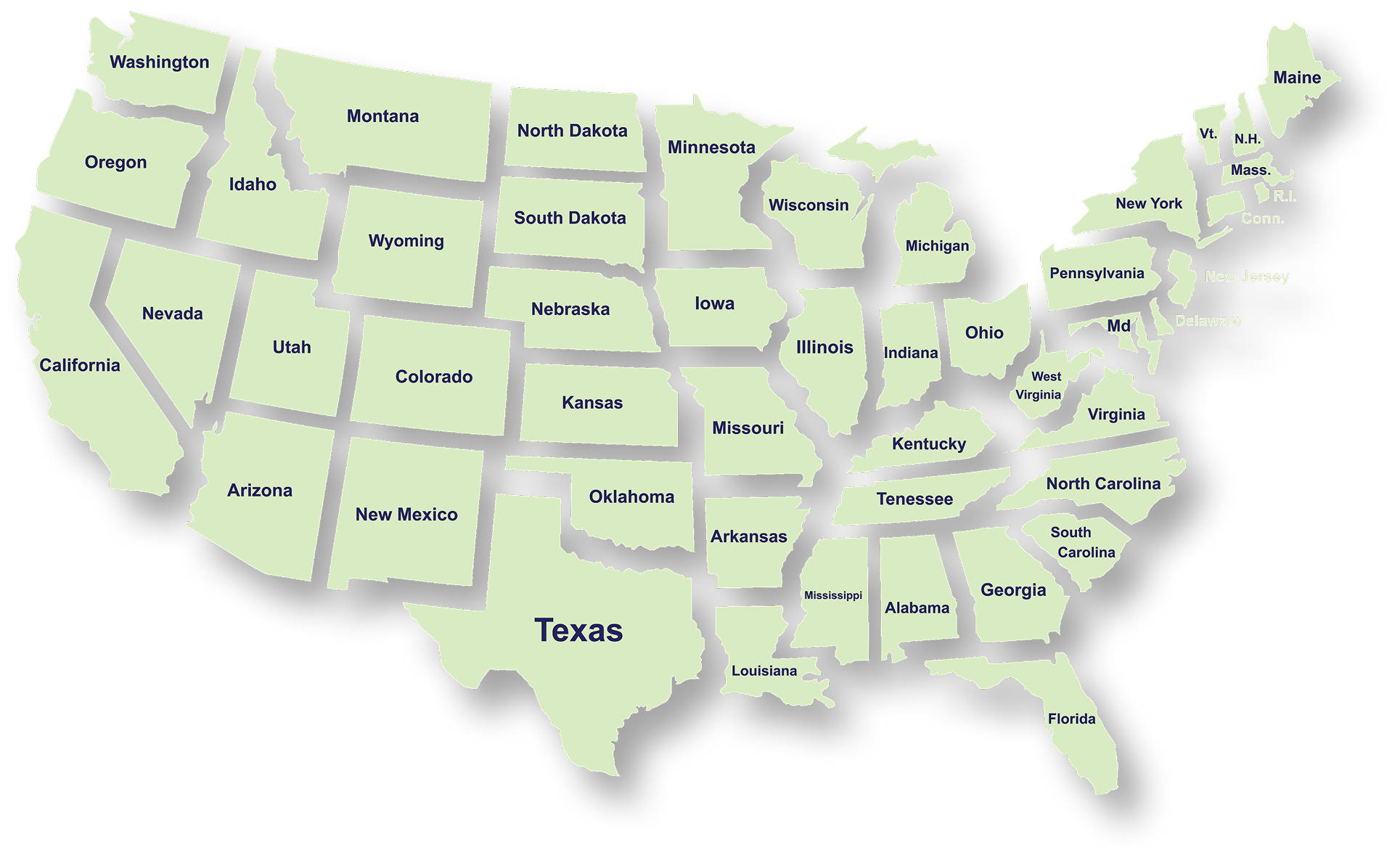
Serving Businesses & Individuals Across USA

We handle accounting, tax filing, and planning with defined timelines and accurate reporting for businesses and individuals across all states.

Frequently Asked Questions

What services does NR CPAs & Business Advisors provide?
What is tax planning and why is it important for businesses?
How can a Virtual CFO help my business?
When should a business consider IRS tax resolution services?
What financial statements does a business typically need?
How can startup advisory services help new businesses?
What is strategic business planning?
What is a Virtual Family Office and who can benefit from it?