Learning Center for Tax and Financial Insights

Stay updated with clear, actionable articles on tax rules, deadlines, deductions, and financial decisions that impact individuals and businesses.

No items found.

Taxes and Holiday Gift Giving

Article Highlights:Watch Out for Holiday Gift ScamsGifts with Tax BenefitsGift of College TuitionGift of College Student’s SuppliesPayoff of Student Loan DebtClean Car CreditQualified Tuition ProgramsQualified Charitable DistributionDonor-Advised FundsWork EquipmentEmployee GiftsMonetary Gifts to IndividualsDocumentationTiming The holiday season is customarily a time of giving gifts, whether to your favorite charity, family members or others. Some gifts have tax implications and can even provide a variety of tax benefits.But be wary; during the holiday season, you may receive phone calls, texts, emails, snail mail, or appeals on social networking sites for donations for various causes. However, some of these appeals may come from fraudsters and not legitimate charities. Unfortunately, this happens every holiday season.So, before writing a check or giving your credit card number to a charity that you aren’t familiar with, check them out so you can be assured that your donation will end up in the right hands. Follow these tips to make sure that your charitable contribution actually goes to the cause you are supporting:Donate to charities that you know and trust. Be alert for charities that seem to have sprung up overnight and that you are not familiar with.Ask if a caller is a paid fundraiser, who they work for, and what percentage of your donation goes to the charity and fundraiser. If you don’t get clear answers—or if you don’t like the answers you get—consider donating to a different organization.Don’t give out personal or financial information, such as your credit card or bank account number, unless you are sure that the charity is reputable.Never send cash or a gift card. You can’t be sure that the organization will receive your donation, and you won’t have a record for tax purposes.Never wire money to someone who claims to be from a charity. Scammers often request donations to be wired because wiring money is like sending cash: Once you send it, you can’t get it back.If a donation request comes from a charity that claims to help a local community group (for example, police or firefighters), ask members of that group if they have heard of the charity and if it is actually providing financial support.Check out the charity’s reputation online using Charity Watch or other online watchdogs.Gifts with Tax BenefitsA Gift of College Tuition – An interesting quirk in the gift tax laws is that an individual can pay a student’s higher-education tuition directly to a qualified school, college, or university, and it will be exempt from gift tax and gift tax reporting. What student wouldn’t love to have part of their tuition paid? It would make a great gift. However, the giver isn’t allowed a charitable deduction on their income tax return for the tuition they generously paid.As an aside, college tuition generally qualifies for a federal income tax credit. Another quirk in the tax laws says that the education credit goes to the individual who claims the child (student) as a dependent, generally resulting in a gift to the child’s parents in the form of the tax credit.Example: Whitney is attending college and is the dependent of her mother and father. Whitney’s grandfather makes a tuition payment directly to the college; since it was made directly to the school, Whitney’s grandfather does not have any gift tax issues. Since Whitney is a dependent of her parents, her parents would claim any available tuition credit. Thus, by paying the tuition, Grandpa made a gift of tuition to his granddaughter and a gift of the tuition credit to her parents.College Student’s Supplies – If you have a spouse or child attending college, the costs of certain course materials qualify for the American Opportunity Tax Credit (AOTC) if the course materials are needed as a condition of enrollment and attendance. Thus, for example, if a computer is needed as a condition of enrollment and attendance at the college, the computer’s cost would qualify for the AOTC of the individual who claims the student as a dependent. Other requirements apply to claim the AOTC; check with this office for details.Payoff of Student Loan Debt – What student or former student wouldn’t appreciate having a portion of their student loan debt paid off in the form of a holiday gift. Such generosity lifts a huge burden off their shoulders. For 2023, up to $17,000 (less if other gifts were made to the same person during the year) can be gifted by one person towards the payment of another’s student loan debt without affecting the giver’s gift tax and gift tax reporting. Clean Car Credit – If you purchase an electric car as a holiday gift for your spouse or even yourself, you will find that some come with a tax credit of up to $7,500. To qualify to claim the credit on your 2023 tax return, the car will have to be “placed in service” by December 31, 2023. So merely ordering the vehicle, even if payment for it is made at the time when the order is placed, won’t be enough – you will need to receive the car and start using it before New Year’s Day. There are also income limitations so that a high-income taxpayer will not qualify for the credit, and the vehicle purchase price (MSRP) is also limited to exclude high-end vehicles from qualifying for the credit. But before you leap, you should also know that the credit is non-refundable, meaning it can only offset your actual tax liability and that any excess credit over your tax liability will be lost. There is, however, an exception when the electric vehicle is used partially for business, in which case the portion of the credit allocated to the business use will become a general business credit that is carried back one year and then carried forward.Qualified Tuition Program (Sec. 529 plans) – These arrangements allow taxpayers to put away large amounts of money, limited only by the projected cost of a college education, which varies from state to state with some plans capped at more than $525,000. The account’s earnings are tax-free if used to pay tuition and certain other college expenses, so the sooner the account is funded, the more it can earn. There are no limits on the number of donors or on age or income. The contributions are subject to the gift tax if the annual contribution exceeds the annual gift tax exclusion amount ($17,000 for 2023; $18,000 for 2024). A special provision allows up to 5 times the usual gift tax exclusion amount to be made to a 529 plan in one year; check with this office for details.Distributions from a Sec 529 plan are tax free, up to $10,000 per year per designated beneficiary for tuition (no other expenses are allowed) in connection with enrollment or attendance at elementary or secondary schools, including public, private, and religious schools. However, this option should be considered cautiously, as Sec. 529 plans work best when the money put into the plan is allowed to grow for a long period of time.Qualified Charitable Distribution (QCDs) – Individuals age70½ or over can transfer up to $100,000 annually from their IRAs to qualified charities without the distribution being taxable. So, you might want to consider using QCDs for your smaller contributions. Contact your IRA custodian or trustee to arrange the transfer, which needs to be completed by December 31, 2023, to count for 2023. Since December 31, 2023, falls on a Sunday and is New Year’s Eve, it’s best not to wait until the last minute to initiate the transfer.A word of caution about QCDs: Congress increased the IRA required minimum distribution (RMD) age to 73 but still allows QCDs once the taxpayer reaches age 70½, and they repealed the age restriction for making traditional IRA contributions beginning in 2020. This means a taxpayer can make traditional IRA contributions and QCDs after reaching age 70½. As a result, Congress included a provision in the tax law requiring a taxpayer who qualifies to make a QCD to reduce the QCD non-taxable portion by any traditional IRA contribution made after reaching 70½ that was deducted, even if the contribution and deduction are not in the same year. This is a complication you would want to consult this office about before making a QCD.Example – Jack makes a traditional IRA contribution of $7,000 when he is age 71 and another $7,000 contribution at the age of 72. He claims an IRA deduction of $7,000 on his tax return for each year. Then later when he is 74, he makes a QCD in the amount $10,000 to his church’s building fund. Since Jack had made the IRA contributions after age 70½, his QCD must be reduced, by the post-70½ contributions that were deducted, and as a result the $10,000 is taxable ($10,000 – 14,000 = (4,000)). However, he can claim $10,000 to the church building fund as a charitable contribution on Schedule A if he itemizes his deductions.

Explore More
No items found.

Year-End Tax Planning Opportunities Are Here

Article Highlights:Not Needing to File a 2023 Return?Are Your Children Attending College?Did You Sell Your Home This Year?Do You Have an Employer Health Flexible Spending Account?Did You Become Eligible to Make Health Savings Account (HSA) Contributions This Year?Is Your Income Unusually Low This Year?Must You Take a Required Minimum Distribution (RMD)?Do You Have Stocks That Have Declined in Value?Do You Have Stocks That Have Appreciated in Value and Your Income Is Low This Year?Have You Considered Prepaying State Income and Property Taxes?Are You Planning Your Charitable Deductions?Do You Have Outstanding Medical or Dental Bills?Have You Forgotten the Annual Gift Tax Exclusion?Do You Think You May Have Under-Withheld Taxes This Year?Did You Suffer a Disaster Loss This Year?Divorced or Separated This Year?Do You Qualify for Energy or Environmental Tax Credits?o Credit for Energy Efficient Home Modificationso Solar Credito Clean Vehicle Credito Previously Owned Clean Vehicle CreditAre You a Working Shareholder in an S Corporation?Are You Planning Business Purchases Soon?Are You Self-Employed?Do You Plan to Pay Your Employees a Bonus?Business Awareness Issueso 2024 E-File Mandateo Corporate Transparency Act Year-end is rapidly approaching, as are the holidays. So, before you become distracted with the seasonal celebrations, it may be in your best interest to consider year-end tax moves that can benefit you for both 2022 2023 and 2023 2024. Here are last-minute tax issues you might consider: INDIVIDUAL PLANNING OPPORTUNITESNot Needing to File a 2023 Return? - If your income and tax situation is such that you do not need to file for2023, don’t overlook the opportunity to bring in some additional income, to the extent it will be tax-free. For instance, if you have appreciated stock that you can sell without incurring any tax, consider selling it, or perhaps take a tax-free IRA distribution if you are 59½ or older or if younger and qualify for an exception to the “early withdrawal” penalty.Also, just because you are not required to file a tax return does not mean you shouldn’t. By not filing you may miss out on some substantial refundable tax credits.Are Your Children Attending College? If you qualify for either the American Opportunity or Lifetime Learning education credits, check to see how much you will have paid in qualified tuition and related expenses in 2023. If it is not the maximum allowed for computing the credits, you can prepay 2024 tuition if it is for an academic period beginning in the first three months of 2024. That will allow you to increase the credit for 2023. This is especially effective for students just starting college who only have tuition expenses for part of the year.Did You Sell Your Home This Year? If so, and if you meet the ownership and occupancy tests, the gain from selling your main home will not be taxed, up to $250,000 ($500,000 if you file a joint return with your spouse who also meets the occupancy test). But if you don’t meet the requirements of both owning and using your home for 2 years in the 5 years counting back from the sale date, you may still qualify for a partial home sale gain exclusion. For example, you may qualify for a reduced exclusion if you sold your home to relocate this year because of a change in employment or due to health. We can determine the amounts of excluded income and taxable gain, and project how your taxes will be impacted.Do You Have an Employer Health Flexible Spending Account? If so, and if you contributed too little to cover expenses this year, you may wish to increase the amount you set aside for next year. The maximum contribution for 2023 is $3,050. The amount you haven’t used in 2023 that may be carried to 2024 is $610 and must be used in the first 2½ months of 2024.Did You Become Eligible to Make Health Savings Account (HSA) Contributions This Year? If you become eligible to make health savings account (HSA) contributions late this year, you can make a full year’s worth of deductible HSA contributions even if you were not eligible to make HSA contributions for the entire year. This opportunity applies even if you first become eligible in December. In brief, if you qualify for an HSA, contributions to the account are deductible (within IRS-prescribed limits), earnings on the account are tax-deferred, and distributions are tax-free if made for qualifying medical expenses.Is Your Income Unusually Low This Year? If your income is unusually low this year, you may wish to consider converting your traditional IRA into a Roth IRA. The lower income likely results in a lower tax rate, which provides you an opportunity to convert to a Roth IRA at a lower tax amount. Also, if you have stocks in your retirement account that have had a significant decline in value, it may be a good time to convert to a Roth.Are You Required to Take a Required Minimum Distribution (RMD)? Once U.S. taxpayers reach the age of 73, they are required to take what is known as a “required minimum distribution” from their qualified retirement plan or IRA every year. If this is the first year that this rule applies to you and you haven’t withdrawn the required amount yet, there’s no need to panic – you don’t have to do so until sometime during the first quarter of next year. Of course, if you wait until 2024 to take your 2023 distribution, you’re going to end up having to take two distributions in one year – one for 2023 and one for 2024.For those who have been required to take an RMD before 2023, you only have until December 31st to take the required distribution for 2023 if you want to avoid penalties.Do You Have Stocks That Have Declined in Value? With the stock market’s ups and downs, you should review your stock portfolio and consider selling losers to offset capital gains that would otherwise be subject to the 15% or 20% long-term capital gains tax rate. Capital losses can also offset up to $3,000 ($1,500 in the case of a married taxpayer filing a separate return) of ordinary income if capital losses exceed capital gains by at least that amount. Recognizing capital losses to offset capital gains can also reduce the amount of income subject to the net investment income surtax. Be aware of the wash sale rules that don’t allow you to deduct a loss if you repurchase those loser stocks within 30 days before or after the sale date.Do You Have Stocks That Have Appreciated in Value and Your Income Is Low This Year? There is a zero long-term capital gains rate for taxpayers whose taxable income is below the 15% capital gains tax threshold. This may allow you to sell some appreciated securities that aren’t in an IRA or retirement account that you have owned for more than a year and pay no or very little tax on the gain. The 2023 15% capital gains tax bracket starts at a taxable income of $89,251 for married joint filers, $59,751 for those filing as head of household, and $44,626 for all other filers.Have You Considered Prepaying State Income and Property Taxes? You probably know that if you are not subject to the alternative minimum tax and you itemize your deductions, you are eligible to deduct both your property taxes and state income (or sales) tax up to a maximum of $10,000. But did you know that in some cases, and of course if you haven’t exceeded the cap, you can increase the amount that you deduct on your 2023 return by prepaying some of the taxes by December 31, 2023? You can ask your employer to boost the amount of your state withholding by a reasonable amount; or, if you are self-employed, pay your 4th-quarter state estimated tax installment in December (otherwise due in January) and increase your deduction. The same is true for your real estate taxes: if you pay your first 2024 installment in 2023, you can take it as part of your 2023 deduction. But be mindful of the so-called SALT limit – the maximum deductible amount of state and local taxes of all types is $10,000. So, don’t electively prepay state taxes if you are at or above the $10,000 cap.Are You Planning Your Charitable Deductions? Many people who itemize take advantage of the ability to take a deduction for their donations to their favorite charities or house of worship. Did you know that you can choose to pay all or part of your 2024 planned giving in 2023 in order to increase the amount you deduct in 2023? Though this may not be appealing to those who itemize every year, if you alternate between taking the standard deduction one year and itemizing the next, this can give you a big boost.Charitable contributions are deductible in the year in which you make them. If you charge a donation to a credit card before the end of the year, it will count for 2023. This is true even if you don’t pay the credit card bill until 2024. In addition, a check will count for 2023 if you mail it in 2023. For last-minute mailings, it may be appropriate to obtain proof of mailing from the USPS. And don’t forget to get an acknowledgment letter or document from each qualified organization that clearly states the donated amount and whether the charity gave you goods or services (other than certain token items and membership benefits) as a result of the contribution.Did You Know You Can Make Charitable Deductions from Your IRA Account? Those who are age 70½ or older are allowed to transfer funds (up to $100,000 annually) from their IRA to qualified charities without the transferred funds being taxable, provided the transfer is made directly by the IRA trustee to a qualified charitable organization. If you are required to make an IRA distribution (i.e., you are age 73 or older), you may have the distribution sent directly to a qualified charity, and this amount will count toward your RMD for the year.Although you won’t get a tax deduction for the transferred amount, this qualified charitable distribution (QCD) will be excluded from your income, with the result that you may get the added benefit of cutting the amount of your Social Security benefits that are taxed. Also, since your adjusted gross income will be lower, tax credits and certain deductions that you claim with phase-outs or limitations based on AGI could also be favorably impacted.If you plan to make a QCD, be sure to let your IRA trustee or custodian know well in advance of December 31 so that they have time to complete the transfer to the charity. If you have contributed to your traditional IRA since turning 70½, the amount of the QCD that isn’t taxable may be limited, so it is a good idea to check with this office to see how your tax would be impacted.

Explore More
No items found.

December 2023 Individual Due Dates

December 1 - Time for Year-End Tax PlanningDecember is the month to take final actions that can affect your tax result for 2023. Taxpayers with substantial increases or decreases in income, changes in marital status or dependent status, and those who sold property during 2023 should call for a tax planning consultation appointment.December 11 - Report Tips to EmployerIf you are an employee who works for tips and received more than $20 in tips during November, you are required to report them to your employer on IRS Form 4070 no later than December 11. Your employer is required to withhold FICA taxes and income tax withholding for these tips from your regular wages. If your regular wages are insufficient to cover the FICA and tax withholding, the employer will report the amount of the uncollected withholding in box 12 of your W-2 for the year. You will be required to pay the uncollected withholding when your return for the year is filed.December 31 - Last Day to Make Mandatory IRA WithdrawalsLast day to withdraw funds from a Traditional IRA Account and avoid a penalty if you were born before January 1, 1952. You may delay your first distribution to April 1, 2024 if your birth date is during the period January 1, 1951 through December 31, 1951. If you are required to take a distribution in 2023, and the institution holding your IRA will not be open on December 31, you will need to arrange for withdrawal before that date.December 31 - Last Day to Pay Deductible Expenses for 2023Last day to pay deductible expenses for the 2023 return (doesn’t apply to IRA, SEP or Keogh contributions, all of which can be made after December 31, 2023).December 31 - Caution! Last Day of the YearIf the actions you wish to take cannot be completed on the 31st or in a single day, you should consider taking action earlier than December 31st, which is a Sunday and many financial institutions may be closed on Friday the 29th, as well as Saturday the 30th.Weekends & Holidays:

Explore More
No items found.

December 2023 Business Due Dates

December 1 - EmployersDuring December, ask employees whose withholding allowances will be different in 2024 to fill out a new Form W4 or Form W4(SP). December 15 - Social Security, Medicare and Withheld Income TaxIf the monthly deposit rule applies, deposit the tax for payments in November.December 15 - Nonpayroll WithholdingIf the monthly deposit rule applies, deposit the tax for payments in November.December 15 - CorporationsThe fourth installment of estimated tax for 2023 calendar year corporations is due.December 31 - Last Day to Pay Deductible Expenses for 2023 Last day to pay deductible expenses for the 2023 return (doesn’t apply to IRA, SEP or Keogh contributions, all of which can be made after December 31, 2023). December 31 - Caution! Last Day of the YearIf the actions you wish to take cannot be completed on the 31st or in a single day, you should consider taking action earlier than December 31st, which is a Sunday and many financial institutions may be closed on Friday the 29th, as well as Saturday the 30th.

Explore More
No items found.

Video Tips: Tax Opportunities for Low-Income Years

If a taxpayer’s income is unusually low in a year, they may wish to consider converting their traditional IRA into a Roth IRA or taking advantage of the zero long-term capital gains rate for low-income taxpayers.

Explore More
No items found.

IRS Expands Requirement to E- File Information Returns Starting in 2024

Article Highlights:New Lower threshold for e-filing information returnsWhy the e-filing mandate?What is an Information Return?Other affected filingsCorrected information returnsNoncompliance PenaltiesWaivers IRS PortalBusinesses, whether operating as a corporation, partnership, or a sole proprietorship, have been required to electronically file information returns when the aggregate number of these returns, regardless of the type of return, for a tax year was more than 250. The IRS issued regulations in February 2023 lowering the threshold to 10 or more returns, effective with the returns filed on or after January 1, 2024. For the most part, this means the electronic filing mandate will apply to 2023 information returns.Some small businesses that previously filed paper information returns, because the number of information returns they had to issue was below the 250 threshold, will now find that they will need to file the forms electronically. Under the prior rules, the threshold number of returns for required e-filing applied separately to each type of return, while under the new regulations, all types of information returns are combined when totaling up the number of returns required to be filed.Affected employers may need significant lead time to implement new software, policies, and procedures to comply with the new rules. Thus, even though electronic filing is not required until 2024 for the 2023 tax year, employers should evaluate what changes may be needed. Simply doing the “same as last year” will not work for many employers.Why the e-filing mandate? The IRS believes that the electronic filing mandate is necessary due to the sheer volume – some four billion information returns – they receive each year. Although about 99% of all information returns in 2019 were e-filed, that still left nearly 40 million paper information returns for the IRS to handle. And as became all too apparent during the COVID-19 crisis, paper filings bog down the IRS’s ability to efficiently process returns. In instituting the lower threshold, the IRS also noted that electronic filing has become more common, accessible, and economical, as evidenced by the prevalence of return preparers and service providers who offer electronic-filing services; by the availability of relevant software; and by the numbers of returns already being filed electronically on a voluntary basis.What is an Information Return? So, you might wonder what an information return is. You are probably familiar with Form W-2 that reports annual wages of an employee, Form 1099-NEC for nonemployee compensation paid to an independent contractor, Form 1099-INT that gives the year’s interest income paid by a bank or other financial institution, and Form 1098 that is issued by a lender and reports the home mortgage interest a taxpayer paid during the year. These are all information returns, but there are significantly more types of information returns. Following are the information returns affected by the new e-file mandate:Form 1042-S, Foreign Person’s U.S. Source Income Subject to Withholding;Forms in the 1094 series;Form 1095-B, Health Coverage;Form 1095-C, Employer-Provided Health Insurance Offer and Coverage;Form 1097-BTC, Bond Tax Credit;Form 1098, Mortgage Interest Statement;Form 1098-C, Contributions of Motor Vehicles, Boats, and Airplanes;Form 1098-E, Student Loan Interest Statement;Form 1098-Q, Qualifying Longevity Annuity Contract Information;Form 1098-T, Tuition Statement;Forms in the 1099 series, such as those noted above (including Form 1099-QA, Distributions from ABLE Accounts);Form 3921, Exercise of an Incentive Stock Option Under Section 422(b);Form 3922, Transfer of Stock Acquired Through an Employee Stock Purchase Plan Under Section 423(c);Forms in the 5498 series (but not Form 5498-QA, ABLE Account Contribution Information, which must be filed on paper);Form 8027, Employer's Annual Information Return of Tip Income and Allocated Tips;Form W-2, Wage and Tax Statement, and the similar wage and tax statements for the U.S. possessions; andForm W-2G, Certain Gambling Winnings Other filings affected by the e-file mandate - The regulations also require e-filing of certain returns and other documents not previously required to be e-filed. Returns affected by the electronic filing mandate, and not listed above, include partnership returns, corporate income tax returns, unrelated business income tax returns, registration statements, disclosure statements, notifications, actuarial reports, and certain excise tax returns, among others. However, the ten-return threshold does not make electronic filing mandatory for employment tax returns, such as Forms 940 and 941.

Explore More
No results found.
Thank you! Your submission has been received!
Oops! Something went wrong while submitting the form.

Want tax & accounting tips & insights?Sign up for our newsletter.

Thank you! Your submission has been received!
Oops! Something went wrong while submitting the form.

Why Work With Us?

We combine deep tax expertise, financial strategy, and practical business insight to help you manage complexity, stay compliant, and make confident financial decisions.
A dollar sign, representing financial advice or discussion at NR CPAs & Business Advisors.

Experienced CPA and Enrolled Agent Leadership

Guidance led by licensed professionals with deep expertise in tax strategy, compliance, and complex financial matters.
White bar chart with an upward arrow on green circular background representing growth or progress at NR CPAs &. Business Advisors

Support for Growing Businesses and Startups

We understand the financial challenges of growth stage businesses and provide structured guidance to support expansion.
A white hand holding a dollar symbol and ascending bar chart on a green circular background representing financial growth or investment at NR CPAs & Business Advisors..

Strategic Financial Advisory

Our team helps you evaluate financial decisions with greater clarity, supported by practical insights and long term planning.

Fractional CFO Support

Access experienced financial leadership without the commitment and cost of hiring a full time Chief Financial Officer.

Proactive Tax Planning Approach

We focus on identifying tax opportunities throughout the year rather than reacting only during filing season.

Clear and Reliable Financial Reporting

Accurate financial statements and reporting that help you better understand performance and make informed decisions.
White IRS building icon with pillars and a dollar sign above on a green circular background.

Professional IRS Representation

Experienced support in resolving IRS notices, disputes, and compliance matters while protecting your financial interests.

Personalized Client Focus

Every client receives thoughtful attention and tailored financial solutions based on their specific needs and business goals.
Financial matters often involve important decisions. Working with experienced advisors can help you approach them with greater clarity and confidence in your choices.

Need Help With Your Tax or Financial Decisions?

Discuss your situation with our advisors to get clear guidance on tax planning, IRS matters, and the financial decisions ahead.
Business consulting at NR CPAs & Business Advisors.

Request Your Consultation

Fill out the form to discuss your tax concerns, financial questions, or advisory needs with our team. We will review your details and respond shortly.

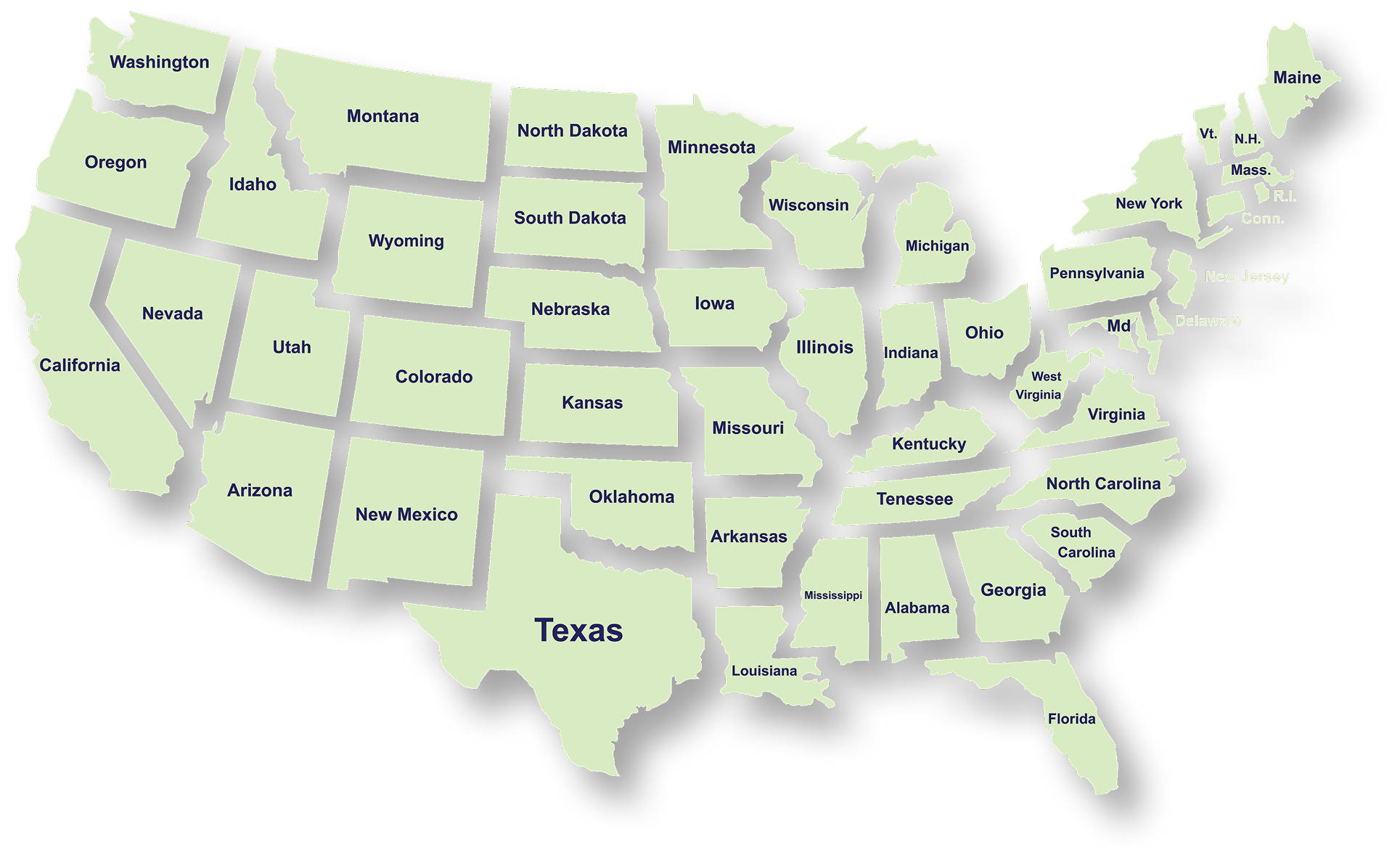
Serving Businesses & Individuals Across USA

We handle accounting, tax filing, and planning with defined timelines and accurate reporting for businesses and individuals across all states.

Frequently Asked Questions

What services does NR CPAs & Business Advisors provide?
What is tax planning and why is it important for businesses?
How can a Virtual CFO help my business?
When should a business consider IRS tax resolution services?
What financial statements does a business typically need?
How can startup advisory services help new businesses?
What is strategic business planning?
What is a Virtual Family Office and who can benefit from it?