Learning Center for Tax and Financial Insights

Stay updated with clear, actionable articles on tax rules, deadlines, deductions, and financial decisions that impact individuals and businesses.

No items found.

Understanding Term Sheets: A Key Tool for Start-up Fundraising

In the dynamic realm of start-ups and venture capital, one document holds paramount importance: the term sheet. It serves as the preliminary guide, a non-binding agreement outlining crucial investment details. For any entrepreneur seeking to secure funding, be it in the seed stage or a series A round, comprehending the essence of a term sheet is indispensable.The Essence of a Term SheetAt its core, a term sheet is the initial handshake of a potential investment. It encapsulates the proposed investment amount and other critical deal particulars. A lead investor employs this document to delineate the fundamental aspects of their investment offer in your venture. While non-binding, it sets the stage for subsequent, legally binding paperwork should the deal progress.Why Use a Term Sheet?1. Streamlining NegotiationsA term sheet acts as the compass, directing negotiations toward a common goal. By agreeing on the primary elements upfront, it significantly expedites the process, saving both time and legal expenses.2. Clarity and TransparencyBy laying out the terms of the deal, a term sheet ensures that all parties involved share a unified understanding. This prevents misunderstandings and disputes in the future, fostering a foundation of trust.3. Investor DeclarationTypically, a term sheet marks the formal declaration of an investor's interest in your venture. This is a significant milestone, indicating serious consideration for investment.4. Control and Decision-makingThe term sheet empowers you to maintain control over your startup. It crystallizes the terms, ensuring that your level of control aligns with your vision.

Explore More
No items found.

Navigating the Future of Social Security: Survey Reveals Concerns and Tax Implications

Recent survey results from the Nationwide Retirement Institute shed light on the prevalent concerns surrounding the future of Social Security. Among those aged 50 and above, a staggering 75% worry that Social Security may run out of funds in their lifetimes, a notable increase from the 66% recorded in 2014. This growing apprehension is driven by looming depletion dates for the program's combined funds, projected to be exhausted by 2034.Addressing the ConcernsWhile uncertainty abounds, there are proactive steps individuals can take to secure their financial future. Rather than being swayed solely by the negative headlines, consider the following strategies:1. Personalized Claiming Strategy:The fear of Social Security depletion has led many to claim benefits before reaching their full retirement age. However, experts emphasize the importance of crafting a strategy based on your unique situation. Even if changes to the program occur, the average retiree is still projected to receive about 77% of their entitled benefits.2. Understanding the Rules:Social Security comes with a web of intricate rules, yet only 49% of adults feel confident in maximizing their benefits. Furthermore, a mere 13% correctly identify their full retirement age. To avoid costly misconceptions, it's crucial to familiarize yourself with the program's regulations and consult reliable resources, such as the Social Security Administration.

Explore More
No items found.

Foreign Account Reporting Due October 16

Article Summary:Foreign-Account Reporting RequirementFinancial Crimes Enforcement NetworkPenalties for Failure to FileTypes of Accounts AffectedForm 8938 Filing RequirementsAll United States entities (including citizens and resident aliens as well as corporations, partnerships, and trusts) with financial interests in or authority over one or more foreign financial accounts (e.g., bank accounts and securities) need to report these relationships to the U.S. Treasury if the aggregate value of those accounts exceeds $10,000 at any time during the year. Failure to file the required forms can result in severe penalties.The U.S. government wants this information for a couple of pretty obvious reasons. One, foreign financial institutions may not have the same reporting requirements as U.S.-based financial institutions. For example, they probably won’t issue the 1099 forms to report interest, dividends and sales of stock. By requiring those in the U.S. to divulge their foreign account holdings, the IRS can more easily cross-check to see if foreign income is being reported on the individual’s tax return. The second (and probably more significant) reason is that the information in the report can be used to identify or trace funds used for illegal purposes or to identify unreported income maintained or generated overseas.Due Date and Extension – For 2022, the due date for filing this report was April 18, 2023, but the government grants an automatic extension to October 16, 2023 for those who didn’t file by April 18. This filing, the Report of Foreign Bank and Financial Accounts (FBAR), is not made with the IRS; rather, it involves completing Bank Secrecy Act forms and filing them electronically through the U.S. Treasury’s Financial Crimes Enforcement Network.Failure to Report Penalties – The government has been very aggressive about levying penalties against those who failed to file a FBAR when required, and even took the position that the penalties applied per each unreported foreign account and not the annual FBAR reporting on FinCEN Form 114. Lucky for taxpayers, after a disagreement in two different tax courts, the issue ended up at the U.S. Supreme Court where the justices ruled the penalties only applied to the FBAR reporting and not per individual account. A civil penalty of up to $10,000 may be imposed for a non-willful failure to report; the penalty for a willful violation is the greater of $100,000 or 50% of the account’s balance at the time of the violation. Both the $10,000 and $100,000 amounts are subject to inflation adjustment. For penalties assessed afterJanuary 19, 2023, the amounts are $15,611 and $156,107, respectively.A willful violation is also subject to criminal prosecution, which can result in a fine of up to $250,000 and jail time of up to five years.

Explore More
No items found.

Electric Vehicle Charging Taxes: A State-By-State Overview

The electric vehicle (EV) and hydrogen electric vehicle (HEV) revolution is well underway, with an increasing number of drivers switching to eco-friendly options every day. However, as EVs and HEVs become more common, states are implementing taxes and regulations on charging stations, potentially affecting drivers’ and businesses’ finances. In this brief guide, we'll explore how different states are handling EV and HEV charging taxes, providing valuable insights for both current and future clean vehicle owners. Delaware: Planning for an EV-Centric FutureAlthough Delaware has not passed recent legislation directly related to EV and HEV taxes, the state is taking proactive steps to prepare for an electric vehicle-dominated future. The state has passed a bill requiring newly constructed residential dwellings to include infrastructure for charging electric vehicles. This forward-thinking legislation positions Delaware for the projected surge in clean vehicle sales by the year 2040.According to Representative Krista Griffith, co-sponsor of the bill, "Major vehicle manufacturers are pledging to go all-electric, and we need to take the step to ensure that we’ve got the appropriate electrical charging infrastructure in place." Furthermore, The First State offers The Clean Vehicle Rebate Program. This rebate is not a tax credit. is not a tax credit. It is a $2,500 cash rebate for electric vehicles purchased or leased after May 1, 2023. Residents must apply within 90 days of their purchase date.Georgia: Excise Tax on EVs and Hydrogen GasGeorgia is taking a unique approach to EV and HEV taxation with an excise tax on both electric vehicles and hydrogen gas used for charging. Effective on July 1, 2023, this tax amounts to 26 cents per 11 kilowatt-hours, equivalent to a gallon of conventional gasoline. Additionally, one recent report explains, Georgia requires private entities offering public chargers to meter the total kilowatt-hours dispensed per station. The Peach State’s taxation approach has garnered criticism as it primarily affects clean vehicle owners using public charging stations, potentially discouraging electric vehicle purchases. The Associated Press notes that alienating EV and HEV drivers is not in the state’s best interest. Georgia has been a major beneficiary of the nationwide electric vehicle investment boom, with over 40 electric vehicle-related projects getting underway since 2020. These projects are estimated to result in $22.7 billion of investment and 28,400 jobs.According to Governor Brian Kemp, "We want to make Georgia the e-mobility capital of the nation."Kentucky: Charging Stations Face New TaxationKentucky, a burgeoning hub for EV battery production, is introducing a new tax that might complicate the state’s charging infrastructure. Starting in January, all publicly available EV chargers, regardless of whether they offer free electricity, will be subject to a usage tax based on the amount of electricity dispensed, with a rate of $0.03 per kilowatt-hour. While the tax aims to capture revenue from out-of-state EV and HV drivers, critics argue that it may discourage the installation of public charging stations.According to Lane Boldman, executive director of the Kentucky Conservation Committee, "The biggest concern is that it basically is not going to bring in the revenue that makes it worth the expense, so you're going to see people stop providing public chargers."This is just the start for the electric vehicle industry in The Bluegrass State. WDRB notes that the Ford Motor Company and its Korean partner, SK On, are constructing two battery factories in Glendale, Kentucky. The $5.8 billion BlueOval SK Battery Park is expected to open in 2025. The factories will employ 5,000 people.

Explore More
No items found.

Simplify Your Business With Recurring Transactions In QuickBooks Online

QuickBooks Online offers a world-class set of bookkeeping and accounting features designed to simplify financial management tasks for all business owners. Among these features is the ability to set up recurring transactions. This powerful, time-saving tool is a great way to automate certain expenses and payments.Whether you're using QuickBooks Online or QuickBooks Desktop, recurring transactions can help you streamline your day-to-day financial processes. In this guide, we'll explore how to make the most of recurring transactions in the QuickBooks Online system.QuickBooks Online: Mastering Recurring TransactionsRecurring transactions in QuickBooks Online are invaluable for businesses that have regular monthly expenses – note that bills are not eligible for the recurring transactions feature, however. By setting up recurring templates for certain costs, business owners can automate the process, ensuring they never miss a payment. Additionally, QuickBooks Online's recurring transactions are ideal for businesses with subscription-based revenue models. This makes it simple for proprietors to effortlessly create recurring invoices, saving time and preventing late payments from subscribers.Creating Recurring TemplatesAccess Your Settings: Log in to your QuickBooks Online account and navigate to the Settings ⚙ menu.Select Recurring Transactions: In the Settings menu, locate and select "Recurring Transactions."Create a New Template: To create a new recurring template, click on "New."Choose Transaction Type: Select the type of transaction you want to make recurring. QuickBooks Online allows you to create templates for various transaction types, except for bill payments and time activities. Once selected, click "OK."Name Your Template: Give your template a descriptive name to easily identify it.Specify the Type: Choose the template type: Scheduled, Unscheduled, or Reminder. Your choice depends on the nature of the transaction and when you want it to recur.

Explore More
No items found.

October 2023 Individual Due Dates

October 2 - Fiduciaries of Estates and TrustsFile a 2022 calendar year return (Form 1041). This due date applies only if you were given an extension of 5½ months. If applicable, provide each beneficiary with a copy of their Schedule K-1 (Form 1041) or a substitute Schedule K-1.sOctober 10 - Report Tips to EmployerIf you are an employee who works for tips and received more than $20 in tips during September, you are required to report them to your employer on IRS Form 4070 no later than October 10. Your employer is required to withhold FICA taxes and income tax withholding for these tips from your regular wages. If your regular wages are insufficient to cover the FICA and tax withholding, the employer will report the amount of the uncollected withholding in box 8 of your W-2 for the year. You will be required to pay the uncollected withholding when your return for the year is filed.October 16 - Taxpayers with Foreign Financial InterestsIf you received an automatic 6-month extension of time to report your 2022 foreign financial accounts to the Department of the Treasury, this is the due date for Form FinCEN 114. October 16 - IndividualsIf you requested an automatic 6-month extension to file your income tax return for 2022, file Form 1040 and pay any tax, interest, and penalties due.

Explore More
No results found.
Thank you! Your submission has been received!
Oops! Something went wrong while submitting the form.

Want tax & accounting tips & insights?Sign up for our newsletter.

Thank you! Your submission has been received!
Oops! Something went wrong while submitting the form.

Why Work With Us?

We combine deep tax expertise, financial strategy, and practical business insight to help you manage complexity, stay compliant, and make confident financial decisions.
A dollar sign, representing financial advice or discussion at NR CPAs & Business Advisors.

Experienced CPA and Enrolled Agent Leadership

Guidance led by licensed professionals with deep expertise in tax strategy, compliance, and complex financial matters.
White bar chart with an upward arrow on green circular background representing growth or progress at NR CPAs &. Business Advisors

Support for Growing Businesses and Startups

We understand the financial challenges of growth stage businesses and provide structured guidance to support expansion.
A white hand holding a dollar symbol and ascending bar chart on a green circular background representing financial growth or investment at NR CPAs & Business Advisors..

Strategic Financial Advisory

Our team helps you evaluate financial decisions with greater clarity, supported by practical insights and long term planning.

Fractional CFO Support

Access experienced financial leadership without the commitment and cost of hiring a full time Chief Financial Officer.

Proactive Tax Planning Approach

We focus on identifying tax opportunities throughout the year rather than reacting only during filing season.

Clear and Reliable Financial Reporting

Accurate financial statements and reporting that help you better understand performance and make informed decisions.
White IRS building icon with pillars and a dollar sign above on a green circular background.

Professional IRS Representation

Experienced support in resolving IRS notices, disputes, and compliance matters while protecting your financial interests.

Personalized Client Focus

Every client receives thoughtful attention and tailored financial solutions based on their specific needs and business goals.
Financial matters often involve important decisions. Working with experienced advisors can help you approach them with greater clarity and confidence in your choices.

Need Help With Your Tax or Financial Decisions?

Discuss your situation with our advisors to get clear guidance on tax planning, IRS matters, and the financial decisions ahead.
Business consulting at NR CPAs & Business Advisors.

Request Your Consultation

Fill out the form to discuss your tax concerns, financial questions, or advisory needs with our team. We will review your details and respond shortly.

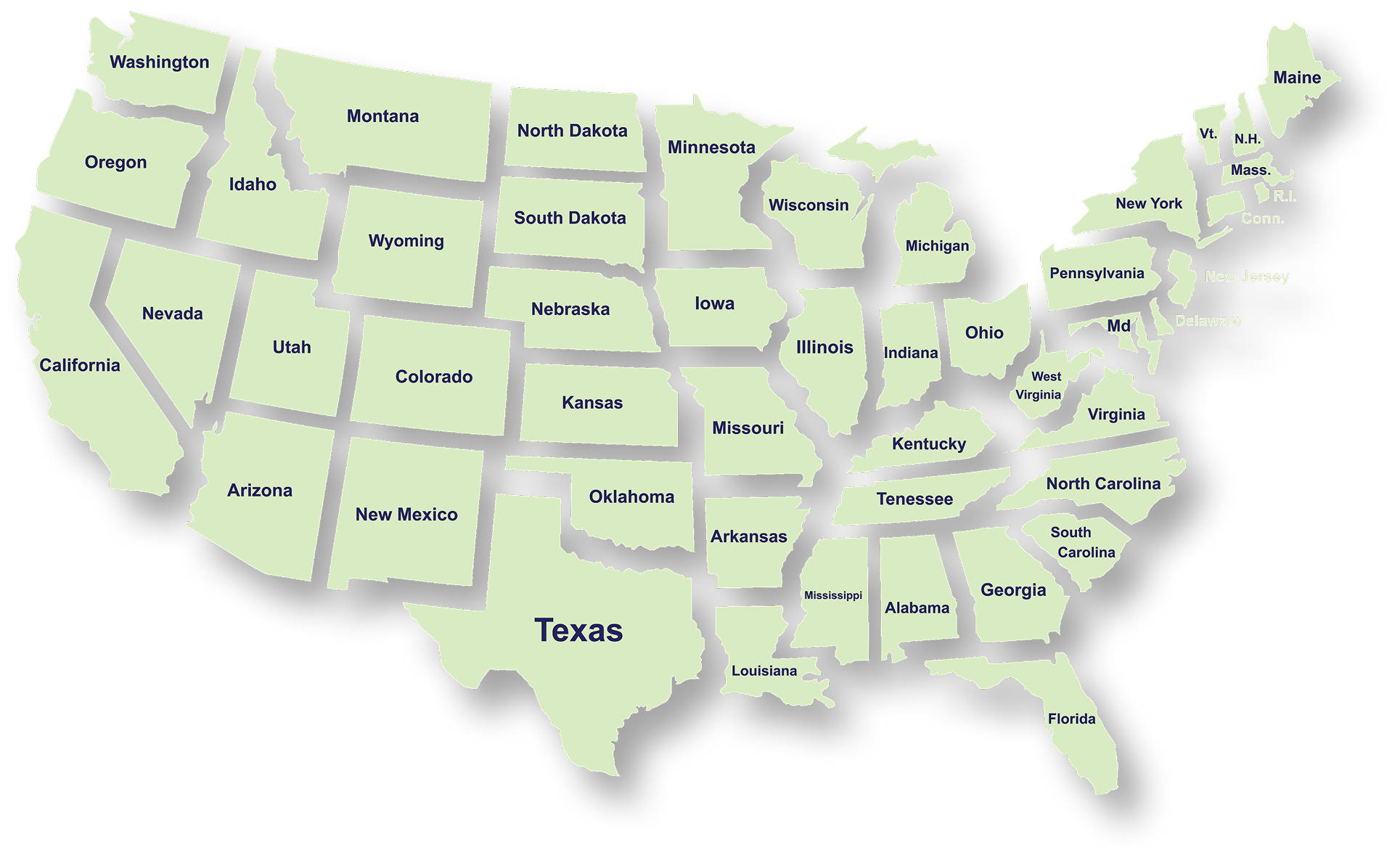
Serving Businesses & Individuals Across USA

We handle accounting, tax filing, and planning with defined timelines and accurate reporting for businesses and individuals across all states.

Frequently Asked Questions

What services does NR CPAs & Business Advisors provide?
What is tax planning and why is it important for businesses?
How can a Virtual CFO help my business?
When should a business consider IRS tax resolution services?
What financial statements does a business typically need?
How can startup advisory services help new businesses?
What is strategic business planning?
What is a Virtual Family Office and who can benefit from it?