Learning Center for Tax and Financial Insights

Stay updated with clear, actionable articles on tax rules, deadlines, deductions, and financial decisions that impact individuals and businesses.

No items found.

Navigating the Challenge: How Rising Interest Rates Impact Start-up Fundraising

In the dynamic world of start-ups, securing funding is the lifeblood of growth and innovation. However, as interest rates begin to rise, entrepreneurs find themselves facing a new set of challenges. In this article, we'll explore the multifaceted impact of rising interest rates on start-up fundraising and delve into strategic approaches to navigate this shifting landscape.The Cost of BorrowingOne of the most immediate and tangible effects of rising interest rates on start-ups is the increased cost of borrowing. As interest rates climb, the expense of loans for operational needs or expansion plans surges. This financial burden could potentially dissuade start-ups from resorting to borrowing, thereby impeding their fundraising endeavors.Shifting Investor BehaviorInvestor behavior is another critical aspect influenced by rising interest rates. The allure of traditional investments, such as bonds, intensifies as they promise higher returns in the face of escalating interest rates. This shift in preference could result in a decline in venture capital and angel investing, as investors gravitate towards the security and higher yields offered by these more stable investments.Crowdfunding ConsiderationsFor start-ups relying on crowdfunding platforms like Kickstarter or IndieGoGo, rising interest rates introduce an additional layer of complexity. Prospective backers may hesitate, mindful of potential increases in interest costs if they choose to borrow funds for project support. This caution could translate to fewer contributions, impacting the success of crowdfunding campaigns.

Explore More
No items found.

Made a Mistake on Your Tax Return - What Happens Now?

Article Highlights:Tax Return Mistakes are CommonFixing Tax Return MistakesAmended ReturnSuperseding ReturnDon’t Procrastinate in Responding to IRSCommon Family Tax MistakesGenerally speaking, tax return mistakes are a lot more common than you probably realize. Taxes have grown complicated and the paperwork required to file proper tax returns is often convoluted. This is especially true if you're filing your taxes yourself.Congress has passed numerous tax laws in recent years making taxes ever more complicated. Even seasoned tax professionals have a hard time digesting all of the changes that they and their clients have to deal with, requiring hours of continuing education. All of this is to say that if you've just discovered that you've made a significant mistake on your tax return, the first thing you should do is stop and take a deep breath, and then call this office. It happens. It's understandable. There are steps that you can take to correct the situation quickly — you just have to keep a few key things in mind, including that the mistake could be in your favor.Fixing Tax Return Mistakes - Here's what you need to know:You generally have three years from the date that you originally filed your tax return (or two years from the date you paid the tax bill in question) to make any corrections necessary to fix your mistakes or oversights.There's a good chance that the IRS will catch an income omission, math errors, or an incorrect deduction or tax credit, in which case the IRS will probably send you a letter letting you know what happened and what you need to do to correct it.If fixing the mistake ultimately results in you owing more taxes, you should pay that difference as quickly as possible. Penalties and interest will keep accruing on that unpaid portion of your bill for as long as it takes for you to pay it, so it's in your best interest to take care of this as soon as you can.Many errors include not claiming tax benefits you are entitled to and cause you to pay more tax than required. You may have overstated or understated your income or received a late tax document, such as one if many varieties of 1099s or K-1s. To correct issues on an already filed return you generally need to file an amended return.An amended return is used to make corrections to previously filed returns. The possible corrections include, but are not limited to:Overstating or understating incomeChanging an incorrect filing statusAdding or deleting dependentsTaking care of discrepancies in terms of deductions or tax creditsIf any of the above apply to the error you've just discovered, you can — and absolutely should — file an amended return.If you catch the error prior to the filing due date of the return, instead of filing an amended return, you can file what’s called a “superseding return” to replace the original return. The difference is that when you file a superseding return you submit a complete new return to take the place of the one originally filed, while with an amended return, you fill out a special form (1040-X) and attach only back-up forms or schedules that pertain to the change.A sudden increase in your tax liability notwithstanding, it's again important to understand that errors on your income taxes aren't really worth stressing out about. The IRS understands that sometimes mistakes happen, and they have a variety of processes in place designed to help make things right.If you have received a notice from the IRS about an error on your tax return, don’t procrastinate in handling it – address the issue(s) raised by the IRS right away. The same applies if you have discovered an error. Either way, you can contact this office for assistance with responding to the IRS, preparing a superseding or an amended return, and requesting penalty abatement.Common Family Tax Mistakes – There are also common mistakes that occur when dealing with family members that you should avoid or correct if you have made them. The following are some commonly encountered situations and the tax ramifications associated with each.Renting to a Relative – When you rent a home to a relative for long-term use as a principal residence, the rental’s tax treatment depends upon whether the property is rented at fair rental value (the rental rate of comparable properties in the area) or at less than the fair rental value.Rented at Fair Rental Value– If you rented a home to a relative at a fair rental value, it is treated as an ordinary rental reported on your Form 1040 on Schedule E, and losses are allowed, subject to the normal passive loss limitations.Rented at Less Than Fair Rental Value– If you rented the home at less than the fair rental value, which often happens when the tenant is a relative of the homeowner, it is treated as being used personally by you; the expenses associated with the home are not deductible, and no depreciation is allowed. The result is that all the rental income is fully taxable and reported as “other income” on your 1040. If you are able to itemize your deductions, the property taxes on the home would be deductible, subject to the current $10,000 cap on state and local taxes. You might also be able to deduct the interest on the rental home by treating the home as your second home, up to the debt limits on a first and second home.Possible Gift Tax Issue – There also could be a gift tax issue, depending on if the difference between the fair rental value and the rent you actually charged the tenant-relative exceeds the annual gift tax exemption, which is $17,000 for 2023. If the home has more than one occupant, the amount of the difference would be prorated to each occupant, so unless there was a large difference ($17,000 per occupant, in 2023) between the fair rental value and actual rent, or other gifting was also involved, a gift tax return probably wouldn’t be needed in most cases.Below-Market Loans – It is not uncommon to encounter situations where there are loans between family members, with no interest being charged or the interest rate being below market rates.A below-market loan is generally a gift or demand loan where the interest rate is less than the applicable federal rate (AFR).The tax code defines the term “gift loan” as any below-market loan where the forgoing of interest is in the nature of a gift, while a “demand loan” is any loan that is payable in full at any time, at the lender’s demand. The AFR is established by the Treasury Department and posted monthly. As an example, the AFR rates for September 2023 were:

Explore More
No items found.

IRS Orders Immediate Stop to New Employee Retention Credit Processing

Article Highlights:Promoter PressureSpecial Withdrawal Option in The WorksWillfully Filed Fraudulent ClaimsProper ERC ClaimsImproper ClaimsAdvice for TaxpayersThose Currently Awaiting an ERC Claim Those Who Haven’t Filed a Claim YetWithdrawing an Existing Claim Already FiledWait For the IRS ERC Settlement Program to Be FinalizedERC Qualifications Despite warnings from the IRS, AICPA, and other professional tax organizations many business owners are being misled into filing for the Employee Retention Tax Credit for which they do not qualify.Amid rising concerns about a flood of improper Employee Retention Credit claims, the Internal Revenue Service on Thursday, September 14, 2023, announced an immediate moratorium through at least the end of the year on processing new claims for the pandemic-era relief program to protect honest small business owners from scams.IRS Commissioner Danny Werfel ordered the immediate moratorium, running through at least Dec. 31, following growing concerns inside the tax agency and from tax professionals, as well as media reports, that a substantial share of new claims from the aging program are ineligible and increasingly putting businesses at financial risk by being pressured and scammed by aggressive promoters and marketing.The IRS continues to work previously filed Employee Retention Credit (ERC) claims received prior to the moratorium but renewed a reminder that increased fraud concerns means processing times will be longer. On July 26, the agency announced it was increasingly shifting its focus to review these claims for compliance concerns, including intensifying audit work and criminal investigations on promoters and businesses filing dubious claims. The IRS announced today that hundreds of criminal cases are being worked, and thousands of ERC claims have been referred for audit.The IRS emphasizes that payouts for these claims will continue during the moratorium period but at a slower pace due to the detailed compliance reviews. With the stricter compliance reviews in place during this period, existing ERC claims will go from a standard processing goal of 90 days to 180 days – and much longer if the claim faces further review or audit. The IRS may also seek additional documentation from the taxpayer to ensure it is a legitimate claim.This enhanced compliance review of existing claims submitted before the moratorium is critical to protect against fraud but also to protect the businesses from facing penalties or interest payments stemming from bad claims pushed by promoters, according to Werfel.Promoter Pressure - “For those people being pressured by promoters to apply for the Employee Retention Credit, I urge them to immediately pause and review their situation while we look to add new protections and safeguards to stop bad claims from ever coming in,” Werfel said. “In the meantime, businesses should seek out a trusted tax professional who actually understands the complex ERC rules, not a promoter or marketer hustling to get a hefty contingency fee. Businesses that receive ERC payments improperly face the daunting prospect of paying those back, so we urge the utmost caution. The moratorium will help protect taxpayers by adding a new safety net onto this program to focus on fraudulent claims and scammers taking advantage of honest taxpayers.”Special Withdrawal Option in The Works - The IRS is also finalizing details that will be available soon for a special withdrawal option for those who have filed an ERC claim, but the claim has not been processed. This option – which can be used by taxpayers whose claim hasn’t yet been paid – will allow the taxpayers, many of them small businesses who were misled by promoters, to avoid possible repayment issues and paying promoters contingency fees. Filers of these more than 600,000 claims awaiting processing will have this option available.Willfully Filed Fraudulent Claims - Those who have willfully filed fraudulent claims or conspired to do so should be aware, however, that withdrawing a fraudulent claim will not exempt them from potential criminal investigation and prosecution.As part of the wider compliance effort, the IRS is working with the Justice Department to address fraud in the ERC program as well as promoters who have been ignoring the rules and pushing businesses to apply.The IRS has trained auditors examining ERC claims posing the greatest risk, and the IRS Criminal Investigation division is actively working to identify fraud and promoters of fraudulent claims for potential referral for prosecution to the Justice Department.IRS Criminal Investigation (IRS-CI) investigates a variety of COVID fraud allegations ranging from fraudulently obtained employee refund tax credits to falsified Paycheck Protection Program loans. To date, IRS-CI has uncovered suspected pandemic fraud totaling more than $8 billion. As of July 31, 2023, IRS-CI has initiated 252 investigations involving over $2.8 billion of potentially fraudulent Employee Retention Credit claims. Of those, fifteen of the 252 investigations have resulted in federal charges. Of the 15 federally charged cases, so far six matters have resulted in convictions, four of those cases have reached the sentencing phase with the average sentence being 21 months.Criminal Investigation’s work is in addition to ERC audits that have started. The IRS has already referred thousands of ERC cases for audit.

Explore More
No items found.

The Future of U.S. Tax Policy: Key Issues For 2024 Presidential Candidates

The early Presidential debates for the 2024 election cycle have begun, and one topic that's expected to take center stage is the future of the U.S. tax code. Tax policy questions loom large, and the 46th person to serve as United States President – remember, Grover Cleveland was elected twice, non-consecutively – will have to grapple with some major tax issues. Foremost among these are the expiring individual and business tax regulations brought about by the Tax Cuts and Jobs Act (TCJA) and the growing deficits and national debt.Tax Cuts and Jobs Act DetailsThe tax code changes brought about the TCJA are scheduled to sunset at the end of 2025, leading to potentially major changes for taxpayers. Kiplinger notes that now is the time to begin planning to mitigate the financial impact of these expiring provisions – talk to your tax professional for planning strategies that might help you keep more of your hard-earned money.It is also imperative for all of the 2024 Presidential candidates to address how they intend to prevent these expirations from negatively affecting Americans in all demographics and at all income levels. TCJA questions surrounding all of the following topics are likely to play a key role in debates moving forward.Individual Tax ExpirationsThe TCJA, which was signed into law in December 2017, introduced temporary changes that significantly alter the taxes paid by individual income earners. This means that the majority of Americans have enjoyed increased after-tax income for the last several years. Some notable provisions that are set to expire include:Lower Tax Rates and BracketsBefore the TCJA changes took effect, the U.S. tax code had seven brackets with rates from 10 percent to 39.6 percent. The TCJA lowered rates for several brackets and widened the brackets to reduce so-called marriage penalties. Furthermore, the TCJA lowered the top tax bracket from 39.6 percent to 37 percent, which has saved high-earners significant amounts of money.Expanded Family BenefitsThe TCJA reformed the Child Tax Credit (CTC), personal and dependent exemptions, and the standard deduction. This gave lower- and middle-income households with children greater benefits. It also simplified the tax filing process. As an example, it doubled the maximum CTC to $2,000 per eligible child and extended overall eligibility to more families.It is important to note that the aforementioned Child Tax Credit changes took effect before the COVID-19 pandemic, which resulted in additional legislation to temporarily expand the credit even further.Itemized Deduction LimitsTo offset tax cuts, the TCJA imposed limits on itemized deductions for home mortgage interest and state and local taxes, and doubled the standard deduction which eliminated the need for millions of taxpayers to itemize their deductions at all. The legislation also temporarily eliminated select miscellaneous itemized deductions. These changes are set to revert after 2025. Business Tax Expirations

Explore More
No items found.

Video Tips: Possible Changes to Your Tax Situation While Getting a Divorce

When couples separate or divorce, the change in their relationship status affects their tax situation. The IRS considers a couple married for tax filing purposes until they get a final decree of divorce or separate maintenance.

Explore More
No items found.

The Curious Case of the Hole-in-One: Tax Ramifications and Legal Wranglings Unfold

In a tale that could rival even the most gripping golf tournament dramas, a recent event in Central Florida saw a hole-in-one winner denied her coveted prize – a brand-new Mercedes-Benz. Linda L. Chen's remarkable feat on the 11th hole at Isleworth Golf & Country Club in Windermere on May 22 was met with disbelief rather than celebration, as she never received the keys or title to her well-deserved victory.The tournament, dubbed "Fins on the Fairway," was a fundraiser benefiting Nova Southeastern University Orlando. The promised prize for a hole-in-one was a sleek Mercedes E Class vehicle, but as events unfolded, it became evident that something was amiss.The Legal Battle UnveiledIn a bold move, Chen has filed a lawsuit against Timothy J. Galvin, the alleged event organizer, his company Tournament Golf Events, Mercedes-Benz of South Orlando, and ACE Hole in One – the company responsible for hole-in-one coverage. Chen is seeking restitution in the form of either the title to the Mercedes or its equivalent value of $90,000.Galvin's version of events differs, asserting that it was the prize indemnifier, ACE Hole in One, that ultimately denied Chen her rightful prize. The reason given was Chen's former status as a professional golfer over 15 years ago, a detail that was not initially disclosed.

Explore More
No results found.
Thank you! Your submission has been received!
Oops! Something went wrong while submitting the form.

Want tax & accounting tips & insights?Sign up for our newsletter.

Thank you! Your submission has been received!
Oops! Something went wrong while submitting the form.

Why Work With Us?

We combine deep tax expertise, financial strategy, and practical business insight to help you manage complexity, stay compliant, and make confident financial decisions.
A dollar sign, representing financial advice or discussion at NR CPAs & Business Advisors.

Experienced CPA and Enrolled Agent Leadership

Guidance led by licensed professionals with deep expertise in tax strategy, compliance, and complex financial matters.
White bar chart with an upward arrow on green circular background representing growth or progress at NR CPAs &. Business Advisors

Support for Growing Businesses and Startups

We understand the financial challenges of growth stage businesses and provide structured guidance to support expansion.
A white hand holding a dollar symbol and ascending bar chart on a green circular background representing financial growth or investment at NR CPAs & Business Advisors..

Strategic Financial Advisory

Our team helps you evaluate financial decisions with greater clarity, supported by practical insights and long term planning.

Fractional CFO Support

Access experienced financial leadership without the commitment and cost of hiring a full time Chief Financial Officer.

Proactive Tax Planning Approach

We focus on identifying tax opportunities throughout the year rather than reacting only during filing season.

Clear and Reliable Financial Reporting

Accurate financial statements and reporting that help you better understand performance and make informed decisions.
White IRS building icon with pillars and a dollar sign above on a green circular background.

Professional IRS Representation

Experienced support in resolving IRS notices, disputes, and compliance matters while protecting your financial interests.

Personalized Client Focus

Every client receives thoughtful attention and tailored financial solutions based on their specific needs and business goals.
Financial matters often involve important decisions. Working with experienced advisors can help you approach them with greater clarity and confidence in your choices.

Need Help With Your Tax or Financial Decisions?

Discuss your situation with our advisors to get clear guidance on tax planning, IRS matters, and the financial decisions ahead.
Business consulting at NR CPAs & Business Advisors.

Request Your Consultation

Fill out the form to discuss your tax concerns, financial questions, or advisory needs with our team. We will review your details and respond shortly.

Serving Businesses & Individuals Across USA

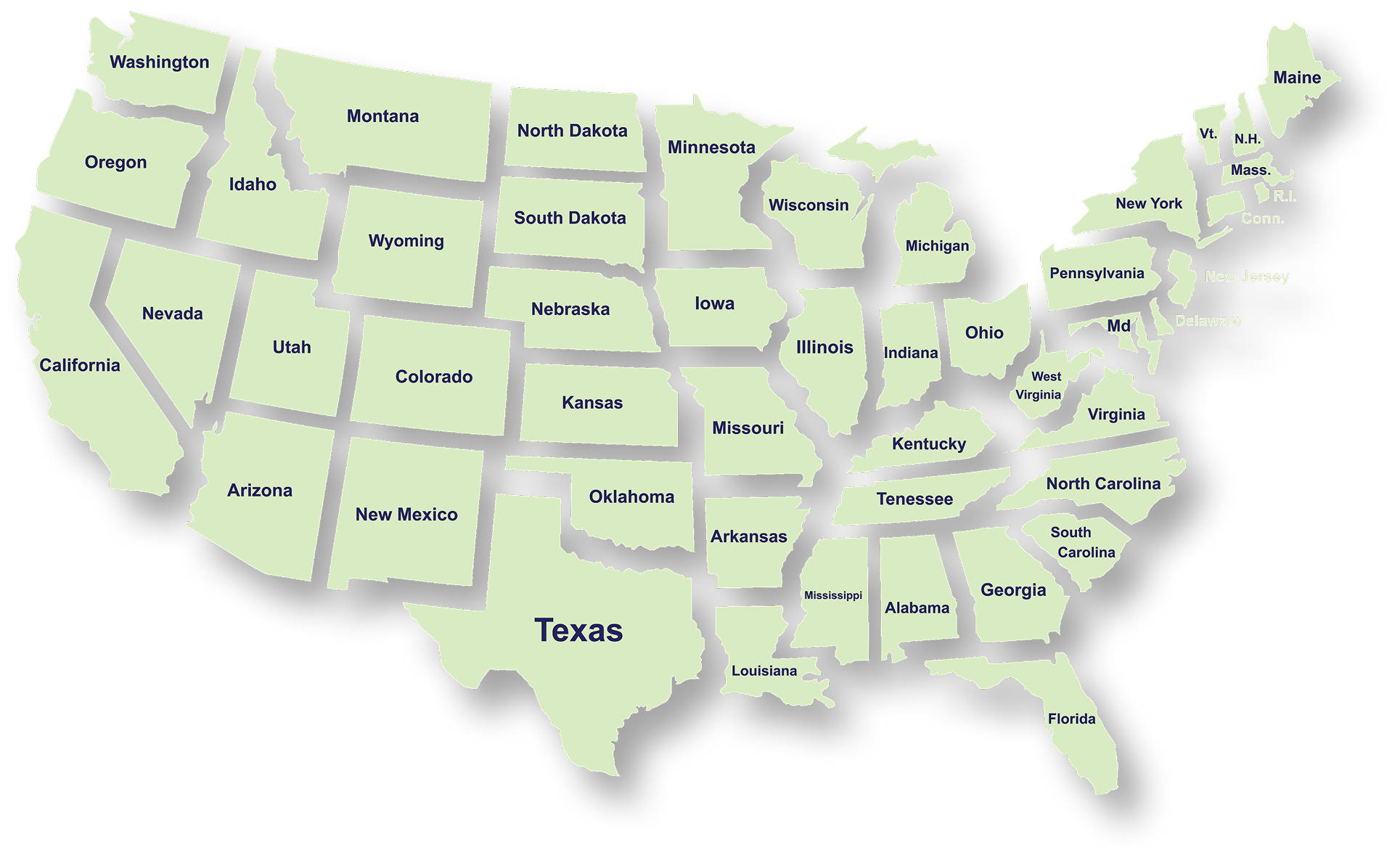
We handle accounting, tax filing, and planning with defined timelines and accurate reporting for businesses and individuals across all states.

Frequently Asked Questions

What services does NR CPAs & Business Advisors provide?
What is tax planning and why is it important for businesses?
How can a Virtual CFO help my business?
When should a business consider IRS tax resolution services?
What financial statements does a business typically need?
How can startup advisory services help new businesses?
What is strategic business planning?
What is a Virtual Family Office and who can benefit from it?