Learning Center for Tax and Financial Insights

Stay updated with clear, actionable articles on tax rules, deadlines, deductions, and financial decisions that impact individuals and businesses.

No items found.

September 2023 Business Due Dates

September 15 - S CorporationsFile a 2022 calendar year income tax return (Form 1120-S) and pay any tax due. This due date applies only if you requested an automatic 6-month extension. Provide each shareholder with a copy of their Schedule K-1 (Form 1120-S) or a substitute Schedule K-1 and, if applicable, Schedule K-3 (Form 1120-S) or substitute Schedule K-3 (Form 1120-S).September 15 - Corporations Deposit the third installment of estimated income tax for 2023 for calendar yearSeptember 15 - Social Security, Medicare and withheld income taxIf the monthly deposit rule applies, deposit the tax for payments in August.September 15 - Nonpayroll WithholdingIf the monthly deposit rule applies, deposit the tax for payments in August.September 15 - PartnershipsFile a 2022 calendar year return (Form 1065). This due date applies only if you were given a 6-month extension. Provide each partner with a copy of their Schedule K-1 (Form 1065) or a substitute Schedule K-1 and, if applicable, Schedule K-3 (Form 1065) or substitute Schedule K-3 (Form 1065).Weekends & Holidays:

Explore More
No items found.

Hawaii Wildfires State of Emergency - Tax Implications

The United States government is providing tax relief for eligible Hawaii residents amid the rampant wildfires on both Maui and the Big Island. The President has declared a disaster for all parts of Hawaii affected by the wildfires. Disaster area taxpayers will now have until February 15, 2024, to file various federal individual and business tax returns and make tax payments.Tax Implications of the Hawaii Wildfires State of Emergency Tax Payments - The February 15, 2024, deadline also applies to any payment normally due during this postponement period, Aug. 8, 2023, through February 15, 2024, including quarterly estimated tax payments, quarterly payroll, and excise tax returns.Who Qualifies for the Filing Postponements - The IRS automatically provides filing and penalty relief to any taxpayer with an IRS address of record located in the disaster area. Therefore, taxpayers do not need to contact the agency to get this relief. However, if an affected taxpayer receives a late filing or late payment penalty notice from the IRS that has an original or extended filing, payment or deposit due date falling within the postponement period, the taxpayer should call the number on the notice to have the penalty abated.In addition, the IRS will work with any taxpayer who lives outside the disaster area but whose records necessary to meet a deadline occurring during the postponement period are located in the affected area. Taxpayers qualifying for relief who live outside the disaster area need to contact the IRS at 866-562-5227. This also includes workers assisting the relief activities who are affiliated with a recognized government or philanthropic organization.Justin Sullivan / Getty Images News via Getty ImagesClaiming Casualty Losses - Affected taxpayers in a federally declared disaster area have the option of claiming disaster-related casualty losses on their federal income tax return for either the year in which the event occurred, or the prior year. Individuals may deduct personal property losses that are not covered by insurance or other reimbursements. Affected taxpayers claiming the disaster loss on their return must include the FEMA disaster declaration number, FEMA-DR-4724-HI.

Explore More
No items found.

Financial Aspects of Elder Care Planning

When we’re young and vibrant, we think that we’ll never grow old. We enjoy each day never thinking there might come a day when we’ll need help to get by. When we think of elder care, we might picture a nonagenarian in a wheelchair living in a nursing home telling stories to the compassionate caregiver sitting by her side. In truth, there is far more to the story than that.Elder care planning has never been more important or more challenging than it is today. While generations once lived together in the family home for life, the empty nest dominates today’s world. Parents whose children have flown the coop to create their own households remain in their homes or move to a place where the sun shines 300 days a year. Many move to be close to their grandchildren but establish their own living space. Most enjoy their newfound freedom from the busy-ness of youth but it can eventually create challenges for them and their families.As long as the happy seniors enjoy good health and have planned well for their financial future, everyone can live happily, doing whatever they’ve decided to do with their time. It’s when the senior reaches the point where they can no longer care for themselves that the challenges can begin to mount. This is when the family will know whether they’ve planned well or there are gaps in their elder care plan.As is often the case with planning, money is a key element in an elder care plan. Deciding who will provide the care is important but this can only be decided once the available funding is clear. There are many factors to consider when deciding how much you need in order to retire and not worry about elder care costs. Some advisers suggest that you should save 10 times your annual income by the time you reach 67. Others say you need $1.8 million to your name by age 65 in order to fund a happy retirement. The right number for you depends on the life you plan to lead in retirement and where you stand when you start to plan. It also involves a clear understanding of the cost of your post-retirement housing, food, clothing, insurance, healthcare, dental and vision care, travel, and a potentially long list of other expenses.When care becomes necessary, you will probably no longer be able to earn a living so your elder care plan needs to cover your living expenses at a minimum. It also has to consider the possibility that long-term care may eventually be required. There are several ways to prepare for this need.Retirement accounts – An excellent way to prepare for elder care is to prepare for retirement. Pensions, 401(k)s, IRAs, HSAs, annuities, and other accounts can provide a foundation that you can draw on when you decide it’s time to stop working. How much you need depends on your lifestyle and location. It takes a lot less money to live in Knoxville, Tennessee than San Francisco, California. It takes a lot less money to take long walks by the lake than it does to play 18 holes of golf at Pebble Beach.Keep in mind that the benefit of these accounts is not limited to the golden years. Some people want the YOLO lifestyle and to retire at 40. Others love what they do and can’t imagine retiring even into their 80s and 90s. Needless to say, a 40-year-old retiree needs a much larger financial cache to cover his lifetime of expenses than an 80-year-old does assuming the same life span.Other Investments – Some people own rental properties and others develop small businesses. Whether they are held for regular income or sold prior to retirement, other investments can help fund a person’s needs later in life.Social Security – If you’ve paid into the system for enough quarters, you can apply for Social Security benefits anytime between the ages of 62 and 70. The monthly payment will generally be 25-30% less at age 62 than it would be if you wait until your Full Retirement Age (FRA). People born prior to or during 1956 reached their FRA by April 2023. Those born in 1957 have an FRA of 66 ½ years. The FRA increases by 2 months every year for people born between 1958 and 1960. Those born in 1958 have an FRA of 66 years, 8 months. Those born in 1959 have an FRA of 66 years, 10 months. Those born in 1960 and thereafter have an FRA of 67. If you wait to collect until after you reach your FRA, your monthly payments will increase by 8% for every year you wait until you reach 70. There is no benefit for waiting to file for Social Security until after your 70thbirthday. In any event, your benefit or expected benefit will increase each year by a cost-of-living adjustment that the Social Security administration announces each October. Note that your benefit is based on your highest 35 years of earnings. Thus, your benefit can increase if you continue to work after qualifying and/or filing for Social Security and you either didn’t already have 35 years of qualified earnings or you earned more in the current year than you earned in the 35thlowest of your prior years’ earnings. If you continue to work after you file for benefits but before you reach your FRA, the benefits you receive can be reduced depending on the level of your earnings. Once you reach your FRA, you can earn as much as you want without decreasing your Social Security benefit. As we hear in the news regularly, all of this is subject to change. Keep up-to-date on any changes that are made to Social Security to understand how the changes might affect you.Medicare – Medicare coverage starts at age 65 unless a qualifying disability occurs at a younger age or you have creditable employer-provided coverage. Medicare has several parts. Part A is hospital coverage and premium-free if you worked enough quarters to qualify. Part B is outpatient coverage that has a monthly premium. For 2023, the standard Part B premium is $164.90. Dental and vision services are generally not covered by Medicare Parts A and B unless related to a covered health need. Also, Parts A and B do not cover all medical expenses so most people apply for a Medicare Advantage or Medicare Supplement plan. Some Medicare Advantage and Medicare Supplement plans include limited dental and vision coverage and others do not so it’s important to select these plans wisely. Medicare Advantage plans generally include prescription drug coverage. Medicare Part D plans are available to Medicare Supplement owners to help cover the cost of their prescriptions.Long-term care (LTC) insurance. As discussed below, LTC insurance plans help cover the cost of certain long-term care. If you decide to obtain LTC insurance, the sooner you apply for it the better. Premiums partly depend on your age and, once a person has a serious health event, this option may no longer be available or may be available at higher prices. Some people think that it is better to regularly deposit the premium amount into an income-earning account rather than applying for LTC insurance. They believe that they can save enough over time to cover their LTC costs. This theory does not account for the fact that LTC needs can arise at any time. If you have LTC insurance, you can obtain benefits for a qualifying need after the contract’s initial waiting period has passed. Thus, LTC insurance is not only useful in elder care planning. It can help at any time in life. Further, premiums for tax-qualified LTC policies can be deducted as medical expenses. The cost of LTC insurance can be prohibitive, however, so it’s important to determine whether you can afford the premiums on an ongoing basis before you apply for it. You should also weigh the cost of LTC insurance against the risk of needing long-term care to decide if it’s right for you.Medicaid may be there if you run out of resources. Nobody wants to rely on Medicaid and it can impact your estate plan if you become subject to its estate recovery rules. Qualifying for Medicaid can be complicated and your choice of caregivers will be limited. This article won’t go into the specifics of Medicaid since it is generally an option of last resort.

Explore More
No items found.

Are You Ignoring Retirement Planning?

Article Highlights:Predicting Social Security IncomePlanning for the FutureEmployer Retirement PlansTax Incentive Retirement Savings PlansAre you ignoring your future retirement needs? That tends to happen when you are younger, retirement is far in the future, and you believe you have plenty of time to save for it. Some people ignore the issue until late in life and then have to scramble at the last minute to fund their retirement. Others even ignore the issue altogether, thinking their Social Security income (assuming they qualify for it) will take care of their retirement needs.By current 2023 government standards, a single individual with $14,580 or a married couple with $19,720 of annual household income is at the 100% poverty level. If you compare those levels with potential Social Security income, you may find that expecting to retire on just Social Security income may result in a bleak retirement.You can predict your future Social Security income by visiting the Social Security Administration’s Retirement Estimator. With the Retirement Estimator, you can plug in some basic information to get an instant, personalized estimate of your future benefits. Different life choices can alter the course of your future, so try out different scenarios – such as higher and lower future earnings amounts and various retirement dates – to get a good idea of how these scenarios can change your future benefit amounts. Once you’ve done this, consider what your retirement would be like with only Social Security income.If you are fortunate enough to have an employer-, union- or government-funded retirement plan, determine how much you can expect to receive when you retire. Add that amount to any Social Security benefits you are entitled to and then consider what retirement would be like with that combined income. If this result portends an austere retirement, know that the sooner you start saving for retirement, the better off you will be.With unsteady interest rates and an up-and-down stock market, it is much more difficult to grow a retirement plan with earnings than it was 10 or 20 years ago. While current interest rates are higher than they’ve been in the past few years, they barely mirror inflation rates, so there is little or no effective growth. That means one must set aside more of one’s current earnings for retirement to prepare for a comfortable retirement.Because the government wants you to save and prepare for your own retirement, tax laws offer a variety of tax incentives for retirement savings plans, both for wage earners and for self-employed individuals and their employees. The contribution limits vary each year and the amounts shown in this article are for 2023. These plans include:Traditional IRA – This plan allows up to $6,500 (or $7,500 for individuals age 50 and over) of tax-deductible contributions each year. The extra contribution, sometimes referred to as a catch-up contribution, allowed for those age 50 and over will be inflation-adjusted starting with 2024. However, the amount that can be deducted phases out for higher-income taxpayers who also have retirement plans through their employer.Roth IRA – This plan also allows up to $6,500 (or $7,500 for individuals age 50 and over) of contributions each year. The catch-up contribution amount will also be inflation adjusted after 2023. Like the Traditional IRA, the amount that can be contributed phases out for higher-income taxpayers; unlike the Traditional IRA, these amounts phase out even for those who do not have an employer-related retirement plan.Employer 401(k) Plans – An employer 401(k) plan generally enables employees to contribute up to $22,500 per year, before taxes. In addition, taxpayers who are age 50 and over can contribute an extra $7,500 annually, for a total of $30,000. Starting in 2025, the catch-up amounts will be increased for employees ages 60 through 63, and as of 2024 catch-up contributions by employees with wages over $145,000 will need to be made to a Roth-style plan. Many employers also match a percentage of the employee’s contribution, and this can amount to a significant sum for those who stay in the plan for many years.Health Savings Accounts – Although established to help individuals with high-deductible health insurance plans pay medical expenses, these accounts can also be used as supplemental retirement plans if an individual has already maxed out his or her contributions to other types of plans. Annual contributions for these plans can be as much as $3,850 for individuals and $7,750 for families.Tax Sheltered Annuities – These retirement accounts are for employees of public schools and certain tax-exempt organizations; they enable employees to make annual tax-deferred contributions of up to $22,500 (or $30,000 for those age 50 and over).Self-Employed Retirement Plans – These plans, also referred to as Keogh plans, allow self-employed individuals to contribute 25% of their net business profits to their retirement plans. The contributions are pre-tax (which means that they reduce the individual’s taxable net profits), so the actual amount that can be contributed is 20% of the net profits.Simplified Employee Pension (SEP) – This type of plan allows contributions in the same amounts as allowed for self-employed retirement plans, except that the retirement contributions are held in an IRA account under the control of the employee or self-employed individual. These accounts can be established after the end of the year, and contributions can be made for the prior year.Saver’s Credit – In the case of low-income taxpayers, the government provides a tax credit of as much as 50% of the first $2,000 of the individual's qualified retirement savings contributions. This credit won’t apply after 2025 but is being replaced by a “savings match” where the government will match up to 50% of the first $2,000 contribution to retirement plans and IRAs for lower-income taxpayers.

Explore More
No items found.

How Does Education Impact Your Taxes?

The kids are back in school! Things like student loans, scholarships, and fellowship grants can play a role in parents’ and college students’ tax liability. Let’s look at how education costs can impact your taxes.Student Loan ForgivenessStudent debt is a hot topic. As of July 2023, total U.S. student loan debt stood at $1.774 trillion while the average federal student loan balance was $37,717. The Supreme Court struck down President Biden’s plan to provide blanket loan forgiveness to all student borrowers so he teamed with the Department of Education to announce a new proposal. The new rule expands on established law that provides debt relief for borrowers who made at least 240 or 300 monthly payments on their loan. The calculation now includes months where payments were late, partial, or deferred and helps those who have held student debt for a long time. We await a proposal to help more recent borrowers and those who stopped paying on their loans altogether.IRS Publication 970: Tax Benefits of Education is a great resource regarding income, deductions, and credits.IncomeScholarships and fellowship grants are not included in taxable income if certain conditions are met. The student must be a candidate for a degree at an eligible educational institution. The proceeds must be used for qualified expenses including tuition and fees, books, and other course-related expenses. They cannot be used for room and board, research, travel, and other expenses that aren't required for enrollment or attendance at the institution. Scholarships and fellowship grants are taxed as ordinary income if they do not meet the requirements.DeductionYou can deduct student loan interest payments of up to $2,500 per return if certain conditions are met. This deduction phases out with modified adjusted gross income (MAGI) between $70,000 and $80,000 if single and $145,000 and $175,000 if filing jointly. If you qualify, you can take this deduction even if you don’t itemize.CreditsEducation costs can generate an American Opportunity Tax Credit (AOTC) and/or a Lifetime Learning Credit (LLC). You can only claim one of these credits each year for each qualifying student but you can claim different credits for different students in the same year. They phase out with MAGI between $80,000 and $90,000 if single and $160,000 and $180,000 for joint filers.

Explore More
No items found.

How Do You Move Transactions from Your Bank into QuickBooks Online?

QuickBooks Online makes this an easy trip but be sure you know how the site handles them once you’ve moved them.Manual transaction entry doesn’t make sense anymore – not when QuickBooks Online makes the process of importing them from your bank so easy. If you enter them on your own, you risk data transposition errors, which can create inaccuracies in your customer billing, reports, and income taxes. Plus, it takes an inordinate amount of time that you could use in running other areas of your business.If you’re still using a manual method, we suggest you consider setting up connections to your online banks. Once your transactions are delivered to QuickBooks Online, the site provides tools that allow you to view them and make sure they’re complete before you store them. Whenever you need to see them, you’ll be able to find them easily.Here are step-by-step instructions to how this all works.Making a ConnectionIn order to do this, you’ll of course need to have set up a username and password for your online bank accounts if you haven’t done so already. In QuickBooks Online, click Bookkeeping in the navigation toolbar. It should open to Transactions | Bank transactions. Click Link account over to the right.A page opens with suggested financial institutions. If yours isn’t there, enter it in the search field at the top. If there are multiple options, be sure to select the correct one and click it. If your bank isn’t listed on the page of options, enter its name, and then click on the correct one if there’s more than one entry. Click Continue and go through any of the security steps your financial institution may have. You’ll get to a page that says, Which accounts do you want to connect?, with a drop-down list displaying options from your Chart of Accounts. Select the type of account you’re creating (checking, credit card, etc.) and continue to follow the onscreen instructions until your connection is complete and QuickBooks Online has downloaded your transactions.WARNING: It’s important that you set up your linked accounts correctly since you’re dealing with the Chart of Accounts. If any step is confusing, we can schedule a session to go over online account connections with you.Dealing with TransactionsOnce you’ve connected to all your online accounts, you’ll see that they appear on the Bank transactions page, displayed in small boxes containing their balances and the number of transactions they contain (there might be quite a few when you first download). You can also see how recently each account was updated (click Update anytime you want to refresh an account).

Explore More
No results found.
Thank you! Your submission has been received!
Oops! Something went wrong while submitting the form.

Want tax & accounting tips & insights?Sign up for our newsletter.

Thank you! Your submission has been received!
Oops! Something went wrong while submitting the form.

Why Work With Us?

We combine deep tax expertise, financial strategy, and practical business insight to help you manage complexity, stay compliant, and make confident financial decisions.
A dollar sign, representing financial advice or discussion at NR CPAs & Business Advisors.

Experienced CPA and Enrolled Agent Leadership

Guidance led by licensed professionals with deep expertise in tax strategy, compliance, and complex financial matters.
White bar chart with an upward arrow on green circular background representing growth or progress at NR CPAs &. Business Advisors

Support for Growing Businesses and Startups

We understand the financial challenges of growth stage businesses and provide structured guidance to support expansion.
A white hand holding a dollar symbol and ascending bar chart on a green circular background representing financial growth or investment at NR CPAs & Business Advisors..

Strategic Financial Advisory

Our team helps you evaluate financial decisions with greater clarity, supported by practical insights and long term planning.

Fractional CFO Support

Access experienced financial leadership without the commitment and cost of hiring a full time Chief Financial Officer.

Proactive Tax Planning Approach

We focus on identifying tax opportunities throughout the year rather than reacting only during filing season.

Clear and Reliable Financial Reporting

Accurate financial statements and reporting that help you better understand performance and make informed decisions.
White IRS building icon with pillars and a dollar sign above on a green circular background.

Professional IRS Representation

Experienced support in resolving IRS notices, disputes, and compliance matters while protecting your financial interests.

Personalized Client Focus

Every client receives thoughtful attention and tailored financial solutions based on their specific needs and business goals.
Financial matters often involve important decisions. Working with experienced advisors can help you approach them with greater clarity and confidence in your choices.

Need Help With Your Tax or Financial Decisions?

Discuss your situation with our advisors to get clear guidance on tax planning, IRS matters, and the financial decisions ahead.
Business consulting at NR CPAs & Business Advisors.

Request Your Consultation

Fill out the form to discuss your tax concerns, financial questions, or advisory needs with our team. We will review your details and respond shortly.

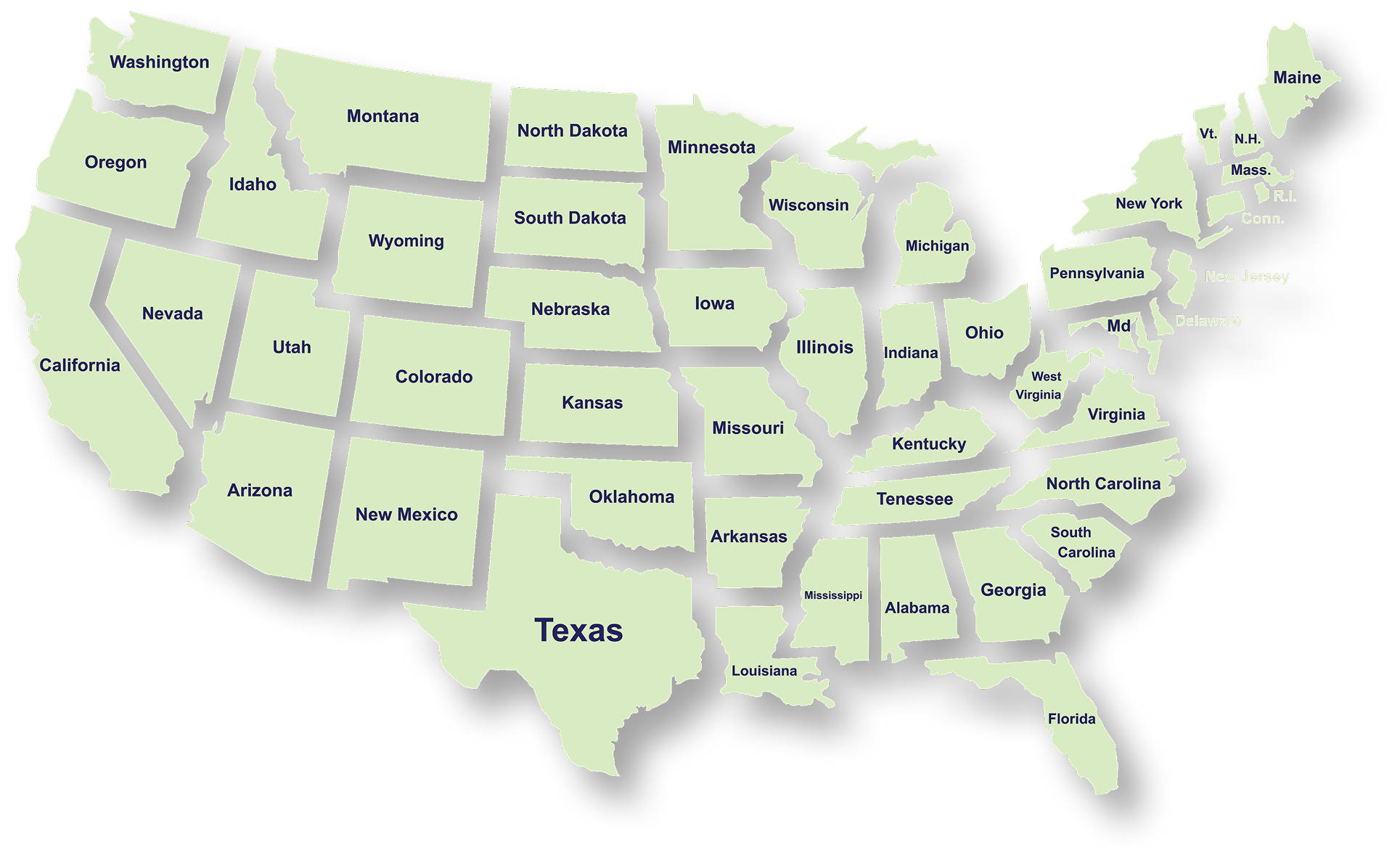
Serving Businesses & Individuals Across USA

We handle accounting, tax filing, and planning with defined timelines and accurate reporting for businesses and individuals across all states.

Frequently Asked Questions

What services does NR CPAs & Business Advisors provide?
What is tax planning and why is it important for businesses?
How can a Virtual CFO help my business?
When should a business consider IRS tax resolution services?
What financial statements does a business typically need?
How can startup advisory services help new businesses?
What is strategic business planning?
What is a Virtual Family Office and who can benefit from it?