Learning Center for Tax and Financial Insights

Stay updated with clear, actionable articles on tax rules, deadlines, deductions, and financial decisions that impact individuals and businesses.

No items found.

Partnership, S-Corp and Trust 2022 Extensions Ending Soon

Article Highlights:September 15* is the extended due date for partnership and S-corporation tax returns.October 2* is the extended due date for trust tax returns.Late-filing penalty for partnerships and S-corporationsLate-filing penalty for trust returnsIf you have a calendar year 2022 partnership, S-corporation, or trust return on extension, don’t forget the extension for filing those returns ends on September 15, 2023* (October 2, 2023* for trust returns).Pass-through entities such as partnerships, S-corporations, and fiduciaries (trusts, estates) pass their income, deductions, credits, etc., through to their investors, partners, or beneficiaries, who in turn report the various items on their individual tax returns. Partnerships file Form 1065, S-corps file Form 1120-S, and fiduciaries file Form 1041, with each partner, shareholder, or beneficiary receiving a Schedule K-1 from the entity that shows their share of the reportable items.If all of the aforementioned entities could obtain an automatic extension to file their returns on the same extended date as allowed to individuals, it would be difficult for individuals to meet the filing deadline without estimating the pass-through information and then later filing an amended return when the actual data was received.To overcome this problem, the automatic extension period for partnerships and S-corporations is set at 6 months, while the extension period for trust and estate income tax returns is 5½ months. Thus, for calendar year partnerships and S-corps that had an original due date of March 15, 2023, and requested an extension of time, the extended due date is September 15*. This gives individual taxpayers who are partners in a partnership or shareholders in an S-corp about a month in which to complete their individual 1040 returns that have an extended due date of October 16.The original due date for calendar year 2022 trust returns was April 18, 2023, and with a 5½-month extension period, the due date for these returns would normally be September 30, but because September 30 is a Saturday in 2023, the returns are due the next business day, October 2*. Thus, individual beneficiaries will have only about 2 weeks to finish up their individual returns.

Explore More
No items found.

Financial Planning for All Ages

Are you wondering where the world economy is going and how your personal finances will stand up to the changes? If so, you are not alone. Part of the fun of being on this planet is planning for the future even when it’s not clear what will happen tomorrow or next week.If you’re old enough to know who Gilligan is without watching syndicated reruns, then you’ve already been through a variety of economic conditions. Inflation, recession, economic booms and busts...today’s shifts are no shock to you. However, if you consider anything by Aerosmith, Savage Garden, and most “boy bands” to be an “oldie”, then today’s economic conditions may be new to you and you’re probably wondering what’s going on.The good news is that financial planning can benefit anyone regardless of their stage in life and without regard to future economic conditions. Financial planning looks at your current financial situation to determine what moves you need to make to reach your future financial goals.You determine your current financial status by creating a balance sheet and income statement. The balance sheet is a snapshot that tells you where you stand financially at any specific point in time. It lists the assets you have available and the debts you need to pay. Some assets are more liquid than others. Liquidity is a measure of how long it might take to get access to the “value” represented by an asset. It takes much longer to sell a house than to take money out of a checking account. On the flip side, the balance sheet also lists the money you owe. Loans (mortgage, car, student…), credit card account balances, and other debt will need to be repaid either soon or over time. Comparing the asset side to the liability side lets you know how you stand at that moment.The income statement tells you how money flows to and from you. The income portion includes your salary, business income, dividends, interest, and other income flowing to you. The expense portion includes your mortgage or rent payment, utilities, food, clothing, gas, car maintenance, insurance, healthcare, taxes, entertainment, and other outflows. These outflows might be one-time costs or weekly, monthly, or annual payments. When you compare your inflows (income) to your outflows (expense), you will know if you have surplus funds available to apply to your financial goals or you aren’t even making ends meet.If every dollar you receive is spoken for, then the next step in financial planning is to review your expenses and lifestyle to be sure they fit your income. Can you reduce your expenses so they are less than your current income? If so, you have an initial plan of action. If not and/or you’re unwilling to change your current lifestyle, it’s time to find new sources of income to adequately fund your current lifestyle and future financial goals.If you have excess funds available, you then need to decide how to put that money to work to reach your financial goals. One of the most rewarding parts of financial planning is retirement planning. It may not seem rewarding today if you have to skip those Beyoncé tickets. But money put away for the future can create peace of mind and untold benefits down the road when you need it.

Explore More
No items found.

Research Credit Available as a Payroll Tax Credit Doubled by the Inflation Reduction Act

Article Highlights: Inflation Reduction ActResearch Credit Payroll Tax OptionResearch CreditQualified ResearchQualified Small BusinessMaking the ElectionThe Inflation Reduction Act that President Biden signed into law in August of 2022, has a provision that could benefit many small business startups, allowing them to potentially double the amount of the research and development tax credit that can be used against payroll taxes from $250,000 to $500,000 per year.This little-known tax benefit for qualified small businesses is the ability to elect to apply a portion of their research credit – up to $500,000 for years beginning after December 31, 2022 – to pay the employer’s share of their employees’ FICA withholding requirement (the 6.2% Social Security tax and the 1.45% Medicare hospital insurance tax). This is double the amount allowed under prior law. This can be quite a benefit, as in their early years, start-up companies generally do not have any taxable profits for the research credit to offset; quite often, it is in these early years when companies make expenditures that qualify for the research credit. This can substantially help these young companies’ cash flow.Research Credit – The research credit is equal to 20% of qualified research expenditures in excess of the established base amount. If using the simplified method, the research credit is equal to 14% of qualified research expenditures in excess of 50% of the company’s average research expenditures in the prior three years.Qualified Research – Research expenditures that qualify for the credit generally include spending on research that is undertaken for the purpose of discovering technological information. This information is intended to be useful in the development of a new or improved business component for the taxpayer relating to new or improved functionality, performance, reliability or quality. Qualified Small Business (QSB) – To apply the research credit to payroll taxes, a company must be a QSB and must not be a tax-exempt organization. A QSB for purposes of this credit is a corporation or partnership with these criteria:The entity does not have gross receipts in any year before the fourth preceding year. Thus, the payroll credit can only be taken in the first 5 years of the entity’s existence. However, this rule does not require a business to have been in existence for at least 5 years.The entity’s gross receipts for the year when the credit is elected must be less than $5 million.Any person (other than a corporation or partnership) is a QSB if that person meets the two requirements above after taking into account the person’s aggregate gross receipts received for all the person’s trades or businesses.

Explore More
No items found.

Business v. Hobby – How to Tell the Difference for Tax Purposes

I think we can all agree that Scarlett Johansson and Tom Hiddleston act for a living. Likewise, the artists whose works sell for millions are clearly in the art business. It took a commitment but they’ve transcended the joy of the activity they love to making a living doing it.But what about the people you’ve never heard of who are engaged in the same activities? They might take classes and get headshots, buy palettes and easels – do all the things they need to do to get a career off the ground. Are they really in the business or are they pursuing a hobby? Sometimes the answer is not clear.The difference between running a business and engaging in a hobby primarily relates to your intention. Is the person engaged in the activity to make a profit or because they enjoy it and have no real concern about making a profit? The IRS has provided some guidelines to help make this determination when the lines are blurred. These guidelines don’t necessarily dictate the result but they can help you and the IRS build a case in either direction.This decision is important. If an activity is a trade or business, the expenses that it generates are deductible as business expenses. Net income derived from such an activity is subject to self-employment tax. If an activity is a hobby, it’s financial aspects are treated differently. Hobby income is reportable as miscellaneous taxable income. It is not subject to self-employment tax since it is not generated by a business activity. Expenses incurred in pursuing a hobby – (often referred to as “hobby losses” within the tax industry – have not been deductible for most taxpayers since the Tax Cuts and Jobs Act (TCJA) of 2018. Prior to that law, taxpayers could deduct hobby losses as miscellaneous itemized deductions to the extent of their hobby income. Miscellaneous itemized deductions would benefit an individual taxpayer if they itemized deductions and their total miscellaneous itemized deductions exceeded 2% of their adjusted gross income. We’ll have to see whether the miscellaneous itemized deduction will be restored when the TCJA sunsets on December 31, 2025. But, for now, no hobby losses can be deducted by an individual taxpayer. Note that this rule regarding not-for-profit losses such as hobby losses applies not only to individuals but to partnerships, estates, trusts, and S corporations. It does not apply to corporations other than S corporations. (Some taxpayers create loan-out corporations so the corporation incurs and deducts the expenses related to their activity. This article will not discuss those structures other than to note that the cost of establishing and maintaining them can make their use prohibitive.)To determine if an activity is a business or a hobby, the first and most clearcut IRS rule is based on the financial results generated by the activity. IRS Publication 535 states, “An activity is presumed carried on for profit if it produced a profit in at least 3 of the last 5 tax years, including the current year.”

Explore More
No items found.

Video Tips: Ignoring Retirement? You May Be Missing Out

Are you ignoring your future retirement needs? That tends to happen when you are younger, retirement is far in the future, and you believe you have plenty of time to save for it. Some people ignore the issue until late in life and then must scramble at the last minute to fund their retirement. Others even ignore the issue altogether, thinking their Social Security income (assuming they qualify for it) will take care of their retirement needs.

Explore More
No items found.

September 2023 Individual Due Dates

September 1 - 2023 Fall and 2024Tax Planning Contact this office to schedule a consultation appointment.September 11 - Report Tips to EmployerIf you are an employee who works for tips and received more than $20 in tips during August, you are required to report them to your employer on IRS Form 4070 no later than September 11. Your employer is required to withhold FICA taxes and income tax withholding for these tips from your regular wages. If your regular wages are insufficient to cover the FICA and tax withholding, the employer will report the amount of the uncollected withholding in box 8 of your W-2 for the year. You will be required to pay the uncollected withholding when your return for the year is filed.September 15 - Estimated Tax Payment DueThe third installment of 2023 individual estimated taxes is due. Our tax system is a “pay-as-you-earn” system. To facilitate that concept, the government has provided several means of assisting taxpayers in meeting the “pay-as-you-earn” requirement. These include:Payroll withholding for employees;Pension withholding for retirees; and Estimated tax payments for self-employed individuals and those with other sources of income not covered by withholding.When a taxpayer fails to prepay a safe harbor (minimum) amount, they can be subject to the underpayment penalty. This penalty is equal to the federal short-term rate plus 3 percentage points, and the penalty is computed on a quarter-by-quarter basis.Federal tax law does provide ways to avoid the underpayment penalty. If the underpayment is less than $1,000 (the de minimis amount), no penalty is assessed. In addition, the law provides "safe harbor" prepayments. There are two safe harbors:The first safe harbor is based on the tax owed in the current year. If your payments equal or exceed 90% of what is owed in the current year, you can escape a penalty.The second safe harbor is based on the tax owed in the immediately preceding tax year. This safe harbor is generally 100% of the prior year’s tax liability. However, for taxpayers whose AGI exceeds $150,000 ($75,000 for married taxpayers filing separately), the prior year’s safe harbor is 110%.Example: Suppose your tax for the year is $10,000 and your prepayments total $5,600. The result is that you owe an additional $4,400 on your tax return. To find out if you owe a penalty, see if you meet the first safe harbor exception. Since 90% of $10,000 is $9,000, your prepayments fell short of the mark. You can't avoid the penalty under this exception.

Explore More
No results found.
Thank you! Your submission has been received!
Oops! Something went wrong while submitting the form.

Want tax & accounting tips & insights?Sign up for our newsletter.

Thank you! Your submission has been received!
Oops! Something went wrong while submitting the form.

Why Work With Us?

We combine deep tax expertise, financial strategy, and practical business insight to help you manage complexity, stay compliant, and make confident financial decisions.
A dollar sign, representing financial advice or discussion at NR CPAs & Business Advisors.

Experienced CPA and Enrolled Agent Leadership

Guidance led by licensed professionals with deep expertise in tax strategy, compliance, and complex financial matters.
White bar chart with an upward arrow on green circular background representing growth or progress at NR CPAs &. Business Advisors

Support for Growing Businesses and Startups

We understand the financial challenges of growth stage businesses and provide structured guidance to support expansion.
A white hand holding a dollar symbol and ascending bar chart on a green circular background representing financial growth or investment at NR CPAs & Business Advisors..

Strategic Financial Advisory

Our team helps you evaluate financial decisions with greater clarity, supported by practical insights and long term planning.

Fractional CFO Support

Access experienced financial leadership without the commitment and cost of hiring a full time Chief Financial Officer.

Proactive Tax Planning Approach

We focus on identifying tax opportunities throughout the year rather than reacting only during filing season.

Clear and Reliable Financial Reporting

Accurate financial statements and reporting that help you better understand performance and make informed decisions.
White IRS building icon with pillars and a dollar sign above on a green circular background.

Professional IRS Representation

Experienced support in resolving IRS notices, disputes, and compliance matters while protecting your financial interests.

Personalized Client Focus

Every client receives thoughtful attention and tailored financial solutions based on their specific needs and business goals.
Financial matters often involve important decisions. Working with experienced advisors can help you approach them with greater clarity and confidence in your choices.

Need Help With Your Tax or Financial Decisions?

Discuss your situation with our advisors to get clear guidance on tax planning, IRS matters, and the financial decisions ahead.
Business consulting at NR CPAs & Business Advisors.

Request Your Consultation

Fill out the form to discuss your tax concerns, financial questions, or advisory needs with our team. We will review your details and respond shortly.

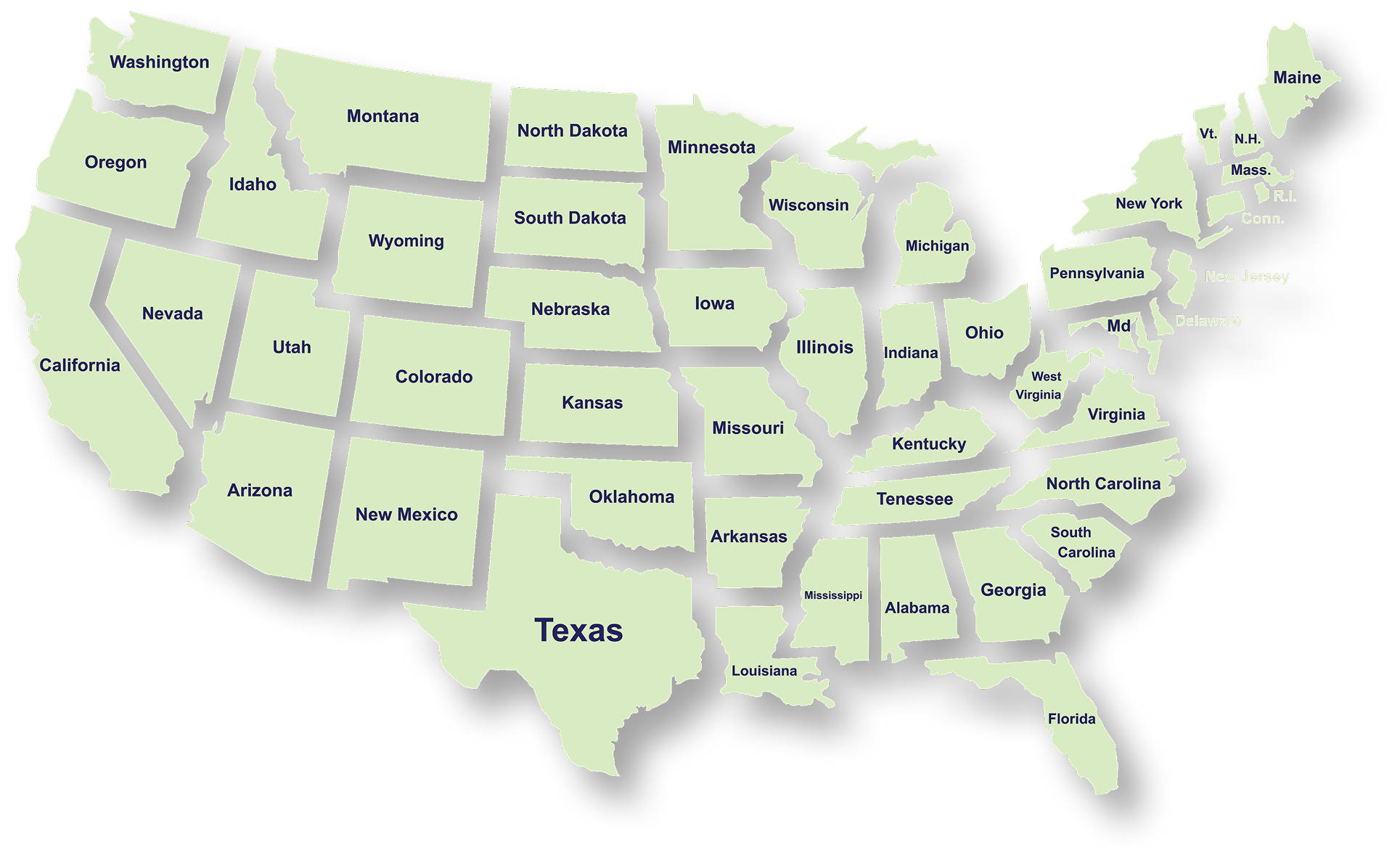
Serving Businesses & Individuals Across USA

We handle accounting, tax filing, and planning with defined timelines and accurate reporting for businesses and individuals across all states.

Frequently Asked Questions

What services does NR CPAs & Business Advisors provide?
What is tax planning and why is it important for businesses?
How can a Virtual CFO help my business?
When should a business consider IRS tax resolution services?
What financial statements does a business typically need?
How can startup advisory services help new businesses?
What is strategic business planning?
What is a Virtual Family Office and who can benefit from it?