Learning Center for Tax and Financial Insights

Stay updated with clear, actionable articles on tax rules, deadlines, deductions, and financial decisions that impact individuals and businesses.

No items found.

Tax Issues When Converting a Rental to Your Personal Residence

Article Highlights:Sale of a Rental Property Converted to a Personal ResidenceExclusion of Gain on Sale of Personal Residence – The Ownership and Use TestsPartial Exclusion of GainThe Impact of a Rental Period After 2008Depreciation RecaptureReporting the SaleDeductions When a Rental Property Is Converted to a Personal ResidenceConverting a rental property to a personal residence raises unique tax implications. If you own a home that you currently rent out and are thinking of converting the property to use as your personal residence, here are issues you should be considering.On conversion, you can no longer deduct the same expenses – such as costs of utilities, home insurance and repairs – that were deductible when the property was a rental. However, the deductions for mortgage interest expense and property taxes will be available and can be useful if your itemized deductions exceed the standard deduction. Even so, these home-related deductions may be limited, depending on the mortgage (loan) amount (for the interest deduction) and whether the overall state and local taxes you paid during the year exceeded $10,000 (for the property tax deduction). Some credits may also be available, such as those for installing a solar system or making energy-efficient home improvements.The more complex impact of the conversion occurs when the property is sold. As a personal residence, some or all of the gain on the sale of the property, if any, can qualify for exclusion from income under certain conditions.Loss on Sale of a Personal ResidenceYou cannot deduct a loss incurred on the sale of your personal residence as nonbusiness losses are not deductible.Exclusion of Gain on Sale of Personal Residence – The Ownership and Use TestsWhen certain conditions are met, a single taxpayer may be able to exclude from income up to $250,000 of the gain on the sale of a personal residence, while up to $500,000 of gain can be excluded on a joint return. The exclusion is allowed each time a taxpayer meets the eligibility requirements, but generally no more frequently than once every two years.The general qualification for exclusion of gain on the sale of a personal residence is subject to two tests: the ownership and use tests.The ownership test requires that you have owned the home for at least two of the five years leading up to the home’s sale date.The use test requires that you must have lived in the home as your main residence for at least two years during the 5-year period ending on the date of the sale. This period does not have to coincide with the two-year period that meets the ownership test. For example, you may have rented and lived in the property for two years then bought the property from the landlord. Then you may have rented the property out for the next two years before selling it. You would have satisfied the use test in the two years while renting the property from the previous owner. And you would have satisfied the ownership test in the two years before the sale while the property was rented out. Thus, the sale qualifies under the ownership and use tests.If you are married, to be eligible for the $500,000 exclusion, either you or your spouse may have been the owner during the testing period, but both of you must meet the use test.If you originally acquired the home via a tax-deferred exchange, then you (or your spouse, if married) must own the home for a minimum of five years before the home sale exclusion can be used, provided you (and your spouse, if married) also meet the 2-year use test.Partial Exclusion of GainIf the ownership and use tests are not met, the sale of a personal residence may still qualify for a partial exclusion of gain if the reason for the sale was work-related, health-related, or triggered by an unforeseen event. IRS Publication 523 provides details as to how each of these situations is determined.A work-related move involves:A new job location that is at least 50 miles further from your home than your previous job location; orIf no previous job location, a new job that is at least 50 miles from your home; orEither of the above is true for your spouse, a co-owner of the home, or anyone else for whom the home was a residence.A health-related move involves:A move “to obtain, provide, or facilitate diagnosis, cure, mitigation, or treatment of disease, illness, or injury for yourself or a family member.”A move “to obtain or provide medical or personal care for a family member suffering from a disease, illness, or injury. A family member includes your:a) Parent, grandparent, stepmother, stepfather;b) Child (including adopted child, eligible foster child, and stepchild) or grandchild;c) Brother, sister, stepbrother, stepsister, half-brother, half-sister;d) Mother-in-law, father-in-law, brother-in-law, sister-in-law, son-in-law, daughter-in-law; ore) Uncle, aunt, nephew, or niece.”You moved pursuant to a doctor’s recommendation because you were experiencing a health problem.“The above is true of your spouse, a co-owner of the home, or anyone else for whom the home was his or her residence.”

Explore More
No items found.

Video Tips: New Parents, Don't Miss Out These Tax Perks for Your Children

Kids are expensive. Whether someone just brought a bundle of joy home from the hospital, adopted a teen from foster care, or is raising their grandchild, there are several tax breaks that can help.

Explore More
No items found.

The Hidden Costs of Sloppy Bookkeeping

A recent Stanford study reviewed the aftermath of the Enron collapse and the repercussions to Enron's accounting firm's former clients. The primary trend they identified was when former clients issued accounting restatements or revisions because of less-than-accurate bookkeeping; there was an increase in the salary demands at the affected companies. The takeaway is that risky or sloppy financial reporting can drive up a company's labor costs. Labor is usually one of a company's biggest cost centers. The Stanford researchers report detailed that a company with "significantly above-average-quality reporting can cut the cost of wages, taxes, benefits, and other employee-related expenses by $3 million." This applies to larger institutions, but the same formula would apply to companies with less revenue and head count. Many small businesses do their books or hire inexperienced staff to cut costs. While this may seem like a cash saving in the short term, the long-term results can add up to a substantial amount. Sloppy bookkeeping can lead to several hidden costs:Penalties and Fines: Inaccurate financial records can lead to incorrect tax filings, resulting in penalties and fines from tax authorities.Lost Time: Correcting bookkeeping errors can be time-consuming. This is time that could have been spent on other aspects of the business.Poor Decision Making: Inaccurate financial data can lead to poor business decisions. For example, you might invest in a new product line based on incorrect profit margins, leading to financial losses.Cash Flow Issues: If you're not accurately tracking income and expenses, you could run into cash flow problems. This could potentially lead to the need for emergency financing, which often comes with high interest rates.Audit Risks: Sloppy bookkeeping increases the risk of an audit. If audited, you could face additional fines and penalties, not to mention the stress and time involved in the audit process.Damage to Business Reputation: If your business consistently makes financial errors, it could damage your reputation with vendors, customers, and financial institutions.Loss of Opportunities: Without accurate financial data, you may miss out on opportunities for growth or investment.Overpayment: Without accurate tracking of expenses, you may end up overpaying vendors or not taking advantage of available discounts or tax deductions.

Explore More
No items found.

Using the Home Sale Gain Exclusion for More than Just Your Home

Article Summary:Home Sale ExclusionPrimary ResidenceSecond HomeFixer-upperRentalWith careful planning, and provided you follow the rules, the tax code allows you to use the home sale gain exclusion every two years.Let’s assume you own a home, perhaps a second (vacation) home, or maybe are even thinking about buying a fixer-upper and flipping it. With careful planning, it is possible to apply the full home sale exclusion to all three of the properties.Here is how it works. The tax code allows you to exclude up to $250,000 ($500,000 for married couples) of gain from the sale of your primary residence if you have lived in it and owned it for two of the five years counting back from the sale date, and you have not previously taken a home sale exclusion within the two years immediately preceding the sale. In addition, there is no limit on the number of times you can use the exclusion, as long as the requirements are met.It makes sense to start off by selling the home you currently live in because you probably already meet the two-out-of-five-years ownership and use tests. The next step, if you have a second home, would be to move into it and make it your primary residence. After you have lived there for two full years and it has been more than two years since the previous home was sold, you can sell the property and take the home sale exclusion again. If you are handy, and find the right property, the next possible step would be to purchase and occupy a fixer-upper while you make repairs and improvements in preparation for its eventual sale after the two-year ownership and occupancy rules have been met. When that time is up, you can sell the fixer-upper and take the third exclusion. This makes it possible for a married couple to exclude as much as $1,500,000 of home sale profit in just over four years if they follow the rules carefully and time the sales correctly.

Explore More
No items found.

How Do You Qualify for Innocent Spouse Relief from IRS Tax Problems?

Few financial events are worse than a big tax bill with penalties from the IRS. If you are a spouse and you were unaware of potential errors or underreporting on your tax return, you may be eligible for innocent spouse relief. To qualify for innocent spouse relief, you must meet all three of the following conditions:You and your spouse filed jointly, and your tax bill was understated solely because of one or more errors that your spouse made. These errors, or willfully improper entries, only apply to income and deductions that belong to your spouse. They include improper deductions and credits, incorrectly reporting basis in property such as securities and business inventory, under-reporting income, or omitting items.You must establish that you didn't know your spouse did this and had no reason to know when you signed your tax return.Prove that considering the facts and circumstances surrounding your case, it wouldn't be fair to hold you responsible for the resulting underpayment.

Explore More
No items found.

Partners May Not Be Employees

Article Highlights:Partner Employee IssueSelf-employment TaxIf your partnership has been treating you and other partners as employees of a disregarded entity owned by the partnership so the partners can participate in employee benefit plans and receive other employee benefits, you’d better read this. Tax regulations (1) issued by the IRS take aim at this practice and were written to put a stop to it.Background: A disregarded entity is treated as a corporation (2) for the purposes of employment taxes. Therefore, the disregarded entity, rather than the owner, is considered to be the employer of the entity's employees for the purposes of employment taxes. However, the owner is not treated as an employee and instead pays self-employment tax on the net earnings from self-employment resulting from the disregarded entity's activities.At one time the regulations did not include an example where the disregarded entity is owned by a partnership, and because of that some taxpayers incorrectly interpreted the regulations to permit partners to participate in certain tax-favored employee benefit plans, which is contrary to the IRS’s intention.The IRS and the Treasury noted that regulations did not create a distinction between a disregarded entity owned by an individual (a sole proprietorship) and a disregarded entity owned by a partnership in the application of the self-employment tax rule. The IRS has long held (3) that:A bona fide member of a partnership is not an employee of the partnership, andA partner who devotes time and energy to conducting the partnership's trade or business, or who provides services to the partnership as an independent contractor, is considered self-employed and is not an employee.

Explore More
No results found.
Thank you! Your submission has been received!
Oops! Something went wrong while submitting the form.

Want tax & accounting tips & insights?Sign up for our newsletter.

Thank you! Your submission has been received!
Oops! Something went wrong while submitting the form.

Why Work With Us?

We combine deep tax expertise, financial strategy, and practical business insight to help you manage complexity, stay compliant, and make confident financial decisions.
A dollar sign, representing financial advice or discussion at NR CPAs & Business Advisors.

Experienced CPA and Enrolled Agent Leadership

Guidance led by licensed professionals with deep expertise in tax strategy, compliance, and complex financial matters.
White bar chart with an upward arrow on green circular background representing growth or progress at NR CPAs &. Business Advisors

Support for Growing Businesses and Startups

We understand the financial challenges of growth stage businesses and provide structured guidance to support expansion.
A white hand holding a dollar symbol and ascending bar chart on a green circular background representing financial growth or investment at NR CPAs & Business Advisors..

Strategic Financial Advisory

Our team helps you evaluate financial decisions with greater clarity, supported by practical insights and long term planning.

Fractional CFO Support

Access experienced financial leadership without the commitment and cost of hiring a full time Chief Financial Officer.

Proactive Tax Planning Approach

We focus on identifying tax opportunities throughout the year rather than reacting only during filing season.

Clear and Reliable Financial Reporting

Accurate financial statements and reporting that help you better understand performance and make informed decisions.
White IRS building icon with pillars and a dollar sign above on a green circular background.

Professional IRS Representation

Experienced support in resolving IRS notices, disputes, and compliance matters while protecting your financial interests.

Personalized Client Focus

Every client receives thoughtful attention and tailored financial solutions based on their specific needs and business goals.
Financial matters often involve important decisions. Working with experienced advisors can help you approach them with greater clarity and confidence in your choices.

Need Help With Your Tax or Financial Decisions?

Discuss your situation with our advisors to get clear guidance on tax planning, IRS matters, and the financial decisions ahead.
Business consulting at NR CPAs & Business Advisors.

Request Your Consultation

Fill out the form to discuss your tax concerns, financial questions, or advisory needs with our team. We will review your details and respond shortly.

Serving Businesses & Individuals Across USA

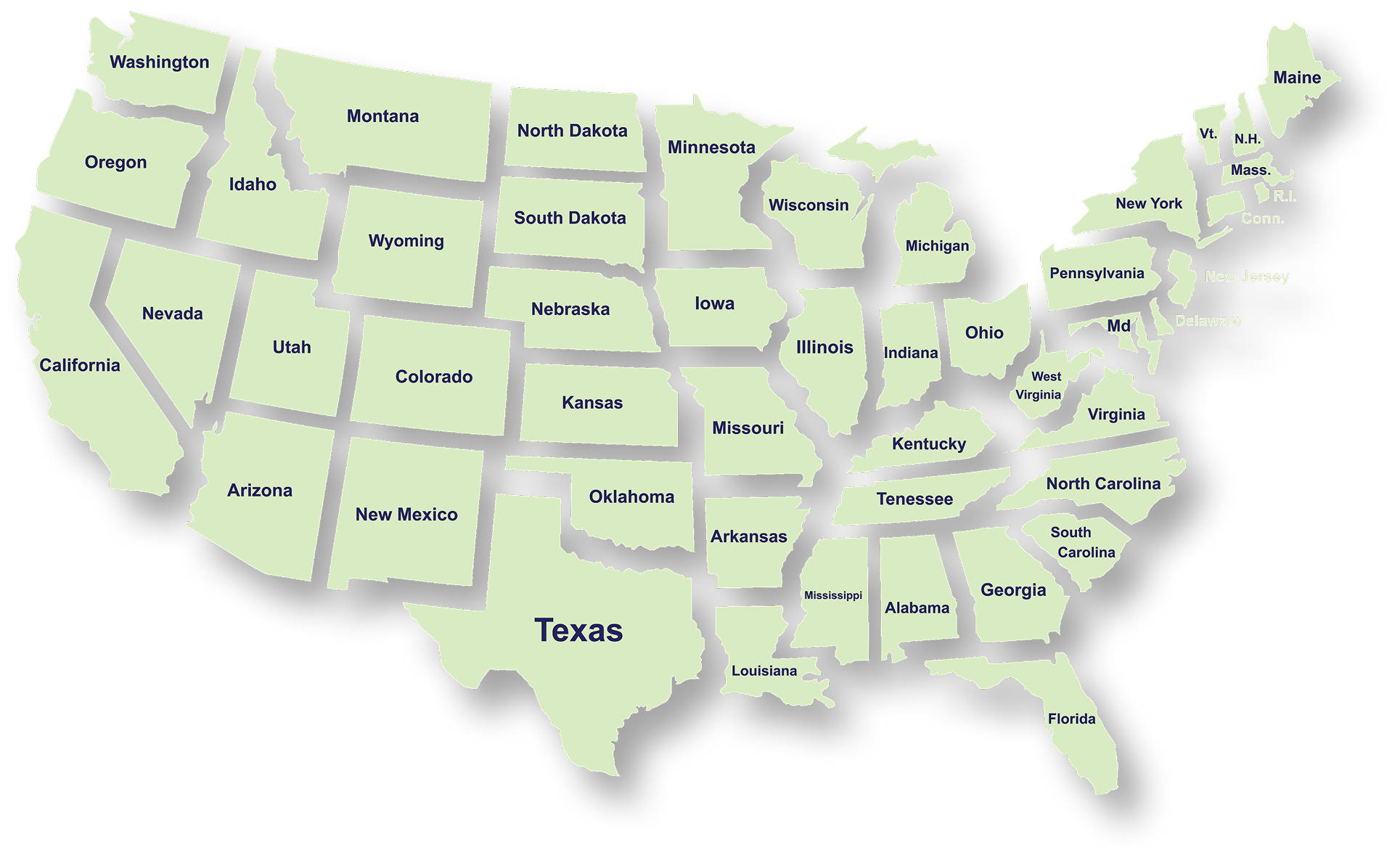
We handle accounting, tax filing, and planning with defined timelines and accurate reporting for businesses and individuals across all states.

Frequently Asked Questions

What services does NR CPAs & Business Advisors provide?
What is tax planning and why is it important for businesses?
How can a Virtual CFO help my business?
When should a business consider IRS tax resolution services?
What financial statements does a business typically need?
How can startup advisory services help new businesses?
What is strategic business planning?
What is a Virtual Family Office and who can benefit from it?