Learning Center for Tax and Financial Insights

Stay updated with clear, actionable articles on tax rules, deadlines, deductions, and financial decisions that impact individuals and businesses.

No items found.

You May Be Able to Minimize the Tax on Your Social Security Benefits and the Cost of Your Medicare Benefits

Article Highlights:Income as a FactorFiling Status as a Factor85% Maximum TaxableBase AmountsDeferring IncomeMaximizing IRA DistributionsGambling GotchaQualified Charitable DistributionsWhether your Social Security benefits are taxable (and, if so, the amount that is taxed) depends on several issues including filing status and income. In addition, the amount that is withheld from your Social Security benefits to pay for your Medicare premiums is similarly determined.The following facts will help you understand the taxability of your Social Security benefits, how your Medicare premiums are determined and how your actions can affect the outcome for the better or worse as far as taxes and costs are concerned.For this discussion the term “Social Security benefits” refers to the gross dollar amount of benefits you receive (i.e., the amount before reduction due to payments withheld for Medicare premiums). The tax treatment of Social Security benefits is the same whether the benefits are paid due to disability, retirement or reaching the eligibility age. Supplemental Security Income (SSI) benefits are not included in the computation because they are not taxable under any circumstances.Taxability of Social Security Benefits - The amount of your Social Security benefits that are taxable (if any) depends on your total income and marital status. If Social Security is your only source of income, it is generally not taxable. On the other hand, if you have a significant amount of other income, as much as 85% of your Social Security benefits can be taxable. If you are married and lived with your spouse at any time during the year and file a separate return from your spouse using the married filing separately status, 85% of your Social Security benefits are taxable regardless of your income. This is to prevent married taxpayers who live together from filing separately, thereby reducing the income on each return and thus reducing the amount of Social Security income subject to tax.The following quick computation can be done to determine if some of your benefits are taxable:Step 1. First, add one-half of the total Social Security benefits you received to the total of your other income, including any tax-exempt interest and other exclusions from income.Step 2. Then, compare this total to the base amount used for your filing status. If the total is more than the base amount, some of your benefits may be taxable.The base amounts are:$32,000 for married couples filing jointly;$25,000 for single persons, heads of household, qualifying surviving spouses (those whose spouse passed away in one of the prior two years) with a dependent child or children, and married individuals filing separately who did not live with their spouses at any time during the year; and$0 for married persons filing separately who lived together during the year.Where taxpayers can defer their “other” income, such as Individual Retirement Account (IRA) distributions, from one year to another, they may be able to plan their income to eliminate or minimize the tax on their Social Security benefits for at least one of the years. However, the required minimum distribution (RMD) rules for IRAs and other retirement plans have to be taken into account.Thus, if your only income is SS benefits, you would likely not be subject to income tax on those benefits. However, if you are drawing SS benefits and working, you may find that the added income from working will cause you to be subject to dual taxation. How can this be, you ask? Since your SS taxation is based upon your income (MAGI), the additional income from working may cause some or a good portion of your SS benefits to be taxable. For example, take a married couple that has a small pension, some investment income, and SS income as detailed in the following table. In the example above, the $15,000 income from working caused an additional $9,075 ($9,825 - 750) of Social Security to become taxable, in effect causing the couple to be taxed on $1.61 for every $1 earned by working.A similar issue can occur when withdrawing from an IRA or other retirement plan. Additional IRA withdrawals can have the same effect as working. For example: you decide you need a new car and take a larger than required withdrawal from your IRA account to pay for the vehicle. That extra IRA distribution could create an unpleasant surprise by causing more of your SS benefits to be taxable.Medicare Insurance Premiums ­- Your annual letter from the Social Security Administration lets you know how much will be withheld from your monthly retirement benefit for Medicare Part B (medical insurance) and Part D (Prescription Drug Plan).Not everyone realizes their Part B and Part D benefits are based upon their modified adjusted gross income (MAGI) from two years prior. This means the premiums for 2023 are actually based on your MAGI for 2021.

Explore More
No items found.

Getting Married Soon? Tax Issues to Think About!

Article Summary:Filing StatusDeductionsNew Spouse’s Past LiabilitiesCombining IncomesHealthcare InsuranceSpousal IRACapital Loss LimitationsImpact on Parents’ ReturnsSocial Security AdministrationInternal Revenue ServiceU.S. Postal ServiceWithholding & Estimated Tax PaymentsHealth Insurance MarketplaceYou think planning a wedding ceremony is complicated? Wait till you see the possible tax issues involved. If you are getting married this year, there is a long list of things you need to be aware of and plan for before tying the knot that can have a significant impact on your taxes. And there are a number of tax-related actions you should take as soon as possible after marriage. Considerations Before MarriageFiling Status – For tax purposes, an individual’s filing status is determined on the last day of the tax year. Thus, regardless of when you get married during the year, you and your new spouse will be treated as married for the entire year and, therefore, can no longer file as single individuals or use the head of household status as you may have done prior to this marriage. Your options are to file using the married joint status, combining your incomes and allowed deductions on one return, or to file two separate returns using the married filing separate status. The latter is not the same as the single status you may have used in the past and can include some negative tax implications. Filing separately in community property states (Arizona, California, Idaho, Louisiana, Nevada, New Mexico, Texas, Washington, or Wisconsin) can additionally be complicated. Also, the terms of a prenuptial agreement, if you have one, can affect your filing status choice.Deductions – The standard deduction for each year is inflation adjusted and for 2023 for a married couple is $27,700 and for a single individual is $13,850. So if both of you have been filing as single and taking the standard deduction, there is no loss in deductions. However, if in past years one of you had enough deductions to itemize and the other took the standard deduction, after marriage you would either have to take the joint standard deduction or itemize, which might result in a loss of some amount of deductions. There could also be an overall reduction of the standard deduction if one or both of you previously filed as head of household.New Spouse’s Past Liabilities – If your new spouse owes back taxes, past state income tax liabilities or past-due child support or has unemployment income debts to a state, the IRS will apply your future joint refunds to pay those debts. If you are not responsible for your spouse’s debt, you are entitled to request your portion of the refund back from the IRS by filing an injured spouse allocation form.Combining Incomes – Combining your incomes can push your taxable income into a higher tax bracket than when filing separately, resulting in a significantly higher income tax. The combined higher incomes can also cause you to lose certain tax benefits available to individuals in lower tax brackets, such as: - The child tax credit which begins to phaseout when your combined incomes (MAGI) reach $400,000, - The child care credit if either or both of you have a child and you both work (because a lower percentage of expenses applies as income increases) and - the possible loss or reduction of the earned income tax credit which applies to lower income individuals.Healthcare Insurance – If either or both of you are obtaining health insurance through a government Marketplace, your combined incomes and change in family size could reduce the amount of the premium tax credit to which you would otherwise be entitled, requiring payback of some or all of the credit applied in advance to reduce your monthly premiums. More complicated yet, if either or both of you are included on your parent’s’ Marketplace policy, those insurance premiums must be allocated from the parents’ return to your return.Spousal IRA – Spousal IRAs are available for married taxpayers who file jointly where one spouse has little or no compensation; the deduction is limited to the smaller of 100% of the employed spouse’s compensation or $6,500 (2023) for the spousal IRA. That permits a combined annual IRA contribution limit of up to $13,000 for 2023. For each spouse age 50 or older, the maximum increases by $1,000. However, the deduction for contributions to both spouses’ IRAs may be limited if either spouse is covered by an employer’s retirement plan.Capital Loss Limitations – When filing as unmarried, each individual can deduct up to $3,000 of capital losses on their tax return for a possible combined total of $6,000, but a married couple is limited to a single $3,000.Impact On Parents’ Returns – If your parents have been claiming either of you as a dependent, they will generally lose that benefit. In addition, if you are in college and qualify for one of the education credits, those credits are only available on the return where your dependency applies. That generally means your parents will not be able to claim the education credits even if they paid the tuition.

Explore More
No items found.

Video: Here is What Taxpayers Need to Know to Claim the Previously-Owned Clean Vehicle Tax Credits

The Inflation Reduction Act of 2022 made several changes to the tax credits provided for qualified plug-in electric drive motor vehicles, including adding fuel cell vehicles to the tax credit.

Explore More
No items found.

Tips for Students Planning to Work During the Summer

Article Highlights:Form W-4Watch Out for Payroll SurprisesTipsOdd JobsSelf-Employment TaxWorking for ParentsROTC StudentsNewspaper DeliveryRetirement ContributionsAs the summer break from school approaches, many students are looking for part-time summer employment. Both parents and students should be aware of the tax issues that need to be considered when working a summer job. Here is a rundown of some of the more common issues:Completing Form W-4 – The W-4 form is used by employers to determine the amount of tax that will be withheld from an employee’s paycheck. Students with multiple summer jobs will want to make sure that all of their employers are withholding an adequate amount of taxes to cover their total income tax liability. Generally, a student with income only from summer and part-time employment, and who is claimed as a dependent of someone else, can earn as much as $13,850 (the standard deduction amount for 2023) without being liable for income tax. However, if the student has investment income, the tax determination becomes more complicated because, as he or she is a dependent of another, special rules apply.Watch Out for Payroll Surprises – Some employers may attempt to avoid their payroll tax liabilities by paying the student in cash and incorrectly treating them as an independent contractor, thus leaving the student with the responsibility of paying both the employee’s and employer’s payroll tax liability (see “Self-Employment Tax” below). If a potential employer intends to do that, they will generally ask the student to complete a Form W-9 rather than a W-4 or simply ask for their Social Security Number (SSN) without requesting a W-4. Tips – If the student works as a waiter, a camp counselor or in another service industry, he or she may receive tips as part of his or her summer income. All tip income received is taxable income and is therefore subject to federal income tax.Employees are required to report tips of $20 or more received while working with any one employer in any given month. This reporting should be made in writing to the employer by the tenth day of the month following the receipt of tips. The employer withholds FICA (Social Security and Medicare taxes) and income taxes on these reported tips, then includes the tips and wages on the employee’s W-2.Employees may keep records of their tips on Form 4070A and submit Form 4070 to the employer. Both forms are in the IRS Publication 1244. This online version allows the employee to enter the information on Forms 4070A and 4070 and print out the completed forms.Tips split with others are not subject to the reporting requirement by the employee who initially receives them. That employee should report to the employer only the net tips received.Odd Jobs – Many students do odd jobs over the summer, are paid in cash and often are incorrectly not treated as an employee by the payer. Just because the payment is in cash does not mean that it is tax-free. Unfortunately, the income is taxable and may be subject to self-employment taxes (see next).These earnings include income from temporary or occasional jobs like dog walking, babysitting, and lawn mowing.Self-Employment Tax – When a student works for an employer, the employer withholds Social Security tax and Medicare tax from his or her pay, matches the amount dollar for dollar, and remits the combined amount to the government. When a student is self-employed, he or she is required to pay the combined employee and employer amounts on their own (referred to as self-employment tax) if the net earnings are $400 or more.This tax pays for the individual’s future benefits under the Social Security system and Medicare Part A. Even if he or she is not liable for income tax, this 15.3% tax may apply to a student’s odd jobs.Working for Parents – A child under the age of 18 working in a business solely owned by his or her parents is not subject to payroll taxes. This saves the child from having to pay the 7.65% payroll taxes and provides the parent with relief from payroll taxes. The payroll tax exception won’t apply if the parent’s business is set up as a corporation.ROTC Students – Subsistence allowances paid to ROTC students participating in advanced training are not taxable. However, active duty pay – such as pay received during summer advanced camp –­ is taxable.Newspaper Carrier or Distributor – Special rules apply to services performed as a newspaper carrier or distributor. An individual is a direct seller and treated as self-employed for federal tax purposes if he or she meets the following conditions:o They are in the business of delivering newspapers;o All of their pay for these services directly relates to sales rather than to the number of hours worked; ando They perform the delivery services under a written contract which states that they will not be treated as an employee for federal tax purposes. Newspaper Carriers or Distributors Under Age 18 – Generally, newspaper carriers or distributors under age 18 are not subject to self-employment tax.Retirement Plan Savings - Additional income tax savings are possible if the child is paid more (or works part-time past the summer) and deposits the extra earnings into a traditional IRA. For 2023, the child can make a tax-deductible contribution of up to $6,500 to their own IRA. The business where the child works also may be able to provide the child with retirement plan benefits, depending on the type of plan it uses and its terms, the child's age, and the number of hours worked. By combining the standard deduction ($13,850) and the maximum deductible IRA contribution ($6,500 ) for 2023, a child could earn $20,350 of wages and pay no income tax.

Explore More
No items found.

Is an SBA (7) Loan Right for Your Business?

It's safe to say that the millions upon millions of small and mid-sized businesses operating right now are the true foundation of the United States economy. But whether you're a seasoned veteran or are a new entrepreneur looking to journey out on your own for the first time, it's important to understand the options that are available for you in terms of funding and how to take advantage of them.One of those is called the SBA (7) loan, which is a flexible form of business funding that is worth a closer look.What is an SBA (7) Loan?The SBA (7) loan program was designed to offer small businesses access to low-interest loans that can be used for a number of different things. They are fully backed by the United States Small Business Administration, hence the name.That money can be used as working capital, it can help purchase new equipment that you need to continue to manufacture your products, or it can even go towards real estate. Under the SBA (7) loan program, funds are available up to $5 million to qualifying businesses.How Do I Qualify?To qualify for an SBA (7) loan, an organization must meet all the following requirements:The person applying for the loan (meaning the business owner) must have "reasonable invested equity" in the business itself.They must also have attempted to find alternative financial sources prior to applying, with the use of personal assets being a chief example.They need to be able to demonstrate a legitimate need for the loan funds. This can't be a loan that you take out because you want it - it needs to be a true requirement to continue your operations.You need to play to use the loan for a sound business purpose.If you have any existing debt to the United States government, you cannot be late on those obligations in any way.As you begin this process, you should first contact your preferred bank to see if it is qualified to give out SBA (7) loans. If it isn't, don't worry - the Small Business Administration has a helpful Lender Match tool that you can use to find one that meets your needs.

Explore More
No items found.

Video Tips: Tax Debt Relief with an Offer-in-Compromise

Our U.S. tax system is built on the premise that all taxpayers are expected to report their tax liabilities accurately and pay them on time. However, the Internal Revenue Code (§7122) gives the IRS the authority to “compromise” (i.e., settle based on a taxpayer’s adverse economic circumstances) a tax liability for less than its stated amount.

Explore More
No results found.
Thank you! Your submission has been received!
Oops! Something went wrong while submitting the form.

Want tax & accounting tips & insights?Sign up for our newsletter.

Thank you! Your submission has been received!
Oops! Something went wrong while submitting the form.

Why Work With Us?

We combine deep tax expertise, financial strategy, and practical business insight to help you manage complexity, stay compliant, and make confident financial decisions.
A dollar sign, representing financial advice or discussion at NR CPAs & Business Advisors.

Experienced CPA and Enrolled Agent Leadership

Guidance led by licensed professionals with deep expertise in tax strategy, compliance, and complex financial matters.
White bar chart with an upward arrow on green circular background representing growth or progress at NR CPAs &. Business Advisors

Support for Growing Businesses and Startups

We understand the financial challenges of growth stage businesses and provide structured guidance to support expansion.
A white hand holding a dollar symbol and ascending bar chart on a green circular background representing financial growth or investment at NR CPAs & Business Advisors..

Strategic Financial Advisory

Our team helps you evaluate financial decisions with greater clarity, supported by practical insights and long term planning.

Fractional CFO Support

Access experienced financial leadership without the commitment and cost of hiring a full time Chief Financial Officer.

Proactive Tax Planning Approach

We focus on identifying tax opportunities throughout the year rather than reacting only during filing season.

Clear and Reliable Financial Reporting

Accurate financial statements and reporting that help you better understand performance and make informed decisions.
White IRS building icon with pillars and a dollar sign above on a green circular background.

Professional IRS Representation

Experienced support in resolving IRS notices, disputes, and compliance matters while protecting your financial interests.

Personalized Client Focus

Every client receives thoughtful attention and tailored financial solutions based on their specific needs and business goals.
Financial matters often involve important decisions. Working with experienced advisors can help you approach them with greater clarity and confidence in your choices.

Need Help With Your Tax or Financial Decisions?

Discuss your situation with our advisors to get clear guidance on tax planning, IRS matters, and the financial decisions ahead.
Business consulting at NR CPAs & Business Advisors.

Request Your Consultation

Fill out the form to discuss your tax concerns, financial questions, or advisory needs with our team. We will review your details and respond shortly.

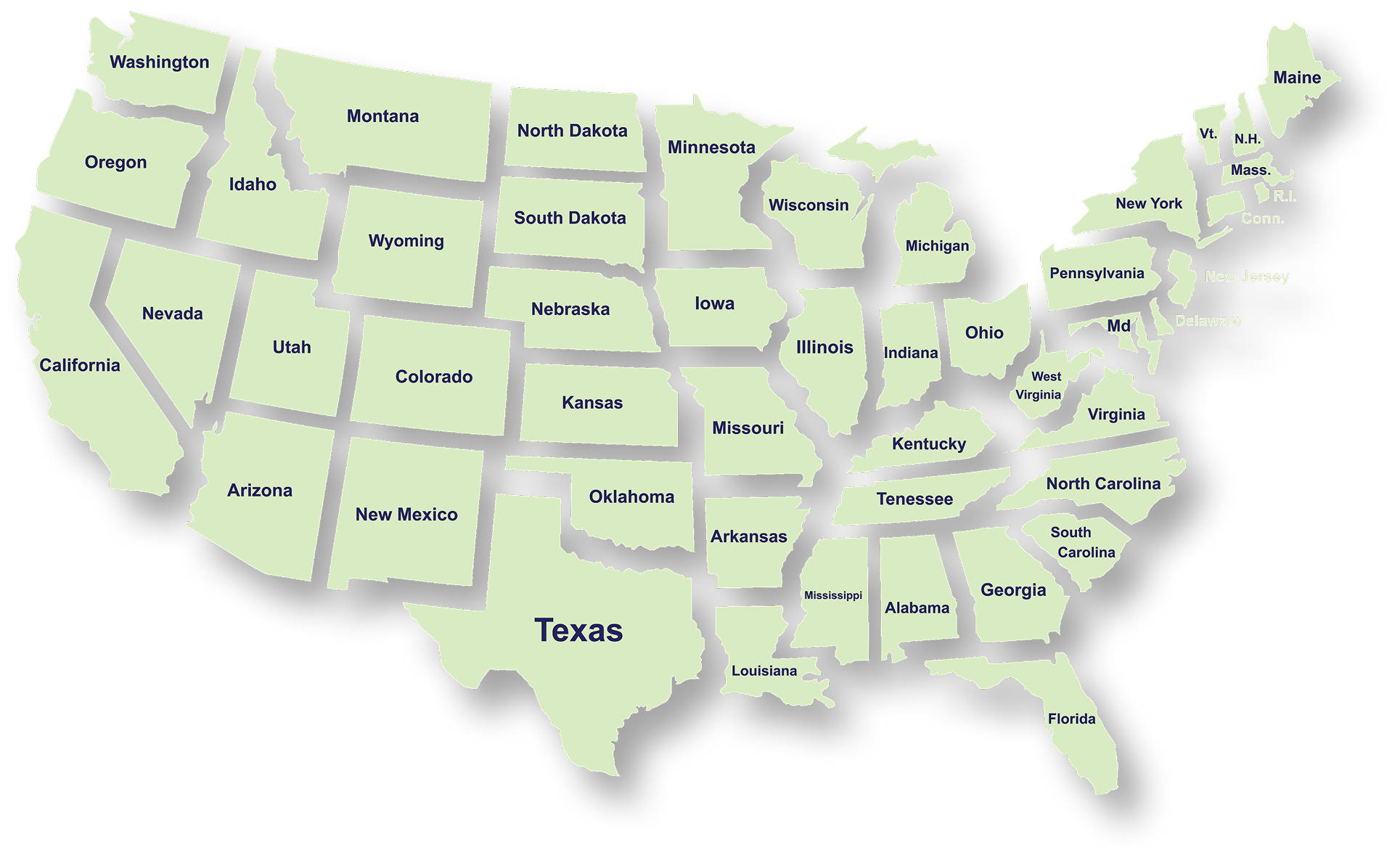
Serving Businesses & Individuals Across USA

We handle accounting, tax filing, and planning with defined timelines and accurate reporting for businesses and individuals across all states.

Frequently Asked Questions

What services does NR CPAs & Business Advisors provide?
What is tax planning and why is it important for businesses?
How can a Virtual CFO help my business?
When should a business consider IRS tax resolution services?
What financial statements does a business typically need?
How can startup advisory services help new businesses?
What is strategic business planning?
What is a Virtual Family Office and who can benefit from it?