Learning Center for Tax and Financial Insights

Stay updated with clear, actionable articles on tax rules, deadlines, deductions, and financial decisions that impact individuals and businesses.

No items found.

Business Growth: How to Plan for (and Make the Most of) This Critical Stage

While it's true that every business is different from the next - and every entrepreneur will go on his or her own unique journey - there are still a few constants that we know to be true.The start-up phase, for example, is when you write a formal business plan. You secure financing, you select your business structure, and you do all the other work required to get your enterprise off the ground. On the other end of the spectrum, we have the maturity phase, which is when you do what it takes to remain both competitive and sustainable for as long as possible.In between that, however, we have what is known as the growth phase - one that often catches a lot of new entrepreneurs in particular off-guard. Still, this is an exceptional opportunity to grow from the business you're running into the one you hoped you'd be in charge of when you started, provided that you're able to keep a few key things in mind.Maximizing Business Growth: Breaking Things DownAs stated, the growth phase of any business is all about two things: expansion and innovation. The first is natural because as your company begins to grow larger, you need to adapt what you're doing to accommodate for that and embrace it. You can't necessarily get to that point without innovation, however. This is when you determine which of your current efforts are working, which ones aren't, and make adjustments accordingly.From the financial side of the spectrum, one of the major things that you'll want to account for during the growth phase has to do with taxes. During growth, things like federal, state, and local taxes are subject to laws that can often change frequently without warning. Keep track of (or at least, hiring a professional to do so) these changes can help you better understand what choices you need to make in terms of structuring, what types of incentives you can offer to your employees to help empower innovation and more.Along the same lines, there will also be certain considerations that you make regarding your accounting in general. During this stage of your business' life, you'll want to work hard to A) generate a consistent income, so that you can B) attract as many new customers as possible.For the best results, use this as an opportunity to re-evaluate your current systems, with IT being chief among them. What do you need to be able to do to generate consistent income that you can't do right now? What did you once need but don't any longer? These are critical questions to answer to help make sure that your business' value continues to grow with its size.

Explore More
No items found.

Video Tips: Avoid Fraudulent Advice from Unscrupulous Tax Preparers

Unscrupulous tax preparers and tax fraud promoters make big promises – and charge high fees – but taxpayers are legally responsible for what's on their returns. Taxpayers should use only reputable tax professionals and know what is on their tax returns. Although scammers are most active during filing season, they operate year-round, and taxpayers should always be on the lookout for these abusive schemes.

Explore More
No items found.

Did You Overlook Something on a Prior Tax Return?

Article Highlights: Repercussions of Incorrect Tax ReturnsFiling Amended Returns Statute of Limitations for Refunds Potential of Audit It is not uncommon to discover that an item of income was overlooked, a deduction was not claimed, or that an amended tax document was received after the tax return was already filed. Regardless of whether the oversight will result in more tax due or a refund, it should not be dismissed. Failing to report an item of income will most certainly generate an IRS inquiry, which typically happens a year or more after the original return was filed and after the interest and penalties have built up. On the other hand, if you have a refund coming, you certainly don’t want that to go by the wayside. The solution is to file an amended return as soon as the error or omission is discovered. Amended returns can also be used to claim overlooked credit, correct filing status or number of dependents, report an omitted investment transaction, include items from delayed or unexpected K-1s and corrected or late filed 1099s, and account for an overlooked deduction or anything else that should have been reported on the original return.If the overlooked item will result in a tax increase, penalties and interest can be mitigated by filing an amended return as soon as possible. Procrastination leads to further complication once the IRS determines something is missing, so it is best to take care of the issues right away.Generally, to claim a refund, an amended return must be filed within three years from the date the original return was filed or within two years from the date the tax was paid, whichever is later.

Explore More
No items found.

June 2023 Individual Due Dates

June 12 - Report Tips to EmployerIf you are an employee who works for tips and received more than $20 in tips during May, you are required to report them to your employer on IRS Form 4070 no later than June 10. Your employer is required to withhold FICA taxes and income tax withholding for these tips from your regular wages. If your regular wages are insufficient to cover the FICA and tax withholding, the employer will report the amount of the uncollected withholding in box 12 of your W-2 for the year. You will be required to pay the uncollected withholding when your return for the year is filed.June 15 - Estimated Tax Payment DueIt’s time to make your second quarter estimated tax installment payment for the 2023 tax year. Our tax system is a “pay-as-you-earn” system. To facilitate that concept, the government has provided several means of assisting taxpayers in meeting the “pay-as-you-earn” requirement. These include: Payroll withholding for employees;Pension withholding for retirees; andEstimated tax payments for self-employed individuals and those with other sources of income not covered by withholding. When a taxpayer fails to prepay a safe harbor (minimum) amount, they can be subject to the underpayment penalty. This penalty is equal to the federal short-term rate plus 3 percentage points, and the penalty is computed on a quarter-by-quarter basis.Federal tax law does provide ways to avoid the underpayment penalty. If the underpayment is less than $1,000 (the “de minimis amount”), no penalty is assessed. In addition, the law provides "safe harbor" prepayments. There are two safe harbors:The first safe harbor is based on the tax owed in the current year. If your payments equal or exceed 90% of what is owed in the current year, you can escape a penalty.The second safe harbor is based on the tax owed in the immediately preceding tax year. This safe harbor is generally 100% of the prior year’s tax liability. However, for taxpayers whose AGI exceeds $150,000 ($75,000 for married taxpayers filing separately), the prior year’s safe harbor is 110%.Example: Suppose your tax for the year is $10,000 and your prepayments total $5,600. The result is that you owe an additional $4,400 on your tax return. To find out if you owe a penalty, see if you meet the first safe harbor exception. Since 90% of $10,000 is $9,000, your prepayments fell short of the mark. You can't avoid the penalty under this exception.However, in the above example, the safe harbor may still apply. Assume your prior year’s tax was $5,000. Since you prepaid $5,600, which is greater than 110% of the prior year’s tax (110% = $5,500), you qualify for this safe harbor and can escape the penalty.This example underscores the importance of making sure your prepayments are adequate, especially if you have a large increase in income. This is common when there is a large gain from the sale of stocks, sale of property, when large bonuses are paid, when a taxpayer retires, etc. Timely payment of each required estimated tax installment is also a requirement to meet the safe harbor exception to the penalty. If you have questions regarding your safe harbor estimates, please call this office as soon as possible.CAUTION: Some state de minimis amounts and safe harbor estimate rules and the date estimates are due are different than those for the Federal estimates. Please call this office for particular state safe harbor rules.June 15 - Taxpayers Living Abroad

Explore More
No items found.

June 2023 Business Due Dates

June 15 - Employer’s Monthly Deposit DueIf you are an employer and the monthly deposit rules apply, June 15 is the due date for you to make your deposit of Social Security, Medicare and withheld income tax for May 2023. This is also the due date for the non-payroll withholding deposit for May 2023 if the monthly deposit rule applies.June 15 - CorporationsDeposit the second installment of estimated income tax for 2023 for calendar year corporations.Weekends & Holidays:If a due date falls on a Saturday, Sunday or legal holiday, the due date is automatically extended until the next business day that is not itself a legal holiday.Disaster Area Extensions:

Explore More
No items found.

5 Things You Should Do Every Time You Open QuickBooks

Usually when people talk about habits, they’re trying to find ways to break bad ones. Sometimes it’s difficult to even trace them back to how they got started. They’ve just become habits.Starting new ones should be easier than breaking old, established ones. And when it comes to your knowledge about your company’s financial health, it’s good to develop practices that you eventually do without even thinking about them.QuickBooks offers many ways to:Get a quick overview of what’s happening with your money,Drill down on the details, andTake positive actions.Here’s what we suggest you do every time you start a work session in QuickBooks.Open the Income Tracker.Go to Customers | Income Tracker. This is the best way to get a quick look at your receivables status. Colored bars across the top of the page show the number of transactions and dollar totals for Unbilled Sales Orders, Unbilled Time & Expenses, Unpaid Open Invoices and Overdue Invoices, and the Amount Paid Last 30 Days. Click any of the bars, and the list below displays only those transactions.QuickBooks’ Income Tracker can tell you quickly about the status of your receivables.Click the down arrow under Action at the end of each row, and you can complete related tasks like Create Invoice, Receive Payment, and Email Row. You can also do Batch Actions like Invoice and Batch Email. And you can create new transactions from here.Look at your Snapshots.You may have already developed a routine for your QuickBooks minutes and hours. You might send a few invoices and pay a few bills and record payments that have come in since you last session. Those are the things you know about. But what about the hidden tasks and potential problems that you don’t? You might be able to prevent trouble down the road by anticipating it.QuickBooks’ Snapshots are a good place to start. There are three of them: Company, Payments, and Customer (Company | Company Snapshot). Take a good look at the charts and tables in the first two especially. You can learn a lot in a short period of time.Check your inventory levels.You certainly don’t instill faith in your customers by running out of items that you’ve said are available. If you don’t keep a close watch on your inventory levels, you risk:Incurring extra costs to have items shipped to you quickly if you’re a reseller.Having to drop everything and create new products if you sell one-of-a-kind items, and/orLosing customers because you can’t fulfill orders rapidly.

Explore More
No results found.
Thank you! Your submission has been received!
Oops! Something went wrong while submitting the form.

Want tax & accounting tips & insights?Sign up for our newsletter.

Thank you! Your submission has been received!
Oops! Something went wrong while submitting the form.

Why Work With Us?

We combine deep tax expertise, financial strategy, and practical business insight to help you manage complexity, stay compliant, and make confident financial decisions.
A dollar sign, representing financial advice or discussion at NR CPAs & Business Advisors.

Experienced CPA and Enrolled Agent Leadership

Guidance led by licensed professionals with deep expertise in tax strategy, compliance, and complex financial matters.
White bar chart with an upward arrow on green circular background representing growth or progress at NR CPAs &. Business Advisors

Support for Growing Businesses and Startups

We understand the financial challenges of growth stage businesses and provide structured guidance to support expansion.
A white hand holding a dollar symbol and ascending bar chart on a green circular background representing financial growth or investment at NR CPAs & Business Advisors..

Strategic Financial Advisory

Our team helps you evaluate financial decisions with greater clarity, supported by practical insights and long term planning.

Fractional CFO Support

Access experienced financial leadership without the commitment and cost of hiring a full time Chief Financial Officer.

Proactive Tax Planning Approach

We focus on identifying tax opportunities throughout the year rather than reacting only during filing season.

Clear and Reliable Financial Reporting

Accurate financial statements and reporting that help you better understand performance and make informed decisions.
White IRS building icon with pillars and a dollar sign above on a green circular background.

Professional IRS Representation

Experienced support in resolving IRS notices, disputes, and compliance matters while protecting your financial interests.

Personalized Client Focus

Every client receives thoughtful attention and tailored financial solutions based on their specific needs and business goals.
Financial matters often involve important decisions. Working with experienced advisors can help you approach them with greater clarity and confidence in your choices.

Need Help With Your Tax or Financial Decisions?

Discuss your situation with our advisors to get clear guidance on tax planning, IRS matters, and the financial decisions ahead.
Business consulting at NR CPAs & Business Advisors.

Request Your Consultation

Fill out the form to discuss your tax concerns, financial questions, or advisory needs with our team. We will review your details and respond shortly.

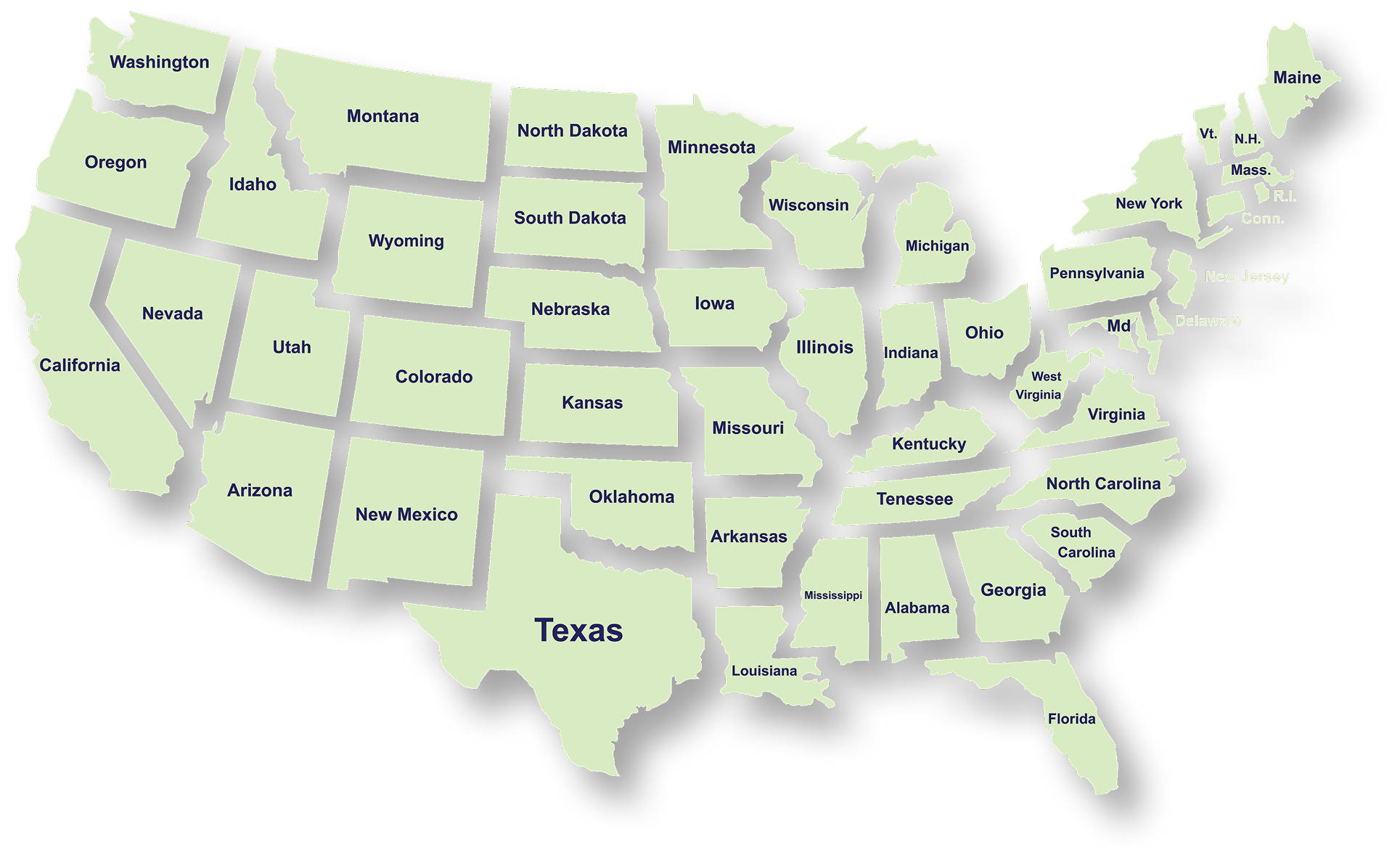
Serving Businesses & Individuals Across USA

We handle accounting, tax filing, and planning with defined timelines and accurate reporting for businesses and individuals across all states.

Frequently Asked Questions

What services does NR CPAs & Business Advisors provide?
What is tax planning and why is it important for businesses?
How can a Virtual CFO help my business?
When should a business consider IRS tax resolution services?
What financial statements does a business typically need?
How can startup advisory services help new businesses?
What is strategic business planning?
What is a Virtual Family Office and who can benefit from it?