Learning Center for Tax and Financial Insights

Stay updated with clear, actionable articles on tax rules, deadlines, deductions, and financial decisions that impact individuals and businesses.

No items found.

Are You an American Living Abroad? Here Are the Essential Tax Facts to Consider

It can be logical to assume that because you've moved out of the country, you no longer have to pay taxes on any money you earn. It can be logical... but it is also incorrect.Nearly all United States citizens must file a Federal Tax Return every year. This is true regardless of where in the world they are or why they happen to be there. The IRS still wants to know about all money you're making worldwide, including but not limited to things like wages, salaries, interest payments, dividends that you receive, rental income, and more.Having said that, it's equally important to note that most people don't end up actually owing taxes under these circumstances. Credits like the Foreign Earned Income Exclusion, the Foreign Tax Credit, and others can help offset or even totally erase any liability you may have.That, of course, is far from a guarantee. This is why, if you're an American that happens to be living abroad for any appreciable length of time, there are several critical things to consider when it comes to your taxes moving forward.Expats and Filing Taxes: Breaking Things DownOne of the most important things to understand about being an American living abroad and filing for your taxes is that credits like those outlined above don't just happen automatically.If you are someone who qualifies for the Foreign Earned Income Exclusion, for example, you need to go out of your way to elect to use it. You do this by filing Form 2555.You should know that it isn't just anyone that gets to use the Foreign Earned Income Exclusion. To qualify, you need to pass one of two tests: the Physical Presence test, or the Bona Fide Residence test.The Physical Presence Test is relatively straightforward. You simply need to be physically present inside the country that you now live in for at least 330 out of 365 consecutive days. The logic is that if you're able to meet that requirement, you likely are a true resident of that country.The Bona Fide Residence test is a bit different. It requires you to have lived outside the United States for A) at least one full calendar year, and B) you can have no present intention of moving back to the United States. This is essentially designed to prevent contractors who spend months at a time working in a foreign country from taking the credit when they know they are not "residents" due to the inherently temporary nature of their employment.

Explore More
No items found.

Video Tips: Check Out the Updates for Clean Vehicle Tax Credits

The Inflation Reduction Act of 2022 made several changes to the tax credits provided for qualified plug-in electric drive motor vehicles, including adding fuel cell vehicles to the tax credit.

Explore More
No items found.

Tax Consequences of Crowdfunding

Article Highlights: Crowdfunding Sites Gifts Charitable Gifts Business Ventures SEC Registration Crowdfunding Scams Raising money through Internet crowdfunding sites prompts questions about the taxability of the money raised. Several sites host money-raising projects for fees generally ranging from 5 to 9%, including GoFundMe, Kickstarter, and Indiegogo. Each site specifies its own charges, limitations, and withdrawal processes. The money raised may or may not be taxable depending on what the purpose of the fundraising campaign was. Gifts – When an entity raises funds for its own benefit and the contributions are made out of detached generosity (and not because of any moral or legal duty or the incentive of anticipated economic benefit), the contributions are considered tax-free gifts to the recipient. On the other hand, the contributor is subject to the gift tax rules if they contribute more than $17,000 to a particular fundraising effort that benefits one individual; the contributor is then liable to file a gift tax return. Unfortunately, regardless of the need, gifts to individuals are never tax deductible. Please note the $17,000 amount is inflation adjusted and was $15,000 for years 2018 through 2021 and $16,000 for 2022. Please contact this office for any other year.A “gift tax trap“ occurs when an individual establishes a crowdfunding account to help someone else in need (the beneficiary) and takes possession of the funds before passing the money on to the beneficiary. Because the fundraiser has possession of the funds, the contributions are treated as a tax-free gift to the fundraiser. However, when the fundraiser passes the money on to the beneficiary, the money is then treated as a gift from the fundraiser to the beneficiary; if the amount is over $17,000, the fundraiser is required to file a gift tax return and reduce their lifetime gift and estate tax exemption. Some crowdfunding sites allow fundraisers to designate a beneficiary to have direct access to the funds, in which case the fundraiser avoids encountering any gift tax problems. Gifts to specific individuals, regardless of need, are not considered charitable contributions under tax law—for example, raising funds to help pay for someone’s funeral expenses. Another example, which includes a little tax twist, would be raising money to help someone pay for their medical expenses. Because it is a gift, it is not taxable to the recipient, but if the recipient itemizes their deductions, any amount of the gift the recipient spends to pay for their (or a spouse’s or dependent’s) medical expenses can be included as a medical expense when the recipient is itemizing deductions on Schedule A of their individual tax return. Charitable Gifts – Even if the funds are being raised for a qualified charity, the contributors cannot deduct the donations as charitable contributions without proper documentation. Taxpayers cannot deduct cash contributions (including payments by check, credit card, or made electronically), regardless of the amount, unless they can document the contributions in one of the following ways: Contribution Less Than $250: To claim a deduction for a contribution to a qualified charitable organization of less than $250, the taxpayer must have a cancelled check, a bank or credit card statement, or a letter from the organization; this proof must show the name of the organization and the date and amount of the contribution. Cash Contributions of $250 or More: To claim a deduction for a donation of $250 or more, the taxpayer must have a written acknowledgment of the contribution from the qualified organization. This acknowledgment must be in the donor’s hands before the earlier of the due date or the date the return for the year the contribution was made is filed, including extensions, and must include the following details: o The amount of cash contributed;o Whether the qualified organization gave the taxpayer goods or services (other than certain token items and membership benefits) as a result of the contribution, along with a description and good-faith estimate of the value of those goods or services (other than intangible religious benefits); ando A statement that the only benefit received was an intangible religious benefit, if that was the case. Thus, if the contributor is to claim a charitable deduction for a cash donation made through a crowdfunding campaign, the contributor must have some way of obtaining a receipt.

Explore More
No items found.

Defer Taxes with Installment Sales

Article Highlights: Capital Gains Rates Surtax on Net Investment Income How it Works Existing Mortgages Tying Up Your Funds Tax Law Changes Selling a property one has owned for a long period of time will frequently result in a large capital gain, and reporting all the gain in one year will generally expose the gain to higher-than-normal capital gains rates and subject the gain to the 3.8% surtax on net investment income. Capital gains rates: Long-term capital gains can be taxed at 0%, 15%, or 20% depending upon the taxpayer’s taxable income for the year. At the low end for 2023 (not over $89,250 for joint filers, $59,750 for head of household status, or $44,625 for other filing statuses), the capital gains rate is zero. If your taxable income is more than $553,850 (joint), $523,050 (head of household), $492,300 (single) or $276,900 (married separate), the capital gains rate is 20%. If your taxable income is between the low and high end amounts, the rate is 15%. As you can see, larger gains push the taxpayer into higher capital gains rates. Surtax on net investment income – Tax law treats capital gains (other than those derived from a trade or business) as investment income upon which higher-income taxpayers are subject to a 3.8% surtax on net investment income. A large gain generally pushes a taxpayer’s income over the threshold for this tax. For individuals, the surtax is 3.8% of the lesser of (1) the taxpayer’s net investment income or (2) the excess of the taxpayer’s modified adjusted gross income (MAGI) over the threshold amount for his or her filing status. The threshold amounts are: $125,000 for married taxpayers filing separately. $200,000 for taxpayers filing as single or head of household. $250,000 for married taxpayers filing jointly or as a surviving spouse. This is where an installment sale could fend off these additional taxes by spreading the income over multiple years.Here is how it works. If you sell your property for a reasonable down payment and carry the note on the property yourself, you only pay income taxes on the portion of the down payment (and any other principal payments received in the year of sale) that represents taxable gain. You can then collect interest on the note balance at rates near what a bank charges. For a sale to qualify as an installment sale, at least one payment must be received after the year in which the sale occurs. Installment sales are most frequently used when the property that is sold is real estate and cannot be used to report the sale of publicly traded stock or securities. Example: You own a lot for which you originally paid $10,000. You paid it off some time ago, leaving you with no outstanding mortgage on the lot. You sell the property for $300,000 with 20% down and carry a $240,000 first trust deed at 3% interest using the installment sale method. No additional payment is received in the year of sale. The sales costs are $9,000.Computation of GainSale Price$300,000Cost< $10,000>Sales costs< $9,000>Net Profit $281,000Profit % = $281,000/$300,000 = 93.67%

Explore More
No items found.

How YouTube Became the Second Most Visited Website in Existence: The Story So Far

According to one recent study, YouTube had more than 2.68 billion active users as of 2023. The streaming giant's "YouTube Premium" paid accounts total nearly 80 million active customers all over the world. It's been estimated that over 50% of Internet users head to the site at least once a month and, through both websites and apps, about 122 million people visit content hosted on it daily.These days, if you're searching for a particular video clip like a recent news interview or even an episode of a television show you remember from decades ago, it's almost muscle memory to head to YouTube and see if it's there. The chances are high that it will be.But it wasn't always like this. YouTube may officially be the second most visited website in existence, but it certainly didn't look destined to achieve that status.YouTube: In the BeginningYouTube as we know it was originally launched in February 2005. It was founded by three entrepreneurs - Chad Hurley, Steve Chen, and Jawed Karim. They had befriended each other while working at PayPal and were all very different, particularly in terms of their education.Not long after meeting, the trio decided to quit their jobs. They believed that they could put their heads together and come up with the type of idea that would "change the world" - they just didn't initially know what that idea would be.At first, it took the form of a dating site called Tune In, Hook Up. It allowed users to upload video clips and share them with other users for free. The intention was that someone would upload a personal clip that would then be seen by someone who was interested, thus sparking a romantic connection.While the site itself never took off, the underlying technology proved to be something worth holding onto. They decided to pivot to becoming a full-fledged online video platform and, after a lengthy period of development, launched at the beginning of the year in 2005.Onward and UpwardIt would be safe to say that things started going well for YouTube and its co-founders almost immediately. The company officially began life as a tech startup backed by venture capitalists. Throughout the course of six months, they raised a significant amount of money from various backers, including notable names like Sequoia Capital.

Explore More
No items found.

Business Growth: How to Plan for (and Make the Most of) This Critical Stage

While it's true that every business is different from the next - and every entrepreneur will go on his or her own unique journey - there are still a few constants that we know to be true.The start-up phase, for example, is when you write a formal business plan. You secure financing, you select your business structure, and you do all the other work required to get your enterprise off the ground. On the other end of the spectrum, we have the maturity phase, which is when you do what it takes to remain both competitive and sustainable for as long as possible.In between that, however, we have what is known as the growth phase - one that often catches a lot of new entrepreneurs in particular off-guard. Still, this is an exceptional opportunity to grow from the business you're running into the one you hoped you'd be in charge of when you started, provided that you're able to keep a few key things in mind.Maximizing Business Growth: Breaking Things DownAs stated, the growth phase of any business is all about two things: expansion and innovation. The first is natural because as your company begins to grow larger, you need to adapt what you're doing to accommodate for that and embrace it. You can't necessarily get to that point without innovation, however. This is when you determine which of your current efforts are working, which ones aren't, and make adjustments accordingly.From the financial side of the spectrum, one of the major things that you'll want to account for during the growth phase has to do with taxes. During growth, things like federal, state, and local taxes are subject to laws that can often change frequently without warning. Keep track of (or at least, hiring a professional to do so) these changes can help you better understand what choices you need to make in terms of structuring, what types of incentives you can offer to your employees to help empower innovation and more.Along the same lines, there will also be certain considerations that you make regarding your accounting in general. During this stage of your business' life, you'll want to work hard to A) generate a consistent income, so that you can B) attract as many new customers as possible.For the best results, use this as an opportunity to re-evaluate your current systems, with IT being chief among them. What do you need to be able to do to generate consistent income that you can't do right now? What did you once need but don't any longer? These are critical questions to answer to help make sure that your business' value continues to grow with its size.

Explore More
No results found.
Thank you! Your submission has been received!
Oops! Something went wrong while submitting the form.

Want tax & accounting tips & insights?Sign up for our newsletter.

Thank you! Your submission has been received!
Oops! Something went wrong while submitting the form.

Why Work With Us?

We combine deep tax expertise, financial strategy, and practical business insight to help you manage complexity, stay compliant, and make confident financial decisions.
A dollar sign, representing financial advice or discussion at NR CPAs & Business Advisors.

Experienced CPA and Enrolled Agent Leadership

Guidance led by licensed professionals with deep expertise in tax strategy, compliance, and complex financial matters.
White bar chart with an upward arrow on green circular background representing growth or progress at NR CPAs &. Business Advisors

Support for Growing Businesses and Startups

We understand the financial challenges of growth stage businesses and provide structured guidance to support expansion.
A white hand holding a dollar symbol and ascending bar chart on a green circular background representing financial growth or investment at NR CPAs & Business Advisors..

Strategic Financial Advisory

Our team helps you evaluate financial decisions with greater clarity, supported by practical insights and long term planning.

Fractional CFO Support

Access experienced financial leadership without the commitment and cost of hiring a full time Chief Financial Officer.

Proactive Tax Planning Approach

We focus on identifying tax opportunities throughout the year rather than reacting only during filing season.

Clear and Reliable Financial Reporting

Accurate financial statements and reporting that help you better understand performance and make informed decisions.
White IRS building icon with pillars and a dollar sign above on a green circular background.

Professional IRS Representation

Experienced support in resolving IRS notices, disputes, and compliance matters while protecting your financial interests.

Personalized Client Focus

Every client receives thoughtful attention and tailored financial solutions based on their specific needs and business goals.
Financial matters often involve important decisions. Working with experienced advisors can help you approach them with greater clarity and confidence in your choices.

Need Help With Your Tax or Financial Decisions?

Discuss your situation with our advisors to get clear guidance on tax planning, IRS matters, and the financial decisions ahead.
Business consulting at NR CPAs & Business Advisors.

Request Your Consultation

Fill out the form to discuss your tax concerns, financial questions, or advisory needs with our team. We will review your details and respond shortly.

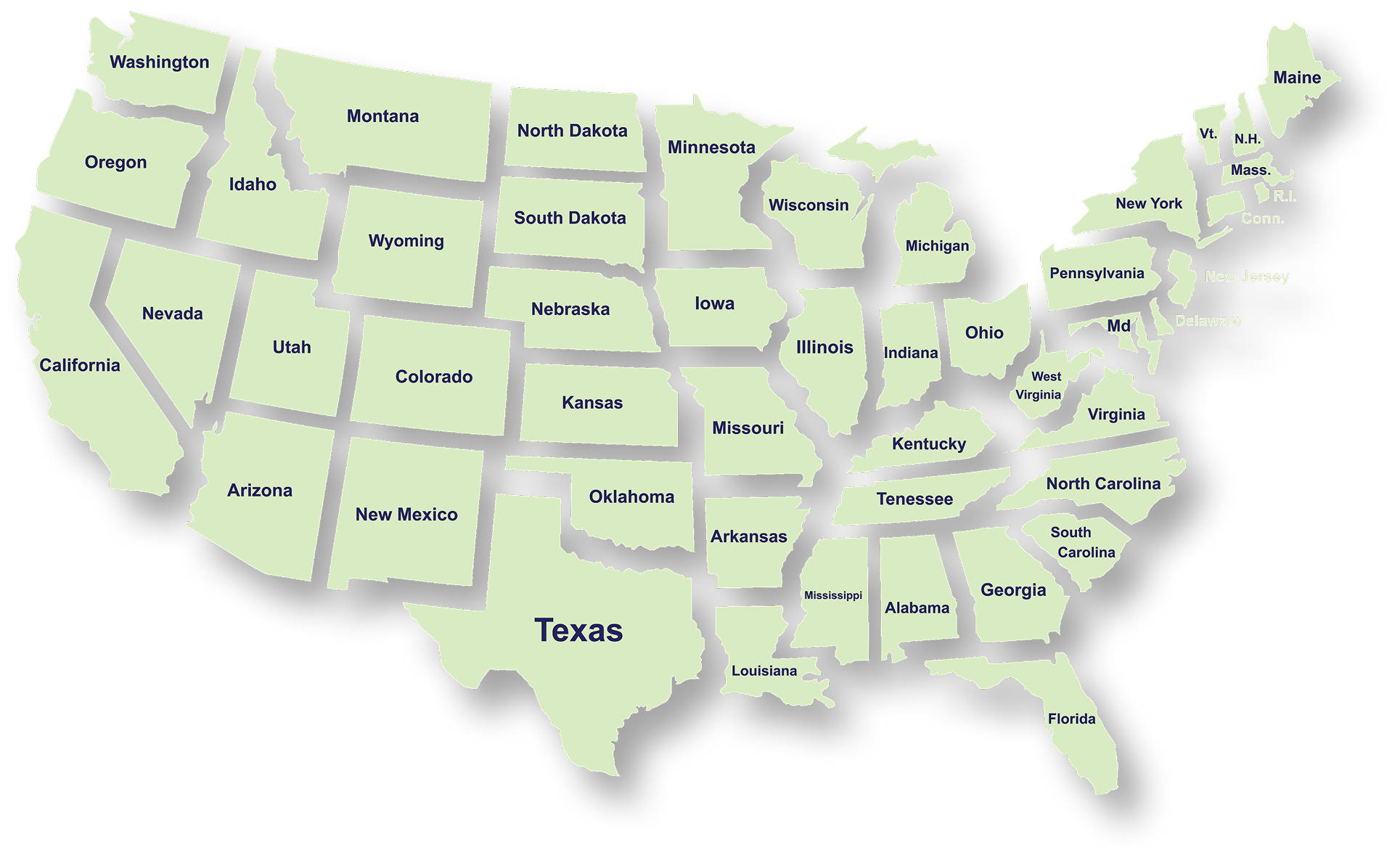
Serving Businesses & Individuals Across USA

We handle accounting, tax filing, and planning with defined timelines and accurate reporting for businesses and individuals across all states.

Frequently Asked Questions

What services does NR CPAs & Business Advisors provide?
What is tax planning and why is it important for businesses?
How can a Virtual CFO help my business?
When should a business consider IRS tax resolution services?
What financial statements does a business typically need?
How can startup advisory services help new businesses?
What is strategic business planning?
What is a Virtual Family Office and who can benefit from it?