Learning Center for Tax and Financial Insights

Stay updated with clear, actionable articles on tax rules, deadlines, deductions, and financial decisions that impact individuals and businesses.

No items found.

What If You Want To File Your Taxes But Can't Afford To Pay Them?

It’s a common conundrum: You want to file your taxes on time, but you anticipate or already know that you will owe money you can’t afford to pay right now. As a result, you put off filing your tax return under the assumption that the IRS can only bill you if they receive your latest outstanding tax return that’s due. If you want to file your taxes right now, you should! Am I Required to File a Tax Return? You may want to file a tax return, but you are not actually required to. Generally, the gross income filing requirement is based on the standard deduction plus personal exemption for your filing status. The IRS has a tool to determine if you are required to file a tax return based on your income alone. Notably, taxpayers who are married and filing separately have a gross income filing requirement. Regardless of the total reported income on your tax return, there are other situations in which you must file a tax return. If you owe self-employment tax on net self-employment income of $400 or more, you are obligated to file a tax return. It’s easy to go past this amount if you drive for Lyft or Uber, are giving freelance work a try, or have any other form of self-employment income that nets out to $400 or more after your deductible expenses. You also must file a tax return if you receive Affordable Care Act subsidies for your health insurance, and if you have any recapture payments such as the First-Time Homebuyer Credit. Any early distributions taken against an IRA or 401(k) also require you to file a tax return even if you had no other income, and the same is true if you reach age 70 1/2 during the tax year and were required to make required minimum distributions (RMDs) from your retirement plan, but did not actually start these payments yet. Even if you are not mandated to file a tax return, you may still want to file one to get a tax refund. If you aren’t due a tax refund, it’s still a good idea to have a tax return on file with the IRS. Tax returns are commonly requested when applying for a lease or mortgage, or to show proof of income and demonstrate ability (or inability) to pay for higher education and other important aspects of life that may arise. Filing a Tax Return vs. Paying Your Actual Tax Bill A common misconception is that you need to pay all taxes due when you file your tax return. While it’s prudent to do so, you are not actually required to. Filing your actual tax return is still the very first thing you should do no matter how much you owe, even if you’re filing it late. Doing so will prevent steep penalties from being incurred if you were required to file a tax return. Additionally, if you put off filing your tax return for too long, the IRS can file a substitute return that won’t apply any tax benefits and will make their assessment against you larger than it actually should be. Even if you can’t afford to put anything toward your tax bill right now, the very least you should do is file your tax return before the deadline every year. If you want to file your taxes despite being unable to pay your bill right now, you can still do so. Receiving an Automated Tax Bill From the IRS If you are unable to pay your taxes, you should still file a tax return without including payment. You can also include a partial payment of any size, even if it’s a small amount like $20. The IRS will not issue a judgment that quickly after you file your return, and even a small payment can help you save some money on interest. If you do not pay your entire tax bill upon filing your return, the IRS will send an automated bill by mail. You can pay your balance before the bill arrives if you have the money to do so, but getting the bill in the mail doesn’t mean you are facing a lien against your bank account. Interest will accrue on the unpaid balance as long as it goes unpaid, but owing money is a separate concept from filing your tax return on time, so you can and should file even if you can’t pay.

Explore More
No items found.

How to Organize Spending Priorities for Your Newer Growth Startup

According to a recent study conducted by U.S. Bank, over 80% of all newly formed businesses that ultimately fail do so due to cash flow problems. If you needed a reason to believe that getting your spending in order and dedicating the time to drafting a proper budget for your new startup is important, look no further than that one. If you take the time to properly budget now, you’re mitigating a significant portion of the risk you’re likely to face in the not-too-distant future. If you don’t, or worse—if you assume that you can just “make it up on the fly”—all you’re doing is setting yourself up for disaster. Therefore, if you truly want to make sure that you have the budget you need to continue to build the business you’ve always wanted, there are a few key things to keep in mind. It Begins by Looking Inward, Not Outward Maybe the most critically important thing for you to understand is that there is no “one size fits all” approach to creating a budget for your startup. Just as it’s fair to say that nobody does what you do quite like how you do it, that same unique quality must extend into the world of budgeting for your SMB. Every business is different ‒ so while you can certainly look to some similar organizations for guidance and inspiration, be aware that their path is not one for you to rigidly follow. You need to start the process by taking a look at your long-term business goals ‒ where are you today, and where do you want to be in a year or five years from now? What are the steps you need to take to help you accomplish that? What are the mile markers you’ll need to hit along the way? Once you have the specific answers to these questions, then you can begin the process of figuring out what budget is most appropriate for your small business. Once you contextualize everything through that lens, many of your priorities will easily reveal themselves. At that point, your job becomes making sure you’re spending money in a way that supports those goals first, and everything else second. As your budget starts to come together, you can even use it as an opportunity to learn more about the business and the way it operates. Once you can better identify how much money you have on hand and where it’s going, you start to better understand things like: The actual money you’re spending on labor and other materials necessary for your products and services. Your overall costs of operations. The level of revenue you’ll need to generate to support your business moving forward. A realistic idea of how much money you can expect to make in terms of profit, and when. So, as you work to come up with a budget that is more specific to your growth startup, you also begin to better understand how that startup works. At that point, you’re not just in a position to make accurate, informed decisions about things like hiring or materials spending ‒ you can also go back and reconfigure your budget to account for any trends or patterns that you’ve discovered. This cyclical process is also a great way to make sure that you always have the cash necessary to take advantage of opportunities as quickly as possible, even ones that you didn’t necessarily expect. The “Day One” Budget For the sake of an example, let’s say that you’re planning a budget for a business that hasn’t technically gotten off the ground yet. At that point, your priorities are a bit different as you’re essentially trying to make “Day One” possible. Again, every business is going to be different from the next. But having said that, there are a few key things you will want to focus on to make sure that your opening goes as smoothly as possible: Facilities costs - Where, specifically, are you going to be doing business? Do you need to rent a storefront? Are you working out of a commercial office space? Will you need a warehouse or other logistical assets? Regardless of which one best describes your situation, you’ll need to think about things like security deposits, any cosmetic or structural changes you need to make to the building, and even things like signage. Fixed assets - Also commonly referred to as “capital expenditures,” these are the things that your people are going to need to do the jobs you’ve asked of them. This includes thinking about purchases like work vehicles (if applicable). You also have to buy furniture and other equipment like computers (after all, your people need a place to work). Materials and supplies - Costs in this category would refer to not only immediate needs like office supplies, but also those related to marketing and other promotional activities you might be engaged in. You’re going to need a steady stream of all of these items to hit the ground running. Miscellaneous - These are all the other costs of physically opening a business that don’t fall into the other three categories. You’ll need to work with an attorney and likely a financial professional to make sure the back end of your business is in order. Depending on your industry, you may need things like licenses and permits—those cost money, too.

Explore More
No items found.

States' SALT Deduction Workarounds Shot Down

Article Highlights: Limit on Tax Allowed as an Itemized Deduction States’ Attempted Workarounds Supreme Court Ruling Final Regulations Notice 2019-12 The Treasury Department and the IRS have essentially shot down efforts by several states to help their residents circumvent the $10,000 cap on the itemized deduction for state and local taxes (SALT). When the Tax Cuts and Jobs Act (TCJA), aka tax reform, was passed, it imposed a $10,000 limit on the SALT deduction; this limitation had a greater impact on the residents of states that imposed the highest taxes on their residents. As it turns out, the states with the highest taxes – income or property taxes, or a combination of the two – are all blue (Democratic) states; thus, many saw it as political retribution, causing some state leaders to seek a workaround. Ultimately, several affected states, including New Jersey, New York, and Connecticut, came up with similar schemes to skirt the $10,000 limitation. Here is how their workarounds were supposed to have worked. Federal tax law names state and local governments as qualified charities, thus allowing gifts to them to be deducted as a charitable itemized deduction. The states created charitable funds; in turn, a contributor to the fund would receive tax credits. The tax credits could then be used against contributors’ SALT liabilities on their state income tax returns or, in some cases, property tax bills. Effectively, taxpayers would get a charitable deduction for their tax payments. However, the fly in the- ointment for these arrangements has turned out to be a 1986 Supreme Court ruling that says that if the taxpayer receives something in return (referred to as “quid pro quo” in legalese) for a contribution, the deductible portion of the contribution is reduced by the fair market value (FMV) of what is received in return for making the contribution. This concept has been applied uniformly to all charitable contributions since the Supreme Court ruling, which is why many written substantiations from charities will include the FMV of items provided to the donor in return for the donor’s charitable contribution. As a result, when the final tax regulations for the SALT limitation were issued, they followed the Supreme Court ruling and treated the tax credits provided in return for the contribution as “quid pro quo” and not allowable to deduct as a charitable contribution. Since the states only allowed tax credits for a portion of the contribution, typically 85% to 90%, the portion not allowed as a tax credit on the state return can be deducted as a charitable contribution on the taxpayer’s federal return. Fortunately for taxpayers, in the preamble to the final regulations, the Treasury indicated its concern that the regulations could create unfair consequences for individuals who had made a charitable contribution in return for tax credits. Consequently, simultaneously with releasing the final regulations, the IRS published Notice 2019-12 saying it intends to publish a proposed regulation to provide a safe harbor for certain individuals who make a charitable contribution in return for tax credits. Under the safe harbor, an individual may treat the portion of a state or local tax payment that is or will be disallowed as “quid pro quo” contributions. To qualify for the safe harbor, taxpayers must itemize deductions for federal tax purposes, and their total state and local tax liability for the year must be less than $10,000. Until the proposed regulations are issued, taxpayers may rely on Notice 2019-12. The following examples are based on those in Notice 2019-12.

Explore More
No items found.

Hobby or Business? It Makes a Difference for Taxes - Now More than Ever

Article Highlights: For-Profit Businesses Not-for-Profit Businesses Nine Determining Factors Profit Presumption Taxpayers are often confused by the differences in tax treatment between businesses that are entered into for profit and those that are not, commonly referred to as hobbies. Recent tax law changes have added to the confusion. The differences are: Businesses Entered Into for Profit – For businesses entered into for profit, the profits are taxable, and losses are generally deductible against other income. The income and expenses are commonly reported on a Schedule C, and the profit or loss—after subtracting expenses from the business income—is carried over to the taxpayer’s 1040 tax return. (An exception to deducting the business loss may apply if the activity is considered a “passive” activity, but most Schedule C proprietors actively participate in their business, so the details of the passive loss rules aren’t included in this article.) Hobbies – Hobbies, on the other hand, are not entered into for profit, and the government currently does not permit a taxpayer to deduct their hobby expenses but does require the income from the activity to be declared. (Prior to the changes included in the Tax Cuts and Jobs Act of 2017, hobbyists were allowed to deduct expenses up to the amount of their hobby income as a miscellaneous itemized deduction on Schedule A. Being able to take this deduction is suspended for years 2018 through 2025.) Thus, hobby income is reported on Schedule 1 of their 1040 and no expenses are deductible. So, what distinguishes a business from a hobby? The IRS provides nine factors to consider when making the judgment. No single factor is decisive, but all must be considered together in determining whether an activity is for profit. The nine factors are: (1) Is the activity carried out in a businesslike manner? Maintenance of complete and accurate records for the activity is a definite plus for a taxpayer, as is a business plan that formally lays out the taxpayer’s goals and describes how the taxpayer realistically expects to meet those expectations. (2) How much time and effort does the taxpayer spend on the activity? The IRS looks favorably at substantial amounts of time spent on the activity, especially if the activity has no great recreational aspects. Full-time work in another activity is not always a detriment if a taxpayer can show that the activity is regular; time spent by a qualified person hired by the taxpayer can also count in the taxpayer’s favor. (3) Does the taxpayer depend on the activity as a source of income? This test is easiest to meet when a taxpayer has little income or capital from other sources (i.e., the taxpayer could not afford to have this operation fail). (4) Are losses from the activity the result of sources beyond the taxpayer’s control? Losses from unforeseen circumstances like drought, disease, and fire are legitimate reasons for not making a profit. The extent of the losses during the start-up phase of a business also needs to be looked at in the context of the kind of activity involved. (5) Has the taxpayer changed business methods in an attempt to improve profitability? The taxpayer’s efforts to turn the activity into a profit-making venture should be documented. (6) What is the taxpayer’s expertise in the field? Extensive study of this field’s accepted business, economic, and scientific practices by the taxpayer before entering into the activity is a good sign that profit intent exists. (7) What success has the taxpayer had in similar operations? Documentation on how the taxpayer turned a similar operation into a profit-making venture in the past is helpful. (8) What is the possibility of profit? Even though losses might be shown for several years, the taxpayer should try to show that there is realistic hope of a good profit. (9) Will there be a possibility of profit from asset appreciation? Although profit may not be derived from an activity’s current operations, asset appreciation could mean that the activity will realize a large profit when the assets are disposed of in the future. However, the appreciation argument may mean nothing without the taxpayer’s positive action to make the activity profitable in the present.

Explore More
No items found.

Household Help: Employee or Contractor?

Article Highlights: Household Employee Definition Employee Control Factors Self-employed or Employee Withholding Requirements Reporting Requirements Taxpayers often will hire an individual or firm to provide services at the taxpayer’s home. Because the IRS requires employers to withhold taxes for employees and issue them W-2s at the end of the year, the big question is whether or not that individual is a household employee. Determining whether a household worker is considered an employee depends a great deal on circumstances and the amount of control the hiring person has over the job and the worker they hire. Ordinarily, when someone has the last word about telling a worker what needs to be done and how the job should be done, then that worker is an employee. Having a right to discharge the worker and supplying tools and the place to perform a job are primary factors that show control. Not all those hired to work in a taxpayer’s home are considered household employees. For example, an individual may hire a self-employed gardener who handles the yard work for that individual as well as some of the individual’s neighbors. The gardener supplies all tools and brings in other helpers needed to do the job. Under these circumstances, the gardener isn’t an employee and the person hiring him/her isn’t responsible for paying employment taxes. The same would apply to the person hired to maintain an individual’s swimming pool or to contractors making repairs or improvements on the home. Contrast the following example to the self-employed gardener described above: The Johnson family hired Maclovia to clean their home and care for their 3-year old daughter, Kim, while they are at work. Mrs. Johnson gave Maclovia instructions about the job to be done, explained how the various tasks should be done, and provided the tools and supplies; Mrs. Johnson, and not Maclovia, had control over the job. Under these circumstances, Maclovia is a household employee, and the Johnsons are responsible for withholding and paying certain employment taxes for her and issuing her a W-2 for the year. W-2 forms are to be provided to the employee by January 31 of the year following the year when the wages were paid and the government’s copy of the form – sent to the Social Security Administration – is also due by January 31. If an individual you hire is considered an employee, then you must withhold both Social Security and Medicare taxes (collectively often referred to as FICA tax) from the household employee’s cash wages if they equal or exceed the $2,100 threshold for 2019. The employer must match from his/her own funds the FICA amounts withheld from the employee’s wages. Wages paid to a household employee who is under age 18 at any time during the year are exempt from Social Security and Medicare taxes unless household work is the employee’s principal occupation. Although the value of food, lodging, clothing or other noncash items given to household employees is generally treated as wages, it is not subject to FICA taxes. However, cash given in place of these items is subject to such taxes. A household employer doesn’t have to withhold income taxes on wages paid to a household employee, but if the employee asks to have withholding, the employer can agree to it. When income taxes are to be withheld, the employer should have the employee complete IRS Form W-4 and base the withholding amount upon the federal income tax and FICA withholding tables.

Explore More
No items found.

How To Use Tax-Advantaged Savings Plans To Save For School.

Qualified tuition plans (ex: 529 Plan) provide a means for family members and others to save for the future educational needs of children. Learn how. .embed-container { position: relative; padding-bottom: 56.25%; height: 0; overflow: hidden; max-width: 100%; } .embed-container iframe, .embed-container object, .embed-container embed { position: absolute; top: 0; left: 0; width: 100%; height: 100%; }

Explore More
No results found.
Thank you! Your submission has been received!
Oops! Something went wrong while submitting the form.

Want tax & accounting tips & insights?Sign up for our newsletter.

Thank you! Your submission has been received!
Oops! Something went wrong while submitting the form.

Why Work With Us?

We combine deep tax expertise, financial strategy, and practical business insight to help you manage complexity, stay compliant, and make confident financial decisions.
A dollar sign, representing financial advice or discussion at NR CPAs & Business Advisors.

Experienced CPA and Enrolled Agent Leadership

Guidance led by licensed professionals with deep expertise in tax strategy, compliance, and complex financial matters.
White bar chart with an upward arrow on green circular background representing growth or progress at NR CPAs &. Business Advisors

Support for Growing Businesses and Startups

We understand the financial challenges of growth stage businesses and provide structured guidance to support expansion.
A white hand holding a dollar symbol and ascending bar chart on a green circular background representing financial growth or investment at NR CPAs & Business Advisors..

Strategic Financial Advisory

Our team helps you evaluate financial decisions with greater clarity, supported by practical insights and long term planning.

Fractional CFO Support

Access experienced financial leadership without the commitment and cost of hiring a full time Chief Financial Officer.

Proactive Tax Planning Approach

We focus on identifying tax opportunities throughout the year rather than reacting only during filing season.

Clear and Reliable Financial Reporting

Accurate financial statements and reporting that help you better understand performance and make informed decisions.
White IRS building icon with pillars and a dollar sign above on a green circular background.

Professional IRS Representation

Experienced support in resolving IRS notices, disputes, and compliance matters while protecting your financial interests.

Personalized Client Focus

Every client receives thoughtful attention and tailored financial solutions based on their specific needs and business goals.
Financial matters often involve important decisions. Working with experienced advisors can help you approach them with greater clarity and confidence in your choices.

Need Help With Your Tax or Financial Decisions?

Discuss your situation with our advisors to get clear guidance on tax planning, IRS matters, and the financial decisions ahead.
Business consulting at NR CPAs & Business Advisors.

Request Your Consultation

Fill out the form to discuss your tax concerns, financial questions, or advisory needs with our team. We will review your details and respond shortly.

Serving Businesses & Individuals Across USA

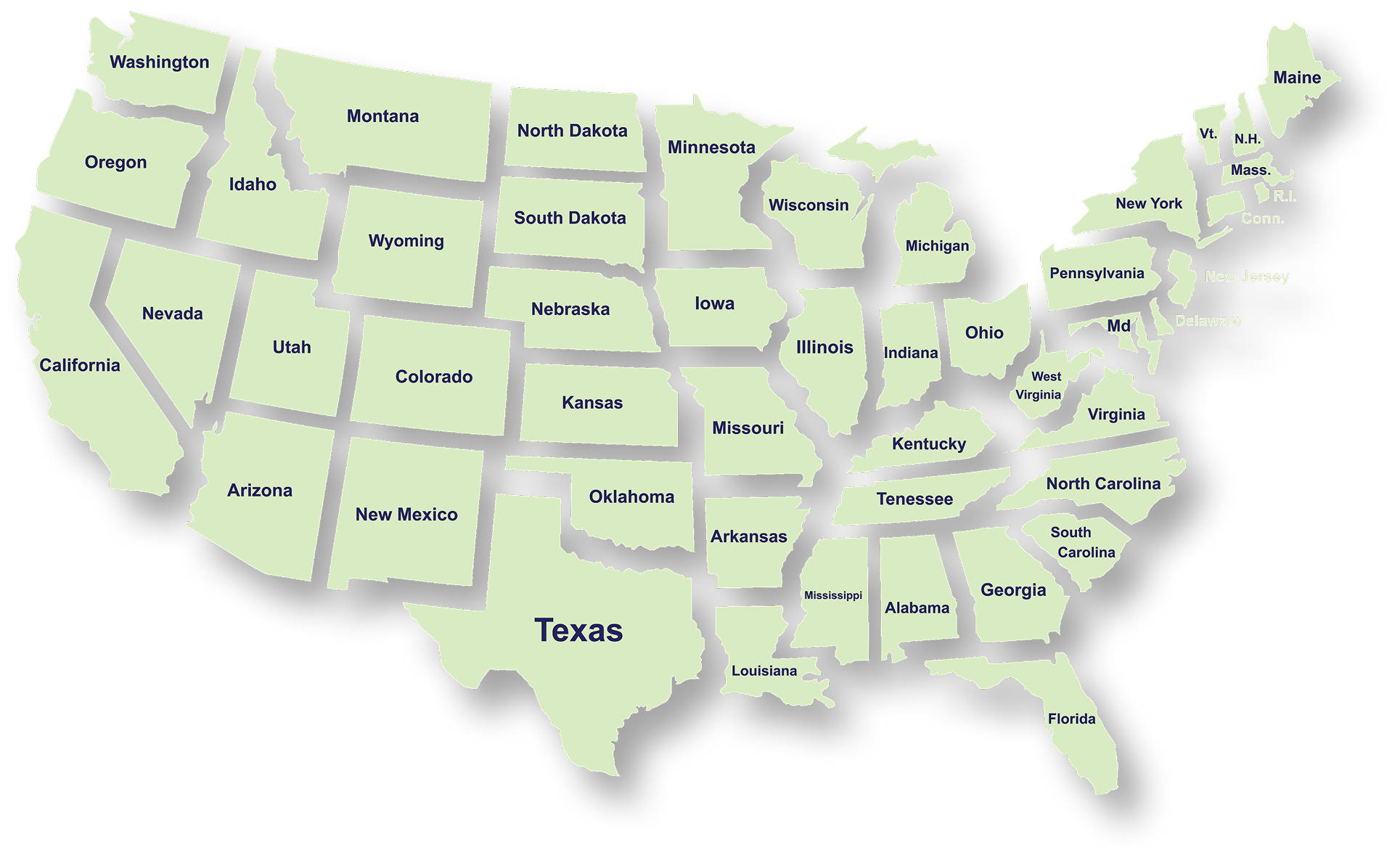
We handle accounting, tax filing, and planning with defined timelines and accurate reporting for businesses and individuals across all states.

Frequently Asked Questions

What services does NR CPAs & Business Advisors provide?
What is tax planning and why is it important for businesses?
How can a Virtual CFO help my business?
When should a business consider IRS tax resolution services?
What financial statements does a business typically need?
How can startup advisory services help new businesses?
What is strategic business planning?
What is a Virtual Family Office and who can benefit from it?