Learning Center for Tax and Financial Insights

Stay updated with clear, actionable articles on tax rules, deadlines, deductions, and financial decisions that impact individuals and businesses.

No items found.

Life Events Happen Year Round, And So Does The Need For Tax Planning.

The following are some life events that can affect your tax return; you may need to take steps to mitigate their impact and avoid unpleasant surprises after it is too late to address them. Learn more. .embed-container { position: relative; padding-bottom: 56.25%; height: 0; overflow: hidden; max-width: 100%; } .embed-container iframe, .embed-container object, .embed-container embed { position: absolute; top: 0; left: 0; width: 100%; height: 100%; }

Explore More
Videos & Info Graphics

The Tax Implications of Getting Married

Video: The following are some of the more frequently encountered tax issues encountered by recently married couples. Learn more. .embed-container { position: relative; padding-bottom: 56.25%; height: 0; overflow: hidden; max-width: 100%; } .embed-container iframe, .embed-container object, .embed-container embed { position: absolute; top: 0; left: 0; width: 100%; height: 100%; }

Explore More
No items found.

What You Need to Know about Student Loan Interest

Article Highlights: Home Equity Loan Home Equity Interest Deduction Alternative Minimum Tax Above-the-Line Interest Deduction Qualified Expenses If you are considering borrowing funds to finance your college education or that of your spouse or children, it is important that you understand that the student loan interest deduction is not limited to the interest paid on government student loans. In fact, virtually any loan interest will qualify as long as the loan proceeds are used solely for qualified higher-education expenses (that is, it is a sole-purpose loan). However, the maximum interest that is deductible each year is $2,500. Thus, in addition to government student loans, home equity lines of credit, personal loans from unrelated parties, and even credit cards can be used if they otherwise qualify. Pension plan loans and loans from related parties do not qualify. Example #1 – Jack takes out an equity line of credit on his home and borrows $30,000 to finance a solar electric installation on his home and $10,000 to pay his daughter’s qualified education expenses. Because this loan is not used for a single purpose (he used it to borrow funds for more than education), he cannot deduct a portion of the interest as above-the-line education loan interest. However, Jack can still deduct the prorated interest on the solar installation as home-acquisition debt if the total debt does not exceed the acquisition debt limits. If Jack had only used the loan to pay for qualified education expenses, then up to $2,500 of the loan interest could have been deducted as above-the-line student loan interest. Example #2 – Mark has a Visa card that he uses for a variety of purposes, and he also uses it to pay his daughter’s qualified education expenses. Because the credit card is not used exclusively to pay for qualified education expenses, none of the interest will qualify as student loan interest. However, if Jack had only used the credit card to pay for qualified education expenses, then up to $2,500 of the credit card interest could have been deducted as above-the-line student loan interest. Caution: Although we use a credit card as an example of an alternate student loan, it is not practical because of the high interest rates. If a loan is not subsidized, guaranteed, financed, or otherwise treated as a student loan under a program of the federal, state, or local government or an eligible educational institution, a payee (the lender) must request a certification from the payer (the borrower) that the loan will be used solely to pay for qualified higher-education expenses. Form W-9S, Request for Student’s or Borrower’s Social Security Number and Certification, is provided by the IRS for this purpose. You can claim a deduction for student loan interest whether you claim the standard deduction or you itemize your deductions since it is an adjustment to income, often referred to as an above-the-line deduction. To qualify as an eligible loan, the loan must have been taken out solely to pay the costs of attending an eligible educational institution for an individual during a period when the individual is a

Explore More
Personal Finance

The Best Ways to Maximize Your Savings for Retirement

According to one recent study, the vast majority of Americans who are between the ages of 55 and 64 say that they have only saved, on average, about 12% of what they’ll need to live out their retirement years in comfort. Things have gotten so severe that experts believe that about 64% of working aged people in the United States say “not having enough saved to retire” is their number one concern, regardless of how far off that date happens to be. But as disconcerting as those statistics are, there is also a silver lining to the situation. Maximizing your savings for retirement is something that you can start doing immediately, regardless of how old you are. It just requires you to keep a few essential things in mind while you do it. If you don’t have a plan, you don’t have much of anything at all Maybe the most important thing for you to understand about maximizing your savings for retirement is that there is truly no “one size fits all” approach to what you’re trying to do. That can be terrifying, yes... but it can also be incredibly liberating if you go about things the right way. In a larger sense, what this means is that you need a plan for saving for retirement, and you need it TODAY. Don’t just say to yourself “I’m going to save 5% of my income every year” and hope that’s enough to get you through. You need to carefully consider all of your own specific variables and come up with a plan that mitigates risk and puts your best foot forward in the most logical way that you can. In a smaller sense, this means that you need to think about: Paying off debt. List all of the current debt responsibilities you have, including bills, credit cards, large purchases like a mortgage, and more. Be sure to include the current interest rates, too. Once you know exactly how much you owe and to whom, you can come up with a realistic plan to pay off that debt (or reduce it) as soon as you can. Figure out how much money you’re going to need to maintain your current lifestyle during retirement. Again, everyone has a different definition of the term “comfortable,” so don’t let someone else tell you how much you should save. Only YOU can do that. Expect the unexpected. Certain problems ‒ like health issues ‒ can crop up unexpectedly and at the worst possible moment. On top of everything else, come up with a strategic approach that will allow you to have the cash reserves necessary to mitigate risk from these problems wherever you can.

Explore More
No items found.

August 2019 Individual Due Dates

August 12 - Report Tips to Employer If you are an employee who works for tips and received more than $20 in tips during July, you are required to report them to your employer on IRS Form 4070 no later than August 12. Your employer is required to withhold FICA taxes and income tax withholding for these tips from your regular wages. If your regular wages are insufficient to cover the FICA and tax withholding, the employer will report the amount of the uncollected withholding in box 12 of your W-2 for the year. You will be required to pay the uncollected withholding when your return for the year is filed.

Explore More
No items found.

August 2019 Business Due Dates

August 12 - Social Security, Medicare and Withheld Income Tax File Form 941 for the second quarter of 2019. This due date applies only if you deposited the tax for the quarter in full and on time. August 15 - Social Security, Medicare and Withheld Income Tax

Explore More
No results found.
Thank you! Your submission has been received!
Oops! Something went wrong while submitting the form.

Want tax & accounting tips & insights?Sign up for our newsletter.

Thank you! Your submission has been received!
Oops! Something went wrong while submitting the form.

Why Work With Us?

We combine deep tax expertise, financial strategy, and practical business insight to help you manage complexity, stay compliant, and make confident financial decisions.
A dollar sign, representing financial advice or discussion at NR CPAs & Business Advisors.

Experienced CPA and Enrolled Agent Leadership

Guidance led by licensed professionals with deep expertise in tax strategy, compliance, and complex financial matters.
White bar chart with an upward arrow on green circular background representing growth or progress at NR CPAs &. Business Advisors

Support for Growing Businesses and Startups

We understand the financial challenges of growth stage businesses and provide structured guidance to support expansion.
A white hand holding a dollar symbol and ascending bar chart on a green circular background representing financial growth or investment at NR CPAs & Business Advisors..

Strategic Financial Advisory

Our team helps you evaluate financial decisions with greater clarity, supported by practical insights and long term planning.

Fractional CFO Support

Access experienced financial leadership without the commitment and cost of hiring a full time Chief Financial Officer.

Proactive Tax Planning Approach

We focus on identifying tax opportunities throughout the year rather than reacting only during filing season.

Clear and Reliable Financial Reporting

Accurate financial statements and reporting that help you better understand performance and make informed decisions.
White IRS building icon with pillars and a dollar sign above on a green circular background.

Professional IRS Representation

Experienced support in resolving IRS notices, disputes, and compliance matters while protecting your financial interests.

Personalized Client Focus

Every client receives thoughtful attention and tailored financial solutions based on their specific needs and business goals.
Financial matters often involve important decisions. Working with experienced advisors can help you approach them with greater clarity and confidence in your choices.

Need Help With Your Tax or Financial Decisions?

Discuss your situation with our advisors to get clear guidance on tax planning, IRS matters, and the financial decisions ahead.
Business consulting at NR CPAs & Business Advisors.

Request Your Consultation

Fill out the form to discuss your tax concerns, financial questions, or advisory needs with our team. We will review your details and respond shortly.

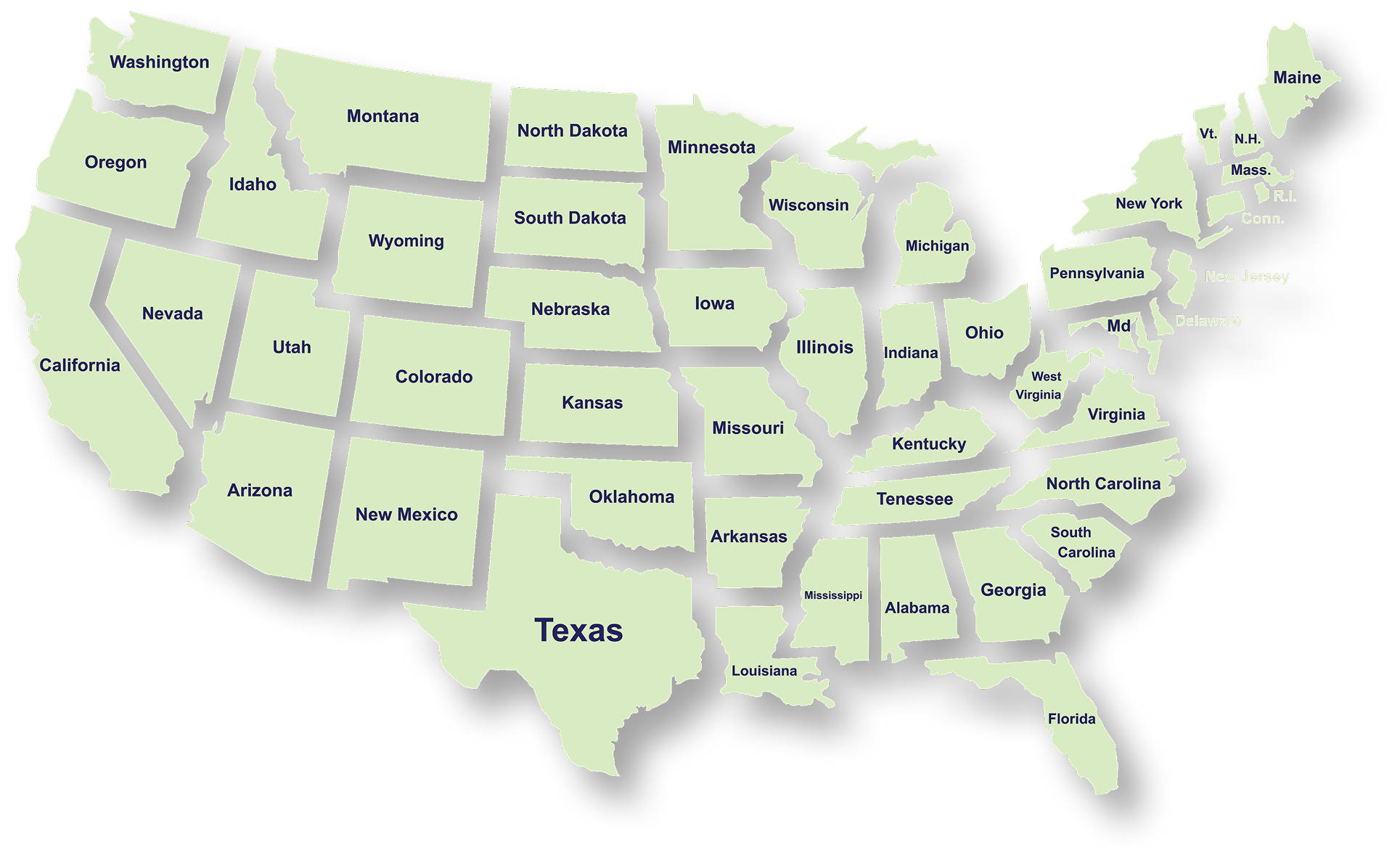
Serving Businesses & Individuals Across USA

We handle accounting, tax filing, and planning with defined timelines and accurate reporting for businesses and individuals across all states.

Frequently Asked Questions

What services does NR CPAs & Business Advisors provide?
What is tax planning and why is it important for businesses?
How can a Virtual CFO help my business?
When should a business consider IRS tax resolution services?
What financial statements does a business typically need?
How can startup advisory services help new businesses?
What is strategic business planning?
What is a Virtual Family Office and who can benefit from it?