Learning Center for Tax and Financial Insights

Stay updated with clear, actionable articles on tax rules, deadlines, deductions, and financial decisions that impact individuals and businesses.

No items found.

Looking for Quick Cash? Try to Avoid Retirement Savings

Article Highlights: Early-Withdrawal PenaltiesReduction in Retirement SavingsExceptions from the Early-Withdrawal PenaltyIf you find yourself looking for a quick source of cash, your retirement savings may look like a tempting option. However, if you are under age 59½ and withdraw money from a traditional IRA or qualified retirement account, you will likely pay both income tax and a 10% early-distribution tax (also referred to as a penalty) on any previously untaxed money that you take out. Withdrawals you make from a SIMPLE IRA before age 59½ and those you make during the 2-year rollover restriction period after establishing the SIMPLE IRA may be subject to a 25% additional early-distribution tax instead of the normal 10%. The 2-year period is measured from the first day that contributions are deposited. These penalties are just what you’d pay on your federal return; your state may also charge an early-withdrawal penalty in addition to the regular state income tax.Thus, before making any withdrawals from an IRA or other retirement plan—including a 401(k) plan, a 403(b) tax-sheltered annuity plan, or a self-employed retirement plan—carefully consider the resulting decrease in retirement savings and increase in taxes and penalties. There are several exceptions to the 10% early-distribution tax; these depend on whether the money you withdraw is from an IRA or a retirement plan. However, even if you are not subject to the 10% penalty, you will still have to pay taxes on the distribution. The SECURE 2.0 Act, passed by Congress and signed into law by the President in December of 2022, added several new exceptions. The following exceptions may help you avoid the penalty; the first 2 are new. Exception for Terminal Illness - This applies in the case of a distribution from a qualified plan to an employee who is terminally ill on or after the date on which the employee has been certified by a physician as having a terminal illness which can reasonably be expected to result in death in 84 months or less after the date of the certification. Penalty Exception for Domestic Abuse - A domestic abuse survivor may need to access his or her money in their retirement account for various reasons, such as escaping an unsafe situation. Retirement plans can permit participants that self-certify that they experienced domestic abuse to withdraw a small amount of money not subject to the 10% early withdrawal penalty and not to exceed the lesser of:o $10,000, oro 50% of the present value of the nonforfeitable accrued benefit of the employee under the plan.A distribution is an eligible distribution if it is made during the 1-year period beginning on any date on which the individual is a victim of domestic abuse by a spouse or domestic partner.Domestic abuse means physical, psychological, sexual, emotional, or economic abuse, including efforts to control, isolate, humiliate, or intimidate the victim, or to undermine the victim’s ability to reason independently including by means of abuse of the victim’s child or another family member living in the household. A distribution in this case may be repaid at any time during the 3-year period beginning on the day after the date on which the distribution was received.60-Day Rollover to Another Qualified Plan – A taxpayer can avoid both the income tax and the penalty on an early distribution if the distribution is rolled over into an eligible retirement plan within 60 days of receipt.Some taxpayers use the 60-day rollover provision as a source for a short-term loan. However, there are built-in hazards for the 60-day rule:o One rollover per 12 months rule – IRA rollovers are limited to one per 12-month period. Any other than the one would be considered a taxable distribution unless another exception applies.o Twenty percent withholding rule – Another barrier to completing a 60-day rollover is the mandatory 20% withholding of federal income tax requirement when a qualified plan distribution isn’t transferred trustee-to-trustee. Because 20% of the distribution went to withholding tax, the taxpayer only received 80% of the funds and cannot recoup the withholding until filing time. Thus, they would have to make up the 20% from other sources to complete a 100% rollover. A distribution from a qualified retirement plan or IRA that is transferred directly by the trustee of the plan to the trustee of another qualified plan or to another IRA does not count as a rollover and does not trigger the once-per-year rollover limitation and are not subject to withholding. Withdrawals from any retirement plan to pay medical expenses - Amounts withdrawn to pay unreimbursed medical expenses are exempt from penalty if they would be deductible on Schedule A during the year and if they exceed 7.5% of your adjusted gross income. This is true even if you do not itemize. Withdrawals from any retirement plan because of a disability - You are considered disabled if you can furnish proof that you cannot perform any substantial gainful activities because of a physical or mental condition. A physician must certify your condition:o Can be expected to result in death, oro Is expected to be of a long, continued, and indefinite duration.IRA withdrawals by unemployed individuals to pay medical insurance premiums - the amount that is exempt from penalty cannot be more than the amount you paid during the year for medical insurance for yourself, your spouse, and your dependents. You also must have received unemployment compensation for at least 12 consecutive weeks during the year.Childbirth and Adoption - For distributions after 2019, a distribution to an individual is exempt if made during the one-year period beginning on the date on which a child of the individual is born, or the date on which the legal adoption of an eligible adoptee is finalized. The maximum amount exempt from penalty is $5,000, and the amount applies to each spouse separately. Such qualified birth or adoption distributions may be recontributed to an individual's applicable eligible retirement plans within three years subject to certain requirements. IRA withdrawals to pay higher education expenses - Withdrawals made during the year for qualified higher education expenses for yourself, your spouse, or your children or grandchildren are exempt from the early-withdrawal penalty.IRA withdrawals to buy, build, or rebuild a first home - Generally, you are considered a first-time homebuyer for this exception if you had no present interest in a main home during the 2-year period leading up to the date the home was acquired, and the distribution must be used to buy, build, or rebuild that home. If you are married, your spouse must also meet this no-ownership requirement. This exception applies only to the first $10,000 of withdrawals used for this purpose. If married, you and your spouse can each withdraw up to $10,000 penalty-free from your respective IRA accounts. IRA withdrawals annuitized over your lifetime - To qualify, the withdrawals must continue unchanged for a minimum of 5 years, including after you reach age 59½. Separation from Service - To qualify, you must be separated from service and be age 55 or older in that year (the lower limit is age 50 for qualified public-service employees such as police officers and firefighters) or elect to receive the money in substantially equal periodic payments after your separation from service. After 2022 this exception also applies to private sector firefighters.Emergency Expenses Withdrawal – The 10% penalty will not apply to certain distributions used for emergency expenses, which are unforeseeable or immediate financial needs relating to personal or family emergency expenses. Only one distribution is permissible per year of up to $1,000, and a taxpayer has the option to repay the distribution within 3 years. No further emergency distributions are permissible during the 3-year repayment period unless repayment occurs. CAUTION: This exception is not effective until after 2023.

Explore More
No items found.

Worried About Getting Audited? Here's What You Need to Know About Your Chances

If you've been following the news recently, you're no doubt familiar with the talk about the Internet Revenue Service hiring new agents during a time when they've been critically understaffed for years. Indeed, the IRS is expected to receive approximately $80 billion in funding between now and 2031, much of which will be used to hire new people with an eye towards an increase in, among other things, potential enforcement increases like auditing in the near future.Nobody wants to get audited, of course - but most people acknowledge that it is a very real possibility at some point. This is especially true of business owners, those who are self-employed, and those who are a part of the gig economy.Of course, this demands the question - does the IRS target some groups of people more than others? Does this hiring spree that they are reportedly about to go on increase your chances of getting audited? What are your chances if you're prone to taking certain types of credits when you file your income taxes? The answers to questions like these require you to keep a few key things in mind.What You Need to Know About the Odds of Getting AuditedAccording to one recent study that was based on data obtained from the Treasury Department, one credit that does likely increase your chances of getting audited is the Earned Income Tax Credit, otherwise known as the EITC for short. In 2022, the maximum EITC amount that someone could claim (if they qualified for it, that is) was $6,935. This credit is designed to provide some much-needed assistance to workers with low-to-moderate income rates in particular. For many, it could not only lower the amount they owe - it could be the deciding factor as to whether they get a refund at all.The aforementioned study looked at 148 million tax returns that were filed in a given year and the 780,000 audits that resulted from that. It was determined that claiming the EITC, along with similar types of refundable credits, does lead to an increase in your chances of getting audited. Part of this is because filing for the EITC can be confusing by its nature. It requires you to understand the finer points of claiming dependents, which children qualify and which ones don't, etc. It's very easy for taxpayers to make mistakes and the IRS tends to go over these types of credits with a careful eye.

Explore More
No items found.

The Gen Z Freelance Movement and the Tax and Bookkeeping Challenges That Come With It

If it seems like more and more employees are turning to freelance work these days, you're not imagining things. According to one recent study, there are currently 73.3 million freelancers in the United States alone. The fast-paced mobile era that we're now living in, coupled with the advent of the fabled "Gig Economy" and companies like Uber and Lyft, have certainly helped bring this about. But what is fascinating isn't necessarily how many freelance workers there are - it's who, exactly, is doing the freelancing.Another study indicated that Generation Z in particular seems particularly fascinated by the idea of striking out on their own, with 53% of them having chosen self-employment of this nature in most cases. Approximately 50% of all Generation Z respondents to one survey, meaning those who fall between the ages of 18 and 22), engaged in freelance work of some kind.It makes sense that people would want to have more control over their own employment and their ability to earn a living. That doesn't mean it is easier than "traditional employment," however - especially when it comes to the financial side of the equation. Bookkeeping and especially taxes present significant challenges that people need to understand before choosing to go down this path moving forward.The Financial Side of Generation Z and Freelancing: An OverviewOne of the biggest challenges that freelance workers of all generations have to deal with has to do with the idea of paying self-employment taxes.Not only is it easy to suddenly find yourself working a freelance job - it can also happen very quickly. This is true to the point where someone may have made the decision without taking the time to research what the long-term implications actually are. One of the most pressing of those is self-employment taxes. In addition to whatever it is decided that you owe by way of income tax, you'll owe an additional 15.3% on the first $160,200 of net profits no matter what.This money is designed to cover Social Security and Medicare taxes - factors that are usually handled by a traditional employer. In a freelance situation, that burden falls on you. If you're not aware that you have to pay this amount, or if you're not able to accurately estimate what it might be given your income, it could end in a significantly larger tax bill than you had assumed you'd be facing.Along the same lines, many new freelancers in particular are surprised to find out that they're supposed to pay taxes throughout the year - not just once like everyone else. Indeed, quarterly estimated tax payments are mandatory and if you don't handle this, you could be hit with penalties before you even have a chance to properly file.

Explore More
No items found.

When Can You Dump Old Tax Records?

Article Highlights:General statute is 3 years Some states are longerFraud, failure to file and other issues can extend the statuteKeeping the actual returnTaxpayers often question how long records must be kept and the amount of time IRS has to audit a return after it is filed.It all depends on the circumstances! In many cases, the federal statute of limitations can be used to help you determine how long to keep records. With certain exceptions, the statute for assessing additional tax is 3 years from the return due date or the date the return was filed, whichever is later. However, the statute of limitations for many states is one year longer than the federal limitation. The reason for this is that the IRS provides state taxing authorities with federal audit results. The extra time on the state statute gives states adequate time to assess tax based on any federal tax adjustments that also apply to the state return.In addition to lengthened state statutes clouding the recordkeeping issue, the federal 3-year rule has several exceptions:The assessment period is extended to 6 years instead of 3 years if a taxpayer omits from gross income an amount that is more than 25 percent of the income reported on a tax return.The IRS can assess additional tax with no time limit if a taxpayer: (a) doesn’t file a return; (b) files a false or fraudulent return to evade tax; or (c) deliberately tries to evade tax in any other manner.The IRS gets an unlimited time to assess additional tax when a taxpayer files an unsigned return.If no exception applies to you, for federal purposes, you can probably discard most of your tax records that are more than 3 years old; add a year or so to that if you live in a state with a longer statute. Examples: Susan filed her 2020 tax return before the due date of April 15, 2021. She will be able to safely dispose of most of her records after April 15, 2024. On the other hand, Don filed his 2020 return on June 1, 2020. He needs to keep his records at least until June 1, 2024. In both cases, the taxpayers may opt to keep their records a year or two longer if their states have a statute of limitations longer than 3 years.

Explore More
No items found.

Video Tips: Why You Should File a Tax Return Even When Not Required

Generally, an individual is required to file a federal tax return for a year if their income exceeds the standard deduction for their filing status for that year. Self-employed individuals also must file if their self-employment earnings for the year exceed $400, even if their income does not exceed the standard deduction. Special rules apply to certain children who have taxable income. State rules may vary.

Explore More
No items found.

Has Technology Disrupted Your Business Model? Here's What to Do Next

Think for a moment about the many ways that the world has changed since Steve Jobs first introduced the iPhone to the world in 2007.Overnight, entire industries were upended. Nobody needed a standalone camera because they were suddenly carrying one around with them in their pocket all day. GPS units for your car became irrelevant. Everyone was suddenly connected to one another all day, every day, thanks to a ubiquitous Internet access point that followed you around wherever you went. The list goes on and on.Of course, all of this demands the question - what do you do if your business model gets disrupted by new technology? At this point, it's likely not a matter of "if," but "when." It's a very common issue facing many established legacy organizations in particular. But even though they may no longer be as glamorous as they once were, it's still possible to have steady revenue and balance sheets. Getting to that point simply requires you to keep a few key things in mind along the way.Owning a Business in the Age of Disruption: Breaking Things DownAgain, the best way to survive any type of technological disruption to your business model involves acknowledging that this is a real possibility, to begin with. Indeed, this is one of the major challenges that legacy organizations in particular often face. Their leadership (and often their employees) have a built-in resistance to change. "These methods have always worked in the past," they tell themselves. "Don't fix what isn't broken."This almost always leads to a lack of vision when it comes to leadership, which can instill an unfortunate intolerance for things like risk and a fear of change across the entire organization. In reality, the opposite is necessary. Businesses need to be in a position to pivot, not just in terms of how they do things, but possibly with regard to what they're doing at all.

Explore More
No results found.
Thank you! Your submission has been received!
Oops! Something went wrong while submitting the form.

Want tax & accounting tips & insights?Sign up for our newsletter.

Thank you! Your submission has been received!
Oops! Something went wrong while submitting the form.

Why Work With Us?

We combine deep tax expertise, financial strategy, and practical business insight to help you manage complexity, stay compliant, and make confident financial decisions.
A dollar sign, representing financial advice or discussion at NR CPAs & Business Advisors.

Experienced CPA and Enrolled Agent Leadership

Guidance led by licensed professionals with deep expertise in tax strategy, compliance, and complex financial matters.
White bar chart with an upward arrow on green circular background representing growth or progress at NR CPAs &. Business Advisors

Support for Growing Businesses and Startups

We understand the financial challenges of growth stage businesses and provide structured guidance to support expansion.
A white hand holding a dollar symbol and ascending bar chart on a green circular background representing financial growth or investment at NR CPAs & Business Advisors..

Strategic Financial Advisory

Our team helps you evaluate financial decisions with greater clarity, supported by practical insights and long term planning.

Fractional CFO Support

Access experienced financial leadership without the commitment and cost of hiring a full time Chief Financial Officer.

Proactive Tax Planning Approach

We focus on identifying tax opportunities throughout the year rather than reacting only during filing season.

Clear and Reliable Financial Reporting

Accurate financial statements and reporting that help you better understand performance and make informed decisions.
White IRS building icon with pillars and a dollar sign above on a green circular background.

Professional IRS Representation

Experienced support in resolving IRS notices, disputes, and compliance matters while protecting your financial interests.

Personalized Client Focus

Every client receives thoughtful attention and tailored financial solutions based on their specific needs and business goals.
Financial matters often involve important decisions. Working with experienced advisors can help you approach them with greater clarity and confidence in your choices.

Need Help With Your Tax or Financial Decisions?

Discuss your situation with our advisors to get clear guidance on tax planning, IRS matters, and the financial decisions ahead.
Business consulting at NR CPAs & Business Advisors.

Request Your Consultation

Fill out the form to discuss your tax concerns, financial questions, or advisory needs with our team. We will review your details and respond shortly.

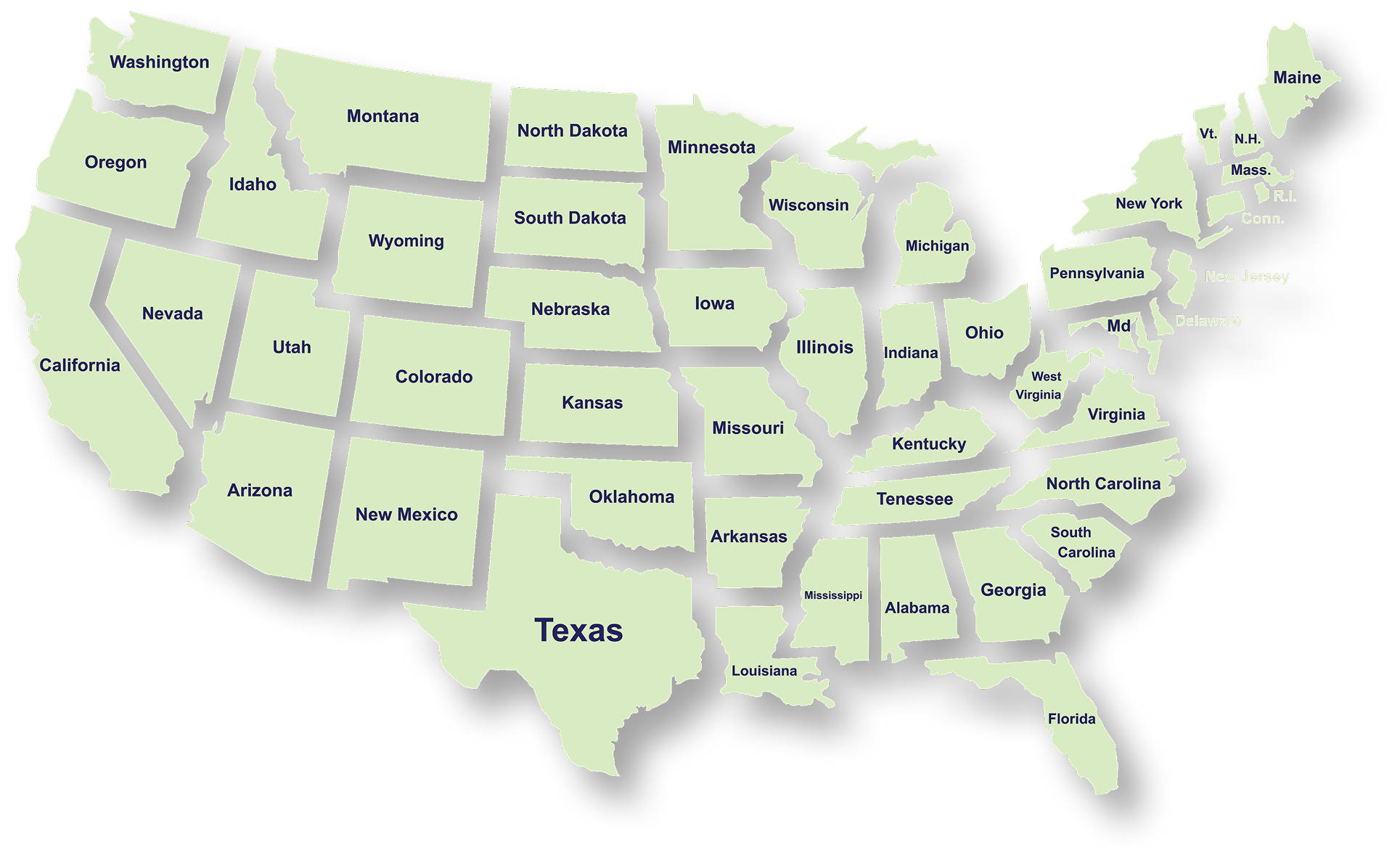
Serving Businesses & Individuals Across USA

We handle accounting, tax filing, and planning with defined timelines and accurate reporting for businesses and individuals across all states.

Frequently Asked Questions

What services does NR CPAs & Business Advisors provide?
What is tax planning and why is it important for businesses?
How can a Virtual CFO help my business?
When should a business consider IRS tax resolution services?
What financial statements does a business typically need?
How can startup advisory services help new businesses?
What is strategic business planning?
What is a Virtual Family Office and who can benefit from it?