Learning Center for Tax and Financial Insights

Stay updated with clear, actionable articles on tax rules, deadlines, deductions, and financial decisions that impact individuals and businesses.

No items found.

Roundup of Individual Tax Changes For 2023

Article Highlights:Required Minimum Distributions (RMD)Excess Accumulation PenaltyMilitary Spouse Retirement Plan ParticipationClean Vehicle CreditCredit For Previously Owned Clean VehiclesEarly Distribution Penalty ExceptionsCredit For Energy Efficient Home ModificationsHome Solar Energy CreditCredit For Small Employer Pension Plan Startup CostsNanny Retirement Contributions Qualified Charitable DistributionsTwo recently passed pieces of tax legislation have brought about several tax changes for 2023 that may affect you. The legislation includes the Inflation Reduction Act and the Secure 2.0 Act. Here is a condensed summary of those changes. Check over the list and see if any of the new rules apply to you.Required Minimum Distributions (RMD) – For 2023 the age at which individuals must begin taking distributions from their traditional IRAs and retirement plans is 73, up from 72 in 2022.Excess Accumulation Penalty – This is the penalty for failing to take an RMD. In the past, this penalty was a draconian 50% of the amount that should have been withdrawn for the year but wasn’t. Beginning in 2023 the penalty has been reduced to 25%, and if a corrective distribution is timely made the penalty drops to 10%.Military Spouse Retirement Plan Participation – In the past, because of frequent military moves, a military spouse often failed to qualify to contribute to an employer’s retirement plan. Beginning in 2023, a military spouse can participate in their employer’s plan starting 2 months after their employment begins and and will be immediately 100% vested in all employer contributions.In return, the employer receives a tax credit equal to $200 per military spouse, and 100% of all employer contributions (up to $300) made to the plan on behalf of the military spouse. The result is a maximum tax credit of $500 for the employer. This credit applies for 3 years with respect to each military spouse.Clean Vehicle Credit – Although the credit can still be as much $7,500, this credit has significantly changed. For 2023, to qualify for the credit, among other requirements, the vehicle’s final assembly must be in North America. In addition, the manufacturer’s suggested retail price (MSRP) cannot be more than $80,000 for a pickup, van, or SUV and not more than $55,000 for other vehicles. To qualify, a purchaser’s adjusted gross income (AGI) must be $300,000 or less for married taxpayers filing jointly, $225,000 for head of household filers, and $150,000 for others. Credit For Previously Owned Clean Vehicles - This credit has not been available in prior years. A previously owned clean vehicle (in other words, a used vehicle) is a formerly owned vehicle that is a model year at least two years earlier than the calendar year in which the taxpayer acquires it. Also it cannot be a vehicle for which a previous credit has been allowed, and it must be acquired from a dealer for a purchase price of $25,000 or less. The available credit is the lesser of $4,000 or 30% of the vehicle’s price. To qualify, a purchaser’s income is limited – their AGI must be no more than $150,000 for married taxpayers filing jointly, $112,500 for heads of household and $75,000 for others. Early Distribution Penalty Exceptions - Current law imposes a 10% additional tax on early (generally before age 59½) distributions from tax-preferred retirement accounts such as traditional IRAs and 401(k) plans, unless an exception provided in the law applies. Several new exceptions to the penalty begin in 2023. o In case of a distribution to a terminally ill individual. o For public safety officers at least age 50 or with at least 25 years of service with the employer sponsoring the plan, whichever comes first.o For corrections officers or forensic security employees providing for the care, custody, and control of forensic patients who are employees of state and local governments.o In the case of a federally declared disaster. > The permanent rules allow up to $22,000 to be distributed from employer retirement plans or IRAs for affected individuals. > Such distributions are not subject to the early distribution 10% additional tax and are considered as gross income over 3 years. > Distributions can be repaid to a tax preferred retirement account. > Additionally, amounts distributed prior to the disaster to purchase a home can be recontributed.o For corrective IRA distributions including the excessive contribution and any earnings allocable to that contribution. o The exception already applies for births and adoptions. Starting in 2023, recontributions of the distributed amounts are permitted within 3 years.o For private sector firefighters, extends the age 50 rule (is age 55 for others).o For domestic abuse survivors for distributions of the lesser of $20,000 or 50% of the retirement account balance.** Distributions may be repaid at any time during the 3-year period beginning on the day after the date on which such distribution was received.Credit For Energy Efficient Home Modifications - This provision provides a non-refundable tax credit for certain energy-saving improvements to a taxpayer’s home. The has been modified through 2032.The previous lifetime credit limit of $500 has been replaced with an annual maximum credit of $1,200, and the credit percentage increased from 10% to 30%. Although not a complete list, the following are annual credit limits that apply to various energy-efficient improvements:o $600 for credits with respect to residential energy property expenditures, windows, and skylights. o $250 for any exterior door ($500 total for all exterior doors). o $300 for residential qualified energy property expenses. o Notwithstanding these limitations, a $2,000 annual limit applies with respect to amounts paid or incurred for specified heat pumps, heat pump water heaters, and biomass stoves and boilers. o $150 for a home energy audit. o The new law adds air sealing insulation as a creditable expense. Under the new law, the one making the improvements and claiming the credit need only be a resident of the home and not necessarily the owner. Home Solar Energy Credit – Beginning in 2023 the credit returns to 30% and is extended through 2034, though the credit rate drops to 26% and 22%, respectively, for years 2032 and 2034. The change includes a credit for battery storage technology of at least 3 KW hours.Credit for Small Employer Retirement Plan Start-up Costs – Under prior law, small businesses (100 or fewer employees) qualify for a nonrefundable credit for administrative and retirement education expenses when adopting a new qualified defined benefit or defined contribution plan. Beginning in 2023 a new category was added (50 employees or fewer) and the credit percentage was increased from 50% to 100% and applies for 4 years with the credit percentage reduced to 75%, 50%, and 25% in those succeeding years. The maximum credit per year per employee is $1,000. Nanny Retirement Contributions – Beginning in 2023, employers of domestic employees (e.g., nannies) are allowed to provide retirement benefits for them under a Simplified Employee Pension (“SEP”) plan. Qualified Charitable Distributions - Under existing law a taxpayer is allowed to make a Qualified Charitable Distribution (QCD) of up to a total of $100,000 each year that is transferred from their traditional IRA to qualified charities of their choice. The QCD offsets their RMD, up to the amount of the RMD.Beginning in 2023, taxpayers will be allowed to make a one-time, $50,000 distribution to charities through charitable gift annuities, charitable remainder unitrusts, and charitable remainder annuity trusts.

Explore More
No items found.

Video Reminder: An Extension to File is Not an Extension to Pay Taxes

Taxpayers who can’t file by April 18, 2023 deadline can request an extension before that deadline, but they should know that an extension to file is not an extension to pay taxes. If they owe taxes, they should pay them before the due date to avoid potential penalties and interest on the amount owed.

Explore More
No items found.

Don’t Get Hit with IRS Underpayment Penalties

Article Highlights:Pay-as-You-Earn SystemWithholding and Payment Forms IRS On-line Withholding EstimatorSituations Triggering UnderpaymentsSafe Harbor PaymentsTrue Safe HarborUnder federal law, taxpayers must pay taxes during the year as they earn or receive income, or they can find themselves falling victim to substantial underpayment penalties. Even worse, they may have spent the money, and when tax time comes are unable to pay their past taxes and spiral into financial distress. To facilitate the pay-as-you-earn concept, the government has provided several means of assisting taxpayers in meeting that requirement. These include: Payroll withholding for employees - W-4; Pension withholding for retirees – W-4P; Voluntary withholding for Unemployment and Social Security benefits - W-4V; and Estimated tax payments for self-employed individuals and those with other sources of income not covered by withholding – Form 1040-ES.Employees with primarily wage income can use the IRS online tool, the Tax Withholding Estimator, to determine if their withholding closely matches their projected tax liability or if they need to adjust their tax withholding by providing a revised Form W-4 to their employer.Employees and those with significant income from other sources, multiple jobs, rentals, side gigs, children subject to the kiddie tax, capital gains, etc., may find it appropriate to consult with this office for a more sophisticated tax projection and estimate of needed withholding and/or estimated tax payments. Individuals should also check their tax withholding and estimated payments when:Changes in tax law affect their situation.They experience a lifestyle or financial change like marriage, divorce, birth or adoption of a child, home purchase, retirement, or filed chapter 11 bankruptcy.They change jobs or have a change in wage income, such as when the taxpayer or their spouse starts or stops working or starts or stops a second job.They have taxable income not subject to withholding, such as interest, dividends, capital gains, self-employment and gig economy income, and IRA distributions.Reviewing their planned deductions or eligible tax credits, including items like medical expenses, taxes, interest expense, gifts to charity, dependent care expenses, education credit, Child Tax Credit or Earned Income Tax Credit.Nonresident alien taxpayers should determine their tax withholding using the special instructions in Notice 1392, Supplemental Form W-4 Instructions for Nonresident Aliens.Once an individual has determined they need to change their tax withholding, the individual should complete a new Form W-4 to give to their employer. Individuals with other types of income should provide the payor with either a new Form W-4P or Form W-4V, as applicable. Those making estimated payments can mail the payment along with the Form 1040-ES to the address included on the form or use the IRS on-line payment system to make a payment electronically.When a taxpayer fails to prepay a safe harbor (minimum) amount, they can be subject to the underpayment penalty. This nondeductible interest penalty is higher than what might be earned from a bank. The penalty is applied quarterly, so for example, making a fourth quarter estimated payment only reduces the fourth-quarter penalty. However, withholding is treated as paid ratably throughout the year, so increasing withholding at the end of the year can reduce the penalties for the earlier quarters. This can be accomplished with cooperative employers or by taking an unqualified distribution from a pension plan, which will be subject to 20% withholding, and then returning the gross amount of the distribution to the plan within the 60-day statutory rollover limit. Federal law and most states have so-called safe harbor rules, meaning if you comply with the rules, you won’t be penalized. There are two Federal safe harbor amounts that apply when the payments are made evenly throughout the year.

Explore More
No items found.

Not Required to File a Tax Return? Reasons You May Want to Anyway!

Article Highlights:Filing ThresholdsTax WithholdingTax CreditsEarned Income Tax CreditChild Tax CreditAmerican Opportunity Tax CreditGenerally, individuals are required to file a tax return for a year if their income exceeds the standard deduction for their filing status for that year. But even if they are not required to file it may be beneficial to do so. They could be missing out on huge refunds.The standard deduction is inflation adjusted each year and the table illustrates the standard deductions for 2023.There are two exceptions: married individuals filing separately must file if their gross income is $5 or more and self-employed individuals must file if their gross self-employment income is $400 or more.Filing Status2023 Standard DeductionMarried Taxpayers Filing Jointly $25,900Surviving Spouse$25,900Head of Household$19,400Single$12,950Additional amounts are added to the amounts above for each filer (and spouse if filing jointly) who is age 65 and over or blind. These additional amounts are $1,500 for married individuals filing jointly and a surviving spouse; $1,850 for others.Just because someone is not required to file a return does not mean they shouldn’t. Failing to file a return could end up leaving large sums of money on the table. Here are some examples.Tax Withholding – Most individuals who have wage income also have federal income tax withheld on their earnings. That withheld tax would be 100% refundable if the worker isn’t required to file a return.A tax credit is a dollar-for-dollar offset against the tax liability. Some credits can only reduce a tax liability to zero, while others as discussed below are refundable, meaning if the credit is more than the individual’s tax any excess credit is refundable. So if an individual is not required to file and therefore owes no tax and qualifies for one or more refundable credits, it may be in their best interest to file and take advantage of the credit(s).Earned Income Tax Credit (EITC) – The EITC is for people who work but have lower incomes. If you qualify, it could be worth up to $6,935 in 2022. The credit is a fully refundable credit, so individuals can receive the full amount of the credit even if they do not owe any taxes.If you were employed for at least part of 2022, you may be eligible for the EITC based on these general requirements and earned less than:o $16,480 ($22,610 if married filing jointly) and have no qualifying children.o $43,492 ($49,622 if married filing jointly) and have one qualifying child.o $49,399 ($55,529 if married filing jointly) and have two qualifying children.o $53,057 ($59,187 if married filing jointly) and have more than two qualifying children.Child Tax Credit (CTC) - This is a per child credit that phases out for higher income taxpayers but is available to all categories of taxpayers that are not required to file. The full credit is $2,000 per child, but the refundable amount is limited to a maximum amount of $1,500 for 2022 ($1,600 for 2023).American Opportunity Tax Credit (AOTC) – The AOTC provides a credit of up to $2,500 per year per eligible student with higher education expenses. Up to 40% of the AOTC is refundable, even when there is no tax liability. Thus, it can result in a refund of as much as $1,000 (40% of $2,500).Generally, an eligible student for the AOTC can be the filer and spouse and their dependents that are enrolled at an eligible educational institution for at least one academic period (semester, trimester, quarter) during the year.If someone other than the filer, a spouse or their claimed dependent directly makes a payment to an eligible educational institution for a student’s qualified tuition and related expenses, then the filer is treated as paying the expenses and qualifies for the credit.

Explore More
No items found.

Video Tips: Different Ways to Pay Your Taxes

Anyone who needs to pay their federal tax bill has several ways to send a payment to the IRS quickly and securely. Knowing the options to make payments helps taxpayers meet their tax obligations.

Explore More
No items found.

Benefits of Qualified Opportunity Funds Waning

Article Highlights:Qualified Opportunity FundQualified Opportunity ZonesDeferred Gains5- and 7-Year Holding Periods2026 End of Deferral 10-Year Holding PeriodA Qualified Opportunity Fund (QOF) is an investment vehicle which is organized as a corporation or a partnership for the purpose of investing in qualified opportunity zone property acquired after December 31, 2017. The QOF must hold at least 90% of its assets in qualified opportunity zone (QOZ) property but a taxpayer may not invest directly in QOZ property.Qualified Opportunity Zones (QOZ) are population census tracts that are generally in low-income communities and that were specifically designated as QOZs after being nominated by the governor of the state or territory in which the community is located and approved by the Treasury Secretary, who then certified the community as a QOZ. The purpose of a QOZ is to spur economic growth and job creation in low-income communities while providing tax benefits to investors.Starting back in 2018, a taxpayer who had a capital gain on the sale or exchange of any property to an unrelated party could elect to defer, and potentially partially exclude, the gain from gross income if the gain was reinvested in a Qualified Opportunity Fund (QOF) within 180 days of the sale or exchange. Unlike Sec 1031 deferrals (tax deferred exchanges), only the amount of the gain, not the amount of the proceeds of sale, needed to be reinvested to defer the gain.As an incentive to invest in Qualified Opportunity Funds, the basis of the QOF investment was increased by 10% of the deferred gain if the taxpayer retained the QOF investment for 5 years. That was increased to 15% if the QOF was retained for 7 years. In other words, if the investment was held at least 5 years, 10% of the original gain is excluded, or if held 7 years, 15% of the original gain is excluded.However, any gain deferred into a QOF becomes taxable the earlier of when the QOF investment is sold or December 31, 2026. Thus, if an individual invests in a QOF in 2023, that only leaves 4 years before the deferred gain becomes taxable at the end 2026. This means an investor just now investing in a QOF doesn’t have enough time to hold the investment the required 5 or 7 years to benefit from the 10% or 15% step up in basis when the deferral has to be reported on the 2026 return. However, the gain deferral is still available and is not taxable until the 2026 return is filed.As illustrated nearby, to meet the meet the 7-year holding requirement the QOF must have been purchased before 1/1/2020 and prior to 1/1/2022 to meet the 5-year holding period.

Explore More
No results found.
Thank you! Your submission has been received!
Oops! Something went wrong while submitting the form.

Want tax & accounting tips & insights?Sign up for our newsletter.

Thank you! Your submission has been received!
Oops! Something went wrong while submitting the form.

Why Work With Us?

We combine deep tax expertise, financial strategy, and practical business insight to help you manage complexity, stay compliant, and make confident financial decisions.
A dollar sign, representing financial advice or discussion at NR CPAs & Business Advisors.

Experienced CPA and Enrolled Agent Leadership

Guidance led by licensed professionals with deep expertise in tax strategy, compliance, and complex financial matters.
White bar chart with an upward arrow on green circular background representing growth or progress at NR CPAs &. Business Advisors

Support for Growing Businesses and Startups

We understand the financial challenges of growth stage businesses and provide structured guidance to support expansion.
A white hand holding a dollar symbol and ascending bar chart on a green circular background representing financial growth or investment at NR CPAs & Business Advisors..

Strategic Financial Advisory

Our team helps you evaluate financial decisions with greater clarity, supported by practical insights and long term planning.

Fractional CFO Support

Access experienced financial leadership without the commitment and cost of hiring a full time Chief Financial Officer.

Proactive Tax Planning Approach

We focus on identifying tax opportunities throughout the year rather than reacting only during filing season.

Clear and Reliable Financial Reporting

Accurate financial statements and reporting that help you better understand performance and make informed decisions.
White IRS building icon with pillars and a dollar sign above on a green circular background.

Professional IRS Representation

Experienced support in resolving IRS notices, disputes, and compliance matters while protecting your financial interests.

Personalized Client Focus

Every client receives thoughtful attention and tailored financial solutions based on their specific needs and business goals.
Financial matters often involve important decisions. Working with experienced advisors can help you approach them with greater clarity and confidence in your choices.

Need Help With Your Tax or Financial Decisions?

Discuss your situation with our advisors to get clear guidance on tax planning, IRS matters, and the financial decisions ahead.
Business consulting at NR CPAs & Business Advisors.

Request Your Consultation

Fill out the form to discuss your tax concerns, financial questions, or advisory needs with our team. We will review your details and respond shortly.

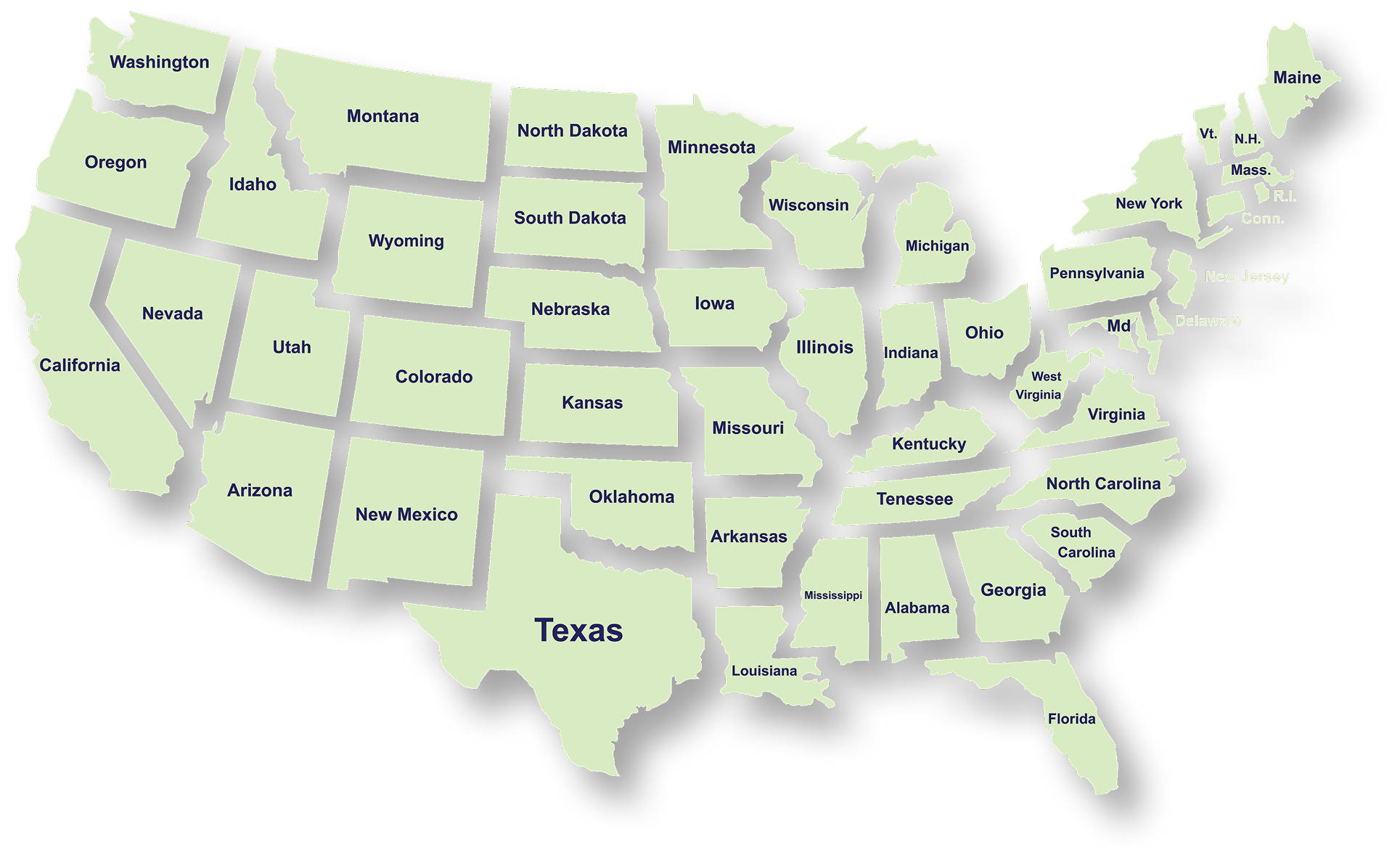
Serving Businesses & Individuals Across USA

We handle accounting, tax filing, and planning with defined timelines and accurate reporting for businesses and individuals across all states.

Frequently Asked Questions

What services does NR CPAs & Business Advisors provide?
What is tax planning and why is it important for businesses?
How can a Virtual CFO help my business?
When should a business consider IRS tax resolution services?
What financial statements does a business typically need?
How can startup advisory services help new businesses?
What is strategic business planning?
What is a Virtual Family Office and who can benefit from it?