Learning Center for Tax and Financial Insights

Stay updated with clear, actionable articles on tax rules, deadlines, deductions, and financial decisions that impact individuals and businesses.

No items found.

How to Receive Payments in QuickBooks Online

It’s more enjoyable than paying your bills. Here are three ways to process incoming money from customers.One of the biggest problems small businesses face is maintaining a positive cash flow. It’s a constant battle. How do you keep your income running ahead of your expenses?QuickBooks Online can help. It provides specialized forms and a mobile app that help you record and deposit the payments that are coming in. Do you ever receive payments instantly for some products and/or services? Are you ever out of the office and have to document a sale for both you and the buyer? Do you send invoices for products and/or services and need to make sure that payments get reported accurately when they come in?QuickBooks Online supports all of these situations. It also provides a service that can automate your payments and help you get paid faster.Applying Payments to InvoicesIf you send invoices to customers for products and/or services, you can receive their payments easily using QuickBooks Online. Businesses can record payments manually, but there’s a better way that can help you get paid faster: QuickBooks Payments. This is a merchant account that allows you to accept credit card and bank payments electronically.Using QuickBooks Online’s mobile app, you can check the payment status of an invoice.Once you set this up in QuickBooks Online, your invoices will allow bank cards and electronic checks as integrated payment options. Your invoices will go out with a button that customers can click to provide bank card or check information. You’ll be able to see when invoices are viewed, paid, and deposited, as shown in the image above. You can also get notifications of invoice activity.Of course, you can also check the payment status of the invoices you’ve sent in the browser-based version of QuickBooks Online on your desktop or laptop. Open your list of invoices on the site and click on one to highlight it. A panel will slide out from the right side of the screen displaying the invoice’s timeline.You can also record payments manually. Look at the end of the row for an invoice that hasn’t been paid. You’ll see a Receive Payment link. Click it to open the Receive Payment screen and complete the fields that aren’t already filled in, then save the screen. There’s also a Receive Payment link on the invoice screen itself.

Explore More
No items found.

How Employee Stock Options Are Taxed

Article Highlights:Non-statutory OptionWage IncomeStatutory (Incentive) OptionsCapital GainsAlternative Minimum Tax Many companies, as an incentive to employees to help grow the companies’ market value, will offer stock options to key employees. The options give the employee the right to buy up to a specified number of shares of the company’s stock at a future date at a specific price. Generally, options are not immediately vested and must be held for a period of time before they can be exercised. Then, at some later date, and assuming the stock price has appreciated to a value higher than the option price of the stock, the employee can excise the options (buy the shares), paying the lower option price for the stock rather than the current market price. This gives the employee the opportunity to participate in the growth of the company through gains from the sale of the stock without the risk of ownership.There are two basic types of employee stock options for tax purposes, a non-statutory option and a statutory option (also referred to as the incentive stock option), and their tax treatment is significantly different. Non-statutory Option – The taxability of a non-statutory option occurs at the time the option is exercised. The gain is considered ordinary income (compensation) and is supposed to be included in the employee’s W-2 for the year of exercise. We say “supposed to be” because it is not uncommon to see smaller firms mishandle the reporting.The employee has the option to sell or hold the stock he or she has just purchased, but regardless of what he or she does with the stock, the gain, which is the difference between the option price and market price of the stock at the time of the exercise, is immediately taxable. Because of the immediate taxation, most employees who have been granted options will, when exercising their options, immediately sell their stock. Under that scenario, the W-2 will reflect the profit and Form 8949 (the tax form used to report sales of stock and other capital assets) may need to be prepared to show the sale, essentially with no gain or loss, so that the gross proceeds of sale reported on the return are matched up with the sale reported to IRS (on Form 1099-B). If there was a sales cost, such as a broker’s commission, then the result would be a reportable loss, albeit usually a small amount. Since the difference between the option price and market price is included in wages, it is also subject to payroll taxes (FICA).If an employee chooses to hold the stock, he or she would have to pay the tax on the difference between the option price and exercise price, plus the FICA tax, from other funds. If the stock subsequently declines in value, the employee is still stuck with the gain reported when the option was exercised. Any loss on the subsequent sale of the stock would be limited to the overall capital loss limitation of $3,000 per year. Statutory (Incentive) Options – What makes the taxation of a statutory option different from a non-statutory option is that no amount of income is included in regular income when the option is exercised. Thus, the employee can continue to hold the stock without any tax liability; and, if he or she holds it long enough, any gain would become a long-term capital gain. To achieve long-term status, the stock must be held for:More than 1 year after the stock option was exercised, and More than 2 years after the option was granted.

Explore More
No items found.

Video Tips: Taxpayers Can Expect a Smaller Refund This Tax Season

Because most of the COVID pandemic-related tax benefits have come to an end, your tax refunds may be smaller this year and substantially smaller for many.

Explore More
No items found.

Are You Caring for a Disabled Family Member? Read This.

Article Highlights: Caring for Disabled Family MembersQualified Medicaid Waiver PaymentsExclusion QualificationsMandatory ExclusionEarned IncomeEarned Income Tax CreditTax Court RulingMany taxpayers prefer to care for ill or disabled family members in their homes as opposed to placing them in nursing homes, but doing this can be expensive, time-consuming, and exhausting. The government also recognizes home care as a means of reducing the government’s costs in terms of caring for individuals who otherwise would be institutionalized (because they require the type of care that is normally provided in a hospital, nursing facility, or intermediate care facility). To promote home care and reduce the government’s institutional care expenses, Medicaid (through state agencies) pays home caregivers a small amount of compensation, referred to as a Medicaid waiver payment, to care for an individual in the care provider’s home. Originally the IRS took the position that these payments were taxable income to the caregiver. Back in 2014, the IRS changed its position and announced that, if the care met certain requirements, the compensation would be excludable and treated in the same manner as excludable difficulty-of-care payments under the foster care payments rule. This is the case even when the caregiver and the individual being cared for are related. The compensation exclusion applies if the following requirements are met:The compensation must be required due to a physical, mental, or emotional handicap with respect to which the State has determined that there is a need for additional compensation. The care must be provided in the care provider’s home. The “provider’s home” may be the care recipient’s home if the care provider resides there and regularly performs the routines of the provider’s private life, such as sharing meals and holidays with family. In contrast a care provider who sleeps at the care recipient’s home several nights a week but on weekends and holidays resides with his or her own family in a separate home would not be providing the care in the care provider’s home and would not qualify to exclude the Medicaid waiver payments received.The payments must be designated as compensation for qualified foster care or difficulty of care.To be excludable, the care payments are limited to a maximum of five individuals aged 19 and older or ten individuals aged 18 and younger.

Explore More
No items found.

Tax Benefits for Members of the Clergy

Article Highlights: Employee CompensationSelf-Employment CompensationParsonage AllowancePrimary ResidenceFair-Market-Value LimitationDesignation by the Employing Organization Business Expenses and Excluded IncomeRetirementVows of PovertySelf-Employment Tax ExemptionMembers of the clergy are taxed on not just their salary but on other fees and contributions that they receive in exchange for performing services such as marriages, baptisms, funerals, and masses. As a result, clerics will generally report their income in two ways:As Employees – As employees, clerics receive from the church W-2 forms that show the amount of their income that is subject to tax, any amount paid as a nontaxable housing allowance (discussed later), and any withholding. As Self-Employed Individuals – Income received by a cleric other than as an employee of a church is reported as self-employment income. Typically, this would include fees received for services provided for baptisms, weddings, funerals, and other religious ceremonies that are not included in the W-2 from the church. This income and any expenses associated with it are reported on Schedule C and are subject to the self-employment tax. Members of the clergy may qualify for two unique tax benefits: a tax-free parsonage allowance and an exemption from the self-employment tax on their ministerial earnings. Here are the details for both.Parsonage/Rental Allowance Exclusion from Income – A member of the clergy can qualify to have a rental allowance excluded from taxable income if that allowance is provided as remuneration for services that are ordinarily the duties of a minister of the gospel. The following are the qualifications and details of the exclusion allowance: The allowance is excludable only to the extent that it is used for expenses related to the minister’s housing (e.g., rent, mortgage payments, utilities, and repairs). The rental allowance is not excludable to the extent that it exceeds reasonable compensation for the minister’s services.The allowance only applies to the minister’s primary residence.The allowance cannot exceed a home’s fair rental value, including furnishings and appurtenances such as garages, plus the cost of utilities. In advance of the payment, the employing organization must designate the allowance by an official action. If a minister is employed by a local congregation, the designation must come from the local church instead of from the church’s national organization.The portion of the minister’s business expenses that is attributable to tax-free income is not deductible. This rule does not apply to home-mortgage interest or to taxes that are deductible in full if the minister itemizes deductions.Retired clerics can exclude a home’s rental value or a rental allowance if it is furnished as compensation for past services and authorized under a convention of a national church organization. However, this exclusion does not extend to the widow or widower of a retired cleric.Although it is not subject to income tax, a parsonage allowance is subject to the self-employment tax unless the minister is exempt (as discussed below).

Explore More
No items found.

Video Tips: Here's Why You Should Have Your Tax Refund Direct Deposited

Receiving a tax refund is happy news to any taxpayer; getting it quickly is even better. Direct deposit is the safest and most convenient way to receive a tax refund. The IRS encourages taxpayers to file when they are ready and choose direct deposit to receive any refund they may be owed.

Explore More
No results found.
Thank you! Your submission has been received!
Oops! Something went wrong while submitting the form.

Want tax & accounting tips & insights?Sign up for our newsletter.

Thank you! Your submission has been received!
Oops! Something went wrong while submitting the form.

Why Work With Us?

We combine deep tax expertise, financial strategy, and practical business insight to help you manage complexity, stay compliant, and make confident financial decisions.
A dollar sign, representing financial advice or discussion at NR CPAs & Business Advisors.

Experienced CPA and Enrolled Agent Leadership

Guidance led by licensed professionals with deep expertise in tax strategy, compliance, and complex financial matters.
White bar chart with an upward arrow on green circular background representing growth or progress at NR CPAs &. Business Advisors

Support for Growing Businesses and Startups

We understand the financial challenges of growth stage businesses and provide structured guidance to support expansion.
A white hand holding a dollar symbol and ascending bar chart on a green circular background representing financial growth or investment at NR CPAs & Business Advisors..

Strategic Financial Advisory

Our team helps you evaluate financial decisions with greater clarity, supported by practical insights and long term planning.

Fractional CFO Support

Access experienced financial leadership without the commitment and cost of hiring a full time Chief Financial Officer.

Proactive Tax Planning Approach

We focus on identifying tax opportunities throughout the year rather than reacting only during filing season.

Clear and Reliable Financial Reporting

Accurate financial statements and reporting that help you better understand performance and make informed decisions.
White IRS building icon with pillars and a dollar sign above on a green circular background.

Professional IRS Representation

Experienced support in resolving IRS notices, disputes, and compliance matters while protecting your financial interests.

Personalized Client Focus

Every client receives thoughtful attention and tailored financial solutions based on their specific needs and business goals.
Financial matters often involve important decisions. Working with experienced advisors can help you approach them with greater clarity and confidence in your choices.

Need Help With Your Tax or Financial Decisions?

Discuss your situation with our advisors to get clear guidance on tax planning, IRS matters, and the financial decisions ahead.
Business consulting at NR CPAs & Business Advisors.

Request Your Consultation

Fill out the form to discuss your tax concerns, financial questions, or advisory needs with our team. We will review your details and respond shortly.

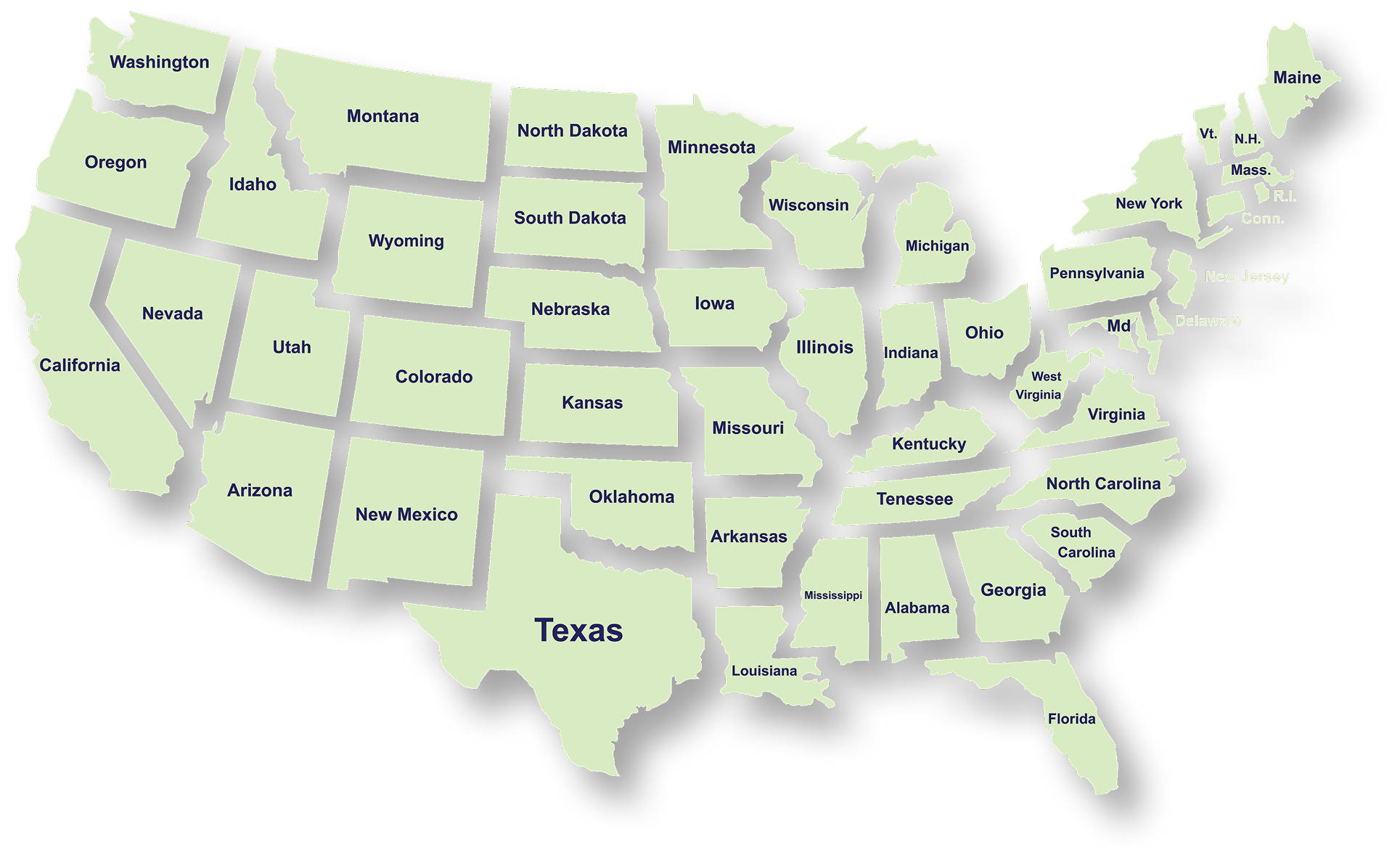
Serving Businesses & Individuals Across USA

We handle accounting, tax filing, and planning with defined timelines and accurate reporting for businesses and individuals across all states.

Frequently Asked Questions

What services does NR CPAs & Business Advisors provide?
What is tax planning and why is it important for businesses?
How can a Virtual CFO help my business?
When should a business consider IRS tax resolution services?
What financial statements does a business typically need?
How can startup advisory services help new businesses?
What is strategic business planning?
What is a Virtual Family Office and who can benefit from it?