Learning Center for Tax and Financial Insights

Stay updated with clear, actionable articles on tax rules, deadlines, deductions, and financial decisions that impact individuals and businesses.

No items found.

Should You Be Keeping Home Improvement Records?

Article Highlights:Keeping home improvement recordsHome gain exclusion amountsRecords may be required to avoid taxMany taxpayers don’t feel the need to keep home improvement records, thinking the potential gain will never exceed the amount of the tax code’s exclusion for home gains explained as follows. Under the current version of the tax code, you are allowed an exclusion of up to $250,000 ($500,000 for married couples) of gain from the sale of your primary residence if you owned and lived in it for at least 2 of the 5 years before the sale. You also cannot have previously taken a home-sale exclusion within the 2 years immediately preceding the sale. There is no limit on the number of times you can use the exclusion if you meet these time requirements; however, extenuating circumstances can reduce the amount of the exclusion. The home-sale gain exclusion only applies to your main home, not to a second home or a rental property. As noted above, you must have used and owned the home for 2 out of the 5 years immediately preceding the sale. The years don’t have to be consecutive or the closest to the sale date. Vacations, short absences, and short rental periods do not reduce the use period. If you are married, to qualify for the $500,000 exclusion, both you and your spouse must have used the home for 2 out of the 5 years prior to the sale, but only one of you needs to meet the ownership requirement. When only one spouse in a married couple qualifies, the maximum exclusion is limited to $250,000 instead of $500,000. If you don’t meet the ownership and use requirements, there are some situations in which a prorated exclusion amount may be possible. An example of this situation would be if you were required to sell the home because of extenuating circumstances, such as a job-related move, a health crisis or other unforeseen events. Another rule extends the 5-year period to account for the deployment of military members and certain other government employees. Please call this office if you have not met the 2 out of 5 rule to see if you qualify for a reduced exclusion. But what if your home sale gain is more than the home sale exclusion? Then it is in your best interests to keep home improvement records. Even if only keeping the receipts for the improvements in a folder or a shoe box.

Explore More
No items found.

Why Quality Bookkeeping Matters

If you had to make a list of all the things that most business owners hate, taking care of accounting and other financial matters is probably right at the top.Yet at the same time, a lot of those same business owners are struggling. Maybe they had a financial goal that they fell significantly short of. Maybe they tried to release a new product or service and it underperformed.Either way, much of this can be changed by returning to those records and making sure that they're as accurate and as up-to-date as possible.In no uncertain terms: 2022 is over. We're well into the new year and if you're still trying to get your books closed from last year, you've got a major problem on your hands.Thankfully, all hope is not lost. There is a way that you can get caught up on things to make sure you're on the right path from a financial point of view. You just may have to shift the way you're used to thinking about what constitutes quality bookkeeping, to begin with.The Benefits of Proper Bookkeeping: Breaking Things DownOne crucial thing to remember is that getting your books together for 2022 is about more than just retroactive financial maintenance. It can directly impact your business and its ability to function in the coming year, too.If your records aren't up-to-date, you can never really be certain where you stand financially. You could have a much, much more positive impression regarding how things are going compared to the reality of the situation. This is especially true if yours is a business that experiences seasonal fluctuations in terms of the income you're bringing in and the work you're doing for clients.Speaking of that, without up-to-date records you also have no true idea of what you worked last year at all. This is about more than just figuring out how much money is sitting in a bank account somewhere. Knowing how much you're working can help uncover trends and patterns that you likely would have missed. You can see who your biggest clients are, for example, and the ones that you absolutely want to hang onto. You can also see if you need to diversify your client base to avoid putting "all of your eggs in one basket."

Explore More
No items found.

Don't Ignore Household Employee Payroll Tax Rules

Article Highlights:Household EmployeesTax AvoidanceForm 1099-KFiling 1099sCorrect ProceduresW-2s, Payroll Taxes and ReportingOvertime Hourly Pay or SalarySeparate PayrollsIf you hire a domestic worker to provide services in or around your home, you probably have a tax liability that you don’t know about – or one that you do know about but are ignoring. Either situation can come back to bite you. When the worker is your employee, your liability includes both withholding and paying payroll taxes as well as issuing a W-2 after the close of the year.Sure, it is a lot easier simply to pay your worker in cash so as to avoid federal and state payroll taxes – and all the paperwork that goes with them. Your domestic worker will likely be fully cooperative with a cash deal because he or she can also avoid paying taxes. However, if the IRS or your state employment department finds out about these payments, the result could be very unpleasant for you. Some families may be paying their household help via a third-party payment processor such as PayPal, Venmo, etc. Beginning for the 2023 tax year these payment processors must begin reporting those payments (on Form 1099-K) when the total for the year exceeds $600. Not everyone who performs services in or around your home is classified as an employee. For instance, a plumber or electrician who makes repairs in your home will generally be a licensed contractor; the government does not classify contractors as employees. On the other hand, the IRS has conclusively ruled that nannies, housekeepers, senior caregivers, some gardeners and various other domestic workers are employees of the people for whom they work. It makes no difference if you have a written contract with the worker; similarly, the number of hours worked, and the amount paid do not matter. You are probably thinking, “Wait a minute” – perhaps ¬¬everyone you know pays in cash, and none of them has paid payroll taxes or issued a W-2 for a household employee. However, if a worker gets injured on your property or if you dismiss the worker under less-than-amicable circumstances, it’s a pretty sure bet that your household employee will be the first one to throw you under the bus by reporting you to the state labor board or by filing for unemployment compensation. Generally, an unemployment insurance claim form requires the worker to list all employers and wage amounts to get benefits. That, in turn, creates a letter audit to collect state employment taxes and a referral to the IRS to collect federal employment taxes (FICA and FUTA).Some individuals try to circumvent the payroll issue by treating a household employee as an independent contractor, incorrectly issuing the household employee a Form 1099-NEC. The easiest way to comply with the law, both federal and state, is to engage a payroll company to make the payroll payments and take care of the paperwork and required filings. If you are a do-it-yourselfer, here are the correct actions you should take for domestic employees:Obtain a Federal Employer Identification Number (FEIN), which you will use in lieu of your Social Security Number when filing the required reporting forms. Note: If, as the owner of a sole proprietorship business, you already have a FEIN, you should use that number instead of requesting a separate one as a household employer. Obtain a state ID number for unemployment insurance and state tax withholdings.Withhold Social Security and Medicare taxes from the employee’s pay if it exceeds the annual threshold ($2,600 for 2023).Withhold income tax from the employee if requested by the worker and if you agree to do so.File state employment tax returns as required – generally quarterly (although beware that some states require monthly returns) – and make the required deposits for state employment taxes.Prepare a W-2 for the employee and a W-3 transmittal; file them by the end of January.File Schedule H with your federal individual income tax return and pay all the federal payroll and withholding taxes (i.e., the federal taxes that you withheld from the employee’s pay, plus your matching share of Social Security and Medicare taxes plus federal unemployment tax, which is entirely your responsibility). Limited exception: If you operate a sole proprietorship with employees, you may include the payroll taxes of your household workers with those of the business’s employees, but you cannot take a business deduction for those taxes. Generally, it is better to keep the personal and business reporting separate.

Explore More
No items found.

What is the Work Opportunity Tax Credit, and Who Qualifies For It?

At its most straightforward, the Work Opportunity Tax Credit is available at the federal level to businesses that go out of their way to hire people from a targeted group that has historically had difficulty finding gainful employment.The theory is to encourage business owners of all types to create economic opportunities whenever possible. The Work Opportunity Tax Credit also helps talk a bit of the stress off of various government assistance programs, many of which need all the help they can get.The Work Opportunity Tax Credit: Breaking Things DownWith regard to the aforementioned targeted groups, they include ones like the following:Qualified IV-A recipients. This involves anyone who is getting financial assistance - or their family members - under Part A of title IV of the Social Security Act.Qualified veterans. An example of this would be a veteran or their family member who was getting SNAP assistance for at least three months. Other examples include those veterans who have been unemployed for various lengths of time given the circumstances.A qualified ex-felon. This is a convicted felon hired within at least a year of getting that conviction or being released from prison.Designated community residence. This is someone who is at least 18 years old (but no older than 40) and lives in either a rural renewal county or an empowerment zone.Vocational rehabilitation referral recipients. This is someone with either a physical or mental disability (or in some cases both) who has been referred to the employer in question. They will also need to have completed either a state plan under the Rehabilitation Act, a program with the Department of Veteran Affairs, or an employment network plan.A qualified summer youth employee. This is someone who is between 16 and 18 years old, who performs services between May 1 and September 15, who has never worked for the employer before, and who lives in an empowerment zone.Other examples of the targeted groups that would allow a business to get approved for the Work Opportunity Tax Credit involve those who have been on long-term unemployment, those who have been on long-term family assistance, and those who are qualified for SSI (supplemental security income), among others.Because of the way that the Work Opportunity Tax Credit functions, a business cannot simply claim it on their federal income taxes. They must first go through a certification process to confirm that the newly hired employee is in fact a member of one of the targeted groups outlined above.If approved, employers can then claim the Work Opportunity Tax Credit equal to 40% of the first-year wages, up to $6,000 (more for certain targeted groups) per employee. Thus, except for those targeted groups with higher allowable creditable wages, the maximum credit is $2,400 (40% of $6,000). For the full credit (40%), the targeted employee must work for a minimum of 400 hours in the first year. For those that work between 120 and 399 hours, the credit percentage is reduced to 25%.The Work Opportunity Tax Credit is a general business credit. If an employer is tax-exempt, they can claim it against the money they are paying out in payroll taxes.

Explore More
No items found.

Video Tips: Ways to Protect Your Personal Information

Identity theft affects millions of people each year and can cause serious harm. Protect yourself by securing your personal information, understanding the threat of identity theft, and exercising caution.

Explore More
No items found.

Can’t Pay Your Taxes? Here Are Some Payment Options

Article Highlights:If You Can’t PayAutomatic Extension in Federally Declared Disaster AreasFamily LoansHome Equity Loans and HELOCsCredit CardShort-term Payment Plan IRS Installment AgreementRetirement FundsFiling ExtensionsEnforced Collections Offer-in-Compromise About 3 out of 4 American taxpayers receive a refund each year when they file their income tax returns, but there are those who for one reason or another end up owing. Of those who owe Uncle Sam many don’t have the means to pay what they owe by the return due date (usually in April). NOTE: If you live in a federally declared disaster area the due date may have been automatically extended. The extension will apply if you reside in the disaster area, and you need not be directly affected by the disaster to qualify. Check the IRS website at Tax Disaster Relief Situations for areas that have disaster filing relief extensions. For example, taxpayers in most of California and parts of Alabama and Georgia now have until Oct. 16, 2023, to file various federal individual and business tax returns and make tax payments. Thus if you owe federal income tax, you have until Oct. 16, 2023, to pay your tax liability. Call this office to confirm you qualify and for information related to state disaster relief due date postponements. Generally, tax due occurs when a wage earner has under-withheld on his or her payroll or a self-employed individual failed to make adequate estimated tax payments during the year. This can be a huge problem for those who are unable to pay their liability. It is generally in your best interest to make other arrangements to obtain the funds for paying your 2022 taxes rather than be subjected to the government’s penalties and interest for payments made after April 18, 2023. Here are a few options to consider.Family Loan – Obtaining a loan from a relative or friend may be the best bet because this type of loan is generally the least costly in terms of interest.Home Equity Loans and HELOCs - Use the equity in your home—that is, the difference between your home’s value and your mortgage balance—as collateral. As the loans are secured against the equity value of your home, home equity loans offer extremely competitive interest rates—usually close to those of first mortgages. Compared with unsecured borrowing sources, such as credit cards, you’ll be paying less in financing fees for the same loan amount. Unfortunately, obtaining these loans takes time, so if you anticipate that you’ll need funds from such a loan to pay your taxes that are due in April, you should get the application process started right away.Rob a Bank – If you don’t get caught you don’t have to pay back any loan. Just kidding.Credit Card – Another option is to pay by credit card with one of the service providers that work with the IRS. However, since the IRS will not pay a credit card discount fee (the fee charged by the credit card company), you will have to pay the fees due and pay the higher credit card interest rates.Short-Term Payment Plan – If you can fully pay the tax owed within 180 days and owe less than $100,000 including tax, penalties, and interest, you can apply for a short-term payment plan online at the IRS web site. You won’t be charged a set-up fee but will still have to pay penalties and interest until the balance owed is fully paid. Set-up fees will be charged if you apply for a payment plan by phone, mail, or in person instead of online.IRS Installment Agreement – If you owe the IRS $50,000 or less, you may qualify for a streamlined installment agreement where you can make monthly payments for up to six years. You will still be subject to the late payment penalty, but it will be reduced by half. Interest will also be charged at the current rate. There is a user fee to set up the payment plan. However, the IRS generally waives the fee for low-income taxpayers who agree to make electronic debit payments. In making the agreement, a taxpayer agrees to keep all future years’ tax obligations current. If the taxpayer does not make payments on time or has an outstanding past due amount in a future year, they will be in default of their agreement and the IRS has the option of taking enforcement actions to collect the entire amount owed. Taxpayers seeking installment agreements exceeding $50,000 will need to validate their financial condition and need for an installment agreement by providing the IRS with a Collection Information Statement (financial statements). Taxpayers may also pay down their balance due to $50,000 or less to take advantage of the streamlined option.Tap a Retirement Account – This is possibly the worst option for obtaining funds to pay your taxes because you are jeopardizing your retirement lifestyle and the distributions are generally taxable at your highest bracket, which adds more taxes to your existing problem. In addition, if you are under age 59½, the withdrawal is also subject to a 10% early withdrawal penalty that compounds the problem even further.

Explore More
No results found.
Thank you! Your submission has been received!
Oops! Something went wrong while submitting the form.

Want tax & accounting tips & insights?Sign up for our newsletter.

Thank you! Your submission has been received!
Oops! Something went wrong while submitting the form.

Why Work With Us?

We combine deep tax expertise, financial strategy, and practical business insight to help you manage complexity, stay compliant, and make confident financial decisions.
A dollar sign, representing financial advice or discussion at NR CPAs & Business Advisors.

Experienced CPA and Enrolled Agent Leadership

Guidance led by licensed professionals with deep expertise in tax strategy, compliance, and complex financial matters.
White bar chart with an upward arrow on green circular background representing growth or progress at NR CPAs &. Business Advisors

Support for Growing Businesses and Startups

We understand the financial challenges of growth stage businesses and provide structured guidance to support expansion.
A white hand holding a dollar symbol and ascending bar chart on a green circular background representing financial growth or investment at NR CPAs & Business Advisors..

Strategic Financial Advisory

Our team helps you evaluate financial decisions with greater clarity, supported by practical insights and long term planning.

Fractional CFO Support

Access experienced financial leadership without the commitment and cost of hiring a full time Chief Financial Officer.

Proactive Tax Planning Approach

We focus on identifying tax opportunities throughout the year rather than reacting only during filing season.

Clear and Reliable Financial Reporting

Accurate financial statements and reporting that help you better understand performance and make informed decisions.
White IRS building icon with pillars and a dollar sign above on a green circular background.

Professional IRS Representation

Experienced support in resolving IRS notices, disputes, and compliance matters while protecting your financial interests.

Personalized Client Focus

Every client receives thoughtful attention and tailored financial solutions based on their specific needs and business goals.
Financial matters often involve important decisions. Working with experienced advisors can help you approach them with greater clarity and confidence in your choices.

Need Help With Your Tax or Financial Decisions?

Discuss your situation with our advisors to get clear guidance on tax planning, IRS matters, and the financial decisions ahead.
Business consulting at NR CPAs & Business Advisors.

Request Your Consultation

Fill out the form to discuss your tax concerns, financial questions, or advisory needs with our team. We will review your details and respond shortly.

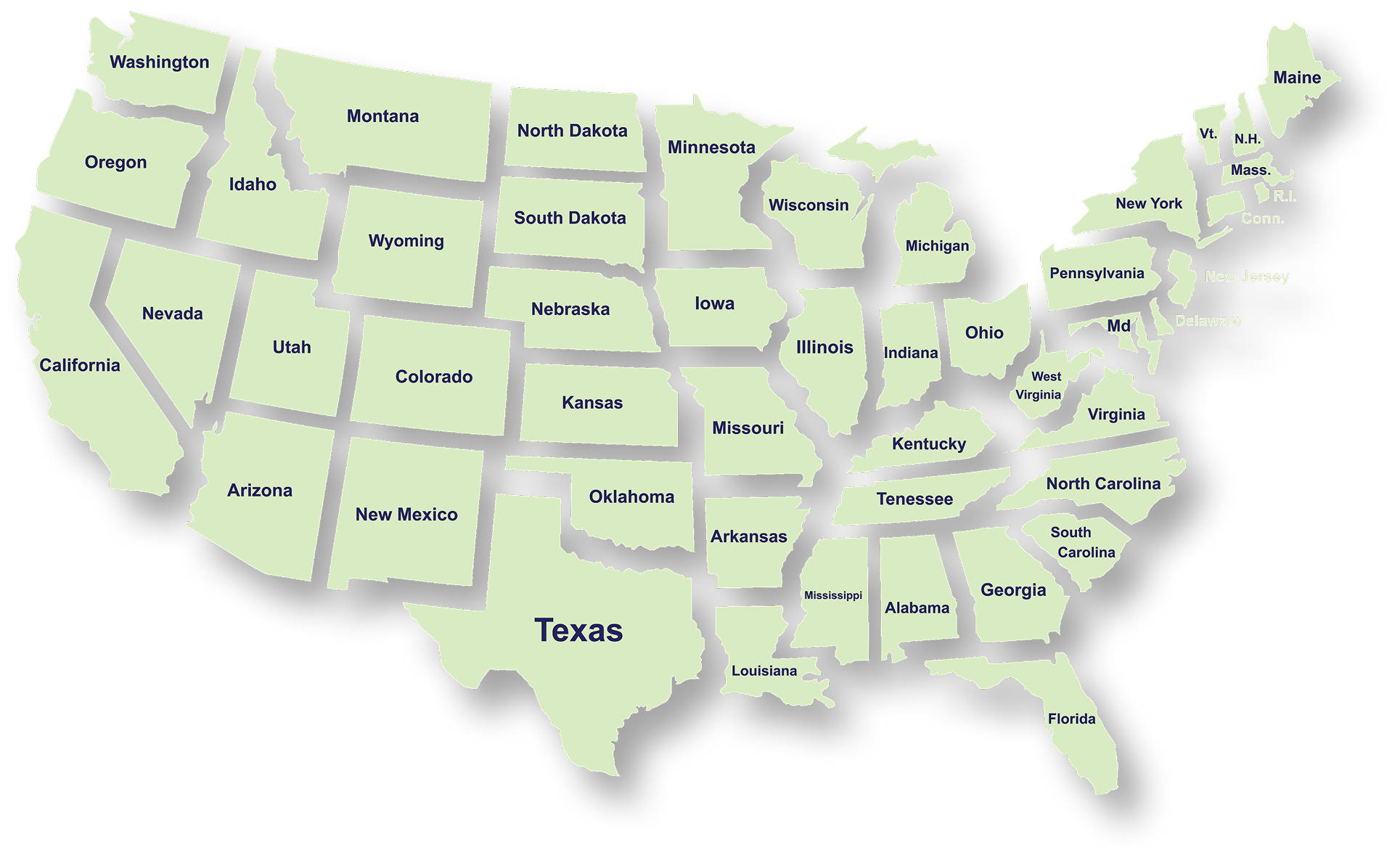
Serving Businesses & Individuals Across USA

We handle accounting, tax filing, and planning with defined timelines and accurate reporting for businesses and individuals across all states.

Frequently Asked Questions

What services does NR CPAs & Business Advisors provide?
What is tax planning and why is it important for businesses?
How can a Virtual CFO help my business?
When should a business consider IRS tax resolution services?
What financial statements does a business typically need?
How can startup advisory services help new businesses?
What is strategic business planning?
What is a Virtual Family Office and who can benefit from it?