Learning Center for Tax and Financial Insights

Stay updated with clear, actionable articles on tax rules, deadlines, deductions, and financial decisions that impact individuals and businesses.

No items found.

Are You Worried You Won't Have Enough Money Saved for Retirement?

All of us dream of one day being able to retire - to finally be able to relax and enjoy the lifestyle we worked so hard for. However, you'll need a significant amount of money to do it, which is where a lot of Americans begin to worry.Saving for retirement is a constant fear for many out there, especially during periods when the economy is hurting. The good news is that not everyone needs to save the same amount for retirement. By performing a few simple calculations now, you can help get yourself on the right path to financial success later on.Calculating Your Retirement Needs: Breaking Things DownFirst, you need to sit down and ask yourself several important questions that are specific to your situation. These include:How much money will you need to spend in retirement in order to maintain the lifestyle you see for yourself?Between now and retirement, how much money do you expect to earn from things like your savings and other potential income sources? How much do you plan on bringing in via Social Security?If you don't have enough money in your savings at that time, what are you going to do?To answer the first question accurately, make a list of the two types of expenses: both essential and discretionary. Essential, as the term implies, are those things that you absolutely cannot live without. Things like food, shelter, health insurance, etc. Discretionary expenses are things like entertainment and travel.One simple theory is that after you retire, you'll need between 75% and 80% of your current income to maintain the lifestyle you enjoy today. So if you made $90,000 per year right now, you would need to earn between $67,500 and $72,000 to continue on as you are as far as spending is concerned.Another theory is that you should simply take what you are currently earning and subtract the amount of money that you are currently saving towards retirement to arrive at that ideal spending number. So if you're currently making that same $90,000 and you're saving $8,000 per year, you would need to make $72,000 to maintain your current lifestyle.

Explore More
No items found.

Many Taxpayers Will See Smaller Refunds This Year

Article Highlights: Child Tax Credit Dependent Care Benefits Recovery Rebates Employee Retention Credit Congress has for years used the tax return as a means of providing benefits to taxpayers in need and incentives to stimulate activities in business, as well as addressing environmental issues. So when COVID-19 hit, Congress and many state governments provided tax benefits to help citizens through the pandemic. Because the COVID pandemic-related benefits have come to an end, your tax refunds may be smaller this year, and substantially smaller for many. The following is a rundown of some areas where decreases in federal tax benefits will affect taxpayers’ 2022 tax refunds. Child Tax Credit: 2021 - Taxpayers with children enjoyed an enhanced and refundable tax credit of $3,000 per child under the age of 18 ($3,600 if under age 6) per child in 2021. 2022 – The credit has reverted to 2020 levels and the maximum credit for 2022 is $2,000 per qualifying child, of which the maximum refundable amount is $1,500 per child in certain situations. In addition, the credit only applies to children under the age of 17. Non-refundable tax credits can only be used to offset tax liability and any excess is lost. On the other hand, a refundable credit offsets tax liability and any excess is refundable. In addition, the child tax credit has always phased out for higher income taxpayers. For 2021 the phaseout thresholds were substantially increased as illustrated in the table. However, that increase was for 2021 only and the thresholds have reverted to 2020 levels for 2022. CHILD & DEPENDENT TAX CREDITS PHASEOUT THRESHOLDS Filing Status 2022 2021 Married Joint or Qualifying Widow $400,000 $150,000 Married Separate $200,000 $75,000 Head of Household $200,000 $112,500 Single $200,000 $75,000 Dependent Care Benefits: The tax code provides a tax credit to help working taxpayers that pay care expenses for their children and other qualifying individuals. The credit is a percentage of the dependent care expenses incurred, but those expenses are limited to specific amounts and the taxpayer’s income from working. The credit percentage also declines for higher income taxpayers. 2021 – The credit was fully refundable, and the credit was a flat 50% of the allowable expenses up to $8,000 for one and $16,000 for two or more qualified individuals. Thus the credit could be as much $4,000 for one and $8,000 for two or more qualified individuals. The 50% credit rate began to phase out when the taxpayer’s AGI reached $125,000, but the rate wasn’t reduced below 20%. 2022 – The credit is not refundable, and the credit rate ranges from a high of 35% to a low of 20% (see table) of the allowable expenses up to $3,000 for one and $6,000 for two or more qualified individuals. AGI Adjusted Applicable Percentage (Other Than 2021) AGI Over But Not Over Applicable Percent AGI Over But Not Over Applicable Percent 0 15,000 35 29,000 31,000 27 15,000 17,000 34 31,000 33,000 26 17,000 19,000 33 33,000 35,000 25 19,000 21,000 32 35,000 37,000 24 21,000 23,000 31 37,000 39,000 23 23,000 25,000 30 39,000 41,000 22 25,000 27,000 29 41,000 43,000 21 27,000 29,000 28 43,000 No Limit 20

Explore More
No items found.

What You Can Learn About Running a Business From Henry Ford

If you had to make a list of people who changed the world essentially just by existing, Henry Ford's name would likely be on it.Most people know him from history as the founder of the (appropriately named) Ford Motor Company. Here, he developed the assembly line method of mass production. Not only did this help cut costs enormously, creating the first automobile that average Americans could afford to buy, but it also revolutionized the manufacturing industry. The computer or mobile device that you're reading this on would have cost a significantly larger amount of money (than it already does) had the assembly line not been invented.He also introduced the Ford Model T automobile, which revolutionized transportation in this country. He quickly became one of the richest and most famous people on the planet... and it's safe to say, he definitely earned it.But it's important to note that Ford's impact on history didn't end with those two ideas. A lot of people don't realize that he also had a hand in revolutionizing many aspects of how businesses are run in the first place. His processes - not to mention his ideas - should absolutely be learned about and applied to today's modern world.Long-Term Lessons From Henry Ford: An OverviewOne of Henry Ford's most important quotes that can be applied to today's modern business world is as follows:"The short successes that can be gained in a brief time and without difficulty are not worth as much."What he's essentially saying here is that while most entrepreneurs do dream of being an overnight success (who doesn't?), nobody wants to be the "one-hit wonder" equivalent of a business. You don't just want to create a company that people are briefly enamored with and then soon forget, regardless of how successful it makes you. What you should want is to create something that you can then build upon and turn into a legitimate legacy.This will take time. This will see you face numerous challenges. This will see your career littered with failure along the way. But it doesn't matter, because the end result of successfully playing the long-game will be worth it for you (and, if you're half as successful as Ford was, for future generations of your family as well).

Explore More
No items found.

Protecting You and Your Business From Lawsuits: What You Need to Know

Running your own business is an exciting endeavor for a wide range of different reasons. First, you get to be your own boss - there is nobody in charge of your daily activities beyond you. Secondly, you get to bring together a number of like-minded individuals to help further your own vision. But as is true with most things in life, there is also a fairly significant downside: lawsuits.Legal action is a common threat to many business owners, regardless of the type of industry that you're operating in. While what follows should not be taken as legal advice in any way, there are still a variety of best practices that you can follow to help protect everything you've worked so hard to build from legal jeopardy.Get Absolutely Everything in WritingBy far, the most important step you can take to protect your business from a lawsuit involves putting absolutely everything in writing: chief among them agreements.If you enter into an agreement with a vendor where you are to perform X task, and they are to perform Y, don't just "sign it" with a handshake. Have a lawyer draw up documents outlining exactly what is to be done and get both parties to sign on the dotted line.That way, if there are any discrepancies later, you'll have something to fall back on in terms of defining the scope of what the original agreement actually was.

Explore More
No items found.

Tax Benefits For Parents

Article Highlights:Child Tax CreditEarned Income Tax CreditHead of Household Filing StatusChild CareEducation Savings PlansEducation Tax CreditEducation Loan InterestChild’s Medical ExpensesIf you are a parent, whether single, married or divorced, there are a significant number of tax benefits available to you, including deductions, credits, and filing status that can help put a dent in your tax liability. Child Tax Credit – You may be entitled to a nonrefundable tax credit of $2,000 for each child under the age of 17 at the close of the year, provided the child qualifies as your tax dependent. The term “nonrefundable” means the credit can only be used to offset any tax liability you may have, and the balance of the credit is lost. If you are not filing jointly with the child’s other parent and have released the child’s tax dependency to that parent, then you will not qualify for the child tax credit for that child. In addition, this credit phases out for higher income taxpayers. For lower income parents, a portion of the child tax credit, which is normally nonrefundable, can become refundable.Earned Income Tax Credit – The earned income credit benefits lower income parents based upon your earned income, filing status (either married filing jointly or unmarried) and the number of qualifying children you have up to three. The credit for 2023 can be as much as $7,430 and better yet, the amount not used to offset your tax liability is fully refundable. This credit is phased out for higher income filers, and those with investment income of more than $11,000 for 2023 aren’t eligible. Head of Household Filing Status – The tax code provides a special filing status – head of household – for unmarried and separated taxpayers. The benefit of head of household filing status is that it provides lower tax rates and a higher standard deduction than the single status ($20,800 as opposed to $13,850 for a single individual in 2023). If you are an unmarried parent and you pay more than one-half the cost of the household for yourself and your child, you qualify for this filing status. Even if you are married, if you lived apart from your spouse the last six months of the year and pay more than one-half the cost of the household for yourself and your child, you qualify for this filing status. Childcare – Many parents who work or are looking for work must arrange for care of their children. If this is your situation, and your children requiring care are under 13 years of age, you may qualify for a nonrefundable tax credit that can reduce your federal income taxes. The childcare credit is an income-based percentage of up to $3,000 of qualifying care expenses for one child and up to $6,000 of qualifying care expenses for two or more children. The allowable expenses are also limited to your earned income, and if you are married, both you and your spouse must work and the limit is based upon the earned income of the spouse with the lower earnings. The credit percentages range from a maximum of 35% if your adjusted gross income (AGI) is $15,000 or less to 20% for an AGI of over $43,000. If your employer provides dependent care benefits under a qualified plan that pays your child care provider either directly or by reimbursing you for the expenses, or your employer provides a day care facility, you may be able to exclude these benefits from your income. Of course, the same expenses aren’t eligible for both tax-free income and the child care credit. Education Savings Plans – The tax code provides two plans to save for your children’s future education. The first is the Coverdell Education Savings Account, which allows non-deductible contributions of up to $2,000 per year. The earnings on these accounts are tax-free provided the amounts withdrawn from the accounts are used to pay qualified expenses for kindergarten and above. Coverdell contributions will phase out for higher income taxpayers beginning at an AGI of $190,000 for married taxpayers filing jointly and half that amount for other taxpayers.

Explore More
No items found.

March 2023 Individual Due Dates

March 10 - Report Tips to EmployerIf you are an employee who works for tips and received more than $20 in tips during February, you are required to report them to your employer on IRS Form 4070 no later than March 10. Your employer is required to withhold FICA taxes and income tax withholding for these tips from your regular wages. If your regular wages are insufficient to cover the FICA and tax withholding, the employer will report the amount of the uncollected withholding in box 8 of your W-2 for the year. You will be required to pay the uncollected withholding when your return for the year is filed.March 15 - Time to Call For Your Tax AppointmentIt is only one month until the April due date for your individual income tax returns. If you have not made an appointment to have your taxes prepared, we encourage you to do so before it becomes too late.

Explore More
No results found.
Thank you! Your submission has been received!
Oops! Something went wrong while submitting the form.

Want tax & accounting tips & insights?Sign up for our newsletter.

Thank you! Your submission has been received!
Oops! Something went wrong while submitting the form.

Why Work With Us?

We combine deep tax expertise, financial strategy, and practical business insight to help you manage complexity, stay compliant, and make confident financial decisions.
A dollar sign, representing financial advice or discussion at NR CPAs & Business Advisors.

Experienced CPA and Enrolled Agent Leadership

Guidance led by licensed professionals with deep expertise in tax strategy, compliance, and complex financial matters.
White bar chart with an upward arrow on green circular background representing growth or progress at NR CPAs &. Business Advisors

Support for Growing Businesses and Startups

We understand the financial challenges of growth stage businesses and provide structured guidance to support expansion.
A white hand holding a dollar symbol and ascending bar chart on a green circular background representing financial growth or investment at NR CPAs & Business Advisors..

Strategic Financial Advisory

Our team helps you evaluate financial decisions with greater clarity, supported by practical insights and long term planning.

Fractional CFO Support

Access experienced financial leadership without the commitment and cost of hiring a full time Chief Financial Officer.

Proactive Tax Planning Approach

We focus on identifying tax opportunities throughout the year rather than reacting only during filing season.

Clear and Reliable Financial Reporting

Accurate financial statements and reporting that help you better understand performance and make informed decisions.
White IRS building icon with pillars and a dollar sign above on a green circular background.

Professional IRS Representation

Experienced support in resolving IRS notices, disputes, and compliance matters while protecting your financial interests.

Personalized Client Focus

Every client receives thoughtful attention and tailored financial solutions based on their specific needs and business goals.
Financial matters often involve important decisions. Working with experienced advisors can help you approach them with greater clarity and confidence in your choices.

Need Help With Your Tax or Financial Decisions?

Discuss your situation with our advisors to get clear guidance on tax planning, IRS matters, and the financial decisions ahead.
Business consulting at NR CPAs & Business Advisors.

Request Your Consultation

Fill out the form to discuss your tax concerns, financial questions, or advisory needs with our team. We will review your details and respond shortly.

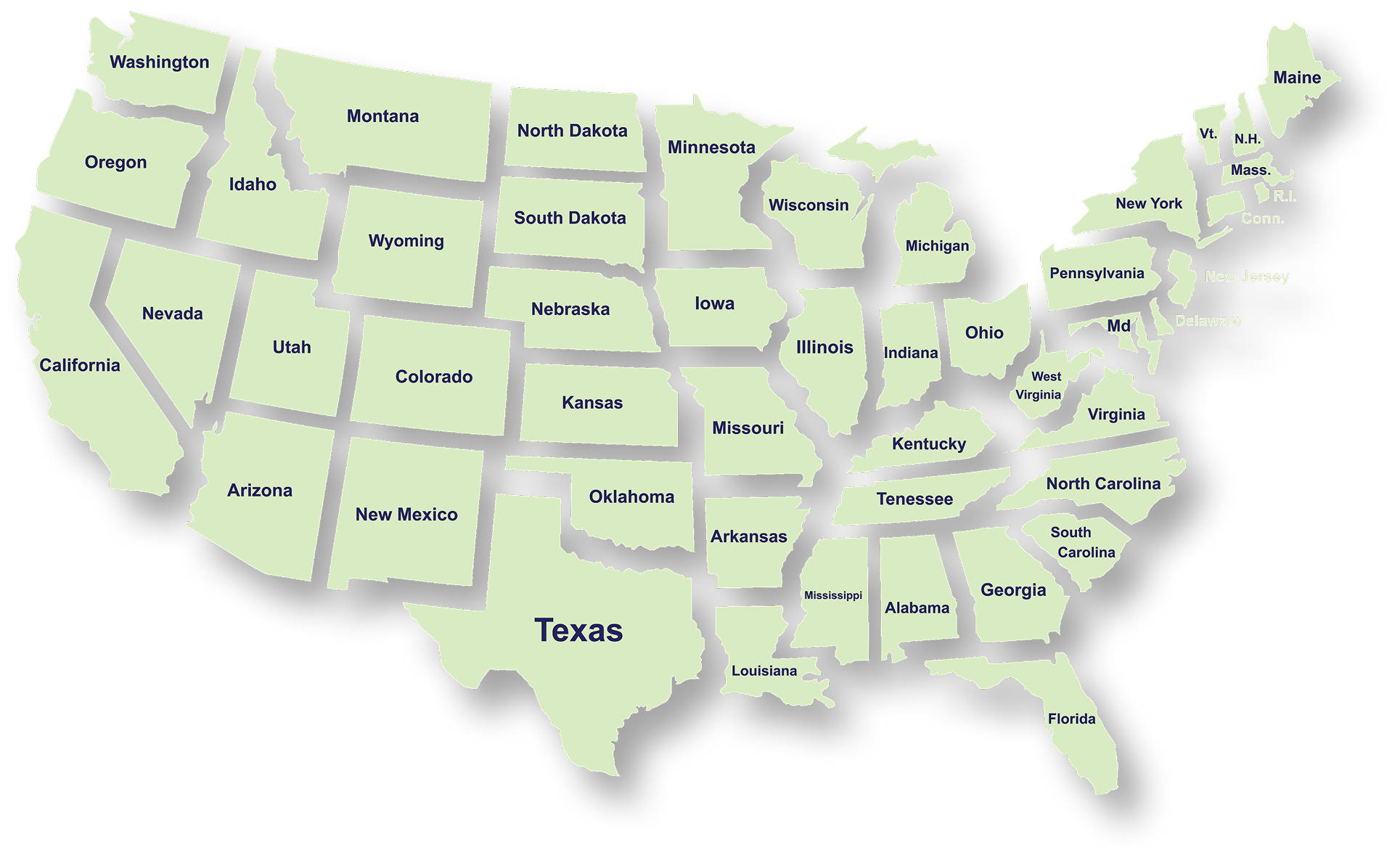
Serving Businesses & Individuals Across USA

We handle accounting, tax filing, and planning with defined timelines and accurate reporting for businesses and individuals across all states.

Frequently Asked Questions

What services does NR CPAs & Business Advisors provide?
What is tax planning and why is it important for businesses?
How can a Virtual CFO help my business?
When should a business consider IRS tax resolution services?
What financial statements does a business typically need?
How can startup advisory services help new businesses?
What is strategic business planning?
What is a Virtual Family Office and who can benefit from it?