Learning Center for Tax and Financial Insights

Stay updated with clear, actionable articles on tax rules, deadlines, deductions, and financial decisions that impact individuals and businesses.

No items found.

Be On the Outlook for Tax Reporting Forms

Article Highlights:Form W-2Form W-2GForm 1099-GForm 1099-MISCForm 1099-DIVForm 1099-INTForm 1099-BForm 1099-SForm SSA-1099Form RRB-1099Form 1099-RForm 1098-TForm 1095-AForm 1099-NECForm 1099-KSchedule K-1With tax season upon us, documents reporting income, sales and other items needed for your 2022 tax return should have arrived or will be arriving soon. Be on the lookout for them and be careful not to accidently discard any. Here are some of the common tax forms you need to be watching for depending upon your particular circumstances.Form W-2 - If you were employed in 2022, you will receive a W-2 from each of your employers. Not only does this form report your wages, but also the income tax that was withheld from your paychecks and which will be a credit against your tax liability.Form W-2G - If you had gambling income more than the IRS gambling winning reporting thresholds, you will receive one or more Form W-2Gs. In fact you may have already received one from the gambling entity at the time you won.Form 1099-G – This form is used for reporting income and refunds from several sources including:If you received a state income tax refund in 2022 from your 2021 return, the state will issue a Form 1099-G reporting the refund amount, which may or may not be taxable income on your 2022 federal return. If you itemized your deductions on your 2021 federal return, the state refund will most likely be taxable for federal.You will also receive a Form 1099-G showing the amount of any unemployment benefits you may have received in 2022, which are taxable for federal purposes. Some states also tax these payments.Form 1099-MISC - You may receive a Form 1099-MISC for miscellaneous income received during 2022. This income will need to be reported on your tax return, but in some cases expenses may be deductible against this income.Form 1099-DIV – If you have stocks or mutual funds that pay dividends, they are typically reported on Form 1099-DIV. Form 1099-INT – If you received interest income in 2022, typically from bank savings accounts, or other investments, you will receive a 1099-INT showing the taxable amount of interest you earned. Although banks and other financial institutions aren’t required to issue a 1099-INT form if the interest you earned is less than $10 for the year, you are still required to report the interest income on your tax return.You may receive a 1099-INT reporting interest paid to you by the IRS because of a delay in their processing your 2021 tax return. This interest is taxable on both your federal and state returns. If you cashed in U.S. savings bonds during 2022 through an account with the government’s TreasuryDirect, you will need to retrieve your 1099-INT from your TreasuryDirect online account since the government is not sending paper 1099-INT forms for these redemptions. This interest is taxable on your federal return but not your state return.Form 1099-B – Where you sold securities during 2022 you should receive a 1099-B providing all the details of your sales for the year.

Explore More
No items found.

Wow! You Can Now Get a Tax Credit For Buying a Used Electric Vehicle

Article Highlights:Income LimitCredit AmountPreviously Owned Clean VehicleQualified SaleQualified BuyerDealer ReportTransfer of Credit to the DealerVehicle Identification NumberNon-refundable Credit2023 brings with it a whole new set of rules related to qualifying for a tax credit for purchasing a used electric vehicle. This is the first time that used electric vehicles have qualified for a tax credit, and although considerably less than the credit for purchasing a new electric vehicle, it does provide an incentive for lower income taxpayers to acquire an electric vehicle. However, this new credit – officially termed the Previously-Owned Clean Vehicle Credit in the tax code – also comes with some rules that limit the vehicles that qualify, and essentially bars the credit to higher income taxpayers. Here are the details.Income Limit – Congress chose to limit this credit to lower income individuals. Thus, no credit is allowed for any tax year if the lesser of the individual’s modified adjusted gross income (MAGI) for the:Current tax year, or The preceding tax year exceeds the threshold amount as indicated below. There is no phaseout and just one dollar over the limit means no credit will be allowed. Thus, Congress has essentially eliminated the credit for higher income taxpayers.Married Filing Joint or Surviving Spouse - $150,000Head of Household - $112,500Others $75,000MAGI is the buyer’s adjusted gross income increased by any foreign earned income and housing exclusions and excluded income from Guam, American Samoa, the Northern Mariana Islands, and Puerto Rico. Credit Amount - A qualified buyer who acquires and places in service a previously owned clean vehicle after 2022 and before 2033 is allowed an income tax credit equal to the lesser of:$4,000 or 30% of the vehicle's sale price. The credit applies to the year that the taxpayer takes delivery (referred to in tax lingo as the year the “vehicle is placed in service”). Previously Owned Clean Vehicle - A previously owned clean vehicle is a motor vehicle:The model year of which is at least two years earlier than the calendar year in which the taxpayer acquires it,Original use of which starts with a person other than the taxpayer, Is acquired in a qualified sale, and Generally meets the requirements applicable to vehicles eligible for the clean vehicle credit for new vehicles (must be made by a qualified manufacturer, be treated as a motor vehicle under the Clean Air Act, have a GVWR of less than 14,000 pounds, and have a rechargeable battery with a capacity of at least seven kilowatt hours) or is a clean fuel-cell vehicle with a gross weight rating of less than 14,000 pounds. The IRS provides a list of qualifying vehicles.

Explore More
No items found.

Video Tips: Tax Forms Coming to Your Mailbox this Tax Season

The tax season is here and documents reporting income, sales and other items needed for your 2022 tax return should have arrived or will be arriving soon. Here are some of the common tax forms you need to be on the lookout for depending upon your particular circumstances.

Explore More
No items found.

Tax Benefits for Grandchildren

Article Highlights: Financially Assisting GrandchildrenCollege savingsEducation savingsRetirement accountsMedical expensesIf you are a grandparent there are several things you can do to teach your grandchildren financial responsibility and set aside money for their future education and retirement. Before we get into actual suggestions, it is important that you understand the gift tax rules. You can give anyone, every year, an amount up to the annual gift tax exclusion. The gift tax exclusion is inflation-adjusted and is currently $17,000, which means that, in 2023, you can give any number of recipients up to $17,000. Thus, you can give each grandchild $17,000per year; and, if you are married, both you and your spouse can each give $17,000 for a total of $34,000 per year. Gifts in excess of $17,000 per donee can certainly be made, but doing so will mean the grandparent must file a Gift Tax Return (Form 709) and pay gift tax on taxable gifts in excess of a lifetime gift and estate tax exclusion $12.92 Million for 2023).Of course, just handing out money to your grandchildren will not teach financial responsibility or meet specific goals you might have in mind for the money. The following are some suggestions.Savings for College: The tax code allows taxpayers to put away large amounts of money limited only by the contributor’s gift tax concerns and the contribution limits of the intended state plan. There are no income or age limitations for these plans, often referred to as Sec. 529 Plans (the tax code number) or Qualified Tuition Plans. The maximum amount – per beneficiary – that can be contributed is based on the projected cost of a college education and will vary among state plans. Some states base their maximum on an in-state four-year education, while others use the cost of the most expensive schools in the U.S., including graduate studies. These plans allow for tax-free accumulation provided the funds are used for qualified college expenses. Thus, a grandparent can currently contribute up to $17,000 per year to a Sec. 529 Plan. There are also special provisions that permit 5 years’ worth of contributions up front (this requires filing gift tax returns). Savings for Education: Funds from a Sec. 529 plan can only be used for college. Coverdell Education Accounts also provide tax-free accumulation like Sec. 529 plans; but, unlike Sec. 529 Plans, the funds can be used for education beginning with kindergarten and continuing through college. So, you might want to consider contributing the first $2,000 (Coverdell annual contribution limit) to a Coverdell account. One downside to a Coverdell account is that it becomes the child’s account to do with as the child wishes when the child reaches the age of majority (age varies by state); while, with the Sec. 529 plan, the contributor maintains control of the plan’s distributions.

Explore More
No items found.

Are You an S Corporation Stockholder? Are You Taking Reasonable Compensation in the Form of Wages?

Article Highlights:S Corporation Compensation Reasonable CompensationFactors Determining ReasonablenessIn the SpotlightSec. 199A DeductionS corporation compensation requirements are often misunderstood and abused by owner-shareholders. An S corporation is a type of business structure in which the business does not pay income tax at the corporate level and instead distributes (passes through) the income, gains, losses, and deductions to the shareholders for inclusion on their income tax returns. If there are gains, these distributions are considered return on investment and therefore are not subject to self-employment taxes. However, if stockholders also work in the business, they are supposed to take reasonable compensation for their services in the form of wages, and of course, wages are subject to FICA (Social Security and Medicare) and other payroll taxes. This is where some owner-shareholders err by not paying themselves a reasonable compensation for the services they provide, some out of unfamiliarity with the requirements and some purposely to avoid the payroll taxes. The Internal Revenue Code establishes that any officer of a corporation, including S corporations, is an employee of the corporation for federal employment tax purposes. S corporations should not attempt to avoid paying employment taxes by having their officers treat their compensation as cash distributions, payments of personal expenses, and/or loans rather than as wages. If the S corporation does not pay its working stockholders a reasonable compensation for their services, then the IRS generally will treat a portion of the S corporation's distributions as wages and impose Social Security taxes on the deemed wages. There is no specific method for determining what constitutes reasonable compensation, and it is based upon facts and circumstances. Generally, it is an amount that unrelated employers would pay for comparable services under like circumstances and based upon the cost of living in the area where the business is located. The following are just some of the many factors that would be considered in making this determination:Training and experience Duties and responsibilities Time and effort devoted to the business Dividend history Payments to non-shareholder employees Timing and manner of paying bonuses to key people What comparable businesses pay for similar services Compensation agreements The use of a formula to determine compensation The problem here, of course, is that it is easy for the IRS to list contributing factors used by the courts in determining reasonable compensation and leave it to the corporation to quantify these factors into a reasonable salary but still can challenge the selected amount later if an auditor, off the top of their head, decides the compensation is unreasonable.The IRS has a long history of examining S corporation tax returns to ensure that reasonable compensation is being paid, particularly if no compensation is shown being paid to employee-stockholders. Reasonable Compensation in the Spotlight – With the passage of tax reform, reasonable compensation will be in the spotlight because of the new deduction for 20% of pass-through income. This new Sec. 199A deduction is equal to 20% of qualified business income (QBI) and will figure intro the shareholder’s income tax return. The QBI for the stockholder of an S-corporation is the amount of net income passed through to the stockholder and designated as QBI on the K-1, but the stockholder may not include the reasonable compensation (wages) he or she was paid as QBI. Thus, wages paid to stockholders reduce the QBI because the S corporation deducts the wages as a business expense, therefore reducing the corporation’s net income and QBI. But that does not mean wages can be arbitrarily adjusted to maximize the Sec. 199A deduction.

Explore More
No items found.

Video Tips: EITC Awareness Campaign from the IRS

The Internal Revenue Service on January 27 kicked off an Awareness outreach campaign to help Americans who earned $59,187 or less in 2022 to take advantage of the Earned Income Tax Credit (EITC). This credit helps millions of hard-working people every year. But each year, many people miss out on the credit because they don’t know about it or don’t realize they’re eligible.

Explore More
No results found.
Thank you! Your submission has been received!
Oops! Something went wrong while submitting the form.

Want tax & accounting tips & insights?Sign up for our newsletter.

Thank you! Your submission has been received!
Oops! Something went wrong while submitting the form.

Why Work With Us?

We combine deep tax expertise, financial strategy, and practical business insight to help you manage complexity, stay compliant, and make confident financial decisions.
A dollar sign, representing financial advice or discussion at NR CPAs & Business Advisors.

Experienced CPA and Enrolled Agent Leadership

Guidance led by licensed professionals with deep expertise in tax strategy, compliance, and complex financial matters.
White bar chart with an upward arrow on green circular background representing growth or progress at NR CPAs &. Business Advisors

Support for Growing Businesses and Startups

We understand the financial challenges of growth stage businesses and provide structured guidance to support expansion.
A white hand holding a dollar symbol and ascending bar chart on a green circular background representing financial growth or investment at NR CPAs & Business Advisors..

Strategic Financial Advisory

Our team helps you evaluate financial decisions with greater clarity, supported by practical insights and long term planning.

Fractional CFO Support

Access experienced financial leadership without the commitment and cost of hiring a full time Chief Financial Officer.

Proactive Tax Planning Approach

We focus on identifying tax opportunities throughout the year rather than reacting only during filing season.

Clear and Reliable Financial Reporting

Accurate financial statements and reporting that help you better understand performance and make informed decisions.
White IRS building icon with pillars and a dollar sign above on a green circular background.

Professional IRS Representation

Experienced support in resolving IRS notices, disputes, and compliance matters while protecting your financial interests.

Personalized Client Focus

Every client receives thoughtful attention and tailored financial solutions based on their specific needs and business goals.
Financial matters often involve important decisions. Working with experienced advisors can help you approach them with greater clarity and confidence in your choices.

Need Help With Your Tax or Financial Decisions?

Discuss your situation with our advisors to get clear guidance on tax planning, IRS matters, and the financial decisions ahead.
Business consulting at NR CPAs & Business Advisors.

Request Your Consultation

Fill out the form to discuss your tax concerns, financial questions, or advisory needs with our team. We will review your details and respond shortly.

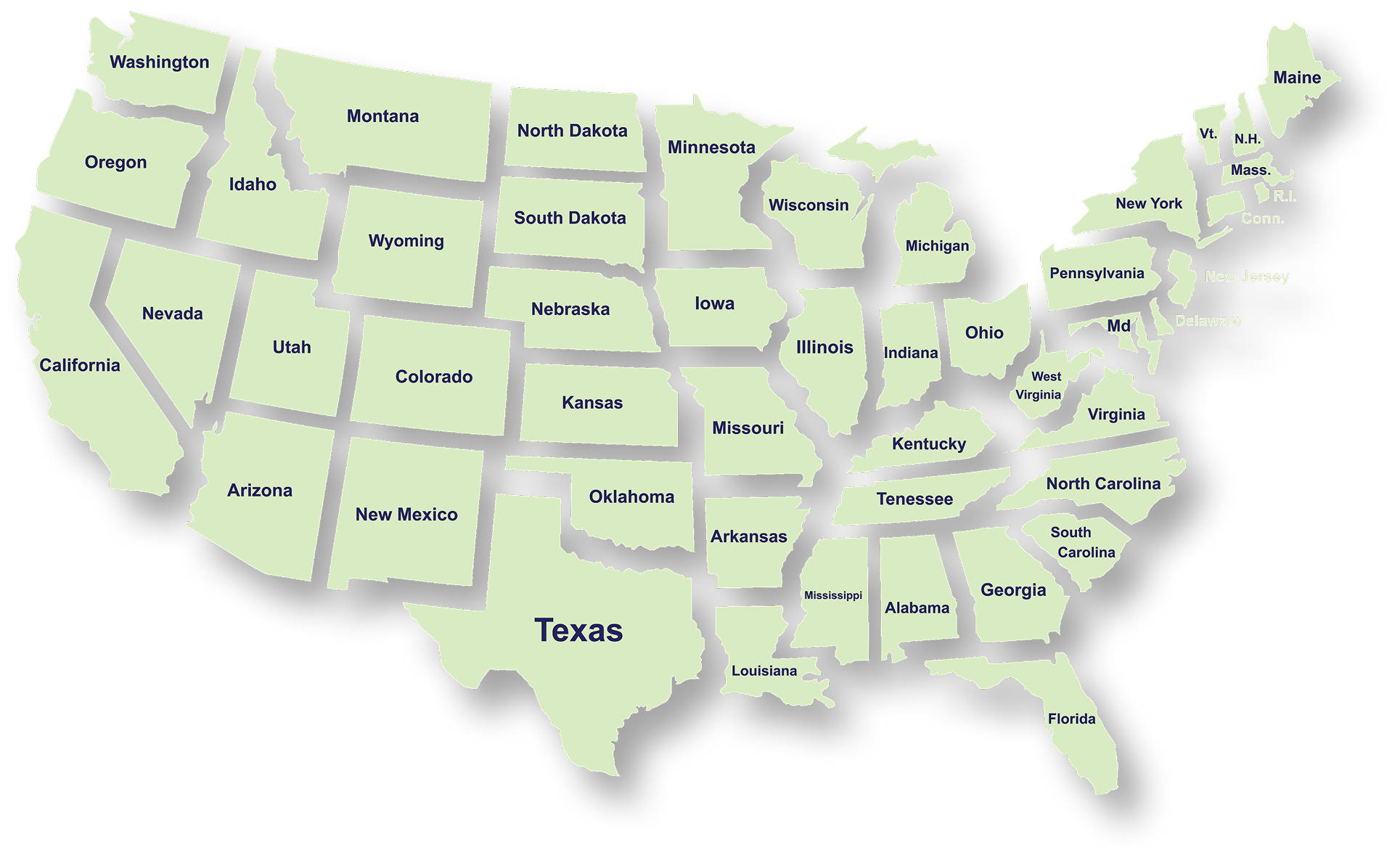
Serving Businesses & Individuals Across USA

We handle accounting, tax filing, and planning with defined timelines and accurate reporting for businesses and individuals across all states.

Frequently Asked Questions

What services does NR CPAs & Business Advisors provide?
What is tax planning and why is it important for businesses?
How can a Virtual CFO help my business?
When should a business consider IRS tax resolution services?
What financial statements does a business typically need?
How can startup advisory services help new businesses?
What is strategic business planning?
What is a Virtual Family Office and who can benefit from it?