Learning Center for Tax and Financial Insights

Stay updated with clear, actionable articles on tax rules, deadlines, deductions, and financial decisions that impact individuals and businesses.

No items found.

Forget Something on Your 2018 Return?

Article Highlights: Tax Reform Problems Corrected 1099s and K-1s Overlooked Income and Deductions Marital Issues Mitigating Penalties The Need for Prompt Amendments If you forgot to include necessary information on your 2018 return, you are not alone. In addition, you may have received a revised 1099 or K-1 since filing your return. The IRS has struggled to deal with the enormity of the changes in the recent tax reform; despite significant pressure to update its regulations, forms, and publications, the IRS could not finish all of its tax-reform updates in a timely manner. Some IRS publications still have not been updated for 2018, and others even include errors. The new tax regulations have been dribbling out, but the IRS still has not provided sufficient guidance for some issues. As a result of this uncertainty, you may receive a corrected 1099 or K-1. You may also need to update your return because, like most taxpayers, you did not fully comprehend all of the provisions of the new tax law thus failing to include an item of income, deduction, or credit. You also may have simply overlooked an item of income or missed a significant deduction. These mistakes happen, which is why the IRS and state tax agencies allow for amended tax returns. A failure to report an item of income will generate an IRS inquiry; this typically happens a year or so after the filing of the original return—which is after the interest and penalties have built up. On the other hand, if you forgot a deduction and are owed a refund, you should not let that go by the wayside.

Explore More
No items found.

Why Tax Basis Is So Important

Article Highlights: Definition of Tax Basis Cost Basis Adjusted Basis Gift Basis Inherited Basis Record Keeping For tax purposes, the term “basis” refers to the original monetary value that is used to measure a gain or loss. For instance, if you purchase shares of a stock for $1,000, your basis in that stock is $1,000; if you then sell those shares for $3,000, the gain is calculated based on the difference between the sales price and the basis: $3,000 – $1,000 = $2,000. This is a simplified example, of course—under actual circumstances, purchase and sale costs are added to the basis of the stock—but it gives an introduction to the concept of tax basis. The basis of an asset is very important because it is used to calculate deductions for depreciation, casualties, and depletion, as well as gains or losses on the disposition of that asset. The basis is not always equal to the original purchase cost. It is determined in a different way for purchases, gifts, and inheritances. In addition, the basis is not a fixed value, as it can increase as a result of improvements or decrease as a result of business depreciation or casualty losses. This article explores how the basis is determined in various circumstances. Cost Basis – The cost basis (or unadjusted basis) is the amount originally paid for an item before any improvements and before any business depreciation, expensing, or adjustments as a result of a casualty loss. Adjusted Basis – The adjusted basis starts with the original cost basis (or gift or inherited basis), then incorporates the following adjustments: increases for any improvements (not including repairs), reductions for any claimed business depreciation or expensing deductions, and reductions for any claimed personal or business casualty-loss deductions. Example: You purchased a home for $250,000, which is the cost basis. You added a room for $50,000 and a solar electric system for $25,000, then replaced the old windows with energy-efficient double-paned windows at a cost of $36,000. The adjusted basis is thus $250,000 + $50,000 + $25,000 + $36,000 = $361,000. Your payments for repairs and repainting, however, are maintenance expenses; they are not tax deductible and do not add to the basis. Example: As the owner of a welding company, you purchased a portable trailer-mounted welder and generator for $6,000. After owning it for 3 years, you then decide to sell it and buy a larger one. During this period, you used it in your business and deducted $3,376 in related deprecation on your tax returns. Thus, the adjusted basis of the welder is $6,000 – $3,376 = $2,624. Keeping records regarding improvements is extremely important, but this task is sometimes overlooked, especially for home improvements. Generally, you need to keep the records of all improvements for 3 years (and perhaps longer, depending on your state’s rules) after you have filed the return on which you report the disposition of the asset.Gift Basis – If you receive a gift, you assume the doner’s adjusted basis for that asset; in effect, the doner transfers any taxable gain from the sale of the asset to you.

Explore More
No items found.

Protecting Yourself from Scams, ID Theft and Cyber Criminals

Article Highlights: ID Theft What’s in Your Wallet or Purse Phony E-mail Pop-up Ads Only Access Secure Websites Avoid Phishing Scams Security Software Educate Children Passwords Phony Charities Impersonating the IRS Back Up Files If It Is Too Good to Be True As much as the Internet has changed our lives for the good, it has also opened us up to threats from crooks from all over the world. They are smart and always coming up with a new trick to separate you from your hard-earned dollars or with an illegal way to use your stolen ID. They apply for loans and credit cards with stolen IDs, file fraudulent tax returns, make purchases with stolen credit card info, and tap into your bank account with stolen account information, and the list goes on. As a result, everyone needs to be very careful and mindful of the tricks used by these scammers to not end up becoming a victim. This office is committed to using safeguards that protect your information from data theft. To further protect your identity, you can also take steps to stop thieves. This article looks at a variety of tricks and schemes crooks use to dupe individuals, along with actions you can take to avoid being scammed, keep your computer secure, avoid phishing and malware, and protect your personal information. ID Theft – The primary information ID thieves are looking for is your name, Social Security number, and birth date. So, constantly be aware of where you use that information, and always question anyone’s need for it when they ask. The fewer institutions that have your ID information, the lower the chances your data will be hacked. Treat personal information like cash – don’t hand it out to just anyone. Social Security numbers, credit card numbers, and bank and even utility account numbers can be used to help steal a person’s money or open new accounts. Every time you receive a request for personal information, you should think about whether the request is truly necessary. Scammers will do everything they can to appear trustworthy and legitimate. Stolen IDs are also frequently used by cyber thieves to file fraudulent tax returns in your name, to take advantage of refundable tax credits such as the earned income tax credit, the child tax credit and the American Opportunity Education Credit, leaving you to deal with the IRS’s identity theft protocol. What’s in Your Wallet or Purse – What is in your wallet or purse can make a big difference if it is stolen. Besides the credit cards and whatever cash or valuables you might be carrying, you also need to be concerned about your identity being stolen, which is a far more serious problem. Think about it: your driver’s license has 2 of the 3 keys to your identity. And if you also carry your Social Security card, bingo! An identity thief then has all the information needed. Phony E-mail – Be aware that an unsolicited e-mail with a request to download an attachment or click on a URL could appear to be from someone you know, such as a friend, work colleague or tax professional. It could be that their e-mail has been hacked and someone else is sending the e-mail, hoping to trick you into some scam. Be alert for suspicious wording or content, and don’t click on any embedded links or attachments if there is any doubt. Pop-up Ads – Don’t assume Internet advertisements, pop-up ads, or e-mails are from reputable companies. If an ad or offer looks too good to be true, it most likely is not true. Take a moment to check out the company behind it. Type the company or product’s name into a search engine with terms like “review,” “complaint” or “scam.” Only Access Secure Websites – Only provide personal information over reputable, encrypted websites. Shopping or banking online should be done only on sites that use encryption. People should look for “https” at the beginning of a Web address (the “s” stands for “secure”) and be sure “https” is on every page of the site. Avoid Phishing Scams – The easiest way for criminals to steal sensitive data is simply to ask for it. Learn to recognize phishing e-mails, calls or texts from crooks that pose as familiar organizations such as banks, credit card companies or even the IRS. These ruses generally urge taxpayers to give up sensitive data such as passwords, Social Security numbers and bank account or credit card numbers. They are called phishing scams because they attempt to lure the receiver into taking the bait. For example, you might get an e-mail disguised as being from your credit card company asking you to verify your password. Companies will never do that because only you have that information, which is why you have to change it if you forget it. Security Software – It is good practice to use security software. An anti-malware program should provide protection from viruses, Trojans, spyware and adware. Set security software to update automatically so it can be upgraded as threats emerge. Also, make sure the security software is on at all times. Invest in encryption software to ensure data at rest is protected from unauthorized access by hackers or identity thieves.

Explore More
No items found.

Video: Check Out These Tax Benefits for Going Green

Congress uses tax deductions and tax credits to influence taxpayers’ actions. For instance, it seeks to stimulate taxpayers to reduce their energy consumption and moving away from the use of fossil fuels. Tax credits come in two types: refundable and nonrefundable. Watch the video to learn more. .embed-container { position: relative; padding-bottom: 56.25%; height: 0; overflow: hidden; max-width: 100%; } .embed-container iframe, .embed-container object, .embed-container embed { position: absolute; top: 0; left: 0; width: 100%; height: 100%; }

Explore More
No items found.

Donor Advised Funds Provide Tax Benefits

Article Highlights: Donor-Advised Fund Itemized or Standard Deductions Sponsoring Organizations Tax Benefits Bunching Strategy High Income Years Donating Appreciated Assets If you would like to make a substantial tax-deductible charitable donation this year, but have the ability to spread the actual distribution of funds to specific charities over a number of years, a donor-advised fund (DAF) may fill that need. There are any number of reasons individuals choose DAFs, including making a substantial charitable donation in an exceptionally high-income year, to overcome the standard deduction, or as part of their estate plan. Here are some details about DAFs that will help you decide if you can gain any benefit from a DAF. What is a DAF? – A DAF is a separate fund (account) set up within a public charity (sponsoring organization) to which a donor contributes cash or non-liquid assets. The donor then advises the sponsoring organization on how to invest and ultimately distribute the funds from the account as charitable gifts over the course of many years. Sponsoring Organization – Tax law allows the sponsoring organization to be independent, community-based, religiously affiliated, or connected with a financial institution. There are typically minimum contributions ranging from $5,000 to $25,000. The sponsoring organization manages the administration of the fund and handles the tax reporting, usually for an annual fee of 1%. In exchange for managing the fund, the sponsoring organization customarily charges an administrative fee based on a percentage of the deposit, which is typically around 1% for smaller deposits. Tax Benefits of DAF – You get to take a tax deduction for your entire donation in the year you contribute the funds or assets to the DAF. You are not required to wait until distributions are made to your designated recipients. In addition, the funds that are not distributed are invested and grow tax-free. Here are situations where a DAF can be beneficial. Use the bunching strategy – Where your itemized deductions, which include donations to qualified charities, are less than the standard deduction, it will not make any difference for tax purposes whether you made a charitable donation or not. With the recent restructuring of taxes, the standard deductions were almost doubled, which made it more difficult for the average taxpayer to benefit from charitable donations. In such situations the bunching strategy works well. When using this strategy, you bunch your deductible charitable contributions for more than one year into a single year, which then gives you enough deductions to itemize for that year and then you take the standard deduction in the subsequent year(s). A DAF is a good vehicle to use for bunching since you make multiple years of charitable contributions to the DAF and then request that the sponsoring organization to dole out the funds to your favorite charities over a period of years. Unusually high income – Where you have had an unusually high income year, maybe because of selling a business or a real estate property, making a killing in the stock market, earning a big bonus, winning the lottery, etc., you may want to contribute a large portion of your good fortune to charity by making a substantial tax deductible contribution to a DAF and direct the DAF to make contributions to your favorite charities for years to come while benefiting from itemizing your deductions in the year when you have an extraordinarily higher marginal tax rate. Avoid capital gains tax on appreciated assets - A huge benefit to DAFs is that you can donate in-kind, appreciated property such as securities, and avoid paying for the appreciation in value that would have resulted from selling those assets. The donor gets a tax deduction for the fair market value of the donation and avoids capital gains tax. Estate Planning – You may simply wish to set up a charitable fund to which you can contribute a portion of your estate and have a future say-so on where the funds will go without the hassle of the legal, administrative and tax filing requirements which are handled by the DAF, allowing you to focus solely on the charitable nature of the fund. This is especially time-saving for the donor when transferring non-cash assets to several organizations.

Explore More
No items found.

June Estimated Tax Payments Are Just Around the Corner

Article Highlights: Employees Self-Employed Individuals Individuals with Sources of Income Without Withholding Quarterly Payments Underpayment Penalty Safe Harbor Payments June 15th falls on the weekend this year, so the due date for the second installment of estimated taxes is the next business day, June 17, which is just around the corner. So, it is time to determine if your estimated tax payment should be lowered if you overestimated your income for 2019 or increased if you underestimated it. Unlike employees, a self-employed individual must estimate his or her net earnings for the year and pay taxes on a quarterly basis according to that estimate. Failure to do so will result in interest penalties. The self-employed are not the only ones who are subject to estimated tax requirements, which also apply to anyone who has income that is not subject to withholding taxes and even to those whose taxes are not sufficiently withheld. Thus, if you have income from stock sales, property sales, investments, alimony, partnerships, S-corporations, inherited pension plans, or other sources that are not subject to withholding, you may also be required to pay either estimated taxes or an underpayment penalty. Others subject to making estimated payments are individuals who must pay special taxes such as the 3.8% tax on net investment income or the employment tax on household employees. Although these payments are called “quarterly” estimates, the periods they cover do not usually coincide with a calendar quarter. Quarter Period Covered Months Due Date* First January through March 3 April 15 Second April and May 2 June 15 Third June through Augus 3 September 15 Fourth September through December 4 January 15 *If the due date falls on a Saturday, Sunday, or holiday, the payment is due on the next business day.

Explore More
No results found.
Thank you! Your submission has been received!
Oops! Something went wrong while submitting the form.

Want tax & accounting tips & insights?Sign up for our newsletter.

Thank you! Your submission has been received!
Oops! Something went wrong while submitting the form.

Why Work With Us?

We combine deep tax expertise, financial strategy, and practical business insight to help you manage complexity, stay compliant, and make confident financial decisions.
A dollar sign, representing financial advice or discussion at NR CPAs & Business Advisors.

Experienced CPA and Enrolled Agent Leadership

Guidance led by licensed professionals with deep expertise in tax strategy, compliance, and complex financial matters.
White bar chart with an upward arrow on green circular background representing growth or progress at NR CPAs &. Business Advisors

Support for Growing Businesses and Startups

We understand the financial challenges of growth stage businesses and provide structured guidance to support expansion.
A white hand holding a dollar symbol and ascending bar chart on a green circular background representing financial growth or investment at NR CPAs & Business Advisors..

Strategic Financial Advisory

Our team helps you evaluate financial decisions with greater clarity, supported by practical insights and long term planning.

Fractional CFO Support

Access experienced financial leadership without the commitment and cost of hiring a full time Chief Financial Officer.

Proactive Tax Planning Approach

We focus on identifying tax opportunities throughout the year rather than reacting only during filing season.

Clear and Reliable Financial Reporting

Accurate financial statements and reporting that help you better understand performance and make informed decisions.
White IRS building icon with pillars and a dollar sign above on a green circular background.

Professional IRS Representation

Experienced support in resolving IRS notices, disputes, and compliance matters while protecting your financial interests.

Personalized Client Focus

Every client receives thoughtful attention and tailored financial solutions based on their specific needs and business goals.
Financial matters often involve important decisions. Working with experienced advisors can help you approach them with greater clarity and confidence in your choices.

Need Help With Your Tax or Financial Decisions?

Discuss your situation with our advisors to get clear guidance on tax planning, IRS matters, and the financial decisions ahead.
Business consulting at NR CPAs & Business Advisors.

Request Your Consultation

Fill out the form to discuss your tax concerns, financial questions, or advisory needs with our team. We will review your details and respond shortly.

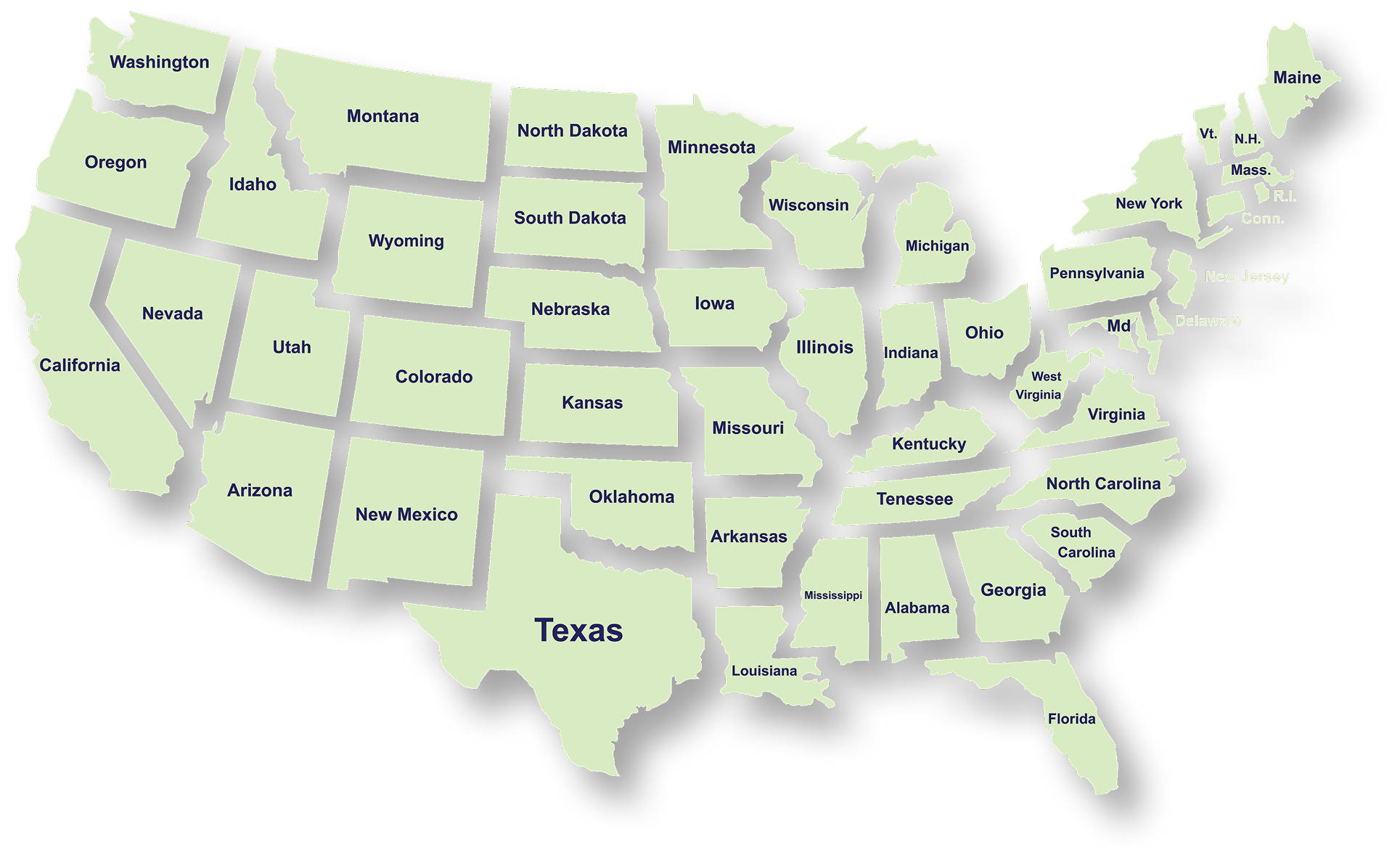
Serving Businesses & Individuals Across USA

We handle accounting, tax filing, and planning with defined timelines and accurate reporting for businesses and individuals across all states.

Frequently Asked Questions

What services does NR CPAs & Business Advisors provide?
What is tax planning and why is it important for businesses?
How can a Virtual CFO help my business?
When should a business consider IRS tax resolution services?
What financial statements does a business typically need?
How can startup advisory services help new businesses?
What is strategic business planning?
What is a Virtual Family Office and who can benefit from it?