Learning Center for Tax and Financial Insights

Stay updated with clear, actionable articles on tax rules, deadlines, deductions, and financial decisions that impact individuals and businesses.

No items found.

Inflation Reduces Income Tax

Article Highlights: IRS Inflation Adjustments Impact of 2023 Adjustments Will Be Felt in 2024 Tax Season Standard Deduction Tax Brackets Other Tax Attributes As the country emerges from the COVID pandemic and supply chain issues, along with the fallout from the war in Ukraine, the country has been experiencing high inflation rates that negatively impact the cost of everyday living, including food, gas for your vehicle, utilities and more. But there is one shining light: tax-related inflation adjustments that will benefit most taxpayers. However, many media outlets have been touting the IRS’ recently released inflation adjustments for 2023 as if taxpayers will see the benefits this coming spring when they file their tax returns. What much of the hype fails to mention is that the 2023 increases will show up on your 2023 tax return which will be filed in 2024. So most people will have to wait until 2024 to see the approximately 7% inflation adjustment to tax benefits. But there was an approximately 3% inflation adjustment for 2022 from which you will benefit when you file your 2022 tax return in early 2023. If you are an employee, you may notice some reduction in the amount of income tax withheld from your wages starting in January, as the 2023 tax withholding calculation will take into account some of the items affected by the inflation adjustments, such as the increased standard deduction and widened tax rates. Standard Deduction: The table illustrates the increases in the standard deduction for 2022 and 2023. As shown in the table, for taxpayers filing married joint returns the increase was $800 from 2021 to 2022 and $1,800 between 2022 and 2023. For a married couple filing jointly these amounts are not subject to income tax. Taking this a step further, if that married couple were in the 22% tax bracket their tax savings would be $176 (0.22 x $800) in 2022 and $396 (0.22 x $1,800) in 2023. Basic Standard Deduction Filing Status 2021 2022 2023 Married Joint 25,100 25,900 27,700 Head of Household 18,800 19,400 20,800 Single 12,550 12,950 13,850 Married Separate 12,550 12,950 13,850 Tax Brackets: Tax brackets are also affected by the inflation adjustments as illustrated in the tables below. For example, you will note that for an unmarried taxpayer using the single filing status for 2022 the table shows that when the individual’s taxable income reaches $89,076 the marginal tax rate increases from 22% to 24%. However, that transition between 22% and 24% occurs at $95,376 for 2023, or a difference of $6,300 that is taxed at 2% less than in 2022. Inflation adjustments are made annually for all the marginal rate brackets. Individual Taxpayers (Single) Tax Rates Marginal Rate 2022 Taxable Income 2023 Taxable Income 10.0% $0 - 10,275 $0 - $11,000 12.0% $10,276 - $41,775 $11,001 - $44,725 22.0% $41,776 - $89,075 $44,726 - $95,375 24.0% $89,076 - $170,050 $95,376 - $182,100 32.0% $170,051 - $215,950 $182,101 - $231,250 35.0% $215,951 - $539,900 $231,251 - $578,125 37.0% $539,901 and above $578,126 and above Heads of Household Tax Rates Marginal Rate 2022 Taxable Income 2023 Taxable Income 10.0% $0 - $14,650 $0 - $15,700 12.0% $14,651 - $55,900 $15,701 - $59,850 22.0% $55,901 - $89,050 $59,851 - $95,350 24.0% $89,051- $170,050 $95,351 - $182,100 32.0% $170,051 - $215,950 $182,101 - $231,250 35.0% $215,951 - $539,900 $231,251 - $578,100 37.0% $539,901 and above $578,101 and above

Explore More
No items found.

Video Tips: The IRS Is Sending Out Reminder Letters

More than 9 million individuals and families who appear to qualify for a variety of key tax benefits but did not claim them by filing an income tax return are being contacted by the Internal Revenue Service. Do not panic if you receive such letters from the IRS. Contact this office if you have any questions.

Explore More
No items found.

IRS Unveils Retirement Plans Inflation Adjustments for 2023

Article Highlights: Planning for the FutureInflation-adjusted Contribution Amountso IRAso Employer 401(k)so HSAso TSAso SE Retirement Planso SEPsAre you ignoring your future retirement needs? That tends to happen when you are younger, retirement is far in the future, and you believe you have plenty of time to save for it. Some people ignore the issue until late in life and then have to scramble at the last minute to fund their retirement. Others may think that the Social Security benefits they’ll receive in retirement will be enough, but may have an expectation that their benefits will be higher than they’ll actually be and also fail to consider how the future viability of the Social Security program may impact their monthly payments. The IRS just released the inflation adjusted retirement plans maximum contribution amounts for 2023, and the increases are dramatic. So, this may be the time to start considering funding a retirement plan if you don’t currently have one. If you are already contributing to a tax-favored retirement plan and are looking for ways to increase your annual contribution, these inflation increases will be good news. Here's a rundown on the various tax-favored retirement plans available and the inflation adjustments pertaining to each. Traditional IRA – This plan allows individuals to make tax-deductible contributions each year to the extent they earned taxable income (basically income from working). There is no age restriction, but the deductibility phases out for some higher income taxpayers. For 2023 the maximum an individual can contribute is $6,500 (up from $6,000 in 2022). For individuals aged 50 and over the maximum increases to $7,500 (up from $7,000 in 2022). The amount that can be deducted phases out for taxpayers who participate in a workplace retirement arrangement such as a 401(k) and have an adjusted gross income (AGI) between $73,000 and $83,000 (up from $68,000 and $78,000 in 2022). For married couples, the AGI phaseout range is $116,000 to $136,000, up from $109,000 and $129,000 in 2022. Roth IRA – Unlike a traditional IRA where generally contributions to the plan are tax deductible but withdrawals from the plan are taxable, contributions to a Roth IRA aren’t currently deductible but payouts in the future are tax free. As with a traditional IRA, you must have taxable earned income in order to contribute to a Roth IRA. This plan also allows a contribution in 2023 of up to $6,500 (up from $6,000 in 2022). For individuals aged 50 and over the maximum increases to $7,500 (up from $7,000 in 2022). An individual’s ability to contribute to a Roth IRA in 2023 phases out for AGIs between $138,000 and $153,000, up from $129,000 and $144,000 in 2022. For married couples, the phaseout applies when AGI is $218,000 to $228,000, up from $204,000 and $214,000 in 2022. If you have more than one IRA, the limits apply to the total contributions made for the year to traditional and Roth IRAs, not to each one.Employer 401(k) Plans – An employer 401(k) plan generally enables employees to contribute up to $22,500 for 2023 (that’s $2,000 more than in 2022), before taxes. In addition, taxpayers who are age 50 and over can contribute an extra $7,500 annually (up from $6,500 in 2022), for a total of $30,000. Many employers also match a percentage of the employee’s contribution, and this can amount to a significant sum for those who stay in the plan for many years.Health Savings Accounts – Although established to help individuals with high-deductible health insurance plans pay medical expenses, these accounts can also be used as supplemental retirement plans if an individual has already maxed out his or her contributions to other types of plans. Annual contributions for these plans can be as much as $3,850 for individuals and $7,750 for families in 2023.Tax Sheltered Annuities – These retirement accounts are for employees of public schools and certain tax-exempt organizations; they enable employees to make 2023 annual tax-deferred contributions of up to $22,500, up from $20,500 in 2022. Those aged 50 and over can contribute $30,000, up from $27,000 in 2022. Self-Employed Retirement Plans – These plans, also referred to as Keogh plans, allow self-employed individuals to contribute 25% of their net business profits to their retirement plans. The contributions are pre-tax (which means that they reduce the individual’s taxable net profits), so the actual amount that can be contributed is 20% of the net profits up to a maximum of $66,000.Simplified Employee Pension (SEP) – This type of plan allows contributions in the same amounts as allowed for self-employed retirement plans, except that the retirement contributions are held in an IRA account under the control of the employee or self-employed individual. These accounts can be established after the end of the year, and contributions can be made for the prior year.

Explore More
No items found.

IRS Plans On Targeting Abusive ERTC Claims

Article Highlights:Television PromotionsPayroll Tax CreditApplicable YearsQualificationsBusiness Operations CurtailedSignificant Decline in Gross ReceiptsPotential AbuseHave you seen those ads on television or received email solicitations promoting a large tax credit? The large tax credit they are referring to is the employee retention tax credit (ERTC). The ERTC is a government-sponsored program to keep workers employed during 2020 and 2021 because of the COVID pandemic by providing refundable tax credits to employers that kept their workers on payroll during the COVID crisis. Unlike most tax credits, this is a credit against the employer payroll taxes. Even though this credit only applies for 2020 and part of 2021 for most businesses, if your business qualifies, and you haven’t already claimed the credit, it can still be claimed by amending the payroll tax returns for those years. So that you can determine if you might qualify for the credit and avoid being misguided by the credit promoters, the following is a summary of the qualifications to claim the ERTC. The credit is available to all employers regardless of size, including tax-exempt organizations, tribal businesses, and businesses in U.S. Territories. There are only two exceptions: State and local governments and their instrumentalities.For eligible employers, the credit is available for wages paid: March 13, 2020, through Sept. 30, 2021, andJuly 1, 2021, through December 31, 2021, for certain start-up companies Eligible Employers fall into one of two categories:Business Operations Curtailed: Eligible employers are employers who were carrying on a trade or business during any quarter in 2020 or during the calendar quarter for which the credit is determined, for calendar quarters beginning after December 31, 2020, and for which the operation of that business is fully or partially suspended. The operation may be partially suspended if an appropriate governmental authority imposes restrictions upon the business operations by limiting commerce, travel, or group meetings (for commercial, social, religious, or other purposes) due to COVID-19 such that the operation can continue to operate but not at its normal capacity.Significant Decline in Gross Receipts: For 2020, employers that have gross receipts that are less than 50% of their gross receipts for the same quarter in 2019 are also eligible. The significant decline in gross receipts ends with the first calendar quarter that follows the first calendar quarter for which the employer’s 2020 gross receipts for the quarter are greater than 80 percent of its gross receipts for the same calendar quarter during 2019. This cutoff of eligibility upon return to 80% of a comparable 2019 quarter’s gross receipts is removed for 2021.For 2021, a significant decline is defined as gross receipts being 80% or less than the gross receipts for the same calendar quarter in 2019 (i.e., there’s a 20% decline in gross receipts). The employer has the option to elect to satisfy the gross receipts test by using the immediately preceding calendar quarter and comparing that quarter to the corresponding quarter in 2019. If an employer was not in existence as of the beginning of the same calendar quarter in calendar year 2019, substitute ‘2020’ for ‘2019’.

Explore More
No items found.

Video Tips: Avoid a Surprise Bill when Tax Season Comes

The next tax season seems far away, but this is actually the perfect time for taxpayers to review their withholding and estimated tax payments. Because federal taxes are pay-as-you-earn, it’s important for taxpayers to withhold enough from their paychecks or pay enough in estimated tax. If they don’t, they risk being charged a penalty. Watch this video for how to avoid a surprise tax bill.

Explore More
No items found.

Managing Gains and Losses in a Turbulent Year

Article Highlights:Rough Year for the Stock MarketYear End ApproachingAnnual Capital Losses Are LimitedBe Aware of Wash Sale RulesOff-Set Short-Term Gains with Long-Term Capital LossesPlanning for Zero Tax on Long-Term Capital GainsConverting a Traditional IRA to a RothIt's been a rough Fall for the stock market. So much so that you should probably carefully review your portfolio and other capital transactions to minimize gain or maximize losses for the year. Remember, capital gains and losses are not just limited to stock transactions. For example, stock losses can offset the gain from the sale of a rental. So you may want to consider other capital transactions you’ve already made this year or could make before the end of the year that would result in a gain that can be offset with stock losses. There can be any number of scenarios that might benefit from year-end planning. Any transaction you plan must be completed by the end of the year, which is right at the conclusion of the Holidays. Thus, it is probably appropriate to have your planning strategies in place well in advance of the Holidays. But first here’s a review of the various tax rules and strategies that apply during this severely down stock market. Annual Capital Losses Are Limited – When planning losses from selling stock, if you have losses remaining after netting losses against capital gains, you can only claim a maximum of $3,000 ($1,500 if filing as married separate) to shelter 2022 ordinary income from salaries, bonuses, self-employment income, interest income, royalties, and other sources. Any excess after the $3,000 ($1,500) is carried over indefinitely until used up to offset capital gains in future years. Be Aware of the Wash Sale Rules – Some individuals may want to take a loss on a specific stock that’s under water while still maintaining a position in the stock by selling the stock and immediately repurchasing it. Unfortunately, that strategy will not work because of the “wash sale” rules. A wash sale is a sale or other disposition of stock or securities, resulting in a loss, in which the seller, within a 61-day period (which begins 30 days before and ends 30 days after the date of the sale or disposition), replaces the stock or securities by acquiring (by way of purchase or exchange on which the full gain or loss is recognized for tax purposes), or entering a contract or option to acquire, substantially identical stock or securities. The tax law says that a loss on a stock sale that meets this definition is not deductible.The amount of any disallowed loss will be added to the basis of the repurchased securities. The rule was developed to prevent investors from creating a deductible loss without any market risk.Off-Set Short-Term Gains with Long-Term Capital Losses - Short-term capital gains do not receive benefits of the special tax rates afforded long-term capital gains. Long-term capital losses, if used to offset long-term capital gains, reduce a gain that would be taxed at no more than 20%. The problem:ST capital gains are taxed at regular rates.LT capital losses if used to offset LTCG reduce 10% or 15% income. Therefore, taxpayers achieve a better overall tax benefit if they can arrange their transactions to offset short-term capital gains with long-term capital losses. Although this cannot always be achieved considering investment strategies, when implemented, it will offset income that would otherwise be taxed at ordinary rates. Planning for Zero Tax on Long-Term Capital Gains - Lower-income taxpayers and those whose income is abnormally low for the year can enjoy a long-term capital gain tax rate of zero, which provides an interesting strategy for these individuals. Even if the taxpayer wishes to hold on to a stock because it is performing well, they can sell it and immediately buy it back, allowing them to include the current accumulated gain in the sale-year’s return with no tax while also reducing the amount of taxable gain in the future. Since the sale results in a gain, the wash sale rule doesn’t apply. To determine if you can take advantage of this tax-saving opportunity, you must determine if your taxable income will be below the point where the 15% capital gains tax rate begins – see table below. Example: Suppose a married couple is filing jointly and has projected taxable income for 2022 of $50,000. From the table below we find that the 15% capital gains tax bracket threshold for married joint filers is $83,351. That means they could add $33,350 ($83,350- $50,000) of long-term capital gains to their income and pay zero tax on the capital gains. Of course, this strategy must be worked out based upon your projected taxable income for the year, which could end up actually being more or less than the estimated amount.

Explore More
No results found.
Thank you! Your submission has been received!
Oops! Something went wrong while submitting the form.

Want tax & accounting tips & insights?Sign up for our newsletter.

Thank you! Your submission has been received!
Oops! Something went wrong while submitting the form.

Why Work With Us?

We combine deep tax expertise, financial strategy, and practical business insight to help you manage complexity, stay compliant, and make confident financial decisions.
A dollar sign, representing financial advice or discussion at NR CPAs & Business Advisors.

Experienced CPA and Enrolled Agent Leadership

Guidance led by licensed professionals with deep expertise in tax strategy, compliance, and complex financial matters.
White bar chart with an upward arrow on green circular background representing growth or progress at NR CPAs &. Business Advisors

Support for Growing Businesses and Startups

We understand the financial challenges of growth stage businesses and provide structured guidance to support expansion.
A white hand holding a dollar symbol and ascending bar chart on a green circular background representing financial growth or investment at NR CPAs & Business Advisors..

Strategic Financial Advisory

Our team helps you evaluate financial decisions with greater clarity, supported by practical insights and long term planning.

Fractional CFO Support

Access experienced financial leadership without the commitment and cost of hiring a full time Chief Financial Officer.

Proactive Tax Planning Approach

We focus on identifying tax opportunities throughout the year rather than reacting only during filing season.

Clear and Reliable Financial Reporting

Accurate financial statements and reporting that help you better understand performance and make informed decisions.
White IRS building icon with pillars and a dollar sign above on a green circular background.

Professional IRS Representation

Experienced support in resolving IRS notices, disputes, and compliance matters while protecting your financial interests.

Personalized Client Focus

Every client receives thoughtful attention and tailored financial solutions based on their specific needs and business goals.
Financial matters often involve important decisions. Working with experienced advisors can help you approach them with greater clarity and confidence in your choices.

Need Help With Your Tax or Financial Decisions?

Discuss your situation with our advisors to get clear guidance on tax planning, IRS matters, and the financial decisions ahead.
Business consulting at NR CPAs & Business Advisors.

Request Your Consultation

Fill out the form to discuss your tax concerns, financial questions, or advisory needs with our team. We will review your details and respond shortly.

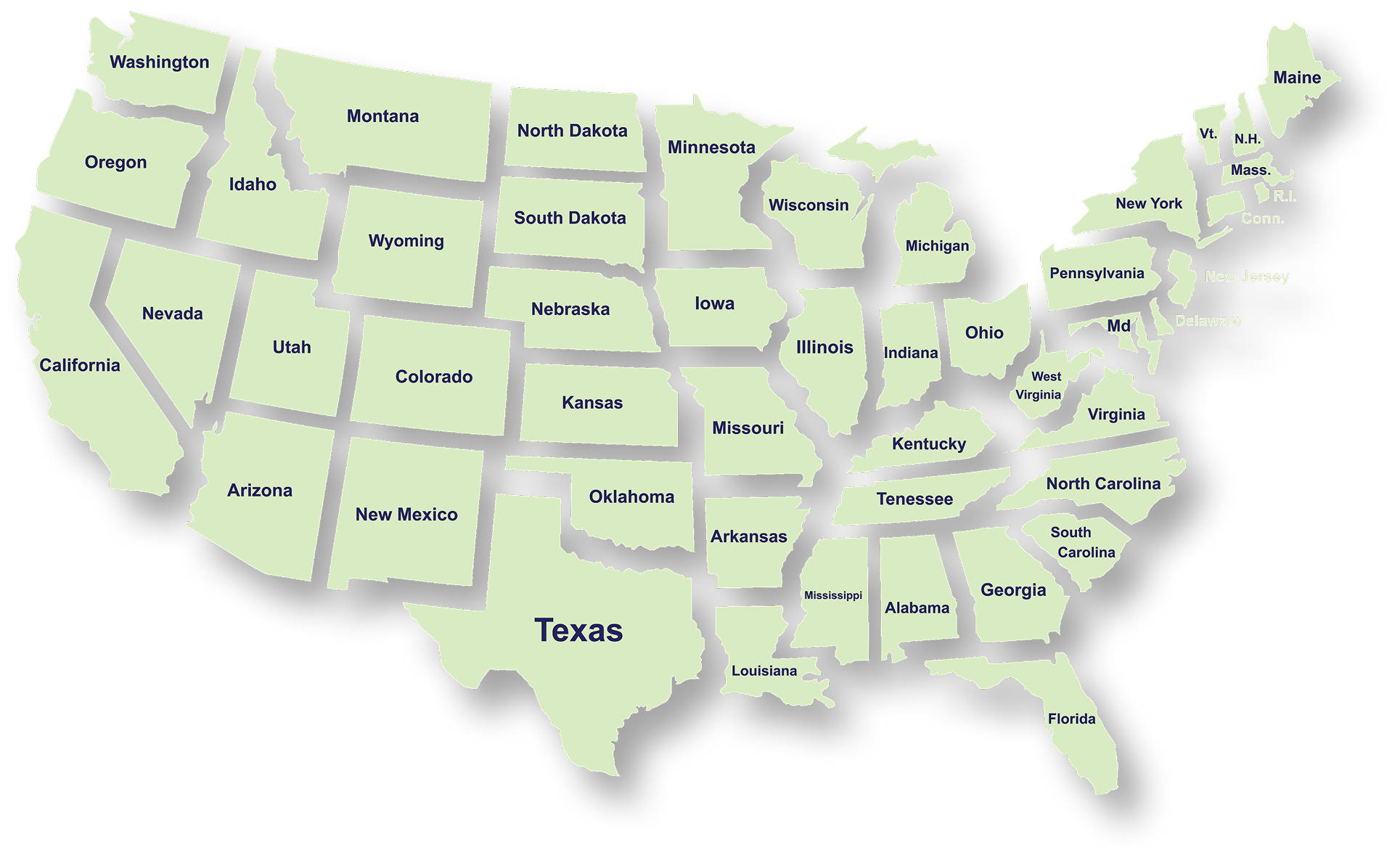
Serving Businesses & Individuals Across USA

We handle accounting, tax filing, and planning with defined timelines and accurate reporting for businesses and individuals across all states.

Frequently Asked Questions

What services does NR CPAs & Business Advisors provide?
What is tax planning and why is it important for businesses?
How can a Virtual CFO help my business?
When should a business consider IRS tax resolution services?
What financial statements does a business typically need?
How can startup advisory services help new businesses?
What is strategic business planning?
What is a Virtual Family Office and who can benefit from it?