Learning Center for Tax and Financial Insights

Stay updated with clear, actionable articles on tax rules, deadlines, deductions, and financial decisions that impact individuals and businesses.

No items found.

Steps Your Business Can Take to Survive a Recession

According to one recent study, there is a 96% chance that the United States will experience some form of economic recession within the next 12 months. If you needed a single statistic to underline the importance of planning ahead when it comes to your business, let it be that one.Thankfully, this news isn't a guarantee of impending doom for your organization. Not only do businesses of all types survive recessions regularly, but some also manage to thrive. If you want to make sure that you're as prepared as you can be for whatever the economy happens to throw at you, there are a number of important things to keep in mind.Monitor Those ExpensesBy far, the most important step that you can take to survive an impending recession involves locating places to cut spending whenever you can.This is something that became particularly important during the economic downturn caused by the COVID-19 pandemic. With countless employees suddenly working from home indefinitely, businesses realized that they didn't need massive offices or retail spaces anymore and used it as an opportunity to downsize.Take a look at your recurring expenses, categorize everything into an order based on importance, and determine what you can live with and what you cannot. Along the same lines, use this as a chance to start re-negotiating any vendor contracts with terms that may not be as favorable as they once appeared.Note that not only is monitoring your expenses not something that you "do once and forget about," it should also be done often - even during those times when the economy is objectively strong. There are always areas that you can cut and trimming as much "fat" out of your expenses as possible is a perfect way to make sure that you remain protected even in the event of the unexpected.Incentivize Cash UpfrontAnother essential step you can take to survive a recession has to do with encouraging your clients to not only pay on time but to pay in cash upfront whenever possible.To speak to the former, understand that most businesses deal with late payments regularly - but that doesn't mean there aren't steps you can take to mitigate the issue. If you haven't already, switch to digital invoices and an electronic payment system to make it as easy as possible for people to pay you. Make sure that you know which invoices are outstanding and make follow-up phone calls to keep things moving.

Explore More
No items found.

Video Tips: Taxpayers with an outstanding tax bill should consider an Offer in Compromise

An Offer in Compromise can be an effective way for individuals and businesses to settle a federal tax debt. This federal program allows taxpayers to enter into an agreement, with the IRS, that settles a tax debt for less than the full amount owed. Sometimes taxpayers can settle for significantly less, especially if they have low income and few assets.

Explore More
No items found.

The Tax Consequences of Closing Your Small Business

The possibility of a recession looms large. According to one recent study, approximately 20% of all small businesses that open their doors today will close within the first year. Of the number that survives, about 30% will close just one year later. By year five, about half of those SMBs will have closed.All of this is to say that if you've tried to open a small business and have had to prematurely close your doors for whatever reason (be it the condition of the larger economy or other concerns), you're not alone. Still, just because you're about to close your doors doesn't mean your obligations as an entrepreneur are formally over.Case in point: income taxes. Just as was true with starting a business, closing a small business brings with it some essential tax implications that you need to be aware of in the coming year. This is true both for yourself and with regard to the hardworking men and women that you employed along the way.The Implications of Closing a Small Business: What You Need to KnowOverall, the most important thing to understand about this process is that the tax consequences of closing a small business depend largely on exactly what type of organization you're talking about.If your small business was a C-Corp, for example, you will likely be subject to what is called "double taxation." This means that not only will you be paying taxes on any assets that get distributed to shareholders, but those shareholders will also be taxed on gains on their individual incomes as well.The situation is a bit different if you're talking about an S-Corp, which is more of a "pass-through" entity when it comes to income tax purposes. This means that any profits or losses will get reported on the tax returns of each shareholder. However, these rules don't apply to any "liquidating distributions" that are made.Essential Information About Closing an LLCIn a situation where the business that you're closing is an LLC, things will also operate a bit differently. Here, you're also talking about a company that dealt with "pass-through" income to its shareholders. This was true whether you formed the business as a sole proprietorship or as partnership income. The way taxes are handled will largely continue through until you formally dissolve the business. This means that every member of the LLC will be exclusively responsible for reporting their own income, which includes any share they receive of the company assets that are distributed upon its closing.

Explore More
No items found.

Year End Tax Planning Issues

Article Highlights:Benefits Sunsetting After 2021Benefits Sunsetting After 2022Not Needing to File May Be an OpportunityMaximize Education Tax CreditsEmployer Health Flexible Spending AccountsMaximize Health Savings Account ContributionsRoth IRA ConversionsAvoid Required Minimum Distribution (RMD) PenaltiesRecognizing Capital LossesTake Advantage of the Zero Capital Gains Tax RateMake Business PurchasesPrepay State Income and 2023 Property TaxesCharitable DeductionsQualified Charitable DistributionsPay Outstanding Medical or Dental BillsRemember the Annual Gift Tax ExemptionAvoid Underpayment PenaltiesDisaster Loss PlanningDivorced or Separated During the YearYear-end is rapidly approaching as are the holidays. So before you become distracted with the seasonal celebrations, it may be in your best interest to consider year-end tax moves that can benefit you for both 2022 and 2023.Having the Congressional members preoccupied with the November mid-term elections has sidelined, at least temporarily, any legislation to extend tax provisions that expired after 2021 and won’t be available for 2022, including: the mortgage insurance premium deduction; increased AGI limit for charitable deductions for those itemizing deductions; the above-the-line charitable deduction for non-itemizers; tax credits for COVID sick and family leave pay for self-employed individuals; the employee retention credit (for employers); the temporary increase in the child tax credit, which reverts to $2,000, the old phase-out levels and the lower age to be a qualifying child; the child and dependent care credit that returns to pre-COVID amounts; and the enhanced earned income tax credit for taxpayers without a qualifying child. Looking forward to 2023, the temporary allowance of a 100% deduction for business meals at a restaurant ends after 2022 and reverts to 50%; bonus depreciation on business property purchases begins to phase out and will only be 80% in 2023.Here are last-minute tax issues you might consider:Not Needing to File May Be an Opportunity - If your income and tax situation is such that you do not need to file for 2022, don’t overlook the opportunity to bring in some additional income, to the extent it will be tax-free. For instance, if you have appreciated stock that you can sell without incurring any tax, consider selling it, or perhaps take a tax-free IRA distribution if you are 59½ or older or if younger and qualify for an exception to the “early withdrawal” penalty. Maximize Education Tax Credits – If you qualify for either the American Opportunity or Lifetime Learning education credits, check to see how much you will have paid in qualified tuition and related expenses in 2022. If it is not the maximum allowed for computing the credits, you can prepay 2023 tuition if it is for an academic period beginning in the first three months of 2023. That will allow you to increase the credit for 2022. This is especially effective for students just starting college who only have tuition expense for part of the year. Employer Health Flexible Spending Accounts – If you contributed too little to cover expenses this year, you may wish to increase the amount you set aside for next year. As a reminder, feminine menstrual products and COVID personal protective equipment now qualify. The maximum contribution for 2022 is $2,850. The amount that may be carried to 2023 is $570 and must be used in the first 2½ months of 2023.Maximize Health Savings Account Contributions – If you become eligible to make health savings account (HSA) contributions late this year, you can make a full year’s worth of deductible HSA contributions even if you were not eligible to make HSA contributions for the entire year. This opportunity applies even if you first become eligible in December. In brief, if you qualify for an HSA, contributions to the account are deductible (within IRS-prescribed limits), earnings on the account are tax-deferred, and distributions are tax-free if made for qualifying medical expenses. Roth IRA Conversions – If your income is unusually low this year, you may wish to consider converting your traditional IRA into a Roth IRA. The lower income results in a lower tax rate, which provides you an opportunity to convert to a Roth IRA at a lower tax amount. Also, the decline in the stock market may provide an opportunity for some to convert where the stocks in their retirement account have had a significant decline in value. Avoid Required Minimum Distribution (RMD) Penalties - Once U.S. taxpayers reach the age of 72, they are required to take what is known as a “required minimum distribution” from their qualified retirement plan or IRA every year. If this is the first year that this rule applies to you and you haven’t withdrawn the required amount yet, there’s no need to panic – you don’t have to do so until sometime during the first quarter of next year. Of course, if you wait until 2023 to take your 2022 distribution, you’re going to end up having to take two distributions in one year – one for 2022 and one for 2023. For those who have fallen into this category before 2022, you only have until December 31st to take the required distribution if you want to avoid penalties. Recognizing Capital Losses – With our current down market you should review your stock portfolio and consider selling losers to offset capital gains that would otherwise be subject to the 15% or 20% long-term capital gains tax rate. Capital losses can also offset up to$3,000 ($1,500 in the case of a married taxpayer filing a separate return) of ordinary income if capital losses exceed capital gains by at least that amount. Recognizing capital losses to offset capital gains can also reduce the amount of income subject to the net investment income surtax. Be aware of the wash sale rules that don’t allow you to deduct a loss if you repurchase those loser stocks within 30 days before or after the sale date. Take Advantage of the Zero Capital Gains Rate - There is a zero long-term capital gains rate for those taxpayers whose taxable income is below the 15% capital gains tax threshold. This may allow you to sell some appreciated securities that you have owned for more than a year and pay no or very little tax on the gain. The 2022 15% capital gains tax bracket starts at taxable income of $83,351 for married joint filers, $55,801 for those filing as head of household, and $41,676 for all other filers.Make Business Purchases - You can reduce taxable income if you make last-minute business purchases such as for office equipment, tools, machinery, and vehicles and write them off using the 100% bonus depreciation or Sec. 179 expensing, provided you place the item(s) into business service by the end of the year. However, you must consider the impact that expensing the items will have on your taxable income and the Sec. 199A 20% pass-through deduction. It may be appropriate to contact this office in advance of any last-minute business acquisition.

Explore More
No items found.

Ways To Save on Your Taxes If You are Laid Off

If you've been following the news recently, you're no doubt aware of a massive round of layoffs that struck one of the most popular social media sites in existence, Twitter. Under the direction of new owner Elon Musk, it was estimated that as many as 3,700 people lost their jobs with more expected to be on the horizon.While Twitter may be the most notable example of mass lay-offs, they are hardly the only company going through this right now. The online payment organization Stripe recently laid off 14% of its workforce. Social media company Meta is anticipated to be planning "significant" job cuts that could take place in weeks. The list goes on and on.But for as difficult as losing your job can be, one area that you don't want to forget about has to do with the income tax implications of such an event. Note that there are still steps that you can take today to save money on your taxes in the event that you've been laid off - you'll just need to keep a few important things in mind along the way.Saving on Your Taxes When Laid Off: Breaking Things DownThe most important step that you can take to save money on your taxes if you are laid off involves making sure that you fully understand the situation you now find yourself in.Severance pay, for example, is a term that describes any money that an employer pays to an employee after a layoff has occurred. Many people don't realize it but severance pay is fully taxable in the year that you receive it. It is still subject to Social Security and Medicare taxes, federal and state income tax withholding, and more. The same is true of any unemployment compensation that you receive, as well as money you receive from benefits like sick days or paid time off that you didn't end up using.Can a Health Savings Account Help Cut My Tax Bill? One way to minimize that tax as much as possible involves putting it into your Health Savings Account, otherwise known as an HSA for short. As the name implies, these are accounts that are specifically used to cover medical expenses that you may incur in the future. As of 2023, you can put up to $3,850 for self-only coverage and $7,750 for family coverage into an HSA without getting taxed so long as it is eventually used for those purposes.Can My Deliverance Fund My IRA? Along the same lines, if you're in a position to do so, you could also make the largest contribution to any retirement funds that you can. If you have an IRA, for example, for 2023, you can contribute up to $6,500 a year and enjoy similar tax-related benefits. Suppose you're over the age of 50, that number increases to $7,500. Note, however, that any money you contribute will not be taxed until you formally retire - which means that you can't withdraw it without incurring a penalty, either.

Explore More
No items found.

The Tax Consequences of Gig Work

Over the last decade, in particular, the definition of the term "career" has changed.Rather than being employed by a single entity for which you receive a W2 at the end of the year, many are now participating in the "gig economy" in a variety of ways. They're not just working a day job. They're also driving for a ride-sharing service like Uber. They're delivering food for companies like DoorDash. They're leaning into the versatility that the fast-paced digital world has brought with it, enjoying the type of freedom that people didn't previously have.Of course, this newfound sense of freedom brings with it a number of potential disadvantages, especially when it comes to tax season. But thankfully, there are still ways to enjoy all the benefits of the "gig economy" with as few of the potential tax-related downsides as possible. You just need to be savvy about planning ahead, and you need to keep a few key things in mind along the way.Taxes and Gig Work: An OverviewBy far, the most important thing to understand about this process is that any time you increase your income - be it by picking up "gig work" in addition to your primary job, or by getting additional employment where you receive a second W2 form at the end of the year - it will always potentially increase your taxes.For the sake of example, let's say that yours is a situation where you A) work for a small business, and B) also run a business like Etsy on the side. The first source of employment would almost certainly give you a W2 at the end of the year. In the second, you'd be left with self-employment income - which itself increases your tax liability almost immediately.In that situation, you would want to pay quarterly estimated tax payments using form 1040-ES to increase your income tax withholding at your W2 job as much as you could to offset the liability that your self-employment income would bring with it. Yes, this means a little less money in your pocket right now - but that's almost certainly better than getting hit with a major tax bill at the end of the year.Along the same lines, you would want to make sure that you're always keeping receipts for your self-employment job so that you can write off whatever you can at the end of the year. In the Uber example, that would include any maintenance and other work that you've had done to your car. In other "gig economy" examples, that might include money that you've spent on supplies that are expressly needed to complete this second job.

Explore More
No results found.
Thank you! Your submission has been received!
Oops! Something went wrong while submitting the form.

Want tax & accounting tips & insights?Sign up for our newsletter.

Thank you! Your submission has been received!
Oops! Something went wrong while submitting the form.

Why Work With Us?

We combine deep tax expertise, financial strategy, and practical business insight to help you manage complexity, stay compliant, and make confident financial decisions.
A dollar sign, representing financial advice or discussion at NR CPAs & Business Advisors.

Experienced CPA and Enrolled Agent Leadership

Guidance led by licensed professionals with deep expertise in tax strategy, compliance, and complex financial matters.
White bar chart with an upward arrow on green circular background representing growth or progress at NR CPAs &. Business Advisors

Support for Growing Businesses and Startups

We understand the financial challenges of growth stage businesses and provide structured guidance to support expansion.
A white hand holding a dollar symbol and ascending bar chart on a green circular background representing financial growth or investment at NR CPAs & Business Advisors..

Strategic Financial Advisory

Our team helps you evaluate financial decisions with greater clarity, supported by practical insights and long term planning.

Fractional CFO Support

Access experienced financial leadership without the commitment and cost of hiring a full time Chief Financial Officer.

Proactive Tax Planning Approach

We focus on identifying tax opportunities throughout the year rather than reacting only during filing season.

Clear and Reliable Financial Reporting

Accurate financial statements and reporting that help you better understand performance and make informed decisions.
White IRS building icon with pillars and a dollar sign above on a green circular background.

Professional IRS Representation

Experienced support in resolving IRS notices, disputes, and compliance matters while protecting your financial interests.

Personalized Client Focus

Every client receives thoughtful attention and tailored financial solutions based on their specific needs and business goals.
Financial matters often involve important decisions. Working with experienced advisors can help you approach them with greater clarity and confidence in your choices.

Need Help With Your Tax or Financial Decisions?

Discuss your situation with our advisors to get clear guidance on tax planning, IRS matters, and the financial decisions ahead.
Business consulting at NR CPAs & Business Advisors.

Request Your Consultation

Fill out the form to discuss your tax concerns, financial questions, or advisory needs with our team. We will review your details and respond shortly.

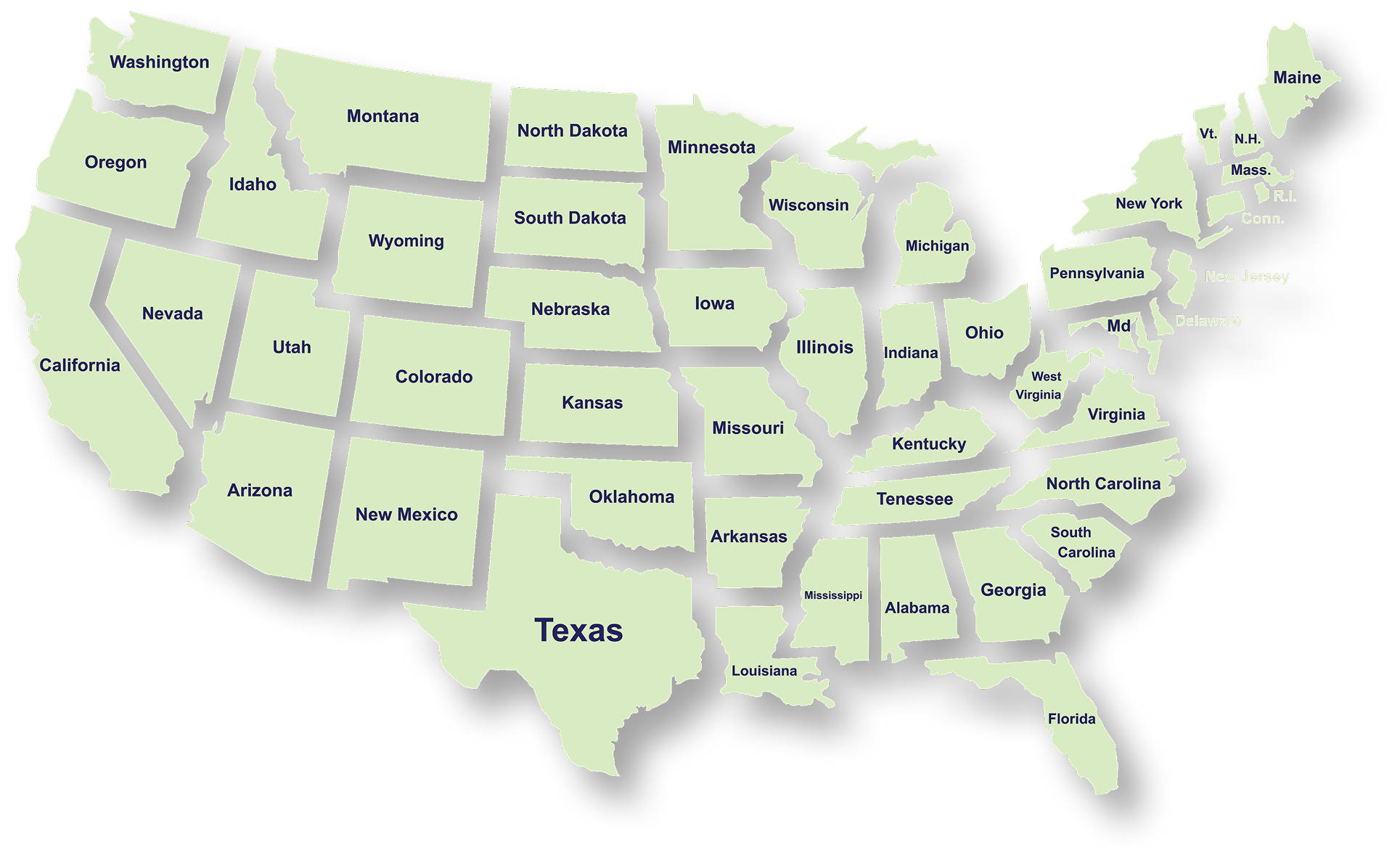
Serving Businesses & Individuals Across USA

We handle accounting, tax filing, and planning with defined timelines and accurate reporting for businesses and individuals across all states.

Frequently Asked Questions

What services does NR CPAs & Business Advisors provide?
What is tax planning and why is it important for businesses?
How can a Virtual CFO help my business?
When should a business consider IRS tax resolution services?
What financial statements does a business typically need?
How can startup advisory services help new businesses?
What is strategic business planning?
What is a Virtual Family Office and who can benefit from it?