Learning Center for Tax and Financial Insights

Stay updated with clear, actionable articles on tax rules, deadlines, deductions, and financial decisions that impact individuals and businesses.

No items found.

Personal Finance Tips from Warren Buffett

There are a lot of seasoned investors out there who have made a lot of money on things like the stock market over the years. They've done their research, they've made choices that they believe in, and they have been rewarded handsomely because of it. Any one of these people would be someone worth listening to, especially if you're concerned about not just the present state of your finances but how things will play out in the future, too.Then, there's Warren Buffett.Paul Morigi / Getty Images Entertainment via Getty ImagesWarren Buffett is one of those rare people who not only transcends what they became initially known for but has also done so in a way that puts them in a league all their own. Buffett is known as the "Oracle of Omaha" because of the incredible level of success that he has enjoyed. By simply paying attention to investment trends and defying them when necessary, Buffett has built a personal fortune in excess of $60 billion - making him one of the richest people on the planet.While building personal wealth through investing does require a certain amount of luck, the majority of it comes down to skill. Buffett developed a plan for himself when it came to finances, and he acted on that plan meticulously over the years. Even if your own personal goal isn't to become a billionaire (and it shouldn't be), there's still a lot to be learned from Warren Buffett that you can put to good use moving forward.Tip #1: It's All About ValueOne of the biggest misconceptions about Warren Buffett and his long-term financial strategy involves the idea that he's always on the lookout for the biggest payday possible. Sure, it would be nice to make huge amounts of money in one or two strategic moves - but this also isn't necessarily realistic.Therefore, Buffett takes a different approach. He focuses on getting high value at the lowest price possible whenever he can. As he has famously said in the past, "price is what you pay, value is what you get."In other words, especially if you're making moves to help accomplish your longer-term personal finance goals, always focus on value. Don't pay a price that is higher than the amount of value that you're getting in return.Tip #2: Start Building Those Positive Money HabitsAnother tip that people can learn from Buffett - and one that far too many people ignore until it's too late - involves establishing solid financial habits as early as possible. Buffett has always believed that most human behaviors are habitual. Once you begin to repeat a process or a series of steps over and over again, it soon becomes second nature. Not too long after that, those "chains" of a new habit are far too strong to be broken. Or, as the old saying goes, "you can't teach an old dog new tricks."This is an especially important concept in the world of personal finance. If you develop very poor money management habits at an early age, you're probably going to carry them with you for the rest of your life. At the same time, if you develop positive habits, they too will serve you well for years to come.But you can't get to that point without having the right personal financial plan in place, to begin with. This is a step that you need to take as early on in the process as possible.Tip #3: If You Can, Avoid DebtOne critical Warren Buffett personal finance tip involves a misconception that a lot of people have concerning debt. Many assume that debt is just a natural part of life. It's a "cost of doing business," so to speak. It's hard to function in life without a credit card, and eventually, you'll need to take out loans to go to school, buy a house, and more.While having a certain amount of debt is probably a foregone conclusion, Buffett insists that people need to avoid it as much as possible. To use the example of credit card debt, it doesn't make sense to put $100 on a credit card at a 20% interest rate for an item that you'll barely end up using. At that point, you're not working hard to pay off the item. You're working hard to pay off the interest.Warren Buffett has dramatically expanded his fortune over the years by eschewing borrowing whenever he could. He insists that this is something that regular, average people can embrace, too.

Explore More
No items found.

ABLE Accounts and Individuals With Disabilities

Article Highlights:Asset limitations when receiving Medicaid or federal Supplemental Security IncomeAnnual Contribution Limits$100,000 Account LimitQualified ExpensesABLE Account Beneficiary CompensationSaver’s CreditSec 529 Plan RolloversCongress created Achieving Better Life Experience (ABLE) accounts in 2014. Prior to the creation of the ABLE accounts, individuals with disabilities who were eligible for Medicaid or federal Supplemental Security Income were limited to a maximum of $2,000 in assets, such as bank savings accounts. Now, disabled people are allowed to have up to $100,000 in one of these special accounts without jeopardizing their Medicaid or Supplemental Security Income. ABLE accounts are available to individuals who became disabled before the age of 26. Once an account is established, anyone can contribute to it, provided that the sum of the contributions for the year does not exceed the annual gift tax exclusion, which is currently $16,000. These accounts are a less-expensive substitute for special needs trusts, which have significant administration costs. If contributions will exceed the annual gifting limit and $100,000 overall, a special needs trust will be required.Each state must enact its own legislation to make ABLE accounts available in that particular state. As of August, 2022, only four states (Idaho, North Dakota, South Dakota, and Wisconsin) haven’t established ABLE programs. Even so, many states allow nonresidents to participate in their program, while some states only allow their own residents to participate in their ABLE account program.ABLE accounts are fashioned after qualified state tuition programs, sometimes referred to as Section 529 plans. Although there is no tax benefit associated with contributions to the accounts, the earnings in the accounts accumulate tax-free and are also tax-free if used for qualified expenses such as: Health care, Education, Employment training and support,Assistive technology,Personal support services,Housing, and Transportation expenses.

Explore More
No items found.

Video Tips: Tax Relief for Hurricane Ian Victims

The IRS is offering tax relief for individuals and businesses within any area designated by the Federal Emergency Management Agency to be impacted by Hurricane Ian. This means extensions on various tax deadlines and extra accommodations for hurricane victims. Watch this video for further details.

Explore More
No items found.

Will a Small Business Grant Help Your Organization? Breaking Things Down

According to one recent study, there are currently more than 32 million small businesses operating in the United States. For the sake of discussion, know that this term refers to those organizations with fewer than 500 employees.To put that number into perspective, those small businesses create more than 1.5 million new jobs every year according to the same research from above. That breaks down to about 64% of all new jobs annually. All told, over 90% of all businesses fall into this category - making them one of the biggest drivers of economic growth that there is.At the same time, any seasoned entrepreneur can tell you that starting your own business is not easy regardless of its size. It takes a lot of time, effort, passion, and money to get a company off the ground in any industry.That, in essence, is what small business grants are designed to aid with. They may not be able to help with the time or effort parts, but they can and often do provide the necessary capital to get a company off the ground and moving in the right direction.But what are small business grants, where do they come from, and how do you take advantage of them in your own situation? The answers to questions like those require you to keep a few important things in mind.What is a Small Business Grant?At its core, a small business grant is exactly what it sounds like - seed money that has been given to a startup company or project, typically by a government agency or nonprofit organization, that is used to give you the best chance possible at success.The major advantage of getting a grant of any type is that it gives you access to funds you wouldn't have otherwise had. In the context of a small business, this can help secure that perfect location for your physical storefront or hire enough employees to get started on developing your products and services. There's also no rule that says you can only apply for and receive one grant during your lifetime - there are many that you can apply for so long as you qualify.All told, there are several different types of grants that you can apply for depending on your needs. Take those offered by the Small Business Administration, for example. The SBA regularly offers grants for the purposes of research and development under the Small Business Technology Transfer program. This is money designed to encourage you to focus on R&D opportunities that have "a high potential for commercialization if successful."Another type of grant offered by the SBA has to do with those aimed at management and technical assistance. This is offered under the appropriately named Management and Technical Assistance Program.When it comes to the SBA in particular, however, there are a number of important things to keep in mind when it comes to qualifying. For starters, the SBA does not actually provide grants for starting or expanding a business. So opening your doors or continuing to grow can't be your priority - you need to fall into one of the categories outlined above.You should also be aware that new grant programs are being developed all the time based on what is happening in the world, as was evidenced by the COVID-19 relief program that went into effect in 2020. So even if you don't qualify for something with the SBA now, you should continue to check to see what is available on a regular basis because you never know what might happen.Is a Small Business Grant Right for my Organization?

Explore More
No items found.

The Success of Palmer Luckey and Oculus: Luck Had Nothing to Do With It

Born in 1992, Palmer Luckey is an entrepreneur who was born and raised in Long Beach, California. He came from a family of hard workers: his father was employed by a local car dealership, while his mother homeschooled Palmer and his three younger sisters.From an early age, Palmer showed a passionate interest in both electronics and engineering. Additionally, his hobbies included something that most 1990s kids loved - video games and technology in general. He would go on to take classes at two local community colleges - Golden West College and Long Beach City College - between the ages of 14 and 15. Later, he attended California State University, Long Beach where he was also the Online Editor for the institution's student-operated newspaper.Kevork Djansezian/ Getty Images News via Getty ImagesAt this point, it's understandable to think that the story of Palmer Luckey sounds pretty familiar. He's a 30-year-old entrepreneur with a fairly typical upbringing who showed interest in electronics like countless other kids born at a turning point for personal computers, technology, and the Internet.But what makes Palmer story's unique is that when he was just 16 years old, he started building VR (virtual reality) headsets that he would design from scratch. He would then go on to develop a device called the Oculus Rift, which is typically considered to be the device that revived the virtual reality industry. The parent company - Oculus VR - was then almost instantly swallowed up by Facebook.You may also think that Palmer Luckey is just another tech entrepreneur who "got lucky" and then "got rich." But in this particular case, luck had absolutely nothing to do with it.The Journey of Palmer Luckey: The Story So FarGenerally speaking, when an entrepreneur is considered to have "gotten lucky," they're someone who found themselves in the right place at the right time. For Palmer Luckey, such a scenario was largely impossible because, by the early 2010s, virtual reality was considered a dead industry - a novelty of the past, similar to the 3D movies of the 1950s.Instead, he had to build "the right place and the right time" with his own two hands - both literally and figuratively in this case.Palmer was so passionate about electronics in general but specifically about virtual reality that he began to design and build many, many of his own displays. Early models had a plethora of issues that detracted from the experience like low contrast or a low field of view. But still, he persisted.

Explore More
No items found.

Video Reminder: Don't Miss the October 17 Deadline

This is a reminder that if you requested an extension to file your 2021 tax return, it is due on Monday, October 17.

Explore More
No results found.
Thank you! Your submission has been received!
Oops! Something went wrong while submitting the form.

Want tax & accounting tips & insights?Sign up for our newsletter.

Thank you! Your submission has been received!
Oops! Something went wrong while submitting the form.

Why Work With Us?

We combine deep tax expertise, financial strategy, and practical business insight to help you manage complexity, stay compliant, and make confident financial decisions.
A dollar sign, representing financial advice or discussion at NR CPAs & Business Advisors.

Experienced CPA and Enrolled Agent Leadership

Guidance led by licensed professionals with deep expertise in tax strategy, compliance, and complex financial matters.
White bar chart with an upward arrow on green circular background representing growth or progress at NR CPAs &. Business Advisors

Support for Growing Businesses and Startups

We understand the financial challenges of growth stage businesses and provide structured guidance to support expansion.
A white hand holding a dollar symbol and ascending bar chart on a green circular background representing financial growth or investment at NR CPAs & Business Advisors..

Strategic Financial Advisory

Our team helps you evaluate financial decisions with greater clarity, supported by practical insights and long term planning.

Fractional CFO Support

Access experienced financial leadership without the commitment and cost of hiring a full time Chief Financial Officer.

Proactive Tax Planning Approach

We focus on identifying tax opportunities throughout the year rather than reacting only during filing season.

Clear and Reliable Financial Reporting

Accurate financial statements and reporting that help you better understand performance and make informed decisions.
White IRS building icon with pillars and a dollar sign above on a green circular background.

Professional IRS Representation

Experienced support in resolving IRS notices, disputes, and compliance matters while protecting your financial interests.

Personalized Client Focus

Every client receives thoughtful attention and tailored financial solutions based on their specific needs and business goals.
Financial matters often involve important decisions. Working with experienced advisors can help you approach them with greater clarity and confidence in your choices.

Need Help With Your Tax or Financial Decisions?

Discuss your situation with our advisors to get clear guidance on tax planning, IRS matters, and the financial decisions ahead.
Business consulting at NR CPAs & Business Advisors.

Request Your Consultation

Fill out the form to discuss your tax concerns, financial questions, or advisory needs with our team. We will review your details and respond shortly.

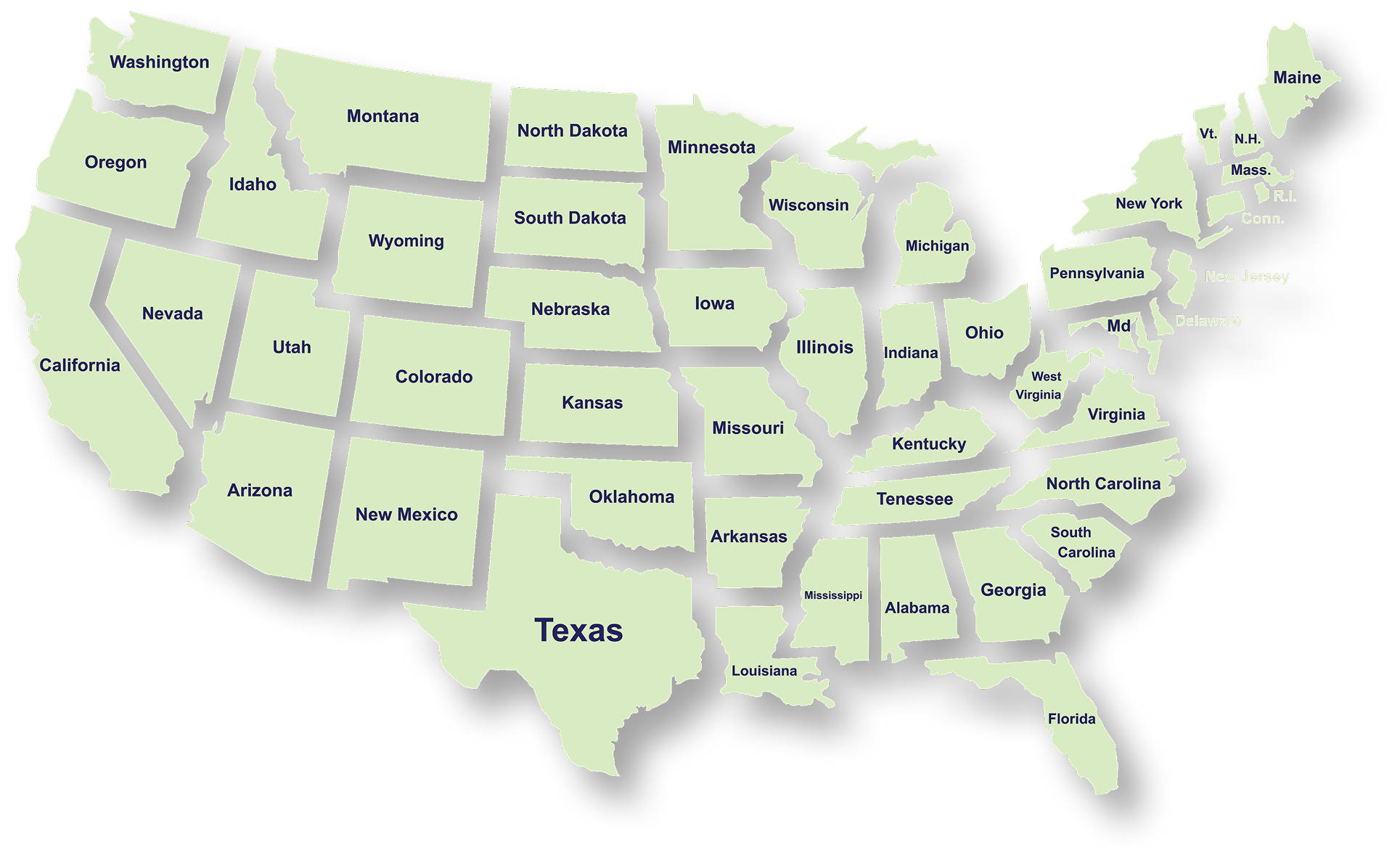
Serving Businesses & Individuals Across USA

We handle accounting, tax filing, and planning with defined timelines and accurate reporting for businesses and individuals across all states.

Frequently Asked Questions

What services does NR CPAs & Business Advisors provide?
What is tax planning and why is it important for businesses?
How can a Virtual CFO help my business?
When should a business consider IRS tax resolution services?
What financial statements does a business typically need?
How can startup advisory services help new businesses?
What is strategic business planning?
What is a Virtual Family Office and who can benefit from it?