Learning Center for Tax and Financial Insights

Stay updated with clear, actionable articles on tax rules, deadlines, deductions, and financial decisions that impact individuals and businesses.

No items found.

Hurricane Ian SBA Disaster Assistance

Article Highlights: Counties that Qualify For Loans Application Deadlines Types of Disaster Loans Interest Rates Hurricane Ian Disaster Fact Sheet Application Assistance The Small Business Administration (SBA) provides disaster assistance for homeowners, renters, nonprofits, and businesses of all sizes affected by Hurricane Ian. Caution: The following list of qualifying counties is preliminary and can change as damage assessments are concluded. Florida Areas Eligible for SBA Disaster Loans - In the Florida counties of: Charlotte, Collier, DeSoto, Hardee, Hillsborough, Lee, Manatee, Pinellas, and Sarasota. For Economic Injury Only Loans: in the contiguous Florida counties of: Broward, Glades, Hendry, Highlands, Miami-Dade, Monroe, Pasco, and Polk. Application Filing Deadlines: Physical damage: November 28, 2022 Economic injury: June 29, 2023 Types of available disaster loans: Home Disaster Loans – Loans to homeowners or renters to repair or replace disaster-damaged real estate and personal property, including automobiles. Business Physical Disaster Loans – Loans to businesses to repair or replace disaster-damaged property owned by the business, including real estate, inventories, supplies, machinery and equipment. Businesses of any size are eligible. Private, non-profit organizations such as charities, churches, private universities, etc., are also eligible. Economic Injury Disaster Loans (EIDL) – Working capital loans to help small businesses, small agricultural cooperatives, small businesses engaged in aquaculture, and most private, non-profit organizations of all sizes meet their ordinary and necessary financial obligations that cannot be met as a direct result of the disaster. These loans are intended to assist through the disaster recovery period. Interest Rates: LOAN INTEREST RATES Physical Damage Loans Home Owners With Credit Available Elsewhere 4.375% Without Credit Available Elsewhere 2.188% Businesses With Credit Available Elsewhere 6.080% Without Credit Available Elsewhere 3.040% Non-Profits With Credit Available Elsewhere 1.875% Without Credit Available Elsewhere 1.875% Economic Injury Loans Businesses & Small Agricultural Cooperatives Without Credit Available Elsewhere 3.040% Non-Profit Organizations Without Credit Available Elsewhere 1.875%

Explore More
No items found.

Four Popular Platforms for Finding Gig Work

There was once a time when the only people who used the word “gig” were musicians chatting about a booking. Today, virtually every newspaper and magazine features the booming gig economy — or how to make the most of it — on a regular basis. Though the term generally refers to people who have taken leave of their full-time jobs, choosing instead to work as independent contractors, there are many who are participating on freelance platforms as a way to supplement their income.No matter whether you’re considering entering this flexible, unpredictable world, you won’t be alone. Businesswire has reported that more than one in three professionals turned to freelancing during the COVID-19 pandemic, and even as businesses have reopened and people have returned to work, a recent Pew Research study found that 9% of Americans were involved in gig work and that 31% of those — roughly 3 percent of U.S. adults — did gig work as their main job.Gig work has plenty of benefits, but it has its drawbacks too. The most obvious advantage is the flexibility of making your own hours and being your own boss. Drawbacks include the unpredictability of work, the lack of paid benefits, and having to pay self-employment taxes.If you’re wondering whether gig work is right for you, you have plenty of options available. Platforms exist for people with specialized skills as well as for unskilled workers, drivers, and grocery pickers. To give you an idea of the opportunities available, we’ve assembled a list of some of the top platforms for finding gig work.Freelancer – This site offers the opportunity to post a personal profile that highlights your skills and then to bid on jobs in over 1,800 categories. Employers post their job descriptions and review the profile posted by each worker whose skills match their needs. Payments are made in milestones. The site has a membership fee after the first month, with a variety of membership options available.Instacart – Signing up to be a contractor for this delivery service means you become a personal shopper, picking out items based on clients’ orders and then delivering them, Instacart’s gig workers do most of their shopping for clients at specific big brand stores. Must have constant access to a smartphone and a vehicle and must be able to lift 50 pounds without accommodation. In addition to being paid based on the job itself, you also have the opportunity to earn tips.TaskRabbit – TaskRabbit matches those who need help with odd jobs and errands with people with the skill to do them. Jobs can range from driving to a physician’s office to helping somebody move or assemble furniture. This last task was posted so frequently on the platform that it attracted the attention of furniture giant IKEA, which purchased the site in 2017 and now offers a TaskRabbit service option with their furniture purchases. Gig workers download the site’s app and are then notified when somebody in their area posts a job they may want to complete.Care.com – This platform matches pet sitters, babysitters, tutors, housekeepers, and senior caretakers with those in need of their services. Signing up as a contractor on this site requires submitting to a background check in order to ensure the safety of those being cared for. Skills such as CPR or first aid certification are particularly valuable. This site does not take a percentage of earnings but does charge a membership fee.

Explore More
No items found.

Is This an Opportune Time to Convert Your Traditional IRA to a Roth IRA?

Article Highlights: Stock Markets Downward Slide Traditional IRA to a Roth IRA Conversions Younger Individuals Here Is How It Works Marginal Tax Rates Example When Using the Marginal Table Conversions Cannot Be Undone. Non-deductible Traditional IRA Contributions If your traditional IRA is invested in stocks and/or mutual funds, the recent substantial downward slide by the stock markets may provide a unique opportunity to convert your traditional IRA to a Roth IRA at a low cost, and then benefit when the markets recover. Why would you want to do that? Because Roth IRA distributions provide tax free retirement benefits while payouts from Traditional IRAs are taxable. Of course there is no assurance that the markets will not continue to decline, and this may not be the most opportune time to make a conversion in your specific circumstances but is something you may want to consider. Conversions provide the most benefit to younger individuals who can look forward to many years of the tax-free growth provided by a Roth IRA. You don’t have to convert all of your traditional IRA in one year. You can convert what you can afford to pay the tax on each year. Here Is How It Works – The tax code allows individuals to convert any portion of their traditional IRA to a Roth IRA by paying tax on the conversion as though taking a distribution from the traditional account. Thus, if you make a conversion you are taxed on the conversion based upon the tax rates that apply to your normal income plus the traditional IRA amount being converted. Of course, if in 2022 you have abnormally lower income, that could make the conversion tax even less. The following table includes the marginal tax rates for 2022. Marginal Tax Rates for 2022 Marginal Rate Filing Status Single HH MFJ MFS 10.0% 0 - 10,275 0 - 14,650 0 - 20,550 0 - 10,275 12.0% 10,276 - 41,775 14,651 - 55,900 20,551 - 83,550 10,276 - 41,775 22.0% 41,776 - 89,075 55,901 - 89,050 83,551 - 178,150 41,776 - 89,075 24.0% 89,076 - 170,050 89,051 - 170,050 178,151 - 340,100 89,076 - 170,050 32.0% 170,151 - 215,950 170,051 - 215,950 340,101 - 431,900 215,951 - 215,950 35.0% 215,951 - 539,900 215,951 - 539,900 431,901 - 647,850 215,951 - 323,925 37.0% 539,901 and Above 539,901 and Above 647,851 and Above 323,926 and Above

Explore More
No items found.

What Is an Offer in Compromise?

Carrying long-term debt is a challenge, but when the money is owed to the government and you see no way to pay what you owe, it can be psychologically and emotionally debilitating. Some people think they can turn to bankruptcy, but that is not the case – bankruptcy specifically will not discharge tax debts. One of the few options available for settling tax debt is an IRS program called an Offer in Compromise, or OIC.An OIC is not something that the IRS agrees to lightly. Roughly one in three applications for the program are approved. Still, it may be worth your time and effort to determine whether you qualify. The Three Steps to Applying for an Offer in CompromiseFill out IRS form 433-A and IRS form 656. If you plan to appeal the debt itself, you will also need to fill out IRS form 656-L.Pay the nonrefundable application fee of $205. If your income is below the IRS low-income guidelines, the fee may be waived.Propose paying an alternative amount to the IRSThis is a simple summary of a complex process that requires providing a significant amount of detail about your income and expenses. Though the form asks for a lot of information, the more diligent you are in demonstrating your inability to pay both your bills and your tax debt, the better your chances of being approved. It is also notable that 20% of the amount that you are offering to pay within your application must be included with your application in order for it to be considered. If your Offer in Compromise is rejected, the money will be applied toward your debt.Eligibility for Applying for an OICQualifying for an OIC is difficult in large part because the IRS has such strict rules about who is eligible to apply, as well as regarding what is needed to qualify. Let’s look at the question of whether you can apply first. In order for your application to be accepted, you must make sure that you meet the following criteria:You have answered all questions on the formsYou are current in having filed your tax returnsYou must have submitted the $205 application fee or successfully had it waivedThere must be at least one tax debt in your Offer in Compromise for which you have not received a billYou must have submitted all of your estimated tax payments for the current yearYou must not be in the midst of a bankruptcy proceedingYou must continue paying taxes and filing your tax returns while the IRS response to your offer is pendingYour case cannot have been sent to the Justice Department by the IRSIf any of these items are not in evidence, the IRS will send your application back for correction and resubmission.

Explore More
No items found.

Tax Benefits for Members of the Military

Article Highlights:Service Member and Spouse Residence or DomicileNon-Taxable AllowancesCombat Zone ExclusionHome Mortgage Interest DeductionHome Property Tax DeductionHome Sale Gain ExclusionMoving DeductionDeath Gratuity PaymentsChild CreditEarned Income Tax CreditIRA ContributionsReservist’s Travel ExpensesQualified Reservist’s Early Retirement Plan WithdrawalsRetired Military Disability CompensationExtension of DeadlinesJoint ReturnsTax ForgivenessROTC StudentsMilitary members benefit from a variety of special tax benefits. These include certain non-taxable allowances, non-taxable combat pay, and a variety of other special tax provisions. Here is a rundown on the most prominent of the tax benefits.Service Member and Spouse Residence or Domicile - A frequent question by service members is “What is my state of residence for tax purposes?” since one’s duty station may change multiple times while serving. Until recently the Servicemembers Civil Relief Act of 2003 allowed a service member to continue to retain his or her home state of residence for tax purposes, even when required to move to another state under military orders. This also applies to other tax jurisdictions within a state, such as for city, county, and personal property taxes. Thus, a service member was able to file tax returns for his or her home state and not the state where he or she is stationed.Then Sec 302 of Veterans Benefits and Transaction Act of 2018 permitted the spouse of a servicemember to elect the same residence for purposes of taxation as the servicemember regardless of the date on which the marriage of the spouse and the servicemember occurred. The election applied with respect to any return of State or local income tax filed for any taxable year beginning with 2018. The benefit of this election is that a spouse of a servicemember stationed in a high-income tax state can elect the state of residency of the servicemember whose resident state has no or low state income tax and not be subject to the state taxes where his or her spouse is stationed.More recently, Congress passed the Veterans Auto and Education Improvement Act of 2022. Under this legislation, which became law Jan. 5, 2023, servicemembers and their spouses, regardless of the date on which the marriage of the servicemember and the spouse occurred, are allowed to elect the state in which they pay income taxes from three options, the:Legal residence or domicile of the servicemember.Legal residence or domicile of the spouse, orCurrent permanent duty station of the servicemember.The Act also expands to spouses a residency protection already offered to servicemembers that allows them to remain tied to a former legal residency, even if they are no longer physically live there.Non-Taxable Allowances – Members of the military benefit from a number of non-taxable allowances including:Living allowances - Basic allowance for housing (BAH), housing and cost-of-living allowances abroad whether paid by the U.S. Government or by a foreign government and overseas housing allowance.Family allowances - Certain educational expenses for dependents, emergencies, evacuation to a place of safety and separation.Death allowances - Burial services, death gratuity payments to eligible survivors, and travel of dependents to burial sites.Moving allowances – Including for relocation, move-in housing, moving household and personal items, moving trailers or mobile homes, storage, temporary lodging and temporary lodging expenses, and military base realignment and closure benefits.Travel allowances – Including annual round trips for dependent students, leave between consecutive overseas tours, reassignment in a dependent-restricted status, transportation for military taxpayers and dependents during ship overhaul or inactivation, and per diem.State benefit payments – Any bonus payment made by a state or political subdivision to any member or former member of the U.S. uniformed services, or to his or her dependent, only because of the member's service in a “combat zone,” is generally treated as a “qualified military benefit” excludable from gross income.Other payments – Defense counseling, disability (including payments received for injuries incurred as a direct result of a terrorist or military action), group term life insurance, professional education, ROTC educational and subsistence allowances, survivor and retirement protection plan premiums, uniform allowances, and uniforms furnished to enlisted personnel.In-kind military benefits – Including legal assistance benefits, space-available travel on government aircraft, medical/dental care, and commissary/exchange discounts.Combat Zone Exclusion –A member of the U.S. Armed Forces who serves in a combat zone can exclude certain pay from income. This pay includes active duty pay earned in any month served in a combat zone; imminent danger/hostile fire pay; a reenlistment bonus, if the voluntary extension or reenlistment occurs during a month served in a combat zone; accrued leave pay earned in any month served in a combat zone; awards for suggestions, inventions, or scientific achievements the service member is entitled to because of a submission made in a month served in a combat zone; and student loan repayments attributable to the period of service in a combat zone (provided a full year’s service is performed to earn the repayment).Any part of a month in a combat zone counts as an entire month. Periods when a servicemember is hospitalized as the result of wounds, disease, or injury in a combat zone are also excluded, provided the hospitalization begins within 2 years of combat zone activities. The hospitalization need not be in the combat zone. Generally, the excludable combat pay is not included in the individual’s pay reported on Form W-2.Commissioned Officers – Commissioned officers may exclude their combat-zone pay; however, the amount of their exclusion is limited to the highest rate of enlisted pay (plus imminent danger/hostile fire pay received).Home Mortgage Interest Deduction – Military taxpayers who receive a non-taxable housing allowance and also own a home can deduct the mortgage interest on their home as an itemized deduction, even if they are paid with the non-taxable military housing allowance pay. However, the home mortgage interest is still subject to the general rules for deducting home mortgage interest, meaning through 2025, only home acquisition debt interest is deductible. Home acquisition debt is debt used to acquire, build, or substantially improve a home.Home Property Tax Deduction – Even though they receive a non-taxable housing allowance, a military taxpayer can still deduct their home’s property taxes as an itemized deduction. However, the deduction for real property tax and state/local income or sales tax is limited to $10,000 annually for years 2018 through 2025.

Explore More
No items found.

Are You Missing Out on the Increased Child Tax Credit?

Article Highlights:American Rescue Plan Act2021 Enhanced Child Tax CreditCredit PhaseoutAdvance PaymentsTIGTA ReportMillions Entitled to But Did Not Receive the CreditCredit Still Available to Those That QualifyThe American Rescue Plan Act of 2021, also referred to as the COVID-19 Stimulus Package or ARPA, was a $1.9 trillion bill passed by Congress to stimulate the U.S. economy as the country emerges from the pandemic.Included in that legislation was a one-year groundbreaking enhancement of the child tax credit for 2021 only. Though it made no changes to the rules about dependency, the law boosted the existing credit from $2,000 to $3,000 for parents of a child aged 6 to 17 (this is a one-year increase from the normal age 16 cutoff).The credit is intended for lower income families and includes a phaseout that reduces the credit by $50 for each $1,000 (or fraction thereof) by which the taxpayer’s modified gross income exceeds the thresholds illustrated in this table. 2021 MAGI PHASEOUT - CHILD TAX CREDITFiling StatusThresholdMarried Filing Joint150,000Heads of Household112,500Others75,000Not only did the bill increase the credit, it also required the IRS to provide monthly payments to parents of up to half of the amount of the credit from July through December of 2021, with the balance credited to them when they filed their 2021 tax return.

Explore More
No results found.
Thank you! Your submission has been received!
Oops! Something went wrong while submitting the form.

Want tax & accounting tips & insights?Sign up for our newsletter.

Thank you! Your submission has been received!
Oops! Something went wrong while submitting the form.

Why Work With Us?

We combine deep tax expertise, financial strategy, and practical business insight to help you manage complexity, stay compliant, and make confident financial decisions.
A dollar sign, representing financial advice or discussion at NR CPAs & Business Advisors.

Experienced CPA and Enrolled Agent Leadership

Guidance led by licensed professionals with deep expertise in tax strategy, compliance, and complex financial matters.
White bar chart with an upward arrow on green circular background representing growth or progress at NR CPAs &. Business Advisors

Support for Growing Businesses and Startups

We understand the financial challenges of growth stage businesses and provide structured guidance to support expansion.
A white hand holding a dollar symbol and ascending bar chart on a green circular background representing financial growth or investment at NR CPAs & Business Advisors..

Strategic Financial Advisory

Our team helps you evaluate financial decisions with greater clarity, supported by practical insights and long term planning.

Fractional CFO Support

Access experienced financial leadership without the commitment and cost of hiring a full time Chief Financial Officer.

Proactive Tax Planning Approach

We focus on identifying tax opportunities throughout the year rather than reacting only during filing season.

Clear and Reliable Financial Reporting

Accurate financial statements and reporting that help you better understand performance and make informed decisions.
White IRS building icon with pillars and a dollar sign above on a green circular background.

Professional IRS Representation

Experienced support in resolving IRS notices, disputes, and compliance matters while protecting your financial interests.

Personalized Client Focus

Every client receives thoughtful attention and tailored financial solutions based on their specific needs and business goals.
Financial matters often involve important decisions. Working with experienced advisors can help you approach them with greater clarity and confidence in your choices.

Need Help With Your Tax or Financial Decisions?

Discuss your situation with our advisors to get clear guidance on tax planning, IRS matters, and the financial decisions ahead.
Business consulting at NR CPAs & Business Advisors.

Request Your Consultation

Fill out the form to discuss your tax concerns, financial questions, or advisory needs with our team. We will review your details and respond shortly.

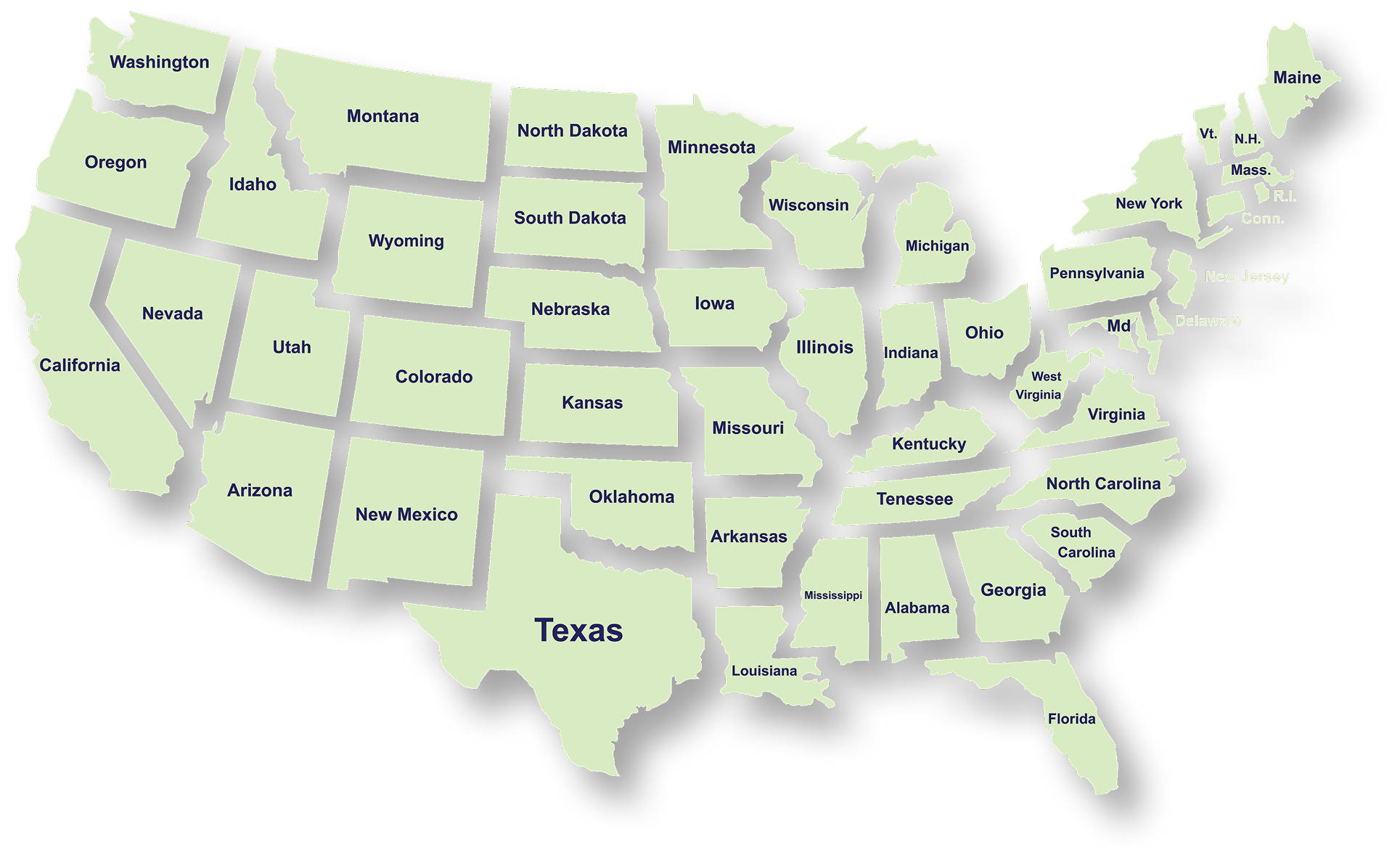
Serving Businesses & Individuals Across USA

We handle accounting, tax filing, and planning with defined timelines and accurate reporting for businesses and individuals across all states.

Frequently Asked Questions

What services does NR CPAs & Business Advisors provide?
What is tax planning and why is it important for businesses?
How can a Virtual CFO help my business?
When should a business consider IRS tax resolution services?
What financial statements does a business typically need?
How can startup advisory services help new businesses?
What is strategic business planning?
What is a Virtual Family Office and who can benefit from it?