Learning Center for Tax and Financial Insights

Stay updated with clear, actionable articles on tax rules, deadlines, deductions, and financial decisions that impact individuals and businesses.

No items found.

Have You Explored QuickBooks' Insights and Snapshots Pages?

QuickBooks is good at finding information quickly. The software’s Insights and Snapshots pages can provide fast, thorough overviews of your finances.There’s more than one way to get where you’re going in QuickBooks. The software was designed to make similar information available by taking multiple paths. This gives you the option to choose what makes the most sense for you, and what’s most convenient.Let’s say you need to get a quick summary of your finances. There are multiple choices. You could, for example:Run a Report. This gives you the opportunity to narrow down the data in your company file so QuickBooks only displays exactly what you want to see. It also takes time.Go to the Customer Center or Vendor Center. You can learn everything you need to know about your business associates and related transactions. But again, this method isn’t very speedy.There are better ways to get fast access to information about your company’s health: Insights and Snapshots.What Are Insights?When you open the 2021 version of QuickBooks (this is also available in some earlier versions), you’ll see two tabs at the top. One says Home Page and the other, Insights. Click on Insights. You can modify QuickBooks’ Insights page to display just the set of charts and graphs that you want.To ensure that you’re seeing everything that’s available, click the gear icon in the upper right. This opens a list of all of the charts and graphs that are available on the Insights page. If they’re not all checked, go ahead and click in front of the ones that aren’t turned on so you can see everything at first. You can change this later.Directly below the gear icon, QuickBooks displays either Cash Basis or Accrual Basis. You would have established this when you were setting up QuickBooks. If you’re not absolutely sure what the difference is or whether you made the right choice, please contact us.How Do You See All of the Charts?QuickBooks can’t show all of the content available for the Insights screen at one time, so you won’t see everything if you’ve selected all seven options. You should see the Profit & Loss chart at the top. You can change the date range by clicking the down arrow next to the field in the upper left. Below that are two additional charts that remain on the screen even if you move on to additional content: Income and Expenses. These three graphs give you a quick look at whether you’re making or losing money. Two links here allow you to Create Invoice and Create Bill.To get to the other charts, click the Next arrow to the right of Profit & Loss. Keep clicking to see six more graphical representations of various elements of your business. They are Prev(ious) Year Income Comparison, Top Customers by Sales, Income and Expense Trend, Business Growth, Net Profit Margin, and Prior Year Expense Comparison. Like you could with Profit & Loss, you can change the date ranges for these charts.

Explore More
No items found.

Video Tips: Tax Deductions for First-Time Homeowners

First-time homeowners should make themselves familiar with authorized deductions, and programs that can assist with home ownership and that can be beneficial. When it comes to home ownership, the IRS considers a home to be a house, condominium, cooperative apartment, mobile home, houseboat or house trailer that contains a sleeping space, toilet, and cooking facilities.

Explore More
No items found.

Health Savings Accounts Fill Multiple Tax Needs

Article Highlights:Medical Savings AccountRetirement AccountHigh-Deductible PlanEligible IndividualsMonetary Qualification for an HSAQualification ChartMaximum ContributionsEstablishing an HSAThe Health Savings Account (HSA) is one of the most misunderstood and underused benefits in the Internal Revenue Code. Congress created HSAs as a way for individuals with high-deductible health plans (HDHPs) to save for medical expenses that are not covered by insurance due to the high-deductible provisions of their insurance coverage.However, an HSA can act as more than just a vehicle to pay medical expenses; it can also serve as a retirement account. For some taxpayers who have maxed out their retirement-plan options an HSA provides them another resource for retirement savings – one that isn’t limited by income restrictions in the way that IRA contributions sometimes are.Although the tax code refers to these plans as “health” savings accounts, they can also be used for retirement, as there is no requirement that the funds be used to pay medical expenses. Thus, a taxpayer can pay medical expenses with other funds, thus allowing the HSA to grow (through account earnings and further tax-deductible contributions) until retirement. In addition, should the need arise, the taxpayer can still take tax-free distributions from the HSA to pay medical expenses.Withdrawals from an HSA that aren’t used for medical expenses are taxable and – depending on the taxpayer’s age – can be subject to penalty. Once a taxpayer has reached age 65, nonmedical distributions are taxable but not subject to a penalty (the same as for a traditional IRA once the IRA owner reaches age 59½). At the same time, regardless of age, a taxpayer can always take tax-free distributions to pay medical expenses.Example: Henry is age 70 and has an HSA account from which he withdraws $10,000 during the year. He also has unreimbursed medical expenses of $4,000. Of his $10,000 withdrawal, $6,000 ($10,000 – $4,000) is added to Henry’s income for the year, and the other $4,000 is tax-free.Eligible Individual – To be eligible for an HSA in a given month, an individual:must be covered under a HDHP on the first day of the month;must NOT also be covered by any other health plan (although there are some exceptions);must NOT be entitled to Medicare benefits (i.e., generally must be younger than age 65); andmust NOT be claimed as a dependent on someone else’s return.Any eligible individual – whether employed, unemployed or self-employed – can contribute to an HSA. Unlike with an IRA, there is no requirement that the individual have compensation, and there are no phase-out rules for high-income taxpayers. If an HSA is established by an employer, then the employee and/or the employer can contribute. Family members or any other person can also make contributions to HSAs on behalf of eligible individuals. Both employer contributions and employee contributions made via the employer’s cafeteria plan are excluded from the employee’s wage income. Employees who make HSA contributions outside of their employers’ arrangements are eligible to take above-the-line deductions – that is, they don’t need to itemize deductions – for those contributions.

Explore More
No items found.

Increased Tax Credits for Home Builders

Article Highlights:Contractor Developer CreditRetroactive Extension to 2022Increased Credit 2023 through 2032Prevailing Wage RequirementsQualificationsQualifying Residential ProjectsNon-Refundable CreditBasis AdjustmentAs part of the Inflation Reduction Act, passed in August 2022, modifying Internal Revenue Code Sec. 45L, contractors will benefit from the increased tax credit for building Energy Efficient New Homes effective January 1, 2023. In addition, this credit that had previously expired after 2021, has been extended through 2032.For 2022, the old credit rules have been retroactively extended providing a $2,000 tax credit for site built home and a $1,000 or $2,000 tax credit for manufactured homes that meet the energy saving requirements of 50% for a site built home and 30% to 50% for manufactured homes.Beginning in 2023 and before 2033 the amount of the credit is increased, and can be $500, $1,000, $2,500, or $5,000, depending on which energy efficiency requirements the home satisfies and whether the construction of the home meets the prevailing wage requirements.$2,500 Credit - for single family and manufactured homes when constructed per the standards set by the Energy Star Residential New Construction Program or the Manufactured Homes Program.$5,000 Credit - for single family and manufactured homes when they are certified by the Department of Energy as a Zero Energy Ready Home.$500 Credit - For multifamily homes when meeting the Energy Star Single Family New Homes Program.$1,000 Credit - for multifamily homes when they are certified by the Department of Energy as a Zero Energy Ready Home.Prevailing Wage Requirements - Under the prevailing wage requirements, for any qualified residence, the taxpayer must ensure that any laborers and mechanics employed by the taxpayer or any contractors or subcontractor in the construction of the residence are paid wages at rates not less than the prevailing rates for construction, alteration, or repair of a similar character in the locality in which the residence is located as determined by the Secretary of Labor.

Explore More
No items found.

Tax Relief for Victims of Hurricane Ian

Article Highlights:Federal Disaster Declaration. Filing Dates Extended.Option as When to Declare the Disaster Loss.Records Located Within Disaster Area.Other Disaster Areas. The Federal government provides special tax law provisions to help taxpayers and businesses recover financially from the impact of a disaster, especially when the federal government declares their location to be a major disaster area as they have for Hurricane Ian. The following highlights the special tax provisions:Filing Due Dates Affected – October 17, 2022 – Is the extended due date for 2021 returns that are on a valid extension. This means individuals who had a valid extension to file their 2021 return due to run out on October 17, 2022, will now have until February 15, 2023, to file. However, because tax payments related to these 2021 returns were due on April 18, 2022, those payments are not eligible for this relief and late payment penalties will apply to any tax due on the return. January 17, 2023 – Is the filing due date for the 4th quarter estimated tax payment which now is not due until February 15, 2023.The February 15, 2023, deadline also applies to:o Quarterly payroll and excise tax returns normally due on October 31, 2022, and January 31, 2023.o Businesses with an original or extended due date also have the additional time including, among others, calendar-year corporations whose 2021 extensions run out on October 17, 2022. Similarly, tax-exempt organizations also have the additional time, including for 2021 calendar-year returns with extensions due to run out on November 15, 2022. In addition, penalties on payroll and excise tax deposits due on or after Sept. 23, 2022, and before Oct. 10, 2022, will be abated as long as the deposits are made by Oct. 10, 2022.Option as When to Declare the Disaster Loss – The IRS allows both individuals and businesses in a federally declared disaster to claim a disaster loss in either the current tax year or the previous tax year. Claiming the loss in the prior year allows taxpayers to get a faster tax refund for the disaster loss. So hurricane Ian losses can be claimed on either:The 2022 return orThe 2021 return by amending an already filed 2021 return or the unfiled 2021 that is currently on extension through October 17, 2022. That extension has been extended through February 15, 2023, as part of the disaster relief. However, careful consideration should be given to which year’s return will provide the greater tax benefit. Also, consider that claiming the loss on the 2021 where there would otherwise be a tax due can reduce or eliminate any late payment penalties.Be sure to write the FEMA declaration number – DR-4673-FL − on any return claiming a loss. See Publication 547 for details.

Explore More
No items found.

Video Tips: Improperly Forgiven PPP Loans Are Now Taxable

The IRS recently issued guidance addressing improper forgiveness of a Paycheck Protection Program loan (PPP loan). When a taxpayer's loan is forgiven based upon misrepresentations or omissions, they are not eligible for exclusion and must include in income the portion of proceeds that were unfairly given up.

Explore More
No results found.
Thank you! Your submission has been received!
Oops! Something went wrong while submitting the form.

Want tax & accounting tips & insights?Sign up for our newsletter.

Thank you! Your submission has been received!
Oops! Something went wrong while submitting the form.

Why Work With Us?

We combine deep tax expertise, financial strategy, and practical business insight to help you manage complexity, stay compliant, and make confident financial decisions.
A dollar sign, representing financial advice or discussion at NR CPAs & Business Advisors.

Experienced CPA and Enrolled Agent Leadership

Guidance led by licensed professionals with deep expertise in tax strategy, compliance, and complex financial matters.
White bar chart with an upward arrow on green circular background representing growth or progress at NR CPAs &. Business Advisors

Support for Growing Businesses and Startups

We understand the financial challenges of growth stage businesses and provide structured guidance to support expansion.
A white hand holding a dollar symbol and ascending bar chart on a green circular background representing financial growth or investment at NR CPAs & Business Advisors..

Strategic Financial Advisory

Our team helps you evaluate financial decisions with greater clarity, supported by practical insights and long term planning.

Fractional CFO Support

Access experienced financial leadership without the commitment and cost of hiring a full time Chief Financial Officer.

Proactive Tax Planning Approach

We focus on identifying tax opportunities throughout the year rather than reacting only during filing season.

Clear and Reliable Financial Reporting

Accurate financial statements and reporting that help you better understand performance and make informed decisions.
White IRS building icon with pillars and a dollar sign above on a green circular background.

Professional IRS Representation

Experienced support in resolving IRS notices, disputes, and compliance matters while protecting your financial interests.

Personalized Client Focus

Every client receives thoughtful attention and tailored financial solutions based on their specific needs and business goals.
Financial matters often involve important decisions. Working with experienced advisors can help you approach them with greater clarity and confidence in your choices.

Need Help With Your Tax or Financial Decisions?

Discuss your situation with our advisors to get clear guidance on tax planning, IRS matters, and the financial decisions ahead.
Business consulting at NR CPAs & Business Advisors.

Request Your Consultation

Fill out the form to discuss your tax concerns, financial questions, or advisory needs with our team. We will review your details and respond shortly.

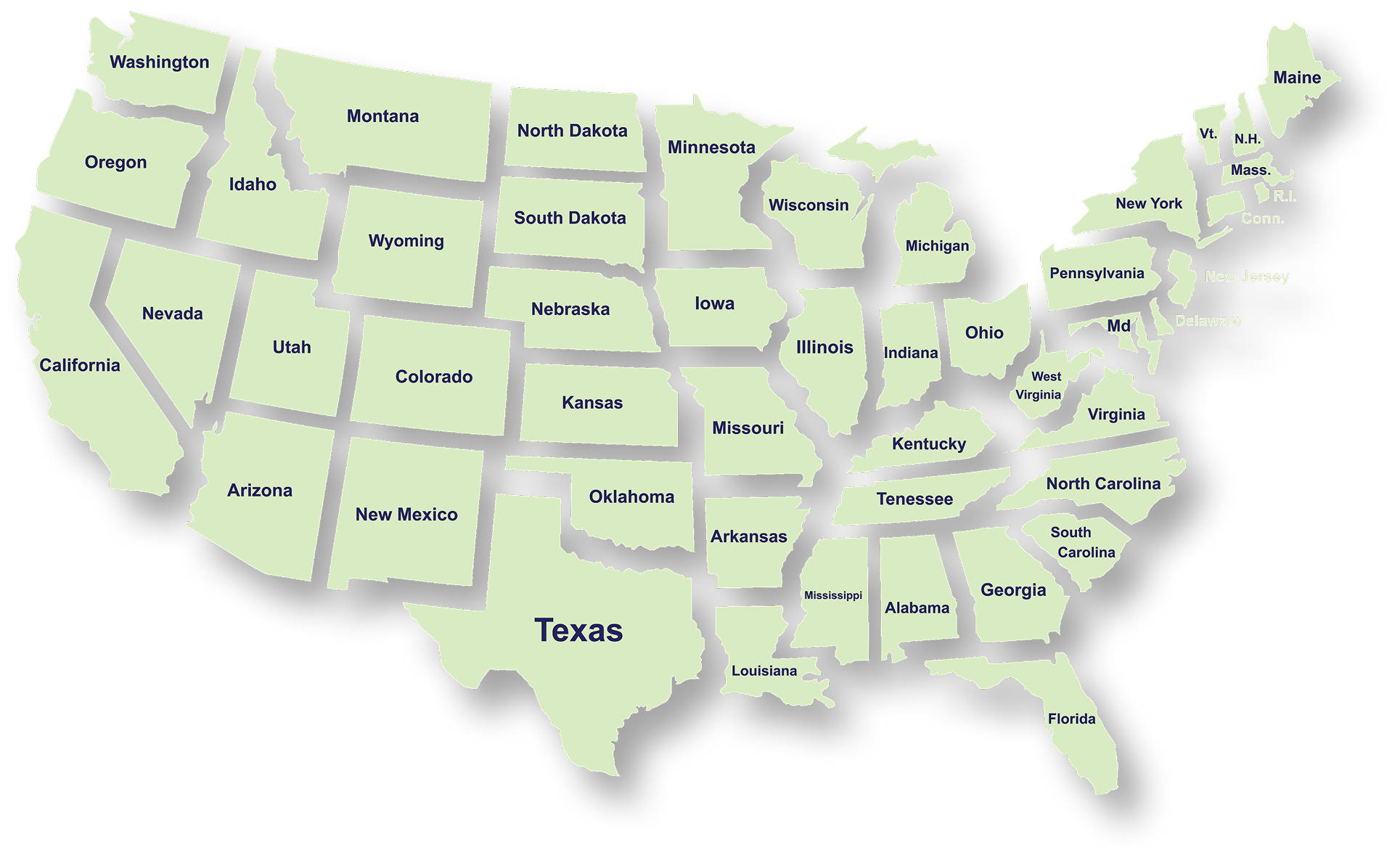
Serving Businesses & Individuals Across USA

We handle accounting, tax filing, and planning with defined timelines and accurate reporting for businesses and individuals across all states.

Frequently Asked Questions

What services does NR CPAs & Business Advisors provide?
What is tax planning and why is it important for businesses?
How can a Virtual CFO help my business?
When should a business consider IRS tax resolution services?
What financial statements does a business typically need?
How can startup advisory services help new businesses?
What is strategic business planning?
What is a Virtual Family Office and who can benefit from it?