Learning Center for Tax and Financial Insights

Stay updated with clear, actionable articles on tax rules, deadlines, deductions, and financial decisions that impact individuals and businesses.

No items found.

Video Tips: Which Kind of Interest Is Tax Deductible?

When it comes to deducting loan interest on your taxes, there are a few things you need to keep in mind. First, only interest on certain types of loans is deductible. Second, you can only deduct the interest if you itemize your deductions. And finally, there is a limit on how much interest you can deduct. By being prepared and knowing what to expect, you can make sure that you get the most out of your tax deductions.

Explore More
No items found.

What Is a Required Minimum Distribution?

Article Highlights: Required Minimum Distributions When the Distributions Must Begin RMD Distribution Tables Figuring the Amount of the Distribution Beneficiary Distribution Rules Surviving Spouse Eligible Designated Beneficiaries Account Owner’s Minor Child Other Beneficiaries Ten Year Rule Pending Legislation Required minimum distributions (RMDs) are required distributions from qualified retirement plans. RMDs are commonly associated with traditional IRAs, but they also apply to 401(k)s and SEP IRAs. The tax code does not allow taxpayers to keep funds in their qualified retirement plans indefinitely. Eventually, assets must be distributed, and taxes must be paid on those distributions. If a retirement plan owner takes no distributions, or if the distributions are not large enough, he or she may have to pay a 50% penalty on the amount that is not distributed. (Note that distributions are not required to be taken from Roth IRAs while the account owner is alive.) Generally, RMDs begin in the year that the retirement plan owner attains the age of 72. The first year’s distribution can be delayed to no later than April 1 of the following year. However, delaying the first distribution means taking two distributions in the following year: one for the age-72 year and one for the next year. If an IRA owner dies after reaching age 72 but before April 1st of the next year, no minimum distribution is required because death occurred before the required beginning date. A person who turned 72 in a previous year is required to take the minimum distribution no later than December 31 of each year. The method for determining the minimum amount is explained below. Even though the tax code mandates minimum distributions after reaching age 72, there is no maximum limit on distributions, and the retirement plan owner can withdraw as much as he or she wishes. However, if more than the required distribution is taken in a particular year, the excess cannot be applied toward the minimum required amounts for future years. The required withdrawal amount for a given year is equal to the value of the retirement account on December 31 of the prior year divided by the distribution period from a table developed by the IRS. For individual's whose spouse is not the sole designated beneficiary, or, the individual's spouse is the sole designated beneficiary but is not more than 10 years younger than the individual, the Uniform Lifetime Table is used. UNIFORM LIFETIME TABLE – EFFECTIVE 2022 Age Distribution Period Age Distribution Period Age Distribution Period Age Distribution Period Age Distribution Period - - 80 20.2 90 12.2 100 6.4 110 3.5 - - 81 19.4 91 11.5 101 6.0 111 3.4 72 27.4 82 18.5 92 10.8 102 5.6 112 3.3 73 26.5 83 17.7 93 10.1 103 5.2 113 3.1 74 25.5 84 16.8 94 9.5 104 4.9 114 3.0 75 24.6 85 16.0 95 8.9 105 4.6 115 2.9 76 23.7 86 15.2 96 8.4 106 4.3 116 2.8 77 22.9 87 14.4 97 7.8 107 4.1 117 2.7 78 22.0 88 13.7 98 7.3 108 3.9 118 2.5 79 21.1 89 12.9 99 6.8 109 3.7 119 2.3 - - - - - - - - 120+ 2.0

Explore More
No items found.

Even if You’re Not Required to File a Tax Return, You May Be Missing Out if You Don’t.

Article Highlights: Tax Filing Thresholds Withholding 2021 Recovery Rebate Credit Earned Income Tax Credit (EITC) Child Tax Credit or Credit for Other Dependents Education Credits Some people may choose not to file a tax return because they didn't earn enough money to be required to file, but these folks may miss out getting a refund if they don’t file. Although there are some exceptions, generally individuals are not required to file a tax return if their income for the year is below the filing threshold for their filing status as shown in the following table. 2021 TAX FILING THRESHOLDS FOR MOST INDIVIDUALS Filing Status Age at the end of 2021 Gross Income Filing Threshold Single Under 65 $12,550 65 or older $14,250 Head of Household Under 65 $18,800 65 or older $20,500 Married Filing Jointly Under 65 (both spouses) 25,100 65 or older (one spouse) $26,450 65 or older (both spouses) $27,800 Married Filing Separate Any Age $5 Qualifying Widow(er) Under 65 $25,100 65 or older $26,450 Many social benefits provided by the government for lower income individuals are distributed through the tax return, often in the form of a tax credit, and a return must be filed to claim those benefits, many of which can be substantial. Some of these credits are partially or fully refundable even if an individual has no tax liability. So, even though you might not be required to file a return you may be missing out on a tax refund if you don’t file one. Here are some examples: Withholding – If you are not required to file a tax return but had income taxes withheld from your W-2 wages, Social Security benefits, retirement income, or investment income, or you made estimated tax payments, you are entitled to have that withholding or estimate payments refunded. However, you must file a tax return to recover the withholding or tax payments. 2021 Recovery Rebate Credit – Individuals who didn't qualify for a third Economic Impact Payment or got less than the full amount, may be eligible to claim the 2021 recovery rebate credit . However, a 2021 return will need to be filed, even if not otherwise required to file a tax return. The credit will reduce any tax owed for 2021 or be included in the tax refund.

Explore More
No items found.

Video Tips: An Overview of Tax Provisions related to Business Travel

As a business owner or self-employed individual, you can take advantage of tax deductions for your business-related travel expenses, including airfare, lodging, transportation, and meals. This can be a great way to save money on your taxes, but it is important to keep good records of your expenses and make sure that they meet the requirements by law. This video provides a quick overview of the business travel tax deduction and how it can benefit you.

Explore More
No items found.

Not All Interest Is Deductible for Taxes

Article Highlights: Interest CategoriesCategory Deductibility Interest Tracing Rules A frequent question that arises when borrowing money is whether or not the interest will be tax deductible. That can be a complicated question, and unfortunately not all interest an individual pays is deductible. The rules for deducting interest vary, depending on whether the loan proceeds are used for personal, investment, or business activities. Interest expense can fall into any of the following categories:Personal interest – is not deductible. Typically this includes interest from personal credit card debt, personal car loan interest, home appliance purchases, etc. Investment interest – this is interest paid on debt incurred to purchase investments such as land, stocks, mutual funds, etc. However, interest on debt to acquire or carry tax-free investments is not deductible at all. The annual investment interest deduction is limited to “net investment income,” which is the total taxable investment income reduced by investment expenses (other than expenses related to investments that produce non-taxable income). The investment interest deduction is only allowed to taxpayers who itemize their deductions. Home mortgage interest – includes the interest on debt to purchase, construct or substantially improve a taxpayer’s principal home or second home. This type of loan is referred to as acquisition debt. For the interest to be deductible the debt must be secured by the home purchased, constructed, or substantially improved. A secured debt is one in which the taxpayer signs a mortgage, deed of trust, or land contract that makes their ownership in a qualified home security for payment of the debt; provides, in case of default, that the home could satisfy the debt; and is recorded under any state or local law that applies. In other words, if the taxpayer can't pay the debt, their home can then serve as payment to the lender to satisfy the debt.o For Debt Incurred Before 12/16/2017 - the debt for which the interest is deductible is limited to $1,000,000 ($500,000 for married separate).o For Debt Incurred After 12/15/2017 - the debt for which the interest is deductible is limited to $750,000 ($375,000 for married separate).Passive activity interest – includes interest on debt that's for business or income-producing activities in which the taxpayer doesn’t “materially participate” and is generally deductible only if income from passive activities exceeds expenses from those activities. The most common passive activities are probably real estate rentals. For rental real estate activities, there is a special passive loss allowance of up to $25,000 for taxpayers who are active but not necessarily material participants in the rental. The $25,000 phases out for taxpayers with adjusted gross income between $100,000 and $150,000.Trade or business interest – includes interest on debts that are for activities in which a taxpayer materially participates. This type of interest can generally be deducted in full as a business expense.

Explore More
No items found.

Take Tax Advantage of a Low-Income Year

Article Highlights:Exercise Stock OptionsConvert a Traditional IRA to a Roth IRAMaximize IRA DistributionsSell Appreciated StockDelay Business ExpendituresRelease DependencyDelay Personal Deductible ExpendituresPeople generally assume that tax planning only applies to individuals with the big bucks. But think again, as some tax moves benefit lower-income taxpayers and those who are having a lower-than-normal income year. So, if 2022 is not producing a lot of income for you, or your income will be substantially lower this year than it usually is, you may be surprised to know that you actually might be able to take advantage of some tax-planning opportunities. Implementing some of these ideas will require action on your part before the close of the year. Here are some possibilities to consider.Exercise Stock Options – If you are an employee of a corporation, the company may offer you the option to purchase shares of it at a fixed price at some future date, so that you can benefit from your commitment to the company’s success by sharing in the company’s growth through the increase in stock value. If those options are non-qualified, then you must report the difference between your preferential option price and the stock’s value when you exercise the option as income. This income will be included in your wages on your year-end W-2 form. In a low-income year, this may give you the chance to exercise some or all of your options without any or with minimal income tax liability. Convert a Traditional IRA to a Roth IRA – Roth IRA accounts provide the benefits of tax-free accumulation and, once you reach retirement age, tax-free distributions. This is why many taxpayers convert their traditional IRA account to a Roth IRA. However, to do so, you must generally pay tax on the converted amount. Many taxpayers overlook some great opportunities to make conversions, such as in years when their income is unusually low or a year when their income might even be negative due to abnormal deductions or business losses. The current standard deduction is higher than ever before, which may offer a taxpayer the opportunity to convert some or all their traditional IRA to a Roth IRA without any conversion tax. If you are in any of these circumstances this year, you should consider converting some or all of your traditional IRA to a Roth IRA before the end of the year.Maximize IRA Distributions – If you are retired and taking IRA distributions, make sure that you are maximizing your withdrawals with respect to your tax bracket. With the robust standard deduction and a lower-than-normal income, it may be tax-effective to actually withdraw more than the minimum required by law. In fact, you may even be able to take a distribution from your IRA with no tax liability. Presented with this situation, you would certainly want to take advantage of it before year’s end, even if you do not need the funds, which you could bank for the future. Sell Appreciated Stock – Income tax rates increase as a taxpayer’s taxable income increases. The regular tax rates start at 10% and then increase in step amounts as one’s taxable income increases, reaching a maximum rate of 37%. However, long-term capital gains are given special treatment and only have three tax rates: 0%, 15%, and 20%. The 0% tax rate applies for taxpayers with taxable incomes up to the following amounts for 2022:

Explore More
No results found.
Thank you! Your submission has been received!
Oops! Something went wrong while submitting the form.

Want tax & accounting tips & insights?Sign up for our newsletter.

Thank you! Your submission has been received!
Oops! Something went wrong while submitting the form.

Why Work With Us?

We combine deep tax expertise, financial strategy, and practical business insight to help you manage complexity, stay compliant, and make confident financial decisions.
A dollar sign, representing financial advice or discussion at NR CPAs & Business Advisors.

Experienced CPA and Enrolled Agent Leadership

Guidance led by licensed professionals with deep expertise in tax strategy, compliance, and complex financial matters.
White bar chart with an upward arrow on green circular background representing growth or progress at NR CPAs &. Business Advisors

Support for Growing Businesses and Startups

We understand the financial challenges of growth stage businesses and provide structured guidance to support expansion.
A white hand holding a dollar symbol and ascending bar chart on a green circular background representing financial growth or investment at NR CPAs & Business Advisors..

Strategic Financial Advisory

Our team helps you evaluate financial decisions with greater clarity, supported by practical insights and long term planning.

Fractional CFO Support

Access experienced financial leadership without the commitment and cost of hiring a full time Chief Financial Officer.

Proactive Tax Planning Approach

We focus on identifying tax opportunities throughout the year rather than reacting only during filing season.

Clear and Reliable Financial Reporting

Accurate financial statements and reporting that help you better understand performance and make informed decisions.
White IRS building icon with pillars and a dollar sign above on a green circular background.

Professional IRS Representation

Experienced support in resolving IRS notices, disputes, and compliance matters while protecting your financial interests.

Personalized Client Focus

Every client receives thoughtful attention and tailored financial solutions based on their specific needs and business goals.
Financial matters often involve important decisions. Working with experienced advisors can help you approach them with greater clarity and confidence in your choices.

Need Help With Your Tax or Financial Decisions?

Discuss your situation with our advisors to get clear guidance on tax planning, IRS matters, and the financial decisions ahead.
Business consulting at NR CPAs & Business Advisors.

Request Your Consultation

Fill out the form to discuss your tax concerns, financial questions, or advisory needs with our team. We will review your details and respond shortly.

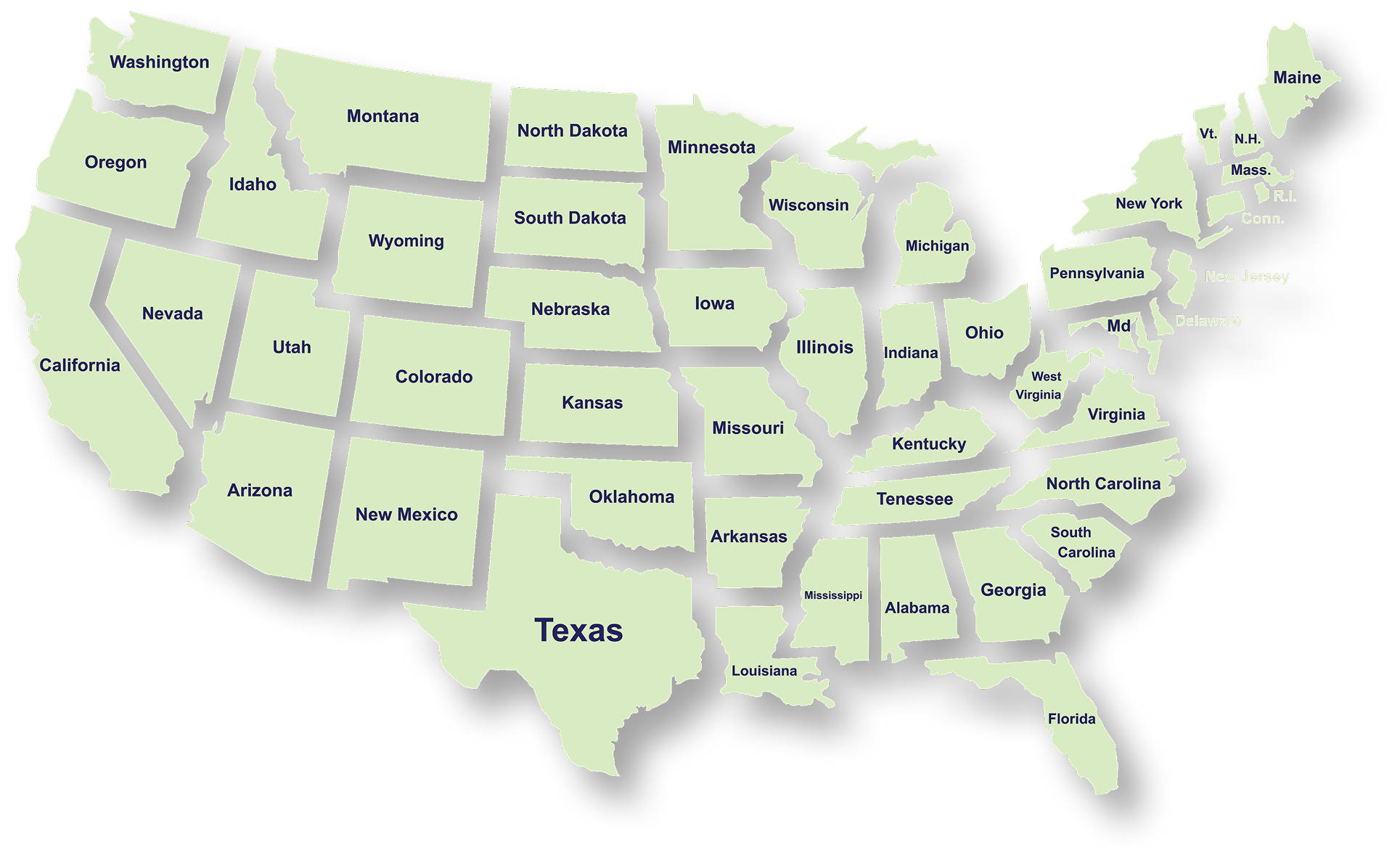
Serving Businesses & Individuals Across USA

We handle accounting, tax filing, and planning with defined timelines and accurate reporting for businesses and individuals across all states.

Frequently Asked Questions

What services does NR CPAs & Business Advisors provide?
What is tax planning and why is it important for businesses?
How can a Virtual CFO help my business?
When should a business consider IRS tax resolution services?
What financial statements does a business typically need?
How can startup advisory services help new businesses?
What is strategic business planning?
What is a Virtual Family Office and who can benefit from it?