Learning Center for Tax and Financial Insights

Stay updated with clear, actionable articles on tax rules, deadlines, deductions, and financial decisions that impact individuals and businesses.

No items found.

Video Tips: Protect Yourself from Charity Scams

Donating to a charity is a great way to give back to the community and help those in need. However, it's important to be aware of potential scams before giving your hard-earned money to a charitable organization. By taking some simple precautions presented in this video, you can ensure that your donation goes to a worthy cause.

Explore More
No items found.

Best Practices for Establishing an Effective Employee Bonus Pool

If you had to make a list of some of the most valuable resources that businesses have when it comes to attracting and retaining top talent, an employee bonus pool would undoubtedly be right at the top.Despite the fact that unemployment is on the decline and things are getting "back to normal" in the wake of the COVID-19 pandemic, there's still a labor shortage in just about every industry you can name. Businesses are having a hard time filling available positions and if they do find someone with the appropriate skill set, it's difficult to keep them in the fold permanently before they wind up leaving for greener pastures. Things have gotten to the point where most job seekers say that they look at bonuses with more weight than they do even their starting salary - that's how important of a concept this is.Thankfully, all hope is not lost. If you're an organizational leader who wants to make sure that your business is remaining as competitive as possible, there are a number of essential things that you'll want to keep in mind.Establishing an Effective Employee Bonus Pool: Breaking Things DownBy far, the most important step that you should take when it comes to establishing an effective employee bonus pool involves building a budget to get a better idea of how things need to play out before you actually start the process in earnest.Obviously, we'd all love to be able to promise any new hire the proverbial moon - whatever they're looking for is what we're willing to give them to see that person join the organization. But a certain amount of realism also has to enter the equation. What is the maximum amount you can afford to put into a collective employee bonus pool and how many people does that need to cover? What do you need to offer on a position-by-position basis in order to remain competitive? These are all questions that you need to answer before the start of the process so that you can make better and more informed choices moving forward.Another best practice that most people should follow when establishing an effective employee bonus pool has less to do with the pool itself and is more about what happens in the weeks and months ahead.

Explore More
No items found.

What an Economic Slowdown Means for Your Small Business

If you pay attention to the financial news, you’ve likely heard that we may — or may not — be in the midst of a recession. While experts argue over whether or not two consecutive periods of falling gross domestic period necessarily confirm an overall decline in economic activity, small business owners have more pressing questions, like, “How is a recession going to affect my business?” and “What can I do to make sure my business survives?” What is a recession and how will it impact my business? Economies swing from periods of expansion to periods of contraction. A recession is a period when consumers stop spending, and this leads to an overall negative impact on some — but not all — businesses. Those that survive and thrive in a recession share certain traits: They generally have adequate cash reserves and access to capital, and they are often private companies that can quickly shift their business strategies without fear of rebellion from shareholders.What you most need to know about a recession is that it tends to make customers cut their spending, so you need to be prepared to respond in a way that keeps your business available to them, keeps you top of mind, and keeps your quality as high as possible despite reduced profits. It’s a challenge, but it’s not impossible. Can I make my business recession-proof?Protecting your business against the worst impacts of recession requires some planning and a commitment to resisting panic. The planning part may feel like it’s too late if we’re already in a recession, but that’s not necessarily true. It certainly helps to have deep cash reserves or access to credit, but even businesses without those advantages can find ways to cut back and make adjustments without changing their commitment to quality and customer service. Cut back on unnecessary spending – You may feel like your expenses aren’t out of line, but taking the time to review the last few months’ worths of credit card and bank statements tend to reveal areas where fat can be trimmed. Are you spending money on subscriptions or memberships that you don’t really need? Are you paying fees for equipment that you aren’t using anymore, or for support services that you arranged for early in your business’ life that you no longer need? Sometimes expenses are actually habits rather than necessities, and businesses — and individuals too — can usually realize some savings when they conduct a quick self-audit.Maximize your business expenditures – If your business places regular orders with the same suppliers over and over again, there’s a good chance that you can negotiate an additional discount or start buying in bigger bulk to reduce your costs. A lot of businesses are concerned about cash flow and are more open to bartering or arranging some kind of deal in order to keep a good customer in business. Reduce your inventory – You don’t want your clients to get a sense that the cupboards are bare, but if you’re in the habit of ordering several months’ worth of supplies, you can quickly cut your expenses by shifting to a three-month strategy. Alternatively, if your suppliers are hesitant about your ordering cutback, try arranging for reduced prices for long-term orders, or locking in your prices to avoid increases.

Explore More
No items found.

What Does The Inflation Reduction Act Mean To You?

Article Highlights: Increased Internal Revenue Service (IRS) Funding Drug Pricing Affordable Care Act Insurance Premiums Corporate Minimum Tax Excise Tax on Corporate Stock Buybacks Home Solar Energy Credit Extended and Increased Credit For Energy Efficient Home Modifications Clean Vehicle Credit Credit For Previously Owned Clean Vehicles Credit For Qualified Commercial Clean Vehicles Research Credit On August 16, 2022, President Biden signed into law the Inflation Reduction Act of 2022 which is a scaled-back version of the prior Biden administration proposals originally included in the Build Back Better Act. The legislation includes a variety of provisions, including substantial green energy incentives, reduction of Affordable Care Act insurance premiums, IRS funding, corporate minimum tax, and more. This article will explore how these provisions will impact individual taxpayers. Increased Internal Revenue Service (IRS) Funding – The IRS has been underfunded for years resulting in inadequate customer service causing extensive waits to speak with an agent to solve issues with the IRS, and substantially reduced enforcement activities. Although some of the $79.6 billion supplemental appropriations will go towards improving customer service, the bulk of the appropriation will go towards increased enforcement, according to the Congressional Research Service. However, Treasury Secretary Janet Yellen has indicated the additional funds will not be used to increase audits of people making less than $400,000 above historic levels. Drug Pricing - The legislation permits Medicare to negotiate lower drug prices (up to 10 drugs in 2026, another 15 in 2027 and 2028, and another 20 annually starting in 2029) and puts a cap on annual out-of-pocket costs at $2,000. Affordable Care Act Insurance Premiums – The previously enacted American Rescue Plan temporally included enhanced subsidies for people buying their own health coverage on the Affordable Care Act Marketplaces for the years 2021 and 2022. The Inflation Reduction Act has extended those subsidies for three years, through 2025. These enhanced subsidies increase the amount of financial help for low and middle-income individuals, many of whom were previously priced out of health insurance coverage. Corporate Minimum Tax – As a fundraiser to help pay for the other provisions, the legislation includes a new corporate minimum tax of 15% that would be imposed on corporations with an average book income of over $1 billion. This provision is projected to raise $258 billion over 10 years. Excise Tax on Corporate Stock Buybacks – Stock Buybacks are when a company purchases its own shares, resulting in fewer outstanding shares. This tends to benefit corporate executives rather than raising worker wages, research and development, and other productivity-boosting investments. The legislation imposes a 1% tax on stock buybacks. This provision is projected to raise $74 billion over 10 years. Home Solar Energy Credit Extended and Increased – Before the passage of the Inflation Reduction Act, a resident of a home was entitled to a non-refundable tax credit for the use of solar electric panels, solar hot water, fuel cells, small wind energy, geothermal heat pumps, and biomass fuel property they had installed for the residence. However, that credit was in the process of being phased out by slowly reducing the credit percentage from 30% to 22%, and the credit was scheduled to end after 2023. With this law change, the credit retroactively returns to 30% for the years 2022 through 2032 when it again begins to phase out and ends after 2034. This means those who qualify for the credit in 2022 benefit from a 30% credit rather than the expected 26% under prior law. Credit For Energy Efficient Home Modifications – This provision provides a non-refundable tax credit for certain energy-saving improvements to a taxpayer’s home. The credit previously expired at the end of 2021, but under the Inflation Reduction Act has been extended and modified through 2032. The previous lifetime credit limit of $500 has been replaced with an annual maximum credit of $1,200, and the credit percentage increased from 10% to 30%. Although not a complete list, the following are credit limits that apply to various energy-efficient improvements: $600 for credits with respect to residential energy property expenditures, windows, and skylights. $250 for any exterior door ($500 total for all exterior doors). $300 for residential qualified energy property expenses Notwithstanding these limitations, a $2,000 annual limit applies with respect to amounts paid or incurred for specified heat pumps, heat pump water heaters, and biomass stoves and boilers. The $1,200 credit amount increased by up to $150 for a home energy audit. A home energy audit is an inspection and written report with respect to a dwelling unit located in the United States and owned or used by the taxpayer as the taxpayer's principal residence, which identifies the most significant and cost-effective energy efficiency improvements with respect to such dwelling unit. The new law eliminates treatment of roofs as creditable after 2022 The new law adds Air sealing insulation as a creditable expense. Under the new law, the one making the improvements and claiming the credit need only be a resident of the home and not necessarily the owner. Clean Vehicle Credit – After 2022 and through 2032, this credit replaces the current plug-in electric vehicle credit and makes significant changes. Transition Rule: A taxpayer who, after December 31, 2021, and before August 16, 2022, purchased, or entered a written binding contract to purchase, a new electric vehicle and placed that vehicle in service on or after the date of enactment, may elect to treat the vehicle as being placed in service before the date of enactment of the Act. This transition rule allows a taxpayer to apply the prior law to the vehicle. This allows a taxpayer to avoid the modified AGI (income), vehicle price, and other restrictions under the new law. Credit Amount – Is based upon two amounts (certified by the qualified manufacturer): Critical Minerals – This portion of the credit is $3,750 and is based upon the percentage of the value of the applicable critical minerals contained in the battery that were: (i) Extracted or processed in the United States or in any country with which the United States has a free trade agreement in effect, or (ii) Recycled in North America Is equal to or greater than the applicable percentage (see applicable percentage below). Battery Component Requirement - This portion of the credit is $3,750 based upon the percentage of the value of the components contained in the battery that is used in the vehicle that were manufactured or assembled in North America is equal to or greater than the applicable percentage (see applicable percentage below). Applicable Percentage – The applicable percentages for each year are included in the following table: APPLICABLE PERCENTAGES Year 2023 2024-2025 2026 2027 2028 Later Years Percentage 50 60 70 80 90 100 Final Assembly Requirement - The Act also requires that final assembly of the vehicle occurs in North America. "Final assembly" means the process by which a manufacturer produces a new clean vehicle at, or through the use of, a plant, factory, or other place from which the vehicle is delivered to a dealer or importer with all component parts necessary for the mechanical operation of the vehicle included with the vehicle, whether the component parts are permanently installed in or on the vehicle. The final assembly requirement applies to vehicles sold after the date of enactment, August 16, 2022. Not all Vehicles Will Continue to Qualify – Because of the critical mineral, battery, and final assembly requirements, only some of the currently available vehicles will continue to qualify for the new credit.

Explore More
No items found.

Aretha Franklin's Tax Situation: What You Need to Know

If someone were to craft a "Mount Rushmore" featuring the likenesses of some of the most influential musicians of all time, Aretha Franklin would undoubtedly be on it.Born in 1942, Franklin was more than just another singer or songwriter. She was a brilliant pianist. She penned some of the most influential songs of all time. She became a massive commercial success after signing with Atlantic Records in the 1960s, essentially creating her own genre along the way. The list goes on and on.Having said that, it's important to note that Franklin passed away in 2018 and when she did, she left some financial troubles behind her that her estate had to take care of. How much did Aretha Franklin owe to the IRS and what eventually became of the situation? The answers to those questions require you to keep a few key things in mind.Express Newspapers / Hulton Archive via Getty ImagesAretha Franklin's Estate Tax Problems: An OverviewWhen Aretha Franklin passed away a few years ago, the IRS quickly determined that her estate owed almost $8 million in back taxes. All of this further complicated a situation that was already ongoing, where family members were battling it out in court (and in the public eye) to see who was owed what in terms of the assets that the esteemed singer had left behind.Aretha Franklin left behind four children - all boys - who quickly entered into negotiations with the IRS. After years of jumping through legal hoops, it seems like all parties have reached a conclusion that they are satisfied with. After the estate makes an immediate payment of $800,000 to the IRS, Franklin's sons are allowed to continue to question the amount that they say is owed. So while it does not seem like the situation is well and truly over, it does appear that things are moving in the right direction.

Explore More
No items found.

Maximizing Your Airbnb Rental Income

If you list your property on Airbnb, you know it has been a remarkable boon for property owners looking to earn income from their available space. The online marketplace makes it easy for you, offering free listings and the ability to set your own price while also offering Host Damage Protection and shouldering the payment process. But for all of the success that hosts worldwide have realized, there have also been frustrations. Some hosts have been disappointed by their earnings and disgruntled by the tax ramifications of their rental income. There are actions you can take – both big and small – to maximize your Airbnb rental income. Likewise, you can take steps to reduce your tax obligation. Let’s take a look at both.Boosting Your Airbnb RevenueThough the money you make by listing your property on Airbnb is referred to as passive income, it is the listings whose owners put in the most effort who make the most money. While offering a property in a convenient or desirable location may be enough to bring people in, there are steps you can take that will make your space more attractive and generate more positive reviews. This in turn will keep your property booked and allow you to raise your rates. Try these strategies:Make sure that your space looks its best when you’re taking photos and that you’ve used positive, descriptive language to describe your property.Take the time to understand who is renting your property and cater to their needs. If you’re attracting beachgoers be sure to provide colorful, plush towels and beach chairs. Families with children will appreciate books, toys, and video games, and business travelers will be quick to rent a spot that has a dedicated work area. Compare your rates to those of successful listings in your area to make sure that they are in line. Small amenities make a big difference. Leaving a bag of coffee grounds on the counter, a loaf of bread, and a dozen eggs in the refrigerator are a small touch that goes a long way. Similarly, putting out curated soaps or shampoos costs little, but will result in enthusiastic positive reviews that will attract more guests, and may allow you to increase your price to more than cover the small cost incurred.

Explore More
No results found.
Thank you! Your submission has been received!
Oops! Something went wrong while submitting the form.

Want tax & accounting tips & insights?Sign up for our newsletter.

Thank you! Your submission has been received!
Oops! Something went wrong while submitting the form.

Why Work With Us?

We combine deep tax expertise, financial strategy, and practical business insight to help you manage complexity, stay compliant, and make confident financial decisions.
A dollar sign, representing financial advice or discussion at NR CPAs & Business Advisors.

Experienced CPA and Enrolled Agent Leadership

Guidance led by licensed professionals with deep expertise in tax strategy, compliance, and complex financial matters.
White bar chart with an upward arrow on green circular background representing growth or progress at NR CPAs &. Business Advisors

Support for Growing Businesses and Startups

We understand the financial challenges of growth stage businesses and provide structured guidance to support expansion.
A white hand holding a dollar symbol and ascending bar chart on a green circular background representing financial growth or investment at NR CPAs & Business Advisors..

Strategic Financial Advisory

Our team helps you evaluate financial decisions with greater clarity, supported by practical insights and long term planning.

Fractional CFO Support

Access experienced financial leadership without the commitment and cost of hiring a full time Chief Financial Officer.

Proactive Tax Planning Approach

We focus on identifying tax opportunities throughout the year rather than reacting only during filing season.

Clear and Reliable Financial Reporting

Accurate financial statements and reporting that help you better understand performance and make informed decisions.
White IRS building icon with pillars and a dollar sign above on a green circular background.

Professional IRS Representation

Experienced support in resolving IRS notices, disputes, and compliance matters while protecting your financial interests.

Personalized Client Focus

Every client receives thoughtful attention and tailored financial solutions based on their specific needs and business goals.
Financial matters often involve important decisions. Working with experienced advisors can help you approach them with greater clarity and confidence in your choices.

Need Help With Your Tax or Financial Decisions?

Discuss your situation with our advisors to get clear guidance on tax planning, IRS matters, and the financial decisions ahead.
Business consulting at NR CPAs & Business Advisors.

Request Your Consultation

Fill out the form to discuss your tax concerns, financial questions, or advisory needs with our team. We will review your details and respond shortly.

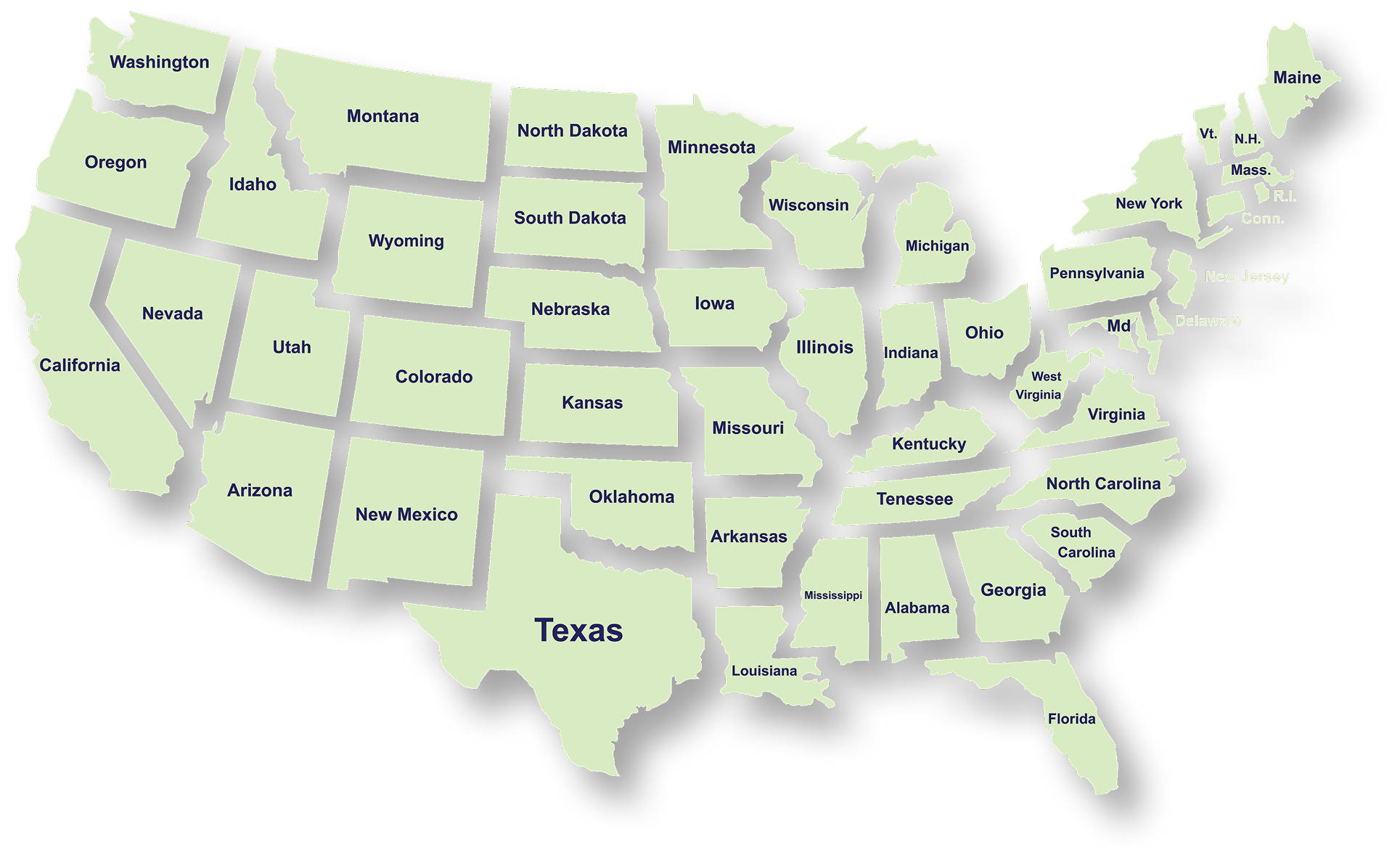
Serving Businesses & Individuals Across USA

We handle accounting, tax filing, and planning with defined timelines and accurate reporting for businesses and individuals across all states.

Frequently Asked Questions

What services does NR CPAs & Business Advisors provide?
What is tax planning and why is it important for businesses?
How can a Virtual CFO help my business?
When should a business consider IRS tax resolution services?
What financial statements does a business typically need?
How can startup advisory services help new businesses?
What is strategic business planning?
What is a Virtual Family Office and who can benefit from it?