Learning Center for Tax and Financial Insights

Stay updated with clear, actionable articles on tax rules, deadlines, deductions, and financial decisions that impact individuals and businesses.

No items found.

How QuickBooks Online Tracks Products and Services

What products and services does your company sell? Do you have enough to fulfill existing and future orders? QuickBooks Online can tell you.Most small businesses maintain a changing inventory of multiple products. Even if you sell one-of-a-kind goods, you need to know what you’ve sold and what’s available. And if your company sells services, you also have to keep track of what you’re able to offer customers.QuickBooks Online can meet these needs. It allows you to create detailed records for both products and services. If you carry inventory, it can make sure that you always know what’s available to sell. When you enter sales and purchase transactions, the site draws on the records you’ve created to help you complete invoices, sales receipts, purchase orders, etc., without having to leave the form you’re working on.Creating your records initially can take some time. And your products and services require regular monitoring and maintenance. But if you’re conscientious about these tasks, you’re not likely to run short on inventory or have too much money tied up in products that aren’t selling fast enough.Preparing QuickBooks OnlineBefore you begin creating records and tracking inventory, you need to make sure that QuickBooks Online is set up correctly. Click the gear icon in the upper right. Under Your Company, click Account and settings. Click the Sales tab in the toolbar. You’ll see the Products and services section near the middle of the screen. Make sure you’ve turned on the Products and services features you’re going to need.Toggle the slider buttons on and off by clicking on them, and be sure to save your changes when you’re done. One option allows you to turn on price rules. This is still classified as a beta feature, but it’s live on the site. It’s also quite complicated to set up and can create confusion for your customers and revenue loss for you if it’s not done correctly. Let us help if you want to use this tool.Creating Your Product and Service RecordsYour first task, of course, is to build your product and service records. Hover your mouse over Sales in the left vertical toolbar on the home page and select Products and Services. The screen that opens is your home base for dealing with inventory and services. Eventually, it will contain a detailed table containing information about both. Two large buttons at the top of the page warn you when you have Low Stock or you’re Out of Stock.

Explore More
No items found.

August 2022 Individual Due Dates

August 10 - Report Tips to EmployerIf you are an employee who works for tips and received more than $20 in tips during July, you are required to report them to your employer on IRS Form 4070 no later than August 10. Your employer is required to withhold FICA taxes and income tax withholding for these tips from your regular wages. If your regular wages are insufficient to cover the FICA and tax withholding, the employer will report the amount of the uncollected withholding in box 12 of your W-2 for the year. You will be required to pay the uncollected withholding when your return for the year is filed.

Explore More
No items found.

August 2022 Business Due Dates

August 1 - Social Security, Medicare, and Withheld Income TaxFile Form 941 for the second quarter of 2022. Deposit or pay any undeposited tax under the accuracy of deposit rules. If your tax liability is less than $2,500, you can pay it in full with a timely filed return. If you deposited the tax for the quarter in full and on time, you have until August 10 to file the return.August 1 - Self-Employed Individuals with Pension PlansIf you have a pension or profit-sharing plan, this is the final due date for filing Form 5500 or 5500-EZ for calendar year 2021.August 1 - All EmployersIf you maintain an employee benefit plan, such as a pension, profit sharing, or stock bonus plan, file Form 5500 or 5500-EZ for calendar year 2021. If you use a fiscal year as your plan year, file the form by the last day of the seventh month after the plan year ends.

Explore More
No items found.

Video Tips: Tax Breaks for People with Disabilities

Tax time can be stressful for any family, but it can be especially challenging for families with disabilities. In addition to the usual paperwork and deadlines, there are a number of tax credits and deductions that can be very helpful for families dealing with medical expenses and other costs related to disability. Taking advantage of these tax breaks can bring tremendous help to people with disabilities and their families.

Explore More
No items found.

Will Your Planned Retirement Income Be Enough after Taxes?

Article Highlights:States With No Income TaxSocial Security Benefits Roth IRA Retirement AccountTraditional IRA Retirement AccountSpousal IRABack-Door Roth IRASaver’s CreditEmployer PensionsEmployee Funded Retirement PlansHealth Savings AccountsBrokerage AccountsMunicipal Bonds InvestmentsHome Equity & Gain ExclusionReverse MortgageWhole Life Insurance Cash Value That is an important question because the actual money you have to spend when you retire depends upon the after-tax sources of your retirement income. Thus it is important to understand how the various retirement vehicles are taxed. There is significant diversity in taxation since a retiree must consider both Federal and state taxes on retirement income. Of all the states one might consider retiring to, there are eight that have no state income tax. These are Alaska, Florida, Nevada, South Dakota, Tennessee, Texas, Washington and Wyoming. However, to make up for no revenue from individual income taxes these states may be funded by other types of taxes, such as property taxes, sales taxes, or excise taxes.Social Security Benefits – Social Security is probably the leading source of retirement for most retirees, and determining the federal taxation can be somewhat complicated and the IRS provides a worksheet. Without using the worksheet we know that no more the 85% of Social Security benefits are subject to federal taxation and in many lower income situations none of the Social Security benefits are taxable. The actual calculation involves adding your other income to half of your annual Social Security benefit. If the amount is less than $32,000 for married tax filers or less than $25,000 for single filers in 2022, you will avoid federal taxes on your benefits. However, those filing Married Separate will find that 85% of their Social Security benefits are always taxable. State Tax - Besides the states that have no state tax, there 30 that do not tax Social Security benefits, The balance, VT, CT, RI, WV, MO, MN, ND, NE, KS, CO, UT, NM, and MT, tax Social Security benefits based on factors such as age and income or a modified amount. See the Tax Foundation Map. Roth IRA Retirement Account – Roth IRA contributions are limited to the lesser of earned income or the annual limit which is $6,000 ($7,000 if age 50 or over). With a Roth IRA, a taxpayer gets no tax deduction when contributions are made. However, what the taxpayer gets is tax-free accumulation, and after age 59-½, all distributions are tax-free, including the account earnings, provided the 5-year holding period has been met. Since the earnings are also tax free once the age and holding period requirements are satisfied, the sooner an individual begins making contributions, the greater the benefits at retirement. However, contributions to Roth IRA are restricted for higher income taxpayers. Traditional IRA Retirement Account – Like Roth IRA contributions, traditional IRA contributions are limited to the lesser of earned income or the annual limit which is $6,000 ($7,000 if age 50 or over). Unlike Roth IRAs, generally contributions are deductible in the year of the contribution. Thus future distributions are fully taxable including the earnings. Where an individual also has a qualified retirement plan, the deductibility is phased out for those with higher incomes. However, they can still make non-deductible contributions, in which case a prorated amount of the distributions will be nontaxable. In addition, individuals can elect to make non-deductible contributions which may be appropriate when an individual intends to subsequently convert the traditional IRA to a Roth IRA as discussed next. Spousal IRA - Generally, IRA contributions are only allowed for taxpayers who have compensation (the term “compensation” includes wages, tips, bonuses, professional fees, commissions, taxable alimony received, and net income from self-employment). Spousal IRAs are the exception to that rule and allow a non-working or low-earning spouse to contribute to his or her own IRA, otherwise known as a spousal IRA, if their spouse has adequate compensation. The maximum amount that a non-working or low-earning spouse can contribute is the same as the limit for a working spouse. Example: Tony is employed, and his W-2 is $100,000. His wife, Rosa, age 45, has a small income from a part-time job totaling $900. Since her own compensation is less than the contribution limit for the year, she can base her contribution on their combined compensation of $100,900. Thus, Rosa can contribute up to $6,000 to an IRA.Back-Door Roth IRA - Where a high-income individual would like to contribute to a Roth IRA but cannot because of the high-income limitations, there is a work-around, commonly referred to as a back-door Roth IRA, that will allow funding of a Roth IRA for some individuals. Here is how a back-door Roth IRA works:First, an individual contributes to a traditional IRA. For higher-income taxpayers who participate in an employer-sponsored retirement plan, a traditional IRA is allowed but is not deductible. Even if all or some portion is deductible, the contribution can be designated as not deductible.Then, since the law allows an individual to convert a traditional IRA to a Roth IRA without any income limitations, the individual can convert the non-deductible Traditional IRA to a Roth IRA. Since the Traditional IRA was non-deductible, the only tax related to the conversion would be on any appreciation in value of the Traditional IRA before the conversion is completed.

Explore More
No items found.

Portability of Unused Estate Tax Exclusion

Article Highlights:Estate TaxLifetime ExemptionSurviving SpousePortability ElectionFinancial DrawbackElection ConsiderationsPortability ExtensionWhen an individual dies, the value of that individual’s estate is subject to estate taxation, which is currently 40% of the individual’s taxable estate. However, there is a lifetime exclusion (exemption) to the estate tax, which for 2022 is $12.06 million. The lifetime exclusion can also be used to offset taxable gifts – those that exceed the annual gift tax exclusion. This means for someone dying in 2022 who hasn’t previously dipped into their lifetime exclusion to offset gift tax, the first $12.06 million of the individual’s estate is exempt from estate tax and passes tax-free to the individual’s beneficiaries. This lifetime exclusion amount is annually adjusted for inflation and is also subject to the whims of Congress. The table below illustrates the exclusion amounts for recent years.Lifetime Estate Tax ExclusionYearAmount2019$11.40 Million2020$11.58 Million2021$11.70 Million2022$12.06 MillionIn the case of married taxpayers, each spouse has a separate lifetime exclusion equal to the $12.06 million (for 2022).Example – Looking at a simplistic situation, let’s say a married couple, Ben and Sylvia, have a joint estate valued at $15 million in 2020 when Ben passed away. He had not made any taxable gifts during his lifetime. Ben’s estate subject to estate tax was $7.5 million (half of the $15 million). In 2020, the estate and gift tax exemption amount was $11.58 million; thus Ben’s estate subject to tax is zero ($7.5 million less $11.58 million). Sylvia is Ben’s sole beneficiary, so she inherits his $7.5 million estate, which combined with her $7.5 million brings her estate total to $15 million (and for this example doesn’t increase or decrease over the coming years). Sylvia passes away in 2022 when the estate tax exemption is $12.06 million. Sylvia’s taxable estate is $2.94 million ($15 million less $12.06 million), resulting in an estate tax of $1,121,800 (based on the estate tax rate schedule which is $345,800 on the first $1 million and 40% of the balance).However, married taxpayers have a special benefit that allows a surviving spouse to make what is called a portability election. The portability election essentially allows the surviving spouse to add the deceased spouse’s unused estate tax exclusion to their own. During the surviving spouse’s remaining lifetime, the exclusion can be used to offset taxable gifts and whatever isn’t used that way is available to reduce the surviving spouse’s estate tax upon his or her death.Example – Using the previous example, when Ben passed in 2020, the estate tax exclusion was $11.58 million, and his estate was $7.5 million. Thus, his unused estate tax exclusion was $4.08 million ($11.58 million – $7.5 million). Sylvia made no taxable gifts since Ben’s death. Had the portability election been made, which required filing an estate tax return for Ben’s estate, Sylvia’s estate tax exclusion in 2022 would have been $16.14 million ($4.08 million + $12.06 million). Thus, none of Sylvia’s $15 million estate would have been taxed since the exclusion of $16.14 million exceeded the value of her estate. The resulting tax savings is $1,121,800.

Explore More
No results found.
Thank you! Your submission has been received!
Oops! Something went wrong while submitting the form.

Want tax & accounting tips & insights?Sign up for our newsletter.

Thank you! Your submission has been received!
Oops! Something went wrong while submitting the form.

Why Work With Us?

We combine deep tax expertise, financial strategy, and practical business insight to help you manage complexity, stay compliant, and make confident financial decisions.
A dollar sign, representing financial advice or discussion at NR CPAs & Business Advisors.

Experienced CPA and Enrolled Agent Leadership

Guidance led by licensed professionals with deep expertise in tax strategy, compliance, and complex financial matters.
White bar chart with an upward arrow on green circular background representing growth or progress at NR CPAs &. Business Advisors

Support for Growing Businesses and Startups

We understand the financial challenges of growth stage businesses and provide structured guidance to support expansion.
A white hand holding a dollar symbol and ascending bar chart on a green circular background representing financial growth or investment at NR CPAs & Business Advisors..

Strategic Financial Advisory

Our team helps you evaluate financial decisions with greater clarity, supported by practical insights and long term planning.

Fractional CFO Support

Access experienced financial leadership without the commitment and cost of hiring a full time Chief Financial Officer.

Proactive Tax Planning Approach

We focus on identifying tax opportunities throughout the year rather than reacting only during filing season.

Clear and Reliable Financial Reporting

Accurate financial statements and reporting that help you better understand performance and make informed decisions.
White IRS building icon with pillars and a dollar sign above on a green circular background.

Professional IRS Representation

Experienced support in resolving IRS notices, disputes, and compliance matters while protecting your financial interests.

Personalized Client Focus

Every client receives thoughtful attention and tailored financial solutions based on their specific needs and business goals.
Financial matters often involve important decisions. Working with experienced advisors can help you approach them with greater clarity and confidence in your choices.

Need Help With Your Tax or Financial Decisions?

Discuss your situation with our advisors to get clear guidance on tax planning, IRS matters, and the financial decisions ahead.
Business consulting at NR CPAs & Business Advisors.

Request Your Consultation

Fill out the form to discuss your tax concerns, financial questions, or advisory needs with our team. We will review your details and respond shortly.

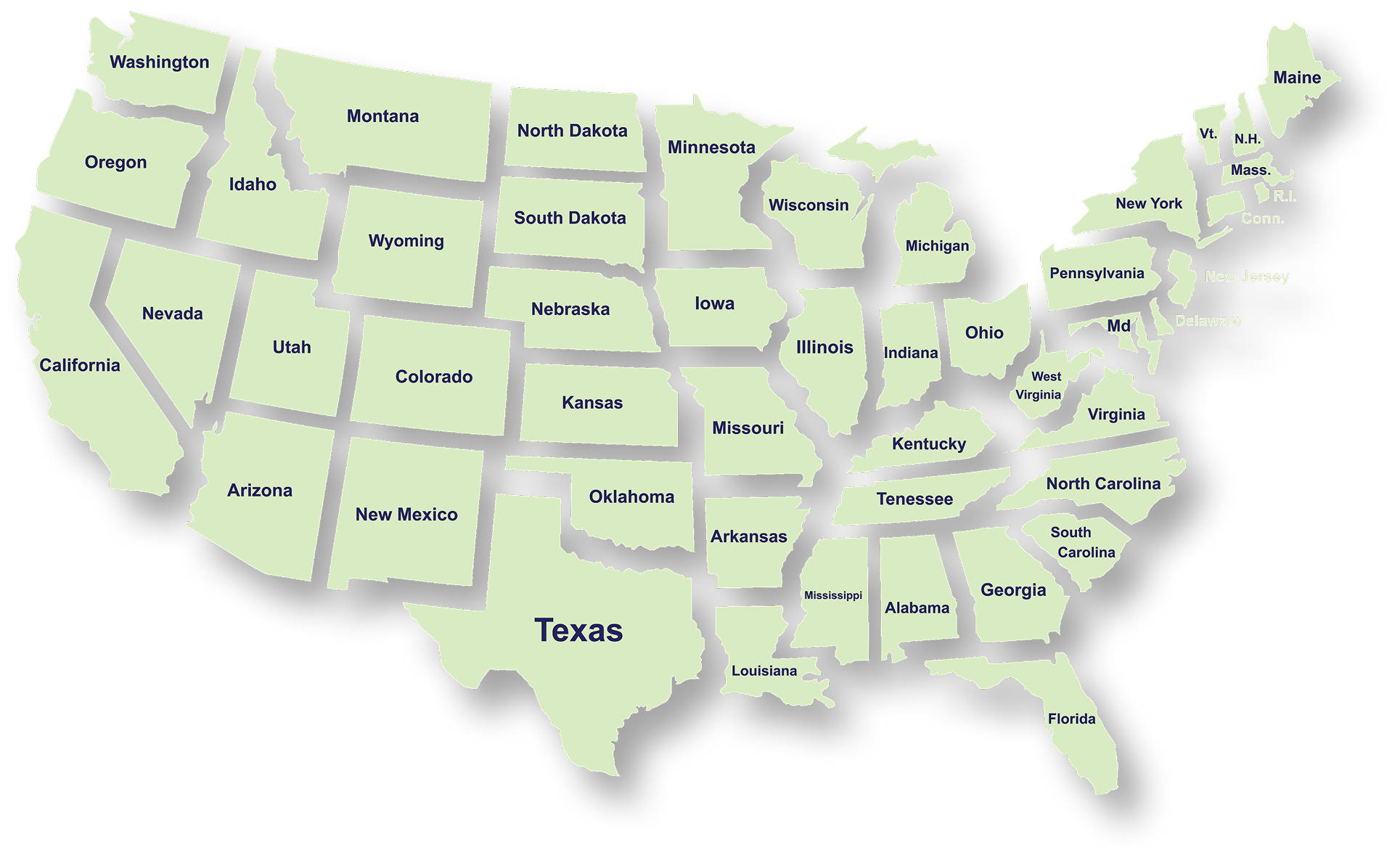
Serving Businesses & Individuals Across USA

We handle accounting, tax filing, and planning with defined timelines and accurate reporting for businesses and individuals across all states.

Frequently Asked Questions

What services does NR CPAs & Business Advisors provide?
What is tax planning and why is it important for businesses?
How can a Virtual CFO help my business?
When should a business consider IRS tax resolution services?
What financial statements does a business typically need?
How can startup advisory services help new businesses?
What is strategic business planning?
What is a Virtual Family Office and who can benefit from it?