Learning Center for Tax and Financial Insights

Stay updated with clear, actionable articles on tax rules, deadlines, deductions, and financial decisions that impact individuals and businesses.

No items found.

June 15 Is an Important Filing Deadline

Article Highlights: Americans Living and Working AbroadExtension RequestsReport of Foreign Bank and Financial Accounts (FBAR)Statement of Foreign Financial AssetsEstimated Tax PaymentsEstimated Safe HarborsJune 15 is the due date both for Americans living and working outside the U.S. to file their 2021 federal income tax returns and for the second estimated tax payment for 2022. Here are some important details for both. Americans Living and Working Abroad - U.S. citizens and resident aliens (i.e., green card holders), and those with dual citizenship, living and working outside the U.S. must file their 2021 federal income tax returns by June 15. A taxpayer qualifies for the June 15 filing deadline if both their tax home and residence are outside the U.S. and Puerto Rico, or they were serving in the military outside the U.S. and Puerto Rico on the regular due date of their return. A statement should be included with the return that indicates which of the two situations applies. Taxpayers who can't meet the June 15 deadline can request an extension of time to file giving them until October 17 to file and avoid the late filing penalties. Taxpayers should file their extension requests electronically to avoid arguments with the IRS over whether the extension was filed on time. The other option is to paper file for an extension using Form 4868, checking box 8, that you are “out of the country.” Be aware the extension – whether filed electronically or on paper – is only for filing and not an extension to pay your tax liability. To be valid the extension must include a reasonable estimate of your tax liability and payment to avoid late payment penalties. Please contact this office for assistance in completing and filing an extension.U.S. Citizens Living Abroad May Also Need to File an FBAR - Generally, U.S. citizens and resident aliens with a foreign bank or financial account need to file Form 114, Report of Foreign Bank and Financial Accounts (FBAR). This reporting requirement is separate from, and in addition to, any reporting required either on Form 1040, Schedule B or Form 8938. The FBAR isn't filed with the IRS but is filed electronically using the Bank Secrecy Act (BSA) filing system.Taxpayers need to file an FBAR if they had an interest in, or signature or other authority over one or more foreign financial accounts whose aggregate value exceeded $10,000 at any time during 2021. Because of this low threshold, taxpayers with any foreign assets should check to see if the FBAR reporting requirement applies to them as the penalties for failure to file an FBAR are extreme. Although the FBAR due date in 2022 was April 18, FinCEN grants an automatic extension, to October 17, to anyone who missed that original deadline.In addition to filing an FBAR, certain taxpayers may also need to file Form 8938, Statement of Foreign Financial Assets. Generally, U.S. citizens, resident aliens and certain nonresident aliens must report specified foreign financial assets on Form 8938 if the aggregate value of those assets exceeds certain thresholds. The 8938 is attached to the taxpayer’s individual income tax return, but if the taxpayer isn’t required to file an income tax return, then the 8938 isn’t required either.Estimated Tax Payments – The next 2022 estimated tax payment is also due on June 15th. Unlike employees, who have income, Social Security, and Medicare taxes withheld from their wages, self-employed individuals must prepay their taxes by making quarterly estimated tax payments. These are referred to as estimated tax payments because the self-employed individual must estimate his or her net earnings for the year and pay taxes on a quarterly basis according to that estimate. Failure to do so will result in interest penalties.The self-employed are not the only ones who are subject to estimated tax requirements, which also apply to anyone who has income that is not subject to withholding taxes and even to those whose taxes are not sufficiently withheld. Thus, if you have income from stock sales, property sales, investments, alimony from a pre-2019 divorce, partnerships, S-corporations, inherited pension plans, or other sources that are not subject to withholding, you may also be required to pay either estimated taxes or an underpayment penalty. Others subject to making estimated payments are individuals who must pay special taxes such as the 3.8% tax on net investment income or the employment tax on household employees.

Explore More
No items found.

Video Tips: Leave-based Donation to Ukrainian Relief

The U.S. tax code provides businesses an opportunity to let their employees donate their unused vacation, sick, or personal leave to qualified charities for Ukrainian Relief. If you or your employers are considering this, there are some tax implications that you should be aware of.

Explore More
No items found.

Not Even Celebrities Are Immune to Issues With Their Taxes

There's an old saying in life that reminds us "the only things that are certain are death and taxes." It seems that, occasionally, some celebrities seem to forget that second part.It's true. Just because you've got the number one movie at the box office, or just because you've sold millions of albums over the course of your career, doesn't mean that Uncle Sam isn't paying attention. In fact, the IRS seems to be particularly interested in high net worth individuals like this because they A) have significant public profiles, and B) tend to bring in huge sums of money every year. It doesn't take a genius to figure out that they're watching those returns closely.All told, there are a number of notable instances where celebrities ran into issues with their taxes - all of which we can learn a little from.Celebrities and Taxes: A Match Made in HeavenOne notable instance of a celebrity running into problems with the IRS takes the form of the late legendary comedian George Carlin.During the 80s, Carlin's career was at a crossroads. He was in the process of transitioning from one type of comedy to the next and was struggling. It was also around this time that he stopped filing taxes - according to a recent HBO documentary on the subject, he failed to do so for three years in a row. It wasn't long before the IRS came knocking at the door, demanding what they were owed. In the documentary, it is revealed that they even threatened to take his house away multiple times. Luckily, he was able to rectify the situation but it was certainly still scary for the funnyman.Speaking of the 1980s, those of us who are old enough will remember that it was a period of time during which fitness guru Richard Simmons seemed to be... well, everywhere. He was on TV. He was in magazines. He couldn't have been more popular.Flash forward to the 2000s and it was reported that he owed about $24,000 in back taxes between 2007 and 2015. It got so bad that the IRS even placed a tax lien on not only his businesses, but also his properties as well.Next up we have O.J. Simpson, the athlete who is famous for his incredible football career (... and that other thing, but let's not get into that right now). At one point, it was revealed that Simpson hadn't actually paid any taxes since 2007 - and the amount that he owed totaled nearly $180,000. There's no actual word on whether the money was paid, but given the plethora of other legal issues that Simpson was/is facing, it's safe to say that this one may not be high on his list of priorities.Film actor Wesley Snipes - he of "Blade" and "Money Train" fame - also famously had a run-in with the IRS several years ago. This is kind of a weird one - Snipes claimed at the time that, because of an organization he belonged to, he didn't actually have to pay taxes at all. It seems that he thought he'd discovered some kind of loophole in the system that he was ready and willing to take advantage of.

Explore More
No items found.

IRS Announces Mid-Year Optional Vehicle Mileage Rate Increase

Article Highlights:Mid-year IncreaseItems Included in the Optional Mileage RateWhat Can Be Deducted in Addition to the Optional Mileage RateSwitching Methods With gas prices soaring it has been expected the IRS would increase the mileage rate that business owners can deduct for vehicle use instead of keeping a record of actual expenses. Sure enough, the IRS recently announced a 4-cent increase in the optional mileage rate for the last half of 2022. The new rate for deductible medical or moving expenses (available for active-duty members of the military) will be 22 cents for the last 6 months of 2022, also up 4 cents from the rate effective at the start of 2022. These new rates become effective July 1, 2022. Optional Mileage Rate for 2022Purpose1/1 through 6/30/227/1 through 12/31/22 Business58.5¢62.5¢Medical/Moving18¢22¢Charitable14¢14¢The standard mileage rate for businesses is based on a study of the fixed and variable costs of operating an automobile. The rate for medical and moving purposes is based on the variable costs as determined by the same study. The rate for using an automobile while performing services for a charitable organization is statutorily set and has been 14 cents for over 20 years.

Explore More
No items found.

The Right Accounting Method for Your Business

Every small business — whether a respected local mom-and-pop retailer, a startup tech company, or an online venture — has accounting and bookkeeping responsibilities, including selecting the accounting method that works best for them. If you’re new to small business ownership, you might not even realize that there are multiple ways to keep tabs on your company’s finances. Don’t worry, though, that’s where this guide comes in. As you keep reading, you’ll learn more about two common business accounting methods, and get helpful advice for choosing the right one for your business. What are the most popular business accounting methods?The two most popular business accounting methods are the cash method and the accrual method. As with anything, there are pros and cons to both tactics. Let’s take a look at what distinguishes each of them, and how to determine which is the best fit for your company’s needs.First, you need to understand that each of the accounting methods is a way to track your incoming and outgoing money. Fundamentally, the biggest difference between these two accounting techniques is whether you track revenues and expenses when they are actually in (or out) of hand or when they are billed. While there are many factors you’ll need to consider before choosing a method for your small business, evaluating the following will help you:The size of your businessYour business’s future growth projectionsWhether you are a sole proprietor or a corporation/publicly traded companyWhether you have (or plan to have) investors involved in your businessWhile most sole proprietors and small businesses have the freedom to choose the accounting method that they feel most comfortable with, companies that have investors will likely need to use the method that their investors want them to based on a vote.It’s also worth noting that publicly traded companies earning more than $25 million in gross revenue per year are required to use the accrual accounting method. With that understanding, let’s take a closer look at the two methods.Cash Method The cash method records revenue on the date that payment for goods or services is received, and expenses on the date that an invoice for goods or services is paid. This is the easiest way to keep track of cash flow. Business owners using this method are able to skip steps such as journal entries and are also able to wait to pay taxes on revenue until payment is actually received. This method is ideal for freelancers and contractors, especially if clients are slow to pay. It also works well for new business owners, who are just learning the ins and outs of bookkeeping.Accrual MethodThe accrual method records revenue at the time that a service or product is sold rather than when it is paid. This accounting option subsequently expenses on the day that a transaction is billed rather than on the day that it is paid, providing business owners with a high-level sense of their balance sheet. It also affords business finance specialists with the ability to be proactive in how they pay their bills to maximize cash flow. Though this method is more complicated, it is preferred by most accounting professionals because it provides a true sense of a business’s financial health.

Explore More
No items found.

This Month's Success Story: The Founder of WhatsApp

From the moment that Steve Jobs first walked across a stage in California and introduced the world to the iPhone in 2007, the ways in which we communicate with one another had changed forever. It's just that few of us could have predicted how striking of a change that would be at the time.One such person who could tell which way the wind was blowing was Jan Koum. Born in Ukraine, you may not be familiar with Koum's name but you're undoubtedly familiar with his work: WhatsApp, one of the most powerful mobilize messaging platforms on Earth.WhatsApp: The Story So FarTo be clear, mobile messaging was hardly a new idea that came about with the introduction of the iPhone. Indeed, older phones had been capable of SMS text messaging for years. But this was something different, and Koum could absolutely see it.Koum's interest in computer programming began when he was just 18 years old. He moved to the United States and enrolled in San Jose State University around that time. Likewise, he was also employed as a security tester at Ernst & Young.During this time he also interviewed with Yahoo and was able to land a position as an infrastructure engineer.According to Forbes, Koum was always something of a troublemaker at school - especially during his early years. But his passion for technology never wavered and he ended up teaching himself computer networking by pouring over manuals that he'd purchased from a used book store in his area, which he would then return when he was finished with them.In 2009, Koum bought his first iPhone and could immediately see the potential. By now, he was 33 years old. At that point, the iTunes App Store (as it was then called) had only existed for about seven months. But still, Koum could see that it was about to launch countless messaging apps as people searched for a viable, fully-featured alternative to the one built into each of Apple's devices.After a brainstorming session with some friends about what the ideal mobile messaging app might look like, Koum landed on the name WhatsApp. His reasoning was simple: when you say it fast enough, it sounds like the phrase "what's up."

Explore More
No results found.
Thank you! Your submission has been received!
Oops! Something went wrong while submitting the form.

Want tax & accounting tips & insights?Sign up for our newsletter.

Thank you! Your submission has been received!
Oops! Something went wrong while submitting the form.

Why Work With Us?

We combine deep tax expertise, financial strategy, and practical business insight to help you manage complexity, stay compliant, and make confident financial decisions.
A dollar sign, representing financial advice or discussion at NR CPAs & Business Advisors.

Experienced CPA and Enrolled Agent Leadership

Guidance led by licensed professionals with deep expertise in tax strategy, compliance, and complex financial matters.
White bar chart with an upward arrow on green circular background representing growth or progress at NR CPAs &. Business Advisors

Support for Growing Businesses and Startups

We understand the financial challenges of growth stage businesses and provide structured guidance to support expansion.
A white hand holding a dollar symbol and ascending bar chart on a green circular background representing financial growth or investment at NR CPAs & Business Advisors..

Strategic Financial Advisory

Our team helps you evaluate financial decisions with greater clarity, supported by practical insights and long term planning.

Fractional CFO Support

Access experienced financial leadership without the commitment and cost of hiring a full time Chief Financial Officer.

Proactive Tax Planning Approach

We focus on identifying tax opportunities throughout the year rather than reacting only during filing season.

Clear and Reliable Financial Reporting

Accurate financial statements and reporting that help you better understand performance and make informed decisions.
White IRS building icon with pillars and a dollar sign above on a green circular background.

Professional IRS Representation

Experienced support in resolving IRS notices, disputes, and compliance matters while protecting your financial interests.

Personalized Client Focus

Every client receives thoughtful attention and tailored financial solutions based on their specific needs and business goals.
Financial matters often involve important decisions. Working with experienced advisors can help you approach them with greater clarity and confidence in your choices.

Need Help With Your Tax or Financial Decisions?

Discuss your situation with our advisors to get clear guidance on tax planning, IRS matters, and the financial decisions ahead.
Business consulting at NR CPAs & Business Advisors.

Request Your Consultation

Fill out the form to discuss your tax concerns, financial questions, or advisory needs with our team. We will review your details and respond shortly.

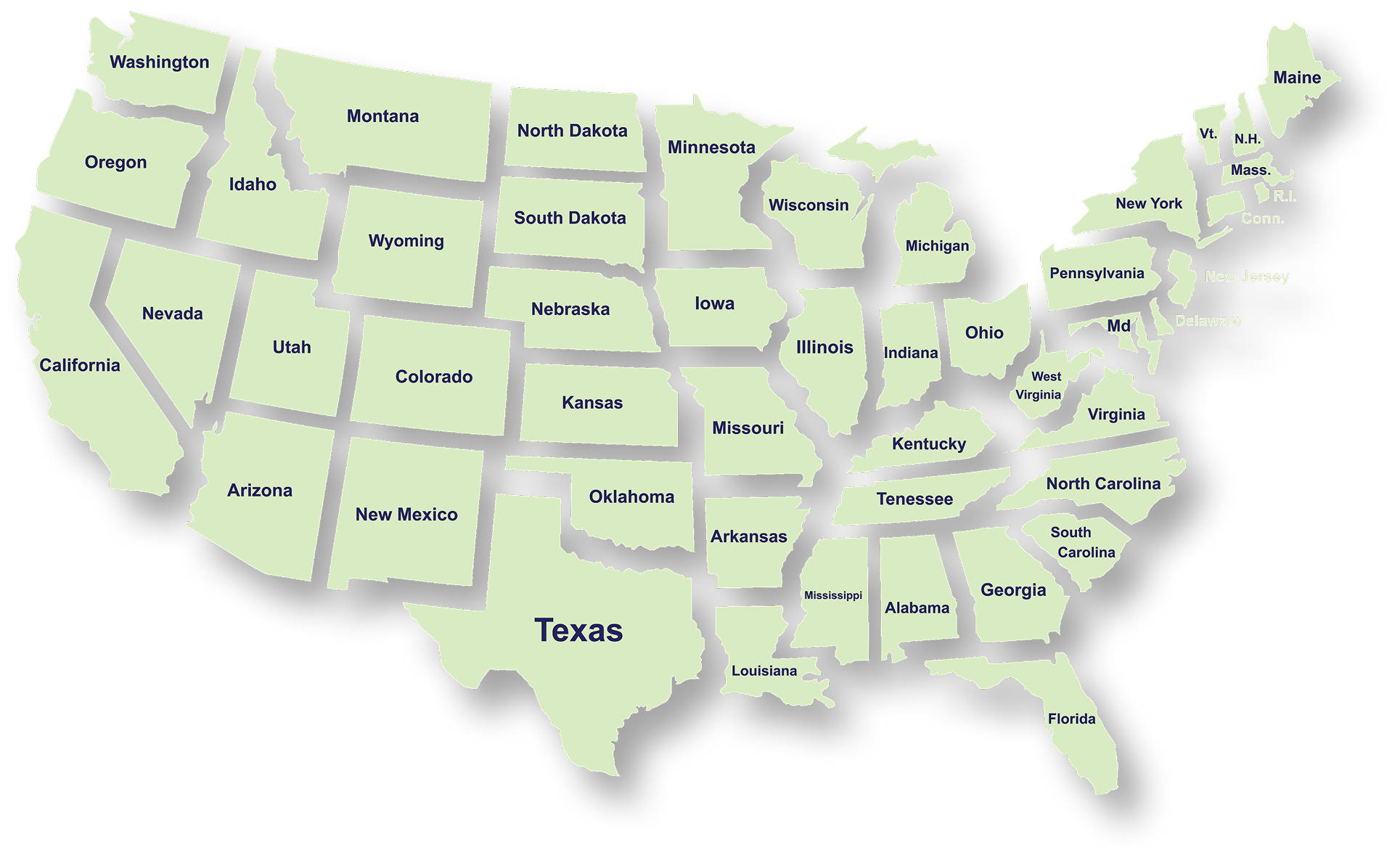
Serving Businesses & Individuals Across USA

We handle accounting, tax filing, and planning with defined timelines and accurate reporting for businesses and individuals across all states.

Frequently Asked Questions

What services does NR CPAs & Business Advisors provide?
What is tax planning and why is it important for businesses?
How can a Virtual CFO help my business?
When should a business consider IRS tax resolution services?
What financial statements does a business typically need?
How can startup advisory services help new businesses?
What is strategic business planning?
What is a Virtual Family Office and who can benefit from it?