Learning Center for Tax and Financial Insights

Stay updated with clear, actionable articles on tax rules, deadlines, deductions, and financial decisions that impact individuals and businesses.

No items found.

How to Protect Yourself When Selecting Investors For Your Startup

Any seasoned entrepreneur will tell you that coming up with an idea for a startup is ultimately the easy part of this process. Figuring out how you're going to get the funds necessary to make that vision a reality? That part is a bit trickier.In fact, selecting investors for your startup can be the hardest part of the process – not only because you want to make sure you’re making the right choices for your new company, but also because it’s important to surround yourself with individuals who will support you both now and years down the road as your business grows. Thankfully, there are a number of best practices that you can use to help find not just an investor, but the right investor to meet your current and future needs.Choosing the Right Investors: Breaking Things DownBy far, one of the most important things to understand about finding an investor for your startup is that you're trying to find a GOOD fit, not necessarily a PERFECT fit.The odds are good that no investor will be 100% perfect for the vision you have for your startup – such is life. Even in the event that you could find a startup investor who would tick every box, it would probably take so long that it wouldn’t be worth the effort. You would ultimately delay the building of your company, not to mention the amount of time it would then take to get your products or services to consumers. Finding the Best Investor For YouThe first step to finding the best investor for you is to make a list of characteristics and standards that are important to you. Remember, you are looking for someone who can help you bring your vision to life, so it is imperative for all of your startup investors to add value to your organization. Prioritize certain qualities above others and if you don’t check all of the boxes in the end,, that's okay -- hardly anyone does, and there are still numerous successful startups. Another best practice to follow when finding an investor for your startup involves trying to sell them not on what your product or service can do in a literal sense, but on what problem it is trying to help people solve. In other words, don’t communicate in terms of technical specifications, but by sharing the unique value that you'll be able to bring to the table with a little help from a qualified investor. Investors want to see that you're not pushing a "solution in search of a problem," so to speak. They want to see that you've identified a potential gap in the marketplace that you – and you alone – can fill with your business concept. That's how to get people excited and that's how you get people to invest.What Types of Startup Investors Are There?

Explore More
No items found.

Video Tips: Summertime Tax Issues Related to Children

School is replaced with childcare for working parents and older children may have summertime jobs. Both activities include income tax issues to consider. If you are parents that are planning for your children's summer break, watch this video to see how it may impact your taxes next year.

Explore More
No items found.

Student Loan Debt - Paying and Avoiding It, Plus Tax Benefits

Article Highlights:Tax Advantaged Repayment of Student LoansEmployer Provided Educational AssistanceQualified Tuition ProgramsThe Deductibility of Student Loan InterestStudent Loans Forgiven in 2021 through 2025Avoiding Student Loan DebtSection 529 PlansCoverdell Education Savings AccountEducation Tax CreditsThe American Opportunity CreditThe Lifetime Learning CreditDespite recent rounds of forgiveness for thousands of borrowers, nearly 43 million Americans are responsible for roughly $1.6 trillion in federal student loans which results in a significant long-term burden for students after graduation. The average debt varies by state from $28,600 in North Dakota to $54,900 in the District of Columbia.Although the U.S. Department of Education has, as a COVID-19 pandemic relief measure, currently suspended loan payments, reduced the interest rate to zero and stopped collections on defaulted loans, all that is scheduled to end after Aug. 31, 2022. Unfortunately, it is time start thinking about how to deal with the resumption of payments and interest charges This article looks at the issue of student loan debt from an income tax perspective including:Tax Advantaged Repayment of Student LoansThe Deductibility of Student Loan InterestTreatment of Forgiven Student LoansAvoiding Student Loan DebtTax Advantaged Repayment of Student LoansThe tax code provides two tax advantaged ways of repaying student loan debt that may apply to individuals under certain circumstances that should be employed to reduce the debt when available: Employer Provided Educational Assistance – The tax code (Sec 127) includes a provision that allows employers to pay for employees’ education as a working condition fringe under an educational assistance program of the employer. It is limited to $5,250 per year and is not taxable income to the employee. The CARES Act of 2020 expanded the definition of expenses available to qualify for the $5,250 employer-provided educational assistance exclusion to include employer payments of the employee’s student loan debt. This special allowance is available for payments made through December 31, 2025 Thus, where the individual works for an employer that has an educational assistance program, they should take advantage of the plan to pay down their debt. Tax Tip - The employee isn’t allowed to claim the above-the-line student loan interest deduction for interest that the employer paid. So, in some cases it may be advantageous for the employer to designate their payment as going to principal only so the employee can claim a deduction for the interest that they paid. Qualified Tuition Programs – Qualified Tuition Plans (sometimes referred to as Section 529 plans) are plans established to help families save and pay for education expenses in a tax-advantaged way that allow taxpayers to gift large sums of money for a family member’s education expenses, while continuing to maintain control of the funds. The earnings from these accounts grow tax-deferred and are tax-free, if used to pay for qualified education expenses. Normally, funds from these accounts are only allowed to pay for education expenses. Distributions from a 529 plan of up to $10,000 can be used to pay the principal and interest on qualified higher education loans of the account’s designated beneficiary or a sibling of the designated beneficiary. However, the $10,000 limit is a lifetime limit. To prevent double-dipping, Sec 529 plan distributions used to pay interest on the education loan cannot also be used for the above-the-line deduction for student loan interest. The Deductibility of Student Loan InterestThe student loan interest deduction is not limited to the interest paid on government student loans. In fact, virtually any loan interest will qualify as long as the loan proceeds are used solely for qualified higher-education expenses (that is, it is a sole-purpose loan). However, the maximum interest that is deductible each year is $2,500. Thus, in addition to government student loans, home equity lines of credit, personal loans from unrelated parties, and even credit cards can be used if they otherwise qualify. Pension plan loans and loans from related parties do not qualify.Example #1 – Jack takes out an equity line of credit on his home and borrows $30,000 to finance a solar electric installation on his home and $10,000 to pay his daughter’s qualified education expenses. Because this loan is not used for a single purpose (he used it to borrow funds for more than education), he cannot deduct a portion of the interest as above-the-line education loan interest. However, if Jack had only used the loan to pay for qualified education expenses, then up to $2,500 of the loan interest could have been deducted as above-the-line student loan interest. Example #2 – Mark has a Visa card that he uses for a variety of purposes, and he also uses it to pay his daughter’s qualified education expenses. Because the credit card is not used exclusively to pay for qualified education expenses, none of the interest will qualify as student loan interest. However, if Mark had only used the credit card to pay for qualified education expenses, then up to $2,500 of the credit card interest could have been deducted as above-the-line student loan interest. Caution: Although we use a credit card as an example of an alternate student loan, it is not practical because of the high interest rates. The deduction is ratably phased-out in 2022 for taxpayers with an AGI (income) of $70,000 to $85,000 ($145,000 to $175,000 for joint returns) and not allowed at all for taxpayers filing as married separate or an individual who is a dependent of another. These phaseout levels are periodically adjusted for inflation.If a loan is not subsidized, guaranteed, financed, or otherwise treated as a student loan under a program of the federal, state, or local government or an eligible educational institution, a payee (the lender) must request a certification from the payer (the borrower) that the loan will be used solely to pay for qualified higher-education expenses. Form W-9S, Request for Student’s or Borrower’s Social Security Number and Certification, is provided by the IRS for this purpose.The deduction for student loan interest can be deducted whether the standard deduction or itemized deductions are claimed since it is an adjustment to income, often referred to as an above-the-line deduction. To qualify as an eligible loan, the loan must have been taken out solely to pay the costs of attending an eligible educational institution for an individual during a period when the individual is a qualified student. Eligible costs include:TuitionFeesRoom and boardBooks and equipmentOther necessary expenses (including transportation) The expense must be incurred within a reasonable time before or after the debt is incurred. The regulations provide that a loan is incurred within a reasonable period if:

Explore More
No items found.

July 2022 Individual Due Dates

July 1 - Time for a Mid-Year Tax Check-UpTime to review your 2022 year-to-date income and expenses to ensure estimated tax payments and withholding are adequate to avoid underpayment penalties.July 11 - Report Tips to EmployerIf you are an employee who works for tips and received more than $20 in tips during June, you are required to report them to your employer on IRS Form 4070 no later than July 11. Your employer is required to withhold FICA taxes and income tax withholding for these tips from your regular wages. If your regular wages are insufficient to cover the FICA and tax withholding, the employer will report the amount of the uncollected withholding in box 12 of your W-2 for the year. You will be required to pay the uncollected withholding when your return for the year is filed.

Explore More
No items found.

July 2022 Business Due Dates

July 1 - Self-Employed Individuals with Pension PlansIf you have a pension or profit-sharing plan, you may need to file a Form 5500 or 5500-EZ for calendar year 2021. Even though the forms do not need to be filed until August 1, you should contact this office now to see if you have a filing requirement, and if you do, allow time to prepare the return

Explore More
No items found.

Small Businesses Can Benefit from the Work Opportunity Tax Credit

Article Highlights:What is the Work Opportunity Tax Credit?Maximum CreditWho Can Claim the Credit?Qualified EmployeesPre-screening and CertificationTax-exempt EmployersThe Work Opportunity Tax Credit (WOTC) is a general business credit that is jointly administered by the Internal Revenue Service (IRS) and the Department of Labor (DOL). The WOTC is available for wages paid to certain individuals who begin work on or before December 31, 2025.The WOTC may be claimed by any employer that hires and pays or incurs wages to certain individuals who are certified by a designated local agency (sometimes referred to as a state workforce agency) as being a member of one of 10 targeted groups.In general, the WOTC is equal to 40% of up to $6,000 of wages paid to, or incurred on behalf of, an individual who:Is in their first year of employment with the business;Is certified as being a member of a targeted group; andPerforms at least 400 hours of services for that employer.However, an employer cannot claim the WOTC for employees who are rehired.Maximum Credit - Thus, the maximum tax credit is generally $2,400. A 25% rate applies to wages for individuals who perform fewer than 400 but at least 120 hours of service for the employer. Up to $24,000 in wages may be considered in determining the WOTC for certain qualified veterans.Who Can Claim the Credit - Employers of all sizes are eligible to claim the WOTC. This includes both taxable and certain tax-exempt employers located in the United States and in certain U.S. territories. Taxable employers claim the WOTC against income taxes, and in general, may carry the current year’s unused WOTC back one year and then forward 20 years. The procedure is different for eligible tax-exempt employers; they can claim the WOTC only against payroll taxes and only for wages paid to members of the Qualified Veteran targeted group.Qualified Employees - An employer may claim the WOTC for an individual who is certified as a member of any of the following targeted groups:Qualified IV-A Recipient - An individual who is a member of a family receiving assistance under a state plan approved under part A of title IV of the Social Security Act relating to Temporary Assistance for Needy Families (TANF). The assistance must be received for any 9-month period during the 18-month period ending on the hiring date.Qualified Veteran - A “qualified veteran” is a veteran who is any of the following:o A member of a family receiving assistance under the Supplemental Nutrition Assistance Program (SNAP) (food stamps) for at least 3 months during the first 15 months of employment.o Unemployed for a period totaling at least 4 weeks (whether or not consecutive) but less than 6 months in the 1-year period ending on the hiring date.o Unemployed for a period totaling at least 6 months (whether or not consecutive) in the 1-year period ending on the hiring date.o A disabled veteran entitled to compensation for a service-connected disability hired not more than one year after being discharged or released from active duty in the U.S. Armed Forces.o A disabled veteran entitled to compensation for a service-connected disability who is unemployed for a period totaling at least six months (whether or not consecutive) in the one-year period ending on the hiring date.o See IRS Notice 2012-13 for addition details.Ex-Felon - A “qualified ex-felon” is a person hired within a year of:o Being convicted of a felony oro Being released from prison from the felonyDesignated Community Resident (DCR) – Who is at least 18 years old and under 40, who resides within one of the following:o An Empowerment Zoneo An Enterprise communityo A Renewal communityand continues to reside at the locations after employment.Vocational Rehabilitation Referral - A “vocational rehabilitation referral” is a person who has a physical or mental disability and has been referred to the employer while receiving or upon completion of rehabilitative services pursuant to:o A state plan approved under the Rehabilitation Act of 1973 ORo An Employment Network Plan under the Ticket to Work program, ORo A program carried out under the Department of Veteran Affairs.Summer Youth Employee - A “qualified summer youth employee” is one who:o Is at least 16 years old, but under 18 on the date of hire or on May 1, whichever is later, ando Is only employed between May 1 and September 15 (was not employed prior to May 1) ando Resides in an Empowerment Zone (EZ), enterprise community or renewal community.Supplemental Nutrition Assistance Program (SNAP) Recipient - A “qualified SNAP benefits recipient” is an individual who on the date of hire is:o At least 18 years old and under 40, ANDo A member of a family that received SNAP benefits for:• the previous 6 months OR• at least 3 of the previous 5 monthSupplemental Security Income (SSI) Recipient - An individual is a “qualified SSI recipient” if a month for which this person received SSI benefits is within 60 days of the date this person is hired.Long-Term Family Assistance Recipient - A “long term family recipient” is an individual who at the time of hiring is a member of a family that meet one of the following conditions:o Received assistance under an IV-A program for a minimum of the prior 18 consecutive months; ORo Received assistance for 18 months beginning after 8/5/1997 and it has not been more than 2 years since the end of the earliest of such 18-month period; ORo Ceased to be eligible for such assistance because a Federal or State law limited the maximum time those payments could be made, and it has been not more than 2 years since the cessation.Qualified Long-Term Unemployment Recipient - A qualified long-term unemployment recipient is one who has been unemployed for not less than 27 consecutive weeks at the time of hiring and received unemployment compensation during some or all or the unemployment period.

Explore More
No results found.
Thank you! Your submission has been received!
Oops! Something went wrong while submitting the form.

Want tax & accounting tips & insights?Sign up for our newsletter.

Thank you! Your submission has been received!
Oops! Something went wrong while submitting the form.

Why Work With Us?

We combine deep tax expertise, financial strategy, and practical business insight to help you manage complexity, stay compliant, and make confident financial decisions.
A dollar sign, representing financial advice or discussion at NR CPAs & Business Advisors.

Experienced CPA and Enrolled Agent Leadership

Guidance led by licensed professionals with deep expertise in tax strategy, compliance, and complex financial matters.
White bar chart with an upward arrow on green circular background representing growth or progress at NR CPAs &. Business Advisors

Support for Growing Businesses and Startups

We understand the financial challenges of growth stage businesses and provide structured guidance to support expansion.
A white hand holding a dollar symbol and ascending bar chart on a green circular background representing financial growth or investment at NR CPAs & Business Advisors..

Strategic Financial Advisory

Our team helps you evaluate financial decisions with greater clarity, supported by practical insights and long term planning.

Fractional CFO Support

Access experienced financial leadership without the commitment and cost of hiring a full time Chief Financial Officer.

Proactive Tax Planning Approach

We focus on identifying tax opportunities throughout the year rather than reacting only during filing season.

Clear and Reliable Financial Reporting

Accurate financial statements and reporting that help you better understand performance and make informed decisions.
White IRS building icon with pillars and a dollar sign above on a green circular background.

Professional IRS Representation

Experienced support in resolving IRS notices, disputes, and compliance matters while protecting your financial interests.

Personalized Client Focus

Every client receives thoughtful attention and tailored financial solutions based on their specific needs and business goals.
Financial matters often involve important decisions. Working with experienced advisors can help you approach them with greater clarity and confidence in your choices.

Need Help With Your Tax or Financial Decisions?

Discuss your situation with our advisors to get clear guidance on tax planning, IRS matters, and the financial decisions ahead.
Business consulting at NR CPAs & Business Advisors.

Request Your Consultation

Fill out the form to discuss your tax concerns, financial questions, or advisory needs with our team. We will review your details and respond shortly.

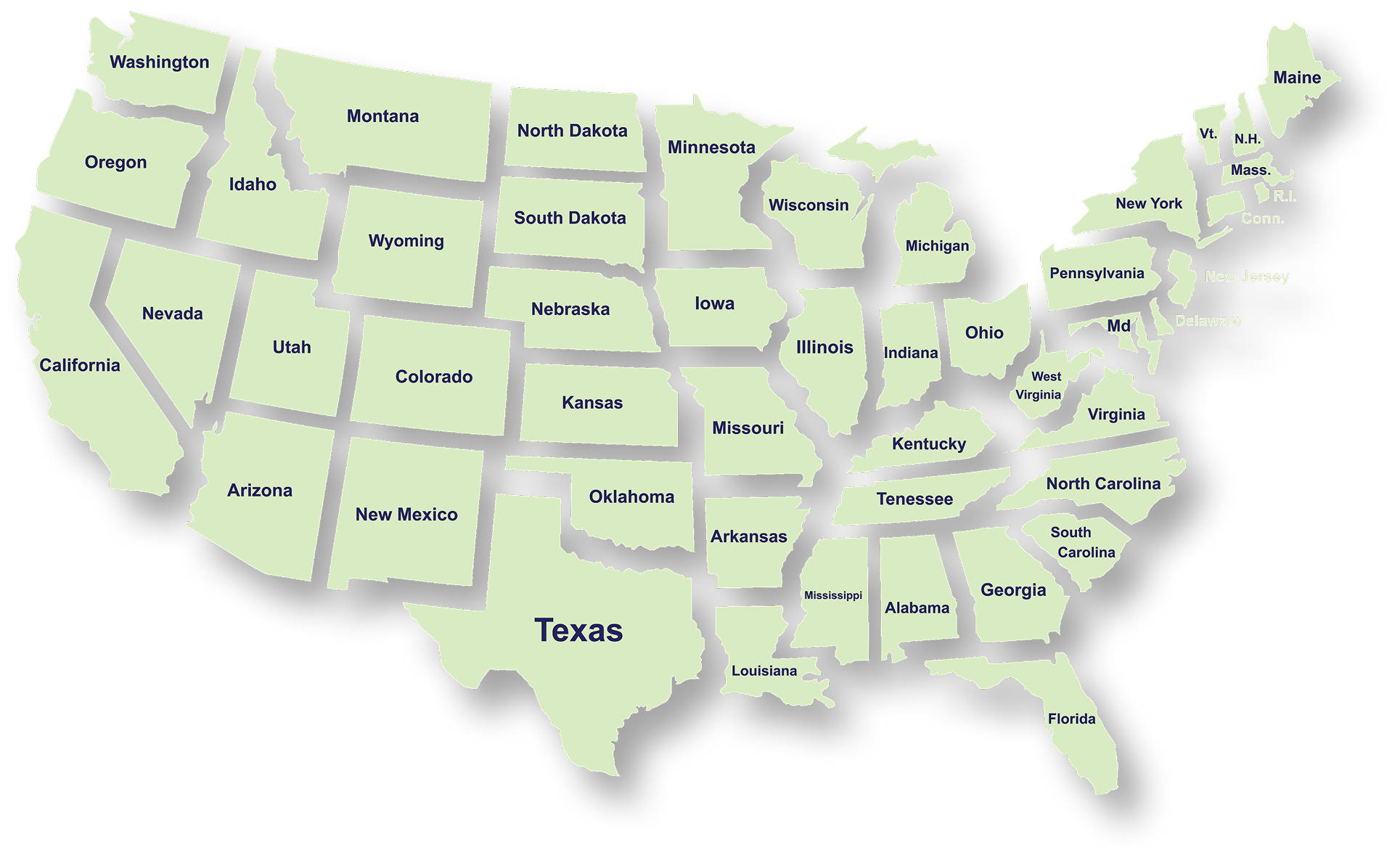
Serving Businesses & Individuals Across USA

We handle accounting, tax filing, and planning with defined timelines and accurate reporting for businesses and individuals across all states.

Frequently Asked Questions

What services does NR CPAs & Business Advisors provide?
What is tax planning and why is it important for businesses?
How can a Virtual CFO help my business?
When should a business consider IRS tax resolution services?
What financial statements does a business typically need?
How can startup advisory services help new businesses?
What is strategic business planning?
What is a Virtual Family Office and who can benefit from it?