Learning Center for Tax and Financial Insights

Stay updated with clear, actionable articles on tax rules, deadlines, deductions, and financial decisions that impact individuals and businesses.

No items found.

Video Tips: Missing Out On Your Tax Refunds?

Many people, especially lower-income taxpayers, forfeit sizable tax refunds because their income is below the mandatory filing threshold so they don’t file a return, and don’t realize there are tax credits available to them that can result in refunds in the hundreds, if not thousands, of dollars.

Explore More
No items found.

Steve Jobs: From Couch Surfing to Revolutionary Entrepreneur

If you had to make a list of some of the most profoundly successful entrepreneurs to ever live, there is at least one name that would absolutely be on it: Steve Jobs.Today, people know Steven Paul Jobs as the co-founder of Apple Computer. He was a majority shareholder in Pixar, one of the most successful animated film studios ever. He was a member of The Walt Disney Company's Board of Directors. He changed the face of personal computing and then became a legend all over again years later with the release of the iPod. The debut of the iPhone changed the way we think about not just the Internet, but communication in general, forever.If you were to name a pivotal technology-related event that took place in the last four decades, there is a good chance that Steve Jobs had a hand in it. But one of the most influential people in tech history didn't start out that way - especially in those early days of his life.Justin Sullivan/Getty Images News via Getty ImagesThe Steve Jobs Success Story: In the BeginningSteve Jobs was born in 1955 in San Francisco, California. His mother was named Joanne Carole Schieble, while his father was Abdulfattah Jandall. He was given up for adoption and was adopted by Clara Jobs and Paul Jobs shortly thereafter.Paul Jobs had many jobs throughout his life, including time spent as a machinist. That love of tinkering is something that he certainly passed on to Steve Jobs. Paul even built a workbench in the family garage so that young Steve could experiment with various things and work on his craftsmanship.In terms of his education, Steve Jobs had a difficult early few years. Many have noted that he had a hard time operating in a "traditional" classroom environment. He grew to resent authority figures pretty quickly and often misbehaved in a variety of ways. Believe it or not, he was even suspended from school on multiple occasions.Part of this had to do with the fact that Steve Jobs tended to be far more advanced than a lot of his classmates. His mother had taught him to read as a toddler, for example, so he was pretty far ahead developmentally speaking in most classes that he took. This led to an onset of boredom, which typically leads to misbehavior in children his age.By fourth grade, however, he had started to take more advanced classes and began to curb that unfortunate behavior that he had become known for.It wasn't until high school, however, that his perspective began to expand. He had always been interested in science and technology, but now he was starting to draw inspiration from sources that were decidedly more creative in nature. He started listening to music - especially rock and roll - in a way that he never had before. He took creative writing classes. He read the works of William Shakespeare, Herman Melville, and other fine literature. The list goes on and on.It's arguable that the seeds of the Steve Jobs that the world would come to know began here - both in terms of his creativity and in terms of the famous Steve Jobs leadership style.After high school, his good friend Steve Wozniak started at the University of California Berkeley campus. Jobs liked to visit him often and would study in the student union at Stanford University, which was nearby. Soon, Jobs enrolled in higher education himself - specifically at Reed College, which is located in Portland, Oregon.However, he dropped out of Reed College after just a single semester. He did so without letting his parents know about his decision. He said that his primary motivator was that he felt bad about spending his parents' hard-earned money on classes that he felt apathetic about. However, he did continue to audit a few classes from that point forward, which essentially allowed him to attend for free. They included calligraphy courses and others.What followed was a period in Jobs' life that can be described as one of self-discovery. He famously spent time couch-surfing at a Hare Krishna temple, where he would also eat the free meals they offered whenever he could. Right around this time he also went to India to visit a very specific ashram. After that ashram was closed, he luckily found another.Ultimately, he returned home to the United States and tried psychedelics for the first time. Not too long after that, he began practicing Zen Buddhism. He returned to a job he had earlier in his life at Atari. However, it was his friendship with Steve Wozniak that saw him start to make appreciable amounts of money. Steve Wozniak had developed something called a "blue box," which was a device that generated the tones necessary to "trick" a telephone network into letting someone make free long-distance calls. The blue box was a hit and once Steve Jobs decided to start selling them, he split all of the profits he made with Wozniak.The Beginning of Apple ComputerThe success of the blue box is partially what inspired Jobs to realize that he could eventually beat the massive computer companies at their own game, even though he lacked the substantial resources that they had.

Explore More
No items found.

If You Want to Maximize Your Social Security Income, You Need to Start Planning Now

According to one recent study, about 27% of people in the United States between the ages of 55 and 67 years old have less than $10,000 saved for retirement. If you needed just one statistic to outline how important it is to plan ahead when you're younger, let it be that one.Similarly, you need to understand that planning isn't about simply making sure that you CAN retire. It's also about doing what you can to maximize those benefits when they do start to arrive. The system itself is designed to reward certain actions and, if you make the right financial decisions today, you'll be able to succeed after you retire.Thankfully, getting to that point isn't necessarily as difficult as many believe it to be. If your goal is to maximize your Social Security benefits by planning ahead, all you need to do is keep a few key things in mind.Maximize Your Social Security, Maximize Your RetirementOne of the most important reasons why you want to start planning now about what your retirement years actually look like comes down to the fact that a lot of the decisions you'll be faced with aren't ones you can make overnight.Case in point: the choice of when, exactly, you'll end up formally retiring. While it's undoubtedly true that you've already worked incredibly hard and would probably like to retire sooner rather than later, it isn't always necessarily a good idea to do so. The longer you delay your retirement, the bigger those benefits get.Everybody has a "full retirement age" which, as the term suggests, is when you get to start collecting your full benefits. Full benefits are dictated based on how much money you've earned in your lifetime. If you retire before you hit this age, you'll still get money - but you won't get as much as you would if you had delayed.If your full retirement age is 67, and you retire at 62, for example. You'll only get 70% of your benefits. If you wait until the age of 70 to retire, you'll get 124% of your benefits.However, this may not be an easy choice to make depending on what you have going on in your life (with your health being a top consideration), which is why you should start thinking about it and planning now.Another reason why it's so important to start planning today to maximize your Social Security income has to do with how the system works, to begin with. Remember that while your age is important, ultimately it is the amount of money that you make that will dictate how much you get in benefits after you retire.Therefore, the more you make, the more you'll eventually get. While "make more money" may seem like obvious advice if you still have 30 years before you retire simply keeping this in mind could influence a lot of the decisions you'll make during your career. It may be a motivating factor when deciding to move from one employer to the next, or whether you should switch careers altogether. Again, these are not decisions that will come to you instantly - they'll take a lot of careful consideration to get right which is why you should always be proactive.

Explore More
No items found.

Justice Department Indicts Brooklyn Dietician for Tax Refund Scheme

The U.S. Justice Department has announced the indictment and arrest of Ehrenfriede Kauapirura, a Brooklyn, New York dietician. She is charged with multiple counts of filing false tax returns, obstructing the Internal Revenue Service, and willful failure to file a tax return.Charges Include Fraudulent Refund Claims, Obstruction, and Failure to File Tax Multiple ReturnsAccording to a press release issued by the United States Department of Justice, in 2015 Kauapirura filed a false amended tax return on which she reported roughly hundreds of thousands of dollars in fictitious tax withholdings that she claimed entitled her to roughly a quarter million dollars in tax refunds. She successfully pursued the same strategy the following year on her official 2016 return.Following the dispersal of approximately $500,000 in refunds, the IRS reviewed her claims and, upon determining that they were fraudulent, attempted to have her return the funds that she had wrongfully received. According to the Department of Justice, her initial response to their collections effort was to transfer the funds from her personal bank account into a trust over which she had control. She also wrote and submitted a check for $1 million to the agency in payment for her tax debt: the check later proved to have been written from an account from a non-existent bank.

Explore More
No items found.

Bunching Your Deductions Can Provide Big Tax Benefits

Article Highlights: Itemized Versus Standard DeductionsMedical ExpensesTaxesCharitable ContributionsIf your tax deductions normally fall short of itemizing your deductions or even if you are able to itemize, but only marginally, you may benefit from using the “bunching” strategy.The tax code allows most taxpayers to utilize the standard deduction or itemize their deductions if that provides a greater benefit. As a rule, most taxpayers just wait until tax time to add up their eligible expenses and then use the higher of the standard deduction or their itemized deductions.If you want to be more proactive, you can time the payments of tax-deductible items to maximize your itemized deductions in one year and take the standard deduction in the next.For the most part, itemized deductions include medical expenses, property taxes, state and local income (or sales) taxes, home mortgage and investment interest, charitable deductions, and casualty losses. The “bunching strategy” is more commonly associated with medical expenses, tax payments and charitable deductions, although there are circumstances in which the other deductions might come into play. There are many opportunities to bunch deductions, and the following are examples of the bunching strategies most commonly used:Medical Expenses – You contract with a dentist for your child’s braces. The dentist may offer you an up-front, lump sum payment or a payment plan. By making the lump sum payment, the entire cost is credited in the year paid, thereby dramatically increasing your medical expenses for that year. If you do not have the cash available for the up-front payment, then you can pay by credit card, which is treated as a lump-sum payment for tax purposes. If you use a credit card, you must realize that the credit card interest is not deductible, and you need to determine if incurring the interest is worth the increased tax deduction. Another important issue with medical deductions is that only the amount of the total medical expenses that exceeds 7.5% of your adjusted gross income (AGI) is actually deductible. So, there is no tax benefit in bunching medical deductions unless the expenses exceed this limitation. If the current year is an abnormally high-income year, you may, where possible, wish to put off making medical expense payments until the following year when the 7.5% threshold is less. Taxes – Property taxes on real estate are generally billed annually at mid-year, and most locales allow property owners to make semi-annual or quarterly payments. Thus, you have the option of paying it all at once or paying in installments. This provides the opportunity to bunch the tax payments by paying one semi-annual installment or two quarterly installments and a full year’s tax liability in one year and only paying one semi-annual installment or two quarterly installments in the other year. In doing so, you are able to deduct 1-½ year’s taxes in one year and 50% of a year’s taxes in the other. If you are thinking of making the property tax payments late as a way to accomplish bunching, you should be cautious. The late payment penalty will probably wipe out any potential tax savings. This strategy won’t work if your mortgage payments include real property taxes that are held by the lender until the taxes are due, as you can only deduct the tax payments that the lender makes on your behalf during the tax year.If you reside in a state that has state income tax, the state income tax paid or withheld during the year is deductible as a federal itemized deduction. So, for instance, if you are paying state estimated tax in quarterly installments, the fourth-quarter estimate is generally due in January of the subsequent year. This gives you the opportunity to either make that payment before December 31st, and be able to deduct the payment on the current year’s return, or pay it in January before the January due date and use it as a deduction in the subsequent year. A few words of caution about the itemized deduction for taxes! Taxes are only deductible for regular tax purposes. So, to the extent you are taxed by the AMT (alternative minimum tax), you derive no benefits from the itemized deduction for taxes. Also, through 2025, the maximum amount per year that you can deduct on your federal return for state and local taxes (property taxes and state income or sales taxes) is $10,000 ($5,000 if using the married separate filing status).Charitable Contributions – Charitable contributions are a nice fit for “bunching” because they are entirely payable at the taxpayer’s discretion. For example, if you normally tithe at your church, you could make your normal contributions during the year and then prepay the entire next year’s tithing in a lump sum in December of the current year, thereby doubling up on the church contribution one year and having no charity deduction for church in the other year. Normally, charities are very active with their solicitations during the holiday season, giving you the opportunity to make the contributions at the end of the current year or simply wait a short time and make them after the end of the year. Be sure you get a receipt or acknowledgment letter from the organization that clearly shows in which year the contribution was made.

Explore More
No items found.

Entrepreneurs: Five Low-Cost and High-Profit Business Ideas

Perhaps you’re a business owner who is ready to downsize, or a long-time employee ready to set off on your own and leverage your knowledge and experience to start your own small business. If you have a particular area of expertise then you’re probably in good shape: people with real know-how have started highly profitable consultancies in everything from tech support to investing, experienced marketing professionals have re-imagined themselves as social media managers and public relations gurus, and administrative professionals have offered virtual assistance service for everything from data entry to market research to scheduling appointments from home.If you’re not as clear-eyed on how best to direct your own talents, it may be helpful to know which small business ventures have proven to be most profitable for those who have already taken the plunge. The list below runs the gamut from having a physical presence to running an entirely online business, from relying on the existing background to trying something entirely new. If there’s nothing here that you find appealing, we hope that it will help you by serving as a springboard for other ideas.Small Businesses with Big PotentialFood trucks – Depending upon where you live it may feel like there’s a food truck on every corner and at every farmer’s market or festival. Food trucks are having more than a moment, with remarkable growth over the last few years that’s expected to continue. Though the business can be competitive and some cities are already saturated, the potential for growth in smaller towns remains. Operating your own food truck generally requires an investment of less than $30,000 and allows you the ability to be creative with your product as well as your marketing efforts. You can go where your customers are and make your own hours, all for a relatively low investment.Vehicle services – The automobile market has changed dramatically in the last few years. Where car owners previously traded in their cars every few years, Kelly Blue Book reports that better quality has led to consumers holding on to their cars far longer, and that has driven the need for vehicle services from cleaning to repair. The longer a vehicle owner plans to hold on to their car, the more they are likely to invest in services to keep it running well and looking good, and that has made car wash services, mobile auto detailing services, and auto repair shops an increasingly profitable business.Health and fitness businesses – The more we know about health, the more we want to improve our own, and that’s been demonstrated by the rise in popularity of personal trainers and home-based fitness classes. Whether you’re already a trainer, yoga instructor, or nutrition expert or it’s something you’re interested in pursuing, you’re likely to find that there are plenty of people willing to pay for your expertise, whether you’re live streaming classes from your home, at clients’ homes, or holding class sessions on a beach or local park. The more creative you are and the more skilled at using social media, the more successful you are likely to be – think yoga with goats or alpaca, or pre-or post-workday strength classes.Maternity and child-related services – There’s nothing new or trendy about having and raising children, but what is a recent development is the investment that people are willing to make to support them as they do it. From hiring doulas and lactation consultants to providing enrichment activities and entertainment for children, affluent Americans are spending increasing amounts on their kids from pre-birth through college age. If you’re a health care professional or are interested in pursuing the education and certification required to assist women through the birth process, the sky is the limit on business potential, and the same is true for those who can lead art classes, gymnastic classes, music classes, or create apps and books that kids can use to entertain themselves.The Sharing Economy – Borrowing rather than buying is one of the most notable stories in the way that people are spending money. Whether it is sharing clothes via businesses like Rent the Runway, renting out properties on Vrbo or AirBnB, or offering a vehicle on Touro, there’s money to be made from items that have already been purchased. If you have a large inventory of in-demand items or assets that you’re willing to make available, there’s money to be made – especially if what you’re offering is unique.

Explore More
No results found.
Thank you! Your submission has been received!
Oops! Something went wrong while submitting the form.

Want tax & accounting tips & insights?Sign up for our newsletter.

Thank you! Your submission has been received!
Oops! Something went wrong while submitting the form.

Why Work With Us?

We combine deep tax expertise, financial strategy, and practical business insight to help you manage complexity, stay compliant, and make confident financial decisions.
A dollar sign, representing financial advice or discussion at NR CPAs & Business Advisors.

Experienced CPA and Enrolled Agent Leadership

Guidance led by licensed professionals with deep expertise in tax strategy, compliance, and complex financial matters.
White bar chart with an upward arrow on green circular background representing growth or progress at NR CPAs &. Business Advisors

Support for Growing Businesses and Startups

We understand the financial challenges of growth stage businesses and provide structured guidance to support expansion.
A white hand holding a dollar symbol and ascending bar chart on a green circular background representing financial growth or investment at NR CPAs & Business Advisors..

Strategic Financial Advisory

Our team helps you evaluate financial decisions with greater clarity, supported by practical insights and long term planning.

Fractional CFO Support

Access experienced financial leadership without the commitment and cost of hiring a full time Chief Financial Officer.

Proactive Tax Planning Approach

We focus on identifying tax opportunities throughout the year rather than reacting only during filing season.

Clear and Reliable Financial Reporting

Accurate financial statements and reporting that help you better understand performance and make informed decisions.
White IRS building icon with pillars and a dollar sign above on a green circular background.

Professional IRS Representation

Experienced support in resolving IRS notices, disputes, and compliance matters while protecting your financial interests.

Personalized Client Focus

Every client receives thoughtful attention and tailored financial solutions based on their specific needs and business goals.
Financial matters often involve important decisions. Working with experienced advisors can help you approach them with greater clarity and confidence in your choices.

Need Help With Your Tax or Financial Decisions?

Discuss your situation with our advisors to get clear guidance on tax planning, IRS matters, and the financial decisions ahead.
Business consulting at NR CPAs & Business Advisors.

Request Your Consultation

Fill out the form to discuss your tax concerns, financial questions, or advisory needs with our team. We will review your details and respond shortly.

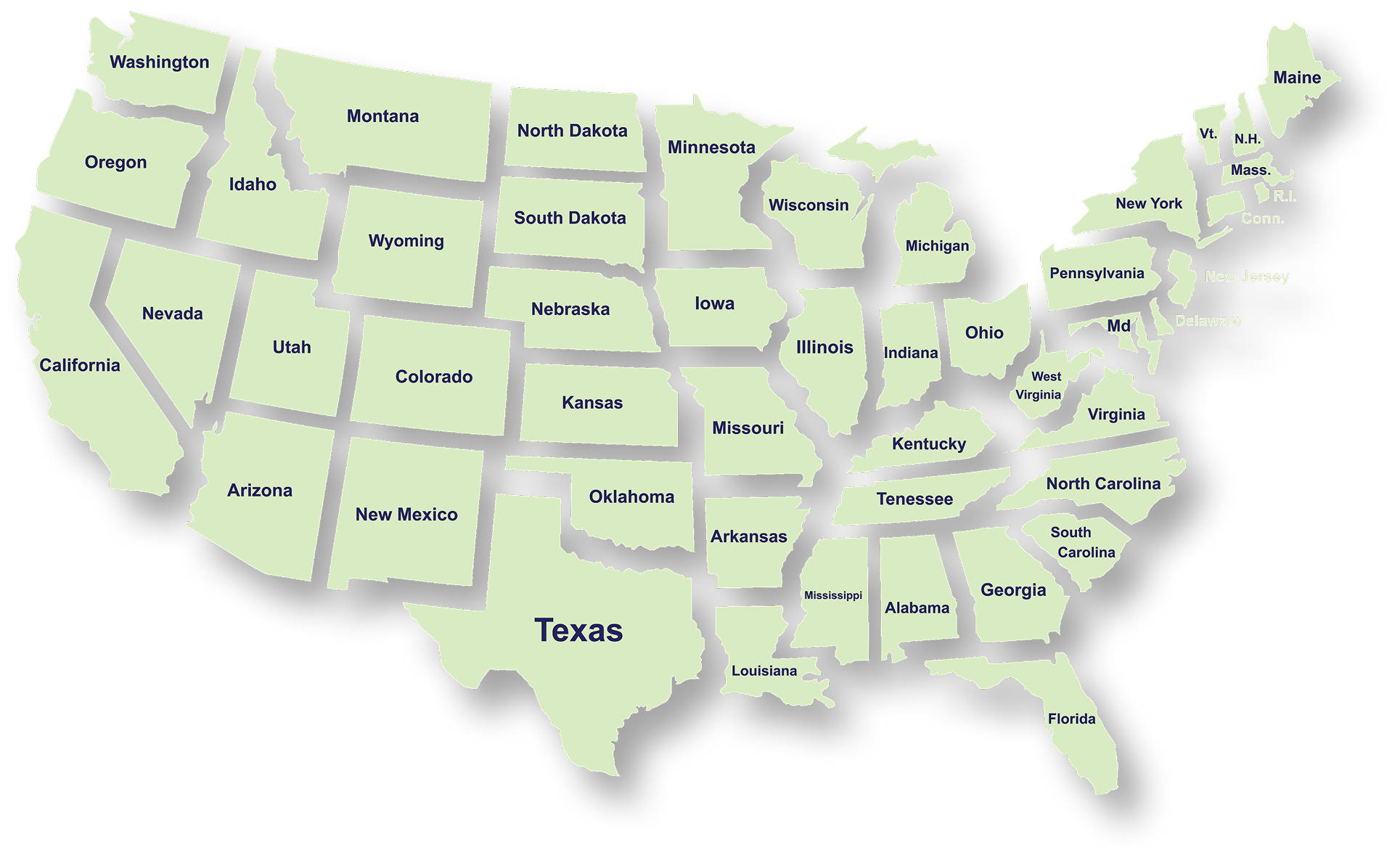
Serving Businesses & Individuals Across USA

We handle accounting, tax filing, and planning with defined timelines and accurate reporting for businesses and individuals across all states.

Frequently Asked Questions

What services does NR CPAs & Business Advisors provide?
What is tax planning and why is it important for businesses?
How can a Virtual CFO help my business?
When should a business consider IRS tax resolution services?
What financial statements does a business typically need?
How can startup advisory services help new businesses?
What is strategic business planning?
What is a Virtual Family Office and who can benefit from it?