Learning Center for Tax and Financial Insights

Stay updated with clear, actionable articles on tax rules, deadlines, deductions, and financial decisions that impact individuals and businesses.

No items found.

Is Your Small Business as Profitable as It Can Be?

Don't Forget About MarginsFinally, paying attention to your profit margin percentages can tell you a number of critical things about the financial health of your company, essentially all at the same time. You'll be able to determine whether:You're correctly pricing and promoting your products in a way that drives profitable growth.All of the products and services you're offering are profitable to begin with.The true value of the relationships you're forging with your customers, and how long they last on average.If you're allocating resources in the most efficient way possible, thus maximizing profitability whenever possible.Again — figuring out whether or not your small business is as profitable as it can be involves a lot more than just looking at any one particular line item on a balance sheet. Often, it is a combination of many things — each representing their own individual piece of the puzzle that is your company. Only by understanding the bigger picture will you have the information you need to see where you truly stand... and what you need to do about it moving forward.In the end, the most important thing for you to understand is that while you may be an expert in running your small business, you're probably not (nor are you expected to be) an expert in small business finances. Those are two entirely separate concepts and should always be treated as such.Partnering with the right financial professional isn't something that you do after your organization is already up and running. It should be a natural part of the process of launching a business in the first place. There are so many decisions that will ultimately affect your cashflow and taxes moving forward — from the financial structure that you set up to the entity you choose during formation. One wrong move at any of these points can artificially limit your ability to make money, and that is a difficult position for any entrepreneur to be in.Instead, partner with a seasoned financial professional immediately and look to this person for insight and guidance as often as possible. If nothing else, they will make sure that the foundation upon which your company is built is as strong as possible — thus eliminating many and even all of the potential issues that could hold you back in the future.

Explore More
No items found.

So, You've Made a Mistake on Your Tax Return. What Happens Now?

Generally speaking, tax return mistakes are a lot more common than you probably realize. Taxes are naturally complicated, and the paperwork required to file them properly is often convoluted. This is especially true if you're filing your taxes yourself — and all of this is in reference to a fairly normal year as far as the IRS is concerned. The 2018 tax year, however, certainly does not qualify as a "normal year." With the passage of the Tax Cuts and Jobs Act, even seasoned financial professionals are having a hard time digesting all of the changes that they and their clients are now dealing with. All of this is to say that if you've just discovered that you've made a BIG mistake on your tax return this year, the first thing you should do is stop and take a deep breath. It happens. It's understandable. There ARE steps that you can take to correct the situation quickly — you just have to keep a few key things in mind. Fixing Tax Return Mistakes: Here's What You Need to Do All told, you have three years from the date that you originally filed your tax return (or two years from the date you paid the tax bill in question) to make any corrections necessary to fix your mistakes. If nothing about your return ultimately changes, you probably don't have anything to worry about — in fact, there's a good chance that the IRS will catch the mistake and fix it themselves. This is especially true in terms of math errors, or if you've left out an important document. The IRS will probably send you a letter letting you know what happened and what you need to do to correct it. If fixing the mistake ultimately results in you owing more taxes, you should pay that difference as quickly as possible. Penalties and interest will keep accruing on that unpaid portion of your bill for as long as it takes for you to pay it, so it's in your best interest to take care of this as soon as you can afford to do so. If you've made a much larger mistake (like if you understated or overstated your income, for example), you'll need to file what is called an amended tax return. This is essentially your "second chance" at getting things right, and the timetable above still applies. Understand, however, that ALL errors must be corrected in the amended return. This means that if you find three errors that will reduce your tax liability and two that actually increase it, you are legally required to correct all five. You can't correct only the mistakes that benefit you. An amended return can be used to correct a variety of issues, including but not limited to ones like:

Explore More
No items found.

Employees' Fringe Benefits after Tax Reform

Article Highlights: Qualified Parking Transit Passes Bicycle Commuting Commuting Moving Deduction Achievement Awards Group Term Life Insurance Dependent Care Benefits Qualified Educational Assistance Programs Tax reform made a lot of changes, some of which impacted employees’ fringe benefits. This article reviews the most frequently encountered fringe benefits, including those that were and were not impacted by tax changes. These changes can affect both a business’s bottom line and its employees’ deductions. BENEFITS IMPACTED BY TAX REFORM Qualified Transportation Fringe Benefits – Qualified transportation fringe benefits include parking, transit passes, commuter (van pool) transportation, and bicycle commuting. Qualified parking – The tax-free fringe benefit for qualified parking is still available to employees and is capped at $265 per month for 2019, up from $260 in 2018. Transit Passes – The tax-free fringe benefit for transit passes is also still available to employees, up to $265 per month for 2019, an increase from $260 in 2018. Bicycle Commuting – Unfortunately, tax reform did away with the $20-per-month tax-free reimbursement for the cost of an employee commuting to work on a bicycle. Commuting – Tax reform killed the monthly commuting fringe benefit (which was $260 in 2018) except when necessary for ensuring the safety of an employee. When allowed, the maximum amount is the same as the transit pass fringe benefit. However, even though they are excludable fringe benefits for employees, after 2017, employers can no longer deduct their expenses for parking or mass transit passes or commuter highway vehicle transportation provided to their employees. Moving expenses – Before 2018 and after 2025, taxpayers who move because of a change in work location who meet certain distance and time requirements are able to deduct their moving costs in excess of any tax-free reimbursement from their employer. However, that deduction is suspended for 2018 through 2025, and any employer reimbursement is taxable and included in the employee’s W-2. There is one exception: moving expenses are still deductible for military members on active duty for moves pursuant to military orders. Achievement awards – Employee achievement awards are excludable from income only to the extent that the award does not exceed $400 for any one employee or $1,600 for a qualified plan award. A qualified plan award means an employee achievement award awarded as part of an established written plan or program of the business that does not discriminate in favor of highly compensated employees.

Explore More
No items found.

Tax Treatment of a Room Rental

Article Highlights: Vacation Home Rental Rules Order of Deductions Loss Limitations Expense Prorating With the shortage of affordable housing these days, many homeowners are renting out rooms in their homes, providing themselves with some additional cash. Questions that are often raised in regard to room rentals include: Is the income taxable? If so, how is it reported? What deductions are allowed? Can a loss be claimed? Answers to these questions follow. If a taxpayer rents rooms or other space in a home and the rented portion does not have facilities (a bathroom and a kitchen) that would make it a dwelling unit on its own, the taxpayer and the renter may be considered to be occupying one dwelling unit. Thus, the “landlord” is mixing personal expenses with business expenses, a situation in which the tax code does not permit a loss. As a result, the income and expenses are treated under the same rules as vacation home rentals and are reported on Schedule E, with prorated expenses deductible against the rental income in a specific order and no loss being allowed. The deductions are claimed in the following order: First, mortgage interest and taxes. Next, operating expenses (examples: advertising, repairs, utilities, maintenance, insurance). Finally, depreciation.

Explore More
No items found.

Tax Reform Muted the AMT: Holders of Incentive Stock Options, Take Note

Article Highlights Alternative Minimum Tax Deterrent to Tax Shelters Tax Reform Changes Tax Deductions and Preferences Incentive Stock Options Tax Planning Opportunity Although Congress, as part of the recent tax reform, promised to do away with the alternative minimum tax (AMT), it only did so for C corporations; as a result, the AMT still applies to individuals. Congress originally developed the AMT in 1969 as a means to prevent high-income individuals from using tax shelters to reduce their taxes. For the AMT, federal income tax is calculated without certain deductions and tax preferences. This tax applies if it is greater than the regularly computed income tax. Although it has since been indexed to inflation, the AMT at one point began to apply to middle-income taxpayers, who are not the intended targets of this punitive tax. The AMT computation includes a tax-exempt amount, but this amount begins to phase out for taxpayers whose adjusted gross income (AGI) exceeds a certain threshold (depending on their filing status). Although the tax reform did not eliminate the AMT, it did mute that tax considerably by increasing the AMT exemptions and by substantially raising the exemption-phaseout thresholds, as illustrated below. The exemptions and AGI phaseout thresholds will be inflation-adjusted in future years. AMT EXEMPTIONS ($) Status 2017 2018 Married Filing Jointly or Surviving Spouse 84,500 109,400 Single or Head of Household 54,300 70,300 Married Filing Separately 42,250 54,700 EXEMPTION-PHASEOUT AGI THESHOLDS Status 2017 2018 Married Filing Jointly or Surviving Spouse 160,900 1,000,000 Single or Head of Household 120,700 500,000 Married Filing Separately 80,450 500,000 These are the tax deductions and preferences that most often affect the average taxpayer: Some itemized deductions are allowed for the regular tax computation but not for the AMT computation. Tier II miscellaneous itemized tax deductions are not allowed for the AMT computation; in addition, for the years 2018 through 2025, they are also not allowed for the regular tax computation. This category primarily includes employee business expenses, investment expenses, and legal fees. As these expenses aren’t currently deductible in either tax calculation, there is no adjustment for the AMT calculation. The AMT computation does not allow the itemized deduction for interest on home-equity debt; such debt also is not deductible in the regular computation through 2025, which eliminates another difference in the two computations. Employee incentive stock option tax preferences are also handled differently in the two computations, as is discussed in more detail later in the post.

Explore More
No items found.

Court of Appeals Rules for Clergy

Article Highlights: Internal Revenue Code Section 107 Court Ruling Employee Status Self-employed Status Parsonage Allowance Self-employment Tax Exemption from Self-employment Tax If you read our previous article related to a Wisconsin District Court ruling, you will recall that the judge in that case had ruled that Sec. 107(2) of the Internal Revenue Code was unconstitutional. Section 107 of the Internal Revenue Code provides that a minister’s gross income doesn’t include the rental value of a home provided by the house of worship. If the home itself isn’t provided, then a rental allowance paid as part of compensation for ministerial services is excludable. This benefit is generally referred to as a parsonage allowance. Thus, a minister can exclude the fair rental value (FRV) of the parsonage from income under IRC Sec. 107(1), or the rental allowance under Sec. 107(2), for income tax purposes. The Sec. 107(2) rental allowance is excludable only to the extent that it is for expenses such as rent, mortgage payments, utilities, repairs, etc., used in providing the minister’s main home, and only up to the amount of the home’s FRV. Good news for clergy members: a 3-judge panel of the 7th U.S. Circuit Court of Appeals has unanimously overturned the lower court’s decision and ruled that Sec. 107 is constitutional; therefore, housing allowances continue to be excludable from income tax. It is unknown whether those who brought the suit will ask the full 7th Circuit to review the case or appeal it to the U.S. Supreme Court and, if so, whether the Supreme Court will take it up. Here is an overview of how members of the clergy (from all faiths) are taxed on their income. When we refer to “church” in this article, please read that to include mosques, synagogues, temples, etc. Members of the clergy are taxed on not just their salary but on other fees and contributions that they receive in exchange for performing services such as marriages, baptisms, funerals, and masses. As a result, clerics will generally report their income in two ways: As an Employee – As an employee, clerics will receive a W-2 from the church showing the amount of their income that is subject to tax, any amount paid as a nontaxable housing allowance (discussed later), and any withholding. Any expenses incurred as a W-2 employee are included on Form 2106 (Employee Business Expenses) and if the cleric also receives a nontaxable parsonage allowance, the expenses must be divided between the taxable W-2 income and nontaxable parsonage allowance. Unfortunately, for years 2018 through 2025 the deduction for employee business expenses has been suspended by tax reform. The suspension affects all employee business expenses, not just those of clergy employees. As a Self-Employed Individual – Income received other than as an employee of a church is reported as self-employment income. Typically, this would include all income that is not included in the W-2 from the church, including fees charged for services, such as weddings, funerals, and other gatherings. This income and any expenses associated with it are reported on Schedule C and are subject to the self-employment tax. Parsonage Allowance – As was discussed previously, as the subject of the court ruling, a member of the clergy can qualify to have a rental allowance excluded from his or her taxable income if that allowance is provided as remuneration for services that are ordinarily the duties of a minister of the gospel. The following are the qualifications and details of the parsonage allowance: It is only excludable to the extent that it is used for expenses related to the minister’s housing (e.g., for rent, mortgage payments, utilities, and repairs). The rental allowance is not excludable to the extent that it exceeds reasonable compensation for the minister’s services. The allowance only applies to the minister’s primary residence. The allowance cannot exceed a home’s FRV, including furnishings and appurtenances such as garages, plus the cost of utilities. In advance of the payment, the employing organization must designate the allowance by an official action. If a minister is employed by a local congregation, the designation must come from the local church, instead of from the church’s national organization. The portion of the minister’s business expenses that is attributable to tax-free income is not deductible. This rule does not apply to home-mortgage interest or to taxes that are deductible in full if the minister itemizes deductions. Retired clerics can exclude a home’s rental value or a rental allowance if the home is furnished as compensation for past services and authorized under a convention of a national church organization. However, this exclusion does not extend to the widow or widower of a retired cleric.

Explore More
No results found.
Thank you! Your submission has been received!
Oops! Something went wrong while submitting the form.

Want tax & accounting tips & insights?Sign up for our newsletter.

Thank you! Your submission has been received!
Oops! Something went wrong while submitting the form.

Why Work With Us?

We combine deep tax expertise, financial strategy, and practical business insight to help you manage complexity, stay compliant, and make confident financial decisions.
A dollar sign, representing financial advice or discussion at NR CPAs & Business Advisors.

Experienced CPA and Enrolled Agent Leadership

Guidance led by licensed professionals with deep expertise in tax strategy, compliance, and complex financial matters.
White bar chart with an upward arrow on green circular background representing growth or progress at NR CPAs &. Business Advisors

Support for Growing Businesses and Startups

We understand the financial challenges of growth stage businesses and provide structured guidance to support expansion.
A white hand holding a dollar symbol and ascending bar chart on a green circular background representing financial growth or investment at NR CPAs & Business Advisors..

Strategic Financial Advisory

Our team helps you evaluate financial decisions with greater clarity, supported by practical insights and long term planning.

Fractional CFO Support

Access experienced financial leadership without the commitment and cost of hiring a full time Chief Financial Officer.

Proactive Tax Planning Approach

We focus on identifying tax opportunities throughout the year rather than reacting only during filing season.

Clear and Reliable Financial Reporting

Accurate financial statements and reporting that help you better understand performance and make informed decisions.
White IRS building icon with pillars and a dollar sign above on a green circular background.

Professional IRS Representation

Experienced support in resolving IRS notices, disputes, and compliance matters while protecting your financial interests.

Personalized Client Focus

Every client receives thoughtful attention and tailored financial solutions based on their specific needs and business goals.
Financial matters often involve important decisions. Working with experienced advisors can help you approach them with greater clarity and confidence in your choices.

Need Help With Your Tax or Financial Decisions?

Discuss your situation with our advisors to get clear guidance on tax planning, IRS matters, and the financial decisions ahead.
Business consulting at NR CPAs & Business Advisors.

Request Your Consultation

Fill out the form to discuss your tax concerns, financial questions, or advisory needs with our team. We will review your details and respond shortly.

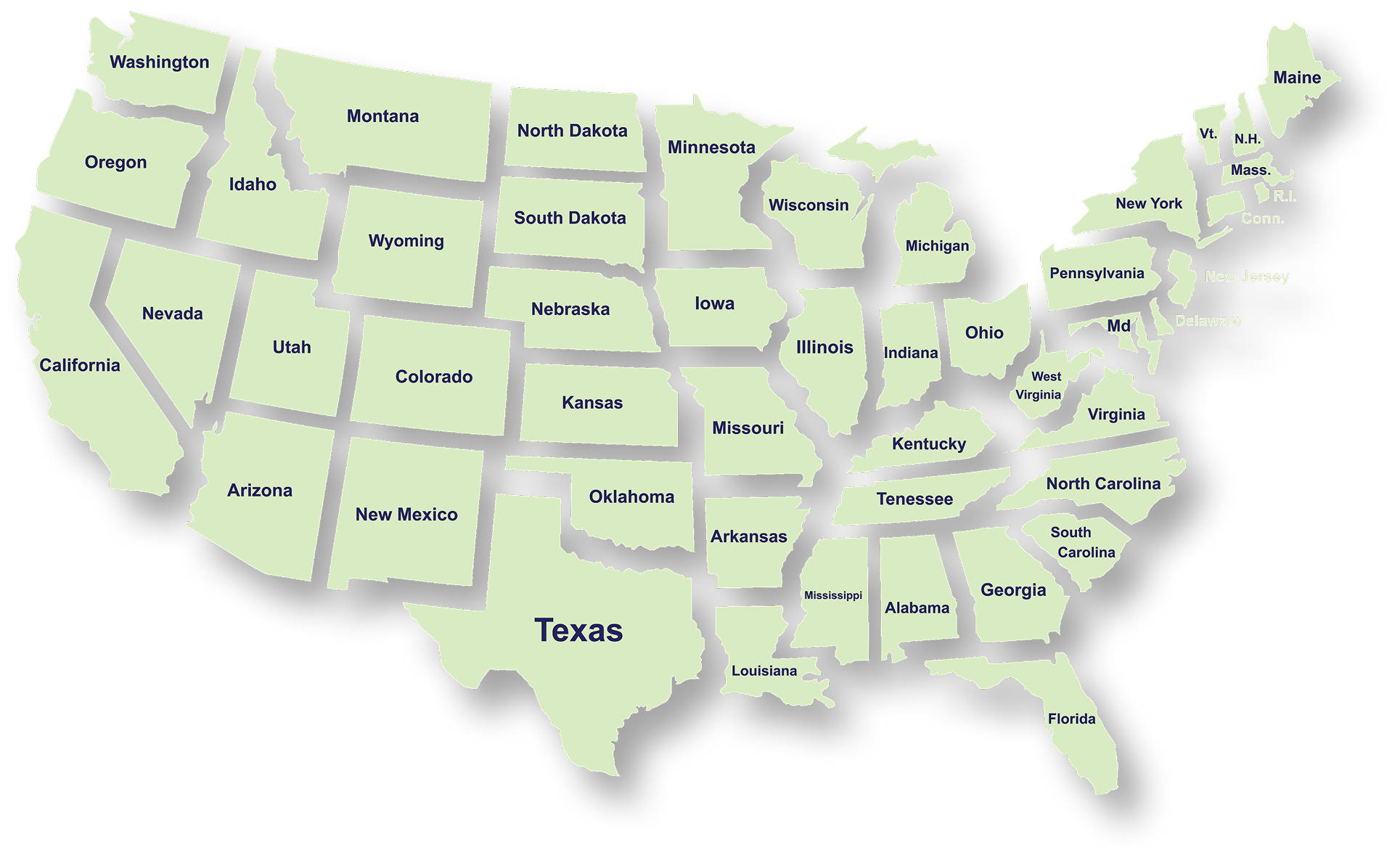
Serving Businesses & Individuals Across USA

We handle accounting, tax filing, and planning with defined timelines and accurate reporting for businesses and individuals across all states.

Frequently Asked Questions

What services does NR CPAs & Business Advisors provide?
What is tax planning and why is it important for businesses?
How can a Virtual CFO help my business?
When should a business consider IRS tax resolution services?
What financial statements does a business typically need?
How can startup advisory services help new businesses?
What is strategic business planning?
What is a Virtual Family Office and who can benefit from it?