Learning Center for Tax and Financial Insights

Stay updated with clear, actionable articles on tax rules, deadlines, deductions, and financial decisions that impact individuals and businesses.

No items found.

You May Qualify for a Small Business Home Office Deduction

Article Highlights: Qualifications Actual Expense Method Simplified Method Home Office Expenses for Renters vs. Homeowners Deduction Limitation How Moving Affects the Home-Office Deduction Other Issues If you are a small business owner and use part of your home for business, you may be able to take the so-called office-in-home tax deduction. This deduction reduces both income and self-employment taxes. While the term “home office” is used to describe when a taxpayer uses their home for a business purpose, the space used may not be an office but may still qualify for the deduction. One of the following must apply for you to be able to deduct home office expenses. The home office: Must be your main place of business. OR Must be a place of business where, in the normal course of your business, you meet patients, clients or customers (just telephone contact with clients isn’t enough to meet this test). OR Must be in a separate structure that is not attached to your home, and you use it in connection with your business. OR Must be a place where you store inventory or samples. This place must be the sole, fixed location of your business. OR Under certain circumstances, must be where you provide day-care services. Generally, except when used to store inventory, an office area must be used on a regular and continuing basis and be exclusively restricted to the trade or business (i.e., no personal use). Two Methods – There are two methods to determine the amount of a home-office deduction: the actual-expense method and the simplified method. Actual-Expense Method – The actual-expense method prorates home expenses based on the portion of the home that qualifies as a home office, which is generally based on square footage. The non-business portions of home mortgage interest and real property taxes continue to be deductible on Schedule A if you itemize deductions. Aside from prorated expenses, 100% of directly related costs, such as painting and repair expenses specific to the office, can be deducted. Unlike the simplified method (discussed next), the business-use part of the home is not limited to 300 square feet. Simplified Method – The simplified method allows for a deduction equal to $5 per square foot of the home used for business, up to a maximum of 300 square feet, resulting in a maximum simplified deduction of $1,500. You may elect to take the simplified method or the actual-expense method (also referred to as the regular method) on an annual basis. Thus, you may freely switch between the two methods each year. Additional office expenses such as utilities, insurance, office maintenance, etc., are not allowed when the simplified method is used. Prorated rent or home interest and taxes are not additionally deductible either, although 100% of home interest and taxes, within the normal Schedule A limitations, are deductible if you itemize deductions. To determine the average square footage when using the simplified method, no more than 300 square feet for any month can ever be used, even if you have multiple businesses for which you use space in your home. If there are multiple businesses, a reasonable method to allocate between businesses is used. Zero is used for months when there was no business use or when the business was not operating for a full year. Don’t count any month when the business use was less than 15 days. Example: Sandra begins using 400 square feet of her home for business on July 20, 2022, and continues using the space as a home office through the end of the year. Her average monthly allowable square footage for 2022 is 125 square feet (300 x 5 months = 1,500/12 = 125). Home Office Expenses – There are differences as to which prorated home expenses are deductible by renters and homeowners when computing the actual expense method, as illustrated in the table below. Prorated Expense Own Rent Mortgage Interest X Property Tax X Rent or Lease Payments X Homeowner's Insurance X Renter's Insurance X Utilities X X Depreciation X Home Maintenance X X Note that the principal payments made on a home loan are not eligible expenses. Instead, homeowners claim a deduction for depreciation on the office portion of the home’s basis. Home Office Deduction Limitation – Even if you qualify for a home-office deduction, your deduction is limited to the business activity’s gross income, which for this purpose is defined as the activity’s gross income, reduced by the home expenses that would be deductible if there were no business use (e.g., mortgage interest, property taxes, certain casualty losses), and the business expenses unrelated to the home’s use. When using the actual expense method, the disallowed amount will be carried over to the next year subject to the same limitations. However, there’s no carryover when using the simplified method. Example: Let’s say you use 20% of your home for business, have gross income of $6,000 from the business and have the following expenses: Deductible mortgage interest (20%) $1,500 Real estate taxes (20%) $1,000 Total $2,500 Expenses not related to business use of the home (100%): Supplies $500 Advertising $1,300 Telephone $200 Total $2,000 Otherwise, nondeductible expenses: Home Maintenance (20%) $200 Home Utilities (20%) $350 Home Insurance (20%) $250 Total. $800 Depreciation (20%) $1,600 Based on the above expenses, you figure your deduction limit as follows. Gross income $6,000 Less: Deductible mortgage interest (20%) $1,500 Real estate taxes (20%) $1,000 Expenses not related to business use of the home (100%) $2,000 Total $4,500 Deduction limit $1,500

Explore More
No items found.

The Story Behind the Success at Chief

People are no longer shocked by women in the C-Suite. As female empowerment in the workforce has steadily climbed over the 20th and 21st centuries, women continue to knock down barriers. The path blazed by female fighter pilots, doctors, and politicians over the last hundred years is now courageously followed by women as they rise through corporations, law and the highest levels of government.Chief, a women-led company, is doing its level best to keep that torch ablaze. Started in 2019, this private network offered women in the C-Suite a much-needed breath of fresh air – and the breath became a wind that blows ever more strongly today.The basic idea? Women in executive positions often find themselves overwhelmed and under-resourced, at least on a personal level. While they’re busy mentoring others and overseeing thriving companies, too many of them don’t know where to turn for their own questions.Enter Chief founders, Carolyn Childers and Lindsay Kaplan. Both had extensive experience with executive leadership. The former worked as a senior VP for cleaning company Handy and then Soap.com; the latter a VP at the mattress giant Casper. They knew personally how draining it is to take on leadership roles without the right support.“The idea of Chief came from a pretty personal place for Lindsay and I,” Childers told CNBC. “We were getting more and more senior in our careers and … realizing that there was no community or resources for us anymore as we were now the resource for other people.”Thus was the idea born: a small, private network of women in the most powerful leadership roles, who could turn to one another for advice, resources, and connection. Before their launch in 2019, they hoped to get 100 women on board. They quickly realized Chief was going to go much farther than that. By the time they made the company official, they already had 200 powerful women representing the gamut of startups to Fortune 50 companies.

Explore More
No items found.

Video Tips: The Significance of Releasing a Child's Dependency

If you are a custodial parent, you may release a child’s dependency to the non-custodial parent for tax purposes. But are you fully aware of the effects it will have on both your and the other parent's tax returns? This video will give you a quick explanation on the ramifications of releasing a child's dependency.

Explore More
No items found.

Owe the IRS Money? How Long Do They Have to Collect?

Article Highlights:Statute of LimitationsFiling Before April Due DateFiling After April Due DateExtensionAmended ReturnsThree-year StatuteUnderstatement Exceeds 25%No Filing or FraudTen-year Collection PeriodTax RecordsState Statutes of LimitationHave you ever wondered how long the IRS has to question and assess additional tax on your tax returns? For most taxpayers who reported all their income, the IRS has three years from the date of filing the returns to examine them. This period is termed the statute of limitations. But wait – as in all things taxes, it is not that clean cut. Here are some complications:You file before the April due date – If you file before the April due date, the three-year statute of limitations still begins on the April due date. So filing early does not start an earlier running of the statute of limitations. For example, whether you file your 2021 return on February 15, 2022, or April 15, 2022, the statute does not start running until April 18, 2022 (that’s not a typo). The due date for 2021 returns was delayed from April 15 to April 18 because of a holiday in the District of Columbia (Emancipation Day) and a weekend, and the April 18th date applies even if you don’t live in DC. But there’s a further exception for residents of Massachusetts and Maine, the due date for 2021 returns is April 19, 2022, because of a holiday observed in both of those states. So, for residents in these two states, the statute of limitations for 2021 returns begins on the 19th.You may recall that due to the Covid-19 pandemic, the IRS extended the original due date to May 17, 2021 for 2020 returns and to July 15, 2020 for 2019 returns. As a result, the statute of limitations for refunds expires May 17, 2024 for 2020 returns and July 15, 2023 for 2019 returns. You file after the April due date - The assessment period for a late-filed return starts on the day after the actual filing, whether the lateness is due to a taxpayer’s delinquency, or under a filing extension granted by IRS. For example, say your 2021 return is on extension until October 17, 2022, and you file on September 1, 2022. The statute of limitations for further assessments by the IRS will end on September 2, 2025. So the earlier you file those extension returns, the sooner you start the running of the statute of limitations. If you want to be cautious you may wish to retain verification of when the return was filed. For electronically filed returns, you can retain the confirmation from the IRS accepting the electronically filed return. If you file a paper return, proof of mailing can be obtained from the post office at the time you mail the return.You file an amended tax return – If after filing an original tax return you subsequently discover you made an error, an amended return is used to make the correction to the original. The filing of the amended tax return does not extend the statute of limitation unless the amended return is filed within 60 days before the limitations period expires. If that occurs, the IRS generally has 60 days from the receipt of the return to assess additional tax.

Explore More
No items found.

Too Many Transactions in QuickBooks Online? Create Rules

It’s important to categorize transactions, but it takes time. If every day brings several dozen into QuickBooks Online, you can automate this process.One of the cardinal rules of accounting is this: Go through your new transactions every day. If you wait until there are too many of them, you’re likely to give them short shrift. You may miss problems, just as you might skip categorizing some of them because it simply takes too long.But correct categorization is essential. Your income taxes and reports will not be accurate if you fail to assign the right category to all of your transactions. QuickBooks Online makes this easy.The site also provides a way for you to accelerate the process by automating it. It allows you to create Rules. That is, if a transaction contains a specific piece of information, a name or an amount, QuickBooks Online allows you to indicate how it should be categorized. This kind of automation will save you time and may even prevent errors – as long as you use it carefully. Here’s how it works.Defining Your RulesWe’ll use an easy example to explain how QuickBooks Online’s Rules work. Let’s say your shipping costs have started to increase lately, and you want to make sure you’re seeing any UPS transactions that go above a specified dollar amount, and that they’re categorized accurately. Hover your mouse over Transactions in the toolbar and click on Banking (assuming you’re downloading your bank transactions). Select an account to work with by clicking on it, and make sure the For review bar is highlighted.Click on a transaction to open it. (If you’ve never explored what you can do with a downloaded transaction, study this box carefully while you’re there, and contact us with any questions.) On the bottom line, you’ll see a link labeled. Create a rule. Click on it, and a panel slides out from the right, as pictured below:The upper half of the Create rule panelThis portion of the Create rule panel is fairly self-explanatory. Give your rule a descriptive name (we entered UPS 25 Plus), and indicate whether it should be applied to Money in or Money out. If you want to select a specific bank account or card, click the down arrow in the field to the right and select it. Otherwise, choose All bank accounts. Next, decide whether a transaction has to meet Any of the conditions you’re going to specify or All of them. In this case, we want All.

Explore More
No items found.

Why Employee Classification is of Paramount Importance

Not too long ago in Orlando, Florida, a federal investigation uncovered a situation where 22 workers were denied overtime by a Florida-based equipment rental company. The company was paying flat salaries to certain employees, regardless of how many hours they worked in a given week. It was revealed that they were doing this in an attempt to skirt the overtime requirement of the Fair Labor and Standards Act.The rental company quickly learned that just because you pay someone a salary doesn't mean you can avoid these types of laws. The government recovered $122,000 in back wages and damages for those employees as a result of this improper classification of their employment status.Why Employee Classification MattersSituations like these highlight the importance of classifying employees correctly from the start. Whenever this topic comes up, most people think about the differences between independent contractors and actual workers employed by a business. But as you can see from the example above, there are many other parts to this discussion as well.Ultimately, it all comes down to the difference between salary and hourly pay employees. Salaried employees are typically those who receive a specific wage, with the understanding that they are going to keep up with all of their stated responsibilities. Sometimes, this means working more than 40 hours a week in exchange for that salary.Hourly employees are treated a bit differently, however. Here, the expectation is that they will work a standard 40 hours per week, every week, except for any vacation time they may have accrued. In the event that a project or responsibility takes them over 40 hours per week, they are entitled to time and a half for each hour they go beyond.There are a few major reasons why someone might prefer a salaried position over an hourly one. No, they aren't going to receive overtime pay like their hourly employees - but they do have access to certain benefits that their counterparts don't.

Explore More
No results found.
Thank you! Your submission has been received!
Oops! Something went wrong while submitting the form.

Want tax & accounting tips & insights?Sign up for our newsletter.

Thank you! Your submission has been received!
Oops! Something went wrong while submitting the form.

Why Work With Us?

We combine deep tax expertise, financial strategy, and practical business insight to help you manage complexity, stay compliant, and make confident financial decisions.
A dollar sign, representing financial advice or discussion at NR CPAs & Business Advisors.

Experienced CPA and Enrolled Agent Leadership

Guidance led by licensed professionals with deep expertise in tax strategy, compliance, and complex financial matters.
White bar chart with an upward arrow on green circular background representing growth or progress at NR CPAs &. Business Advisors

Support for Growing Businesses and Startups

We understand the financial challenges of growth stage businesses and provide structured guidance to support expansion.
A white hand holding a dollar symbol and ascending bar chart on a green circular background representing financial growth or investment at NR CPAs & Business Advisors..

Strategic Financial Advisory

Our team helps you evaluate financial decisions with greater clarity, supported by practical insights and long term planning.

Fractional CFO Support

Access experienced financial leadership without the commitment and cost of hiring a full time Chief Financial Officer.

Proactive Tax Planning Approach

We focus on identifying tax opportunities throughout the year rather than reacting only during filing season.

Clear and Reliable Financial Reporting

Accurate financial statements and reporting that help you better understand performance and make informed decisions.
White IRS building icon with pillars and a dollar sign above on a green circular background.

Professional IRS Representation

Experienced support in resolving IRS notices, disputes, and compliance matters while protecting your financial interests.

Personalized Client Focus

Every client receives thoughtful attention and tailored financial solutions based on their specific needs and business goals.
Financial matters often involve important decisions. Working with experienced advisors can help you approach them with greater clarity and confidence in your choices.

Need Help With Your Tax or Financial Decisions?

Discuss your situation with our advisors to get clear guidance on tax planning, IRS matters, and the financial decisions ahead.
Business consulting at NR CPAs & Business Advisors.

Request Your Consultation

Fill out the form to discuss your tax concerns, financial questions, or advisory needs with our team. We will review your details and respond shortly.

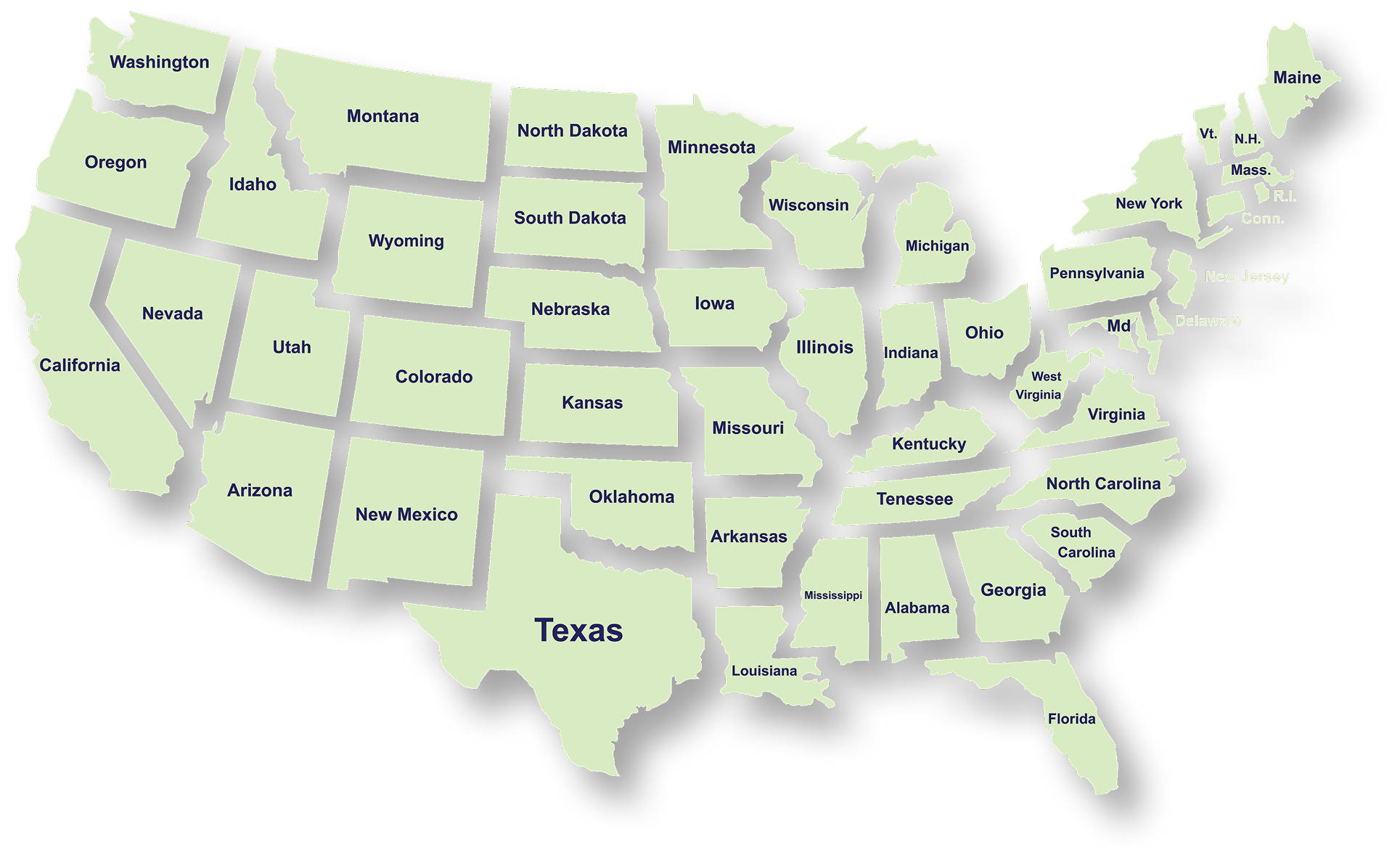
Serving Businesses & Individuals Across USA

We handle accounting, tax filing, and planning with defined timelines and accurate reporting for businesses and individuals across all states.

Frequently Asked Questions

What services does NR CPAs & Business Advisors provide?
What is tax planning and why is it important for businesses?
How can a Virtual CFO help my business?
When should a business consider IRS tax resolution services?
What financial statements does a business typically need?
How can startup advisory services help new businesses?
What is strategic business planning?
What is a Virtual Family Office and who can benefit from it?