Learning Center for Tax and Financial Insights

Stay updated with clear, actionable articles on tax rules, deadlines, deductions, and financial decisions that impact individuals and businesses.

No items found.

May 2022 Individual Due Dates

May 10 - Report Tips to EmployerIf you are an employee who works for tips and received more than $20 in tips during April, you are required to report them to your employer on IRS Form 4070 no later than May 10. Your employer is required to withhold FICA taxes and income tax withholding for these tips from your regular wages. If your regular wages are insufficient to cover the FICA and tax withholding, the employer will report the amount of the uncollected withholding in box 12 of your W-2 for the year. You will be required to pay the uncollected withholding when your return for the year is filed.

Explore More
No items found.

May 2022 Business Due Dates

May 2 - Social Security, Medicare and Withheld Income Tax File Form 941 for the first quarter of 2022. Deposit or pay any undeposited tax under the accuracy of deposit rules. If your tax liability is less than $2,500, you can pay it in full with a timely filed return. If you deposited the tax for the quarter in full and on time, you have until May 10 to file the return.May 2 - Federal Unemployment Tax Deposit the tax owed through March if it is more than $500.May 10 - Social Security, Medicare and Withheld Income Tax

Explore More
No items found.

S Corporations Reasonable Compensation Requirement

Article Highlights: Payroll TaxesCorporate OfficersEmployees of a CorporationReasonable SalariesFactorsFlow-Through DeductionsWage Limitations Unlike a C corporation, which itself pays the tax on its taxable income, an S corporation does not directly pay taxes on its income; instead, its income, losses, deductions, and credits flow through to its shareholders’ individual tax returns on a pro rata basis. These distributions are not subject to self-employment (Social Security and Medicare) taxes. As a result, many S corporations ignore the requirement that each shareholder-employee must take reasonable compensation in the form of W-2 wages in exchange for services performed for the corporation. These wages are subject to Social Security and Medicare taxes (which the corporation and the employee generally split equally); the corporation is also responsible for paying the Federal Unemployment Tax (as well as any state unemployment taxes).The Internal Revenue Code establishes that an officer of an S corporation is an employee of that corporation for Federal Unemployment Tax purposes. S corporations should not attempt to avoid paying this tax by treating their officers’ compensation as distributions rather than as wages.This has been an issue for decades; in 1974, the IRS issued a ruling stating that, when a shareholder-employee fails to take a salary, or if that salary is unreasonable, an auditor should assert that the salary is unreasonable. The officer’s distributions will then be shifted to account for reasonable compensation, and he or she will be assessed the related employment taxes and penalties. At stake here are the employee’s 6.2% Social Security and 1.45% Medicare payroll taxes, the S corporation’s matching amounts, the Federal Unemployment Tax, and whatever state taxes happen to apply. Who Is an Employee of the Corporation? – Generally, an officer of a corporation is considered an employee of that corporation. The fact that an officer is also a shareholder does not change the requirement that any payments made to that officer must be treated as wages. Courts have consistently held that S corporation shareholders who provide more than minor services to their corporation (and receive payment in return) are employees whose compensation is subject to federal taxes. Tax regulations do provide an exception for officers who do not perform services or who perform only minor services. These officers are not considered employees. What’s a Reasonable Salary? – The instructions for Form 1120S (“U.S. Income Tax Return for an S Corporation”) state: “Distributions and other payments by an S corporation to a corporate officer must be treated as wages to the extent the amounts are reasonable compensation for services rendered to the corporation.” There are no specific guidelines in the tax code regarding the definition of reasonable compensation. The various courts that have ruled on this issue have based their determinations on the facts and circumstances of the individual cases. These are some factors that courts have considered when determining reasonable compensation: The officer’s training and experience The officer’s duties and responsibilities The time and effort that the officer devotes to the business The corporation’s dividend history The corporation’s payments to non-shareholder employees The timing and manner of the bonuses paid to key people at the corporationThe payments that comparable businesses have made for similar services The corporation’s compensation agreements The formulas that similar corporations have used to determine compensation The problem here, of course, is that it is easy for the IRS to simply list contributing factors that courts have used when determining reasonable compensation and leave it to each corporation to quantify these factors and determine a reasonable salary—all while retaining the ability to challenge the selected amount later if an auditor decides that the compensation is not reasonable. The IRS has a long history of examining S corporations’ tax returns to ensure that reasonable compensation is being paid, particularly when a corporation pays no compensation to employee-stockholders.

Explore More
No items found.

The Ever-Changing Role of Tax and Accounting Professionals in the Modern Era

To say that there is a lot going on in the world right now is truly a bit of an understatement.Starting a few years ago with the onset of the still ongoing COVID-19 pandemic, the role of the accounting professionals in the context of a small business began to change. It's truly become a role that acts as a sounding board for solid decision-making, as is true with that of the virtual CFO.In the early days of the pandemic, businesses of all shapes and sizes needed help navigating the complexities of PPP and EIDL loans. Now, another matter is impacting organizations around the world: the current war in Ukraine and political turmoil. This, coupled with tight labor markets and supply chain issues, has created a perfect storm in the worst possible way for many.But throughout this, and despite the fact that their roles have evolved significantly, the tax and accounting community remains more important than ever. This is true for a wide range of different reasons, all of which are worth a closer look.The State of Advisors TodayTo get a better understanding of just what an important role accounting firms are playing these days, consider it all within the context of the war in Ukraine or China Covid lockdowns.Yes, it's true that the war and the lockdowns are thousands of miles away from the United States. But the economic stress that it is already causing has been felt all across the globe. Small and even mid-sized businesses have already been through the wringer over the last few years - many are scared that they won't be able to survive what may be on the horizon.That is where virtual CFO and accountancy firms can come into play. Rather than just providing a standard service (like tax preparation or bookkeeping), they can reach out to clients and listen to their specific situations and make precise recommendations about how to stay safe moving forward.No, they won't be able to truly eliminate the uncertainty that we're all experiencing. But they will be able to help business leaders understand it and navigate it, thus helping them come through on the other side all the better because of it.

Explore More
No items found.

Why Proactive Planning is More Important Than You Realize

There's an old saying that reminds us "if you fail to plan, you plan to fail." Whoever coined that phrase was talking about the world of small business accounting whether they realized it or not.Financial and tax literacy aren't just an important part of running a business. They're literally the foundation upon which everything else is built. Tax literacy helps to make sure that you're not only taking care of your obligations but that you're not paying more money than you should ultimately have to. Financial literacy helps to avoid problems like cash flow issues which could cause even a seemingly successful business to close prematurely.These are also important concepts to know for individuals, too. It helps avoid problems like not budgeting properly, they can help you understand the true impact of inflation and more. All of this is in the name of avoiding common problems that typically hold people back.But the thing to understand is that these are not skills that you're born with - you have to be proactive about learning them. You also want to make sure that you have the right partner by your side to help make this process as easy as possible.The Power of a Well-Laid PlanOne of the major reasons why planning is so crucial in this context is because it helps avoid one of the single biggest problems that both businesses and individuals often face: not budgeting properly.Indeed, the lack of a sound (and realistic) budget is often one of the major contributors to money problems for most people. When no semblance of a plan is in place, it's far too easy to overspend. It's also likely that you're not paying nearly as much attention to your finances as you should be. This in turn leads to a significant amount of financial stress, which isn't something that you can just get rid of overnight.What people don't realize is that by coming up with a plan and creating that budget, it can actually put them closer to their goals - not farther away from them. Yes, it may take a bit of additional time to make that big purchase, but you're not going to overspend. You're not going to use funds that were allocated for something more important. You can also see the progress you've made and how far you have left to go, which can help create a much-needed perspective on the entire situation.

Explore More
No items found.

Video Tips: Thinking about Bunching Your Tax Deductions?

Are you a taxpayer whose total of itemized deductions is close to the standard deduction amount for your filing status? If so, “bunching” your tax deduction may be a good choice for you. Watch this video to learn more about tax bunching and how you can do proactive planning to maximize the benefits.

Explore More
No results found.
Thank you! Your submission has been received!
Oops! Something went wrong while submitting the form.

Want tax & accounting tips & insights?Sign up for our newsletter.

Thank you! Your submission has been received!
Oops! Something went wrong while submitting the form.

Why Work With Us?

We combine deep tax expertise, financial strategy, and practical business insight to help you manage complexity, stay compliant, and make confident financial decisions.
A dollar sign, representing financial advice or discussion at NR CPAs & Business Advisors.

Experienced CPA and Enrolled Agent Leadership

Guidance led by licensed professionals with deep expertise in tax strategy, compliance, and complex financial matters.
White bar chart with an upward arrow on green circular background representing growth or progress at NR CPAs &. Business Advisors

Support for Growing Businesses and Startups

We understand the financial challenges of growth stage businesses and provide structured guidance to support expansion.
A white hand holding a dollar symbol and ascending bar chart on a green circular background representing financial growth or investment at NR CPAs & Business Advisors..

Strategic Financial Advisory

Our team helps you evaluate financial decisions with greater clarity, supported by practical insights and long term planning.

Fractional CFO Support

Access experienced financial leadership without the commitment and cost of hiring a full time Chief Financial Officer.

Proactive Tax Planning Approach

We focus on identifying tax opportunities throughout the year rather than reacting only during filing season.

Clear and Reliable Financial Reporting

Accurate financial statements and reporting that help you better understand performance and make informed decisions.
White IRS building icon with pillars and a dollar sign above on a green circular background.

Professional IRS Representation

Experienced support in resolving IRS notices, disputes, and compliance matters while protecting your financial interests.

Personalized Client Focus

Every client receives thoughtful attention and tailored financial solutions based on their specific needs and business goals.
Financial matters often involve important decisions. Working with experienced advisors can help you approach them with greater clarity and confidence in your choices.

Need Help With Your Tax or Financial Decisions?

Discuss your situation with our advisors to get clear guidance on tax planning, IRS matters, and the financial decisions ahead.
Business consulting at NR CPAs & Business Advisors.

Request Your Consultation

Fill out the form to discuss your tax concerns, financial questions, or advisory needs with our team. We will review your details and respond shortly.

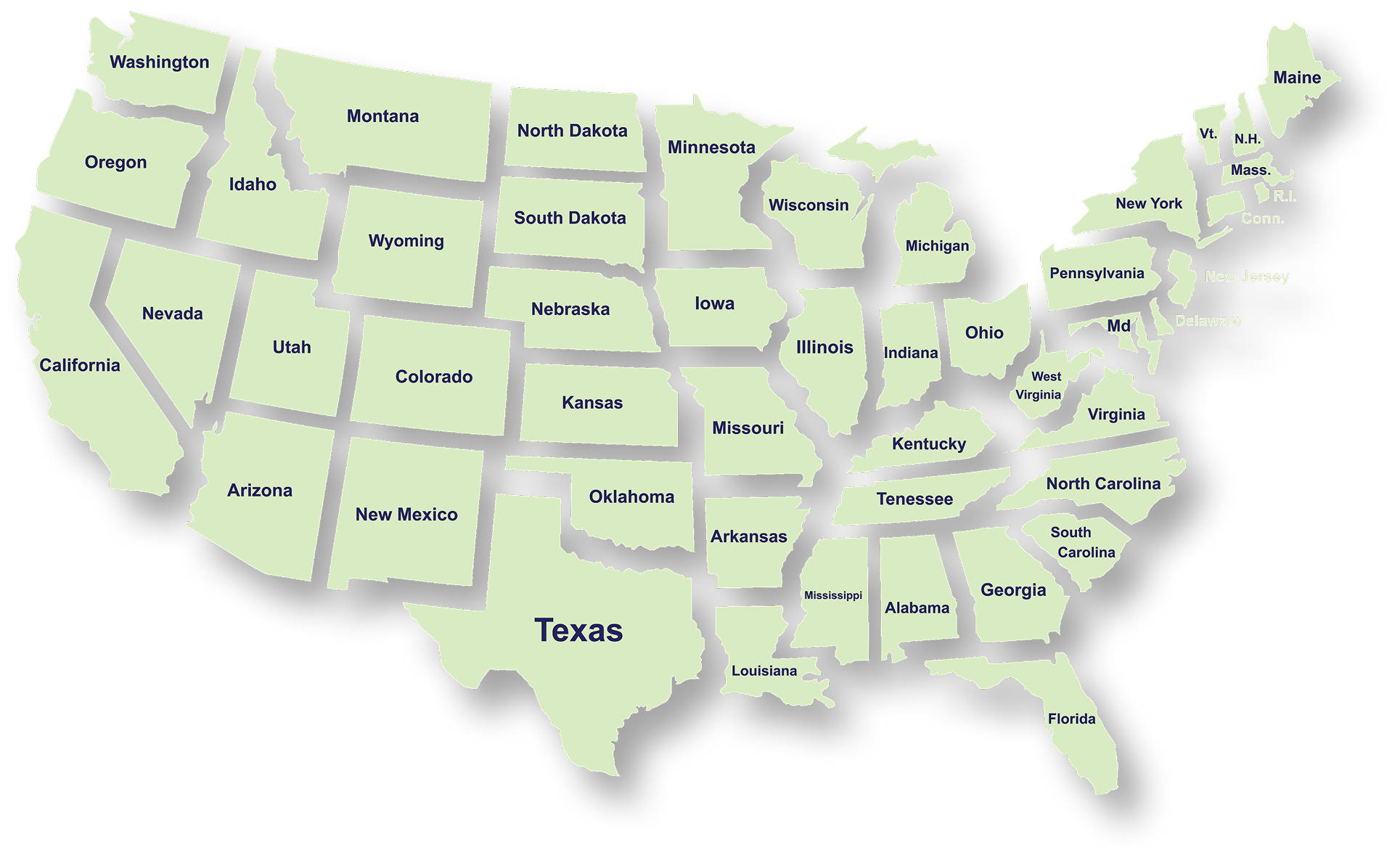
Serving Businesses & Individuals Across USA

We handle accounting, tax filing, and planning with defined timelines and accurate reporting for businesses and individuals across all states.

Frequently Asked Questions

What services does NR CPAs & Business Advisors provide?
What is tax planning and why is it important for businesses?
How can a Virtual CFO help my business?
When should a business consider IRS tax resolution services?
What financial statements does a business typically need?
How can startup advisory services help new businesses?
What is strategic business planning?
What is a Virtual Family Office and who can benefit from it?