Learning Center for Tax and Financial Insights

Stay updated with clear, actionable articles on tax rules, deadlines, deductions, and financial decisions that impact individuals and businesses.

No items found.

Foreign Income and Tax Reporting Issues

Article Highlights:Non-Resident Alien SpouseForeign RentalsForeign PensionsForeign Income ExclusionFBARStatement of Specified Foreign Financial AssetsCredit of Foreign Tax PaidCanadian Registered Retirement Savings & Income PlansReporting Receipt of Foreign Gifts or BequestsReporting Ownership or Transactions with Foreign TrustsAnnual Information Return for Foreign Trust with U.S. OwnerOwnership or Voting Power in Foreign CorporationWe have a worldwide economy and with that comes a variety of tax issues. Some of these may be relevant to you. The following issues, some of which you may not be aware of, apply to individuals. In addition, some are subject to severe penalties when not complied with.Non-Resident Alien SpouseIt is becoming more frequent that a U.S. citizen or U.S. resident alien is married to a nonresident alien. In this circumstance the couple has filing options for U.S. tax purposes. Generally, a U.S. citizen or a U.S. resident alien (sometimes referred to as a green card holder) who is married to a nonresident alien must file their U.S. tax return using the filing status Married Filing Separate. This filing status has higher tax rates and certain limitations that do not apply to other filing statuses. The nonresident alien spouse would have to file a nonresident U.S. tax return on any U.S. source income.However, tax law allows a person who is a nonresident alien at the end of the taxable year, and who is married to a U.S. citizen, or a U.S. resident alien, to be treated as a U.S. resident for income tax purposes and file a Married Filing Joint return, if both spouses so elect. In doing so both spouses must agree to subject their worldwide income for the taxable year to U.S. taxation.Once made, and as long as one of the spouses is a U.S. citizen or resident alien, the election applies for the election year and all future years until it is terminated. If the election is terminated, neither spouse is eligible to make the election for any subsequent tax year.Making this election requires a careful analysis of the tax ramifications of combining incomes, not only for the current year but all future years. Also, the couple could be subject to an FBAR filing requirement discussed later.Foreign RentalsGenerally, foreign rental property is reported on the U.S. tax return in the same manner as a domestic rental. However, there are some differences in rental depreciation. For residential property, if the property were in the U.S. the depreciable recovery period would be 27.5 years but for a foreign rental the recovery period would be 30 years straight line. Similarly, for commercial rentals 40 years instead of 39.5.The passive loss rules apply to a foreign rental in the same manner as a domestic rental so any consolidated net losses are limited to $25,000 but this limit is reduced (phases out) for taxpayers with an adjusted gross income (AGI) between $100,000 and $150,000.If the landlord hires a non-resident alien in the foreign country to perform services related to the foreign rental activity, there are no U.S. reporting or withholding requirements. However, the foreign person providing those services should complete Form W-8BEN and return it to the landlord as proof that the individual is not subject to U.S. taxation.Last, but not least, if a foreign bank account is maintained to receive rental income and disperse rental expense payments, and the owner of the property has signature or other authority over the account, then there may be an FBAR reporting requirement discussed later.Foreign PensionsA foreign pension or annuity distribution is a payment from a pension plan or retirement annuity received from a source outside the United States such as a:foreign employer;trust established by a foreign employer;foreign government or one of its agencies (including a foreign social security pension);foreign insurance company;foreign trust or other foreign entity designated to pay the annuity.Just as with domestic pensions or annuities, the taxable amount generally is the gross distribution minus the cost (investment in the contract) unless there is a tax treaty provision covering the taxation of the pension.Another issue is whether the pension is taxable to the U.S., the individual’s country of residence, other country or the pension’s country of origin. This is commonly determined by the tax treaty between the U.S. and the country of origin. Generally, most tax treaties allow the country of residence to tax the pension or annuity under its domestic laws. This is true unless a special treaty provision specifically amends that treatment.The following are some commonly encountered treaty provisions:Canada - Canadian Old Age Security (OAS) pensions and Canada/Quebec Pension Plan (CPP/QPP) benefits received by U.S. residents are treated for tax purposes as if they were U.S. Social Security payments. U.S Social Security benefits received by a Canadian resident are taxable to Canada. Beneficiaries of a Canadian RRSP, RRIF, Registered Pension Plan, or deferred profit-sharing plan are taxable to the U.S. if the recipient is a U.S. Resident.United Kingdom - UK pensions received by a U.S. resident are taxable to the U.S. and U.S. pensions received by a resident of the UK are taxable to the UK. Each country can only tax the amount that would have been taxed in the other country.CAUTION: These treaty provisions are with the U.S. Federal government and not with the individual states. Consult the individual state’s rules.Foreign Income ExclusionU.S. citizens and resident aliens are taxed on their worldwide income, whether they live inside or outside of the U.S. However, qualifying U.S. citizens and resident aliens who live and work abroad may be able to exclude from their income all or part of their foreign salary or wages, or amounts received as compensation for their personal services. In addition, they may also qualify to exclude or deduct certain foreign housing costs.To qualify for the foreign earned income exclusion, a U.S. citizen or resident alien must:Have foreign earned income (income received for working in a foreign country, including payroll disbursements from a U.S. employer and self-employment income);Have a tax home in a foreign country; andMeet either the bona fide residence test or the physical presence test.The foreign earned income exclusion amount is adjusted annually for inflation. For 2021, the maximum is $108,700 ($112,000 for 2022) per qualifying person. If the taxpayers are married and both spouses (1) work abroad and (2) meet either the bona fide residence test or the physical presence test, each one can choose the foreign earned income exclusion. Together, they can exclude as much as $217,400 for the 2021 tax year ($224,000 for 2022), but if one spouse uses less than 100% of his or her exclusion, the unused amount cannot be transferred to the other spouse.In addition to the foreign earned income exclusion, qualifying individuals may also choose to exclude or deduct a foreign housing amount from their foreign earned income. The amount of qualified housing expenses eligible for the housing exclusion and housing deduction is generally limited to 30% of the maximum foreign earned income exclusion. The housing amount limitation is $32,610 for the 2021 tax year ($33,600 for 2022).

Explore More
No items found.

Are Damage Awards Taxable?

Article Highlights:Physical InjuryWrongful DeathEmotional DistressEmployment DiscriminationSexual HarassmentHuman Trafficking RestitutionWrongful IncarcerationDamages Related to Business InterestsLegal ExpensesFrequent questions that arise are: Are amounts received from settlement of lawsuits and other legal remedies taxable? Are the legal fees paid in connection with these payments tax deductible? The tax code specifies that all income is taxable from whatever source derived, unless exempted by the Internal Revenue Code. The tax code does provide an exclusion from income for certain damage awards but not for others. The companion issue to damage awards is the deductibility of the legal fees associated with the damage awards and settlements. This article looks at a variety of situations and the tax ramifications. Physical Injury - Damages received on account of personal physical injuries or physical sickness are excludable from income whether recovery is by suit or agreement, or the amounts are received as a lump sum or in periodic payments. When a legal action originates with a physical injury or physical sickness, then all damages (other than punitive) are treated as payments due to physical injury or physical sickness whether the recipient of the damages is the injured party.Wrongful Death – Is considered physical injury or physical sickness for purposes of the income exclusion. In addition, where state law provides that only punitive damages can be awarded in wrongful death suits, punitive damages are excludable. Emotional Distress - Emotional distress isn’t considered physical injury or physical sickness for purposes of the income exclusion. However, the tax code allows the exclusion of damages received for emotional distress to the extent not more than the amount paid for medical care related to emotional distress.Employment Discrimination - No exclusion is allowed for damages received in a suit involving employment discrimination or injury to reputation, which is accompanied by a claim of emotional distress. However, the exclusion would apply to a claim of emotional distress, which was related to a physical injury or physical sickness.Sexual Harassment Damages and Settlements - Tax reform put restrictions on business deductions related to sexual harassment damages and settlements as well as impacting the taxability of any award or settlement. Impact on a Business - No business deduction is allowed for any settlement, payout, or attorney fees related to sexual harassment or sexual abuse if such payments are subject to a nondisclosure agreement. Impact on an Award Recipient – Damages for sexual harassment and gender discrimination are not excludable and thus are fully taxable. The issue of sexual harassment qualifying as excludable physical injury or sickness has been in court on several occasions – always with the same result (it’s taxable). Human Trafficking Restitution Payments - A defendant convicted of a human trafficking offense is required to make restitution payments to the victim. These payments are excludable from the victim’s gross income for federal income tax purposes. The payments may be to compensate the victim for costs of medical services, physical and occupational therapy or rehabilitation, transportation, temporary housing, childcare expenses, lost income, attorneys’ fees and other costs and losses the victim suffers because of the offense.

Explore More
No items found.

Working Abroad Has Huge U.S. Tax Benefits

Article Highlights:Tax-Free Income from Working AbroadForeign Earned Income and Housing ExclusionsForeign Self-Employment IncomeClaiming or Revoking the ExclusionU.S. citizens and resident aliens are taxed on their worldwide income, whether they live in the U.S. or in another country. However, qualifying U.S. citizens and resident aliens who live and work abroad may be able to exclude from their income all or part of their foreign salary or wages, or amounts received as compensation for their personal services. In addition, they may also qualify to exclude or deduct certain foreign housing costs.This exclusion applies to both employees and self-employed individuals. In addition to the excludable income, this can also be an attractive option to individuals who wish to travel the world. Today’s digital world allows individuals, armed with their computer and a Wi-Fi connection, to work from anywhere. So, for example, if you would like to be a digital wanderer and your employer approves or you are self-employed, you can travel the world while earning income from your employer or your self-employment clients. Some employers may nix the idea because they don’t want their business to be entangled in foreign taxes, and you should check into what your tax filing responsibility will be with any foreign country where you are thinking of working.If you do work abroad for a U.S. firm, you can still have payroll disbursements (and client payments if you are self-employed) deposited in your U.S. bank account, charge expenses on your credit card, and use online banking to make credit card payments, thus avoiding any foreign bank account reporting. You will still have to file a U.S. 1040 tax return and report your income the same way as if you were living and working in the U.S., except if you meet certain requirements, you will be able to exclude some or all of your foreign earnings from income tax. To qualify for the foreign earned income exclusion, a U.S. citizen or resident alien must: Have foreign earned income (income received for working in a foreign country, including payroll disbursements from a U.S. employer and self-employment income); Have a tax home in a foreign country; and Meet either the bona fide residence test or the physical presence test. The foreign earned income exclusion amount is adjusted annually for inflation. For 2022, the maximum is up to $112,000 per qualifying person. If you are married and both you and your spouse (1) work abroad and (2) meet either the bona fide residence test or the physical presence test, each of you can choose the foreign earned income exclusion. Together, you can exclude as much as $224,000 for the 2022 tax year, but if one of you uses less than 100% of their exclusion, the unused amount cannot be transferred to the other spouse. In addition to the foreign earned income exclusion, qualifying individuals may also choose to exclude or deduct a foreign housing amount from their foreign earned income. The amount of qualified housing expenses eligible for the housing exclusion and housing deduction is generally limited to 30% of the maximum foreign earned income exclusion. The housing amount limitation is $33,600 for the 2022 tax year. However, the limit will vary depending on where the qualifying individual’s foreign tax home is located and the number of qualifying days in the tax year. The foreign earned income exclusion is limited to the actual foreign earned income minus the foreign housing exclusion. Therefore, to exclude a foreign housing amount, the qualifying individual must first figure the foreign housing exclusion before determining the amount for the foreign earned income exclusion.

Explore More
No items found.

Video Tips: Tax Deadline Is Here - Do You Need An Extension?

If a taxpayer cannot file their tax return by the April due date, they can file for an extension of time. If you need help getting an extension, contact us today.

Explore More
No items found.

Tax Issues That Arise When Converting a Home into a Rental

Article Highlights: Reason for Conversion Basis Depreciation Cash Flow versus Tax Profit or Loss Passive Losses Home Gain Exclusion Other Tax Issues Becoming a Landlord With the current substantial appreciation in home values and demand for housing exceeding the available inventory, along with low home mortgage interest rates, more and more homeowners are converting their existing homes into rentals when they buy a new home. Other reasons individuals may make the conversion include maximizing the tax benefits for an elderly person who can no longer live alone by delaying the sale of that person’s home; and to ensure that a home provides value when its owner takes a temporary job assignment in a different location. Some homeowners even mistakenly think that, when a home has declined in value, converting it into a rental can allow them to deduct that loss. Regardless of why an individual considers making a conversion, several tax matters come into play when making that decision. Basis – The basis of the converted property is a good place to start examining these conversion-related tax issues. The basis is the starting value that is used to calculate gains or losses for tax purposes. The basis is also used to determine the amount of depreciation that can be claimed for property used in the rental activity. Generally, for depreciation purposes, a property’s depreciable basis on the date of the conversion is the lower of its adjusted basis (the original cost, plus the costs of any improvements, minus any deducted casualty losses) or its fair market value (FMV). Example #1: A home’s original purchase cost was $250,000; the homeowner later added a room at a cost of $50,000. At the time of the conversion, there had been no casualty losses, so the home’s adjusted basis is $300,000 ($250,000 + $50,000). By comparison, the property’s FMV is $350,000, so the depreciable basis for the rental is the lower of the two amounts: $300,000. Example #2: If, on the date of the conversion, a home has the same adjusted basis as in Example #1, but its FMV is only $225,000, then the depreciable basis used for the rental is equal to $225,000, as that is the lower of the two amounts. When a home’s FMV is less than its adjusted basis on the date of conversion, as in Example #2, the rental has dual bases: (1) If the rental is subsequently sold for a loss, the basis for loss is the FMV on the date of the home’s conversion. Because losses from the sale of personal-use properties (such as homes) are not deductible, this rule prevents homeowners whose homes have declined in value from converting them into rentals in order to claim tax losses. (2) If the rental home is subsequently sold for a profit, the basis for the gain is the property’s adjusted basis. Depreciation – Depreciation is an allowance that both accounts for wear and tear and provides a systematic way for the owner to recover the initial investment in the property. This is necessary because tax law doesn’t allow homeowners to deduct the entire cost of a residential rental at one time. Despite this statutory allowance for the depreciation of residential rentals, real properties have historically appreciated rather than depreciated, so this allowance typically provides a significant tax advantage (i.e., a write-off). Here is how to determine the depreciation for a residential rental: First, reduce the basis by the value of the surrounding land (as land is not depreciable) to get the value of the improvements to the home (i.e., the structure); then, multiply that value by .03636 (the annual depreciation rate). In the conversion year, the resulting amount has to be prorated by the number of months used as a rental. Generally, the value of the land is based on a property-tax statement. For example, if a property-tax statement values an entire property at $240,000 and its land at $80,000, then 1/3 of the basis ($80,000 / $240,000) is allocated to land; the remaining 2/3 is allocated to improvements. Thus, if the basis is $300,000, then the depreciable improvements are valued at $200,000 (2/3 × $300,000), and the annual depreciation deduction is $7,272 (.03636 × $200,000). Rental Cash Flow versus Taxable Profit or Loss – Cash flow is the net amount after subtracting expenses from rental income, and the taxable profit or loss is the rental income minus any allowable tax deductions. Of course, higher cash flow is always better, but it is particularly important to avoid having a rental with a negative cash flow. The following example compares cash flow to taxable income. COMPARISON OF CASH FLOW AND TAXABLE INCOME Income/Expense Cash Flow ($) Taxable Income ($) Rental Income 30,000 30,000 Mortgage Payment <23,000> Mortgage Interest <20,700> Real Property Tax <2,400><2,400> Insurance <1,800><1,800> Maintenance & Repairs <400><400> Gardening <800><800> Depreciation <7,272> Total Expenses <28,400><33,372> Cash Flow 1,600 Taxable Income <3,372>

Explore More
No items found.

Seek Tax Advisor Recommendations Before Selling an Investment Property

The real estate market is red hot, and plenty of folks nearing retirement and holding investment property see now as an excellent time to offload their real estate assets and reap the profits. If you’re one of them, then - tempting as it may be - make sure that you talk to your tax advisor before making that move.Purchasing rental properties has become an extremely popular investment strategy. In fact, experts say that those nearing and past retirement age have accumulated about $6.4 million in net worth tied to those holdings. As attractive as that income is, it can also create responsibilities around rent collection and property management that lose their appeal pretty quickly. It’s no wonder that, between those responsibilities and skyrocketing valuations, many people are looking to get out. While a sale now makes perfect sense, it’s important to go about it the right way to minimize the tax implications. There are a variety of tax-planning strategies that will provide you with significant benefits. These include:A 1031 exchange – This option would mean exchanging the property that is currently owned and deferring the capital gains by identifying the replacement within 45 days and completing the exchange within 180 days. Investment in an Opportunity Zone – This option allows investment property owners to sell their property and then roll their gain on it into the Opportunity Zone Fund. Doing so provides tax-deferred growth over the next four years.Transfer the property to a charitable remainder trust before it is sold. This process exempts the gain from capital gains tax and allows it to be reinvested, with the original owner receiving the income during their lifetime, and the balance transferring to the charity after they die.Holding off on selling until a low-income year. As tempting as it may be to take advantage of the current market, it may make more sense to hold off until after retirement, when your income is lower and the tax hit may not be as extreme.

Explore More
No results found.
Thank you! Your submission has been received!
Oops! Something went wrong while submitting the form.

Want tax & accounting tips & insights?Sign up for our newsletter.

Thank you! Your submission has been received!
Oops! Something went wrong while submitting the form.

Why Work With Us?

We combine deep tax expertise, financial strategy, and practical business insight to help you manage complexity, stay compliant, and make confident financial decisions.
A dollar sign, representing financial advice or discussion at NR CPAs & Business Advisors.

Experienced CPA and Enrolled Agent Leadership

Guidance led by licensed professionals with deep expertise in tax strategy, compliance, and complex financial matters.
White bar chart with an upward arrow on green circular background representing growth or progress at NR CPAs &. Business Advisors

Support for Growing Businesses and Startups

We understand the financial challenges of growth stage businesses and provide structured guidance to support expansion.
A white hand holding a dollar symbol and ascending bar chart on a green circular background representing financial growth or investment at NR CPAs & Business Advisors..

Strategic Financial Advisory

Our team helps you evaluate financial decisions with greater clarity, supported by practical insights and long term planning.

Fractional CFO Support

Access experienced financial leadership without the commitment and cost of hiring a full time Chief Financial Officer.

Proactive Tax Planning Approach

We focus on identifying tax opportunities throughout the year rather than reacting only during filing season.

Clear and Reliable Financial Reporting

Accurate financial statements and reporting that help you better understand performance and make informed decisions.
White IRS building icon with pillars and a dollar sign above on a green circular background.

Professional IRS Representation

Experienced support in resolving IRS notices, disputes, and compliance matters while protecting your financial interests.

Personalized Client Focus

Every client receives thoughtful attention and tailored financial solutions based on their specific needs and business goals.
Financial matters often involve important decisions. Working with experienced advisors can help you approach them with greater clarity and confidence in your choices.

Need Help With Your Tax or Financial Decisions?

Discuss your situation with our advisors to get clear guidance on tax planning, IRS matters, and the financial decisions ahead.
Business consulting at NR CPAs & Business Advisors.

Request Your Consultation

Fill out the form to discuss your tax concerns, financial questions, or advisory needs with our team. We will review your details and respond shortly.

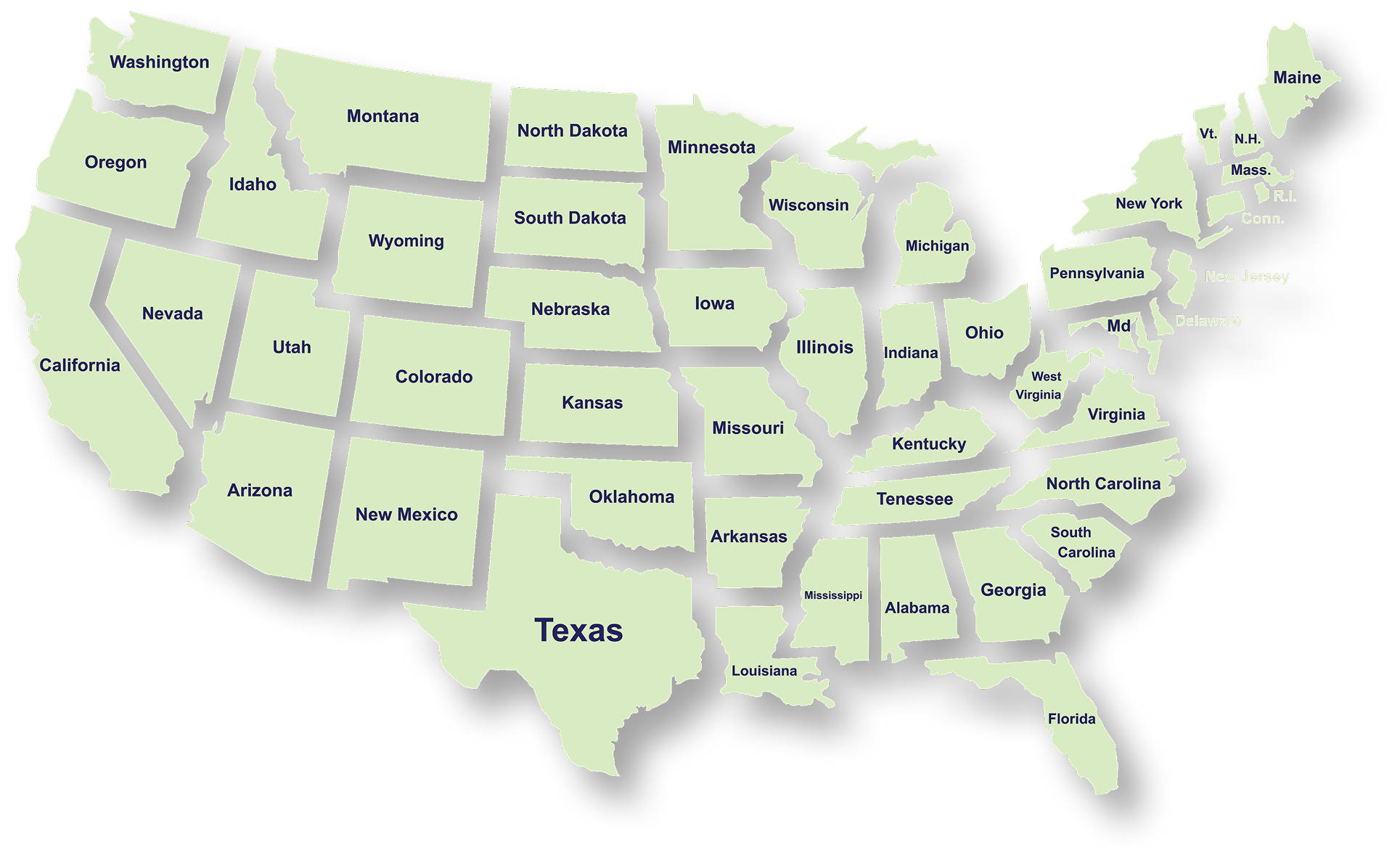
Serving Businesses & Individuals Across USA

We handle accounting, tax filing, and planning with defined timelines and accurate reporting for businesses and individuals across all states.

Frequently Asked Questions

What services does NR CPAs & Business Advisors provide?
What is tax planning and why is it important for businesses?
How can a Virtual CFO help my business?
When should a business consider IRS tax resolution services?
What financial statements does a business typically need?
How can startup advisory services help new businesses?
What is strategic business planning?
What is a Virtual Family Office and who can benefit from it?