Learning Center for Tax and Financial Insights

Stay updated with clear, actionable articles on tax rules, deadlines, deductions, and financial decisions that impact individuals and businesses.

No items found.

You May Qualify for the 20% Tax Pass-Through Deduction

Article Highlights:Sec 199A Deduction Qualified Business Income Threshold Specified Service Businesses Limitations Wage Limitation Aggregating Amounts Several years ago, when Congress changed the tax-rate structure for C corporations to a flat rate of 21% instead of the former graduated rates that topped out at 35%, they also came up with a new deduction for businesses that are not organized as C corporations. This tax break will be available only through tax year 2025 unless it is extended by Congress.As a result, the current tax code provides a substantial tax benefit for most non-C-corporation business owners in the form of a deduction that is equal to 20% of their qualified business income (QBI). This deduction is most known as a pass-through income deduction because it applies to income from pass-through business entities such as partnerships and S corporations. This category also includes income from sole proprietorships, rentals, and farms; Real Estate Investment Trust (REIT) dividends; pass-through income from publicly traded partnerships; and cooperative dividends. The shorthand term for this deduction is the Sec 199A deduction, as 199A is the Internal Revenue Code section number for this provision. Let’s look at how this deduction works. QBI – QBI is defined as the net amount of income, gains, deductions, and losses with respect to trades or businesses that are conducted within the United States.QBI does not include:Wages Capital gains or losses, Interest income, Dividends or payments in lieu of dividends, Annuity income not received in connection with a trade or business, Gain or loss from foreign currency transactions, Trade or business of being an employee, Reasonable compensation from an S-corporation, or Guaranteed payments from a partnership.The pass-through deduction is not a business deduction; it is deducted on a taxpayer’s 1040 after the adjusted gross income is calculated. It is allowed regardless of whether the taxpayer claims the standard deduction or itemizes deductions. Since it is not a business deduction, it does not affect the computation of self-employment tax. Where QBI is less than zero, it is treated as a loss from a qualified business on the next year’s computation of QBI.Complicated Computation - Congress ignored simplification when it created this deduction, which can be quite complicated, and which includes limitations at the entity level and for the combined deductions from all entities; furthermore, it is subject to a limitation based on the individual’s taxable income.Thresholds & Caps – When determining the 20% of QBI deduction for each entity, the de-ductible amount may be reduced, phased-out or phased-in based on that year’s taxable income (without regard to the deduction itself). The 2021 thresholds for each limitation are $164,900 (170,050 in 2022) for individuals and $329,800 ($340,100 in 2022) for joint filers. The maximum of any phase-out or phase-in is $50,000 more than the threshold for individuals and $100,000 more for joint filers, so the maximums are $214,900 for individuals and $429,800 for joint filers ($220,050 and $440,100 for 2022). For those filing married separate, the 2021 threshold and cap amounts are $164,925 and $214,925, respectively, and for 2022, the amounts are the same as for individuals as noted above.Specified Service Business – Special rules apply to specified service businesses, which are generally businesses that rely on the skill and reputation of the owners or employees. These include businesses focusing on health, law, accounting, actuarial science, performing arts, consulting, athletics, financial services, brokerage services, and so on. This category specifically does not include engineering or architecture businesses and trades or businesses whose services consist of investment-type activities. For specified service businesses, if the taxable income is equal to or below the threshold, the entity’s deductible amount is the full 20% of QBI. When the taxable income is above the threshold, the deduction is pro-rata phased out between the threshold and the cap. Thus, a specified service business entity has no deduction when the taxable income exceeds $214,900 for individuals or $429,800 for joint filers ($220,050 and $440,100 for 2022) or $214,925 for 2021 and $220,050 for 2022 for married separate filers.

Explore More
No items found.

The Steps to Estimate Start-Up Costs Before You Launch Your New Business

According to one recent study, start-ups created over two million jobs in the United States in 2015 alone. In fact, by 2018, there were 30.2 million such organizations operating in the country — making up a significant part of the economy.But having an idea for a product or service and bringing that vision into reality are often two different things. It's one thing to come up with something innovative — it's another thing entirely to avoid the trials and tribulations that the business side of the equation often brings with it. That's why it's so important to estimate start-up costs before you launch your new business — it can help you avoid as many of these issues as possible.Estimating Start-Up Costs the Right WayBy far, the most important step that you can take when it comes to estimating start-up costs involves first listing out all spending you'll need on the assets that you require for your business to function.If you're opening a retail store, for example, obviously you're going to need things like shelves. You'll need tables, point of sale systems, light fixtures, so on and so forth. All of these are fixed costs, and they're also essential — you literally can't get by without them. Therefore, listing them out at the beginning of this process is a great way to give yourself a financial foundation for your endeavor.The same is true if you're opening a business where you will be manufacturing products. You need raw materials from which to produce those products. You'll need to think about labor costs and all the equipment needed to bring your vision for those products into reality. All of this is essential and these are costs that you can't overlook at the beginning of this process.

Explore More
No items found.

SBA Extends Deferment of Principal & Interest for COVID EIDL Loans

On March 16, the U.S. Small Business Administration (SBA) announced a new program to provide additional deferment of principal and interest payments for existing the COVID Economic Injury Disaster Loan (EIDL) program for a total of 30 months from inception on all approved COVID EIDL loans. The extended deferment period will provide additional flexibility to small business owners impacted by the pandemic, especially those in hard-hit sectors managing disruption with recent variants, as well as recent supply chain and inflation challenges amid a growing economic recovery.

Explore More
No items found.

Want to Make the Inc. 5000 Annual List of the Fastest-Growing Companies? Here's How

Originally launched in 1979 and based out of Manhattan, Inc. is one of the most famous magazines in existence that celebrates what it means to be an entrepreneur. The print edition has an estimated circulation of about 1.4 million copies, while the online page - the appropriately titled Inc.com - is said to receive about 33 million views monthly.All of this is important because entrepreneurs are truly the key to our economy. According to one recent study, there were about 31.7 million small businesses in the United States as of 2020 - making up a massive 99.9% of all organizations in existence. Over the years, one of the things that Inc. has become famous for is their Inc. 5000 list - a yearly collection of some excellent growth stories that are designed to serve as inspiration for everyone else trying to follow a similar path.Of course, the question remains: how do you go about getting yourself onto the Inc. 5000 annual list of the fastest-growing companies in the country? By keeping a few key things in mind.Cracking the Inc. 5000 List: An OverviewThe good news is that making the Inc. 5000 list isn't necessarily as difficult as some might think. It's actually something that you can apply for, which you can do by visiting the official website at www.inc.com/inc5000/apply.Keep in mind, however, that you need to meet a number of important requirements to even be considered. First, your company needs to be privately owned and, obviously, it must be based in the United States. It also needs to be totally independent - you can't be a subsidiary or a separate division of another, larger company.Showing that you were able to grow using your own resources is very important in order to maintain the spirit of the list itself.Next, you must have started earning revenue by at least March 31 of your first year of operation. Again, the emphasis here is on growth and these are all important benchmarks to illustrate that.You must have had revenue of no less than $100,000 during your first year in operation, and had revenue of no less than $2 million by year four. Your revenue in year four must exceed your total revenue in year one. Also, keep in mind that revenue must be under a single LLC or corporation.

Explore More
No items found.

There's a Lot You Can Get Wrong With Business Budgeting... But It's Still an Invaluable Practice

According to one recent study, only about two-thirds of all businesses that open today will survive two years in operation. Roughly half of them will last approximately five years. When you get to 10 years out, that number drops to one-third, according to the Bureau of Labor Statistics.Fascinatingly, a massive 82% of all organizations that end up failing do so for essentially the same reason: cash flow issues. Cash flow doesn't just refer to the total amount of money coming into an account. It also refers to the timing of that money, among other factors.Invoices don't get paid when they should be. Loan payments come due before the cash is in an account. All of these things take their toll, and businesses of all sizes pay the price because of it.That, in essence, is why business budgeting is so important. You need to be aware of what is going on in the short term, yes, but the long term is far more important. Obviously, you have goals that you've set for yourself that you're trying to accomplish, whether it's expanding to a new location, purchasing new equipment, or hiring more employees. But you need to make sure that you're financially in a position to do that, and business budgeting is how you do it.The Importance of Business BudgetingOf course, people can make a number of mistakes when it comes to business budgeting that can be truly detrimental in the long run. Case in point: simply assuming that last year's budget is applicable to this year, which is rarely the case.Never forget that last year's budget was based on an entirely different set of circumstances than what you are currently facing. In the best of times, businesses are supposed to grow and evolve -- they're naturally going to need more money to do it. Not only that, but consider if you had attempted to use 2019's budget as a basis for your 2020 projections, and then something wholly unexpected like the COVID-19 pandemic hits. It would throw everything into chaos in a way that would make it difficult to pivot from moving forward.The same concept is true whenever there is an unexpected change in consumer purchasing behavior, something that has happened before and will absolutely happen again whether you like it or not. For example, say there is a company that makes products that somehow significantly underpredicted the demand they would see for the holiday season. The reason for this might be as simple as a manager wanting to set a budget goal that he or she knew they would be able to hit. But once that budget was set, it created a ripple effect throughout the entire company; demand was based on that sales forecast, production was operating off of it and more. A significant amount of money is left on the table, all because that manager fell into some of the worst practices of business budgeting there are.

Explore More
No items found.

Video Tips: Tax Things You Need to Know about Inheritances

Inheritances can come in different forms–some are taxable while some are not. Tax treatments for different types of inherited securities can vary and lead to unexpected results without proper planning. Watch this video for a quick view of how your inheritances can be taxed.

Explore More
No results found.
Thank you! Your submission has been received!
Oops! Something went wrong while submitting the form.

Want tax & accounting tips & insights?Sign up for our newsletter.

Thank you! Your submission has been received!
Oops! Something went wrong while submitting the form.

Why Work With Us?

We combine deep tax expertise, financial strategy, and practical business insight to help you manage complexity, stay compliant, and make confident financial decisions.
A dollar sign, representing financial advice or discussion at NR CPAs & Business Advisors.

Experienced CPA and Enrolled Agent Leadership

Guidance led by licensed professionals with deep expertise in tax strategy, compliance, and complex financial matters.
White bar chart with an upward arrow on green circular background representing growth or progress at NR CPAs &. Business Advisors

Support for Growing Businesses and Startups

We understand the financial challenges of growth stage businesses and provide structured guidance to support expansion.
A white hand holding a dollar symbol and ascending bar chart on a green circular background representing financial growth or investment at NR CPAs & Business Advisors..

Strategic Financial Advisory

Our team helps you evaluate financial decisions with greater clarity, supported by practical insights and long term planning.

Fractional CFO Support

Access experienced financial leadership without the commitment and cost of hiring a full time Chief Financial Officer.

Proactive Tax Planning Approach

We focus on identifying tax opportunities throughout the year rather than reacting only during filing season.

Clear and Reliable Financial Reporting

Accurate financial statements and reporting that help you better understand performance and make informed decisions.
White IRS building icon with pillars and a dollar sign above on a green circular background.

Professional IRS Representation

Experienced support in resolving IRS notices, disputes, and compliance matters while protecting your financial interests.

Personalized Client Focus

Every client receives thoughtful attention and tailored financial solutions based on their specific needs and business goals.
Financial matters often involve important decisions. Working with experienced advisors can help you approach them with greater clarity and confidence in your choices.

Need Help With Your Tax or Financial Decisions?

Discuss your situation with our advisors to get clear guidance on tax planning, IRS matters, and the financial decisions ahead.
Business consulting at NR CPAs & Business Advisors.

Request Your Consultation

Fill out the form to discuss your tax concerns, financial questions, or advisory needs with our team. We will review your details and respond shortly.

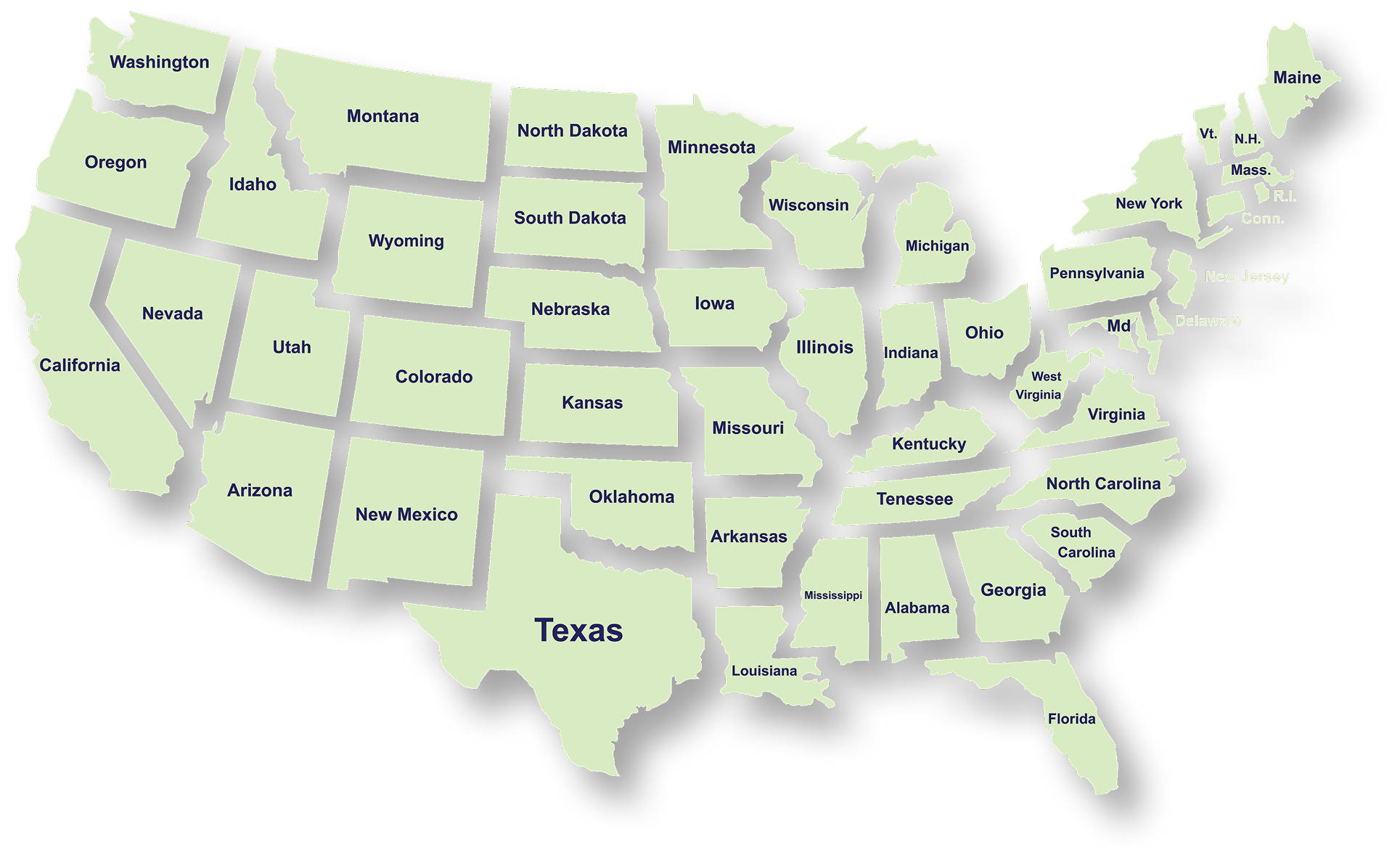
Serving Businesses & Individuals Across USA

We handle accounting, tax filing, and planning with defined timelines and accurate reporting for businesses and individuals across all states.

Frequently Asked Questions

What services does NR CPAs & Business Advisors provide?
What is tax planning and why is it important for businesses?
How can a Virtual CFO help my business?
When should a business consider IRS tax resolution services?
What financial statements does a business typically need?
How can startup advisory services help new businesses?
What is strategic business planning?
What is a Virtual Family Office and who can benefit from it?