Learning Center for Tax and Financial Insights

Stay updated with clear, actionable articles on tax rules, deadlines, deductions, and financial decisions that impact individuals and businesses.

No items found.

Video Tips: What to Do When You Can't Pay Your Taxes

Most taxpayers will receive a refund when they file their income tax returns. But what if you end up owing the IRS and can't pay it back immediately? Watch this video for some possible solutions to minimize your tax penalties and interest.

Explore More
No items found.

Charitable Tax Deduction Peculiarities

Article Highlights:Charity Auctions Use of an Asset Charity Volunteer Away-From-Home Travel Expenses Entertainment Vehicle Use Uniforms Vehicle Donations Valuing Non-cash Contributions Documentation Charitable contributions are deducted as part of a taxpayer’s itemized deductions on IRS Schedule A, except for the special 2020 and 2021 provisions that allow up to $300 ($600 for married taxpayers filing jointly for 2021) of cash donations as a deduction for non-itemizers.Charitable contributions can take many forms, and some are unusual or misunderstood. The following includes issues that a taxpayer may encounter related to non-cash contributions.Charity Auctions – It is not uncommon for charitable organizations to conduct charity auctions where individuals contribute items to be auctioned off that others bid on, with the proceeds going to the charity. Frequent questions arise related to the charitable income tax deduction for those contributing items for the auction and for those that were winning bidders who purchased items at the charitable auction. As with most things tax, the answers can be convoluted.Donors – Generally a donor will be eligible for a charitable deduction equal to their basis in the item contributed, not its current fair market value (FMV).Example 1: A donor purchased an antique vase several years ago for $400 and contributed it for a charity auction. The antique’s current fair market value is $2,000, and the high bid at the auction was $3,000. The donor is only entitled to a charity deduction of $400.Sometimes a donor will contribute the use of property, such as use of the donor’s timeshare or vacation rental. Unfortunately, per IRS regulations, granting an individual use of property while retaining ownership does not constitute a charitable gift and no charitable deduction is permitted. Nevertheless, the donor may deduct the cost of maintaining a personally owned asset to the extent its use relates to providing services for the charity.Purchaser – The winning bidder may claim a charitable contribution deduction only for the excess of the purchase price paid for the item over its fair market value.Example 1 (continued): The purchaser of the antique vase would be allowed a charitable contribution deduction of $1,000, the difference between their winning bid of $3,000 and the FMV of $2,000.Charity Volunteer – If individuals volunteer their time to a charitable organization, they probably qualify for some tax breaks. Although no tax deduction is allowed for the value of services performed for a qualified charity or federal, state or local governmental agency, some deductions are permitted for out-of-pocket costs incurred while performing the services. The following are some examples:Away-From-Home Travel Expenses - Away-from-home travel expenses while performing services for a charity include out-of-pocket round-trip travel costs, taxi fares, and other costs of transportation between the airport or station and hotel, plus 100% of lodging and meals. These expenses are only deductible if there is no significant element of personal pleasure associated with the travel or if the services for a charity do not involve lobbying activities.Entertainment - The cost of entertaining others on behalf of a charity, such as wining and dining a potential large contributor are allowed (but the costs of the volunteer’s own entertainment and meals are not deductible).Vehicle Use - If the volunteer uses their car or other vehicle while performing services for a charitable organization, they may deduct their actual unreimbursed expenses that are directly attributable to the services, such as gas and oil costs but not repairs, or deduct a flat 14 cents per mile for the charitable use of their car. Parking fees and tolls are also deductible.Uniforms - Volunteers can deduct the cost of a uniform they wear when doing volunteer work for the charity, as long as the uniform has no general utility. The cost of cleaning the uniform can also be deducted.There are some misconceptions as to what constitutes a charitable deduction, and the following are frequently encountered issues:Depreciation - No deduction is allowed for the depreciation of a capital asset as a charitable deduction. This includes vehicles and computers.Example 2: Kathy volunteers as a member of the sheriff’s mounted search and rescue team. As part of volunteering, Kathy is required to provide a horse. Kathy is not allowed to deduct the cost of purchasing her horse or to depreciate the value of her horse. She can, however, deduct uniforms, travel, and other out-of-pocket expenses associated with the volunteer work.Use of an Asset - A taxpayer who buys an asset and uses it while performing volunteer services for a charity can’t deduct its cost if he or she retains ownership of it. That’s true even if the asset is used exclusively for charitable purposes.To verify volunteer charitable contributions:Get written documentation from the charity about the nature of your volunteering activity and the need for related expenses to be paid. For example, if you travel out of town as a volunteer, request a letter from the charity explaining why you’re needed at the out-of-town location.You should submit a statement of expenses to the charity if you are paying out of pocket for substantial amounts, preferably with a copy of the receipts. Then, arrange for the charity to acknowledge the amount of the contribution in writing. Maintain detailed records of your out-of-pocket expenses—receipts plus a written record of the time, place, amount, and charitable purpose of the expense. Donating a Vehicle to Charity – A few years back, this was a popular type of charitable donation promoted by many charities. However, vehicle donations were so abused by taxpayers claiming values higher than what the vehicles were worth that Congress had to step in. The result is several rules that, in some cases, limit the amount of the charitable deduction.Although not as prevalent as in the past, there are still charities that solicit contributions of vehicles. For taxpayers that contribute to a charity a motor vehicle (or a boat or airplane), the deduction is limited for those vehicles with a claimed value exceeding $500 by making it dependent upon the charity’s use of the vehicle and imposing higher substantiation requirements.If the charity sells the vehicle without any “significant intervening use” to substantially further the organization’s regularly conducted activities or without any major repairs, the donor’s charitable deduction can’t exceed the gross proceeds from the charity’s sale of the vehicle. Examples of qualifying significant intervening use include delivering meals to the needy or elderly every day for a year or driving 10,000 miles during a one-year period while delivering meals.The gross proceeds limitation on a donor’s auto contribution deduction doesn’t apply if the charity sells it at a price significantly below FMV (or gives it away) to a needy individual. This exception applies only if supplying a vehicle to a needy individual directly furthers the donee’s charitable purpose of relieving the poor and distressed or the underprivileged who need a means of transportation. In this case, the fair market of the vehicle is used to determine the amount of the contribution.

Explore More
No items found.

Read This First Before Tapping Your Retirement Savings

Article Highlights: Tapping Your Retirement SavingsTraditional IRAs and Qualified Retirement PlansSimple IRAsEarly-Withdrawal PenaltiesReduction in Retirement SavingsExceptions from the Early-Withdrawal PenaltyRoth IRAsYour 401(k), IRA or other retirement accounts may be a tempting source for cash if you find yourself short of funds or have a major purchase you are considering. But withdrawing money from a traditional IRA or qualified retirement account before you reach age 59 1/2 may not be the best idea, as you will likely pay both income tax and a 10% early-distribution tax (also referred to as a penalty) on any previously untaxed money that you take out. Withdrawals you make from a SIMPLE IRA before age 59 1/2, and those you make during the 2-year rollover restriction period after establishing the SIMPLE IRA, may be subject to a 25% additional early-distribution tax instead of the normal 10%. The 2-year period is measured from the first day that contributions are deposited. These penalties are just what you’d pay on your federal return; your state may also charge an early-withdrawal penalty in addition to the regular state income tax.Thus, before making any withdrawals from a traditional IRA or other retirement plan, including a 401(k) plan, a 403(b) tax-sheltered annuity plan, or a self-employed retirement plan, there are two things you should carefully consider: (1) you are taking funds, and their future appreciation, from your retirement savings which can impact your future retirement lifestyle. (2) You will be creating unnecessary taxes and penalties which will increase the amount you will need to withdraw to obtain your needed funds. If you have decided to make a retirement account withdrawal, there are a number of exceptions to the 10% early-distribution tax; these depend on whether the money you withdraw is from an IRA or a retirement plan. However, even if you are not subject to the 10% penalty, you will still have to pay taxes on the distribution. The following exceptions may help you avoid the penalty: Withdrawals from any retirement plan to pay medical expenses - Amounts withdrawn to pay unreimbursed medical expenses are exempt from penalty if they would be deductible on Schedule A during the year and if they exceed 7.5% of your adjusted gross income. This is true even if you claim the standard deduction and do not itemize deductions. Withdrawals from any retirement plan as a result of a disability - You are considered disabled if you can furnish proof that you cannot perform any substantial gainful activities because of a physical or mental condition. A physician must certify your condition.Withdrawals up to $5,000 from any retirement plan related to birth or adoption -Distributions that are penalty-free are those you made during the one-year period beginning on the date on which your child is born or on which the legal adoption of an eligible adoptee (an individual under age 18 or who is physically or mentally incapable of self-support) is finalized. For married couples, the $5,000 limit applies to each spouse who takes a distribution from their retirement plan.IRA withdrawals by unemployed individuals to pay medical insurance premiums - The amount that is exempt from penalty cannot be more than the amount you paid during the year for medical insurance for yourself, your spouse, and your dependents. You also must have received unemployment compensation for at least 12 consecutive weeks during the year you made the withdrawal or the following year.IRA withdrawals to pay higher-education expenses - Withdrawals made during the year for qualified higher education expenses for yourself, your spouse, or your children or grandchildren are exempt from the early-withdrawal penalty.IRA withdrawals to buy, build, or rebuild a first home - Generally, you are considered a first-time homebuyer for this exception if you had no present interest in a main home during the 2-year period leading up to the date the home was acquired, and the distribution must be used to buy, build, or rebuild that home. If you are married, your spouse must also meet this no-ownership requirement. This exception applies only to the first $10,000 of withdrawals used for this purpose. If married, you and your spouse can each withdraw up to $10,000 penalty-free from your respective IRA accounts. IRA withdrawals annuitized over your lifetime - To qualify, the withdrawals must continue unchanged for a minimum of 5 years, including after you reach age 59 1/2. Employer retirement plan withdrawals - To qualify, you must be separated from service and be age 55 or older in that year (there’s a lower limit of age 50 for qualified public-service employees such as police officers and firefighters) or, regardless of age, elect to receive the money in substantially equal periodic payments after your separation from service.

Explore More
No items found.

Tax Benefits for Child Daycare Providers and Users

Article Highlights: Daycare Providers Simplified Food Deduction Special Rules for Business Use of the Provider’s Home Home Sale Consequences Other Expenses Other Daycare Provider Issues Daycare User Credit Employer Dependent Care Benefits Other Credit Criteria Special tax benefits are available for those providing daycare services for children and the parents who pay for those services. This article looks at the various tax deductions daycare providers may use and the childcare tax credit that the parents may claim. DAYCARE PROVIDERS Daycare providers are generally self-employed individuals who provide care in their home, and like other self-employed individuals conducting a business, they are allowed to deduct business expenses, including the following: Business Use of a Vehicle – Examples of business-related use of a personal vehicle by a daycare provider include taking the kids to the park, on field trips, or to the movies. Also eligible is mileage to purchase supplies and for other business-related travel. What’s deductible is the standard mileage rate (58.5 cents per business mile in 2022, up from 56 cents per mile in 2021) or the prorated business portion of the actual operating expenses for the vehicle. In either case, a contemporaneously prepared log detailing the business trips should be maintained. Food – Daycare providers can deduct the cost of meals provided to the children (not including meals for their own children). Using a simplified method for the deduction does not require documenting food purchases. This does not preclude a care provider from using the actual expenses if the actual cost is higher and the provider is willing to document the expenses without including food purchased for his or her own family’s use. The simplified meal deduction amounts for 2021 are illustrated in the table below. Year States Breakfast Lunch Dinner Snack 2021 Contiguous States $1.39 $2.61 $2.61 0.78 2021 Alaska $2.22 $4.24 $4.24 $1.26 2021 Hawaii $1.62 $3.06 $3.06 $.091 The rates do not include the cost of nonfood supplies (e.g., utensils), which may be deducted separately. The number of meals per day per child is limited to the amounts below. (The table uses the amounts based upon the rates for contiguous states and will be higher for Alaska and Hawaii.) Meal Rate 2021 Allowance One Breakfast $1.39 $1.39 One Lunch $2.61 $2.61 One Dinner $2.61 $2.61 Three Snacks $0.78 $2.32 2021 Daily Maximum Per Child $8.95 If the provider receives some form of reimbursement or subsidy, then the provider may deduct only the part of the simplified rate that exceeds the reimbursed amount Business Use of the Home – Self-employed individuals may take a business deduction for the business use of a portion of their home if that portion is used exclusively for business. Daycare facilities are not subject to the exclusive use requirement that applies to other home offices. However, that special rule only applies to providers who: 1. Are licensed, certified, registered or approved as a daycare care provider under state law; 2. Have a pending application for licensing, certification, registration, or approval under state law as a daycare provider that has not been denied; or 3. Is exempt from licensing, certification, registration, or approval under state law. Any daycare provider not meeting one of these three requirements is still subject to the exclusive use rules, which will generally prevent them from claiming the deduction unless they use some portion of the home exclusively for daycare purposes, such as a bedroom or a storage area. The daycare facility exception does not apply if the services performed are primarily educational or instructional in nature (e.g., musical instruction). However, the exception does apply if the services are primarily custodial and if the educational, development, or enrichment activities are only incidental to the custodial services. The services must be provided for individuals aged 65 or older, children, or individuals who are physically or mentally incapable of caring for themselves. When calculating the percentage of business use of the home, both the space used to operate the daycare business and the amount of time that the space is used to provide day care, including preparation and cleaning time, are factors. Example – Edna uses her living room, kitchen, and bathroom ten hours a day, five days a week to provide licensed daycare services. The home is 2,400 square feet, and the living room, kitchen and bathroom are a combined 1,400 square feet. The exclusive use requirement doesn’t apply. Edna’s percentage use of her home for business is determined as follows: Once the percentage is determined, all the home expenses, including interest, real property taxes, home insurance, maintenance, utilities, and depreciation, are summed up and multiplied by the percentage to determine the deduction for the business use of the home. If the home is rented, the rent expense replaces the interest, taxes, and depreciation. After determining the deduction, it is further limited to the gross income from the daycare operation, and if limited by the gross income, there is a specific order in which the home expenses can be used (not discussed in this article). Claiming the business use of the home deduction will also impact any future sale of the home. For taxpayers who own and use their home for two years out of the five years prior to the sale, they can generally exclude up to $250,000 ($500,000 if married filing jointly) of any resulting gain. However, any depreciation claimed or that could have been claimed after May 15, 1997, cannot be excluded and, as a result, will be taxable to the extent of any gain from the sale. Example: A care provider is entitled to claim $1,000 per year of home depreciation, and she operates that business for ten years, claiming a total of $10,000 in depreciation. Whenever she ultimately sells her home, the $10,000 cannot be included in the excluded gain and will always be treated as a taxable capital gain, to the extent of any home sale gain. Other Expenses – Other expenses include just about any expense that has to do with operating the daycare facility, including, for example: o Advertising o Business banking account fees o Daycare licensing o Daycare organization membership expenses o Seminars and education related to operating a daycare center o Business insurance o Games and toys o Supplies, diapers, wipes, and cleaning supplies o Phone service o Prorated Internet service o Field trip expenses o Payroll for employees Additional important tax issues apply to daycare providers: Self-Employment Tax – Like all self-employed taxpayers, daycare providers must pay self-employment tax, which is made up of the Social Security tax of 12.4% on the first $147,000 (2022) of profit from the business and a 2.9% Medicare tax on all the profits. Plus, there is an additional 0.9% Medicare tax on the extent to which the profits exceed $200,000 for single taxpayers, $250,000 for married taxpayers filing jointly, and $125,000 for married taxpayers filing separately. In addition, half of the self-employment tax can be deducted from gross income. Qualified Business Income Deduction - Most business owners are allowed a deduction equal to 20% of their qualified business income (QBI). This deduction is most commonly known as the pass-through income deduction because it applies to income from business pass-through entities such as partnerships and S-corporations but also includes income from sole proprietorships reporting on Schedule C of Form 1040. It is sometimes referred to as the Section 199A deduction. The computation can be quite complicated and includes limitations on the deduction at the entity level and then again when the deductions from all entities of the taxpayer are combined and is further subject to a limitation based on the taxpayer’s taxable income. While the deduction doesn’t reduce the amount of the business income on which self-employment tax is paid, it does lower the individual’s income that is subject to income tax. In many cases, this deduction can be very beneficial for a taxpayer operating a daycare business. Retirement Plan Contributions – Profits from a daycare business qualify for IRA contributions and self-employed retirement plans, allowing daycare providers to put away substantial amounts for their future retirement. Medical Insurance Above-the-Line Deduction – While most taxpayers must itemize their deductions in order to deduct the cost of their medical insurance, self-employed taxpayers – including daycare providers, to the extent of the profits from their business – can deduct the premiums from their adjusted gross income and avoid the 10% medical expense haircut when itemizing deductions. Employer Identification Number – Most daycare clients can claim a tax credit for the cost of daycare. However, to do so, they must include either the daycare provider’s Social Security number (SSN) or an employer identification number (EIN) on their tax returns. It is a best practice in this age of ID theft for an individual operating a daycare business not to give out their SSN to their clients and instead obtain and use an EIN (even if they don’t have employees). DAYCARE USER If you use the services of daycare providers you may qualify for a tax credit if the expense is an “employment-related” expense, i.e., it must enable you or your spouse, if married, to work or look for work, and it must be for the care of a child, stepchild, foster child, brother, sister, or stepsibling (or a descendant of any of these) who is under 13, lives in your home for more than half the year, and does not provide more than half of his or her own support for the year. Married couples must file jointly, and both spouses must work (or one spouse must be a full-time student or disabled) to claim the credit.

Explore More
No items found.

Video Tips: Tax Deductions for Educator Expenses

Are you an educator teaching in kindergarten through grade 12? A part of your unreimbursed teaching expenses during the year can be deducted from your tax return. Watch this video for details so you can take advantage of this.

Explore More
No items found.

The Most Important KPIs for E-Commerce Businesses

If you’re running an e-commerce business, you are part of one of the most exciting and expansive aspects of the global economy. No matter what you’re selling – whether product or service — the challenges are constant and the competition is fierce. That’s why it’s important for you to leverage every tool at your disposal. If you’re not making good use of the data provided by your website-hosting platform, it’s time to start. If you know what you’re looking at and what you should be looking for, the information can be invaluable to your decision-making process and your success.The most important data tools provided by your platform are known as Key Performance Indicators (KPIs). If used and interpreted properly, they can help you see what is most (and least) appealing to your customers and to quickly identify problems with your site, directing you to the quickest and most effective solutions to boost revenue. Unfortunately, in the interest of answering every question, these online tools offer so much information that it is easy to get overwhelmed and decide to discard the whole batch, relying instead on instinct. This is a mistake. The secret to getting the most out of the data is to know which of the dozens of KPIs provided are most important, and how to use them. Any easily measurable data that reflects how close you are to attaining your bottom-line business goals and the growth stage of your business is what will be most useful, especially if it can be interpreted at a glance. Though each business’ unique objectives and goals will be determinative, there are some KPIs that are universally valuable. They are the ones that give you a quantifiable measure of overall performance and show you where improvement is most accessible. Surveys of e-commerce professionals have indicated that the top KPIs to track are:Conversion rateCustomer lifetime valueCustomer retention rateAverage order valueNet profitCart abandonment rateNumber of ordersLet’s take a look at each so you understand what they are and how looking at them regularly can make a difference to your overall success.Conversion rateConversion rate is considered the top indicator of success because it is an indicator of how many of the people who come to your site end up buying or in some other way engaging. From a mathematical perspective, it takes your number of visitors who purchase and divides it by the number of visitors overall.

Explore More
No results found.
Thank you! Your submission has been received!
Oops! Something went wrong while submitting the form.

Want tax & accounting tips & insights?Sign up for our newsletter.

Thank you! Your submission has been received!
Oops! Something went wrong while submitting the form.

Why Work With Us?

We combine deep tax expertise, financial strategy, and practical business insight to help you manage complexity, stay compliant, and make confident financial decisions.
A dollar sign, representing financial advice or discussion at NR CPAs & Business Advisors.

Experienced CPA and Enrolled Agent Leadership

Guidance led by licensed professionals with deep expertise in tax strategy, compliance, and complex financial matters.
White bar chart with an upward arrow on green circular background representing growth or progress at NR CPAs &. Business Advisors

Support for Growing Businesses and Startups

We understand the financial challenges of growth stage businesses and provide structured guidance to support expansion.
A white hand holding a dollar symbol and ascending bar chart on a green circular background representing financial growth or investment at NR CPAs & Business Advisors..

Strategic Financial Advisory

Our team helps you evaluate financial decisions with greater clarity, supported by practical insights and long term planning.

Fractional CFO Support

Access experienced financial leadership without the commitment and cost of hiring a full time Chief Financial Officer.

Proactive Tax Planning Approach

We focus on identifying tax opportunities throughout the year rather than reacting only during filing season.

Clear and Reliable Financial Reporting

Accurate financial statements and reporting that help you better understand performance and make informed decisions.
White IRS building icon with pillars and a dollar sign above on a green circular background.

Professional IRS Representation

Experienced support in resolving IRS notices, disputes, and compliance matters while protecting your financial interests.

Personalized Client Focus

Every client receives thoughtful attention and tailored financial solutions based on their specific needs and business goals.
Financial matters often involve important decisions. Working with experienced advisors can help you approach them with greater clarity and confidence in your choices.

Need Help With Your Tax or Financial Decisions?

Discuss your situation with our advisors to get clear guidance on tax planning, IRS matters, and the financial decisions ahead.
Business consulting at NR CPAs & Business Advisors.

Request Your Consultation

Fill out the form to discuss your tax concerns, financial questions, or advisory needs with our team. We will review your details and respond shortly.

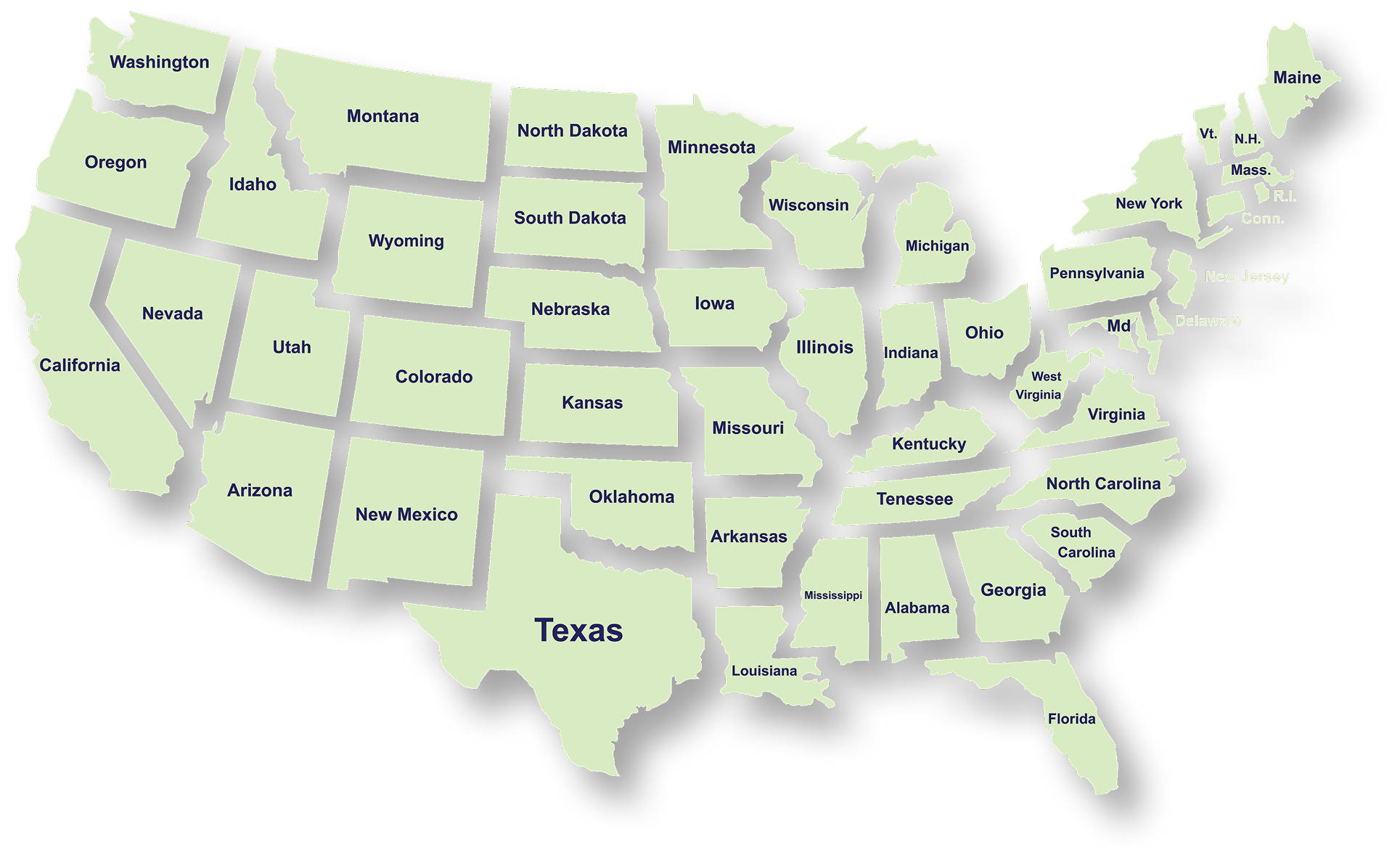
Serving Businesses & Individuals Across USA

We handle accounting, tax filing, and planning with defined timelines and accurate reporting for businesses and individuals across all states.

Frequently Asked Questions

What services does NR CPAs & Business Advisors provide?
What is tax planning and why is it important for businesses?
How can a Virtual CFO help my business?
When should a business consider IRS tax resolution services?
What financial statements does a business typically need?
How can startup advisory services help new businesses?
What is strategic business planning?
What is a Virtual Family Office and who can benefit from it?