Learning Center for Tax and Financial Insights

Stay updated with clear, actionable articles on tax rules, deadlines, deductions, and financial decisions that impact individuals and businesses.

No items found.

How to Automate Email Reminders for Overdue Customers

One way to keep your company’s cash flow positive is by sending email reminders to overdue customers. QuickBooks Online can automate this. Most small businesses struggle with cash flow. How do you get customers to pay by the due date, or at least not long after? We’ve written about some of the possible solutions. Accept credit/debit cards and direct bank payments. Send statements regularly. Offer a discount for early payment if it makes financial sense for you.QuickBooks Online offers another tool for accelerating incoming payments: automated reminders. If you set these up, you won’t have to spend so much time keeping up with past-due remittances. It’s easy to do, and you can personalize your messages. You can even do this manually if you come across an individual customer who needs a nudge.What about reminders for yourself? QuickBooks Online doesn’t come with a to-do list that you can use to enter tasks that must be done. But there are still ways to tie a digital string around your finger so you don’t fall behind on your own critical chores.If you feel like you’re being too intrusive by sending out payment reminders, think about how you feel when you receive one yourself. Often, a financial obligation has simply slipped your attention. You want to maintain a good working relationship with your vendors, so you might even welcome such an email or letter.Setting Up the AutomationTo get started, click the gear icon in the upper right corner. Under Your Company, click on Account and Settings. Click the Sales tab and scroll down to Reminders. Click the pencil icon way over to the right to open the options here, then click the on/off button next to Automatic invoice reminders to activate them. Click the down arrow next to Default email message for invoice reminders to open the template. QuickBooks Online includes email templates for late payment reminders that you can edit.If you’ve ever done a mail merge, this will look familiar to you. QuickBooks Online replaces the text in [brackets] with data from your company file. So it will prepare an email for every customer that is past due and replace the bracketed content with your own customer and company names and invoice numbers. Of course, you can choose not to personalize the emails, but it’s likely to be more effective if you do. Everything in the template can be edited, and you can check a box to have a copy sent to you.Below this email template are three reminder-scheduling blocks. Click the button next to Reminder 1 to turn it on. You’ll see that you can set up a reminder to go out to customers either on the due date or a specified number of days (3, 7, 14, 30, or 90) before or after.

Explore More
No items found.

Is there a Tax Break for Tuition Paid to Special Schools?

Article Highlights:Medical DeductionTuition To Treat Learning Disabilities is DeductibleSpecial Teaching TechniquesPrivate Letter RulingsA component of itemized deductions is the cost of medical care. The total of eligible medical expenses paid during the tax year is reduced by 7.5% of the taxpayer’s adjusted gross income (AGI). While you are undoubtedly familiar with most of the medical expenses eligible for the deduction, such as payments for doctor/dentist care, surgeries, prescription drugs and other commonly encountered medical costs, one type of eligible medical expense that you may not be aware of is the cost of a child attending a special school. This type of school is designed to compensate for or overcome a physical or mental handicap, in order to qualify the individual for future normal education or for normal living. This includes a school for the teaching of Braille or lip reading. The principal reason for attending must be the special resources available at the school for alleviating the handicap. Treating a child at such a school can be financially burdensome to the child’s parents, especially if the care isn’t covered by health insurance. Provided the parents have total itemized deductions greater than their standard deduction, they can get help from the tax law, which allows as eligible medical costs:The tuition for ordinary education that is incidental to the special services provided at the school, and The cost of meals and lodging supplied by the school The distinguishing characteristic of a special school is the substantive content of its curriculum, which may include some ordinary education, but only if the ordinary education is incidental to the school's primary purpose of enabling students to compensate for or overcome a handicap.In a private letter ruling, the IRS said that for a child diagnosed with multiple learning disabilities, tuition paid to attend a school designed to assist students in overcoming their disabilities and developing appropriate social and educational skills was a deductible medical expense.

Explore More
No items found.

Is Interest Paid on Borrowed Money Tax Deductible?

Article Highlights: Interest CategoriesCategory Deductibility Interest Tracing Rules If you borrow money will the interest you pay be deductible for income tax purposes? The answer to that question can be complicated, and unfortunately, not all the interest an individual pays is tax-deductible. The rules for deducting interest vary, and essentially depend on what the loan proceeds are used for: personal items, investment, home mortgage, business activities or higher-education. Interest expense can fall into any of the following categories:Personal interest – is not deductible. Typically, this includes interest paid on personal credit card debt, personal car loans, home appliance purchases, etc. Investment interest – this is typically paid on debt incurred to purchase investments such as land, stocks, mutual funds, and the like. However, interest on debt to acquire or carry investments that produce tax-free income is not deductible at all. The annual investment interest deduction is limited to “net investment income,” which is the total taxable investment income reduced by tax-deductible investment expenses. Prior to the tax reform enacted in 2017, these expenses often included investment advisory fees that were part of miscellaneous itemized deductions. However, for years 2018 through 2025, the deduction of these types of expenses is suspended. Currently, the IRS’s instructions to Form 4952, Investment Interest Expense Deduction, list only depreciation and depletion as examples of eligible expenses, and most individuals typically won’t have these expenses. So, for most taxpayers, their investment interest deduction will be limited to the amount of their investment income. However, the investment interest deduction is only allowed to taxpayers who itemize their deductions on Schedule A. Home mortgage interest – includes the interest on a taxpayer’s primary home and a single second home. However, the debt on which the interest is deductible is generally limited to $750,000 ($1 million for debt incurred before December 16, 2017) of home acquisition debt (debt used to purchase or substantially improve the home(s)). The acquisition debt must be secured by the home(s) to be deductible as home mortgage interest. In addition, home mortgage interest is only deductible by those who itemize their deductions. Interest paid on equity debt – such as debt that may result when acquisition debt is refinanced – is not deductible as home mortgage interest with a couple of exceptions.o If the loan proceeds are used to make substantial improvements to the home, the debt is treated as acquisition debt and the interest on that debt would be deductible. o If the amount of the new loan merely replaces the balance of the old acquisition debt, as may be the case when the original loan is refinanced only to take advantage of a lower interest rate and no cash (equity) is taken out, then the interest would continue to be deductible as home mortgage interest so long as the $750,000 or $1 million debt cap isn’t exceeded. But to the extent the new loan is greater than the balance of the old acquisition loan and isn’t used for substantial home improvements or traceable to another deductible use, the interest on the excess debt isn’t deductible. Note: the rules stated here are for federal tax purposes; state rules may be different. Passive activity interest – includes interest on debt that's for business or income-producing activities in which the taxpayer doesn’t “materially participate” and is generally deductible only if income from passive activities exceeds expenses from those activities. The most common passive activities are probably real estate rentals. For rental real estate activities, there is a special passive loss allowance of up to $25,000 for taxpayers who are active, but not necessarily material, participants in the rental. The $25,000 phases out for taxpayers with adjusted gross income between $100,000 and $150,000.Trade or business interest – includes interest on debts that are for activities in which a taxpayer materially participates. This type of interest can generally be deducted in full as a business expense, although the deduction is limited for taxpayers with average annual gross income for the prior three years exceeding $27 million. The details of this limitation are not covered in this article.Educational loans – Interest paid on a qualified student loan may be claimed as an above-the-line deduction (i.e., itemizing isn’t required). The maximum deduction per year is $2,500. This is a per return limit, not a per student limit. Mixed-use loans don’t qualify. A “qualified student loan” is generally one used to pay higher education expenses, such as tuition, room and board, and related expenses, for attending post-secondary educational institutions, including certain vocational schools, and certain institutions offering postgraduate training, on behalf of the taxpayer, spouse, or any dependent of the taxpayer (at the time the loan is incurred). For 2022, the deduction is phased out when modified AGI is between $145,000 and $175,000 for joint filers and $70,000 to $85,000 for others, except the deduction is not allowed when filing using the married separate status or if the taxpayer is a dependent of someone else. Once the AGI reaches the upper amount, no deduction is allowed for that year.Because of the variety of limits imposed on interest deductions, the IRS provides special rules to allocate interest expense among the categories. These “tracing rules,” as they are called, are generally based on the use of the loan proceeds. Thus, interest expense on a debt is allocated in the same manner as the allocation of the debt to which the interest expense relates. Debt is allocated by tracing disbursements of the debt proceeds to specific expenditures, i.e., by “following the money.”

Explore More
No items found.

Video Tip: An Overview of the Adoption Tax Credit

Taxpayers who adopted or started the adoption process in 2021 may qualify for the adoption credit. This credit can be applied to international, domestic private, and public foster care adoption. Watch this video for a quick overview of the adoption tax credit.

Explore More
No items found.

Twists and Turns of the Education Tax Credits

Article Highlights: American Opportunity Tax CreditLifetime Learning CreditRefundable CreditWhich Credit to TakePost-secondary Education3-month RuleMaximizing the CreditQualified ExpensesWho Claims the CreditQualified Educational InstitutionsGift Tax IssuesIf you have a child or children in college, or perhaps you or your spouse is a student, it can be confusing to figure out which of two potential education tax credits (1) you are eligible for and (2) gives you the greater tax benefit. This article looks at some of the twists and turns of these credits. There are two higher-education tax credits: the American Opportunity Tax Credit (AOTC) provides up to $2,500 worth of credit for each student, 40% of which may be refundable. The credit is equal to 100% of the first $2,000 of college tuition and qualified expenses and 25% of the next $2,000. The AOTC only applies to the first 4 years of post-secondary education. The other credit is the Lifetime Learning Credit (LLC), which only provides a maximum $2,000 of credit (20% of up to $10,000 of eligible expenses) per family per year. None of it is refundable, meaning it can only be used to offset your tax liability, and any additional credit amount is lost.Here are some of the issues that arise with these two credits:1. Many students attend local colleges for the first two years and then transfer to a university for the remainder of their education. Knowing the university tuition will be higher, some parents take the LLC and wait on the AOTC, thinking they can use it in years with higher tuition and get a larger credit. This isn’t a good plan because the AOTC credit is only good for the first four years of post-secondary education. Thus, it is always better to claim the AOTC in the first four years. 2. A special rule allows the tuition for an academic period that begins in the first three months of the next year to be paid in advance and thus increase the amount of tuition qualifying for the credit in the year the tuition is paid. This allows for planning when to make tuition payments to maximize credits, especially in the first partial calendar year.Example: Jill graduated from high school in June and will start college in September. Her tuition and credit-qualifying expenses for the semester covering the last four months of the year and January of the next year are $1,500. Her mother, Cindy, is aware of the 3-month rule, and in December she prepays Jill’s $1,700 tuition for the semester beginning February 1 of the next year, bringing the qualifying expenses to a total of $3,200. The AOTC is equal to 100% of the first $2,000 of qualifying expenses and 25% of the next $2,000. Thus the AOTC for Jill is $2,300 ($2,000 + 25% of $1,200). Cindy could increase the credit for the year to the full $2,500 maximum by purchasing $800 worth of course materials needed for “meaningful attendance or enrollment” in Jill’s course of study.

Explore More
No items found.

Important Enhancements to the Earned Income Tax Credit For 2021

Article Highlights: Largest Antipoverty Program Taxpayers Not Required to File Earned Income Filing Age Threshold Investment Income Childless Workers Maximum Credit and Phase-out Ranges Qualifying Children 2019 AGI Separated Spouses Child Does Not Have an SSN Refunds Delayed Active Military Disabled Individuals The earned income tax credit (EITC) is regarded as one of the government’s largest antipoverty programs and helps millions of American families every year. You are urged to check to see if you qualify for this very beneficial refundable credit. Significant enhancements have been added (some only for 2021), and even if you have not qualified in the past, you may qualify this year. If you are not normally required to file a tax return because your income is below the filing threshold, you could qualify for this credit. You may also qualify for the child tax and the recovery rebate credits, plus get a refund of any income tax withholding you had during 2021, so don’t assume there is no benefit from filing a tax return. The IRS estimates that one in five individuals eligible for EITC fail to claim it simply because they don’t understand the criteria. Plus, many individuals who never qualified for the EITC previously may be eligible in 2021 because their income will be lower because of the COVID pandemic. Nationwide last year, almost 25 million eligible workers and families received over $60 billion in EITC with an average EITC of $2,411. To qualify for the EITC you must have earned income. Earned income is generally income from working, such as wages and net self-employment income, but also includes tips, union strike benefits, nontaxable military combat pay and nontaxable parsonage allowances for clergy. Wages for this purpose includes wages before reductions due to salary deferrals such as 401(k)s, cafeteria plans, and excludable dependent care benefits. There are several changes to EITC for 2021 that will allow significantly more individuals to qualify for the credit. Generally, the age threshold to claim the EITC is 19, with certain exceptions, and with no upper cap on age. In the past, the EITC was only available to people ages 25 to 64. In addition, individuals may have investment income of $10,000 (up from $3,650 in 2020) and still qualify for EITC. Childless workers and couples can qualify for the EITC if their earned income is below $21,430 ($27,380 for joint filers), and the maximum credit for a taxpayer with no qualifying children is $1,502, up from $538 in 2020. As mentioned previously, the EITC is based on the amount of your earned income and whether there are qualifying children in your household. The credit increases as the taxpayer’s earned income or adjusted gross income (AGI) increases, until it reaches a plateau, where it remains constant at the maximum credit amount until it reaches the AGI phase-out threshold. Once the threshold amount is exceeded, the credit is reduced by a set percentage, and no credit is allowed once the income exceeds the top of the phase-out range. The following table illustrates the maximum credit and phase-out ranges based on filing status and number of children for 2021. Filing Status Number of Children Credit % Maximum Credit EI Phase-out Threshold Starts EI Phase-out Threshold Ends Joint Filing None 15.30 $1,502 $17,560 $27,380 Others None 15.30 $1,502 $11,610 $21,430 Joint Filing 1 34.00 $3,618 $25,470 $48,108 Others 1 34.00 $3,618 $19,520 $42,158 Joint Filing 2 40.00 $5,980 $25,470 $53,865 Others 2 40.00 $5,980 $19,520 $47,915 Joint Filing 3 or more 45.00 $6,728 $25,470 $56,414 Others 3 or more 45.00 $6,728 $19,520 $51,464

Explore More
No results found.
Thank you! Your submission has been received!
Oops! Something went wrong while submitting the form.

Want tax & accounting tips & insights?Sign up for our newsletter.

Thank you! Your submission has been received!
Oops! Something went wrong while submitting the form.

Why Work With Us?

We combine deep tax expertise, financial strategy, and practical business insight to help you manage complexity, stay compliant, and make confident financial decisions.
A dollar sign, representing financial advice or discussion at NR CPAs & Business Advisors.

Experienced CPA and Enrolled Agent Leadership

Guidance led by licensed professionals with deep expertise in tax strategy, compliance, and complex financial matters.
White bar chart with an upward arrow on green circular background representing growth or progress at NR CPAs &. Business Advisors

Support for Growing Businesses and Startups

We understand the financial challenges of growth stage businesses and provide structured guidance to support expansion.
A white hand holding a dollar symbol and ascending bar chart on a green circular background representing financial growth or investment at NR CPAs & Business Advisors..

Strategic Financial Advisory

Our team helps you evaluate financial decisions with greater clarity, supported by practical insights and long term planning.

Fractional CFO Support

Access experienced financial leadership without the commitment and cost of hiring a full time Chief Financial Officer.

Proactive Tax Planning Approach

We focus on identifying tax opportunities throughout the year rather than reacting only during filing season.

Clear and Reliable Financial Reporting

Accurate financial statements and reporting that help you better understand performance and make informed decisions.
White IRS building icon with pillars and a dollar sign above on a green circular background.

Professional IRS Representation

Experienced support in resolving IRS notices, disputes, and compliance matters while protecting your financial interests.

Personalized Client Focus

Every client receives thoughtful attention and tailored financial solutions based on their specific needs and business goals.
Financial matters often involve important decisions. Working with experienced advisors can help you approach them with greater clarity and confidence in your choices.

Need Help With Your Tax or Financial Decisions?

Discuss your situation with our advisors to get clear guidance on tax planning, IRS matters, and the financial decisions ahead.
Business consulting at NR CPAs & Business Advisors.

Request Your Consultation

Fill out the form to discuss your tax concerns, financial questions, or advisory needs with our team. We will review your details and respond shortly.

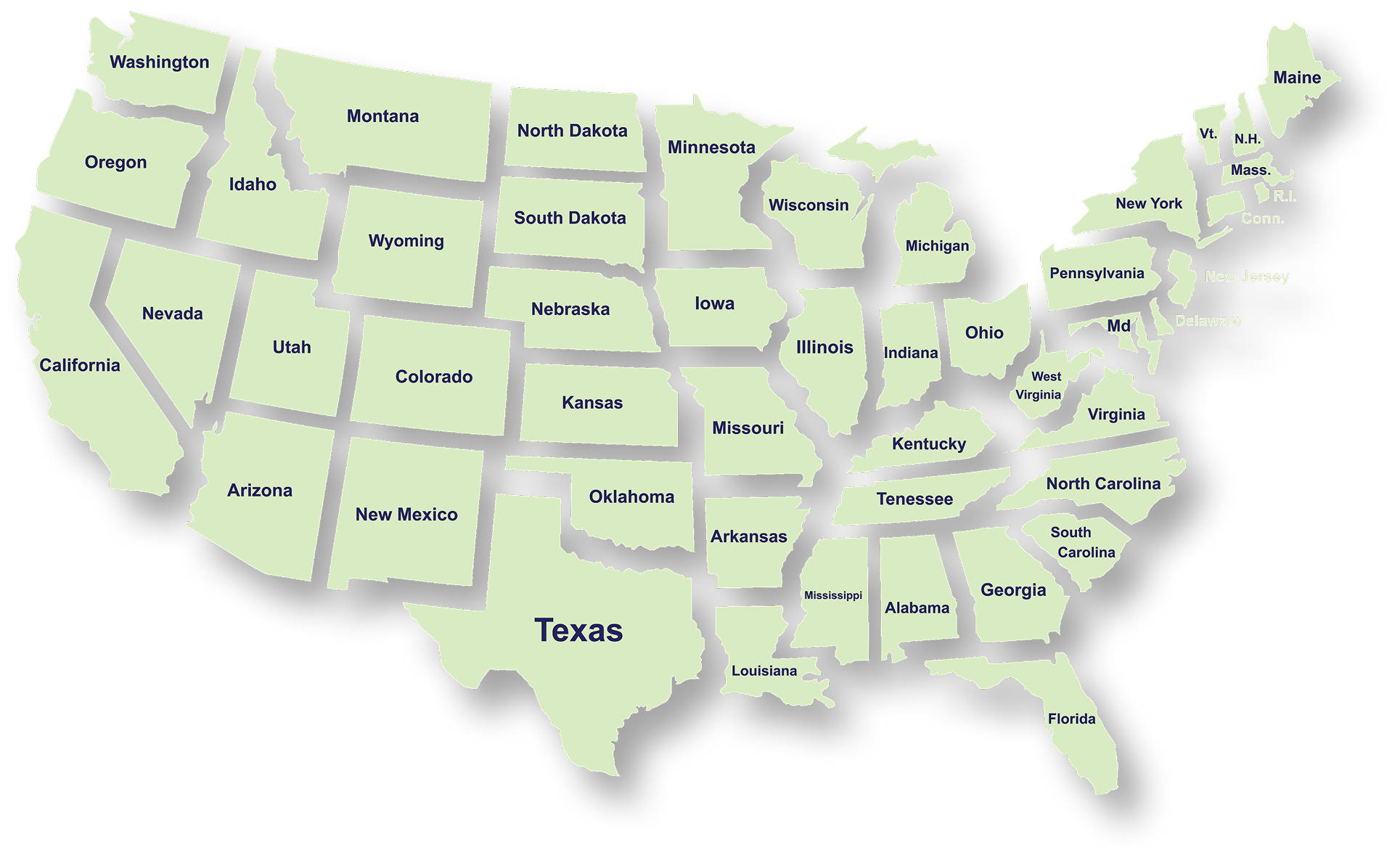
Serving Businesses & Individuals Across USA

We handle accounting, tax filing, and planning with defined timelines and accurate reporting for businesses and individuals across all states.

Frequently Asked Questions

What services does NR CPAs & Business Advisors provide?
What is tax planning and why is it important for businesses?
How can a Virtual CFO help my business?
When should a business consider IRS tax resolution services?
What financial statements does a business typically need?
How can startup advisory services help new businesses?
What is strategic business planning?
What is a Virtual Family Office and who can benefit from it?