Learning Center for Tax and Financial Insights

Stay updated with clear, actionable articles on tax rules, deadlines, deductions, and financial decisions that impact individuals and businesses.

No items found.

Don’t Think You Have to File a Tax Return? You May Be Missing Out!

Article Highlights:WithholdingOther PrepaymentsTax CreditsEarned Income Tax CreditChild Tax CreditAmerican Opportunity Tax CreditRecovery Rebate CreditThese days the tax return is used for more than just collecting taxes. It has also become a tool for the government to provide social benefits. This article discusses the various reasons and resulting benefits available to you when you file, even if you are not required to, as you may be eligible for a refund of withholding or estimated payments or a refund as a result of a refundable tax credit or even a stimulus payment that you didn’t previously receive. Here are some of the possibilities. Refund of Withholding – You may have worked or had other income that included income tax withholding, but the total of all your income was less than the requirement to file a return. You are required to file a 2021 return if your income is equal to or more than the amount shown in the following table based on the filing status you would use if you did file:2021 GENERAL TAXPAYER FILING REQUIREMENTSTaxpayer Filing StatusGross IncomeSingle$12,550Head of Household$18,800Surviving Spouse$25,100Married Filing Separate$5Married Filing Jointly$25,100Add to the Above Amounts for Taxpayers Aged 65 and Older or Meet the Blind Qualifications Married Filing Joint or Surviving Spouse $1,350All Others$1,700Caution: Self-employed taxpayers generally must file in all circumstancesSo, if you are not required to file and decide not to bother, you would be forfeiting any income tax withholding on wages you earned. Other Pre-payments – You may have made 2021 tax payments but have forgotten about them, such as estimated tax payments or a 2020 overpayment you applied to your 2021 return. Surely you don’t want to forfeit those amounts.

Explore More
No items found.

All the Best Cash Flow Practices for Medical Practices

According to one study conducted by U.S. Bank, a massive 82% of all businesses that ended up failing said that cash flow issues were a major contributor to that event. Often, this doesn't just come down to the amount of money coming into an organization — it relates to the timing as well.Proper cash flow management requires a fundamental understanding that not all types of businesses are created equally. Some, like retail stores, tend to make a significant portion of their income at the end of the year — hence events like "Black Friday" and "Cyber Monday." Others, like landscaping businesses, see the vast majority of their income generated during the warm summer months.Medical practices also present their own unique challenges. Therefore, if you really want to take control over the cash flow for your practice, there are a few key things you'll need to keep in mind.Medical Practices and Cash Flow: What You Need to KnowPerhaps the most critical thing to understand about medical practice cash flow is that the dynamic has changed significantly over the last few years.More and more, insurance companies are shifting costs to consumers — a burden that they may not be ready to handle. According to one recent study, about 10% of families in the United States have a medical bill they can't afford to pay at all. A further 25% currently have some type of outstanding medical bill. It's an unfortunate situation for all involved, but it requires medical practices to be especially proactive about how they're collecting for services rendered.In terms of cash flow, a way to mitigate risk involves getting as much money from patients at the time of their visit as you can. To get to this point, you need to offer a wide range of different payment options. People can always pay with cash and checks, but you should also offer the option for credit cards, digital services like PayPal or Venmo and more.Making the checkout process as efficient as possible is also a great way to get to this point. Train your employees to take someone's copay when they check-in so that they don't have to wait after their appointment. Make sure that they're informing patients that a statement will be coming with additional charges and outline any that their insurance policy might not cover. The more efficient you can make this process, the more likely it is that you'll be able to collect payment while someone is still in your office. At the very least, it will significantly reduce the amount of time you're waiting on unpaid bills.

Explore More
No items found.

Costs for Installing Medically-Related Home Improvements Have Tax Benefits

Article HighlightsAging PopulationHome Improvements for Medical Care or TreatmentImprovements That Increase the Home’s ValueImprovements That Do Not Increase the Home’s ValueMedical AGI LimitationsAccording to the Social Security Administration, 10,000 baby boomers a day are reaching the age of 65, as of 2018 16% of Americans were age 65 or older, and by 2030 all boomers will be at least 65. Boomers aren’t the only reason the nation’s overall population is aging – people are living longer due partly to better health care (even though deaths from COVID-19 have lowered life expectancy projections). The CDC has stated that falls are the leading cause of injuries among people age 65 and older, and nearly 30% of older adults reported falling at least once in the preceding 12 months. To help minimize falls, and to accommodate age-related infirmities, many people are adding grab bars in showers, modifying stairways, widening hallways to accommodate a wheelchair, and other projects to make the home safer and more accessible for older occupants. If you are planning to make such home improvements, you may be eligible to include the costs as a medical expense for income tax purposes. Generally, the costs of home improvements are not deductible except to offset home gain when the home is sold. But a medical expense deduction may be claimed when the primary purpose of the home modification is for a medical reason. The tax law says that deductible medical expenses are those paid for the “diagnosis, cure, mitigation, treatment, or prevention of disease, and the costs for treatments affecting any part or function of the body.”So, if you are making the modification because you, your spouse, or a dependent has a medical need for doing so, then the modification expense may be deductible as a medical expense, but only to the extent that it exceeds any resulting increase in the property’s value. Example: A doctor recommends that his patient with severe arthritis have daily hydrotherapy, and so the individual has a hot tub installed at a cost of $21,000. The individual then hires a certified home appraiser to determine how much the hot tub addition increased the home’s value. The appraiser concludes the increase is $20,000. The individual’s medical deduction for the year the hot tub is installed will be limited to $1,000 ($21,000 - $20,000). The other $20,000 of expenses will increase the home’s basis, meaning that it will add to the home’s cost and will offset the sales price when the home is sold. Even though a prescription from a doctor for most medically-related home modifications isn’t required, the taxpayer, if questioned by the IRS, needs to be able to demonstrate how the expenditure relates to his or her medical care or that of a spouse or dependent. And having a letter from the individual’s doctor that explains the type of modifications that would be medically beneficial would help to prove a medical need.

Explore More
No items found.

February 2022 Individual Due Dates

February 4 - Tax AppointmentIf you don’t already have an appointment scheduled with this office, you should call to make an appointment that is convenient for you.February 10 - Report Tips to EmployerIf you are an employee who works for tips and received more than $20 in tips during January, you are required to report them to your employer on IRS Form 4070 no later than February 10. Your employer is required to withhold FICA taxes and income tax withholding for these tips from your regular wages. If your regular wages are insufficient to cover the FICA and tax withholding, the employer will report the amount of the uncollected withholding in box 12 of your W-2 for the year. You will be required to pay the uncollected withholding when your return for the year is filed.

Explore More
No items found.

February 2022 Business Due Dates

February 10 - Certain Small EmployersFile Form 944 to report Social Security and Medicare taxes and withheld income tax for 2021. This due date applies only if you deposited the tax for the year in full and on time.February 10 - Farm EmployersFile Form 943 to report Social Security and Medicare taxes and withheld income tax for 2021. This due date applies only if you deposited the tax for the year timely, properly, and in full.February 10 - Federal Unemployment TaxFile Form 940 for 2021. This due date applies only if you deposited the tax for the year in full and on time.February 15 - All BusinessesThe following information statements are due to recipients to whom certain payments were made during 2021: Form 1099-B (Proceeds from Broker and Barter Exchange Transactions), Form 1099-S (Proceeds from Real Estate Transactions) and Form 1099-MISC (Miscellaneous Income) if substitute payments are reported in Box 8 or gross proceeds paid to an attorney are reported in Box 10. With consent of the recipient, the 1099 can be issued electronically.February 15 - Social Security, Medicare, and Withheld Income TaxIf the monthly deposit rule applies, deposit the tax for payments in January.February 15 - Non-Payroll WithholdingIf the monthly deposit rule applies, deposit the tax for payments in January.February 16 - Payroll WithholdingEmployers begin withholding for employees who claimed exemption from withholding in 2021 but have not provided a W-4 (or W-4(SP)) to continue the exemption for 2022.February 28 - Information Returns Filing DueFile government copies of information returns (Form 1099) and transmittal Forms 1096 for certain payments you made during 2021, other than the 1099-NECs that were due January 31. There are different 1099 forms for different types of payments.

Explore More
No items found.

What’s Next for the Child Tax Credit?

December 15th, 2021 marked the last deposit date for the child tax credit payment expanded under the American Rescue Plan (ARP). Though many had hoped the program would be continued, political leaders are struggling to find a way forward that makes the majority of Congress happy, and as a result, many families have been left waiting and wondering what will come next.Though a child tax credit has existed since 1997, it was significantly revised in the face of the global pandemic to offer parents financial relief. Where it had previously been provided to eligible families as a single, partially refundable amount at tax time, the ARP allowed checks to be sent out on a monthly basis and made the credit fully refundable. It also substantially expanded the credit from $2,000 to $3,000 annually per child, with a $600 bonus for children under the age of 6. The impact of the revision was undeniable. According to a report issued by the Center on Poverty and Social Policy at Columbia University in late October, the payments of up to $300 per child being deposited in bank accounts (along with other COVID-19-related government support) contributed to a 4.6 percentage point (26 percent reduction) in child poverty in September of 2021 alone. Previous reports documented similar results, with an August report on its impact on material hardship reporting that the “more generous and inclusive monthly payment marks a historic, albeit temporary shift in the American welfare state’s treatment of low-income families.”With the addition of the word “temporary” in the report’s main takeaway, the center shines a light on the question of what happens next, now that the payments will stop being sent. Both Democrats and Republicans had backed the credit through the Tax Cuts and Jobs Act under the Trump administration, and there is bipartisan support for some type of continuation, but the devil is in the details and consensus has been hard to find.Much of the disagreement about how to move forward has revolved around whether the tax credit should be tied to a work requirement, and there are other issues surrounding what agency should be responsible for its administration and to whom and how it should be distributed. Where Senator Mitt Romney has proposed that monthly cash should be sent to all families regardless of income, with those above eligible income thresholds reconciling the difference on their income tax return, others object that it doesn’t limit the benefit to working families and those paying into the tax system. Still, others insist that there must be oversight from social service agencies to ensure that children are getting the benefit of the payments – Senator Joe Manchin called attention to the many grandparents who have assumed responsibility for raising their grandchildren and insists that a mechanism be put in place to ensure that the money follows the child rather than their parent.

Explore More
No results found.
Thank you! Your submission has been received!
Oops! Something went wrong while submitting the form.

Want tax & accounting tips & insights?Sign up for our newsletter.

Thank you! Your submission has been received!
Oops! Something went wrong while submitting the form.

Why Work With Us?

We combine deep tax expertise, financial strategy, and practical business insight to help you manage complexity, stay compliant, and make confident financial decisions.
A dollar sign, representing financial advice or discussion at NR CPAs & Business Advisors.

Experienced CPA and Enrolled Agent Leadership

Guidance led by licensed professionals with deep expertise in tax strategy, compliance, and complex financial matters.
White bar chart with an upward arrow on green circular background representing growth or progress at NR CPAs &. Business Advisors

Support for Growing Businesses and Startups

We understand the financial challenges of growth stage businesses and provide structured guidance to support expansion.
A white hand holding a dollar symbol and ascending bar chart on a green circular background representing financial growth or investment at NR CPAs & Business Advisors..

Strategic Financial Advisory

Our team helps you evaluate financial decisions with greater clarity, supported by practical insights and long term planning.

Fractional CFO Support

Access experienced financial leadership without the commitment and cost of hiring a full time Chief Financial Officer.

Proactive Tax Planning Approach

We focus on identifying tax opportunities throughout the year rather than reacting only during filing season.

Clear and Reliable Financial Reporting

Accurate financial statements and reporting that help you better understand performance and make informed decisions.
White IRS building icon with pillars and a dollar sign above on a green circular background.

Professional IRS Representation

Experienced support in resolving IRS notices, disputes, and compliance matters while protecting your financial interests.

Personalized Client Focus

Every client receives thoughtful attention and tailored financial solutions based on their specific needs and business goals.
Financial matters often involve important decisions. Working with experienced advisors can help you approach them with greater clarity and confidence in your choices.

Need Help With Your Tax or Financial Decisions?

Discuss your situation with our advisors to get clear guidance on tax planning, IRS matters, and the financial decisions ahead.
Business consulting at NR CPAs & Business Advisors.

Request Your Consultation

Fill out the form to discuss your tax concerns, financial questions, or advisory needs with our team. We will review your details and respond shortly.

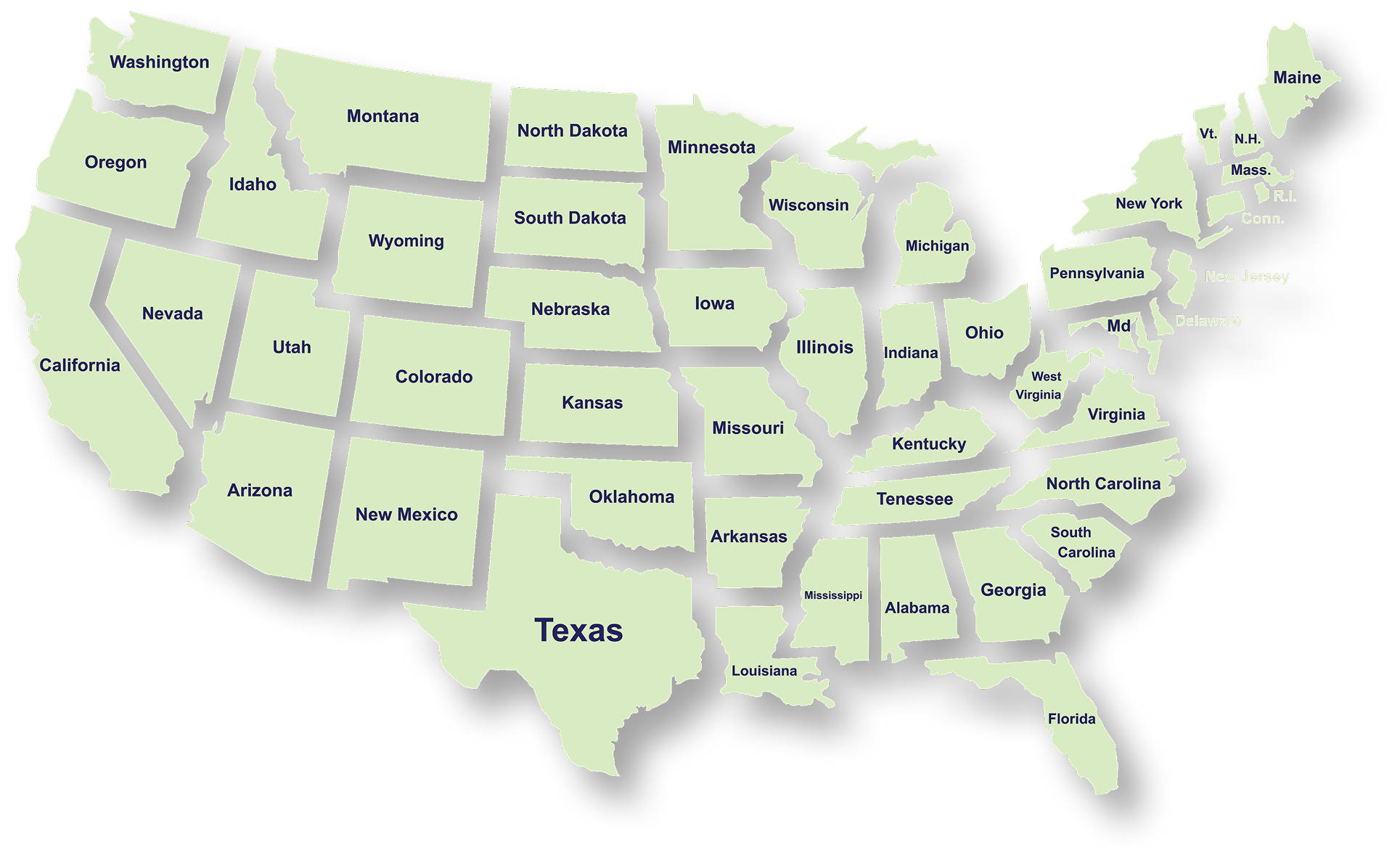
Serving Businesses & Individuals Across USA

We handle accounting, tax filing, and planning with defined timelines and accurate reporting for businesses and individuals across all states.

Frequently Asked Questions

What services does NR CPAs & Business Advisors provide?
What is tax planning and why is it important for businesses?
How can a Virtual CFO help my business?
When should a business consider IRS tax resolution services?
What financial statements does a business typically need?
How can startup advisory services help new businesses?
What is strategic business planning?
What is a Virtual Family Office and who can benefit from it?