Learning Center for Tax and Financial Insights

Stay updated with clear, actionable articles on tax rules, deadlines, deductions, and financial decisions that impact individuals and businesses.

No items found.

The Art of Running a Successful Family Business: Breaking Things Down

At its core, a family business is exactly what it sounds like: a company or other enterprise owned, operated, and actively managed by at least two people from the same family. This can be a parent and their kids, two siblings, or some other configuration — it doesn't actually matter, as the management is made up of people with some type of similar close relation.According to one recent study, family businesses make up between 80% and 90% of all business enterprises in North America. They contribute approximately 64% to the gross domestic product of this country, equaling roughly $5 trillion every year. Not only that, but they also comprise around 60% of the workforce — making their contribution every bit as significant as it is comprehensive.Having said that, as is true with so many other types of businesses, simply beginning an enterprise with someone you trust isn't nearly enough to guarantee success. Family organizations often fail the same as others do, and if you truly want to make sure that yours gets off on the right foot, there are a few key things to keep in mind.Building a Family Business: An OverviewBy far, the biggest thing to understand about running a successful family business is that not every family member necessarily has a place in the proceedings.Indeed, experts agree that this is one of the major traps that most new entrepreneurs, in particular, tend to fall into — a deeply-rooted obligation that kids or other relatives "need" to join the company. The issue is that while this is a kind gesture, it could also create a situation where people with authority aren't invested in being there.For parents trying to bring their kids into the business, it's far more beneficial to create a situation where they feel free to join the organization should they so choose. It shouldn't feel like an obligation to them, as that will only cause problems later on.Along the same lines, not every family member is necessarily qualified for this level of responsibility — a similar issue that causes problems from a different perspective. Experience still needs to be the driving force behind what role someone will be given in an organization if any. There's no sense in bringing someone with no experience into an industry and elevating them to a position of authority simply out of some sense of obligation that "there is always a place for you here." Doing so isn't just doing them a disservice — it also dramatically increases the chances that the business will ultimately fail.Another major pitfall that many family businesses fall into is where the organization simply cannot grow fast enough to support everyone at the same time. If one were to start a business and immediately give their four kids management-level positions, especially in those early days, there might not be enough work to go around. There certainly may not be revenue to support those salaries, either.

Explore More
No items found.

Filing As Married Separate? Better Read This.

Article Highlights:Filing Requirements Changing Filing Status Social Security Benefits Traditional IRA Deductibility Roth IRA Contribution Restrictions Higher Education Interest Deduction Itemized Deductions Medicare Premiums Child & Dependent Care Credit Earned Income Tax Credit (EITC) Premium Tax Credit (PTC) Tax Rates Other Limitations Married taxpayers have two options when filing their 1040 or 1040-SR tax returns. The first and most frequently used filing status is married filing joint (MFJ), where the incomes and allowable expenses of both spouses are combined and reported on one tax return. The joint status almost always results in the lowest overall tax. Spouses who file together are jointly liable for the tax, meaning either or both can be held responsible for paying the tax from the joint return.The second option is to file as married filing separately (MFS), with each spouse filing a return. Depending on whether the taxpayers are residents of a separate or community property state, these separate returns may include just the income and eligible expenses of each filer or a percentage of their combined income and expenses. Couples may choose the MFS option for a variety of reasons:They want to avoid the joint and several liability for the tax. They have children from a prior marriage and want to keep finances separate. They only want to keep their taxes separate. The marriage is tenuous. The taxpayers are separated and don’t want to cooperate in filing a joint return. One spouse might get a larger refund by filing separately (the other will pay more). They think they can save money by filing separate returns, and a variety of other reasons. The fact of the matter is that Congress carefully writes the tax laws to eliminate tax breaks for those filing MFS and can make filing very complicated. Here are some of the issues related to separate filings.Filing Requirements – MFJ taxpayers generally do not need to file a return unless their joint income exceeds the standard deduction, $25,100 for 2021, but those filing MFS must file if they have just $5 of income.Changing Filing Status – Taxpayers cannot change their filing status from joint to separate after the unextended return due date, usually April 15. However, they can change from a separate to a joint return any time up to 3 years.Social Security Benefits – For joint filers, the income threshold where Social Security benefits become taxable is $32,000. For those filing separately, 85% of the benefits are taxable from the very first dollar of Social Security income.Traditional IRA Deductibility – An IRA contribution is not deductible for higher income taxpayers who are also active participants in qualified requirement plans. For joint filers with employer-sponsored plans, the IRA deductibility for 2021 begins to phase out when their joint income reaches $105,000 and is fully phased out at $125,000. But when filing MFS, the deductibility begins to phase out with the first dollar of income and is fully phased out when the AGI (adjusted gross income) reaches $10,000.

Explore More
No items found.

The Importance of a Well-Oiled Accounting

Slater encourages accounting teams to establish a predictable monthly routine that is adhered to like clockwork. “From the beginning, have this regular weekly, monthly cadence that enables you to stay on top of everything,” she said. “When you keep going with it, it’s so much easier to grow from that foundation.” Not only does it provide solid and predictable results, but makes dealing with audits and eventual late-stage capital raises much less stressful. “Having a clean start from the beginning really pays for itself,” she says. If need be, she encourages companies to bring in consultants “so you’re ready for that scrutiny of going public and your company’s systems and processes and financials are ready.”Another smart move is reading yourself for growth by moving beyond basic accounting tools like QuickBooks and adding more advanced applications that will help your team address all of its functions. As your organization grows, these financial platforms can be invaluable for planning. So too will your accounting team’s understanding of the company’s products and services, so be sure to have them interact and engage with other critical functions of the company. The more understanding and familiarity there is between the product or service side of the company with the financial and accounting functions, the more collaboratively and successfully your organization can move forward.If you are in need of an accounting clean up, feel free to reach out to our office for details on how we can set you up for success.

Explore More
No items found.

Video tip: Are You Protecting Yourself from Identity Theft?

Identity theft is a crime that is on the rise, in both number and their fraudulent technique. Watch this video and learn how to protect yourself and your family before it's too late.

Explore More
No items found.

As the Pandemic Continues, Managing Restaurant Cash Flow Becomes Critical

Cash flow has always been a challenge for restaurants, and before COVID-19 changed everything there were thousands of articles written about the importance of forecasting, streamlining overhead, and controlling inventory. But more than a year-and-a-half into the pandemic, more than 110,000 restaurants have closed their doors permanently. Those restaurants that survived (and even thrived) in the face of closures, reduced seating, and staffing shortages went beyond traditional cash flow strategies, finding ways to reduce costs, expand sales, and pivot their entire menu. With reports of variants squashing hopes of a true return to normal, here are some of the cash flow management strategies that have helped other restaurants expand their clientele, pay their bills, and keep their doors open.Pay More Attention to Your Bookkeeping – It may be the last thing you want to think about, but during a financial crisis it is more important than ever to stay on top of your bills. The more up-to-date information you have about invoices and fees, as well as trends in your sales, the more confidence you can have in your decisions. Conversely, missing information about an unpaid bill can have devastating effects when you’re operating on a knife’s edge. Analyze Your Inventory … and Your Menu – Speaking of knife’s edge, one of the keys to boosting your cash flow is to avoid ordering food and alcohol items that aren’t contributing to it. Take a good look at your menu to see what is selling and what isn’t – and eliminate the slow movers, as well as their associated inventory items. Your goal is to boost the big sellers while improving your forecasting of the inventory that supports it. If you can, find menu items that cross-utilize the same ingredients so that you can leverage economies of scale. Many of the restaurants that have proven most successful during the pandemic have dramatically scaled back their menus. Update Your Payroll and Labor Analysis – Restaurants have always experienced high levels of turnover, and in anticipation of this have worked with forecasts of their needs based on historical data. But the pandemic has changed everything. Staffing has become more of a challenge and staff levels and schedules need to be made on a day-to-day basis determined by actual sales. Take a close look at the adjustments you’ve had to make in the last few months and build in seasonal forecasts as you can anticipate both slow and busy seasons ahead for both front-of-the-house and kitchen staff. Avoid Credit and Leverage Fast Cash Payments – When you first opened your restaurant, you likely relied heavily on credit, but it is much safer to do that when you’re in a period of growth than during a slowdown. If you are struggling to pay your bills, try to negotiate discounts for immediate payments to help you hold on to more of your cash. Yours is not the only food business that is hungry for cash, and you’re likely to find your vendors much more flexible on pricing when offered quick payment.

Explore More
No items found.

Entrepreneur Success Stories: How R. J. Scaringe and Rivian Built an Electric Truck Company From the Ground Up

Based in California, Rivian is an American automotive manufacturer that specializes in electric vehicles. Originally founded back in 2009, the company now has manufacturing plants in Illinois, Michigan, California, Vancouver, and England. Designing cars intended for both on and off-road driving, the organization currently employs more than 7,000 people as of 2021.You may have heard about Rivian recently because they just rolled off their first production electric truck. That in and of itself is notable — but the success it has already enjoyed is equally so. Experts from Motor Trend have dubbed it "one of the most remarkable vehicles" they had ever test drove. All told, it's the product of ten years of hard work finally coming to fruition — and entrepreneur R.J. Scaringe has been a big, big part of that up to this point.Rivian: The Story So FarRobert "R.J" Scaringe and Rivian began focusing on autonomous, electric-powered vehicles as far back as 2011. Just a few years later, they received a substantial investment that allowed them to open research facilities in both Michigan and on the West Coast a few years later. The Michigan headquarters, in particular, proved to be very strategic, as it allowed them to operate closer to some of their key supply chain partners.But in those early days of the company, Scaringe had his eyes set on one thing: an electric sports car. Production was supposed to begin in 2013, but a number of setbacks prevented that from happening.As is true with any successful entrepreneur, R.J. Scaringe was not one for giving up. By September 2016, Rivian was already in talks to buy a manufacturing plant that formerly belonged to Mitsubishi in Illinois. Not only did they purchase the plant itself, but they also got access to everything in it — allowing them to build a new manufacturing facility with an eye toward a decidedly different direction than the one they had settled on prior.All of that hard work and perseverance paid off in the form of the 2022 Rivian R1T — the first mass-produced electric truck in the United States. Again, Motor Trend called it "part truck, part sport sedan and 100 percent amazing" — no faint praise, to be sure.The Rivian R1T offers a four-motor, four-wheel-drive system that is capable of delivering 415 horsepower and no less than 413-foot pounds of torque to the front wheels. This, along with 420 horsepower and 495-foot pounds delivered to the rears, allow it to go from 0mph to 60mph in as little as three seconds.When people think about electric vehicles, they often call to mind situations where they would have to make certain compromises. Maybe an electric car doesn't go as fast as its traditional alternatives, or maybe it can't travel as far. They assume that they'll probably be limited in terms of performance under certain conditions.

Explore More
No results found.
Thank you! Your submission has been received!
Oops! Something went wrong while submitting the form.

Want tax & accounting tips & insights?Sign up for our newsletter.

Thank you! Your submission has been received!
Oops! Something went wrong while submitting the form.

Why Work With Us?

We combine deep tax expertise, financial strategy, and practical business insight to help you manage complexity, stay compliant, and make confident financial decisions.
A dollar sign, representing financial advice or discussion at NR CPAs & Business Advisors.

Experienced CPA and Enrolled Agent Leadership

Guidance led by licensed professionals with deep expertise in tax strategy, compliance, and complex financial matters.
White bar chart with an upward arrow on green circular background representing growth or progress at NR CPAs &. Business Advisors

Support for Growing Businesses and Startups

We understand the financial challenges of growth stage businesses and provide structured guidance to support expansion.
A white hand holding a dollar symbol and ascending bar chart on a green circular background representing financial growth or investment at NR CPAs & Business Advisors..

Strategic Financial Advisory

Our team helps you evaluate financial decisions with greater clarity, supported by practical insights and long term planning.

Fractional CFO Support

Access experienced financial leadership without the commitment and cost of hiring a full time Chief Financial Officer.

Proactive Tax Planning Approach

We focus on identifying tax opportunities throughout the year rather than reacting only during filing season.

Clear and Reliable Financial Reporting

Accurate financial statements and reporting that help you better understand performance and make informed decisions.
White IRS building icon with pillars and a dollar sign above on a green circular background.

Professional IRS Representation

Experienced support in resolving IRS notices, disputes, and compliance matters while protecting your financial interests.

Personalized Client Focus

Every client receives thoughtful attention and tailored financial solutions based on their specific needs and business goals.
Financial matters often involve important decisions. Working with experienced advisors can help you approach them with greater clarity and confidence in your choices.

Need Help With Your Tax or Financial Decisions?

Discuss your situation with our advisors to get clear guidance on tax planning, IRS matters, and the financial decisions ahead.
Business consulting at NR CPAs & Business Advisors.

Request Your Consultation

Fill out the form to discuss your tax concerns, financial questions, or advisory needs with our team. We will review your details and respond shortly.

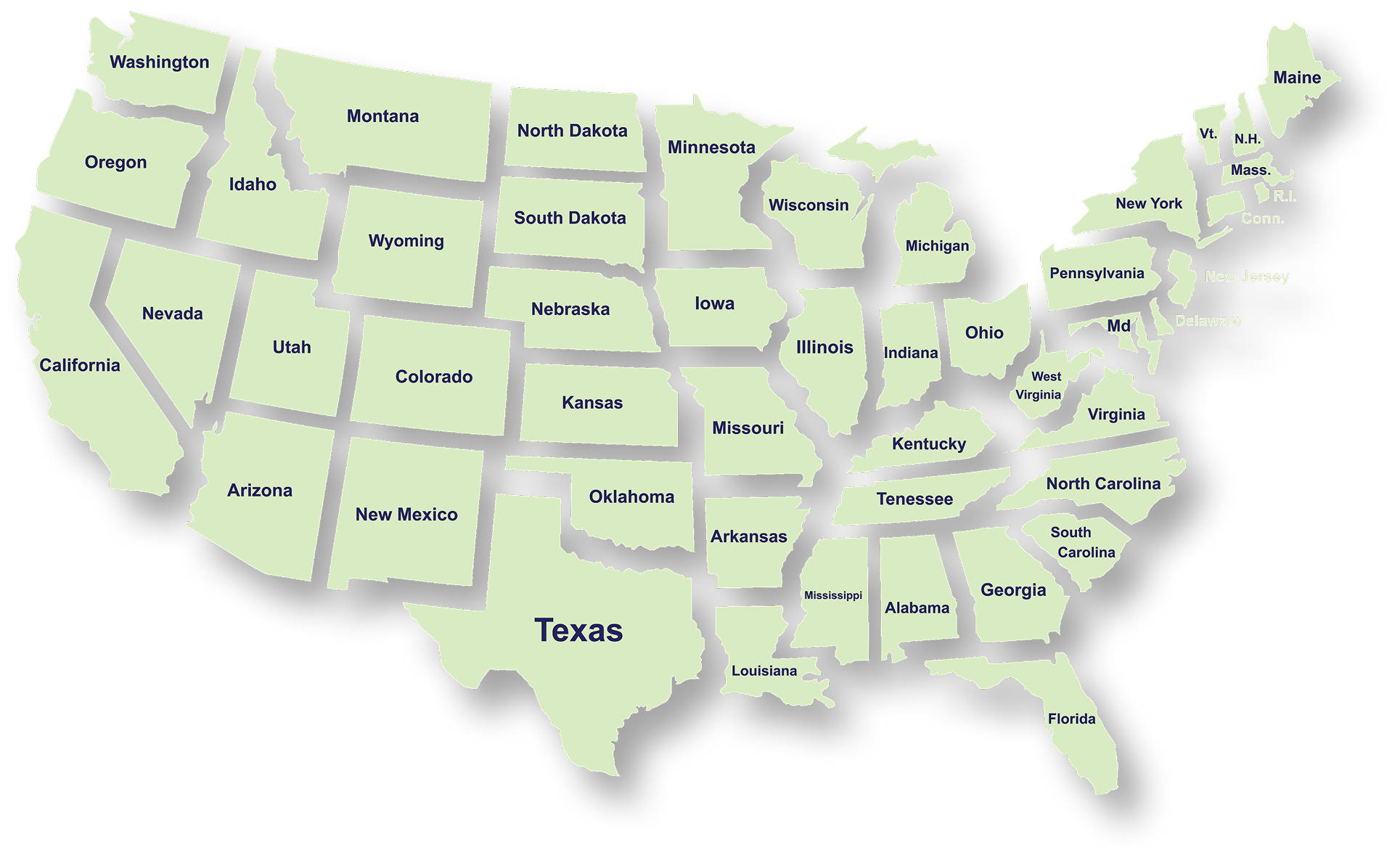
Serving Businesses & Individuals Across USA

We handle accounting, tax filing, and planning with defined timelines and accurate reporting for businesses and individuals across all states.

Frequently Asked Questions

What services does NR CPAs & Business Advisors provide?
What is tax planning and why is it important for businesses?
How can a Virtual CFO help my business?
When should a business consider IRS tax resolution services?
What financial statements does a business typically need?
How can startup advisory services help new businesses?
What is strategic business planning?
What is a Virtual Family Office and who can benefit from it?