Learning Center for Tax and Financial Insights

Stay updated with clear, actionable articles on tax rules, deadlines, deductions, and financial decisions that impact individuals and businesses.

No items found.

Video Tip: Let's Talk About IRAs–A Brief Overview into Retirement Accounts

Looking to open a retirement savings account? The Individual Retirement Arrangements (IRAs) provide tax-beneficial options for you. Watch this video to learn the basics of IRAs and find an IRA that is right for your goal.

Explore More
No items found.

Mega-Rich Backdoor IRA Strategies May Backfire If New Tax Bill Passes

While it’s usually true that the “rich get richer,” a proposed tax code will prove a remarkable exception if the House has its way. The legislation would mandate an annual required minimum distribution for retirement accounts exceeding $10 million and is aimed at accounts used as tax shelters by the rich rather than at the low-and middle-income savers who the tax-advantaged nest eggs were originally created to help.IRAs allow individuals with incomes that fall under specific limits to contribute after-tax dollars into investment accounts and to withdraw investment earnings tax-free after they reach the age of 59 ½. But many wealthy individuals are using a backdoor strategy involving the conversion of traditional IRA and Roth 401(k) accounts to take advantage of the tax shelter. The proposed bill would put an end to this practice. Its purpose is “to avoid subsidizing retirement savings once account balances reach very high levels.” The change in distribution rules was passed by the House Ways and Means Committee as a way to help fund the ambitious social programming contained within the $3.5 trillion Build Back Better program. According to its authors, it would help to pay for education, paid leave, childcare, and climate measures while also leveling the tax code’s playing field. The bill was reportedly inspired by news of an IRA owned by billionaire Peter Thiel. Valued at $2,000 in 1999, it grew to $5 billion over a twenty-year period. According to the complex calculations surrounding distributions, the 53-year-old PayPal co-founder could be required to withdraw all but $20 million of the fund’s holdings and would owe income tax on its growth due to his being under the age at which IRA investment earnings are tax-free.

Explore More
No items found.

Employers Hiring New Employees May Be Able to Claim a Work Opportunity Tax Credit

Article Highlights:Potential CreditEligible EmployeesCredit DeterminationCertification ProcessOther IssuesThe Covid-19 pandemic has had a significant impact on the labor market – mandated government lockdowns and workers’ and customers’ fears of contracting the illness resulted in businesses closing or temporarily cutting back and laying off or furloughing millions of employees. In April 2020, the unemployment rate reached 14.8%, the highest rate since such data started to be collected in 1948. While by September 2021 the unemployment rate had declined to 4.8%, millions of job openings went unfilled as former employees were reluctant to return to work. Some businesses still weren’t operating at full capacity because they weren’t able to find enough employees. If you are a business owner, and are hiring new workers, you may be able to claim a Work Opportunity Tax Credit (WOTC) if you hire someone who has been unemployed for 27 consecutive weeks or more or if the individual is from one of several other categories of eligible employees, as explained below. This credit is an income tax credit, unlike some of the pandemic-related credits that are applied to employment taxes of the business. The WOTC is typically worth up to $2,400 for each eligible employee, but it can be worth up to $9,600 for certain veterans and up to $9,000 for “long-term family assistance recipients.” The credit, which was extended by Congress in late 2020 legislation, is available for eligible employees who begin working for the new employer after 2020 and before 2026. Generally, an employer is eligible for the WOTC only when paying qualified wages to members of any of the targeted groups listed below. For more details on the required qualifications for each group, see the instructions for IRS Form 8850 (Pre-Screening Notice and Certification Request for the Work Opportunity Credit). (1) Qualified IV-A recipients – generally, members of a family that is receiving assistance under the Temporary Assistance for Needy Families (TANF) program; (2) Qualified veterans;(3) Qualified ex-felons – generally, those hired within one year of release from prison; (4) Designated community residents – those who are aged 18 through 39 and who are living in an empowerment zone or a rural renewal area*; (5) Vocational rehabilitation referrals – handicapped individuals who are referred by rehabilitation agencies;(6) Qualified summer youth employees – those who are 16 or 17 years old, have never previously worked for the employer and reside in an empowerment zone*;(7) Qualified members of families who participate in the Supplemental Nutritional Assistance Program (SNAP); (8) Qualified Supplemental Security Income recipients;(9) Qualified long-term family assistance recipients – those receiving TANF assistance payments; and (10) Qualified long-term-unemployed individuals. The period of unemployment cannot be less than 27 consecutive weeks, and must include a period (which may be less than 27 consecutive weeks) in which the individual received unemployment compensation under state or federal law.* Both empowerment zones and rural renewal areas are listed in the IRS Form 8850 instructions. The empowerment zone designations expired at the end of 2020. However, the legislation that extended the WOTC through 2025 also provides for an extension of the designations to the end of 2025.For an employer to qualify for the credit, the employee must work a minimum of 120 hours and receive at least 50% of his or her wages from that employer for working in the employer’s trade or business. Relatives of the employer and employees who have previously worked for the employer do not qualify for the credit. For an employee from most of the targeted groups, the credit is based upon the first $6,000 of first-year wages. If an employee completes at least 120 hours but less than 400 hours of service for the employer, the credit is equal to those wages multiplied by 25%. If the employee completes 400 or more hours of service, the credit is equal to the wages multiplied by 40%. Thus, the maximum credit per employee in one of these groups would be $2,400 (.4 x $6,000). For the summer youth employees, only the first $3,000 of the first-year wages are taken into account, resulting in a maximum per-employee credit of $1,200 (.4 x $3,000)

Explore More
Hr & People Management

New Hire Paperwork: What’s Required and What’s Recommended?

Employers must comply with numerous requirements, including paperwork and notices, when hiring new employees. In addition to required new hire paperwork, documentation is recommended to help administer payroll, benefits, and other HR responsibilities. Here are some key forms to keep in mind:Required New Hire Paperwork:Form I-9. An I-9 Form must be completed for each new hire to verify the individual’s identity and that they are authorized to work in the United States. To complete Section 2 of the I-9, employees must present documents for this verification. The I-9 Form includes a List of Acceptable Documents (List A, List B, and List C). An employee must present one document from List A or one document from List B and one document from List C.o List A documents: establish both identity and employment authorizationo List B documents: establish identity onlyo List C documents: establish employment authorization onlyEmployers must generally inspect Section 2 documents in the employee's physical presence. However, due to the pandemic, the U.S. Department of Homeland Security (DHS) has offered employers some flexibility. Specifically, from April 1, 2021 through December 31, 2021, the requirement that employers inspect the I-9 documentation in-person applies only to those employees who physically report to work at a company location on any regular, consistent, or predictable basis, according to the DHS. If employees hired on or after April 1, 2021 work exclusively in a remote setting due to COVID-19-related precautions, they are temporarily exempt from the physical inspection requirements until they go back into the workplace on a regular, consistent, or predictable basis, or the DHS terminates the flexible option, whichever is earlier.Form W-4. All new hires must complete a W-4 to determine the amount of federal income tax to withhold from their wages. Several states also require a tax withholding form. Employers should ensure that they are using the latest version of the form, which may change each year. If the employee has questions or asks for advice on how to complete a W-4, instruct them to speak with a tax advisor.Notice of Coverage Options. Under the Affordable Care Act (ACA), employers must provide a Notice of Coverage Options to all new hires within 14 days of their start date. This requirement applies even if the employer doesn't offer health insurance and/or the employee is not eligible for health insurance.Wage and hour. Under federal law, employers that use the tip credit must first notify tipped employees of:o The minimum cash wage that will be paid;o The tip credit amount, which cannot exceed the value of the tips actually received by the employee;o That all tips received by the tipped employee must be retained by the employee except for a valid tip pooling arrangement limited to employees who customarily and regularly receive tips.State and local notices. Many states and local jurisdictions also require that employers provide specific notices to employees at the time of hire. These required notices may cover state disability insurance, state-run retirement programs, leave entitlements, harassment and discrimination, workers' compensation, unemployment, and other employment-related benefits and protections. Many states require employers to provide, in writing, the employer’s business name, address, and telephone number; the employee’s rate of pay and regular payday; and certain other information. Provide new hire notices in accordance with your state and local requirements.New hire reporting. Federal law requires that employers submit certain information to their state regarding each new hire within 20 days of the employee's start date, but several states have shorter timeframes. New hire reporting is included in many RUN Powered by ADP® packages. If you have to fulfill these responsibilities on your own, you have several options, such as submitting the new hire's W-4 or an equivalent form. Check your state's new hire reporting program for details.

Explore More
No items found.

Tips to Get Your Startup Off the Ground

One of the most important things to understand about being a startup entrepreneur is that there is no “one size fits all” approach to what you're doing. Everyone's path is different, and you need to find out your own if you want to have any reasonable chance for long-term success.Having said that, there are a number of qualities that successful startups share — and there are a plethora of best practices that you can and should use to your advantage. Again — nobody can tell you exactly what to do as there is no road map. But by keeping a few critical things in mind, you can increase the chances that your startup will stand the test of time exponentially.Launching Your Startup the Right Way: An OverviewBy far, one of the most important tips that you can use to get your startup off the ground has to do with practicing patience whenever possible. Rome wasn't built in a day, and your successful business won't be, either.Yes, there are times when progress will move slower than you'd like. You may set a timeframe for yourself to hit certain milestones, and there will be situations where you'll miss them. Sometimes, they're because of mistakes you've made along the way, while other times they'll be due to factors that are totally outside your control. But while the arc of progress may be slow, it's also nothing if not stable — meaning that if you just remain patient and stay the course, you will soon get the results that you're after.Another critical tip that can help with your startup efforts involves spending that initial capital not just slowly, but wisely. Many of the entrepreneurs who run into issues try to “spend their way to the top,” as it were. Similar to the point about patience outlined above, they just want to hit each milestone as quickly as they possibly can. Soon, they begin to get careless — almost greedy. They lose sight of the things that really matter and believe too much in the old saying that “you have to spend money to make money.”

Explore More
No items found.

Proposed Federal Legislation Enhances Green Credits

Articles Highlights: Build Back Better Act LegislationHome Solar Energy CreditStorage BatteriesHome Energy-Efficient ModificationsPlug-in 4-Wheel Electric Drive VehiclesPreviously Owned Electric VehiclesBicycle Commuting Electric Bicycles If you are considering buying an electric vehicle, adding solar to your home or making energy-saving improvements to your home, you may want to wait for the outcome of the $3.5 trillion Build Back Better Act (BBBA) legislation being hotly debated in Congress. The legislation includes a variety of tax benefits for making energy-saving home improvements and purchases of environmentally-friendly vehicles, that if included in the final version of passed legislation, will substantially enhance existing tax benefits and add some new ones. Thus, it may be appropriate to delay any planned “green” expenditures pending the outcome of the final BBBA legislation. Here is an overview of some of the proposed provisions. Keep in mind there is no assurance any of these proposals will pass, and if they do, they may not be the same as described in this article. Any tax strategies suggested are predicated on the legislation passing as described. Home Solar Energy Credit – This credit, which is currently scheduled to expire after 2023, is currently phasing out from the original 30% of the cost and only provides a credit of 26% for 2021 and 2022. The proposed changes in the BBBA legislation would extend the credit through 2033, and would return the credit to 30% for 2022 through 2031. Thus, if contemplating a solar installation, by waiting until 2022 the credit would be 30% instead of 26% of the cost. Even if you are already in the process of installing solar, note that the credit applies to the year the installation is complete. So, if the installation completion can be delayed until 2022, it would qualify for the 30% rate rather than 26%. The adjacent chart illustrates the current law versus the proposed law. SEC 25D (Solar) Credit Rate Phaseout Applicable YearCurrent Law Proposed Law 2020 30%- 2021 26%- 2022 26% 30% 2023 22% 30% 2024 0% 30% 2025 - 2031 -0- 30% 2032 -0- 26% 2033 -0- 22%Battery Storage Technology Expenditure – Under existing law, storage batteries qualify for the solar credit if the battery is charged via solar and not from the grid. The proposed law would include as eligible property any battery storage technology installed on a dwelling in the U.S. used as a residence by the taxpayer and that has a capacity of no less than 3 kilowatt hours and does not include the requirement that it only be charged from the solar array. Home Energy-Efficient Modifications – Current law provides a 10% of cost credit for making certain energy-efficient home modifications but includes a lifetime credit limit of $500 going all the way back to 2006. That credit is scheduled to expire after 2021. The proposed legislation includes a new 30% of cost credit with an annual credit limit of $1,200. As with the prior credit there are credit limits for certain specific modifications. Thus, it might make sense to delay any planned modifications until 2022. However, if that provision is not included in the final legislation, no credit will be allowed in 2022 at all.Plug-in 4-Wheel Electric Drive Vehicles – Current law allows a non-refundable credit of up to $7,500 for the purchase or lease of an electric 4-wheel vehicle. However, the credit begins to phase out once a manufacturer sells 200,000 qualifying vehicles; thus, many of the more popular vehicles no longer qualify for the current credit. The proposed legislation introduces a new credit that is refundable, is no longer phased out by manufacturer sales and establishes a new method of calculating the credit that takes into consideration battery capacity, purchase price, and whether the vehicle is domestically assembled and satisfies domestic content qualifications. Thus, if you are considering purchasing a vehicle that no longer qualifies under the current credit, it may be beneficial to wait until 2022. But, under the proposed law changes, the credit will phase out by $200 for each $1,000 in excess of the high-income thresholds illustrated in the table. Filing Status Magi Threshold Married Joint, Surviving Spouse $800,000 Head of Household $600,000 Single and MFS $400,00Previously Owned Electric Vehicles - The proposed tax changes also include a credit for the purchase of previously owned electric cars equal to $1,200 plus a bonus for batteries with more than 4-kilowatt hour capacity, but the credit cannot exceed 30% of the vehicle’s cost. So, if you are considering purchasing a used electric vehicle, it may make sense to wait until 2022 to see if this credit is included in the final legislation. As with the new vehicle credit, this one is also limited by the taxpayer’s AGI, and the threshold is significantly less than that for new vehicles. Filing Status AGI Threshold Married Joint or Surviving Spouse $800,000 Head of Household $125,000 Single or Married Filing Separately $75.000Bicycle Commuting - The proposed changes would restore the nontaxable employee fringe benefit for bicycle commuting to work, with the monthly benefit limited to 30% of the amount allowed for qualified parking. Electric Bicycle Credit - The proposal would also allow a credit of 15% of the cost (limited to $5,000) of an electric bicycle placed in service during the year, limited to one bicycle (2 if filing married joint). However, this credit would be subject to the same AGI threshold limits as the used electric vehicles. So, if you are contemplating the purchase of an electric bicycle, and assuming this credit is included in the final legislation, delaying the purchase until 2022 may be appropriate.Other Credits – The legislation also extends the credits for 2- and 3-wheel plug-in electric vehicles for highway uses, fuel cell vehicles, and refueling property (both personal and commercial).

Explore More
No results found.
Thank you! Your submission has been received!
Oops! Something went wrong while submitting the form.

Want tax & accounting tips & insights?Sign up for our newsletter.

Thank you! Your submission has been received!
Oops! Something went wrong while submitting the form.

Why Work With Us?

We combine deep tax expertise, financial strategy, and practical business insight to help you manage complexity, stay compliant, and make confident financial decisions.
A dollar sign, representing financial advice or discussion at NR CPAs & Business Advisors.

Experienced CPA and Enrolled Agent Leadership

Guidance led by licensed professionals with deep expertise in tax strategy, compliance, and complex financial matters.
White bar chart with an upward arrow on green circular background representing growth or progress at NR CPAs &. Business Advisors

Support for Growing Businesses and Startups

We understand the financial challenges of growth stage businesses and provide structured guidance to support expansion.
A white hand holding a dollar symbol and ascending bar chart on a green circular background representing financial growth or investment at NR CPAs & Business Advisors..

Strategic Financial Advisory

Our team helps you evaluate financial decisions with greater clarity, supported by practical insights and long term planning.

Fractional CFO Support

Access experienced financial leadership without the commitment and cost of hiring a full time Chief Financial Officer.

Proactive Tax Planning Approach

We focus on identifying tax opportunities throughout the year rather than reacting only during filing season.

Clear and Reliable Financial Reporting

Accurate financial statements and reporting that help you better understand performance and make informed decisions.
White IRS building icon with pillars and a dollar sign above on a green circular background.

Professional IRS Representation

Experienced support in resolving IRS notices, disputes, and compliance matters while protecting your financial interests.

Personalized Client Focus

Every client receives thoughtful attention and tailored financial solutions based on their specific needs and business goals.
Financial matters often involve important decisions. Working with experienced advisors can help you approach them with greater clarity and confidence in your choices.

Need Help With Your Tax or Financial Decisions?

Discuss your situation with our advisors to get clear guidance on tax planning, IRS matters, and the financial decisions ahead.
Business consulting at NR CPAs & Business Advisors.

Request Your Consultation

Fill out the form to discuss your tax concerns, financial questions, or advisory needs with our team. We will review your details and respond shortly.

Serving Businesses & Individuals Across USA

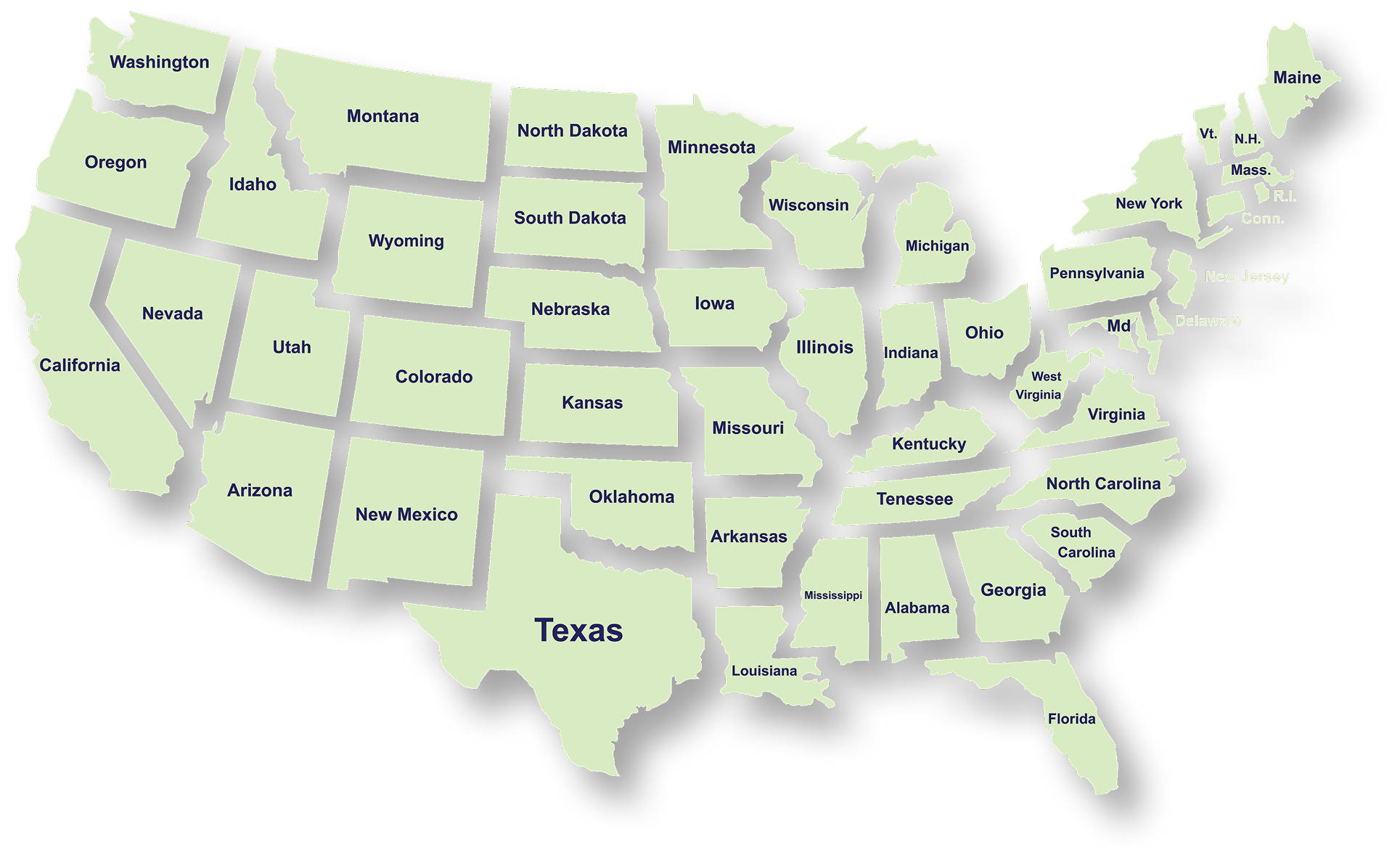
We handle accounting, tax filing, and planning with defined timelines and accurate reporting for businesses and individuals across all states.

Frequently Asked Questions

What services does NR CPAs & Business Advisors provide?
What is tax planning and why is it important for businesses?
How can a Virtual CFO help my business?
When should a business consider IRS tax resolution services?
What financial statements does a business typically need?
How can startup advisory services help new businesses?
What is strategic business planning?
What is a Virtual Family Office and who can benefit from it?