Learning Center for Tax and Financial Insights

Stay updated with clear, actionable articles on tax rules, deadlines, deductions, and financial decisions that impact individuals and businesses.

No items found.

The Treasury Green Book of Biden Proposed Tax Changes

Article Highlights Long-Term Capital Gains Rates Top Individual Tax Rate Pass-Through Income Subject to 3.8% NIIT or SECA Tax Limit Nonrecognition of Like-Kind Exchanges Transfer of Appreciated Property by Gift or Death Family-Owned and -Operated Businesses 15-Year Fixed-Rate Payment Plan Excess Business Loss Limitation Carried Interest Enhanced Financial Account Reporting The U.S. Treasury has released the Biden administration’s 2022 Fiscal Year Budget, which includes a general explanation of the administration’s 2022 revenue proposals. The publication is commonly referred to as the Green Book and outlines the Biden administration’s tax proposals. Keep in mind that these are proposals and will have to be passed by Congress. The Green Book proposals include both domestic and international taxes; however, this article will only cover domestic tax issues that deal with individuals and small businesses. Also included in the Green Book are proposals to extend, expand or create new energy-related tax credits; we have not included any of these proposals in this article. Long-Term Capital Gains Rates Currently, long-term capital gains and qualified dividends are taxed at the following rates. CG TAX RATES BY AGI RANGE FOR 2021 Filing Status Zero Rate 15% Rate 20% Rate Single 0 - $40,400 $40,401 – $445,850 $445,851 and above Head of Household 0 - $54,100 $54,101 – $473,750 $473,751 and above Married Filing Joint 0 - $80,800 $80,801 – $501,600 $501,601 and above Married Filing Separate 0 - $40,400 $40,401 – $250,800 $250,801 and above The Green Book proposals would increase the tax rate for long-term capital gains and qualified dividends to 39.6% (the proposed increase to the top individual rate) from the current 20% rate to the extent the taxpayer’s AGI exceeds $1 million. That will result in a tax as high of 43.4% when including the 3.8% net investment income tax imposed on investment income of middle- to higher-income taxpayers. The proposal suggests making the retroactive rate change effective for gains and income recognized after April 28, 2021. Example: Under the proposal, a taxpayer with $900,000 of wage income and $200,000 of long-term capital gain income would have $100,000 of capital income taxed at the current preferential tax rate and $100,000 taxed at ordinary income tax rates. Top Individual Tax Rate The Green Book proposes an increase in the top individual rate from the current 37% to 39.6%. This will return the top rate to where it was before the passage of the Tax Cuts and Jobs Act (TCJA). Note: under the TCJA, the 37% rate applies only through 2025. The table below shows the taxable income threshold for the top tax rate in 2021, and only income above that level is taxed at the top tax rate. Tax rate brackets are currently adjusted annually for inflation; the proposed 2022 thresholds will be inflation-indexed in future years. TAXABLE INCOME THRESHOLD* FOR THE TOP INDIVIDUAL TAX BRACKET Filing Status 2021 Proposed 2022 Single 523,600 452,700 Head of Household 523,600 481,000 Married Filing Joint 628,300 509,300 Married Filing Separate 314,150 254,650 *top rate applies to taxable income above these amounts Pass-Through Income Subject to 3.8% NIIT or SECA Tax Under current law, S-corporation shareholders and limited partners are not subject to self-employment tax on pass-through income. However, the Green Book proposes changing that for high-income taxpayers with adjusted gross income of more than $400,000. The proposal would ensure that all trade or business income of high-income taxpayers is subject to the 3.8 percent Medicare tax, either through the net investment income tax (NIIT) or the Self-Employment Contributions Act (SECA) tax. The NIIT base would be expanded to include income and gain from trades or businesses not otherwise subject to employment taxes, and the 3.8% NIIT tax would be redirected to the Hospital Insurance Trust Fund. The 3.8% SECA tax would apply to the ordinary business income of high-income non-passive S corporation owners (those whose AGI is greater than $400,000). Limited partners and LLC members who provide services and materially participate in their partnerships and LLCs would be subject to SECA tax on their distributive shares of partnership or LLC income to the extent that this income exceeds certain threshold amounts. The exemptions from SECA tax provided under current law for certain types of S corporation income (e.g., rents, dividends and capital gains) would continue to apply to these types of income. Material participation standards would apply to individuals who participate in a business in which they have a direct or indirect ownership interest. Taxpayers are usually considered to materially participate in a business if they are involved in it in a regular, continuous and substantial way. Often, this means they work for the business for at least 500 hours per year. The statutory exception to SECA tax for limited partners would not exempt a limited partner from SECA tax if the limited partner otherwise materially participated. To determine the amount of partnership income and S corporation income that would be subject to SECA tax under the proposal, the taxpayer would sum: (a) ordinary business income derived from S corporations for which the owner materially participates in the trade or business and (b) ordinary business income derived from either limited partnership interests or interests in LLCs that are classified as partnerships to the extent a limited partner or LLC member materially participates in its partnership’s or LLC’s trade or business (this sum is referred to as “potential SECA income”). Beginning in 2022, the additional income that would be subject to SECA tax would be the lesser of: (i) the potential SECA income or (ii) the excess over $400,000 of the sum of the potential SECA income, wage income subject to FICA under current law, and 92.35 percent of self-employment income subject to SECA tax under current law. The $400,000 threshold amount would not be indexed for inflation. Limit Nonrecognition of Like-Kind Exchanges The Tax Cuts and Jobs Act did away with all Sec 1031 “like-kind” exchanges (tax-deferred exchanges) except those related to real property. The Green Book proposes going a step further and would limit eligibility for Section 1031 exchanges by permitting each taxpayer to defer only up to $500,000 ($1 million for married taxpayers filing jointly) of real property gain each year. Any gain more than the $500,000 ($1 million) limit would be recognized as taxable income in the taxable year in which the taxpayer transfers the real property. These changes would require REITs to distribute gains on property sales that could otherwise be deferred under Section 1031. Caution: The proposal would apply these rules to exchanges “completed after taxable years beginning after December 31, 2021. However, deferred ex-changes may be completed in 2022, but the property given up may have been transferred in 2021, and thus may be taxable in 2021. Transfer of Appreciated Property by Gift or Death

Explore More
No items found.

Day Care Providers Enjoy Special Tax Benefits

Article Highlights: Business Use of Home Prorated Use Owned Home Rented Home Exclusive Use Meal Allowance Other Deductions A taxpayer who is in the business of providing family day care in their home may deduct the ordinary and necessary expenses of their business. The two primary deductions include the business use of their home and the cost of providing meals and snacks to children in their care. The following is a rundown on deductible business expenses for home day care providers. Business Use of the Home – Generally, to be able to take a deduction for business use of the home, the tax law requires the business portion to be used exclusively for business. However, a special allowance is carved out for day care facilities, allowing prorated use even though the business is operated in parts of the home also used personally by the care provider and his or her family. But that exception to the exclusive use requirement applies only if the owner or the operator of the day care facility: (1) Has applied for (and the application has not been rejected) a license, certification, registration or approval as a day care center or a family or group care home under the provisions of any applicable state law; (2) Has been granted (and the grant has not been revoked) a license, certification, registration or approval as a day care center or a family or group day care home under the provisions of any applicable state law; or (3) Is exempt from having a license, certification, registration or approval as a day care center or a family or group day care home under the provisions of any applicable state law. The day care facility exception does not apply if the services performed are primarily educational or instructional in nature (e.g., musical instruction). However, the exception does apply if the services are primarily custodial and if the educational, development or enrichment activities are only incidental to the custodial services. The determination depends generally on the facts and circumstances of each particular case. When calculating the percentage of business use of the home, both the space used to operate the day care business and the amount of time that the space is used to provide day care – including preparation and cleaning time – are factors. Example – Edna uses her living room, kitchen and bathroom ten hours a day, five days a week, to provide licensed day care services. The home is 2,400 square feet, and the living room, kitchen and bathroom are a combined 1,400 square feet. Edna’s percentage use of her home for business is determined as follows: Although the business use of the home deduction cannot exceed the gross income of the business, and there is an order in which the deductions are allowed while applying the gross income limitation, the deduction is generally made up of the following prorated expenses: For an Owned Home: o Mortgage interest o Home taxes o Utilities o Repairs o Homeowner’s insurance o Depreciation For a Rented Home: o Rent o Utilities o Repairs o Renter’s insurance Example: Edna, in our prior example, provides family day care services out of her rented home, for which she pays $2,200 a month in rent and $3,100 for utilities for the year. Her business use of the home deduction is determined as follows: Rent ($2,200 x 12)……… $26,400 Utilities…………………………. 3,100 Total…………………………….. $29,500 The prorated amount (her deduction for the year) is $5,121 (17.36% of $29,500) Some providers have rooms such as play rooms or sleeping rooms set aside that are used exclusively for their business. In these cases, a separate calculation for the exclusive-use space should be made using 100% use, and then that amount should be added to the deduction for the prorated portion of the home.

Explore More
No items found.

Congress Introduces Tax-Preparer Regulation Legislation

Article Highlights PTIN Requirements CPAs, EAs, and Attorneys State Regulations American Families Plan Taxpayer Protection and Preparer Proficiency Act Anyone preparing a tax return for compensation must have a PTIN issued by the IRS, but there are no requirements associated with obtaining a PTIN—no advance training, no continuing education, and no ethical standards to abide by. On the other hand, CPAs, enrolled agents (EAs), and attorneys have strict ethical standards, educational or testing requirements, and continuing education requirements that keep them up to date with the latest tax-law changes. While some states require paid preparers to register and pay a fee, only California and Oregon have comprehensive programs that include annual registration and verified continuing-education requirements. In addition, the IRS has a voluntary program that includes annual continuing-education requirements. Thus, anyone—except in California and Oregon—who is not a CPA, EA, or attorney can declare themselves to be a tax preparer without needing any tax education. The IRS has previously attempted, without Congressional authority, to regulate the tax-preparer profession, including registration, testing, and continuing education. But, as the result of a lawsuit (Loving v. IRS) filed by a group of unregulated tax preparers, a federal judge invalidated the program in 2013, ruling that the IRS lacked the statutory authority to regulate preparers. The Biden administration’s American Families Plan calls for Congress to pass bipartisan legislation that will give the IRS the statutory authority to regulate the tax-preparer profession. Currently, tax returns prepared by certain types of preparers have high error rates. These preparers charge taxpayers large fees while exposing them to costly audits by claiming deductions and credits to which taxpayers are not entitled.

Explore More
No items found.

Video tips: Summer Activities and Their Impacts on Taxes

Summer is full of activities and life-changing events. But did you know that some of those activities can make a difference to your tax return next year? Watch this video for some quick tips. .embed-container { position: relative; padding-bottom: 56.25%; height: 0; overflow: hidden; max-width: 100%; } .embed-container iframe, .embed-container object, .embed-container embed { position: absolute; top: 0; left: 0; width: 100%; height: 100%; }

Explore More
No items found.

Video: Tax Tips for Educators

Teachers and education administrators can benefit from a special tax deduction for education expenses that are not reimbursed. Watch this video to learn more. .embed-container { position: relative; padding-bottom: 56.25%; height: 0; overflow: hidden; max-width: 100%; } .embed-container iframe, .embed-container object, .embed-container embed { position: absolute; top: 0; left: 0; width: 100%; height: 100%; }

Explore More
No items found.

Tax Ramifications of Disposing of a Vehicle

Article Highlights: Trading in a Vehicle Selling a Vehicle Gifting a Vehicle Donating a Vehicle to Charity If you are buying a new car, are you wondering what to do with the old one? You actually have a number of options, some of which have tax implications and some of which don’t. These options include trading the car in with the dealer, selling it to a third party, donating it to a charity, gifting it to someone, or even keeping it as a second car. Here are the details for each. Note: This article does not discuss in detail how to treat the disposition of a vehicle used for business. Trade-In – Although you may be able to get more for your car by selling it yourself, trading the car in with the dealer eliminates the hassle of selling the vehicle and is the option selected by many people when they purchase a new car. Prior to the passage of the 2017 tax reform, if a vehicle was used partially for business and the disposition of that vehicle would have resulted in a gain, it was better to trade the vehicle in because the tax law allowed the gain to be deferred. However, that is no longer an option, and now, whether you trade in your vehicle or sell it to a third party, it is treated as a sale. If a car has been used 100% for personal purposes (no business use), whether you trade it in or sell it generally makes no difference since, except in rare cases, the vehicle will have declined in value and there would be no gain from the transaction. When there is a loss from the sale of personal-use property, tax law does not allow the loss to be deducted. On the other hand, the law says that when a personal-use item such as a vehicle is sold for a profit, the profit is taxable. If the car was used partially for business, the business portion of the sale likely results in a gain or a loss that will need to be reported on your tax return for the sale year. Sell the Vehicle – In this Internet age, a variety of online sites exist with firms that will let you know the value of your used vehicle; an example is Kelly Blue Book. There are also used car dealers that will buy your car and relieve you of all the DMV transfers and sales tax issues. Of course, you can sell it yourself through online sites such as Craigslist or perhaps by just placing a “for sale” sign in the car, in which case you need to make sure the title is properly transferred so you have no future liability. You also need to be cautious of potential buyers, to make sure someone does not try to scam you with a hot check or the promise of a future payment. In most states, vehicle sales are “as is” sales, provided you do not attempt to conceal a material defect. News reports during the Covid pandemic are that auto dealers are experiencing an inventory shortage, which has resulted in some used vehicles being valued at as much as or more than when they were first sold a few years ago, tempting owners to sell their used autos at a profit. Many sellers may not be aware that they will have a reportable tax gain. Gift It to Someone – It is quite common for individuals to gift their old car to a child, a family member, or an acquaintance. There are no gift tax ramifications as long as the fair market value (FMV) of the vehicle is less than the annual gift tax exclusion amount ($15,000 for 2021). Where a married couple jointly makes the gift, the annual gift tax exclusion applies to each spouse; thus, the vehicle’s value could be as much as $30,000 without any tax ramifications. If the vehicle’s FMV exceeds those limits, a gift tax return is required. The direct gift of a vehicle to an individual is not allowed as a charitable contribution on the former owner’s income tax return, even if the person to whom the car is given is “needy.”

Explore More
No results found.
Thank you! Your submission has been received!
Oops! Something went wrong while submitting the form.

Want tax & accounting tips & insights?Sign up for our newsletter.

Thank you! Your submission has been received!
Oops! Something went wrong while submitting the form.

Why Work With Us?

We combine deep tax expertise, financial strategy, and practical business insight to help you manage complexity, stay compliant, and make confident financial decisions.
A dollar sign, representing financial advice or discussion at NR CPAs & Business Advisors.

Experienced CPA and Enrolled Agent Leadership

Guidance led by licensed professionals with deep expertise in tax strategy, compliance, and complex financial matters.
White bar chart with an upward arrow on green circular background representing growth or progress at NR CPAs &. Business Advisors

Support for Growing Businesses and Startups

We understand the financial challenges of growth stage businesses and provide structured guidance to support expansion.
A white hand holding a dollar symbol and ascending bar chart on a green circular background representing financial growth or investment at NR CPAs & Business Advisors..

Strategic Financial Advisory

Our team helps you evaluate financial decisions with greater clarity, supported by practical insights and long term planning.

Fractional CFO Support

Access experienced financial leadership without the commitment and cost of hiring a full time Chief Financial Officer.

Proactive Tax Planning Approach

We focus on identifying tax opportunities throughout the year rather than reacting only during filing season.

Clear and Reliable Financial Reporting

Accurate financial statements and reporting that help you better understand performance and make informed decisions.
White IRS building icon with pillars and a dollar sign above on a green circular background.

Professional IRS Representation

Experienced support in resolving IRS notices, disputes, and compliance matters while protecting your financial interests.

Personalized Client Focus

Every client receives thoughtful attention and tailored financial solutions based on their specific needs and business goals.
Financial matters often involve important decisions. Working with experienced advisors can help you approach them with greater clarity and confidence in your choices.

Need Help With Your Tax or Financial Decisions?

Discuss your situation with our advisors to get clear guidance on tax planning, IRS matters, and the financial decisions ahead.
Business consulting at NR CPAs & Business Advisors.

Request Your Consultation

Fill out the form to discuss your tax concerns, financial questions, or advisory needs with our team. We will review your details and respond shortly.

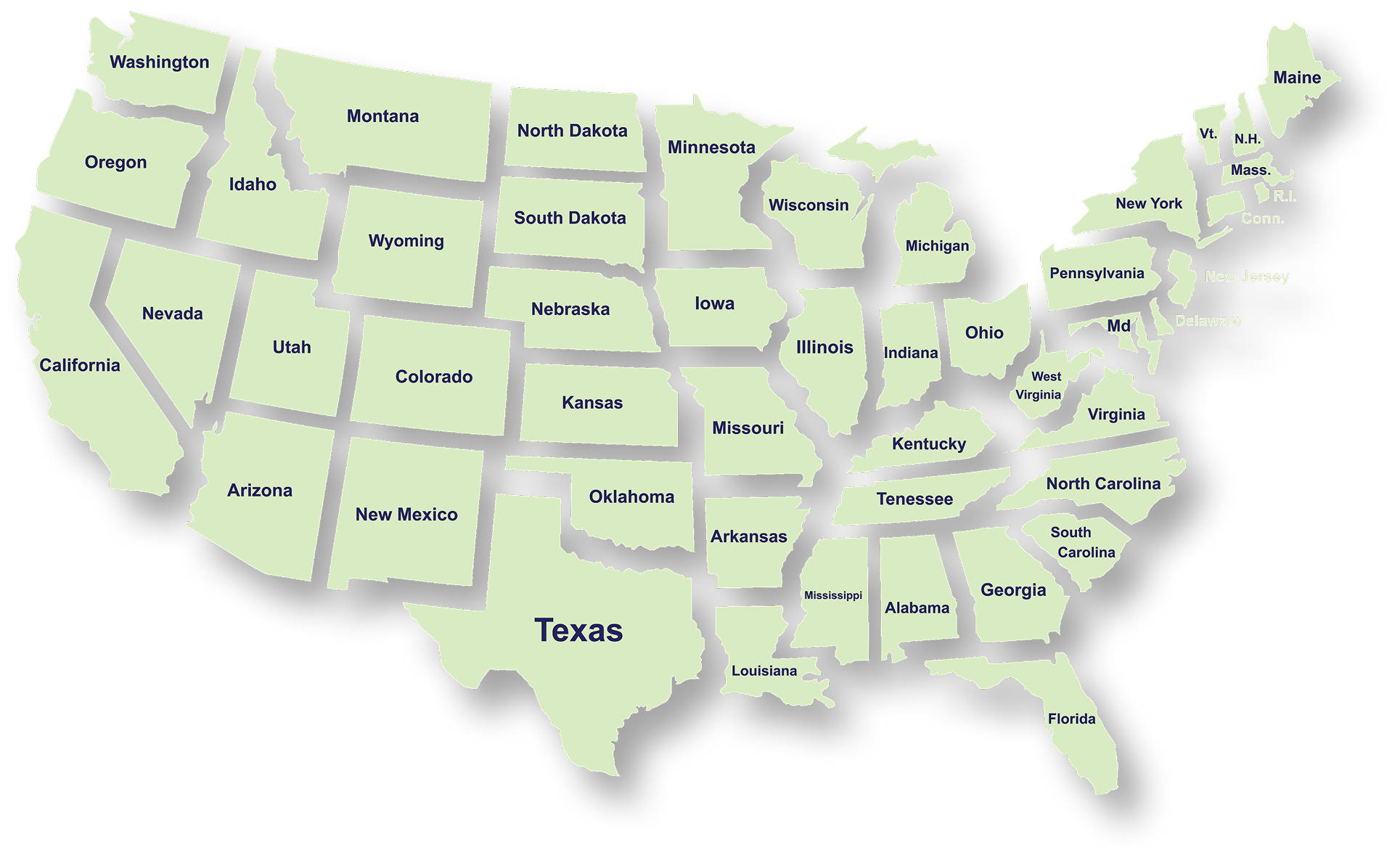
Serving Businesses & Individuals Across USA

We handle accounting, tax filing, and planning with defined timelines and accurate reporting for businesses and individuals across all states.

Frequently Asked Questions

What services does NR CPAs & Business Advisors provide?
What is tax planning and why is it important for businesses?
How can a Virtual CFO help my business?
When should a business consider IRS tax resolution services?
What financial statements does a business typically need?
How can startup advisory services help new businesses?
What is strategic business planning?
What is a Virtual Family Office and who can benefit from it?