Learning Center for Tax and Financial Insights

Stay updated with clear, actionable articles on tax rules, deadlines, deductions, and financial decisions that impact individuals and businesses.

No items found.

The July 15th Deadline Is Fast Approaching, and It Isn't Just for the 2019 Individual Tax Return

Article Highlights: Extensions Contributions to IRAs Estimated Tax Payments for the First Two Quarters of 2020 Individual Refund Claims for the 2016 Tax Year Foreign Account Reporting Requirements Due to the COVID-19 emergency, the IRS provided taxpayers with an automatic three-month extension to July 15 to file their 2019 tax returns and pay the 2019 tax, among other tax actions normally due on April 15. So, with July 15th fast approaching, it is important to understand that the day is more than just the deadline for filing your 2019 tax return. It is also the deadline for other things tax. Here is a rundown. 1040 Extension – Those who are unable to file their 2019 individual 1040 tax return by the July 15th deadline need to file a Form 4868 extension, which will give them until October 15th to file the return. The tax liability shown on the extension should be paid with the extension form to avoid late payment penalties and interest. Penalties, interest, or additions to tax for failure to pay federal income taxes were disregarded during the April 15–to–July 15 extension-period window, but these will begin to accrue on July 16, 2020. CAUTION: While the Form 4868 extension is an extension for filing, it is not an extension for paying your tax liability. The Form 4868 instructions say (and tax courts have ruled) that for an extension to be valid, a taxpayer must properly estimate their tax liability, enter that tax liability on the form, and file the extension by the due date of the return, which is July 15th this year. The monthly penalty for not filing the 1040 tax return by the July 15th due date is 4½ percent of the tax due for late filing and ½ percent of the tax due for late payment. The maximum cumulative penalty rate is 25%; however, the ½ percent per month for late payment continues until the tax is paid. There is also a minimum penalty for 2019 returns not filed within 60 days of the return due date, including extensions. That penalty is the lesser of $435 or the amount due on the 2019 tax return. Importantly, if you do not owe or if you are getting a refund, there is no penalty because the penalties are based on a percentage of the tax due—if no tax is due, then no penalty is assessed. The IRS also charges interest on late payments and penalties. The rate is subject to quarterly adjustment and is currently at an annual rate of 5% of the amount owed, with interest accumulating daily. Contributions to a Roth or Traditional IRA for the 2019 Tax Year – July 15th is the last day for making 2019 contributions to Roth or traditional IRAs. Form 4868 does not provide an extension for making IRA contributions. Individual Estimated Tax Payments for the First Two Quarters of 2020 – Normally, the first installment of estimated taxes for a tax year is due on April 15th, and the second installment comes due on June 15th. For 2020, the IRS extended these due dates to July 15th, to coincide with the other COVID-19-related extensions. Taxpayers who fail to prepay the minimum (“safe harbor”) amount may be subject to a penalty for underpayment of the estimated tax. This penalty is based on the interest on the underpayment, which is calculated using the short-term federal rate plus 3 percentage points. The penalty is computed on a quarter-by-quarter basis, so even people who have prepaid the correct overall amount for the year may be subject to the penalty if the amounts are not paid proportionally or in a timely way. However, for 2020, penalties for failure to pay federal income taxes during the April 15–to–July 15 period will be disregarded. Federal tax law does provide ways to avoid the underpayment penalty. For instance, if the underpayment is less than $1,000 (referred to as the de minimis amount), no penalty is assessed. In addition, two options exist for safe-harbor prepayments: 1. The first is based on the total tax on the current year’s return. There is no penalty when prepayments (including both withholding and estimated payments) equal or exceed 90% of the current year’s tax. 2. The second is based on the total tax amount (not including credits for prepayments) on the return for the preceding tax year. This is generally set at 100% of the prior year’s tax liability. However, taxpayers with adjusted gross income exceeding $150,000 (or $75,000 for married taxpayers filing separately) must pay 110% of the prior year’s tax liability to meet the safe-harbor test. Individual Refund Claims for the 2016 Tax Year – The regular three-year statute of limitations for 2016 tax returns normally would have expired on April 15th of this year. However, due to the COVID-19 emergency, the statute of limitations was extended to July 15th. Thus, no refund will be granted for 2016 returns (original or amended) filed after July 15th. An exception is if a net operating loss is being carried to 2016; in this case, the usual three-year limitation for claiming a refund won’t apply as long as the statute is still open for the year when the net operating loss (NOL) occurred. However, taxpayers could risk missing out on the refundable Earned Income Tax Credit, the refundable American Opportunity Tax Credit for college tuition, and the refundable child credit for the 2016 tax year if they do not file before the statute of limitations ends. Caution: The statute does not apply to balances due for unfiled 2016 returns. Foreign Account Reporting Requirements (FBAR) – For each United States person who has a financial interest in, signature, or other authority over any foreign financial accounts, including bank, securities, or other types of financial accounts in a foreign country, if the aggregate value of these financial accounts exceeds $10,000 at any time during the calendar year, that person must report that relationship to the U.S. government during each calendar year. This reporting requirement is commonly referred to as FBAR, and the due date is the same as that for individual 1040 returns. This report is submitted online to the Treasury Department’s Financial Crimes Enforcement Network (FinCEN), and the FBAR’s annual due date is April 15th. However, FinCEN grants an automatic extension to October 15th each year, so if you missed the April due date this year, you still have until October 15th to file the FBAR. Penalties for failing to file a FBAR are severe, and individuals should not overlook overseas family accounts on which they are named as account holders, or online foreign gambling accounts. If in doubt, call this office for further details.

Explore More
No items found.

Post-Pandemic Trends Shifting the Economy for Small Businesses Everywhere

While it's absolutely true that the ongoing COVID-19 pandemic has created significant challenges for small and large businesses alike, there are also some changes happening that can be viewed as less negative. Behaviors have changed during the Coronavirus outbreak, and some of these could end up being positive for small businesses in particular moving forward. In fact, there are a few core trends in particular that are nothing if not opportunities just waiting to be taken advantage of by a savvy entrepreneur that knows what he or she is doing. The Shift Towards Digital is Picking Up Speed With so many people spending more time indoors (even as lockdowns lift), it should come as no surprise that the shift towards digital business is picking up speed. Now, more than ever before, companies operating in the digital space are getting more and more successful – in large part because the options to do almost anything else were severely limited during stay-at-home phases and we’re still not back to pre-pandemic norms. This means that if you're a small business owner, the barrier to actually get your organization off the ground has never been lower. You don't need to worry about finding an ideal location and renting physical office space. Really, once you have your goods and/or services accounted for, all you need is a computer (or mobile device) and an Internet connection. Likewise, a lot of companies are enjoying success right now integrating e-commerce channels into their business that didn't exist in the past. If you have a product that can be shipped (or even hand delivered), you can integrate a digital storefront into your existing website and allow people to place orders that way. Not only is it a great way to remain operational as COVID-19 drags on, but it's also an opportunity to "future-proof" your operations in case mass shutdowns occur again in the future. The Flexibility of Location Independence Teleconferencing software like Skype and Zoom is certainly nothing new - the technology has existed in some form or another dating all the way back to the 1990s. But one thing that COVID-19 has ushered in is an era where businesses actually leverage this tech to create a whole new era of location independence in terms of HOW they offer their goods and services. One of the best examples of this is taking place in gyms across America as you read this. Fitness classes are regularly moving online so that people can still work out and stay healthy right from the comfort (and safety) of their own homes. Healthcare professionals are offering therapy and similar services over technologies like Teladoc and Apple’s FaceTime. You're also even seeing a digital shift for professional services like this office holding online consultations and meetings – something that saves all parties a tremendous amount of time, effort and travel in exchange for a few quick mouse clicks and the use of a video camera for their computer. City Partnerships Give Businesses an Interesting Boost Another fascinating trend brought about in the wake of COVID-19 has to do with the unique business boosts taking place in cities across America. Case in point: restaurants. Even as states begin to open back up again, a lot of restaurants in particular are dealing with the fact that they're only allowed to operate at 50% capacity (if that). Likewise, there are probably less-than-normal numbers of patrons who are enthusiastic right now about going into a physical restaurant to enjoy a "care-free night out on the town," with virus fears and anxieties so high. So, what has happened? A lot of cities have partnered with restaurants to close streets for specific periods of time at night and on weekends so that those businesses can set up tables outdoors (yes ¬– some even in the middle of the street). Not only does this allow them to serve far more people than they could with their actual indoor option, but it's a great way to promote social distancing and other safety measures while boosting small businesses as well. The Era of Remote Work is Upon Us Everyone knew that remote work had been getting more and more popular over the last several years, to the point where one recent study said that about 42% of the people who worked exclusively from home said that they'd been doing so for more than five years. The ongoing COVID-19 pandemic has certainly acted as an accelerant for this particular fire, however, and this is one factor that creates interesting implications for small businesses in particular moving forward. With so many Americans under strict stay-at-home orders at one point and with all non-essential businesses closed, more people were working remotely than ever before. Not only did employees realize that they actually enjoyed the freedom and flexibility that came with it, but their employers are also quickly realizing that most of them are just as productive at home – if not more so. Some of these employers have started to wonder if – even when things go "back to normal" – they should bother calling everyone back into the office again, or allow the remote work to continue. If employees are allowed to work from home a larger percentage of the time (or entirely, in some cases), small businesses can potentially save an enormous amount of money on utilities alone. They likely won't need to invest in massive office spaces if far fewer people are actually using it, representing an additional cost savings and money that can be funneled into other areas of the business. Plus, some studies indicate that people are actually more productive when working from home - thus increasing not only the quality of the work being done but the revenue those employees are able to generate as well. The Future of Payments Last but not least we arrive at another trend that COVID-19 has highlighted over the last several months: the popularity of cashless and contactless payments. With the concern around germs changing hands, there’s no question that paying with cash is less popular in the time of coronavirus. Many businesses have even gone “cashless” – refusing to accept cash at all. “Contactless” payments take this one step further. Along with the various smartphone options (like Apple Pay and Google Pay), many debit and credit cards now include a contactless option where consumers simply wave or tap their card on the reader to pay. That’s it. No waiting for your card to register, no PIN, no signature – just a fast and seamless transaction. In an April Mastercard survey spanning 19 countries, 82% of respondents said they view contactless payments as “the cleaner way to pay.” The benefits of this for small businesses are as enormous as they are immediate. For starters, younger generations in particular actually prefer this to traditional payments – meaning that offering it as an option could be your ticket to attracting an entirely new audience. Likewise, research indicates that contactless transactions are far faster than their traditional counterparts - to the tune of 12.56 seconds on average compared to about 33.7 seconds for cash transactions and 26.7 seconds for conventional card transactions. So, not only are you giving people additional options in terms of how they pay for your goods and services, but you're also creating an environment where you can execute more transactions in a faster, more secure way as well. It truly is a win-win situation, regardless of how you choose to look at it. In the end, it's absolutely clear that the COVID-19 pandemic has changed the way we do business – likely for good. But for every struggle that the coronavirus brought with it, it's also clear that it unlocked a world of new opportunities for businesses, too. That's why, as more and more states are opening up and things are slowly returning "to normal," a lot of small businesses are asking themselves how they can continue applying some of these new strategies for the long-term. Rather than return to the limitations of an era that has officially ended, they're eager to embrace the opportunities that are now suddenly in front of them. The small business owners who are most successful through the COVID-19 crisis and beyond will likely be the ones who seize this chance to pivot and keep up with the changing demands of their customers.

Explore More
No items found.

Unique IRA Opportunities for 2020

Article Highlights: 2020 Tax Saving Opportunities Traditional IRA to Roth IRA Conversions Paying the Conversions Tax Required Minimum Distribution (RMD) 2020 RMD Waiver Coordinating Distributions with 2020 Income As bad as it has been financially for many individuals, 2020 does provide some unique tax opportunities for those who have traditional IRA accounts. These range from converting traditional IRAs to Roth IRAs, retirees making larger-than-normal IRA withdrawals and the decision whether to take advantage of the required minimum distribution suspension for 2020. Let’s look at these prospective tax strategies to see if they might apply to you. CONVERSION OF A TRADITIONAL IRA TO A ROTH IRA The first opportunity to explore is converting your traditional IRA account to a Roth IRA account. The reason you might want to do that is a Roth IRA provides tax-free accumulation and, once you reach retirement age, tax-free distributions. A traditional IRA provides tax deferral of earnings, and the distributions are taxable. Since distributions from a Roth IRA are not taxable but those from a traditional IRA would be, you generally pay tax on the amount converted (after all, the government isn’t going to allow both the tax deduction when contributing to a traditional IRA and tax-free withdrawal from the Roth on the converted amount). Thus, a conversion provides the most benefit in a year when your income is low, and as a result, you receive a lower tax rate. Timing is key, and 2020 may be a low-income year when you might find it appropriate to convert some portion of your traditional IRA to a Roth IRA. Example: Suppose you are normally in the 32% tax bracket but find yourself in the 12% tax bracket for 2020 because of the COVID-19 pandemic. That means you can convert some portion of your traditional IRA to a Roth IRA at a tax cost of only 12% (or $120 per $1,000 converted) as opposed to $320 per $1,000 under normal circumstances. When considering a conversion, one concern is where the money to pay the conversion tax comes from. Generally, it must come from separate funds. If it is taken from the IRA being converted, for individuals under age 59½, the funds withdrawn to pay the tax will also be subject to the 10% early distribution penalty in addition to being taxed.

Explore More
No items found.

A Novel Way to Make COVID-19 Relief Donations

Article Highlights: Donating unused vacation time, sick leave and personal time Employer’s Function Great Donation Opportunity On March 13, 2020 the President issued an emergency disaster declaration under the Stafford Act as a result of the coronavirus disease pandemic. The disaster area covers all 50 states, the District of Columbia, and five U.S. Territories. As a result, and as was done in the past in the wake of major disasters, including Hurricanes Katrina, Sandy, Harvey and Maria, the IRS is providing special relief that allows employees to donate their unused paid vacation, sick leave, and personal leave time to COVID-19 relief efforts. Here is how it works: if your employer is participating, you can relinquish any unused and paid vacation time, sick leave and personal leave for cash payments which your employer will donate to COVID-19 relief charitable organizations. The cash payment will not be treated as wages to you and your employer can deduct the amount donated as a business expense. However, since the income isn’t taxable to you, you will not be allowed to claim the donation as a charitable deduction on your tax return. Even so, excluding income is often worth more as tax savings than a potential tax deduction, especially if you generally claim the standard deduction* or you are subject to AGI-based limitations.

Explore More
No items found.

The IRS Is Issuing Some Stimulus Payments by Debit Card; Some Are Being Mistaken as Junk Mail and Thrown Out

Article Highlights: Junk Mail Stimulus Payment Debit Card If you are like most Americans, you receive tons of junk mail, which you tend to discard without ever reading. Well, if you haven’t already received your stimulus payment from the feds, maybe you shouldn’t be so quick to throw away those envelopes from unknown senders, at least until you have received your stimulus payment. It seems the government has begun sending out its stimulus payments on debit cards mailed in plain white envelopes, which some people have discarded, thinking it was junk mail. The Treasury has decided to send the 4 million or so individuals still waiting for their stimulus payments a Visa debit card, issued by a financial institution that the general public is generally not familiar with, in a plain envelope from Money Network Cardholder Services, also a name few will recognize. After years of counseling by the IRS and others, people have become very diligent in watching out for scams and false advertising, and mail from an unknown source in a plain envelope appears to be just another advertisement for a credit card or, even worse, a scam. As a result, many people discarded the envelope, not realizing that it contained their stimulus payment.

Explore More
No items found.

Congress Liberalizes PPP Loan Forgiveness

Article Highlights: Loan Forgiveness Confusion Covered Period Extended Loan Maturity Extended Limit on Expenses other than Payroll Reduced Exemptions for Those Unable to Rehire or Replace Employee Both Loan forgiveness and Payroll Tax Deferral Allowed If you are the owner of a small business that was able to obtain a Paycheck Projection Program (PPP) Loan, you have probably already started worrying about how you are supposed to spend the loan proceeds to maximize loan forgiveness. When these loans were first offered, the key word business owners heard was “forgiveness,” and that created a national stampede to apply for these loans. Most potential borrowers had little or no knowledge of how the loan proceeds were to be used to qualify for loan forgiveness. This, combined with the lack of initial guidance from the Treasury and Small Business Administration (SBA), added to the confusion. The CARES Act, the legislation that created this loan program, specified that loan proceeds were to be used for business payroll, lease payments, mortgage interest, and utility payments. It also specified the loan funds were to be used during the eight-week “covered period” that commenced immediately after receiving the loan proceeds. That meant the forgiveness clock started ticking the day the loan proceeds were deposited in the employer’s bank account. To add to the confusion, the SBA decided to limit uses other than payroll to 25% of the amount forgiven—a limitation not included in the CARES Act. Because the CARES Act includes generous unemployment benefits that, in many cases, provide income in excess of what the employer was paying as wages, many employees are resisting returning to work. This makes it difficult for employers to maintain their pre-COVID payroll and head count, which are also requirements for forgiveness. Seeing the confusion and consternation caused by the forgiveness issue, Congress has passed the Paycheck Protection Program Flexibility Act (PPPFA) of 2020, which makes substantial changes to the program: The covered period has been extended from 8 weeks to 24 weeks after the origination of the loan or December 31, 2020, whichever occurs first, giving employers substantially more time to comply with the forgiveness requirements and other terms of the loan. If the loan was received before the enactment of the PPPFA, the borrower may choose either the original 8-week period or the new 24-week/December 31, 2020 period. Loan maturity has been increased from 2 years to a minimum of 5 years, giving borrowers a longer amount of time to pay back the portion of the loan that is not forgiven. For loans finalized prior to the PPPFA, the lender and borrower can agree to change to the longer term. Congress has rebutted the administration’s attempt to limit the uses of the funds for other than payroll to no more than 25% of the forgiveness. The Act instead requires at least 60% of the loan proceeds to be used for payroll for full forgiveness and up to 40% can be used for business rent, mortgage interest (but not for pre-payment of the interest or for payment of principal) and utility payments. To alleviate employers’ rehiring problems, the Act provides an exemption for employers that are unable: o To rehire an employee who was working for the employer on February 15, 2020, o To hire similarly qualified employees on or before December 31, 2020, or o To return to the same level of business activity as such business was operating at before February 15, 2020, due to compliance with requirements established or guidance issued by the Secretary of Health and Human Services, the Director of the Centers for Disease Control and Prevention, or the Occupational Safety and Health Administration during the period beginning on March 1, 2020, and ending December 31, 2020, related to the maintenance of standards for sanitation, social distancing, or any other worker or customer safety requirement related to COVID–19. The deferral of payments of the PPP loan principal, interest and fees that was originally 6 months to one year is changed by the Act to be until the date the loan forgiveness amount is remitted to the bank by the SBA. The original rules of the CARES Act prevented employers who received PPP loan forgiveness from being able to defer payment of payroll tax, another provision of the CARES Act. The PPPFA changes that rule to allow qualified employers to take advantage of deferring 2020 payroll tax payments even if they’ve received PPP loan forgiveness. The deferral allows 50% of the eligible payroll taxes to be deferred until December 31, 2021 and the balance to December 31, 2022. Taxes that can be deferred include the 6.2% employer portion of the Social Security (OASDI) payroll tax, and the employer and employee representative portion of Railroad Retirement taxes (that are attributable to the employer’s 6.2% Social Security (OASDI) tax rate), effective for wages paid March 27, 2020 through December 31, 2020.

Explore More
No results found.
Thank you! Your submission has been received!
Oops! Something went wrong while submitting the form.

Want tax & accounting tips & insights?Sign up for our newsletter.

Thank you! Your submission has been received!
Oops! Something went wrong while submitting the form.

Why Work With Us?

We combine deep tax expertise, financial strategy, and practical business insight to help you manage complexity, stay compliant, and make confident financial decisions.
A dollar sign, representing financial advice or discussion at NR CPAs & Business Advisors.

Experienced CPA and Enrolled Agent Leadership

Guidance led by licensed professionals with deep expertise in tax strategy, compliance, and complex financial matters.
White bar chart with an upward arrow on green circular background representing growth or progress at NR CPAs &. Business Advisors

Support for Growing Businesses and Startups

We understand the financial challenges of growth stage businesses and provide structured guidance to support expansion.
A white hand holding a dollar symbol and ascending bar chart on a green circular background representing financial growth or investment at NR CPAs & Business Advisors..

Strategic Financial Advisory

Our team helps you evaluate financial decisions with greater clarity, supported by practical insights and long term planning.

Fractional CFO Support

Access experienced financial leadership without the commitment and cost of hiring a full time Chief Financial Officer.

Proactive Tax Planning Approach

We focus on identifying tax opportunities throughout the year rather than reacting only during filing season.

Clear and Reliable Financial Reporting

Accurate financial statements and reporting that help you better understand performance and make informed decisions.
White IRS building icon with pillars and a dollar sign above on a green circular background.

Professional IRS Representation

Experienced support in resolving IRS notices, disputes, and compliance matters while protecting your financial interests.

Personalized Client Focus

Every client receives thoughtful attention and tailored financial solutions based on their specific needs and business goals.
Financial matters often involve important decisions. Working with experienced advisors can help you approach them with greater clarity and confidence in your choices.

Need Help With Your Tax or Financial Decisions?

Discuss your situation with our advisors to get clear guidance on tax planning, IRS matters, and the financial decisions ahead.
Business consulting at NR CPAs & Business Advisors.

Request Your Consultation

Fill out the form to discuss your tax concerns, financial questions, or advisory needs with our team. We will review your details and respond shortly.

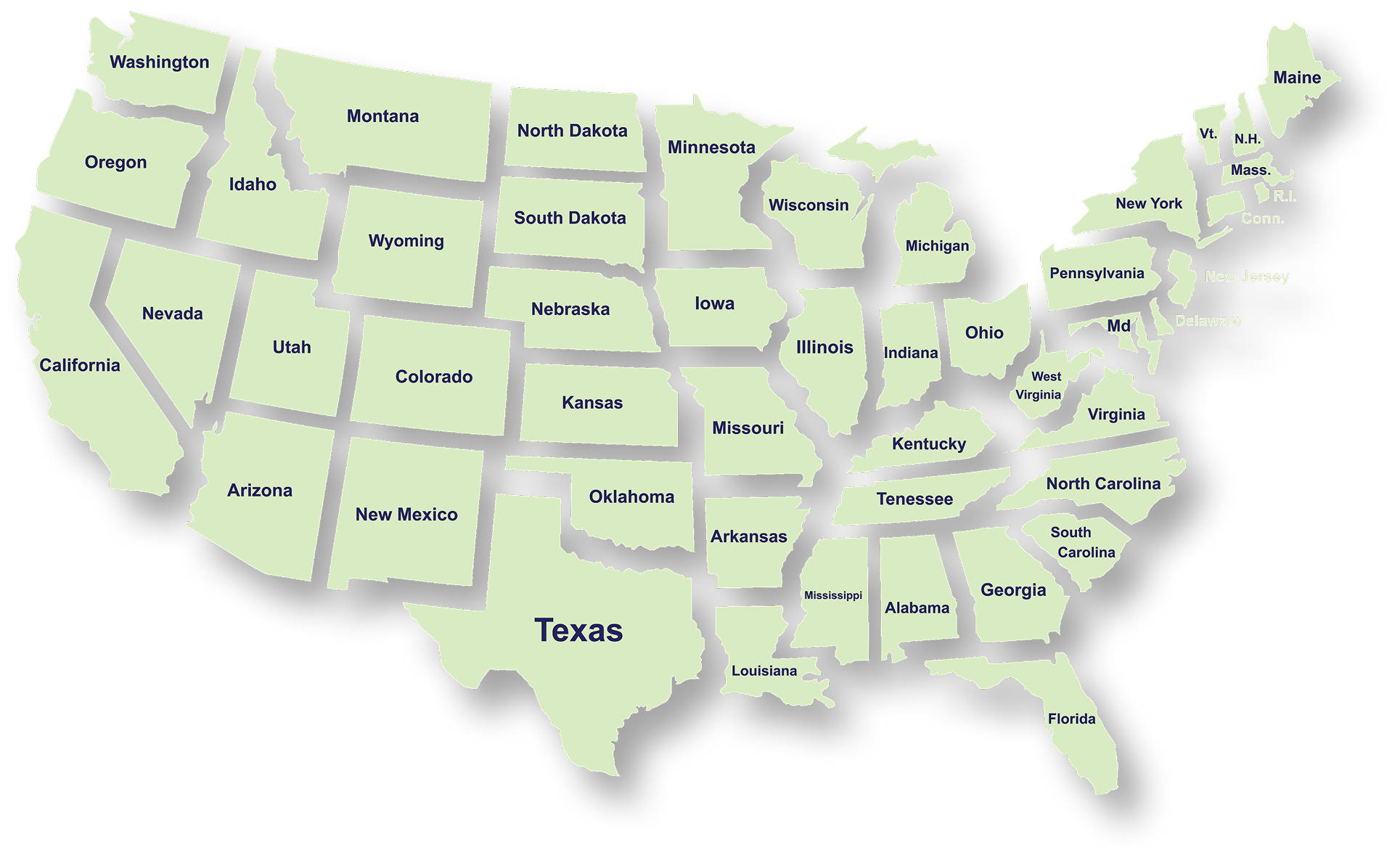
Serving Businesses & Individuals Across USA

We handle accounting, tax filing, and planning with defined timelines and accurate reporting for businesses and individuals across all states.

Frequently Asked Questions

What services does NR CPAs & Business Advisors provide?
What is tax planning and why is it important for businesses?
How can a Virtual CFO help my business?
When should a business consider IRS tax resolution services?
What financial statements does a business typically need?
How can startup advisory services help new businesses?
What is strategic business planning?
What is a Virtual Family Office and who can benefit from it?