Learning Center for Tax and Financial Insights

Stay updated with clear, actionable articles on tax rules, deadlines, deductions, and financial decisions that impact individuals and businesses.

No items found.

Haven't Filed Past Returns? IRS May File One for You and It Won't Be Pretty

Article Highlights: Non-Filers IRS Information Reporting IRS Prepared Substitute Return Notice of Deficiency Tax Court Appeal Liens and Levies There are millions of individuals who do not file a tax return each year, many of them simply because their income is below the filing threshold levels for the year based upon their filing status. Still others simply procrastinate and risk forfeiting their rightful refunds, including earned income tax credits, child tax credits, tuition credits and excess withholding. Then there are others who believe they owe, whether they actually do or not, and don’t file because they think they can’t pay what they owe. Not filing on time and owing money can result in a 5% per month (maximum 25%) failure-to-file penalty, plus failure-to-pay penalties and statutory interest in addition to what is owed. It does not make sense to incur unnecessary penalties, especially when the IRS has payment options and, in certain hardship situations, compromise options that may apply. If you are in the situation just described and think the IRS is not aware of you, think again. The IRS information reporting system knows a lot more about you than you might imagine. Here is just a short list of items that get reported to the IRS’s computer and added to your file: W-2s for wages filed by employers. W-2Gs for wagering winnings from racetracks, casinos, poker parlors, etc. 1099-MISC forms from businesses you have contracted with. 1099-INT and 1099-DIV showing interest and dividends earned from financial accounts. 1099-B forms showing the gross proceeds from the sales of securities. 1099-K forms showing the credit card transactions for your business. 1099-S forms reporting the gross proceeds from sales of real estate. K-1s from businesses and trusts you are connected with. Form 8300 transaction forms from banks showing large transactions. The list goes on and on.

Explore More
No items found.

IRS and Treasury Release the Latest State-By-State Economic Impact Payment Figures

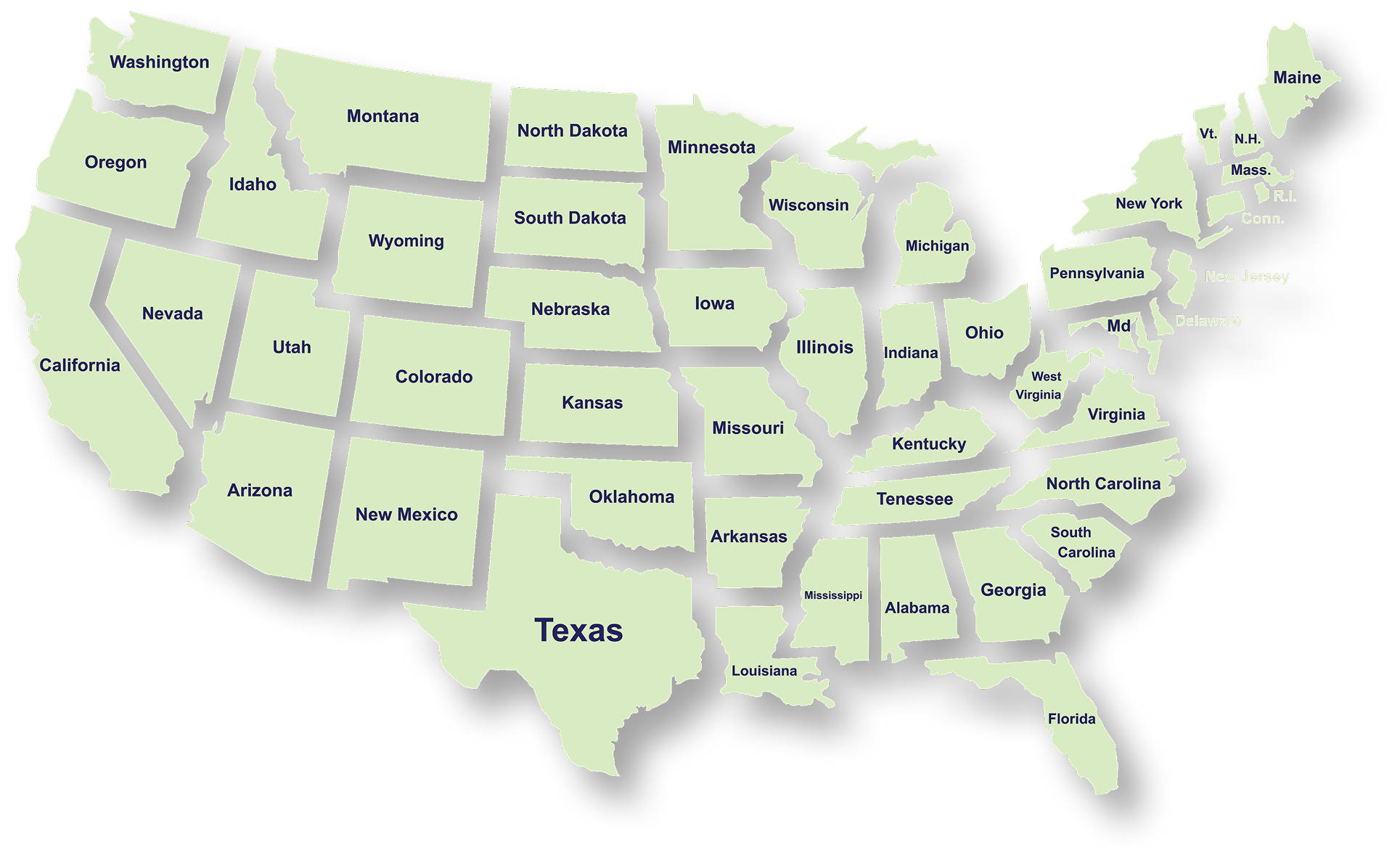
The Treasury Department and the IRS released updated state-by-state figures for Economic Impact Payments (EIPs) on May 22nd, reflecting the opening weeks of the program. Along with the announcement came the following quote from IRS Commissioner Chuck Rettig: “Economic Impact Payments have continued going out at a rapid rate to Americans across the country. We remind people to visit IRS.gov for the latest information, including answers to the most common questions we see surrounding the payments. We also continue to urge those who don’t normally have a filing requirement, including those with little or no income, that they can quickly register for the payments on IRS.gov.” Millions of people who are typically non-filers are still eligible to receive these EIPs. The payments are automatic for the following groups: People who filed a tax return in 2018 or 2019 Recipients of Social Security retirement, survivor or disability benefits (SSDI) and Railroad Retirement benefits Supplemental Security Income (SSI) and Veterans Affairs beneficiaries who didn’t file a tax return in the last two years For those who do not fit into these groups (i.e. anyone who doesn’t receive federal benefits and didn’t have a filing obligation in 2018 or 2019), the IRS “continues to encourage them to visit the Non-Filer tool at IRS.gov so they can quickly register for Economic Impact Payments.” People can continue to receive these payments throughout 2020. The following chart shows the Economic Impact Payment totals by state. State State postal code Total Number of EIP Payments Total Amount of EIP Payments Alabama AL 2,332,771 $ 3,988,469,624 Alaska AK 333,429 $ 580,774,111 Arizona AZ 3,242,043 $ 5,573,167,261 Arkansas AR 428,624 $ 2,496,524,966 California CA 16,869,636 $ 27,897,283,972 Colorado CO 2,605,089 $ 4,407,408,401 Connecticut CT 1,601,397 $ 2,609,644,445 Delaware DE 463,653 $ 778,262,906 District of Columbia DC 308,306 $ 421,734,460 Florida FL 10,618,792 $ 17,546,164,251 Georgia GA 4,763,109 $ 8,081,253,826 Hawaii HI 691,424 $ 1,179,264,436 Iowa IA 1,477,214 $ 2,660,402,672 Idaho ID 808,118 $ 1,512,453,150 Illinois IL 5,729,351 $ 9,630,495,809 Indiana IN 3,174,698 $ 5,613,824,661 Kansas KS 1,310,151 $ 2,359,448,490 Kentucky KY 2,199,370 $ 3,824,826,391 Louisiana LA 2,186,332 $ 3,680,836,165 Maine ME 714,941 $ 1,215,239,330 Maryland MD 2,692,062 $ 4,380,831,484 Massachusetts MA 3,136,787 $ 5,028,963,151 Michigan MI 4,813,156 $ 8,286,614,929 Minnesota MN 2,613,771 $ 4,577,086,990 Mississippi MS 1,427,440 $ 2,422,655,854 Missouri MO 2,933,973 $ 5,118,911,639 Montana MT 527,902 $ 932,003,084 Nebraska NE 887,877 $ 1,611,581,538 Nevada NV 1,496,510 $ 2,484,078,422 New Hampshire NH 676,004 $ 1,139,776,925 New Jersey NJ 3,955,396 $ 6,507,621,505 New Mexico NM 997,072 $ 1,684,917,178 New York NY 9,341,632 $ 15,034,060,259 North Carolina NC 4,820,974 $ 8,264,415,092 North Dakota ND 354,768 $ 632,983,746 Ohio OH 5,828,477 $ 9,833,041,489 Oklahoma OK 1,799,803 $ 3,190,860,867 Oregon OR 2,031,861 $ 3,425,278,483 Pennsylvania PA 6,258,107 $ 10,596,406,088 Rhode Island RI 536,218 $ 869,615,684 South Carolina SC 2,443,864 $ 4,174,979,940 South Dakota SD 416,962 $ 759,483,658 Tennessee TN 3,305,606 $ 5,693,071,645 Texas TX 12,396,590 $ 21,635,810,592 Utah UT 1,287,162 $ 2,494,199,291 Vermont VT 327,867 $ 555,841,287 Virginia VA 3,796,975 $ 6,447,589,217 Washington WA 3,453,810 $ 5,876,091,642 West Virginia WV 913,264 $ 1,578,210,674 Wisconsin WI 2,817,912 $ 4,948,382,340 Wyoming WY 270,626 $ 488,905,666 Foreign Addresses 748,724 $ 1,222,795,510

Explore More
No items found.

Does Your Business Qualify for the Research Tax Credit?

Article Highlights: Computation Method Regular Method Simplified Method Qualified Research The Credit General Business Credit AMT Payroll Tax Election For businesses, the tax code provides a tax credit of up to 20% of qualified expenditures to encourage businesses to develop, design or improve products, processes, techniques, formulas or software and similar activities. In the past, this credit—called the Credit for Increasing Research Activities—had to be reauthorized by Congress yearly, but as part of the 2015 PATH Act, this credit was made permanent. Calculated on the basis of increases in research activities and expenditures, the purpose of the credit is to reward businesses that pursue innovation by continually increasing investment in research activities. Even so, an alternative simplified method allows taxpayers to claim research credits if research costs remain the same or even decline compared with prior years. Computation Methods – There are two methods used to compute the credit: the regular method that provides for a 20% research credit or the simplified method, which is easier to document but results in a reduced credit of 14% of eligible expenses. Regular Method - Under the regular research credit method, the credit equals 20% of qualified research expenditures for a tax year over a base amount established by the business entity in 1984–1988, or a later period for companies that started subsequent to that period of time. This method may be best for companies that can document a low base amount. Simplified Method - Under the alternative simplified method, the credit equals 14% of qualified research expenses over 50% of the average annual qualified research expenses in the three preceding tax years. If the taxpayer has no qualified research expenses in any of the three preceding tax years, the alternative simplified method credit may be 6% of the tax year’s qualified research expenses. This method may be the best choice for taxpayers with incomplete records from the mid-1980s, those complicated by mergers and acquisitions, taxpayers with a high base amount from that period or smaller business entities. Qualified Research - The term “qualified research” means research undertaken for the purpose of discovering information that is technological in nature, the application of which is intended to be useful in the development of a new or improved business component of the taxpayer, and relates to:

Explore More
No items found.

July 2020 Individual Due Dates

July 1 - Time for a Mid-Year Tax Check UpTime to review your 2020 year-to-date income and expenses to ensure estimated tax payments and withholding are adequate to avoid underpayment penalties or to determine if the estimated payments and/or withholding can be reduced because your income has declined as a result of the COVID-19 emergency.July 1 - Time to Call for Your Tax Appointment if You Haven’t Yet Filed Your 2019 Return It is only 2 weeks until the July 15 due date for your 2019 individual income tax return that normally would have been due in April, but because of the COVID-19 emergency, was automatically extended by the IRS. If you have not made an appointment to have your taxes prepared, we encourage you to do so before it becomes too late. If you have already had your appointment but still have not gotten all of your tax information to this office, please contact us so that a 3-month extension can be prepared for you. If you will owe tax, payment needs to be made with the extension request. July 10 - Report Tips to EmployerIf you are an employee who works for tips and received more than $20 in tips during June, you are required to report them to your employer on IRS Form 4070 no later than July 10. Your employer is required to withhold FICA taxes and income tax withholding for these tips from your regular wages. If your regular wages are insufficient to cover the FICA and tax withholding, the employer will report the amount of the uncollected withholding in box 12 of your W-2 for the year. You will be required to pay the uncollected withholding when your return for the year it is filed.July 15 - IRA Contributions for 2019 This is the last day to make IRA contributions for tax year 2019.July 15 - IndividualsIf you took advantage of the 3-month COVID-19 automatic extension provided by the IRS to file your income tax return for 2019, file Form 1040 or 1040-SR, or request an additional 3-month extension using Form 4868, and pay any tax due. July 15 - Taxpayers Living AbroadNormally, for a U.S. citizen or resident alien living and working (or on military duty) outside the United States and Puerto Rico, the filing due date for your 2019 income tax return and to pay any tax due would have been June 15. However, due to the COVID-19 emergency this due date was extended to July 15. If you are a U.S. citizen or resident alien living and working (or on military duty) outside the United States and Puerto Rico, July 15 is the filing due date for your 2019 income tax return and to pay any tax due. If your return has not been completed and you need additional time to file your return, file Form 4868 to obtain 3 additional months to file. Then, file Form 1040 or 1040-SR by October 15. However, if you are a participant in a combat zone, you may be able to further extend the filing deadline (see below).Caution: This is not an extension of time to pay your tax liability, only an extension to file the return. If you expect to owe, estimate how much and include your payment with the extension. If you owe taxes when you do file your extended tax return, you will be liable for both the late payment penalty and interest from the due date.Combat Zone- For military taxpayers in a combat zone/qualified hazardous duty area, the deadlines for taking actions with the IRS are extended. This also applies to service members involved in contingency operations, such as Operation Iraqi Freedom or Enduring Freedom. The extension is for 180 consecutive days after the later of: The last day a military taxpayer was in a combat zone/qualified hazardous duty area or served in a qualifying contingency operation, or have qualifying service outside of the combat zone/qualified hazardous duty area (or the last day the area qualifies as a combat zone or qualified hazardous duty area), or The last day of any continuous qualified hospitalization for injury from service in the combat zone/qualified hazardous duty area or contingency operation, or while performing qualifying service outside of the combat zone/qualified hazardous duty area.

Explore More
No items found.

July 2020 Business Due Dates

July 1 - Self-Employed Individuals with Pension Plans If you have a pension or profit-sharing plan, you may need to file a Form 5500 or 5500-EZ for calendar year 2019. Even though the forms do not need to be filed until July 31, you should contact this office now to see if you have a filing requirement, and if you do, allow time to prepare the return.July 15 - CorporationsIf you took advantage of the 3-month COVID-19 automatic extension provided by the IRS to file your corporate income tax returns due on July 15, 2020, file Form 1120 or 1120S, or request an additional 3-month extension using Form 7004, and pay any tax due. CAUTION: The extension did not apply to calendar year S-Corporation returns that were due on March 16, 2020. July 15 - Fiduciaries If you took advantage of the 3-month COVID-19 automatic extension provided by the IRS to file your trust or estate income tax return for 2019, file Form 1041, or request an additional 2-1/2-month extension using Form 7004, and pay any tax due. July 15 - Estimated Tax – CorporationsCorporate 2020 estimated tax payments that would normally have been due between April 1, 2020 and July 14, 2020 are payable on July 15, 2020.July 15 - Social Security, Medicare and Withheld Income TaxIf the monthly deposit rule applies, deposit the tax for payments in June 2020. However, you may be able to retain a portion of the deposit to fund the mandatory paid sick leave and family leave under the Families First Coronavirus Response Act or defer portions to 2021 and 2022 under the CARES Act. July 15 - Non-Payroll Withholding If the monthly deposit rule applies, deposit the tax for payments in June.July 31 - Self-Employed Individuals with Pension Plans If you have a pension or profit-sharing plan, this is the final due date for filing Form 5500 or 5500-EZ for calendar year 2019.

Explore More
No items found.

What You Need to Know About the People First Initiative

The global COVID-19 pandemic has presented significant challenges for American citizens from both the health and financial perspectives. Many individuals are looking for ways to reduce the financial impact of layoffs or furloughs they have experienced as a result of the shutdown in the economy. In an effort to relieve some of this burden, the Internal Revenue Service introduced the People First Initiative on March 25, 2020. The initiative outlines provisions for suspension of certain tax payments and reduction or suspension of IRS representative enforcement actions during this time. The initiative is effective for the time period of April 1st, 2020 to July 15th, 2020 and covers a number of IRS processes. Installment Agreements An installment agreement is a payment plan set up with the Internal Revenue Service that allows you to pay your outstanding taxes over time. For taxpayers who currently have an installment agreement with the IRS, payments will be suspended on their accounts between April 1st, 2020 and July 15th, 2020. In addition, installment agreements will not be considered to be in default during this time. It is important to note that interest will continue to accrue during this time and all missed payments will be due once the extension period has expired. Offer in Compromise An offer in compromise is an agreement with the IRS that allows taxpayers experiencing financial hardship to settle their tax debts for less than the total amount owed. Depending on where a taxpayer is in the offer in compromise application process, there are several remedies available. If you currently have an offer in compromise agreement, you may opt to suspend your payments owed between April 1, 2020 and July 15th, 2020. Similarly to installment agreements, interest will continue to accrue and any payments missed during the relief period will become due at the end of the extension timeframe. If your application for an offer in compromise is still pending, you may have until July 15th in order to provide any additional requested information. The initiative also provides that applications for an offer in compromise may not be closed without the taxpayer’s permission during the covered period. For those with delinquent tax filings for the 2018 tax year, these late filings will not result in a defaulted offer in compromise agreement if the outstanding tax returns are filed prior to July 15th, 2020. Automated and Field Collection Activities Collection activities including liens and levies will be halted during the initiative period in most cases. It should be noted, however, that Internal Revenue Service representatives will continue to pursue actions related to high-income taxpayers as necessary. IRS Passport Certifications The IRS will suspend the submission of passport certifications to the State Department for seriously delinquent taxpayers. These certifications seek to prevent taxpayers with severely outstanding tax liabilities from renewing or receiving a new passport. IRS Collection Activity During the People First Initiative coverage period, the IRS will cease forwarding taxpayer accounts to third party collection agencies. IRS Audits The IRS is modifying its policies related to conducting audits in light of the current coronavirus pandemic. Where possible, IRS agents will conduct their audits remotely and any in-person meetings will be suspended during this time, although taxpayers are still encouraged to respond to outstanding requests to the extent possible. Some taxpayers may have received requests to verify their income information in order to confirm their qualification for the Earned Income credit. These individuals have until July 15th, 2020 to respond to this request. While provisions have been made to provide taxpayers with financial relief during the initiative period, the statute of limitations on the Internal Revenue Service will still apply. The IRS will take action to protect its interests should the expiration of the statute occur during this time. While the People First Initiative can offer much needed tax relief during an unprecedented time in our country, it is important to look closely at the details of the provisions and how they may apply to your circumstances. We can help you with understanding your current options. The July 15th deadline is quickly approaching, but it isn’t too late to take action. If you would like to learn more about the People First Initiative and how we can help sort out your IRS tax problems, please feel free to contact us for more information or to schedule an appointment.

Explore More
No results found.
Thank you! Your submission has been received!
Oops! Something went wrong while submitting the form.

Want tax & accounting tips & insights?Sign up for our newsletter.

Thank you! Your submission has been received!
Oops! Something went wrong while submitting the form.

Why Work With Us?

We combine deep tax expertise, financial strategy, and practical business insight to help you manage complexity, stay compliant, and make confident financial decisions.
A dollar sign, representing financial advice or discussion at NR CPAs & Business Advisors.

Experienced CPA and Enrolled Agent Leadership

Guidance led by licensed professionals with deep expertise in tax strategy, compliance, and complex financial matters.
White bar chart with an upward arrow on green circular background representing growth or progress at NR CPAs &. Business Advisors

Support for Growing Businesses and Startups

We understand the financial challenges of growth stage businesses and provide structured guidance to support expansion.
A white hand holding a dollar symbol and ascending bar chart on a green circular background representing financial growth or investment at NR CPAs & Business Advisors..

Strategic Financial Advisory

Our team helps you evaluate financial decisions with greater clarity, supported by practical insights and long term planning.

Fractional CFO Support

Access experienced financial leadership without the commitment and cost of hiring a full time Chief Financial Officer.

Proactive Tax Planning Approach

We focus on identifying tax opportunities throughout the year rather than reacting only during filing season.

Clear and Reliable Financial Reporting

Accurate financial statements and reporting that help you better understand performance and make informed decisions.
White IRS building icon with pillars and a dollar sign above on a green circular background.

Professional IRS Representation

Experienced support in resolving IRS notices, disputes, and compliance matters while protecting your financial interests.

Personalized Client Focus

Every client receives thoughtful attention and tailored financial solutions based on their specific needs and business goals.
Financial matters often involve important decisions. Working with experienced advisors can help you approach them with greater clarity and confidence in your choices.

Need Help With Your Tax or Financial Decisions?

Discuss your situation with our advisors to get clear guidance on tax planning, IRS matters, and the financial decisions ahead.
Business consulting at NR CPAs & Business Advisors.

Request Your Consultation

Fill out the form to discuss your tax concerns, financial questions, or advisory needs with our team. We will review your details and respond shortly.

Serving Businesses & Individuals Across USA

We handle accounting, tax filing, and planning with defined timelines and accurate reporting for businesses and individuals across all states.

Frequently Asked Questions

What services does NR CPAs & Business Advisors provide?
What is tax planning and why is it important for businesses?
How can a Virtual CFO help my business?
When should a business consider IRS tax resolution services?
What financial statements does a business typically need?
How can startup advisory services help new businesses?
What is strategic business planning?
What is a Virtual Family Office and who can benefit from it?