Learning Center for Tax and Financial Insights

Stay updated with clear, actionable articles on tax rules, deadlines, deductions, and financial decisions that impact individuals and businesses.

No items found.

Year-end Tax Planning Strategy - Annual Gifts

Annual gifts are one of the best ways to reduce your future estate taxes. Learn more below.

Explore More
No items found.

Last-Minute Tax Strategies

Article Highlights: Maximize Education Tax Credits Employer Health Flexible Spending Accounts Maximize Health Savings Account Contributions Conversions to Roth IRAs Don’t Forget Your 2018 Minimum Required Distribution Advance Charitable Deductions Utilize IRA-to-Charity Transfers Maximize Tax-Deductible Medical Expenses Don’t Waste the 2018 Annual Gift Tax Exemption Take Steps to Avoid Underpayment Penalties Prepay State and Local Taxes for 2018 Defer Capital Gains by Investing in an Opportunity Zone Fund Sell Loser Stocks Not Needing to File May Be an Opportunity Maximize IRA Distributions Make Business Purchases Just a reminder that the last day you may make a tax-deductible purchase, pay a tax-deductible expense, take advantage of tax credits, or make tax-deductible charitable contributions for 2018 is Dec. 31. Every taxpayer’s situation is unique, and the suggestions offered here may not apply to you. The best way to ensure that you are putting yourself into the most tax-advantaged position is to seek tax-planning advice, usually earlier in the year. However, the following are some tax strategies that can be utilized at the last minute. Maximize Education Tax CreditsIf you qualify for either the American Opportunity or Lifetime Learning education credit, check to see how much you have already paid in qualified tuition and related expenses in 2018. If it is not the maximum allowed for computing the credits, you can prepay 2019 tuition as long as it is for an academic period beginning in the first three months of 2019. That will allow you to increase the credit for 2018.Employer Health Flexible Spending AccountsIf you contributed too little to cover expenses this year, you may wish to increase the amount you set aside for next year. As a reminder, you cannot set aside amounts to get tax-free reimbursements for over-the-counter drugs for which you don’t have a doctor’s prescription other than insulin, and the maximum contribution for 2018 is $2,650.Maximize Health Savings Account Contributions If you become eligible to make health savings account (HSA) contributions late this year, you can make a full year’s worth of deductible HSA contributions, even if you were not eligible to make HSA contributions for the entire year. This opportunity applies even if you first become eligible in December. In brief, if you qualify for an HSA, contributions to the account are deductible, or nontaxable if made by your employer (within IRS-prescribed limits); earnings on the account are tax-deferred; and distributions are tax-free if made for qualifying medical expenses.Conversions to Roth IRAs If your income is unusually low this year, you may wish to consider converting your traditional IRA into a Roth IRA. The lower income results in a lower tax rate, which provides you an opportunity to convert to a Roth IRA at a lower tax amount.Don’t Forget Your 2018 Minimum Required Distribution If you have reached age 70 1/2, you must make required minimum distributions (RMDs) from your IRA, 401(k) plan, and other employer-sponsored retirement plans (but if you are still working, distributions from your current employer’s plan can be postponed until you retire). Failure to take a required withdrawal can result in a 50% penalty of the amount of the RMD not withdrawn. If you turned age 70 1/2 in 2018, you can delay the first required distribution to the first quarter of 2019, but if you do, you will have to take a double distribution in 2019. Carefully consider the tax impact of a double distribution in 2019 versus a distribution in both this year and next.Advance Charitable DeductionsIf you regularly tithe at a house of worship, you might consider pre-paying part or all of your 2019 tithing, thus advancing the deduction into 2018. This can be especially helpful to individuals who marginally itemize their deductions, possibly allowing them to itemize this year and then take the standard deduction for 2019.Utilize IRA-to-Charity Transfers You can combine your charitable contributions with your required minimum distribution. Once you reach age 70 1/2 and begin your required minimum distributions mentioned above, you can request that your IRA trustee directly transfer funds from your IRA to a charity. In doing so, the distribution is not taxable and goes toward satisfying your RMD requirements. This also reduces your AGI, which in some circumstances can reduce the amount of taxable Social Security income. There is no minimum charitable distribution, but the maximum amount per individual is $100,000 per year.Maximize Tax-Deductible Medical Expenses For example, if you have outstanding medical or dental bills, paying the balance before year-end may be beneficial, but only if you already meet the 7.5% of the AGI floor for deducting medical expenses, or if adding the payments would put you over the 7.5% threshold and you are itemizing your deductions. You can even use a credit card to pay the expenses, but you would only want to do so if the interest expenses you’d incur if you don’t pay off the card right away would be less than the tax savings. You might also wish to consider scheduling and paying for medical expenses such as glasses and dental work before the end of 2018, since the medical floor is slated to increase to 10% of the AGI in 2019.

Explore More
No items found.

Want to Save Taxes on a Roth IRA Conversion?

With year-end just around the corner… Have you thought about any last-minute actions for this year’s taxes? You might convert some or all of your traditional IRAs into a Roth IRA. Learn more.

Explore More
No items found.

2018 TAX DEDUCTION FINDER & PROBLEM SOLVER

This is an archive of the 2018 edition of our tax organizer. Use this organizer if you have not yet filed your 2018 tax return. To get ready for your tax appointment, we use tax organizers to help us identify missing tax deductions and get you more organized before your appointment. We update the tax organizer annually to make sure you are compliant with the latest tax law changes. The 2018 individual tax organizer is provided in three configurations to assist you in collecting relevant tax information needed to properly prepare your tax return. Access any of the three versions by double-clicking on the underlined title links below. The organizers can be downloaded to your computer where you can fill and save the information until you have completed collecting all of your information. After you have completed it, please forward the organizer (printed or digitally) to our office for immediate service. If you have an office appointment, you can print it out and bring it with you to the meeting. A word of caution: you can fill the organizers online and print them out. However, if you close the file, your data will not be saved unless the form is saved to your computer. Once the completed organizer has been received, you will be contacted by phone, fax or e-mail with any questions, comments, or suggestions. If you e-mail our office advising us that you have sent your tax materials, we will notify you of their receipt. 2018 Basic Organizer

Explore More
No items found.

January 2019 Individual Due Dates

January 2 - Time to Call For Your Tax Appointment - January is the beginning of tax season. If you have not made an appointment to have your taxes prepared, we encourage you to do so before the calendar becomes too crowded.January 10 - Report Tips to Employer - If you are an employee who works for tips and received more than $20 in tips during December, you are required to report them to your employer on IRS Form 4070 no later than January 10.

Explore More
No items found.

January 2019 Business Due Dates

January 15 - Employer’s Monthly Deposit Due - If you are an employer and the monthly deposit rules apply, January 15 is the due date for you to make your deposit of Social Security, Medicare and withheld income tax for December 2018. This is also the due date for the nonpayroll withholding deposit for December 2018 if the monthly deposit rule applies. Employment tax deposits must be made electronically (no paper coupons), except employers with a deposit liability under $2,500 for a return period may remit payments quarterly or annually with the return.January 31 - 1099-MISCs Due To Service Providers & the IRS - If you are a business or rental property owner and paid $600 or more to individuals (other than employees) as nonemployee compensation during 2019, you are required to provide Form 1099 to those workers by January 31. “Nonemployee compensation” can mean payments for services performed for your business or rental by an individual who is not your employee, commissions, professional fees and materials, prizes and awards for services provided, fish purchases for cash, and payments for an oil and gas working interest. In order to avoid a penalty, copies of the 1099s also need to be sent to the IRS by January 31, 2019 *. The 1099s must be submitted on optically scannable (OCR) forms. This firm prepares 1099s in OCR format for submission to the IRS with the 1096 submittal form. This service provides both recipient and file copies for your records. A business or individual who is required to file 250 or more information returns (i.e., 1099s among others) must file those forms electronically. Please call this office for preparation assistance. *This due date for the IRS’ copy is one or two months earlier than in years prior to 2017 and applies when you have paid nonemployee compensation that is being reported in box 7 of the 1099-MISC. January 31 - Form 1098 and Other 1099s Due to Recipients - Form 1098 (Mortgage Interest Statement) and Forms 1099, other than 1099-MISC when box 7 is used, are also due to recipients by January 31. The IRS’ copy is not due until February 28, 2019, or April 1, 2019 if electronically filed. These 1099s may be reporting the following types of income: Dividends and other corporate distributions Interest Amounts paid in real estate transactions Rent Royalties Amounts paid in broker and barter exchange transactions Payments to attorneys Payments of Indian gaming profits to tribal members Profit-sharing distributions Retirement plan distributions Original issue discount Prizes and awards Medical and health care payments Debt cancellation (treated as payment to debtor)

Explore More
No results found.
Thank you! Your submission has been received!
Oops! Something went wrong while submitting the form.

Want tax & accounting tips & insights?Sign up for our newsletter.

Thank you! Your submission has been received!
Oops! Something went wrong while submitting the form.

Why Work With Us?

We combine deep tax expertise, financial strategy, and practical business insight to help you manage complexity, stay compliant, and make confident financial decisions.
A dollar sign, representing financial advice or discussion at NR CPAs & Business Advisors.

Experienced CPA and Enrolled Agent Leadership

Guidance led by licensed professionals with deep expertise in tax strategy, compliance, and complex financial matters.
White bar chart with an upward arrow on green circular background representing growth or progress at NR CPAs &. Business Advisors

Support for Growing Businesses and Startups

We understand the financial challenges of growth stage businesses and provide structured guidance to support expansion.
A white hand holding a dollar symbol and ascending bar chart on a green circular background representing financial growth or investment at NR CPAs & Business Advisors..

Strategic Financial Advisory

Our team helps you evaluate financial decisions with greater clarity, supported by practical insights and long term planning.

Fractional CFO Support

Access experienced financial leadership without the commitment and cost of hiring a full time Chief Financial Officer.

Proactive Tax Planning Approach

We focus on identifying tax opportunities throughout the year rather than reacting only during filing season.

Clear and Reliable Financial Reporting

Accurate financial statements and reporting that help you better understand performance and make informed decisions.
White IRS building icon with pillars and a dollar sign above on a green circular background.

Professional IRS Representation

Experienced support in resolving IRS notices, disputes, and compliance matters while protecting your financial interests.

Personalized Client Focus

Every client receives thoughtful attention and tailored financial solutions based on their specific needs and business goals.
Financial matters often involve important decisions. Working with experienced advisors can help you approach them with greater clarity and confidence in your choices.

Need Help With Your Tax or Financial Decisions?

Discuss your situation with our advisors to get clear guidance on tax planning, IRS matters, and the financial decisions ahead.
Business consulting at NR CPAs & Business Advisors.

Request Your Consultation

Fill out the form to discuss your tax concerns, financial questions, or advisory needs with our team. We will review your details and respond shortly.

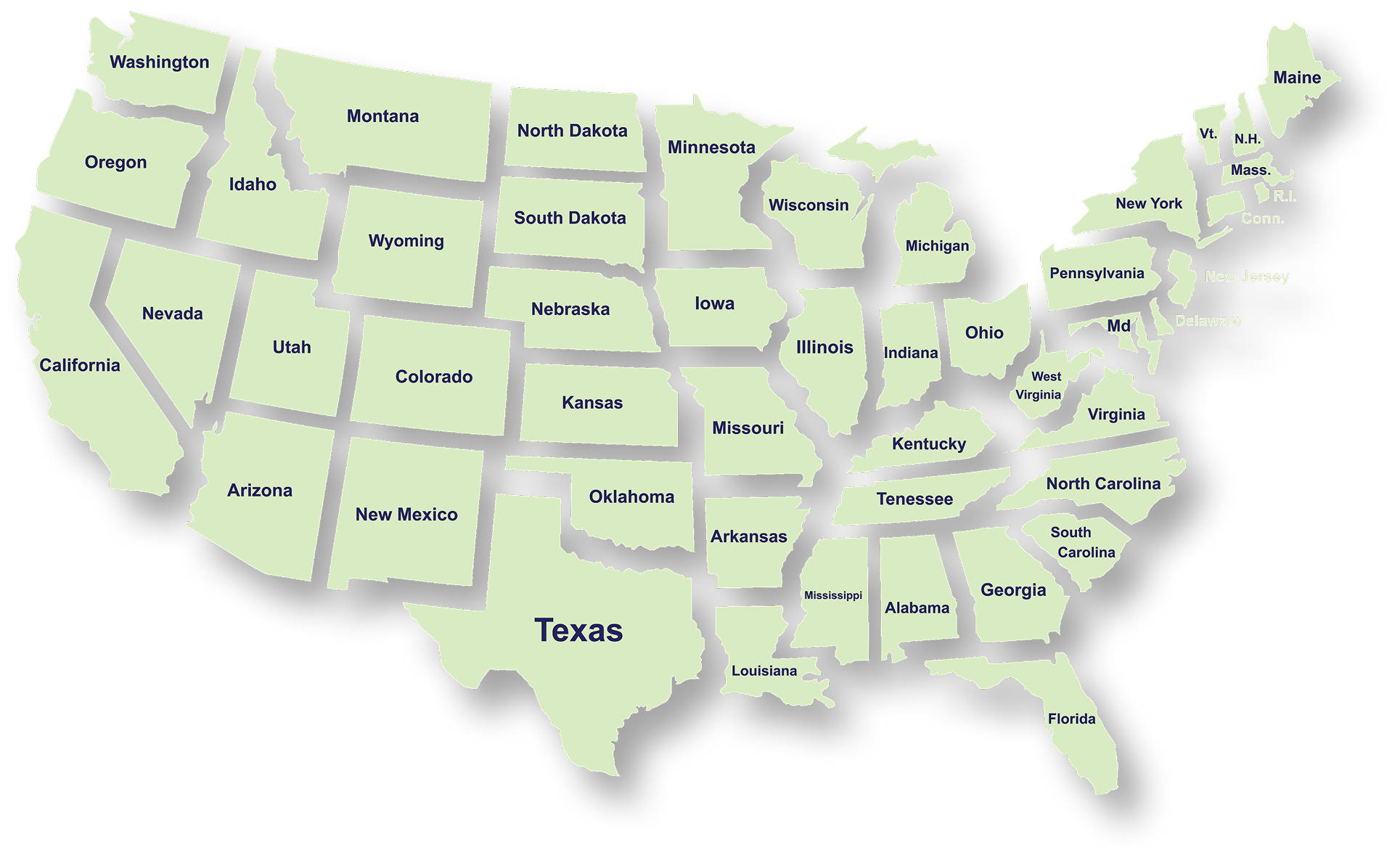
Serving Businesses & Individuals Across USA

We handle accounting, tax filing, and planning with defined timelines and accurate reporting for businesses and individuals across all states.

Frequently Asked Questions

What services does NR CPAs & Business Advisors provide?
What is tax planning and why is it important for businesses?
How can a Virtual CFO help my business?
When should a business consider IRS tax resolution services?
What financial statements does a business typically need?
How can startup advisory services help new businesses?
What is strategic business planning?
What is a Virtual Family Office and who can benefit from it?