Learning Center for Tax and Financial Insights

Stay updated with clear, actionable articles on tax rules, deadlines, deductions, and financial decisions that impact individuals and businesses.

No items found.

Getting Started with Accounts in QuickBooks Online, Part 2

We covered a lot of ground last month, but there are still some things to know about working with transactions you import from your banks. Last month, we went over the basics of managing financial transactions once you’ve downloaded them into QuickBooks Online. We walked you through the mechanics of connecting to banks and credit card companies online and described the process of reviewing imported transactions, exploring concepts like: Categorizing them, and marking them as billable Adding them to an account register; matching them to related transactions; or transferring them to another account Using Batch actions to process related groups We explored QuickBooks Online’s Banking features last month, including the site’s ability to work with related transactions as groups. This month, we’ll look at the process of setting up rules to automatically classify transactions as they come in from your banks. We’ll also provide a brief overview of the Chart of Accounts. Bank Rules We’ve already discussed QuickBooks Online’s ability to guess how transactions should be categorized (it’s not always right, but you can change incorrect ones). It also allows you to memorize transactions that recur on a regular basis; this also saves time and improves accuracy. There’s another way the site also uses automation to help minimize keystrokes: Bank Rules. Based on your input, it will scan incoming items and classify them, so you don’t have to. This can be very helpful when you regularly import transactions that share specific attributes. Let’s look at how this works. Click Banking in the navigation toolbar, then click Bank Rules. Once you’ve created your own rule(s), they’ll appear in a grid on this screen. For now, click New rule in the upper right corner. Basically, you’re going to tell QuickBooks Online that when specific conditions are met, as you can see in the example below, it should take the specified action(s): assign a Transaction type, Payee, and/or Category. You can also have the transaction automatically added to your books. You can create Bank Rules in QuickBooks Online that will automatically assign a Transaction type, Payee, and Category to imported items that meet specific conditions.

Explore More
No items found.

10 Ways to Improve Profits in the Coming Year

In the U.S., the economy is thriving and expected to grow over the next few months. Businesses are expanding. The Federal Reserve has inched up interest rates, creating investment opportunities, and lenders are offering small business loans. All of this points to a promising outlook for the coming months. As a small business owner, this is the time to take a closer look at your profit and loss sheets to determine how you can make the most out of this current economy. How Can You Increase Revenue and Profits in the Coming Year? For most companies, increasing revenue and profit margins is a goal. Yet, there’s strong competition in most sectors. Here’s a look at ways you can boost your profit margins without having to invest heavily. #1: Increase Pricing Marginally Inflation is a key component of the current market. As the U.S. consumer increases confidence in spending, it becomes possible to increase prices. Re-evaluate your current price points. Are you getting enough from each sale to build profits? #2: Don’t Overlook the Impact of Tariffs The ongoing trade war with China has many business owners worried about cost. Plan now. Tariffs are impacting nearly all industries including construction, retail, restaurants, and manufacturing to name just a few. Work with your team to understand the impact on your business’s bottom line, such as the higher cost of goods, and build those costs into your prices. #3: Get Rid of Tasks Not Adding Value to the Customer Take a closer look at what you are spending on within your profit and loss. Is each one of these expenses directly contributing to your customers' needs? Eliminate costs that do not contribute to customer value. #4: Review Competitor Prices Along with increasing your prices, take a closer look at what your competition is charging for services. There are two things to focus on here. If their prices are higher, why? Are they offering something better for their product or service that encourages a higher price point? Second, are your prices competitively aligned with theirs? If not, what can you do to offer something extra to your customer? #5: Reduce Overstock Carrying a significant amount of stock does not improve business operations and increases costs. It can drive up waste when product is lost or forgotten. It also hampers your company’s ability to keep inventory costs in line with your goals. Pair down stock. #6: Find a Way to Increase the Value of Every Sale Provide some last-minute addition your customer could buy to enhance their product or service. Ensure your sales team is speaking to each customer about this offer, right as they close the deal. If you sell cars, offer an add-on feature for a certain additional amount. If you sell professional services, determine if your customers could benefit from a monthly check-in or other add-on services. #7: Expand Product or Services Lines With Care Look for complimentary services and products that do not require a lot of investment to offer them to your customers. What additional products or revenue streams could enhance what you already provide? This may not require additional equipment or a large amount of inventory. #8: Build Your Team’s Skillset Beyond a doubt, in a sales-oriented business, your company cannot build revenue if your sales team misses their market. Invest in sales training for the modern audience. Focus on moving away from traditional methods toward more efficient and brand-building methods for sales. #9: Get Your Numbers in Line Now Hiring a team to help you explore your current profit margins is critical. However, bringing on a professional organization to help with managing your books is only effective if you apply the information and insights they provide to you. In other words, find a team you can sit down with and discuss opportunities you can apply right now. #10: Build Your Customer Base Use a variety of tools to help build your customer base. Complete a market analyses to better understand who your target customer is. Then, work to modernize your marketing efforts to attract that specific audience. When you do, you turn heads and capitalize on a new set of customers. Building revenue and profits starts with knowing where you are specifically. Review your prices, financial accounts, and books with care. Then, look for small ways to reduce costs that don’t contribute to your profits and build up services, products, and prices for those that help your company to grow. Always have a focus on the bottom-line benefit of any investment you make.

Explore More
No items found.

Don't Overlook Tax Credits

Article Highlights: Non-refundable vs. Refundable Credit Childcare Credit Earned Income Tax Credit Child & Dependent Tax Credit Saver’s Credit Vehicle Tax Credits Adoption Credit Residential Energy-Efficient Property Credit Tax credits are a tax benefit that offsets your actual tax liability, as opposed to a tax deduction, which reduces your income. Congress provides tax credits to individual taxpayers for a number of reasons, including as a form of assistance for lower-income taxpayers, to stimulate employment, and to stimulate certain investments, among other things. Tax credits come in two types: non-refundable and refundable. A non-refundable credit can only reduce your tax liability to zero; any excess is either carried forward or is simply lost. In the case of a refundable credit, if there is excess after reducing your tax liability to zero, the excess is refundable. The following is a summary of some of the tax credits available to individual taxpayers: Childcare Credit – Parents who work or are looking for work often must arrange for care of their children during working hours or while searching for work. If this describes your situation and your children requiring care are under 13 years of age, you may qualify for a childcare tax credit. The credit ranges from 20% to 35% of non-reimbursed expenses, based upon your income, with the higher percentages applying to lower-income taxpayers and the lower percentages applying to higher-income taxpayers. Applicable Percentage of AGI for the Childcare Credit AGI Over But Not Over Applicable Percent AGI Over But Not Over Applicable Percent 0 15,000 35 29,000 31,000 27 15,000 17,000 34 31,000 33,000 26 17,000 19,000 33 33,000 35,000 25 19,000 21,000 32 35,000 37,000 24 21,000 23,000 31 37,000 39,000 23 23,000 25,000 30 39,000 41,000 22 25,000 27,000 29 41,000 43,000 21 27,000 29,000 28 43,000 No Limit 20 The maximum expense amount allowed is $3,000 for one child and $6,000 for two or more, and the credit is non-refundable, which means it can only reduce your tax to zero, and the excess is lost. As an example, say your adjusted gross income (AGI) is between $33,000 and $35,000. Your credit percentage would be 25%. If you paid childcare expenses of $4,000 for two children under the age of 13, your tax credit would be $1,000 ($4,000 x 25%). If your tax for the year was $5,000, the credit would reduce that tax to $4,000. On the other hand, if your tax for the year was $800, the credit would reduce your tax to zero, and the $200 excess credit would be lost. This credit also applies when a taxpayer or spouse is disabled or a full-time student, in which case special “earned income” allowances are provided for months when the taxpayer or spouse is disabled or a full-time student. Please call this office for additional details if this situation applies in your case. Earned Income Tax Credit (EITC) – Congress established the EITC as an income supplement for working individuals in lower-paying employment. If you qualify, it could be worth as much as $6,431 in 2018. It is a refundable credit. The EITC is based on the amount of your earned income (income from work for wages and/or self-employment) and whether there are qualifying children in your household. Qualifying children are those who live with you for over half the year, are related, and are under the age of 19 or a full-time student under the age of 24. The credit increases as your earned income increases. The table below shows the earned income at which the maximum credit is achieved for 2018. Qualifying Children Earned Income Maximum Credit None 6,780 $519 1 $10,180 $3,461 2 $14,290 $5,716 3 or more $14,290 $6,431 The credit amount phases out after reaching the maximum based on filing status and number of qualifying children. The 2018 phase-out ranges are shown in the table below. Qualifying Children Filing Status Phase-out Range None Married Filing Joint $14,170–20,950 Others $8,490–15,270 1 Married Filing Joint $24,350–46,010 Others $18,660–40,320 2 Married Filing Joint $24,350–51,492 Others $18,660–45,802 3 or more Married Filing Joint $24,350–54,884 Others $18,660–49,194 In addition, there are some qualification requirements: you, your spouse (if married and filing jointly), and each qualifying child must have a valid Social Security number, and you cannot use the filing status married filing separately. You cannot be a qualifying child of another person, your investment income for the year cannot exceed $3,500 (2018), and you cannot exclude earned income from working abroad. If you do not have a qualifying child, you must be at least age 25 but under 65 at the end of the year. Even though this credit can be worth thousands of dollars to a low-income family, the IRS estimates as many as 25 percent of people who qualify for the credit do not claim it, simply because they don’t understand the criteria. If you qualified for but failed to claim the credit on your return for 2015, 2016, and/or 2017, you can still claim it for those years by filing an amended return or an original return, if you have not previously filed. Please call for assistance. Members of the military can elect to include their nontaxable combat pay in their earned income for the earned income credit. If that election is made, the military member must include in their earned income all nontaxable combat pay they received for the year. Child & Dependent Tax Credit – As an aid to families with children, the tax reform increased the child tax credit from $1,000 to $2,000 for each qualified child. A qualified child for this tax credit is one who is under age 17 at the end of the year, is related, is not self-supporting, lived with you over half the year, has a Social Security number, and is claimed as your dependent. The refundable portion of this credit is equal to 15% of your earned income but limited to $1,400. Beginning in 2018, you are also able to claim a non-refundable credit of $500 for each of your dependents who do not qualify for the child credit. For both the child and dependent credits, the credit begins to phase out for married taxpayers with an AGI of $400,000 ($200,000 for others). Saver’s Credit – Congress created the non-refundable saver’s credit as a means of stimulating retirement savings among lower-income individuals. It helps to offset part of the first $2,000 that workers voluntarily contribute to traditional or Roth individual retirement arrangements (IRAs), SIMPLE-IRAs, SEPs, 401(k) plans, 403(b) plans for employees of public schools and certain tax-exempt organizations, 457 plans for state or local government employees, and the Thrift Savings Plan for federal employees. The saver’s credit is available in addition to any other tax savings that apply as a result of contributing to retirement plans. The credit is a percentage of the first $2,000 contributed to an eligible retirement plan. The following table illustrates the percentage based upon filing status and AGI for 2018.

Explore More
No items found.

Expecting Your Taxable Income to Be Low This Year? You Can Take Advantage of It

Article Highlights: Adjusted Gross Income Taxable Income Graduated Individual Tax Rates Take IRA Distributions Redeem Government Bonds Defer Deductions Convert Traditional IRA Funds into a Roth IRA Zero Capital Gains Rate Business Expenses Affordable Care Act If your taxable income is exceptionally low this year, or even if you expect not to be required to file a tax return this year, a number of tax opportunities may be available to you. But time is running short, since these opportunities will require action on your part before year’s end. However, before we consider actual strategies, let’s look at key elements that govern tax rates and taxable income. Adjusted Gross Income (AGI) – This is the sum of all of your income that’s subject to tax, such as wages, interest, dividends, gains from sales, net self-employment income, retirement income, minus items that are specifically deductible without having to itemize your deductions, including contributions to traditional IRAs and self-employed retirement plans, interest paid on student loans, contributions to health savings plans, and a limited number of others. Taxable Income – To be simplistic, taxable income is your AGI less the greater of the standard deduction for your filing status or your itemized deductions: AGI XXXX Deductions - XXXX Taxable Income XXXX If the deductions exceed your AGI, then you can end up with a negative taxable income, which means that to the extent it is negative, you can actually add income or reduce your deductions without incurring any tax. Graduated Individual Tax Rates – Ordinary individual tax rates are graduated. So as your taxable income increases, so does your tax rate. Thus, the lower your taxable income, the lower your tax rate will be. Your income tax is the result of multiplying your tax rate by your taxable income (but to simplify the computation for those with taxable income up to $100,000, the IRS figures the tax by income range and provides look-up tables, so for most taxpayers, their tax rate is not apparent). Individual ordinary tax rates range from 10% to as high as 37%. For 2018, the taxable income amounts for the three lowest tax rates – 10%, 12%, and 22% – are: Filing Status Single Married Filing Jointly Head of Household Married Filing Separate 10% $0–9,525 $0–19,050 $0–13,600 $0–9,525 12% $9,526–38,700 $19,051–77,400 $13,601–51,800 $9,526–38,700 22% $38,701–82,500 $77,401–165,000 $51,801–82,500 $38,701–82,500 So for instance, if you are single, your first $9,525 of taxable income is taxed at 10%. The next $29,174 ($9,526 to $38,700) is taxed at 12%, and the next $43,799 ($38,701 to $82,500) is taxed at 22%. Here are some strategies you can employ for your tax benefit. However, these strategies may be interdependent on one another and your particular tax circumstances. Take IRA Distributions – Depending upon your projected taxable income, you might consider taking an IRA distribution to add income for the year. For instance, if your projected taxable income is negative, then you can actually take a withdrawal of up to the negative amount without incurring any tax. Even if your projected taxable income is not negative and your normal taxable income would put you in the 22% or higher bracket, you might want to take out just enough to be taxed at the 10% or even the 12% tax rate. Of course, those are retirement dollars; consider moving them into a regular financial account set aside for your retirement. Also, be aware that distributions before age 59½ are subject to a 10% early-withdrawal penalty even if there is no tax liability, so this strategy isn’t recommended for those younger than 59½.

Explore More
No items found.

Legitimate Tax-Deductible Charity or Scam?

Articles Highlights: Holiday Giving Scammers and How to Avoid Them Verifying Legitimate Charities Substantiation Special Situations With the holiday season approaching, and with the great need for aid in the wake of the recent hurricanes and wildfires, you no doubt are being solicited for donations. However, do not be fooled by the scammers who come out from hiding whenever there is a disaster and during the holiday season. The last thing you want to do is get ripped off; not only will your charitable dollars go to waste, but you will also lose your tax deduction, as contributions are only tax-deductible if they are to qualified charities. Soon, your physical and electronic mailboxes – not to mention your voicemail box – will be filled with charitable solicitations. Before you break out your checkbook, however, be sure to do your homework, especially if you are contemplating a donation to an organization that you are not already familiar with. The Federal Trade Commission suggests avoiding any charity or fundraiser that refuses to provide detailed information about its identity, mission, and costs, as well as how your donation will be used; will not provide proof that your contribution would be tax-deductible; uses a name that closely resembles that of a better-known (more reputable) organization; thanks you for a pledge that you do not remember making; uses high-pressure tactics to get you to donate immediately; asks for donations in cash or asks you to wire money; or offers to send a courier or overnight delivery service to collect a donation immediately. Numerous websites can help you to check the validity of a charity. The IRS provides one, but it is rather cumbersome to use. Charity Navigator allows you to search for a charity name and provides details about that charity’s function. When in doubt, take the time to verify a charity’s legitimacy. If you plan to itemize your deductions – after you have determined that you are not contributing to a scam operation – ensure that your charitable donations meet the requirements for being tax-deductible. The recipient organization must be one or more of the following: a church, synagogue, mosque, or other place of worship; a tax-exempt educational institution or hospital; a federal, state, or local governmental unit, if the contribution is used for public purposes; a publicly supported corporation, trust, fund, foundation, or community chest that is organized and operated only for charitable, religious, educational, scientific, or literary purposes; to prevent cruelty to children or animals; or to foster certain national or international amateur sports competitions; or a certain type of private operating foundation or agricultural research organization. Substantiation – First and foremost, you must receive substantiation of your cash gift in order to deduct it on your tax return; you also must itemize your deductions rather than use the standard deduction. Cash contributions include those paid by cash, check, electronic fund transfer, and credit card. However, you cannot deduct a cash contribution, regardless of the amount, unless you can document the contribution in one of the following ways: A bank record that shows the qualified organization’s name, as well as the date and amount of the contribution. Eligible bank records include a. a canceled check, b. a bank or credit union statement, or c. a credit card statement. A receipt (or a letter or other written communication) from the qualified organization showing the organization’s name, as well as the date and amount of the contribution. Cash contributions of $250 or more – To claim a deduction for a contribution of $250 or more, you must provide a written acknowledgment of the contribution from the qualified organization. This acknowledgment must include the following details:

Explore More
No items found.

Year-end Tax Planning Is Not Business as Usual; Things You Need to Know

Article Highlights: Major Tax Changes in 2018 Refund or Tax Due? Underpayment of Taxes Alternative Minimum Tax Minimum Required Distributions Convert into a Roth IRA Review Portfolio for Losses Make the Most of Higher Education Tax Credits Optimize Health Savings Account Contributions Empty Flexible Spending Accounts Bunch Charitable Deductions Remember the Annual Gift Tax Exemption Home Equity Debt • Retirement Savings Divorce in the Future Maximize Business Expenses New Flow-Through Deduction This has been a tumultuous year for taxes, with the tax reform that passed in late 2017 generally becoming effective in 2018, often with significant changes for both individuals and businesses. This is the first major tax reform legislation in more than 30 years, and to implement it, the IRS will have to create or revise approximately 450 forms, publications and instructions and modify around 140 information technology systems to ensure it can accommodate the newly revised or created tax forms, not to mention writing tax regulations for all of these changes – a daunting task for sure. The following are issues that could affect you and that you may need to plan for. Refund or Tax Due? – Most taxpayers are equating the recent tax reform to a larger refund when their 2018 tax return is prepared. However, that may not be the case because your tax refund is the difference between what you prepaid through payroll withholding and estimated tax payments and what you owe. Even if your tax bill is lower, if your prepayments were also lower, then your refund may not be as expected. The passage of tax reform came on December 20, 2017, just days before employers needed Form W-4 – the Employee’s Withholding Allowance Certificate – for 2018 withholding information from their employees, which did not give the IRS time to adjust the form and withholding tables for the new law. It was not until late February that the IRS published revised withholding tables and an updated Form W-4. Even then, there was concern that some employers might be using the old W-4 with the new tables. On top of that, many taxpayers and tax professionals were finding that the revised W-4 and withholding tables did not produce an accurate result. The bottom line is that there is a real concern that many taxpayers are in for an unpleasant surprise at tax time – so much so that the IRS has been issuing almost daily notices warning taxpayers that they may be under-withheld. This is a real concern for 2018 returns, and you may wish to fine-tune your withholding before year’s end. Underpayment of Taxes: Should your liability be greater than your prepayments by $1,000 or more, you may also be subject to underpayment penalties. This could simply be the result of under-withholding on your wages or underpaying estimated tax if you are self-employed, or of out-of-the-ordinary income, such as stock gains, sale of a business or rental or even winning big from the lottery. There are safe harbor prepayments to avoid a penalty, which require prepaying: 90% of the current year’s tax liability, 100% of the prior year’s tax liability, or 110% of the prior year’s tax liability, if the prior year’s AGI was over $150,000. If you are underpaid, there is still time to make adjustments and avoid or mitigate the penalty. Adjusting your payroll withholding is the best option, since withholding is treated as being paid ratably throughout the year, and the penalty is computed on a quarterly basis based on the prepayments through that quarter. However, as the end of the year gets closer, there is less and less time for revised withholding to kick in, so don’t delay in notifying your employer if you need to increase your withholding. Alternative Minimum Tax (AMT): Although Congress had promised to repeal both individual and corporate AMT, they only repealed the corporate AMT. However, even though they didn’t repeal it for individuals, the tax reform act did increase the exemption amounts and phase-out thresholds, and it eliminated certain deductions that triggered the AMT, so that the AMT will impact fewer taxpayers, giving rise to these possible strategies: Exercise Incentive Stock Options – These changes to the AMT may allow larger blocks of incentive stock options to be exercised, and the stock that’s issued can be held long-term and thus enjoy the lower capital gains tax rates without triggering the AMT. Some tax planning may be required, which may be a multi-year endeavor. Recapture AMT – The higher exemptions and phase-outs provide a greater opportunity for taxpayers with AMT tax credit carryover to recapture AMT paid in prior years. If the current year’s regular tax exceeds the AMT, a taxpayer can claim the AMT credit carryover for the difference. Avoid the Minimum Required Distribution Penalties: Once taxpayers reach the age of 70.5, they are required to take what is known as a “required minimum distribution” from their qualified retirement plan or IRA every year. If this is the first year that this rule applies to you and you haven’t taken your money out yet, there’s no need to panic – you don’t have to do so until some time during the first quarter of next year. Of course, if you wait until 2019 to take your 2018 distribution, you’re going to end up having to take two distributions in one year: one for 2018 and one for 2019. For those who fell into this category before 2018, you only have until December 31st to withdraw your 2018 distribution to avoid penalties. Convert into a Roth IRA: If you have a traditional IRA and your income for 2018 has been very low, you may want to consider converting your traditional IRA into a Roth IRA and taking advantage of the tax-free distribution benefits of a Roth IRA in the future, especially if you can do so with little or no tax on the conversions. This will probably require a tax projection to determine an amount to convert and the tax cost, if any, of the conversion. However, the tax reform made conversions permanent, and once made, the conversion cannot be undone. Review Portfolio for Losses: The conventional strategy is to offset as much of your gains as possible with losses from selling other assets in your portfolio. If you have an overall loss, the loss that can be used to offset income other than capital gains is limited to $3,000 ($1,500 for married taxpayers filing separately), and any excess loss carries over to the next year. Keep in mind that losses from the sale of business assets are generally separately allowed in full in the year of sale and are not mixed with the losses from the sale of capital assets. Assets that are sold and not held long-term, referred to as short-term capital gains, do not receive the benefit of the special rates afforded to long-term capital gains. Taxpayers achieve a better overall tax benefit if they can arrange their transactions to offset short-term capital gains with long-term capital losses.

Explore More
No results found.
Thank you! Your submission has been received!
Oops! Something went wrong while submitting the form.

Want tax & accounting tips & insights?Sign up for our newsletter.

Thank you! Your submission has been received!
Oops! Something went wrong while submitting the form.

Why Work With Us?

We combine deep tax expertise, financial strategy, and practical business insight to help you manage complexity, stay compliant, and make confident financial decisions.
A dollar sign, representing financial advice or discussion at NR CPAs & Business Advisors.

Experienced CPA and Enrolled Agent Leadership

Guidance led by licensed professionals with deep expertise in tax strategy, compliance, and complex financial matters.
White bar chart with an upward arrow on green circular background representing growth or progress at NR CPAs &. Business Advisors

Support for Growing Businesses and Startups

We understand the financial challenges of growth stage businesses and provide structured guidance to support expansion.
A white hand holding a dollar symbol and ascending bar chart on a green circular background representing financial growth or investment at NR CPAs & Business Advisors..

Strategic Financial Advisory

Our team helps you evaluate financial decisions with greater clarity, supported by practical insights and long term planning.

Fractional CFO Support

Access experienced financial leadership without the commitment and cost of hiring a full time Chief Financial Officer.

Proactive Tax Planning Approach

We focus on identifying tax opportunities throughout the year rather than reacting only during filing season.

Clear and Reliable Financial Reporting

Accurate financial statements and reporting that help you better understand performance and make informed decisions.
White IRS building icon with pillars and a dollar sign above on a green circular background.

Professional IRS Representation

Experienced support in resolving IRS notices, disputes, and compliance matters while protecting your financial interests.

Personalized Client Focus

Every client receives thoughtful attention and tailored financial solutions based on their specific needs and business goals.
Financial matters often involve important decisions. Working with experienced advisors can help you approach them with greater clarity and confidence in your choices.

Need Help With Your Tax or Financial Decisions?

Discuss your situation with our advisors to get clear guidance on tax planning, IRS matters, and the financial decisions ahead.
Business consulting at NR CPAs & Business Advisors.

Request Your Consultation

Fill out the form to discuss your tax concerns, financial questions, or advisory needs with our team. We will review your details and respond shortly.

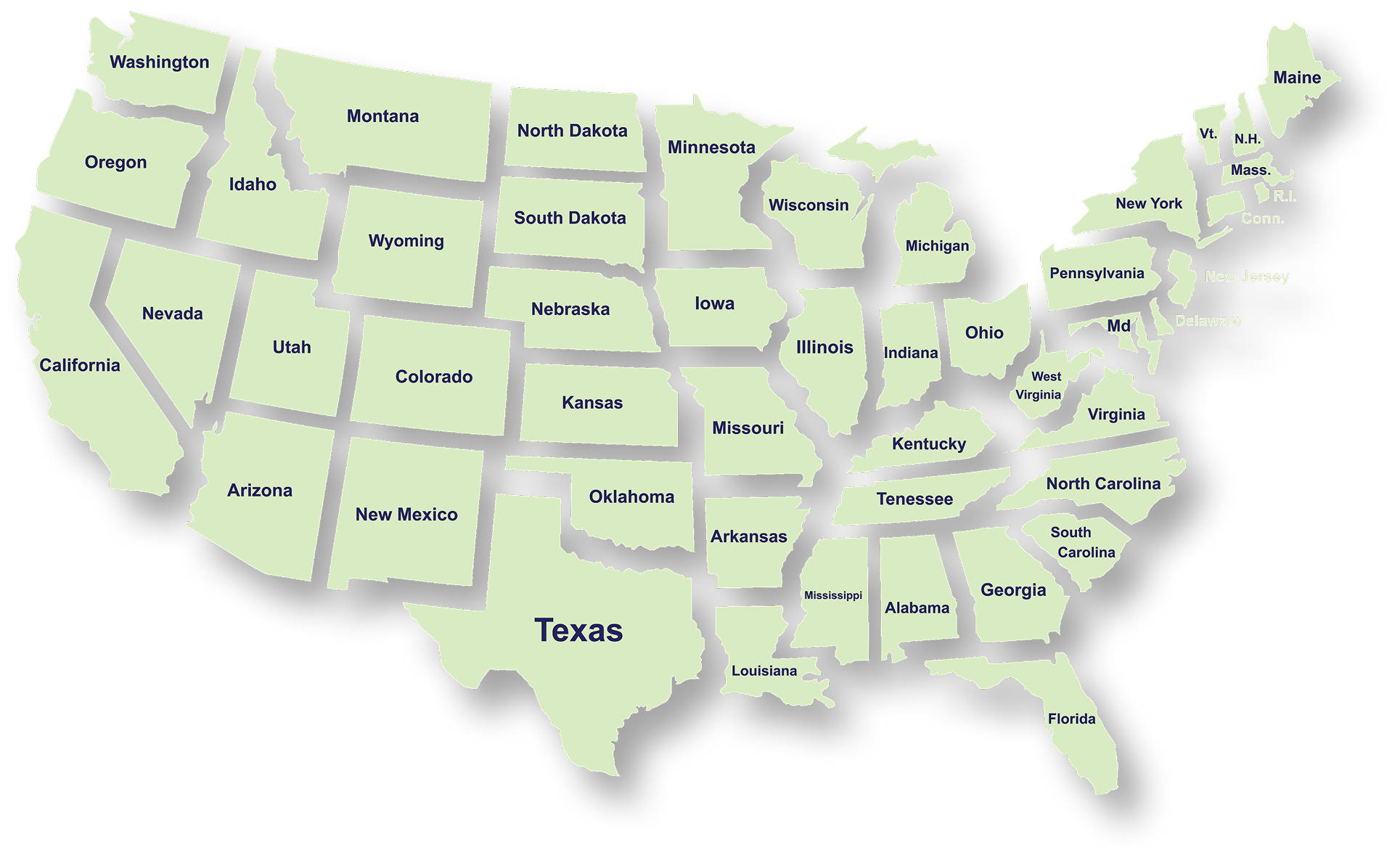
Serving Businesses & Individuals Across USA

We handle accounting, tax filing, and planning with defined timelines and accurate reporting for businesses and individuals across all states.

Frequently Asked Questions

What services does NR CPAs & Business Advisors provide?
What is tax planning and why is it important for businesses?
How can a Virtual CFO help my business?
When should a business consider IRS tax resolution services?
What financial statements does a business typically need?
How can startup advisory services help new businesses?
What is strategic business planning?
What is a Virtual Family Office and who can benefit from it?