Learning Center for Tax and Financial Insights

Stay updated with clear, actionable articles on tax rules, deadlines, deductions, and financial decisions that impact individuals and businesses.

No items found.

Most Common Types of IRS Tax Problems

Receiving notification from the Internal Revenue Service that there’s some kind of problem is one of the most bone-chilling situations an American taxpayer can experience. Just receiving an envelope with a return address from the IRS can strike fear. There are many different reasons that the IRS might reach out, but some are more common than others. Here are the top issues that would cause a taxpayer to hear from the IRS or require you to resolve an issue: An Error On Your Tax Return – Nobody’s perfect, and filling out tax returns is not an easy thing. If you’ve made a mistake, whether it’s something simple like filing status or number of dependents or something bigger like total income or incorrectly claiming a deduction, if you discover it on your own, all you need to do is file an amended return using form 1040X, the Amended Individual Income Tax Return. If the mistake means that you owe more money, quickly submitting the amount that you owe will help you avoid having to pay too much in penalties or interest. It’s not at all unusual for the IRS to discover mistakes – especially math mistakes – and they will generally notify you that they have made corrections on your behalf. Mismatched/Underreported Income – Along the lines of the mistakes referenced above, there is a specific form that the IRS will send you if they determine that the amount of income you report on your tax return is different from what has been reported by employers. That form is the CP2000 Notice, and the agency will send it to you, notifying you of the corrected amount, should they review your return and feel that it is appropriate. Failure to File a Tax Return – Filing a tax return isn’t necessarily required if you don’t owe money or if you’re owed a tax refund, but it’s not a good idea. Failing to file a return when you’re owed a refund puts you at risk of losing out on receiving the money you’ve owed – you have just three years to amend the problem if you want to get your money. For those who are in arrears to the IRS, there is a significant negative outcome to failing to file a return, including having to pay a “failure to file” penalty that can go as high as 25 percent of your unpaid tax bill: 5 percent of the amount you owe, plus interest, will be charged for each month for up to five months You Owe the IRS for Taxes Not Paid – When the IRS calculates that you have not paid them the full amount that you owe, they will send you notification of what they believe the difference is via form CP14. You Owe the IRS Penalties and Fees – When you don’t pay your taxes or you fail to file a return, the IRS will notify you that you owe them penalties, and possibly interest. You Owe the IRS But Can’t Afford to Pay – There are many taxpayers who find themselves facing a tax bill that they are simply unable to pay all at once. If you fall into this category, the IRS does offer the option of paying in installments. To request this type of payment plan, contact the agency. If even paying in small increments is outside of your ability, you may be able to negotiate a reduced tax bill through what is called an Offer in Compromise. Tax Debt Resulting in Tax Levy – If you are unable or unwilling to satisfy your tax debt, the IRS may opt for a tax levy, which is the legal seizure of your property in lieu of payment. A tax levy can take the form of real property such as real estate, your vehicle or personal property, or your wages, the money in your bank accounts or your financial accounts. Notification that a levy is being issued against you comes via either notice LT11, CP504, CP90, or CP91. Notification that A Tax Lien Has Been Filed – If you have failed to pay your tax debt, the IRS may take action to protect its own interests ahead of other creditors by filing a tax lien. This comes in the form of Letter 3172, which will be sent to both you and your other creditors to let them know of the government’s claim against your financial assets, personal property and real estate. By sending this letter out, the government ensures that it will benefit from the liquidation of any of your property in order to satisfy the amount that it is owed. Once a lien has been placed on your property, it is extremely difficult to get out of until you’ve paid up.

Explore More
No items found.

Getting Started with Accounts in QuickBooks Online

QuickBooks Online was built to work with transactions downloaded from your online financial institutions. Here’s how to work with them. The ability to import transactions from financial institutions into QuickBooks Online is definitely one of the best things about the site. You may have even signed up for that very reason. By now, you’ve probably already set up at least one connection. But are you using all of the QuickBooks Online’s account tools? There’s a lot you can do once you’ve imported in data from your bank or credit card provider. We’ll explore these features in this column and the next. First Steps If you’re a new subscriber, you may not have established these critical links yet. It’s an easy process. Start by clicking the Banking link in the left vertical navigation pane. In the upper right corner, click Add Account and enter the name of your financial institution if it’s not pictured. Then follow the instructions you’re given on the screen. These can vary depending on the bank or credit card provider, but you’re always at least asked to enter the user name and password that you use to log into each online. Need help with this? Let us know. Viewing Your Transactions Once you’ve made a successful connection, you’ll be returned to the Bank and Credit Cards page. You should see a card-shaped graphic at the top of the screen for each account you’ve linked. Click on one. The table that opens is not your account register. The view here defaults to For Review, which refers to transactions you’ve downloaded. The All tab should also be highlighted; we’ll get to Recognized transactions later. When you first download transactions into QuickBooks Online, before you’ve done anything with them, many will appear under For Review. There’s a lot going on here, so don’t be surprised if you’re confused. Review each transaction by clicking on it. QuickBooks Online will have guessed at how it should be categorized, but you can change this by opening the list in the category field and selecting the correct one. It’s critical that you get this right, since it will have an impact on reports and income taxes. If you need to Split it between multiple categories, click on that button found to the right. If the transaction is Billable, check that box and choose a customer from the drop-down list. If you don’t see this box, click the gear icon in the upper right and select

Explore More
No items found.

Three Common Family Tax Mistakes

Article Highlights Family Member Transactions Renting to a Relative Below-Market Loans Transferring Home Titles Gifts Basis Life Estate When it comes to transactions between family members, the tax laws are frequently overlooked, if not outright trampled upon. The following are three commonly encountered situations and the tax ramifications associated with each. Renting to a Relative – When a taxpayer rents a home to a relative for long-term use as a principal residence, the rental’s tax treatment depends upon whether the property is rented at fair rental value (the rental value of comparable properties in the area) or at less than the fair rental value. Rented at Fair Rental Value – If the home is rented to the relative at a fair rental value, it is treated as an ordinary rental reported on Schedule E, and losses are allowed, subject to the normal passive loss limitations. Rented at Less Than Fair Rental Value – When a home is rented at less than the fair rental value, it is treated as being used personally by the owner; the expenses associated with the home are not deductible, and no depreciation is allowed. The result is that all of the rental income is fully taxable and reported as “other income” on the 1040. If the taxpayer were able to itemize their deductions, the property taxes on the home would be deductible, subject to the $10,000 cap on state and local taxes effective starting with 2018. The taxpayer might also be able to deduct the interest on the rental home by treating the home as their second home, up to the debt limits on a first and second home. Possible Gift Tax Issue – There also could be a gift tax issue, depending if the difference between the fair rental value and the rent actually charged to the tenant-relative exceeds the annual gift tax exemption, which is $15,000 for 2018. If the home has more than one occupant, the amount of the difference would be prorated to each occupant, so unless there was a large difference ($15,000 per occupant, in 2018) between the fair rental value and actual rent, or other gifting was also involved, a gift tax return probably wouldn’t be needed in most cases. Below-Market Loans – It is not uncommon to encounter situations where there are loans between family members, with no interest being charged or the interest rate being below market rates. A below-market loan is generally a gift or demand loan where the interest rate is less than the applicable federal rate (AFR). The tax code defines the term “gift loan” as any below-market loan where the forgoing of interest is in the nature of a gift, while a “demand loan” is any loan that is payable in full at any time, at the lender’s demand. The AFR is established by the Treasury Department and posted monthly. As an example, the AFR rates for October 2018 were: Term AFR (Annual) Oct. 2018 3 years or less 2.55% Over 3 years but not over 9 years 2.83% Over 9 years 2.99% Generally, for income tax purposes: Borrower – Is treated as paying interest at the AFR rate in effect when the loan was made. The interest is deductible for tax purposes if it otherwise qualifies. However, if the loan amount is $100,000 or less, the amount of the forgone interest deduction cannot exceed the borrower’s net investment income for the year. Lender – Is treated as gifting to the borrower the amount of the interest between the interest actually paid, if any, and the AFR rate. Both the interest actually paid and the forgone interest are treated as investment interest income. Exception – The below-market loan rules do not apply to gift loans directly between individuals if the loan amount is $10,000 or less. This exception does not apply to any gift loan directly attributable to the purchase or carrying of income-producing property.

Explore More
No items found.

Mitigating the Effects of Employee Burnout: What You Need to Know

Make absolutely no mistake about it: Not only is employee burnout very real, it’s probably costing your business a lot more money than you realize. It’s also not a problem that you’re necessarily going to be able to buy your way out of, either. According to one recent study, a massive 70 percent of the workforce in the United States is not engaged with their current jobs in any type of meaningful way ― and employee burnout is a major contributing factor to this. As stated, if you think that this is because people don’t feel like they’re making enough money, the chances are very high that you’re wrong. The same study revealed that 89 percent of employers THINK that people leave jobs to get more money elsewhere, but in reality, that’s only actually true about 12 percent of the time. But perhaps the most damning statistic of all is the following: Collectively, disengaged employees cost organizations in the United States between $450 and $550 billion every year in terms of lost productivity alone. So, once you’ve come to the realization that this is, in fact, a problem, you must then turn your attention toward taking advantage of any possible solution in front of you. The good news is that it is possible to mitigate the effects of employee burnout ― you just need to keep a few key things in mind. Understand What Employee Burnout Looks LikeNot every employee is necessarily burned out ― even if they’re pulling long hours or giving everything to help you achieve your goals. But in an effort to avoid the major downsides of burnout on your business, you need to know more about how to spot it in its nascent stages. If an employee is burned out, they’re probably exhibiting one or even all of the following signs: They’re exhausted, either physically or emotionally. The resources needed to cope with their work environment in these two areas are totally spent, and they tend to act accordingly. We’ve all been here, so you should know what it looks like. They’re increasingly cynical. They know what they’re supposed to do and why it matters, but they’re less convinced that it really matters to THEM in the long run. They’re growing more inefficient as time goes on. Burned-out employees tend to give up “trying” pretty quickly as a result of the cynical attitude outlined above, and the quality of the work they offer suffers as a result. Put a Premium on the Mental Health of Your Employees If you truly want to mitigate the effects of employee burnout, you need to focus not on correcting the problem but on trying to prevent it from happening in the first place.

Explore More
No items found.

Tax Reform Enables Deferral of Taxable Gains Into Investments in Opportunity Zones

Article Highlights: Tax Cuts and Jobs Act Reinvested Gains Enhanced Basis Qualified Opportunity Funds Partnerships Qualified Opportunity Zones Those who have a large capital gain from the sale of a stock, asset, or business and who would like to defer that gain with the possibility of excluding some of it from taxation should investigate a new investment called a qualified opportunity fund (QOF), which was created as part of the recent tax reform. To help communities that have not recovered from the past decade’s economic downturn, lawmakers included in the Tax Cuts and Jobs Act the new code Sections 1400Z-1 and 1400Z-2, which are intended to promote investments in certain economically distressed communities through QOFs. Investments in QOFs provide unique tax incentives that lawmakers designed to encourage taxpayers to participate in these funds. Reinvesting Gains – Starting in 2018, a taxpayer who has a capital gain from selling or exchanging any non-QOF property to an unrelated party may elect to defer that gain if it is reinvested in a QOF within 180 days of the sale or exchange. Only one election may be made with respect to a given sale or exchange. If the taxpayer reinvests less than the full amount of the gain in the QOF, the remainder is taxable in the sale year, as usual. The amount of the gain – not the amount of the sale’s proceeds, as in Sec 1031 deferrals – needs to be reinvested in order to defer the gain. The gain income is deferred until the date when the QOF investment is sold or December 31, 2026 – whichever is earlier. At that time, the taxpayer includes the lesser of the following amounts as taxable income: a. The deferred gain b. The fair market value of the investment, as determined at the end of the deferral period, reduced by the taxpayer’s basis in the property. (Basis is explained below.) A taxpayer who holds a QOF investment for 10 years or more before selling it can elect to permanently exclude the gain from the sale that is in excess of the originally deferred gain (i.e., the appreciation). Qualified Opportunity Fund Basis – The basis of a QOF that is purchased with a deferred gain is $0 unless either of the following increases applies: (a) If the investment is held for 5 years, the QOF’s basis increases from $0 to 10% of the deferred gain. (b) If the investment is held for 7 years, the QOF’s basis increases from $0 to 15% of the deferred gain. If on December 31, 2016 a taxpayer holds a QOF that was purchased with deferred gains, the original deferred gain must be included as gross income on that taxpayer’s 2026 return; the basis of the investment will then be increased by the amount of this included gain. If the QOF investment is held for at least 10 years before being sold, the taxpayer can elect to increase the basis to the property’s fair market value. This adjustment means that the QOF’s appreciation is not taxable when it is sold. Example 1: On June 30, 2018, Phil sold a rental apartment building for $3 million, resulting in a gain of $1 million. Within the statutory 180-day window, he invested that $1 million into a QOF and elected to take the temporary gain deferral exclusion. On July 1, 2026, he then sold the QOF for $1.5 million. Because Phil held the investment for over 7 years, its basis is enhanced by $150,000 (15% of $1 million). Because the investment’s fair market value is greater than the original deferred gain, he must include a taxable gain of $1.35 million ($1.5 million – $150,000) in his 2026 gross income. Example 2: The facts here are the same as in Example 1, except Phil waited to sell the QOF until 2030, meaning that he held it for nearly 12 years. Because he had the investment on December 31, 2026, he was required to include $850,000 ($1 million – $150,000) of deferred gain on his 2026 return, and his basis in the QOF was increased from $0 to $850,000. After selling the QOF for $1.5 million, Phil elected to permanently exclude the gain by increasing his basis to $1.5 million (the fair market value on the date of the sale). Thus, he has no gain ($1.5 million – $1.5 million) in 2030.

Explore More
No items found.

Rejoice - Business Meals Are Still Deductible

Article Highlights: Ban on Deducting Entertainment Expenses Business Meals Mixed Entertainment and Meals Substantiation Requirements Disallowed Employee Business Expenses If you are a business owner who is accustomed to treating clients to sporting events, golf getaways, concerts and the like, you were no doubt saddened by the part of the tax reform that passed last December that did away with the business-related deductions for entertainment, amusement or recreation expenses, beginning in 2018. You can still entertain your clients; you just can’t deduct the costs of doing so as a business expense. While the ban on deducting business entertainment was quite clear in the revised law, a lingering question among tax experts has been whether the tax reform’s definition of entertainment also applied to business meals, such as when you take a customer or business contact to lunch. Some were saying yes, and others no. Either way, both sides recommended keeping the required receipts and documentation until the issue was clarified. The IRS recently issued some very business-friendly guidance, pending the release of more detailed regulations. In a notice, the IRS has announced that taxpayers generally may continue to deduct 50 percent of the food and beverage expenses associated with operating their trade or business, including business meals, provided: The expense is an ordinary and necessary expense paid or incurred during the taxable year in carrying out any trade or business; The expense is not lavish or extravagant under the circumstances; The taxpayer, or an employee of the taxpayer, is present at the furnishing of the food or beverages; The food and beverages are provided to a current or potential business customer, client, consultant or similar business contact; and Food and beverages provided during or at an entertainment activity are purchased separately from the entertainment, or the cost of the food and beverages is stated separately from the cost of the entertainment on one or more bills, invoices or receipts.

Explore More
No results found.
Thank you! Your submission has been received!
Oops! Something went wrong while submitting the form.

Want tax & accounting tips & insights?Sign up for our newsletter.

Thank you! Your submission has been received!
Oops! Something went wrong while submitting the form.

Why Work With Us?

We combine deep tax expertise, financial strategy, and practical business insight to help you manage complexity, stay compliant, and make confident financial decisions.
A dollar sign, representing financial advice or discussion at NR CPAs & Business Advisors.

Experienced CPA and Enrolled Agent Leadership

Guidance led by licensed professionals with deep expertise in tax strategy, compliance, and complex financial matters.
White bar chart with an upward arrow on green circular background representing growth or progress at NR CPAs &. Business Advisors

Support for Growing Businesses and Startups

We understand the financial challenges of growth stage businesses and provide structured guidance to support expansion.
A white hand holding a dollar symbol and ascending bar chart on a green circular background representing financial growth or investment at NR CPAs & Business Advisors..

Strategic Financial Advisory

Our team helps you evaluate financial decisions with greater clarity, supported by practical insights and long term planning.

Fractional CFO Support

Access experienced financial leadership without the commitment and cost of hiring a full time Chief Financial Officer.

Proactive Tax Planning Approach

We focus on identifying tax opportunities throughout the year rather than reacting only during filing season.

Clear and Reliable Financial Reporting

Accurate financial statements and reporting that help you better understand performance and make informed decisions.
White IRS building icon with pillars and a dollar sign above on a green circular background.

Professional IRS Representation

Experienced support in resolving IRS notices, disputes, and compliance matters while protecting your financial interests.

Personalized Client Focus

Every client receives thoughtful attention and tailored financial solutions based on their specific needs and business goals.
Financial matters often involve important decisions. Working with experienced advisors can help you approach them with greater clarity and confidence in your choices.

Need Help With Your Tax or Financial Decisions?

Discuss your situation with our advisors to get clear guidance on tax planning, IRS matters, and the financial decisions ahead.
Business consulting at NR CPAs & Business Advisors.

Request Your Consultation

Fill out the form to discuss your tax concerns, financial questions, or advisory needs with our team. We will review your details and respond shortly.

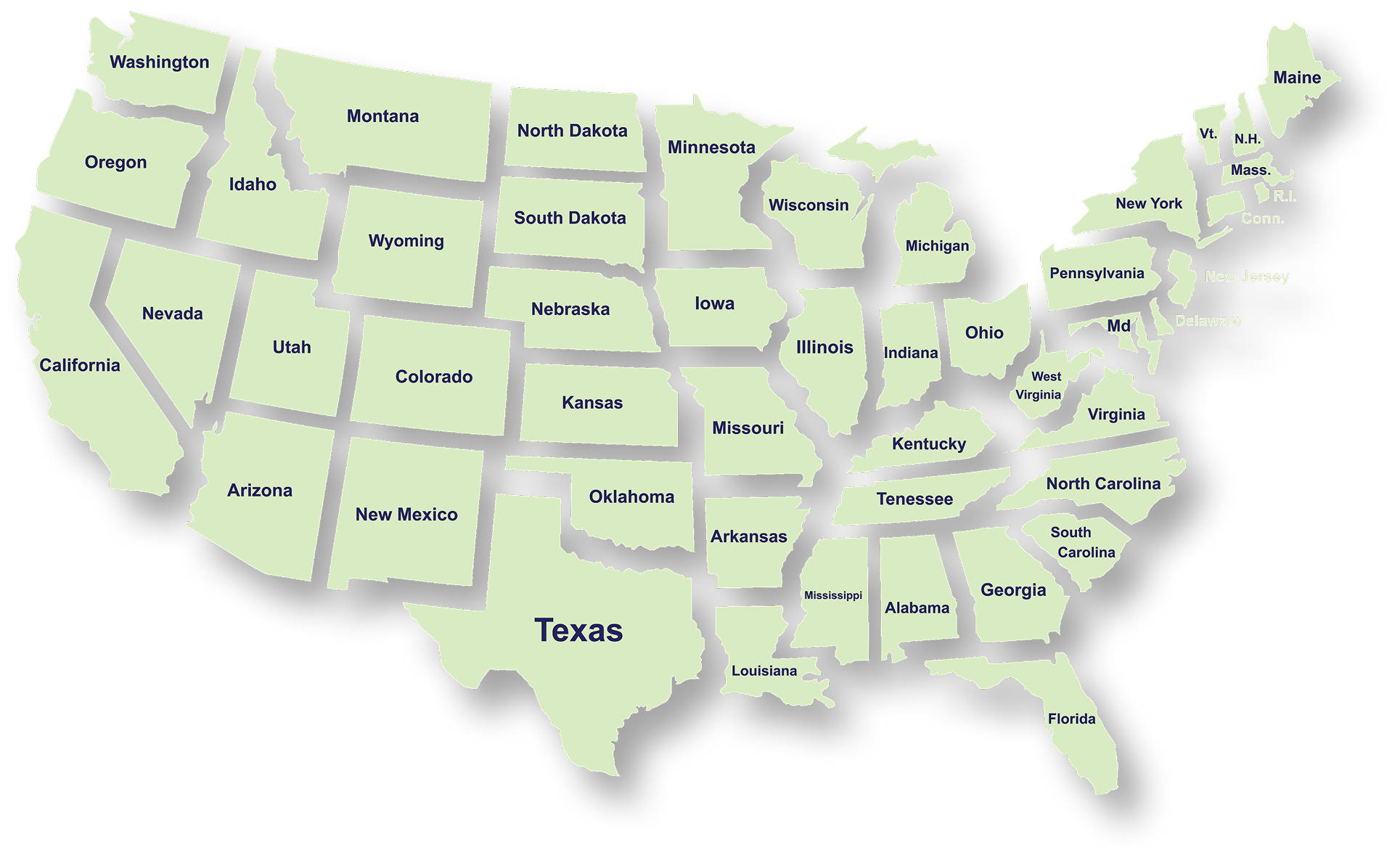
Serving Businesses & Individuals Across USA

We handle accounting, tax filing, and planning with defined timelines and accurate reporting for businesses and individuals across all states.

Frequently Asked Questions

What services does NR CPAs & Business Advisors provide?
What is tax planning and why is it important for businesses?
How can a Virtual CFO help my business?
When should a business consider IRS tax resolution services?
What financial statements does a business typically need?
How can startup advisory services help new businesses?
What is strategic business planning?
What is a Virtual Family Office and who can benefit from it?