Learning Center for Tax and Financial Insights

Stay updated with clear, actionable articles on tax rules, deadlines, deductions, and financial decisions that impact individuals and businesses.

No items found.

Year-end Individual Strategies: Bunching

Year-end is rapidly approaching and you only have a limited time to utilize tax-saving strategies. The Tax Cuts and Jobs Act of 2017 substantially increased the standard deduction and made changes that affect itemized deductions. Learn all about bunching.

Explore More
No items found.

Tax Breaks for Higher Education

Over the years, Congress has continued to enhance tax breaks for students and their parents. These tax benefits provide taxpayers with a large number of options for tax-favored financing of their education and the education of their family members. This brochure highlights the various education benefits included within the U.S. income tax system. Coverdell Education Savings Account (Education IRA) Qualified State Tuition Program American Opportunity Credit Lifetime Learning Credit Penalty-Free IRA Withdrawals for Education Purposes Deduction for Education Loan Interest Tax-Free Savings Bond Interest Student aid is available from the Department of Education for students of limited means. The aid can include educational grants such as a “Pell” grant or various types of student and parent educational loans. Planning and saving for future education can limit or eliminate potential student aid, because these resources will be taken into consideration at the time the need for student aid is determined. Understanding the tax terms: You will encounter several tax terms in this brochure that may be unfamiliar to you. Understanding their full meaning will help give you a better picture of the limits, qualifications, and restrictions that apply to the benefits for education. Phase Out... Instead of just eliminating certain deductions and credits, the tax law often decreases them gradually to zero (“phases them out”) over a specific income range. For example, say a hypothetical $1,000 deduction is allowed, but “phases out” when a taxpayer’s “modified adjusted gross income (AGI)” is between $40,000 and $60,000. A taxpayer with a modified AGI of $40,000 or less will be allowed the full $1,000 deduction, while the taxpayer with a modified AGI of $60,000 or more would get no deduction. For modified AGIs between $40,000 and $60,000, the taxpayer would be allowed a pro-rated deduction amount. Regular AGI and Modified AGI... AGI is the abbreviation for “adjusted gross income.” “Regular AGI” is the total of all income, allowable losses, and adjustments before subtracting itemized or standard deductions and, for years other than 2018 through 2025, personal exemptions. However, several tax benefits described in this brochure are limited or not available to taxpayers whose so-called “modified AGI” is too high. Generally, the modified AGI for educational benefits adds back certain amounts from foreign, U.S. Possession, and Puerto Rican sources that are excluded from income. Qualified Educational Institutions... These Institutions are generally accredited, post-secondary educational institutions that offer credit toward a bachelor’s degree, an associate’s degree, or some other recognized post-secondary credential. Certain proprietary institutions and post-secondary vocational institutions also qualify if they are eligible to participate in Department of Education student aid programs. Coverdell Education Savings AccountOriginally referred to as an Education IRA, the Coverdell Education Savings Account is actually a nondeductible education savings account. The investment earnings from this account accrue and are withdrawn tax-free if the proceeds are used to pay qualified education expenses of the account beneficiary. Contributions are only allowed for designated beneficiaries under the age of 18 and the allowable nondeductible contribution is $2,000 per year per beneficiary. The annual contribution limit is gradually reduced if the contributing taxpayer’s “modified AGI” is within the phase-out range and eliminated for taxpayers above the range, which for married taxpayers filing jointly is $190,000 – $220,000 and $95,000 – $110,000 for single taxpayers. Unlike phase-outs for many other tax benefits, these amounts are not adjusted annually for inflation and have not changed since 2002. Anyone is allowed to make the contribution provided the total contribution for the under 18 beneficiary does not exceed the annual contribution limit and the contributing taxpayer’s AGI is within limits. If the AGI limits the contribution, the funds can be gifted to someone else whose contribution would not be AGI limited, even the beneficiary. Distributions from the Coverdell Education Savings Account are tax- and penalty-free (including interest on the account) if they are used to pay for qualified education expenses of the designated beneficiary or a member of the beneficiary’s family. The definition of qualified education expenses includes elementary or secondary education, kindergarten through grade 12, as well as post-secondary education. Because of the phase-out provision for contributions, taxpayers cannot always be sure they can contribute to the accounts. Recognizing this problem, the tax law permits Coverdell contributions to be made after the close of the tax year for which the contribution is being made and before the April 15 filing due date for that year. (Note: if the April 15 due date falls on a Saturday, Sunday or holiday, the due date is the next business day.) Additional rules apply for dealing with rollovers, changes in designated beneficiaries, death of taxpayer or beneficiary, excess contributions, special needs beneficiaries, and unauthorized use of distributions. Qualified State Tuition ProgramsA qualified state tuition program is one generally set up by a state or state instrumentality that lets individuals make contributions to an account established for a designated beneficiary’s higher education. Unlike the Coverdell Education Savings Account, there is no limit on the annual contributions to Qualified State Tuition programs. However, contributions to these plans are considered gifts to the beneficiary, making the annual gift exclusion amount the practical annual limit per contributor. The annual gift exclusion amount is inflation-adjusted periodically and is $15,000 for 2019; please call this office for the limit for other years. A special rule allows a donor who makes total contributions exceeding the annual gift limit to elect to take the contributions into account ratably over a five-year period, starting with the year of the contribution. This allows a donor to contribute as much as $75,000 (2019) in one year, while avoiding the gift tax implications. The donor must file a gift tax return for the year of the contribution, and a five-year election must be made on the return. Care should be exercised in determining the total contributed to any individual’s account to avoid nonqualified distributions if the amount exceeds the educational needs. Virtually all of the high population states now have these programs, which are professionally managed and tailor the investments and risk potential to the prospective student’s current age. Individuals are not restricted to using the program established in their home state but instead can pick and choose among the programs of any of the states that have established programs. A major benefit of these programs is that the distributions of earnings from the programs can be excluded from income if used for qualified education expenses. This puts the Qualified State Tuition Programs on par with Coverdell Education Savings Accounts, but without the annual contribution limit. However, unlike Coverdell plans that allow tax-free distributions to pay for grades K-12 expenses, distributions through 2017 from QSTPs were only used for post secondary education expenses. For years after 2017, tax reform added withdrawals for elementary or secondary school tuition expenses but limits the annual withdrawal for each beneficiary to $10,000 (regardless of the number of 529 plans in the beneficiary’s name). This special $10,000 amount applies for tuition paid to public, private or religious schools.

Explore More
No items found.

Medical Insurance and Taxes

Article Highlights Uninsured Penalty Employer Plans Health Reimbursement Plans Self-Employed Health Insurance Deduction Itemized Deductions Deductible Medical Insurance The Affordable Care Act (ACA) imposed significant penalties on taxpayers and their families who do not have ACA-compliant health insurance. Even though the tax reform removed these penalties after 2018, they still apply for this year and can be as high as the greater of $2,085 or 2.5% of the family’s household income. So, just about everyone is being forced to carry medical insurance, and it is probably one of your largest expenses. Even though the penalty is going away in 2019, it is important to understand how the health insurance expense is handled for tax purposes so you can get the most tax benefits possible. Employer Health Insurance – If an employer has 50 or more full-time-equivalent employees, the employer is required to offer affordable health care to their full-time employees or else the business will be subject to federal penalties. The business is not required to pay the premiums, just provide access to the insurance. Many companies, even those with fewer than 50 full-time equivalent employees, may pay for health insurance as part of their employees’ compensation packages. You may deduct any portion of the health coverage premiums you pay as a medical itemized deduction, or if you or your spouse are self-employed, the premiums you pay may be an above-the-line health insurance deduction under certain conditions, as discussed below. But don't include in your medical expenses any insurance premiums paid by an employer-sponsored health insurance plan unless the premiums are included as taxable wages on your Form W-2. Employer Health Reimbursement Arrangements (HRAs) – Distributions received by an employee under an HRA are excluded from gross income. Whenever an item is excluded from income, a taxpayer cannot then also take a tax deduction for the same item because that would result in a double benefit – both exclusion from income and a deduction. Thus, health insurance premiums paid with funds from an HRA would not be deductible. Self-Employed Health Insurance Deduction – A self-employed individual, including partners or more-than-2% shareholders of an S corporation, can deduct as an above-the-line expense 100% of the amount paid during the tax year for medical insurance on behalf of the self-employed individual and his or her spouse and dependents, subject to the following: The deduction cannot exceed the self-employed individual’s net earnings from self-employment. For a more-than-2% S corporation shareholder, the deduction cannot be taken unless the amount paid for the insurance by the S corporation is included in the shareholder's wages from the S corporation.

Explore More
No items found.

Find Unclaimed Property Infographic

Every year literally billions of dollars of unclaimed assets sit at various federal and state agencies. Anything from checking and savings accounts to wages, lottery winnings, and IRS tax refunds, are left sitting for their rightful owners to find them. Be careful of the scammers or companies that charge a fee to find your unclaimed property. It can all be done free online at https://www.usa.gov/unclaimed-money.

Explore More
No items found.

November 2018 Individual Due Dates

November 13 - Report Tips to Employer If you are an employee who works for tips and received more than $20 in tips during October, you are required to report them to your employer on IRS Form 4070 no later than November 13. Your employer is required to withhold FICA taxes and income tax withholding for these tips from your regular wages. If your regular wages are insufficient to cover the FICA and tax withholding, the employer will report the amount of the uncollected withholding in box 12 of your W-2 for the year. You will be required to pay the uncollected withholding when your return for the year is filed.

Explore More
No items found.

November 2018 Business Due Dates

November 13 - Social Security, Medicare and Withheld Income Tax File Form 941 for the third quarter of 2018. This due date applies only if you deposited the tax for the quarter in full and on time.November 15 - Social Security, Medicare and Withheld Income Tax

Explore More
No results found.
Thank you! Your submission has been received!
Oops! Something went wrong while submitting the form.

Want tax & accounting tips & insights?Sign up for our newsletter.

Thank you! Your submission has been received!
Oops! Something went wrong while submitting the form.

Why Work With Us?

We combine deep tax expertise, financial strategy, and practical business insight to help you manage complexity, stay compliant, and make confident financial decisions.
A dollar sign, representing financial advice or discussion at NR CPAs & Business Advisors.

Experienced CPA and Enrolled Agent Leadership

Guidance led by licensed professionals with deep expertise in tax strategy, compliance, and complex financial matters.
White bar chart with an upward arrow on green circular background representing growth or progress at NR CPAs &. Business Advisors

Support for Growing Businesses and Startups

We understand the financial challenges of growth stage businesses and provide structured guidance to support expansion.
A white hand holding a dollar symbol and ascending bar chart on a green circular background representing financial growth or investment at NR CPAs & Business Advisors..

Strategic Financial Advisory

Our team helps you evaluate financial decisions with greater clarity, supported by practical insights and long term planning.

Fractional CFO Support

Access experienced financial leadership without the commitment and cost of hiring a full time Chief Financial Officer.

Proactive Tax Planning Approach

We focus on identifying tax opportunities throughout the year rather than reacting only during filing season.

Clear and Reliable Financial Reporting

Accurate financial statements and reporting that help you better understand performance and make informed decisions.
White IRS building icon with pillars and a dollar sign above on a green circular background.

Professional IRS Representation

Experienced support in resolving IRS notices, disputes, and compliance matters while protecting your financial interests.

Personalized Client Focus

Every client receives thoughtful attention and tailored financial solutions based on their specific needs and business goals.
Financial matters often involve important decisions. Working with experienced advisors can help you approach them with greater clarity and confidence in your choices.

Need Help With Your Tax or Financial Decisions?

Discuss your situation with our advisors to get clear guidance on tax planning, IRS matters, and the financial decisions ahead.
Business consulting at NR CPAs & Business Advisors.

Request Your Consultation

Fill out the form to discuss your tax concerns, financial questions, or advisory needs with our team. We will review your details and respond shortly.

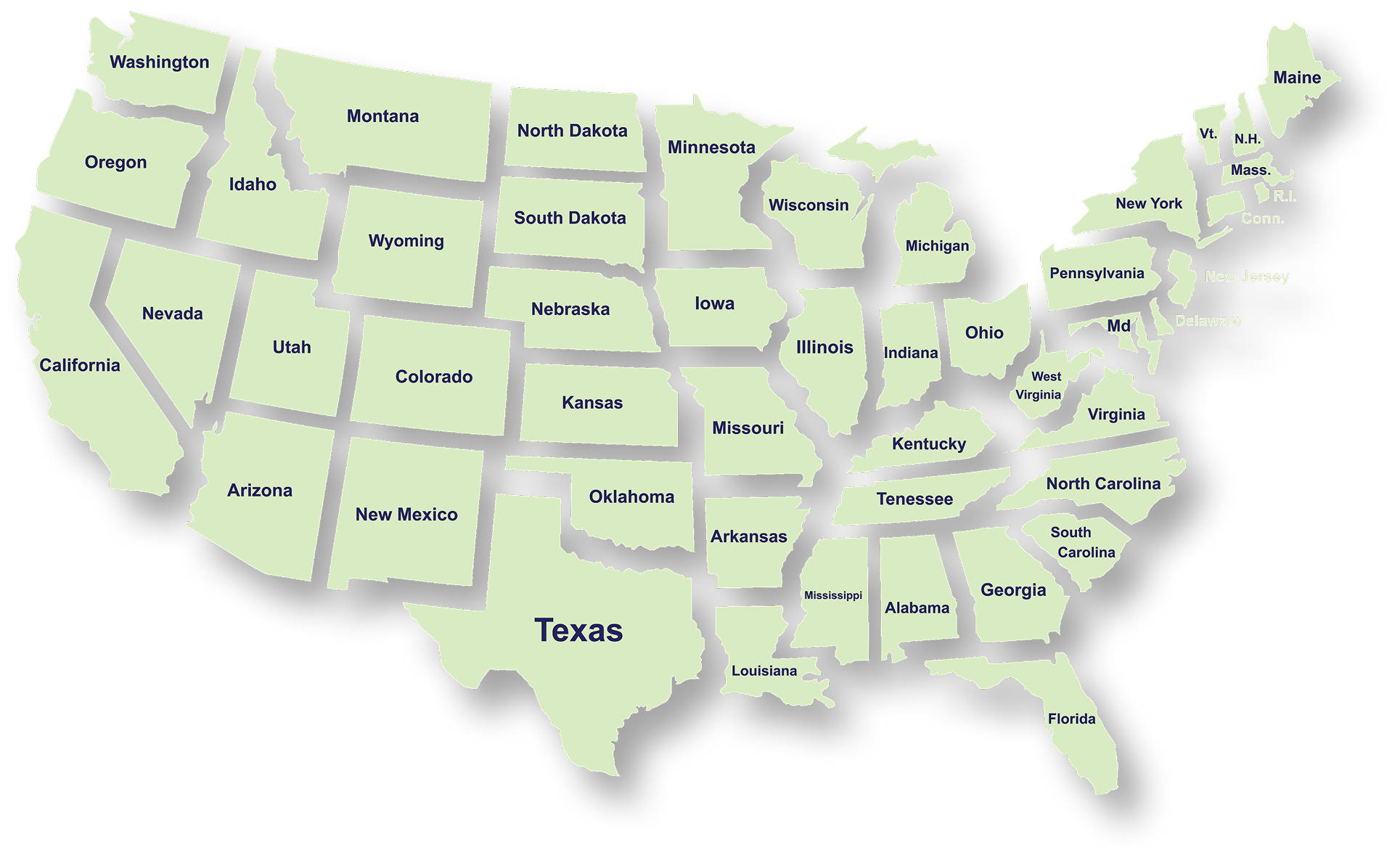
Serving Businesses & Individuals Across USA

We handle accounting, tax filing, and planning with defined timelines and accurate reporting for businesses and individuals across all states.

Frequently Asked Questions

What services does NR CPAs & Business Advisors provide?
What is tax planning and why is it important for businesses?
How can a Virtual CFO help my business?
When should a business consider IRS tax resolution services?
What financial statements does a business typically need?
How can startup advisory services help new businesses?
What is strategic business planning?
What is a Virtual Family Office and who can benefit from it?