Learning Center for Tax and Financial Insights

Stay updated with clear, actionable articles on tax rules, deadlines, deductions, and financial decisions that impact individuals and businesses.

No items found.

Is Your Individual Taxpayer Identification Number Expiring?

Article Highlights: Expiring ITINs Renewal Process IRS Notice Spouses or Dependents Family Renewal Option Filing With An Expired ITIN Passports The IRS recently announced that approximately 2.7 million Individual Taxpayer Identification Numbers (ITINs) will be expiring at the end of 2018 and will need to be renewed. ITINs are used by people who have tax filing or payment obligations under U.S. law but who are not eligible for a Social Security number. ITIN holders who have questions should visit the ITIN information page on IRS.gov and take a few minutes to review the guidelines. Under a recent tax law change, ITINs that have not been used on a federal tax return at least once in the last three consecutive years will expire Dec. 31, 2018. In addition, ITINs with middle digits 73, 74, 75, 76, 77, 81, or 82 will also expire at the end of the year (even if the ITIN has been used in the past three years). Thus, those people with expiring ITINs who expect to file a tax return in 2019 must renew before they can file their 2018 return. Individuals with expiring ITINs are encouraged to renew soon to avoid delays that could affect their tax filing and refunds in 2019. How to renew an ITIN - To renew an ITIN, a taxpayer must complete a Form W-7 and submit all required documentation. Taxpayers submitting a Form W-7 to renew their ITIN are not required to attach a federal tax return. However, taxpayers must still note a reason for needing an ITIN on the Form W-7. There are three ways to submit the W-7 application package. Taxpayers can: Mail the Form W-7, along with original identification documents or copies certified by the agency that issued them, to the IRS address listed on the Form W-7. The IRS will review the identification documents and return them within 60 days. Work with Certified Acceptance Agents (CAAs) authorized by the IRS to help taxpayers apply for an ITIN. CAAs can authenticate all identification documents for primary and secondary taxpayers, verify that an ITIN application is correct before submitting it to the IRS for processing, and authenticate the passports and birth certificates for dependents. This saves taxpayers from mailing original documents to the IRS. Instead of mailing original identification documents to the IRS, call and make an appointment at a designated IRS Taxpayer Assistance Center to have each applicant’s identity authenticated in person Applicants should bring a completed Form W-7 along with all required identification documents. See the TAC ITIN authentication page on the IRS web site for more details.

Explore More
No items found.

You Could Have An Unpleasant Surprise At Tax Time

A major concern for 2018 is whether taxpayers are having enough withheld from their paychecks. Tax reform was passed late in 2017 and didn’t allow the IRS time to modify the W-4 and withholding tables for 2018. In fact, they were not released until part way through the year. Warch below to learn more.

Explore More
No items found.

Making Estimated Tax Payments

Why Pay Estimates?The tax system is intended to be a “pay-as-you-go” system, and the only way to prepay taxes is through withholding and estimated taxes. Generally, payroll comes to mind when we think about withholding, but withholding is also available through a variety of other means, including pension income and Social Security payments. However, there are a multitude of income sources that generally do not have withholding, such as self-employment income, interest, dividends, rents, gains from stock sales, alimony etc. Estimated tax payments provide a means of prepaying one’s taxes on these kinds of income. However, the use of estimated tax vouchers is not limited to taxpayers with income not subject to withholding. A variety of situations might arise that warrant the use of estimated taxes, such as taxpayers who are paid by commissions or who receive bonuses that distort their income. Frequently, a married couple with substantial income may also rely on estimated taxes to supplement its wage withholding. Are Estimates Mandatory?No, it is not mandatory for you to make estimated tax payments. However, if you end up owing money when you file your tax return, then you might be subject to the underpayment of estimated tax penalty. Unless you meet one of the exceptions explained later, this penalty could apply even if all of your income sources are subject to withholding. What is the Penalty?It is a nondeductible interest penalty computed on a quarterly basis. The interest rate varies from quarter to quarter based on the prevailing interest rates. Over the past 8 to 10 years, the rates have been as high as 8%, but most recently have been 5% or 6%. Estimate Due DatesPayments are due on the 15th day after the end of the quarter, giving a taxpayer 15 days to compute their tax liability for the prior period. The tax quarters are not all the same duration. The first quarter is three months (Jan–Mar), The second quarter is two months (Apr–May), The third quarter is three months (June–Aug), and The final quarter is four months (Sep–Dec). The due dates are: If paid all at once, the due date is April 15. If paid in installments, the due dates are: First payment: April 15 of the tax year Second payment: June 15 of the tax year Third payment: Sept. 15 of the tax year Fourth payment: Jan. 15 of the following year; or if the tax return is filed by Jan. 31 of the following year and the entire balance is paid with the return, the Jan. 15 payment may be skipped. Note: If a due date falls on a Saturday, Sunday, or federal legal holiday, the due date will be the next business day. The payment in January of the following year confuses some taxpayers who attempt to take credit for payment in the following year since that was the year in which it was paid. If you miss a payment due date, you should make the payment as soon as possible! Farmers and Fishermen Exception - With at least two thirds of their gross income for the prior year or the current year from farming or fishing, they may: Pay all of their estimated tax by Jan. 15 (fourth quarter due date); or File their tax return on or before March 1 and pay the total tax due. How to Avoid the PenaltyThere are a number of exceptions to the underpayment of estimated tax penalty, which can help you plan your estimated payments, avoid the penalty and minimize the advance payments. No Tax Liability In Prior Year - A taxpayer is exempt from the underpayment of estimated tax penalty if they had no tax liability in the prior year and they were a U.S. citizen or resident for the whole year. For this rule to apply, the tax year must have included all 12 months of the year. De Minimis Exception - Taxpayers can owe up to $1,000 on their tax return without penalty. Current Year Exception If a taxpayer’s withholding and estimated tax payments are equal to 90% or more of the current year’s tax liability, then there is no penalty. Prior Year Exception - The underpayment can also be avoided by prepaying through withholding and estimated tax payments an amount equal to 100% or more of the prior year’s tax liability. Caution: See High Income Taxpayers below. Prior Year Exception for High Income Taxpayers - For taxpayers with gross incomes (AGI) in excess of $150,000 ($75,000 for married taxpayers filing separately), the prepayments must total 110% of the prior year’s tax. This penalty exception is frequently used by taxpayers as means of determining a safe harbor estimate for the current tax year. Annualized Income Exception - A complicated exception can help you avoid the underpayment of estimated tax penalty if you have large changes in income, deductions, additional taxes, or credits that require you to start making or adjusting estimated tax payments. The payment amounts will vary based on your income, deductions, additional taxes, and credits for the months ending before each payment due date. As a result, this method may allow you to skip or lower the amount due for one or more payments. Farmers and Fishermen Exception - If at least two-thirds of the taxpayer’s gross income for the prior year or the current year is from farming or fishing, the taxpayer’s required annual payment is the smaller of: 66 2/3 % (.6667) of the total tax for the year, or 100% of the total tax shown on the prior year’s return, provided the prior year was for a full 12 months. Determining the Amount to PayIndividuals generally pay estimates in even quarterly amounts utilizing one of the underpayment exceptions or by projecting their taxes for the year. However, payments can be adjusted quarterly, allowing payments to be skipped or stopped if there are fluctuations in income significant enough to warrant the adjustment.

Explore More
No items found.

Moving Deductions are Kaput

Article Highlights: Prior Law Deduction Deduction Repealed Military Exception Employer Reimbursement Reimbursement Gross Up Prior to the passage of tax reform, individuals who moved as the result of a job change or job relocation could deduct their unreimbursed moving expenses if the driving distance from their home to the new job location was at least 50 miles more than the driving distance from home to the old job location. There was also a requirement that the individual work in the new location for a specified minimum period of time after the move. Unfortunately, tax reform effectively repealed that deduction after 2017, except for members of the Armed Forces on active duty who move pursuant to a military order. On top of that, if an employer reimburses the employee for the expenses—whether by paying a moving van company, airline, or other vendor directly, or by reimbursing the employee for their moving expenses—the reimbursement will be treated as taxable wages subject to withholding of income, Medicare, and Social Security taxes.

Explore More
No items found.

Tips On Filing Your Tax Return

Deadline for Filing Your ReturnGenerally, individual tax returns are due on the 15th day of the fourth month after the close of your tax year. Since virtually all individual taxpayers file on a calendar year, the due date for most individual taxpayers is April 15. That is the due date for both filing your return and paying any balance-due taxes. If the April 15 due date falls on a Saturday, Sunday or federal legal holiday, the due date is delayed until the next business day. Most states have the same due date, although some give additional time. U.S. citizen and U.S. resident taxpayers who are out of the country on the April due date may qualify for an automatic two-month extension to file their return and pay any federal income tax that is due. This applies if they are living outside of the United States and Puerto Rico and their main place of business or post of duty is outside the United States and Puerto Rico, or they are in military or naval service on duty outside the United States and Puerto Rico. Merely being out of the U.S. on vacation on the return due date isn’t a reason to qualify for the automatic 2-month extension. The deadlines for filing and paying, if there is a tax due, is extended for 180 days after the latter of the last day a military taxpayer was in a combat zone/qualified hazardous duty area, or the last day of any continuous qualified hospitalization for injury from service in the combat zone/qualified hazardous duty area. In addition to the 180 days, the deadline is also extended by the number of days that were left for the individual to take action with the IRS when they entered a combat zone/qualified hazardous duty area. Proof of FilingIf a paper return is being filed, it is considered filed on time if it is properly addressed, has sufficient postage and is postmarked by the due date. It may be appropriate to obtain a proof of mailing if there is a balance due on the return, since both the late filing penalty and the late payment penalty are based on the amount of the balance due. This is especially important if the amount of balance due is sizable and the returns are mailed close to the due date. If the return is sent by registered mail, the date of the registration is the postmark date. The registration is evidence that the return was delivered. If sent by certified mail and the receipt is postmarked by a postal employee, the date on the receipt is the postmark date. The postmarked certified mail receipt is evidence that the return was delivered. Note: A private postage meter date is not considered to be valid proof of mailing. In addition to filing paper returns through the U.S. Postal Service, the IRS has designated several private delivery services that taxpayers can use to send their returns to the IRS. The postmark date for these services is generally the date the private delivery service records the date in its database or marks on the mailing label. The private delivery service will explain how to get written proof of this date. For e-filed returns, the date of an electronic postmark given by an authorized electronic return transmitter is considered to be the filing date if the electronic postmark’s date is on or before the filing due date. Reasons for an ExtensionThere are valid reasons for not filing a tax return on time, and there is no stigma associated with doing so. The following are typical reasons that taxpayers file an extension: Waiting for a K-1 Distribution Form from a partnership or estate. Need additional time to fund certain self-employed retirement plans. Taxpayer suffered a casualty and the tax documents were lost. Taxpayer or spouse is ill. Taxpayer or spouse is deceased. These are by no means the only valid reasons for an extension, but are shown as examples. If You Need Additional TimeIf you need additional time to file your return, the IRS provides two forms of extensions. The extension used by most taxpayers is Form 4868; the other one, Form 2350, is used by taxpayers living and working overseas and is not discussed in this brochure. CAUTION: It is important to note that these are extensions of time to file your return, not an extension to pay your tax liability. Even if you file for and are granted an extension of time to file, interest and late payment penalties (discussed later) will apply to any balance due on the return from the original April due date. Automatic Six-Month Extension – This extension gives you until October 15 to file your return. If you expect to owe, estimate how much and include an extension payment. If you owe taxes when you do file your extended tax return, you will be liable for both the late payment penalty and interest from the due date. If the October 15 due date falls on a Saturday, Sunday or legal holiday, the due date is delayed until the next business day. Most states have the same due date, although some give additional time. While the extension may be automatic, it is still necessary to submit a request for the extension. This is done on IRS Form 4868, which can be filed electronically or on paper. If you aren’t able to file on time, the request should be submitted by the regular due date of the return, even if you owe no tax or will be entitled to a refund once you file the return. It is not a good idea to delay filing your return because you owe taxes. The late filing penalty is 5% per month (maximum 25%) and can be substantial. It is generally better practice to file the return without payment and avoid the late filing penalty. We can also establish an installment agreement which allows you to pay your taxes over a period of up to 60 months.

Explore More
No items found.

August 2018 Individual Due Dates

August 10 - Report Tips to Employer If you are an employee who works for tips and received more than $20 in tips during July, you are required to report them to your employer on IRS Form 4070 no later than August 10. Your employer is required to withhold FICA taxes and income tax withholding for these tips from your regular wages. If your regular wages are insufficient to cover the FICA and tax withholding, the employer will report the amount of the uncollected withholding in box 12 of your W-2 for the year. You will be required to pay the uncollected withholding when your return for the year is filed.

Explore More
No results found.
Thank you! Your submission has been received!
Oops! Something went wrong while submitting the form.

Want tax & accounting tips & insights?Sign up for our newsletter.

Thank you! Your submission has been received!
Oops! Something went wrong while submitting the form.

Why Work With Us?

We combine deep tax expertise, financial strategy, and practical business insight to help you manage complexity, stay compliant, and make confident financial decisions.
A dollar sign, representing financial advice or discussion at NR CPAs & Business Advisors.

Experienced CPA and Enrolled Agent Leadership

Guidance led by licensed professionals with deep expertise in tax strategy, compliance, and complex financial matters.
White bar chart with an upward arrow on green circular background representing growth or progress at NR CPAs &. Business Advisors

Support for Growing Businesses and Startups

We understand the financial challenges of growth stage businesses and provide structured guidance to support expansion.
A white hand holding a dollar symbol and ascending bar chart on a green circular background representing financial growth or investment at NR CPAs & Business Advisors..

Strategic Financial Advisory

Our team helps you evaluate financial decisions with greater clarity, supported by practical insights and long term planning.

Fractional CFO Support

Access experienced financial leadership without the commitment and cost of hiring a full time Chief Financial Officer.

Proactive Tax Planning Approach

We focus on identifying tax opportunities throughout the year rather than reacting only during filing season.

Clear and Reliable Financial Reporting

Accurate financial statements and reporting that help you better understand performance and make informed decisions.
White IRS building icon with pillars and a dollar sign above on a green circular background.

Professional IRS Representation

Experienced support in resolving IRS notices, disputes, and compliance matters while protecting your financial interests.

Personalized Client Focus

Every client receives thoughtful attention and tailored financial solutions based on their specific needs and business goals.
Financial matters often involve important decisions. Working with experienced advisors can help you approach them with greater clarity and confidence in your choices.

Need Help With Your Tax or Financial Decisions?

Discuss your situation with our advisors to get clear guidance on tax planning, IRS matters, and the financial decisions ahead.
Business consulting at NR CPAs & Business Advisors.

Request Your Consultation

Fill out the form to discuss your tax concerns, financial questions, or advisory needs with our team. We will review your details and respond shortly.

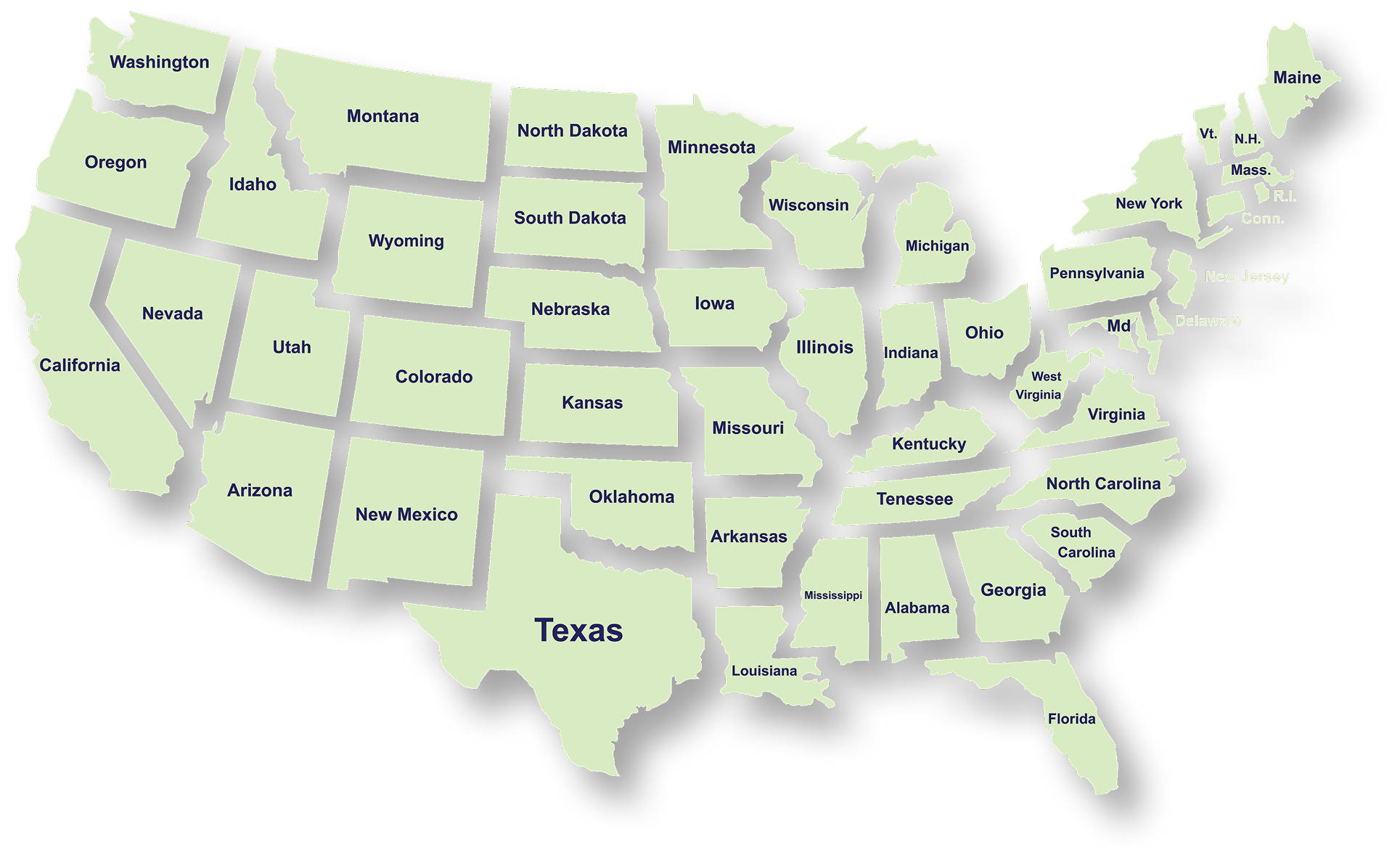
Serving Businesses & Individuals Across USA

We handle accounting, tax filing, and planning with defined timelines and accurate reporting for businesses and individuals across all states.

Frequently Asked Questions

What services does NR CPAs & Business Advisors provide?
What is tax planning and why is it important for businesses?
How can a Virtual CFO help my business?
When should a business consider IRS tax resolution services?
What financial statements does a business typically need?
How can startup advisory services help new businesses?
What is strategic business planning?
What is a Virtual Family Office and who can benefit from it?