Learning Center for Tax and Financial Insights

Stay updated with clear, actionable articles on tax rules, deadlines, deductions, and financial decisions that impact individuals and businesses.

No items found.

First-Year Start-Up Tax and Accounting Issues

Some of the most common stressors encountered by entrepreneurs involve tax liabilities, whether the business is booming or they’re struggling to keep their head above water. The best way to avoid these pitfalls is to learn about them ahead of time. Here’s what every entrepreneur needs to know. Watch the video below.

Explore More
No items found.

Don't Have a Budget? QuickBooks Online Can Help

The hardest part of creating a budget is getting started. QuickBooks Online provides tools that can jump-start the process. You know you should have a budget. You’re aware that it can help you stay on track with your company’s income and expenses throughout the year. Maybe you’ve even tried to make one before, but you got discouraged by the mechanics or by the difficulty of estimating money in and out for the next 12 months. June may not be the beginning of your fiscal year, but that doesn’t mean you can’t make a serious effort to start building a budget that can help you rein in expenses and set revenue goals. Here’s a look at QuickBooks Online’s budgeting features. Creating the Framework Before you begin, you’ll want to make sure that your fiscal year is set correctly in QuickBooks Online. Click the gear icon in the upper right, then click Your Company | Account and Settings | Advanced. If the First month of fiscal year isn’t correct, click the pencil icon over to the right and change it. Then click Save and exit out of this window. Click the gear icon again and select Budgeting, then click Add budget in the upper right. QuickBooks Online asks you the questions that need to be answered before you start filling in your budget grid. The first thing you’ll do is give your budget a descriptive name by entering it in the Name field. Next, open the drop-down list under Fiscal year and select the correct 12-month period. You can create your budget in one of three intervals: Monthly, Quarterly, or Yearly. If you want to populate your budget with numbers from this year or last, make that selection in the Pre-fill data? field. There’s one more option at the top of the Budgets Grid screen that’s not shown in the image above. You can Subdivide by Customer, Class, or Location. This can be useful if you want to view budget data specific to a subset of entries in each of those categories. You could, for example, choose three customers and view only their numbers in the grid individually, one at a time. Providing Your Numbers Once you’re satisfied with the selections you’ve made, click

Explore More
No items found.

Choosing Your Accounting Method Under New Tax Laws

Businesses today must take a closer look at their accounting methods. Since the passage of new tax laws, with changes to thresholds for choosing accounting methods, all companies need to take an inward look at their current accounting methods to determine if they are the most beneficial permissible method applicable. It is important to work closely with accounting professionals here — making changes as well as decisions on how accounting methods need to be updated. What Is Changing? The Tax Cuts and Jobs Act put into place new laws for a variety of sectors. One key area impacted that many business owners do not immediately consider is accounting. The overall method of accounting and the type of business can be key factors to consider. This tax reform set out to support small business owners and offer key ways to reduce some taxes. It also put into place provisions and accounting method reform with a focus on keeping things simple. Outdated methods of accounting minimized the amount of information shared, but they tend to overcomplicate methods. This is especially true with outdated gross receipt thresholds. Old methods required business owners to use accrual basis accounting which tends to increase overall administrative costs and compliance requirements. Here is a look at some of the key changes businesses should recognize moving forward. Limits on Cash Method of Accounting Improved One key change is the limitation on which businesses can use the cash method of accounting. Previously, companies could not use the cash method of accounting — commonly considered the most natural and more affordable method — as an option if they reached a threshold in revenue. Previously, this method could not be used if the average annual gross receipts for the company were limited to companies with revenue under $10 million, except for the following companies that are that are limited to $1 Million: Retailing (NAICS codes 44 and 45); Wholesaling (NAICS code 42); Manufacturing (NAICS codes 31 – 33); Mining (NAICS codes 211, 212); Publishing (NAICS code 5111); or Sound recording (NAICS code 5112). The new law changes this. First, it increases the threshold to $25 million. It also indexes this to inflation (meaning it can rise over time due to inflationary measures). Companies who are now able to use this method will note an accounting method change. It will allow the company to recognize ratable taxable income from this change over a period of four years — you do not have to adjust this all at one time. Additionally, any losses are recognized immediately.

Explore More
No items found.

Big Changes to the Kiddie Tax

Article Highlight: Prior Law New Law Earned Income Unearned Income Fiduciary Rates Strategies Years ago, to prevent parents from transferring their investment accounts into their children’s name to avoid taxes, Congress created what is referred to as the kiddie tax. This counteracted the strategy of taking income from the parents’ higher tax bracket and shifting it to their children’s lower tax bracket. The kiddie tax plugged that tax loophole by taxing the child’s unearned income (income not from working) at the parent’s top marginal rate. That has all changed under the new tax reform. Beginning in 2018, children’s tax rates are no longer based upon their parents’ top marginal rates. Congress streamlined the kiddie tax by taxing a child’s unearned income by the capital gain and ordinary income rates that apply to trusts and estates. Thus, the child's tax is unaffected by the parent's tax situation or the unearned income of any siblings, while the earned income is taxed using the single tax rates. Although this will greatly simplify the preparation of a child’s return, there will be losers and winners. One of the big winners will be a child who is employed. Since earned income is taxed at single rates, a working child will benefit from the new higher standard deduction allowing them to make up to $12,000, instead of the previous $6,350 of earned income without any tax. On the other hand, for those with substantial unearned (investment) income, that income will no longer be subject to the parent’s top tax bracket but instead will be taxed at the rates for estates and trusts, which for 2018 hit 37% at a taxable income of $12,500. The losers will be children with substantial investment income, which will be taxed at the trust rates, especially children whose parents are in a low tax bracket. Under the old law, a child’s unearned income was taxed at the parents’ top tax bracket, which now may be lower than the fiduciary tax rates. The kiddie tax applies to children under the age of 18, a child age 18 at the end of the year with earned income less than one half the cost of their support, and full-time students between the ages of 18 and 24, also with earned income less than one half the cost of their support.

Explore More
No items found.

Should I Use a Credit Card to Pay My Taxes?

With tax filing season out of the way, paying off those tax bills that weren't paid by April 18th is the next major concern for people. While there are a few options for payment agreements if you can't afford to write a check for the full amount immediately, there's also the option of paying your tax bill with a credit card. It can be less confusing than navigating IRS payment plans, and if your credit card has a nice rewards program, then it's something to think about. Depending on how much you owe in taxes and what terms your credit card offers, it may or may not be worth putting your tax bill on your credit card. Here are some of the pros and cons of using a credit card to pay your taxes and why you would or wouldn't want to pursue this option. Processing Fees Legally, the IRS cannot directly accept credit card payments so they use three different approved payment processors for taking credit and debit card payments. At the time of writing, the processor with the most favorable rate is pay1040.com. Their minimum processing fee is $2.59, otherwise charging 1.87% of your balance. So, if you owe $2,000 in taxes, then you'd be charged a total of $2,037.40. Keep in mind that this processing fee is steeper the bigger that your outstanding balance is, and you need to pay it on top of whatever you'll owe in interest. If you go on a payment plan and pay by direct debit or check, you'll only pay the IRS interest rate and any applicable penalties with no processing fees. Interest Rates and Balance Transfers Interest rate varies by the credit card that you have, but the average rate is 15.07%. For the first quarter of 2018, the IRS interest rate on underpayments is 4% (expected to go up to 5% for the second quarter.) This interest rate is in addition to any applicable penalties like the .0.50% late fee that applies every month until the balance has been paid off. But the interest rate the IRS charges is a lot less than the average credit card interest rate. If you anticipate paying your balance off over time, you will definitely pay a lot more interest with a credit card even if it's less confusing to calculate than the IRS interest rates, which change more often. However, if you open a new credit card intended for balance transfer if your credit's good, then you can get a few months to a whole year to pay off your balance at a 0% interest rate which both buys time and saves money. But if you're late on the payments eventually and/or your credit isn't that great, this isn't a likely option. Credit Card Rewards Credit card rewards, like cash rebates and frequent flier miles, are what often makes the extra fees and interest tempting to put your tax balance on your credit card: Why not get a free vacation for paying your taxes? But financial experts estimate that most credit card rewards only net you about 1% back of what you purchase. It's worth sitting down and doing the math on how much the IRS interest rates and forgoing processing fees would save you so you can take that vacation out of pocket instead. Unless you plan on paying off your entire balance immediately and the reward offered is worth what you'll pay in fees, reward programs aren't likely to completely defray the costs of using a credit card for your taxes. Tax Bills and Your Credit Report Ultimately, if you need extra time to pay your taxes, you are better off with an IRS installment or short-term payment agreement since owing money on these plans does not appear on your credit report. However, carrying a balance will appear once you shift the responsibility from the IRS to your credit card company. In addition to impacting your available credit, it also affects your credit utilization score based on how much of your available credit is being used. If you're looking for housing, more credit, or other situations that warrant your credit report being pulled, then you'll want to avoid paying your taxes with a credit card. Ultimately, it's up to you to weigh the risks and benefits of using a credit card to pay your taxes. If you're taking a longer-term approach, an installment agreement is likely to cost you less both upfront and in the long run.

Explore More
No items found.

Good and Bad News About The Home Office Tax Deduction

Article Highlights: Home Office Qualifications Actual-Expense Method Simplified Method Income Limitation Employee Deduction “Home office” is a type of tax deduction that applies to the business use of a home; the space itself may not actually be an office. This category also includes using part of a home for storing inventory (e.g., for a wholesale or retail business for which the home is the only fixed location); as a day care center; as a physical meeting place for interacting with customers, patients, or clients; or the principal place of business for any trade or business. Generally, except when used to store inventory, an office area must be used on a regular and continuing basis and exclusively restricted to the trade or business (i.e., no personal use). Two methods can be used to determine a home-office deduction: the actual-expense method and the simplified method. Actual-Expense Method – The actual-expense method prorates home expenses based on the portion of the home that qualifies as a home office; this is generally based on square footage. These prorated expenses include mortgage interest, real property taxes, insurance, heating, electricity, maintenance, and depreciation. In the case of a rented home, rent replaces the interest, tax, and depreciation expenses. Aside from prorated expenses, 100% of directly related costs, such as painting and repair expenses specific to the office, can be deducted.

Explore More
No results found.
Thank you! Your submission has been received!
Oops! Something went wrong while submitting the form.

Want tax & accounting tips & insights?Sign up for our newsletter.

Thank you! Your submission has been received!
Oops! Something went wrong while submitting the form.

Why Work With Us?

We combine deep tax expertise, financial strategy, and practical business insight to help you manage complexity, stay compliant, and make confident financial decisions.
A dollar sign, representing financial advice or discussion at NR CPAs & Business Advisors.

Experienced CPA and Enrolled Agent Leadership

Guidance led by licensed professionals with deep expertise in tax strategy, compliance, and complex financial matters.
White bar chart with an upward arrow on green circular background representing growth or progress at NR CPAs &. Business Advisors

Support for Growing Businesses and Startups

We understand the financial challenges of growth stage businesses and provide structured guidance to support expansion.
A white hand holding a dollar symbol and ascending bar chart on a green circular background representing financial growth or investment at NR CPAs & Business Advisors..

Strategic Financial Advisory

Our team helps you evaluate financial decisions with greater clarity, supported by practical insights and long term planning.

Fractional CFO Support

Access experienced financial leadership without the commitment and cost of hiring a full time Chief Financial Officer.

Proactive Tax Planning Approach

We focus on identifying tax opportunities throughout the year rather than reacting only during filing season.

Clear and Reliable Financial Reporting

Accurate financial statements and reporting that help you better understand performance and make informed decisions.
White IRS building icon with pillars and a dollar sign above on a green circular background.

Professional IRS Representation

Experienced support in resolving IRS notices, disputes, and compliance matters while protecting your financial interests.

Personalized Client Focus

Every client receives thoughtful attention and tailored financial solutions based on their specific needs and business goals.
Financial matters often involve important decisions. Working with experienced advisors can help you approach them with greater clarity and confidence in your choices.

Need Help With Your Tax or Financial Decisions?

Discuss your situation with our advisors to get clear guidance on tax planning, IRS matters, and the financial decisions ahead.
Business consulting at NR CPAs & Business Advisors.

Request Your Consultation

Fill out the form to discuss your tax concerns, financial questions, or advisory needs with our team. We will review your details and respond shortly.

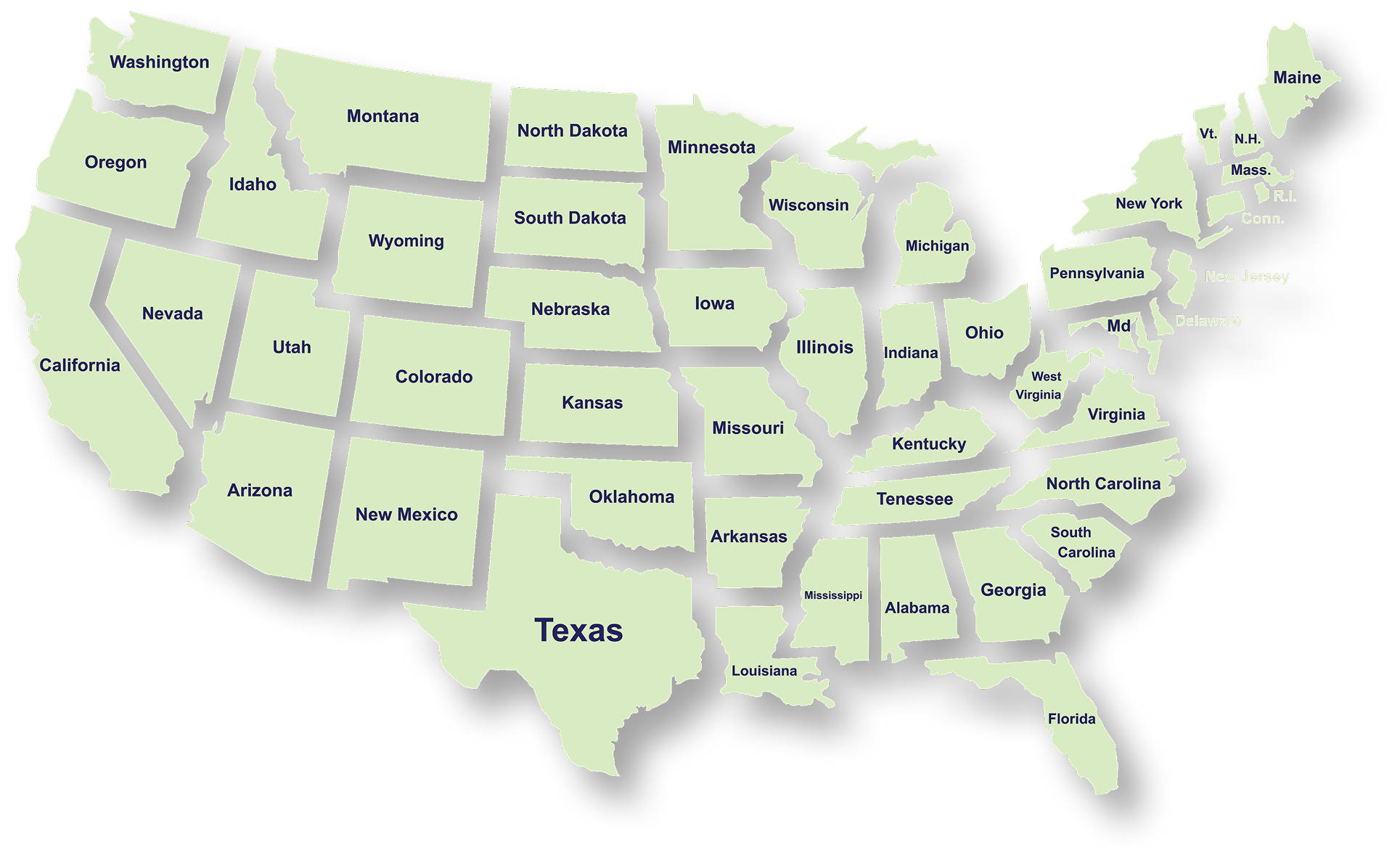
Serving Businesses & Individuals Across USA

We handle accounting, tax filing, and planning with defined timelines and accurate reporting for businesses and individuals across all states.

Frequently Asked Questions

What services does NR CPAs & Business Advisors provide?
What is tax planning and why is it important for businesses?
How can a Virtual CFO help my business?
When should a business consider IRS tax resolution services?
What financial statements does a business typically need?
How can startup advisory services help new businesses?
What is strategic business planning?
What is a Virtual Family Office and who can benefit from it?