Learning Center for Tax and Financial Insights

Stay updated with clear, actionable articles on tax rules, deadlines, deductions, and financial decisions that impact individuals and businesses.

No items found.

Household Employees and Your Taxes

Employment Tax Responsibilities for Employers of Household WorkersHousehold employees are workers you hire for “domestic services,” i.e., those services performed in and about your home. Duties of cooks, butlers, housekeepers, governesses, maids, valets, babysitters, caretakers, gardeners, janitors, or personal chauffeurs all can qualify as “domestic services.” Not everyone you hire for work at your home is considered a household employee, though. For example, a self-employed gardener may take care of your lawn and several others in your neighborhood, providing all his own tools and job assistants and setting his own work schedule. That gardener probably won’t be considered your household employee because he is running an independent operation over which you have no “say-so.” You see, a worker at your home becomes an employee when you control what work that person is to do AND how and when the work is to be done. If you qualify as a household employer, you may have to pay certain federal payroll taxes, including social security and Medicare taxes and unemployment taxes. You withhold some of these taxes from your employee’s wages; others you must pay from your own funds. (Some states require certain taxes too, so be sure to check with the state employment department in your area.) Taxes You Withhold From WagesSocial Security and Medicare Taxes: If you pay cash wages in excess of a specified threshold amount during the year to a given employee, you must withhold social security and Medicare taxes from the employee’s wages. This threshold amount $2,100 for 2019 will vary from year to year and applies to each separate household employee you hire. Call for amounts applicable to other years. Example: This year, Jane hired Louise, a housekeeper, and Rose, a babysitter. She withheld social security and Medicare taxes from their wages. Over the course of the entire year, however, she paid Louise only $500 and Rose $800. Since neither worker’s yearly wage equaled the threshold amount, Jane owes no social security or Medicare tax for them. That being the case, she must repay to the workers the taxes she already had withheld from their wages.Federal Income Tax: Household employees may also ask you to withhold income tax from their wages; you aren’t required to agree to the request. If you choose to withhold, however, you must collect the income tax from the employee’s wages (the IRS publishes tables to let you know how much to withhold) and you pay the amount withheld to the government. Additional Taxes You Must PayEmployer’s Share of Social Security and Medicare Taxes: As an employer, you must match the amount of social security and Medicare tax you withhold from your employee’s wages. For instance, if you withheld $50 in social security from your housekeeper’s wages, you would be required to pay to the government $100 (the $50 withheld from your employee, plus another $50 from your own funds). Federal Unemployment Tax (FUTA): You are also responsible for FUTA taxes if you paid a total of $1,000 (2018, call this office for other years) or more in household employee wages during any calendar quarter of the current year or the previous year. FUTA tax isn’t a withholding tax but is paid by you alone on behalf of your employees. (Certain states also assess unemployment taxes – check with the appropriate agency in your area.) Paying the TaxYou report and pay the required federal payroll taxes for your household employees along with your regular individual income tax return. Schedule H, Household Employment Taxes, is used to figure the amount of the tax that you owe. Reporting Wages to EmployeesYou need to give your household employees Form W-2, Wage and Tax Statement, to report wages and tax withholding for the year. The W-2 is due to the employee by Jan. 31 of the year following the year in which you paid the wages. You must also file a copy of the W-2 with the Social Security Administration by January 31, too. To accurately prepare W-2s, you need certain information from your employee, including his/her name, address, and social security number. So that you have all the necessary information available for timely filing, you may want to have your workers fill out Form W-9, Request for Taxpayer Identification Number and Certification, when you hire them. That way you will have data on file to complete W-2s when the time comes. Other Paperwork ChoresForm SS–4: If you have household employees, you will need to obtain an employer identification number (EIN) for yourself. This number is not the same as your Social Security Number. The IRS issues the EIN and prefers that you apply online at their website – www.IRS.gov (type EIN in the search box) – or by filling out and faxing or mailing Form SS-4, Application for Employer Identification Number, to the IRS. The IRS does not charge for an EIN; beware of web sites on the Internet that charge for this service. Employee Form W–4: If you agree to withhold income tax for an employee, ask him/her to complete Form W-4, Employee’s Withholding Allowance Certificate. The information on this form will help you determine the correct amount of income tax to withhold. Payroll Journal: You should record in a journal each payday the wages and withholding of household employees. Set up a separate record for each employee with room for the following information:

Explore More
No items found.

Tax Reform Suspends the Tax Deduction for Employee Business Expenses

Article Highlights: Employee Business Expenses Miscellaneous Itemized Deductions Subject to the 2% AGI Floor Accountable Reimbursement Plan Occupations Impacted Not all provisions of the Tax Cuts and Jobs Act are beneficial to taxpayers. One notable negative provision is the suspension of the deduction for employee business expenses. Under prior law, taxpayers who were employees were able to deduct expenses related to their employment as a miscellaneous itemized deduction, to the extent the expenses exceeded 2% of their adjusted gross income. Yet, under the tax reform, employee business expenses will not be allowed for tax years 2018 through 2025. However, this new limitation does not apply to individuals who are self-employed. For this group of taxpayers, expenses such as business use of their personal vehicle, business-related travel, work-related education, and use of a qualified home office for business continue to be tax-deductible on their business schedules. Furthermore, tax reform actually provides them with more liberal expensing options and, for some, even a special deduction of 20% of qualified business income. In addition, this limitation does not affect employees whose employers reimburse employee business expenses under an “accountable plan,” a business-expense reimbursement plan under which the employer can reimburse employees tax-free for business expenses. On the other hand, some employers may reimburse expenses without having an “accountable plan,” in which case the reimbursement is included in the employees’ W-2 wages; since the expenses are not deductible under the new law, the reimbursement will end up being taxable. The loss of employee business expenses as a deduction will impact certain types of employment more than others. Examples of some big losers, assuming the increased standard deduction does not make up for the loss of the deduction, will include: Professionals such as employed physicians, professional engineers, CPAs, enrolled agents, and other professionals with substantial annual continuing education expenses. Long-Haul Truckers who have to pay for their own meal and lodging expenses while on the road. Firefighters – Many are required to pay firehouse dues, which for some have been deductible expenses, as well as uniform expenses. Outside Sales Employees – Many work remotely away from the employer’s business location and incur travel and home office expenses. Entertainers, including actors, musicians, and the like who always have substantial costs for costumes, agent fees, and other employee business expenses. Union Members, including those with sizeable union dues. Educators, including teachers and other educators who work in elementary and secondary schools who have unreimbursed expenses for classroom supplies. Even though they are allowed a $250 above-the-line deduction, that doesn’t begin to cover most teachers’ expenses. Tradespeople who are required to provide their own tools of the trade.

Explore More
No items found.

Learn How Business Owners Can Hire Their Children During The Summer To Help Save On Taxes.

Consider hiring your child during the summer school vacation to work in your business. There are significant tax benefits. A child can earn $12,000 without owing any income tax. Learn more below.

Explore More
No items found.

So Long To The Tax Deduction For Investment Expenses

Article Highlights: Itemized Deduction Net Investment Income Investment Interest Deduction Surtax On Net Investment Income Retirement Account Fees Under the new tax reform law, investment expenses are no longer deductible as a miscellaneous itemized deduction. This means, for example, that if you have an investment account and are paying fees to have it managed, those fees are no longer deductible. This also means IRA and other types of retirement account fees that are considered investment fees are no longer deductible. This affects more than just the itemized deduction for investment expenses, as these fees are used in the computation of net investment income (NII). NII is investment income reduced by investment expenses. NII is used in other tax computations as well. Here are two examples, one that is taxpayer beneficial and one that is not: Investment Interest Deduction – Taxpayers who itemize their deductions can take a deduction for interest paid on debts to acquire investments. However, that deduction is limited to the lesser of the interest expense or NII. The elimination of investment expenses in the determination of NII effectively makes NII larger and in turn allows for a larger investment interest deduction. Surtax On Net Investment – The Affordable Care Act imposes a 3.8% surtax on NII for higher-income taxpayers. This surtax generally applies to taxpayers filing a joint return with an AGI in excess of $250,000, married filing separate taxpayers with an AGI in excess of $125,000 and other filers with an AGI in excess of $200,000. Since the tax is based on the NII, not being able to deduct investment expenses in the computation of NII effectively makes the NII larger, and thus the amount subject to the surtax is larger.

Explore More
No items found.

Tax Deductions for Telecommuting Employees

Equipment Purchases: Record separately items having a useful life of more than one year. Normally, the costs of such assets are recovered differently on your tax return than are other recurring, everyday business expenses like business cards, office supplies, etc. Telephone Expenses: The basic local telephone service costs of the first telephone line provided in your residence are not deductible. However, toll calls from that line are deductible if the calls are business-related. The costs (basic fee and toll calls) of a second line in your home are also deductible if the line is used exclusively for business. When communication equipment, such as a cell phone, is used part for business and part personally the cost of the equipment must be allocated to deductible business use and non-deductible personal use. Keep your bills for cellular phone use and mark all business calls. Professional Fees & Dues: Dues paid to professional societies related to your profession are deductible. Supplies & Expenses: Generally, to be deductible, items must be ordinary and necessary costs in your profession and not reimbursable by your employer. Continuing Education: Educational expenses are deductible under either of two conditions: (1) your employer requires the education in order for you to keep your job or rate of pay; or (2) the education maintains or improves your skills in your profession. Costs of courses that are taken to meet the minimum requirements of a job, or that qualify you for a new trade or business, are NOT deductible. Auto Travel: Your auto expense is based on the number of qualified business miles you drive. If you qualify for the home office deduction, your home becomes your primary business location, and you will not have any nondeductible commuting travel. Therefore, generally all of your business travel from home to other business locations and meetings will be deductible. Document business miles in a record book as follows: (1) give the date and business purpose of each trip; (2) note the place to which you traveled; (3) record the number of business miles; and (4) record your car’s odometer reading at both the beginning and end of the tax year. Keep receipts for all car operating expenses – gas, oil, repairs, insurance, etc. – and of any reimbursement you received for your expenses.

Explore More
No items found.

Charitable Giving & Your Taxes

Your Chartitable Gifts Make a Difference for Others and for Your TaxesWhen you give away cash or goods to qualified nonprofit organizations, you will probably be able to take a tax deduction as partial reward for your generosity. However, the IRS rules for deducting charitable contributions aren’t as simple as many people might think. For example, deduction limits can apply, and certain gifts require timely written acknowledgment from the recipient organizations. Qualified Charitable OrganizationsIn order for a donation to be deductible, it must be given to a “qualified U.S. organization.” Not all nonprofit organizations qualify, but the IRS regularly publishes a list of the ones that do. In general, the qualifying groups can be categorized as: governmental bodies; nonprofit groups organized for religious, educational, scientific, or literary purposes; war veterans’ groups; fraternal societies and lodges; and certain nonprofit cemetery companies. Examples of typical qualified organizations include churches, nonprofit hospitals, colleges and universities, school booster clubs, libraries, public parks and recreation facilities, etc. When gifts are made to fraternal organizations and lodges, only the part of the gift that those organizations give away to other qualified charities is deductible. In addition, gifts to a cemetery company can’t be deducted if they are ear-marked for the care of a specific cemetery lot. Limits on Charitable DeductionsIn general, deductions for charitable gifts are limited to 50% (60% for years 2018 through 2025 for cash contributions to public charities) of a taxpayer’s adjusted gross income. However, depending on the kind of organization and the type of property being given, that limit can dip as low as 20%. Prior to tax reform there was an overall limit on itemized deductions for higher income taxpayers. Tax reform suspended that limitation. However, your state may not have conformed to that suspension. Gifts That Return a Benefit to YouIf a taxpayer is audited on his or her contributions, the IRS looks to see whether voluntary donations were made intentionally or whether it was just payment for services provided by a charitable organization. For example, payments to a parochial school for a child’s tuition or to a church for a family wedding give the taxpayer a benefit and don’t qualify as contributions. Payments to charities for raffle tickets, lotteries, or bingo also fall in this category and aren’t deductible – with these one is really purchasing the chance to win that new TV, trip to Hawaii, etc. In certain situations, only a partial benefit may be received for what is given. In that case, one can generally deduct the amount of the gift that is over and above the value of what is received. Say you paid $50 to attend a fundraising dinner at your church. The church determines that the value of the dinner and program is $15. Your deductible charitable contribution is $35, i.e., the amount of your payment that exceeds $15. Giving Your TimeAlthough you may volunteer many hours working for a charitable organization, the value of your time is not deductible. However, if you incur expenses (e.g., travel costs to and from the charity’s location) related to volunteer work, those costs are deductible. Other out-of-pocket costs incurred on behalf of the charity may be deductible as well. Travel Away From Home for CharityA charitable deduction can be taken for travel expenses (including meals and lodging) incurred while performing services for a charity in an out-of-town location. However, two important criteria need to be met in order to get this deduction: You must perform services for the organization in an official capacity while you’re away from home. No “significant element of personal pleasure” must be connected with the travel. Does this mean your trip can’t be enjoyable? No, but it does mean that the primary purpose of your travel must be related to your charitable duties and not be a personal vacation. Special Rule for Taxpayers Age 70.5 & OlderTax law provides a special provision that allows individuals age 70.5 or over—who are required to take an annual required minimum distribution (RMD) from their IRA— to directly transfer funds from their IRA account to a qualified charity or charities. In doing so, the amount transferred escapes taxation but still counts towards their RMD for the year. The maximum IRA-to-charity distributions each eligible IRA owner may make per year is $100,000. Non-Cash DonationsDonations don’t always have to be in cash. One can also deduct the “fair market value” (FMV) of donated items like used clothing, furniture, and appliances (FMV is the price goods are likely to sell for on the open market). Condition of Contributed Items: The condition of the contributed item is important, because except as noted below, tax law does not permit a charitable contribution for clothing or household items unless the contributed items are in “good used condition” or “better.” They also do not allow a deduction for items with minimal monetary value, such as used socks or undergarments. There is a provision that permits a deduction for clothing and household goods that are not in good used condition or better. Under this provision, a deduction can be taken if (1) the amount claimed as a deduction is greater than $500, and (2) the taxpayer includes with the taxpayer’s return a qualified appraisal with respect to the property. Household items include furniture, furnishings, electronics, appliances, linens, and other similar items. Food, paintings, antiques, and other objects of art, jewelry and gems, and collections are excluded from the definition of household items for this purpose.

Explore More
No results found.
Thank you! Your submission has been received!
Oops! Something went wrong while submitting the form.

Want tax & accounting tips & insights?Sign up for our newsletter.

Thank you! Your submission has been received!
Oops! Something went wrong while submitting the form.

Why Work With Us?

We combine deep tax expertise, financial strategy, and practical business insight to help you manage complexity, stay compliant, and make confident financial decisions.
A dollar sign, representing financial advice or discussion at NR CPAs & Business Advisors.

Experienced CPA and Enrolled Agent Leadership

Guidance led by licensed professionals with deep expertise in tax strategy, compliance, and complex financial matters.
White bar chart with an upward arrow on green circular background representing growth or progress at NR CPAs &. Business Advisors

Support for Growing Businesses and Startups

We understand the financial challenges of growth stage businesses and provide structured guidance to support expansion.
A white hand holding a dollar symbol and ascending bar chart on a green circular background representing financial growth or investment at NR CPAs & Business Advisors..

Strategic Financial Advisory

Our team helps you evaluate financial decisions with greater clarity, supported by practical insights and long term planning.

Fractional CFO Support

Access experienced financial leadership without the commitment and cost of hiring a full time Chief Financial Officer.

Proactive Tax Planning Approach

We focus on identifying tax opportunities throughout the year rather than reacting only during filing season.

Clear and Reliable Financial Reporting

Accurate financial statements and reporting that help you better understand performance and make informed decisions.
White IRS building icon with pillars and a dollar sign above on a green circular background.

Professional IRS Representation

Experienced support in resolving IRS notices, disputes, and compliance matters while protecting your financial interests.

Personalized Client Focus

Every client receives thoughtful attention and tailored financial solutions based on their specific needs and business goals.
Financial matters often involve important decisions. Working with experienced advisors can help you approach them with greater clarity and confidence in your choices.

Need Help With Your Tax or Financial Decisions?

Discuss your situation with our advisors to get clear guidance on tax planning, IRS matters, and the financial decisions ahead.
Business consulting at NR CPAs & Business Advisors.

Request Your Consultation

Fill out the form to discuss your tax concerns, financial questions, or advisory needs with our team. We will review your details and respond shortly.

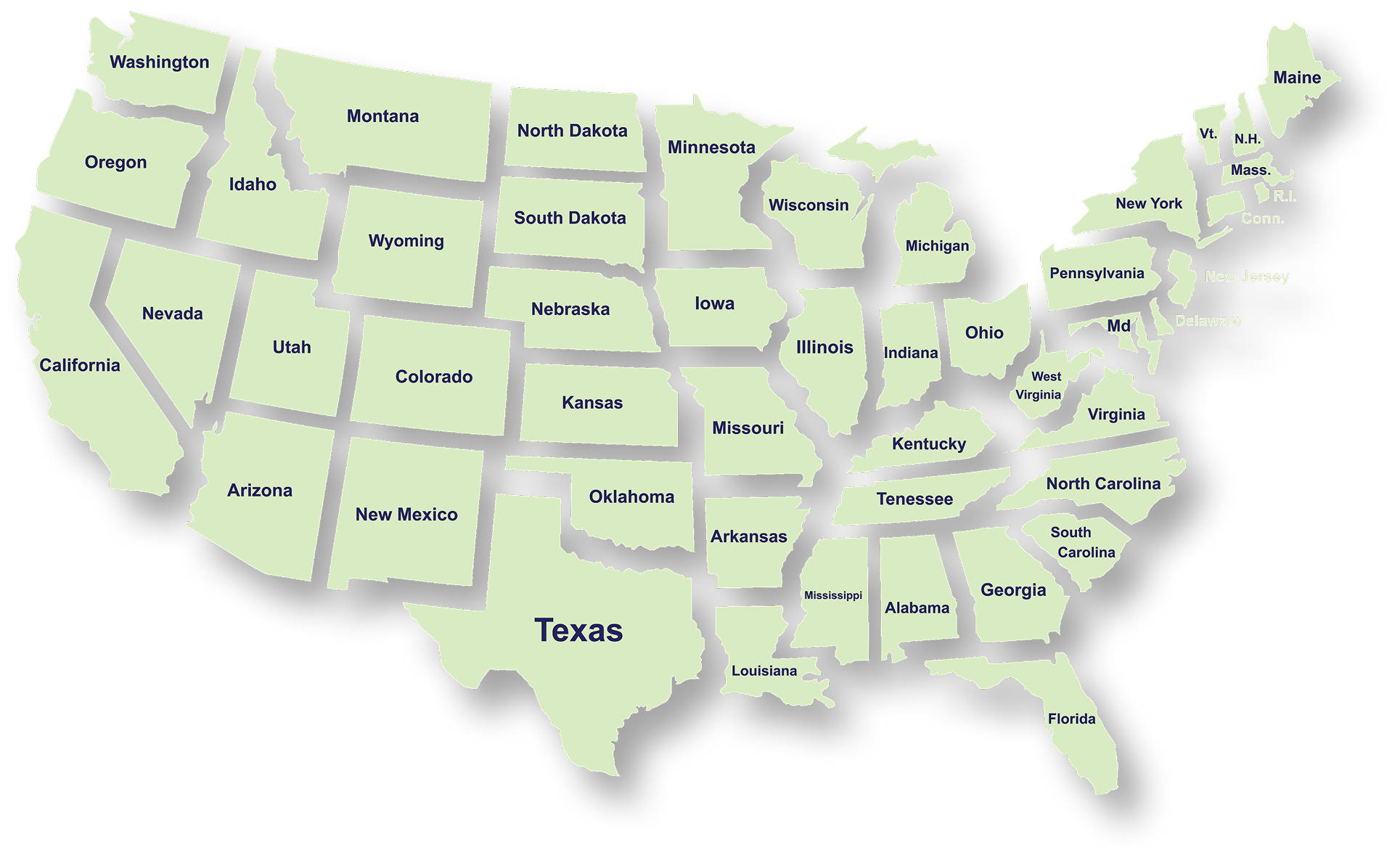
Serving Businesses & Individuals Across USA

We handle accounting, tax filing, and planning with defined timelines and accurate reporting for businesses and individuals across all states.

Frequently Asked Questions

What services does NR CPAs & Business Advisors provide?
What is tax planning and why is it important for businesses?
How can a Virtual CFO help my business?
When should a business consider IRS tax resolution services?
What financial statements does a business typically need?
How can startup advisory services help new businesses?
What is strategic business planning?
What is a Virtual Family Office and who can benefit from it?